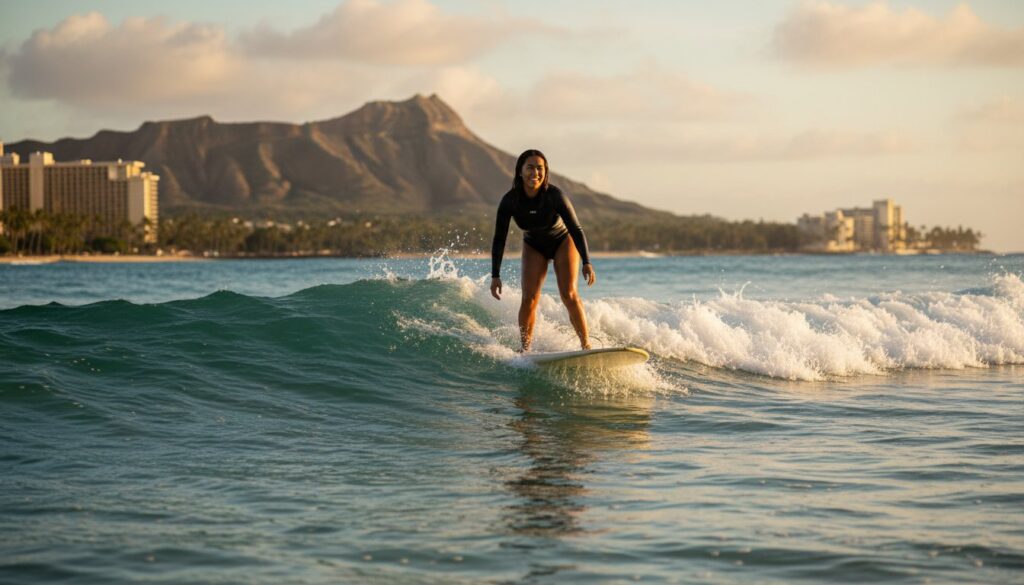
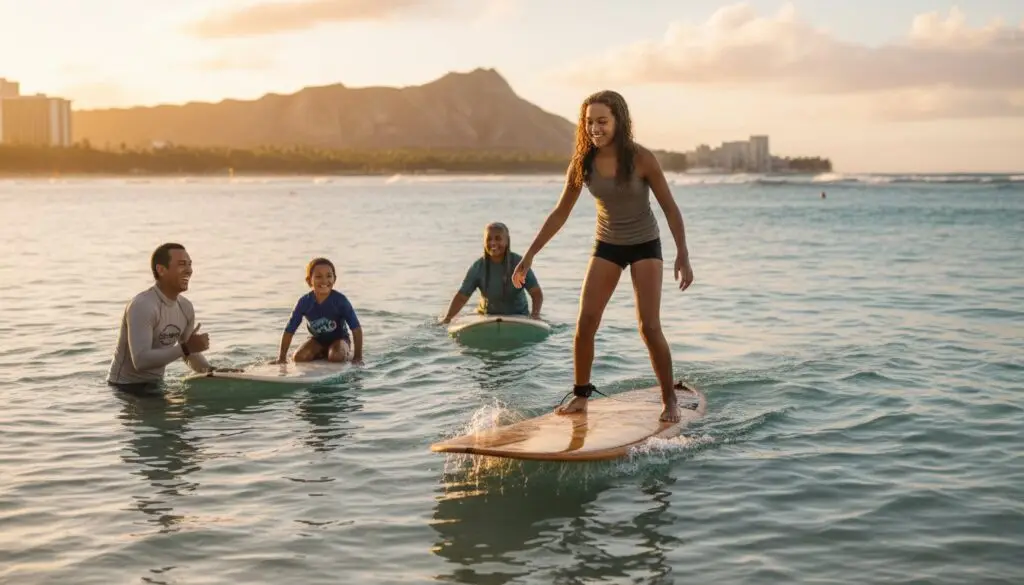
Surfing Waikiki tops more bucket lists than almost any other wave on the planet, and once you paddle out here for the first time, you’ll understand exactly why. Picture warm, turquoise water rolling gently beneath you while Diamond Head stands watch in the distance — it’s the kind of scene that makes first-timers forget they were ever nervous. However, many visitors still worry about crowded lineups, ocean safety, or booking a lesson that feels more like a tourist trap than an authentic Hawaiian experience. We understand that hesitation, and this guide exists to erase it completely.
This is the exact stretch of coastline where the original Waikiki Beach Boys first shared the stoke with visitors nearly a century ago, and that same spirit of aloha still shapes every lesson we teach today. In the sections below, you’ll find everything you need — from the gentlest beginner breaks and month-by-month conditions to lineup etiquette, gear checklists, and honest safety information that most guides skip entirely. Consequently, by the time you finish reading, you’ll know more about surfing Waikiki than most guidebooks ever explain. Let’s get you ready to catch that first wave.
Key Takeaways
- Waikiki’s legendary gentle waves are the real secret behind why so many people fall in love with surfing here on day one. For a deeper walkthrough, see our Learn to Surf in Waikiki: Your Complete Beginner’s Guide.
- Knowing exactly which beginner-friendly break to paddle out to removes all the guesswork from your first session. For a deeper walkthrough, see our Surfing Lesson Honolulu: Complete Beginner’s Guide.
- Choosing between a guided lesson and a solo rental determines whether your first time surfing Waikiki feels effortless or overwhelming. For a deeper walkthrough, see our Surf Waikiki Hawaii: The Ultimate Guide to the Birthplace of Surfing (2026).
- Mastering a handful of simple lineup rules lets you surf with aloha and earn instant respect from locals.
- Understanding seasonal swell patterns, water temperatures, and safety basics helps you plan the smartest possible trip.
Why Surfing Waikiki Is the World’s Most Famous First-Wave Experience
There is simply no place on Earth quite like Waikiki to learn how to ride a wave. Picture yourself gliding across warm, turquoise water with the Hawaiian sun on your back and the iconic Diamond Head crater watching over you — that feeling is exactly why generations of visitors keep coming back. Above all, this stretch of coastline isn’t just any beach; it’s the cradle of modern surfing, a place where the spirit of aloha flows as freely as the tides. Because the conditions here are naturally forgiving, Waikiki remains one of the safest and most inspiring places in the world to start your journey.
The Perfect Waves for Surfing in Waikiki
The magic behind learning to surf in Waikiki lies almost entirely in its waves. Forget the intimidating, powerful surf you’ve seen in movies — here, the waves are long, slow-breaking rollers that give beginners plenty of time to paddle, find their balance, and pop up to their feet. Specifically, an outer reef acts as a natural barrier that tames the ocean’s energy before it ever reaches the beach, creating the gentle, rolling surf Waikiki is famous for. In contrast to the expert-only barrels of Oahu’s North Shore, this is a place where the ocean welcomes you with open arms and builds your confidence with every single wave.
A Rich History on the Water — Hawaiian surfing lessons
When you paddle out into these waters, you become part of a timeless story. These were the same breaks where Hawaiian royalty, the Aliʻi, perfected the “sport of kings” centuries ago. This sacred tradition was later shared with the world by the true father of modern surfing, Duke Kahanamoku. Duke’s influence is a cornerstone of the history of surfing as we know it today, and his spirit lives on right here on this beach. He taught the first visiting surfers on this very sand, creating the original Waikiki Beach Boys — a legacy we proudly carry forward, not just as instructors, but as guardians of this culture. An experience surfing Waikiki is, therefore, an invitation to connect with the true heart of Hawaii. For a deeper walkthrough, see our How Much Is Surfing Lessons in Hawaii? 2024 Prices.
A Beginner’s Guide to Waikiki’s Surf Breaks
The main area for learning to surf in Waikiki stretches from the iconic pink Royal Hawaiian Hotel down to the Duke Kahanamoku statue. Think of it as a friendly ocean nursery: the waves are gentle, the water is warm, and the sandy bottom is forgiving. For a full breakdown of every break name and wave-riding term you’ll hear on the sand, see our Surfing Terms 101: A Guide to Waikiki Surf Lingo and Hawaiian Traditions. You can also browse our full Waikiki surf breaks guide for even more detail on every wave along this coastline.
While the whole area is fantastic for surfing Waikiki, a handful of legendary spots stand out — and our Beach Boys know each one like family. You don’t need to choose; we’ll read the ocean and take you to the right break for your skill level. For families specifically, see our Surfing Classes for Kids Waikiki: Top Guide 2026.
Canoes: The Heart of Waikiki Surfing
Look for the “Pink Palace of the Pacific,” the Royal Hawaiian Hotel, and you’ve found Canoes. This is the absolute heart of the action, and it’s the go-to spot for lessons because the waves are slow, gentle, and offer long, forgiving rides — typically breaking around one to three feet on a normal south swell day. The vibe here is pure joy, full of families, first-timers, and the classic outrigger canoes that give the break its name. For a full pricing breakdown, see our How Much Are Surfing Lessons in Hawaii? Full Price Guide.
Queens: A Classic Longboard Wave
Just past Canoes, right in front of the statue of Duke Kahanamoku, sits Queens — holy ground for any surfer. The wave here carries a little more energy, making it a longboarder’s dream, yet it remains manageable for confident beginners. When you surf Queens, you’re riding a piece of history, in the exact spot where Hawaiian royalty and the original Beach Boys once shared their love of the ocean.
Populars and Number Threes: Room to Grow
Once you’ve got a few sessions under your belt, breaks like Populars (“Pops”) and Number Threes offer a natural next step. These spots sit slightly further offshore and catch a touch more swell energy, usually running two to five feet depending on the season. As a result, they reward surfers who can already pop up consistently and paddle confidently past the impact zone. Our instructors monitor these breaks daily and will only guide you there once you’re genuinely ready, so you never feel out of your depth.
Feeling overwhelmed by all these options? Don’t be. Our expert instructors read the ocean every single day and know exactly which break is working best at any given hour. It’s precisely why so many travel writers agree Waikiki is the ideal place to learn, as detailed in this beginner’s guide to surfing in Waikiki from travel experts at Fodor’s. For a broader overview of every lesson option available, see our Surfing Lessons in Hawaii: Complete Beginner’s Guide.
The Best Time of Year for Surfing Waikiki
Unlike Oahu’s North Shore, which turns dangerous in winter, surfing Waikiki actually gets better in the warmer months. Understanding the seasonal pattern helps you plan a trip with the best possible conditions for learning.
Summer (May–September): Prime Learning Season
Gentle south swells dominate during these months, producing the classic, slow-rolling waves Waikiki is known for. Water temperatures hover around 78–81°F (26–27°C), winds stay light in the morning, and conditions remain consistent day after day. Consequently, summer is genuinely the best window for beginners who want the calmest possible water.
Winter (November–March): Bigger, But Still Beginner-Friendly
Winter brings slightly larger south and wrap-around swells to Waikiki’s outer breaks, while inner breaks like Canoes usually stay calm and beginner-friendly year-round. Water temperature dips only slightly, to around 75°F (24°C). In other words, you can absolutely learn to surf in Waikiki in December just as easily as in July — your instructor simply chooses the right spot for the day’s conditions.
Best Time of Day and Tide
Early mornings, generally before 9 a.m., offer the calmest wind, the fewest crowds, and the clearest water. Mid-tide conditions tend to produce the most consistent, easy-to-catch waves for new surfers, whereas extreme low tide can expose more of the reef beneath the sandy channels. Booking a morning lesson is, therefore, one of the simplest ways to stack the odds in your favor; see learn to surf in Oahu for more local options and schools.
Your First Ride: Choosing Between Lessons and Rentals
Standing on the sand with the gentle waves of Waikiki calling your name, you’ll face one big decision: grab a board and go it alone, or get some guidance from the pros first? Think of it as choosing between an independent adventure and a guided journey into the heart of Hawaiian wave-riding. For a full comparison of pricing and included gear, see our Surfboard Rental Waikiki: The Ultimate 2026 Guide to Riding with Aloha.
Your first experience surfing Waikiki should be all about smiles and success. That’s exactly why we believe starting with a lesson isn’t just a good idea — it’s the fastest way to actually stand up on your very first day. For an honest breakdown of whether it’s truly worth it, see our guide on Is It Worth Taking a Surfing Lesson on Vacation?
Why a Surf Lesson Is a Must for Beginners
Jumping into the ocean with our instructors is about more than technique — it’s about joining our ohana (family). Our Beach Boys carry on a legacy central to the history of surfing in Waikiki, and they’re here to make your time on the water safe, fun, and unforgettable. A typical 90-minute lesson with us includes — see our first surfing lesson for a detailed breakdown of timing and what to expect.
- Safety First: We start on the sand, teaching you about the board, the waves, and the unwritten rules of the water. Ocean awareness is key.
- Guaranteed Success: Our proven techniques give you a huge advantage — paddling, popping up, and riding a wave all the way to shore.
- Maximum Fun: We help you find the right waves so you spend more time riding and less time wiping out.
Renting a Surfboard: Are You Ready?
Feeling confident after a lesson or two? Renting a board on your own is a great next step, but it’s worth being honest with yourself first. Ask:
- Can I paddle out past the break on my own?
- Can I pop up consistently on a wave?
- Do I know how to control my board and steer away from others?
- Am I familiar with surf etiquette?
If you answered yes to all four, browse our surfboard rental Waikiki guide and we’ll set you up with the perfect soft-top board. If you’re still unsure, that’s completely okay — the best rides come with confidence, so book a lesson with us to build your confidence first!
![Surfing in Waikiki: The Ultimate Beginner's Guide [2026]](https://starbeachboys.com/wp-content/uploads/2026/03/Surfing-in-Waikiki-The-Ultimate-Beginners-Guide-2026-Infographic-scaled.jpg)
How to Plan Your First Surfing Waikiki Session (Step by Step)
Follow these six steps to turn your first attempt at surfing Waikiki into a smooth, stress-free success rather than a guessing game on the sand.
- Check the surf and weather forecast. Look at wind direction and swell size the night before so you know roughly what to expect once you reach the beach the next morning.
- Choose your break based on skill level. Pick Canoes if you’re brand new, Queens if you’ve surfed a few times, and leave Populars or Threes for once you can paddle and pop up reliably.
- Book a lesson or arrange your rental gear in advance. Reserving ahead of time guarantees you get an instructor and a board sized correctly for your height and experience level.
- Warm up and learn ocean safety on the sand first. Spend ten minutes practicing your pop-up on dry land and reviewing basic etiquette before you ever touch the water.
- Paddle out and catch your first wave with guidance. Let your instructor position you at the right spot in the lineup and call you into the wave at exactly the right moment.
- Practice surf etiquette in the lineup as you keep riding. Wait your turn, respect other surfers’ right of way, and celebrate every ride, wipeout included, as part of the learning process.
Gear and What to Bring for Surfing Waikiki
Packing light is one of the best parts of surfing Waikiki, since lessons typically include everything you need. Still, a few personal items make a real difference in comfort and safety.
- Reef-safe sunscreen: Hawaii law restricts sunscreens containing oxybenzone and octinoxate to protect coral reefs, so pack a mineral-based option before you arrive.
- Rash guard or snug t-shirt: This prevents sunburn and wax irritation on your stomach and chest during longer sessions.
- Swimsuit or boardshorts: Choose something secure that won’t shift or come loose while paddling and popping up.
- A soft-top longboard, roughly 9 to 10 feet: This is the safest, most stable board type for beginners, and it’s what most reputable surfboard rental shops in Waikiki will provide.
- Water, snacks, and a dry bag for your phone and hotel key, since there’s rarely convenient storage right on the sand.
Surf Etiquette & The Aloha Spirit: How to Share the Waves
Out on the water, there’s a simple code — think of it as the rules of the road that keep everyone safe and the good times rolling. In Hawai’i, this is known as the Aloha Spirit, and it’s built on respect, sharing, and looking out for one another. When you’re surfing Waikiki, you’re joining a big family, and these guidelines keep the positive vibes flowing from shore to the lineup. Browse more tips under our Waikiki surfing tag for related etiquette and lineup articles.
The Golden Rules of the Lineup
- Don’t drop in. The surfer closest to the peak — where the wave breaks first — has the right of way. Dropping in means taking off on a wave someone else is already riding. It’s like cutting in line; let them have their ride, because your wave will come.
- Paddle wide. When paddling back out for another wave, stay clear of the main surfing area and go around the action rather than through it. This keeps the rider’s path clear and keeps you out of harm’s way. For more context, see our guide on surfing lessons in Hawaii.
- Hold onto your board. Always control your board, since a loose board can injure someone else in the water. Ditching your board should be a last resort — keeping a grip on it shows you care about the people around you.
Embracing the Waikiki ‘Ohana’ Vibe
More than any rule, surfing Waikiki is defined by its welcoming atmosphere. The vibe here is pure ‘ohana’ — family. We love sharing our waves, and that’s what makes this one of the best places on Earth to learn. For more on gear and rentals that support that vibe, see our Surfboard Waikiki: Rent, Learn & Ride the Waves guide.
A smile and a friendly “howzit?” go a long way. Respect the locals who call these waves home, and be ready to cheer for your fellow surfers. The most important thing you can bring to the water is a great attitude. That’s the true spirit of Duke Kahanamoku and the Waikiki Beach Boys, a tradition we’re proud to share. Ready to learn the right way? Come surf with us, and we’ll show you the ropes.
Ocean Safety: Currents, Reef, and Sun
Even though surfing Waikiki is remarkably beginner-friendly, a little ocean awareness goes a long way toward keeping your session both fun and safe.
Rip Currents and Channels
Sandy channels between the reef breaks can create mild currents that actually help pull surfers back out to the lineup — useful once you understand them, disorienting if you don’t. Lifeguard towers dot the beach, and official guidance from Hawaii’s Ocean Safety division recommends always swimming or surfing near a staffed tower, especially during your first few sessions.
Reef Awareness
Much of Waikiki’s seafloor is sandy, but patches of shallow reef do exist, particularly outside the main beginner zones. Wearing reef-safe sunscreen protects the coral, while learning to fall flat rather than diving headfirst protects you. Your instructor will always steer you clear of exposed reef sections.
Sun Protection
Hawaii’s UV index runs high year-round, so a rash guard, reef-safe sunscreen, and reapplication every couple of hours matter just as much as your surfing technique. A sunburned first day is far more forgettable than a great one.
Experience the Legacy: Surfing with Waikiki’s Star Beachboys
You’ve learned about the legendary breaks and the perfect conditions. Now it’s time to connect with the true heart of surfing Waikiki. It’s more than a sport here; it’s a birthright, a story passed down through generations. We are Star Beachboys, direct descendants of the original Waikiki Beach Boys who first shared the gift of heʻe nalu (wave sliding) with the world alongside Duke Kahanamoku. We don’t just work on this beach — we’re part of its living history. For those wanting to explore beyond surfing, see our Waikiki SUP Rental Guide 2026: Paddle Through Paradise with the Star Beachboys.
More Than Just a Lesson
We won’t just push you into waves. We share the stories, the respect for the ocean, and the genuine spirit of aloha that makes surfing here so magical. Your safety and fun are our top priorities, but our real mission is welcoming you into our world. With us, you’re not a customer — you’re ohana. For pricing details, see our guide on surfing lessons in Hawaii.
Ready to Catch Your First Wave?
Getting started is easy. Your adventure is just a few clicks away, and we take care of everything, so all you need to bring is a smile. If you’re wondering about the risks involved, see our honest answer on Is Surfing Safe for Complete Beginners? Every lesson with Star Beachboys includes:
- Expert Instruction: Friendly, patient, and professional guidance.
- Quality Equipment: A stable surfboard perfectly sized for you.
- Comfort and Protection: A long-sleeve rash guard to keep you comfortable.
There’s a wave out there with your name on it, and the spirit of Duke is alive and well on Waikiki Beach. Come share the stoke with our Ohana! Book your Waikiki surf lesson today.
Join the Legacy: Your Waikiki Surf Adventure Awaits
Waikiki offers far more than perfect, rolling waves for your first ride — it’s a place where the aloha spirit flows from the sand to the sea. You’ve now learned about the best beginner breaks in our Learn to Surf in Waikiki guide, seasonal conditions, essential gear, lineup etiquette, and the powerful history that makes surfing waikiki a truly legendary experience. This isn’t just about catching a wave; it’s about connecting with the soul of surfing right where it all began.
The ocean is calling. Don’t just learn to surf — experience the tradition. With over 50 years on these sands, our native Hawaiian instructors carry the direct legacy of the original Waikiki Beach Boys. We’re not just a school; we’re an ohana, ready to welcome you. Ready to ride the waves? Come join our Ohana and book your surf lesson today! For one more complete overview, see our Waikiki Surf Guide 2026: Ride the Waves with the Original Beach Boys.
That first wave is a feeling you’ll never forget, and we can’t wait to share the stoke with you. Aloha!
Frequently Asked Questions About Surfing Waikiki
Is it hard to surf in Waikiki for the first time?
Not at all. Waikiki is one of the best places on Earth to learn, since the waves here are famous for being long, gentle, and forgiving — perfect for your first time on a board. The sandy bottom means you don’t have to worry about rocks, and it’s where modern surfing was born. For related tips on getting started regardless of your fitness level, see our Surfing for All Fitness Levels: Start Your Wave Journey.
What is the best time of year to surf in Waikiki for beginners?
Summer, from May to September, is best. Gentle south swells create those classic, rolling waves Waikiki is known for, conditions stay consistent, and the water is warm. That said, winter still offers plenty of forgiving inner-reef breaks, so you can learn nearly any month of the year.
Can you surf in Waikiki without a lesson?
You can rent a board and paddle out, but we always recommend a lesson first. Surfing is about more than standing up — it’s about safety, reading the ocean, and understanding etiquette. A lesson from a true Waikiki Beach Boy ensures you learn the right way, respecting both the water and your fellow surfers.
How crowded are the waves in Waikiki?
Waikiki is a world-famous surf spot, so it can get lively out there. However, several different breaks spread the crowd out, and the vibe stays friendly and welcoming throughout. Our instructors are experts at finding the least-crowded spots for your lesson, and early mornings are usually the quietest time to paddle out.
Are there sharks in Waikiki?
Sharks do live in Hawaiian waters, since the ocean is their home. However, encounters in the main Waikiki surf areas are extremely rare, because the shallow, sandy, and busy waters aren’t their preferred habitat. Our Beach Boys have spent their lives in these waves, and your safety remains our number one priority.
What should I wear for a surf lesson in Waikiki?
Keep it simple: a comfortable swimsuit or boardshorts works well. We highly recommend a rash guard or snug-fitting t-shirt to protect against sun and surfboard wax irritation. We provide the board and leash, so just bring positive energy and reef-safe sunscreen.
How much does it cost to go surfing in Waikiki?
The cost for surfing Waikiki varies. Renting a board on your own might cost around $20–$30 per hour, while a group lesson typically runs $75–$100 per person, and a private lesson offers one-on-one coaching for $150 or more. A lesson with us includes the board, expert instruction from a real Beach Boy, and memories that last a lifetime. For a full price comparison, see our How Much Do Surfing Lessons Cost in Honolulu?
Can kids learn to surf in Waikiki?
Absolutely. Waikiki is the perfect playground for keiki (kids) to learn, since the waves are gentle, the water is warm, and the sandy bottom makes it a safe environment. A private lesson is often best for younger children, giving them the focused attention needed to build confidence. See our Best Surf Schools for Beginners in Waikiki: Complete 2024 Guide for more family-focused options.
What is the water temperature for surfing Waikiki year-round?
Water temperatures stay remarkably stable, ranging from about 75°F (24°C) in winter to 81°F (27°C) in summer. As a result, you can comfortably surf in just a swimsuit or rash guard any month of the year, without needing a wetsuit.
What size surfboard should a beginner use in Waikiki?
Most beginners do best on a soft-top longboard between 9 and 10 feet long. The extra length and volume make paddling easier and provide far more stability when popping up, which is exactly why nearly every Waikiki surf school starts new riders on boards this size.