Surfing lessons in Hawaii cost between $75 and $250 per person for most formats — from budget-friendly group sessions to personalized private coaching. The exact price depends on your island, lesson type, group size, and what gear is included. Complete price guide breaks down every cost factor so you can book with confidence.
If you are planning to take surfing lessons in Hawaii, understanding the full pricing landscape is the smartest first move you can make. Hawaii is widely recognized as the birthplace of modern surfing, and its warm Pacific waters attract millions of visitors each year who want to experience riding a wave for the very first time. However, prices vary considerably across islands, lesson formats, and surf schools — so knowing what to expect before you book saves you money and frustration.
In addition to pricing, this guide covers what every lesson includes, how location affects cost, the best time of year to book, age requirements, what to bring, and how to save money without sacrificing quality. By the end, you will have everything you need to choose the right lesson confidently. Last updated: 2026-08-11. Author: Star Beach Boys.

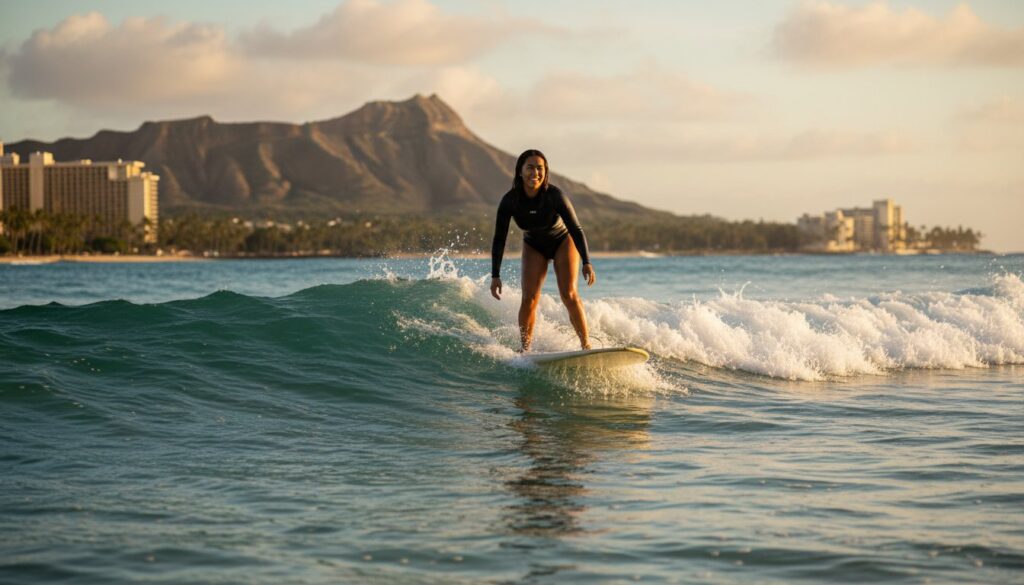
Group surfing lessons on Hawaiian beaches offer the most affordable entry point for first-time wave riders.
How Much Do Surfing Lessons in Hawaii Cost? Full 2024 Price Breakdown
Surfing lesson prices in Hawaii fall into four main categories. Each serves a different type of learner and budget. Specifically, beginners almost always start with a group lesson, while those wanting faster progress often invest in private sessions. For full island pricing details see our full price guide.
These prices generally include board rental and a rash guard (a lightweight protective top worn during surfing). In most cases, no prior experience or personal equipment is required. For the most current island-by-island figures, the full Hawaii surfing lessons price guide at Star Beach Boys is an excellent starting resource.
Group Lessons vs. Private Lessons: Which Is Right for You?
Choosing between a group lesson and a private lesson comes down to two things: budget and learning pace. Group lessons are social, affordable, and perfectly effective for true beginners. You will learn the fundamentals alongside others, which many find motivating. Furthermore, the instructor-to-student ratio in a well-run group is still manageable — typically one instructor for every four to six students. See the average price breakdown for comparison.
Private lessons, on the other hand, offer undivided attention. As a result, you receive real-time feedback on your pop-up (the motion of jumping from lying to standing on the board), paddle technique, and wave selection. Research consistently shows that one-on-one coaching accelerates skill development significantly faster than group settings.
How Island Location Affects the Price of Surfing Lessons in Hawaii
Location is one of the strongest price drivers for surfing lessons in Hawaii. Each major island has a distinct surf culture, different wave conditions, and a different density of surf schools — all of which shape what you pay. See our complete price guide for island comparisons and examples.
Oahu (Waikiki & North Shore)
Waikiki is the most popular destination for beginner surfing lessons in all of Hawaii — and for good reason. Its gentle, long-rolling waves are produced by an offshore reef that slows and softens incoming swells, creating near-perfect conditions for first-timers. Additionally, the high concentration of surf schools along Waikiki Beach creates natural price competition. Group lessons here start at around $75 per person.
The North Shore, by contrast, is world-famous for powerful winter swells. It is not a beginner spot in winter, but summer sessions there can be suitable for intermediate surfers. Expect to pay a premium — $150 to $250 for private coaching — due to instructor expertise and the exclusivity of the location. Explore more options with this guide to surf lessons on Oahu and finding the best school for you.
Maui
Maui offers a range of surf breaks suitable for beginners through advanced riders. Lahaina and Kihei are the most popular lesson spots. Group lessons on Maui average $90 to $130 per person, slightly higher than Oahu due to the smaller number of competing schools and the island’s premium tourism pricing. Nevertheless, the experience is exceptional — especially with Maui’s crystal-clear water and dramatic mountain backdrop.
Big Island (Hawaii Island)
The Big Island has fewer surf schools than Oahu or Maui, which means less price competition. Consequently, group lessons typically run $95 to $140 per person. The advantage here is a more intimate, uncrowded experience. Kohala Coast and Hilo both offer surf instruction, though conditions vary considerably between the wetter east side and the drier west.
Kauai
Kauai is the most remote of the major Hawaiian islands, and surf lesson prices reflect that. Group lessons commonly range from $100 to $150 per person, while private sessions can reach $200 or more. Poipu Beach is the go-to beginner spot on the island. Despite the higher cost, Kauai’s lush, unspoiled scenery makes the session unforgettable. For a focused breakdown on Honolulu-area pricing, this resource on how much surfing lessons cost in Honolulu provides detailed figures.
Island-by-Island Price Comparison at a Glance
Waikiki Beach offers the widest range of surf schools and consistently competitive pricing for beginner surfing lessons in Hawaii.
What Is Included in a Hawaii Surf Lesson?
Most reputable surf schools in Hawaii bundle the following into their quoted lesson price. Therefore, you typically do not need to rent equipment separately or purchase anything extra before your session.
- Surfboard rental — a wide, stable foam longboard (often called a “foamie”) designed specifically for beginners to make balance easier
- Rash guard — a lightweight Lycra or neoprene top that protects your skin from sun exposure and board abrasion
- Safety briefing — ocean awareness education covering rip currents, wave etiquette, and how to fall safely without injury
- Land-based warm-up and pop-up practice — 20 to 30 minutes of technique drills on the beach before you enter the water
- In-water instruction — a certified instructor in the water with you throughout the session, guiding waves and correcting form
- Sunscreen application guidance — many schools remind students about reef-safe sunscreen to protect Hawaii’s coral ecosystems
Premium Add-Ons Available at Some Schools
Some premium surf schools offer additional services at an extra cost. These include:
- Video analysis — filmed session review to identify and correct technique errors
- Photography packages — professional in-water surf photos to capture your first wave
- Post-lesson coaching feedback — a structured debrief covering what went well and what to work on next
- Wetsuit rental — rarely needed in Hawaii due to warm water temperatures, but available at some schools for winter morning sessions
Always confirm exactly what is included before you book. Pricing transparency varies between providers, and some schools advertise a low headline price but charge separately for board rental.
Best Time of Year to Take Surfing Lessons in Hawaii
Hawaii is one of the few places on earth where surfing is genuinely a year-round activity. However, wave size and surf school pricing both shift depending on the season — so timing your visit strategically can improve both your experience and your budget.
Summer (May – September): Best for Beginners
Summer months bring calmer south swells to most Hawaiian beaches, creating gentle, manageable waves perfect for learning. Waikiki, in particular, is exceptionally calm from June through August. Consequently, summer is the highest-demand period for surf lessons — meaning prices may be slightly elevated and availability can be limited. Booking at least one to two weeks in advance is strongly recommended during this window.
Winter (November – March): Best for Intermediate and Advanced Surfers
Winter produces powerful north swells that make the North Shore legendary. Waves at spots like Pipeline and Sunset Beach regularly exceed 20 to 30 feet. These conditions are strictly for experienced surfers. Nevertheless, south-facing beginner beaches like Waikiki remain manageable in winter, making it a viable time for lessons if you are on the south shore. Prices tend to be slightly more competitive off-peak in late October and early November.
Spring and Fall: The Best Value Windows
April, May, September, and October offer an excellent middle ground. Wave conditions are still friendly for beginners, tourist crowds are thinner, and many surf schools offer promotional pricing or discounted packages during these shoulder seasons. If budget is a priority, these months represent the strongest overall value for surfing lessons in Hawaii.
Who Can Take Surfing Lessons in Hawaii? Age, Fitness, and Requirements
One of the great things about surfing lessons in Hawaii is how accessible they are to virtually everyone. Surf schools on the major islands are designed to accommodate a very wide range of ages, fitness levels, and physical abilities.
Age Requirements
Most Hawaii surf schools accept students as young as 5 or 6 years old. Children in this age group typically join a dedicated kids’ session with smaller boards and shallower water. There is generally no upper age limit — seniors in their 60s and 70s regularly take beginner lessons at Waikiki and stand up on their first wave. Surfing is one of the most age-inclusive sports in the world.
Fitness and Swimming Requirements
You do not need to be an athlete to take surfing lessons in Hawaii. However, basic swimming ability is required by most schools — you should be comfortable in the water and able to swim at least 50 yards unassisted. Surf schools will typically ask about your swimming ability during the booking process. Furthermore, a reasonable level of upper-body strength helps with paddling, though instructors are trained to work with all fitness levels.
Family and Group Bookings
Surfing lessons are enormously popular with families visiting Hawaii. Many schools offer family packages that bundle multiple students at a discounted per-person rate. Group bookings — such as bachelor parties, corporate team outings, or school trips — can also negotiate custom pricing directly with the school. In general, the larger the group, the greater the per-person savings.
What to Bring to Surfing Lessons in Hawaii
Knowing what to pack for your session makes the whole experience smoother. Most equipment is provided by the school, so you do not need to haul a lot of gear to the beach.
- Swimsuit or board shorts — comfortable and quick-drying; worn under the rash guard provided by the school
- Reef-safe sunscreen — Hawaii law requires reef-safe sunscreen (no oxybenzone or octinoxate) to protect coral reefs; apply before arriving at the beach
- Water bottle — paddling is physically demanding; staying hydrated before and after the session matters
- Towel — for drying off after your session ends
- A change of clothes — you will be wet after the lesson, so dry clothes for the journey back are a practical necessity
- Leave valuables at your accommodation — watches, jewelry, and phones are safest left behind; most beaches do not offer secure storage
Notably, Hawaii’s water temperature averages between 75°F and 80°F (24°C – 27°C) year-round, so a wetsuit is not needed. The rash guard provided by your school offers all the protection necessary for most sessions.
How to Book Surfing Lessons in Hawaii: Step-by-Step Guide
Booking surfing lessons in Hawaii is straightforward when you follow a clear process. The steps below apply whether you are booking for yourself, a partner, or an entire family group. For detailed island pricing and packages, see the full price guide.
- Assess your current skill level and learning goals. Decide whether you are a complete beginner, an intermediate surfer looking to progress, or an experienced surfer seeking advanced coaching. Your answer determines the lesson type — group, semi-private, or private — and the appropriate surf location.
- Choose your island and specific surf location. Oahu’s Waikiki is the most beginner-friendly and price-competitive. Maui and the Big Island offer more intimate settings. Kauai is great for a remote, uncrowded experience. Match the location to your skill level and budget.
- Research and shortlist reputable surf schools. Read verified Google and TripAdvisor reviews, check that instructors hold valid certifications (such as ISA — International Surfing Association credentials), review each school’s safety policies, and confirm their student-to-instructor ratios.
- Compare pricing and confirm exactly what is included. Review each school’s pricing page carefully. Confirm whether board rental, rash guard, sunscreen, safety briefing, and in-water instruction are all included in the quoted price — or whether any are charged as extras.
- Book your session in advance and secure your spot. Reserve online, by phone, or in person at the beach. During peak season (June through August and holiday periods), booking at least one to two weeks ahead is strongly advisable. Many popular schools sell out entirely during peak weeks.
For a detailed walkthrough of the booking process, this guide on how to book a surf lesson in Waikiki covers every step in depth, including how to spot and avoid low-quality operators.
How to Save Money on Surfing Lessons in Hawaii
Surfing lessons in Hawaii represent excellent value for the experience they deliver. Nevertheless, there are several practical strategies to reduce costs without compromising on quality or safety.
- Choose a group lesson — group sessions cost up to 60% less than private lessons and are highly effective for beginners learning core technique.
- Book a multi-lesson package — most schools offer discounted rates when you commit to three or more lessons together. Per-lesson savings typically range from 15% to 25%.
- Travel in the shoulder season — April, May, September, and October see lower demand and, consequently, lower pricing. Savings of 10% to 20% compared to peak summer rates are common.
- Look for online-exclusive promotions — many schools offer early-bird pricing, first-time visitor discounts, or website-only deals not available at the beach. Sign up for school newsletters if you are planning well in advance.
- Bring your own rash guard — if you already own one, some schools will subtract a small rental fee from your total. Confirm this before booking.
- Check hotel concierge recommendations carefully — hotels sometimes receive commissions for referring guests to specific surf schools. Always cross-reference with independent reviews before paying a hotel-referred price.
Are Surfing Lessons in Hawaii Worth the Cost?
Absolutely — and the evidence supports this strongly. According to the Surf Industry Manufacturers Association, surfing is one of the fastest-growing water sports globally, with millions of new participants entering the sport each year. In Hawaii specifically, data shows that first-time surfers who take a professional lesson are significantly more likely to stand up and ride their first wave compared to those who attempt to teach themselves.
Beyond the thrill of catching your first wave, professional instruction ensures you understand ocean safety, surf etiquette, and proper technique. All three of these factors reduce the risk of injury for yourself and other surfers in the water. As noted by the American Red Cross, structured water safety education is one of the most effective tools for preventing aquatic accidents.
Furthermore, surfing is deeply woven into Hawaiian culture. As detailed in Wikipedia’s comprehensive history of surfing, the sport originated in Polynesia and was central to Hawaiian society for centuries before it spread around the world. Choosing a school that respects and honors this tradition adds cultural depth to your lesson that goes far beyond the price.
What to Look for in a Quality Hawaii Surf School
Not all surf instruction is created equal. Therefore, when comparing schools, look for these key quality indicators:
- ISA-certified instructors — the International Surfing Association sets the global standard for surf instruction credentials
- Clear student-to-instructor ratios — a ratio of no more than 6:1 in group lessons ensures you receive meaningful attention
- Transparent all-inclusive pricing — avoid schools that advertise a low price but charge for board rental, rash guard, or safety equipment separately
- Verified reviews on independent platforms — Google, TripAdvisor, and Yelp reviews from real customers provide the most reliable quality signal
- Ocean safety protocols — a reputable school will explain rip current awareness, wave priority rules, and emergency procedures before entering the water
Standing up on your first wave is the moment that makes every dollar spent on surfing lessons in Hawaii completely worthwhile.
Ocean Safety and Surf Etiquette Every Student Should Know
Understanding basic ocean safety before your first surfing lesson in Hawaii gives you confidence and keeps you and others safe. A good instructor will cover all of this, but being prepared in advance makes the beach briefing even more valuable.
Rip Currents
A rip current is a narrow, fast-moving channel of water flowing away from the shore. Rip currents are the leading cause of lifeguard rescues at U.S. beaches, according to the National Weather Service. If caught in one, the key rule is to stay calm, float, and swim parallel to the shore until out of the current — never swim directly against it, as this exhausts swimmers quickly.
Surf Lineup Etiquette
Hawaii’s surf spots follow a clear priority system. The surfer closest to the peak of the wave — the “deepest” or most inside position — has right-of-way. Dropping in on another surfer’s wave (paddling in front of them) is a serious breach of etiquette. Furthermore, beginners should stick to the designated beginner zones at their lesson beach and avoid paddling into advanced surf breaks.
How to Fall Safely
Falling is an unavoidable part of learning to surf — and doing it correctly prevents injury. Cover your head with your arms when falling. Always fall flat, away from the board, not onto it. After falling, surface slowly and cover your head with one arm before looking up. Your instructor will demonstrate these techniques during the land briefing before your first wave.
Frequently Asked Questions About Surfing Lessons in Hawaii
Conclusion: Everything You Need to Know About Surfing Lessons in Hawaii
In summary, surfing lessons in Hawaii range from $75 for an accessible group session to $250 or more for premium private coaching — with the island you choose, the season you visit, and the lesson format all playing key roles in the final price. Oahu’s Waikiki remains the most affordable and beginner-friendly starting point, while Maui, the Big Island, and Kauai offer memorable alternatives at slightly higher price points. Furthermore, every quality lesson includes board rental, rash guard, safety instruction, and hands-on in-water coaching — so the value is exceptional at every price level. Whether you are booking for yourself, a family, or a group of friends, investing in professional instruction is the single best way to ensure you stand up, ride your first wave, and fall in love with surfing in the most beautiful ocean setting on earth.