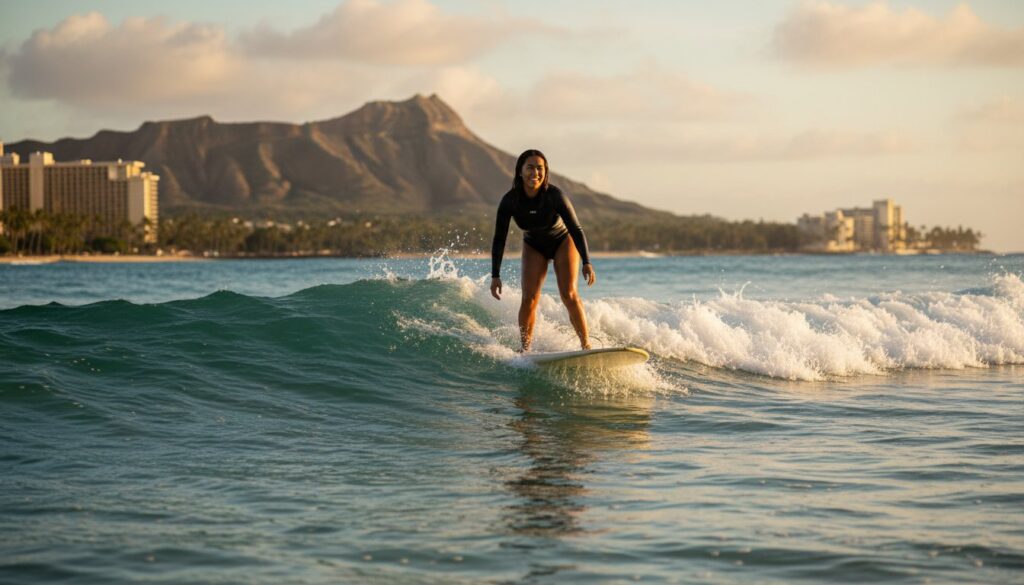
Waikiki surf lessons are widely regarded as the single best way to learn to surf, and for good reason: they pair patient, certified instruction with slow-rolling, beginner-friendly waves and the warm Hawaiian aloha spirit that puts first-timers at ease within minutes. Whether you have never touched a surfboard or you are shaking off years of rust, Waikiki surf lessons give you one of the most forgiving and welcoming ocean classrooms on the planet. In fact, Waikiki has been a global epicenter of surf culture since the early twentieth century, so learning here connects you to more than a century of surfing history. This guide goes further than any other resource online — covering pricing, scheduling, safety, kids’ lessons, ocean conditions, and every question you might ask before paddling out.
Why Waikiki Delivers the Best Surf Lessons in the World
Not every beach is equally suited to learning. Fortunately, Waikiki offers a rare combination of conditions that make it exceptional for newcomers of every age. Its south-facing shoreline receives long, slow-rolling swells — the ocean waves that travel toward shore before breaking — giving beginners several extra seconds to find their footing compared to steeper, faster breaks elsewhere. Meanwhile, the sandy bottom and shallow water reduce the risk of injury, which matters enormously for anyone stepping onto a board for the first time.
Gentle, Predictable Waves Built for Beginners
Because Waikiki’s reef and sandbar formations break up ocean swell before it reaches the shore, waves arrive smaller, slower, and more consistently than at most surf destinations. As a result, instructors can reliably time your takeoff, and you get far more attempts per session than you would at a steep, fast-breaking beach.
Warm Water Means No Wetsuit, No Hesitation
Water temperatures in Waikiki hover between 75 and 80 degrees Fahrenheit year-round, so a wetsuit is never necessary. This removes yet another barrier between you and the water. Consequently, you can focus entirely on the mechanics of standing up rather than managing cold, bulky gear.
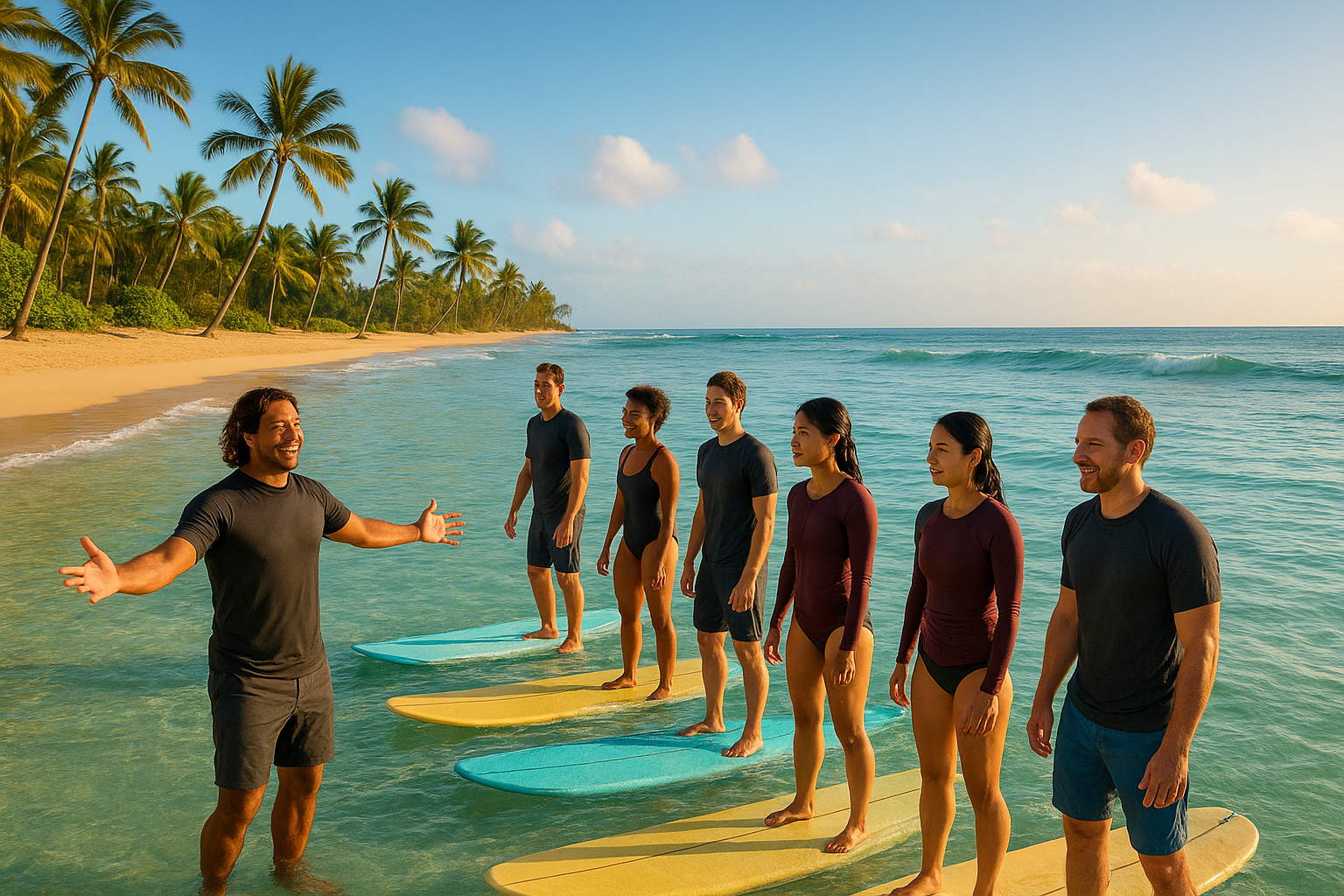
Waikiki’s gentle, warm waves create a forgiving environment where beginner surf lessons truly come to life.
Waikiki Surf Lesson Types and What They Cost
Before you book, it helps to understand exactly what formats are available. Most operators offer three tiers of Waikiki surf lessons, each suited to a different traveler:
- Group lessons ($40–$80 per person): Shared with 3–5 other students; social, affordable, and ideal for casual first-timers.
- Semi-private lessons ($70–$130 per person): Typically two students to one instructor, striking a balance between cost and personal attention.
- Private lessons ($100–$200): One-on-one coaching that accelerates your progress dramatically, especially if you have a specific goal like riding an unbroken wave by the end of your trip.
Because pricing and inclusions vary by operator, it is worth comparing packages directly. You can compare Waikiki surf lesson packages here to see current pricing, group sizes, and what is bundled into each option before you commit.
How to Choose the Best School for Your Waikiki Surf Lessons
With dozens of operators lining the beach, choosing wisely can feel overwhelming. However, five simple steps will narrow your options quickly and protect you from a disappointing booking.
- Assess your swimming ability honestly.
- Decide between group, semi-private, or private lessons.
- Research and compare local operators.
- Confirm exactly what is included in the price.
- Arrive prepared on lesson day.
Step 1 — Assess Your Swimming Ability First
Before booking any lesson, honestly evaluate your comfort level in open water. Most reputable Waikiki surf schools expect participants to swim at least 50 meters unassisted. Although the lesson area is shallow and instructors stay close, currents can occasionally shift, so basic swimming competency is non-negotiable for your safety.
Step 2 — Decide Between Group, Semi-Private, and Private Lessons
Group lessons remain the most popular choice because they are affordable and social. In contrast, private and semi-private options deliver more individualized coaching, which speeds up your learning curve considerably. If you only have one shot at this trip, paying more for focused attention is often worth it.
Step 3 — Research and Compare Operators
Once you know which format suits you, spend time comparing operators side by side. Look for schools whose instructors hold certifications from recognized bodies such as the International Surfing Association (ISA), the sport’s global governing federation. Certified instructors are trained not only in technique but also in water safety and emergency response, according to ISA’s official coaching standards. Additionally, pay attention to the student-to-instructor ratio — ideally no more than four or five students per instructor — and read recent reviews focused on patience, communication, and safety. Star Beach Boys is a well-regarded Waikiki surf school with experienced local instructors and a full range of lesson formats, and browsing their site gives you a clear benchmark for what a professional, organized operation looks like — including pricing, safety standards, and session inclusions. You can also browse all Waikiki surf lesson options to see how different packages stack up.
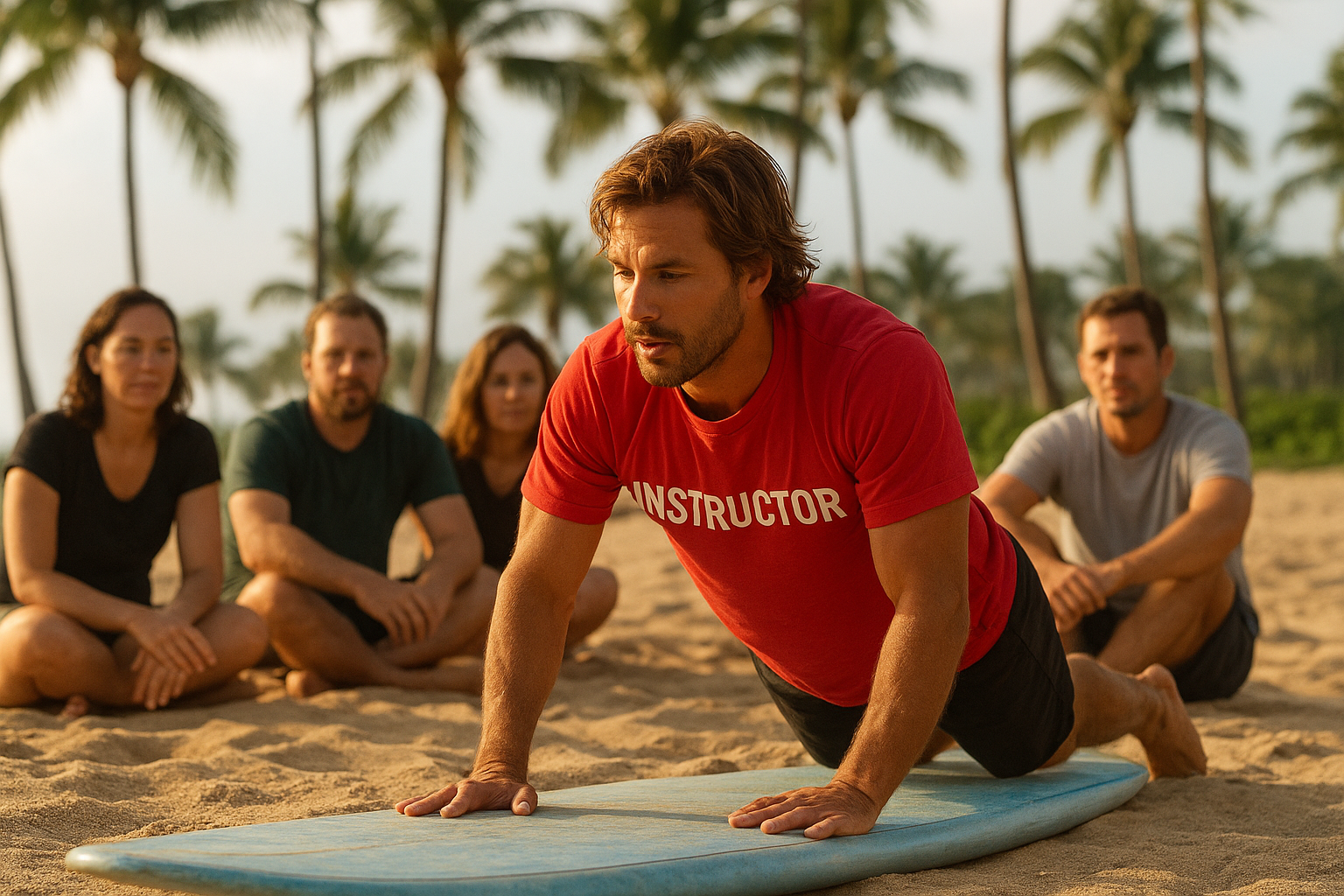
A thorough beach briefing is a hallmark of the best surf schools in Waikiki, covering stance, paddling, and safety before entering the water. For a deeper walkthrough, see our Best Surf Instructors in Waikiki.
What Happens During Your Waikiki Surf Lesson, Minute by Minute
Most surf lessons in Waikiki follow a clear, proven structure. Generally, you begin with a 15 to 20 minute beach briefing where your instructor covers paddling technique, how to read a wave, and the all-important pop-up — the motion of going from lying flat to standing on the board. This on-sand practice matters because it builds muscle memory before you ever touch the water.
Next, you move into the water for 45 to 60 minutes of hands-on riding. Your instructor will typically push your board into waves during the early stages so you can focus entirely on standing up rather than timing your paddle. Meanwhile, they call out corrections and encouragement from beside you. By the end of most beginner sessions, the majority of students have stood up on a wave at least once — a milestone that feels genuinely exhilarating.
Common Beginner Mistakes to Avoid
Even in ideal conditions, beginners tend to repeat the same handful of errors. For example, many students look down at their feet instead of fixing their gaze on the horizon, which throws off balance immediately. Others pop up too early or too late, missing the wave’s momentum entirely. Additionally, placing your feet too close together narrows your base of support and makes balancing far more difficult. A skilled instructor identifies and corrects these habits quickly, so staying attentive during the briefing will shorten your learning curve significantly.
Booking Smart: Timing, Pricing Hacks & Cancellation Policies
Booking in advance is almost always the smarter move, particularly during peak summer months when lesson slots fill quickly. Many schools offer early-bird discounts or multi-session package deals, so it always pays to ask. Furthermore, morning lessons — typically before 10 a.m. — tend to offer calmer conditions and fewer crowds in the water, which makes for a noticeably better experience.
Always confirm the cancellation policy before paying. Reputable schools offer a full refund or reschedule option if conditions turn unsafe. In practice, Waikiki’s south shore rarely sees dangerous surf for beginners, but weather-related cancellations do occasionally happen during winter storm swells.
Step 4 — Confirm What Is Included
Before finalizing your booking, verify exactly what the lesson fee covers. Most quality operators include the surfboard, a rash guard, and instruction. Some also provide reef-safe sunscreen and photographs of your session — a nice bonus for capturing your first waves. If gear rental is not included, factor that cost into your comparison.
Step 5 — Arrive Prepared on the Day
Plan to arrive at least 15 minutes before your scheduled start time. This allows you to complete any required waivers, apply sunscreen, and meet your instructor without feeling rushed. Bring a towel, a change of clothes, and a reusable water bottle, since staying hydrated matters when you are exerting yourself in tropical heat and saltwater.

Morning is the ideal time for surf lessons in Waikiki, when the ocean is calm and the beach is at its most peaceful.
Best Time of Day and Season for Waikiki Surf Lessons
Timing genuinely changes your experience. Early morning sessions, generally between 7 and 10 a.m., offer glassy water, lighter wind, and fewer swimmers in the lineup, so instructors can position you for more wave attempts per hour. As the day progresses, onshore wind tends to pick up and chop the surface, which makes balance slightly harder for first-timers.
Seasonally, Waikiki surf lessons run year-round, but summer months from May through September bring the calmest, most beginner-friendly south shore swells. Winter, by contrast, pushes larger north and west swells toward other parts of Oahu, occasionally adding a touch more size to Waikiki’s break — still manageable for beginners, but worth checking with your school if you are especially cautious. Reliable ocean and swell data is available through the National Oceanic and Atmospheric Administration (NOAA), which is a useful reference if you want to understand conditions before you travel.
Waikiki Surf Lessons for Kids, Seniors, and Every Fitness Level
One of the most overlooked strengths of Waikiki surf lessons is how well they adapt to different ages and fitness levels. Children as young as five or six can participate, typically on wider, more buoyant boards with shorter sessions matched to their attention spans. It is a fantastic family activity that creates lasting memories for parents and kids alike.
Similarly, older adults and travelers who are not in peak physical condition should not rule out a lesson. Because instructors push you into the wave and the paddling distances are short, most reasonably mobile adults in their sixties, seventies, and beyond can safely participate. If you have joint concerns or a health condition, simply mention it when booking so your instructor can adjust the pace and board selection accordingly.
Ocean Safety: What Every Waikiki Surf Lesson Should Teach You
Safety should never be an afterthought. Before you paddle out, a good instructor explains how to identify rip currents, how to fall safely away from your board, and how to signal for help if needed. Reef awareness also matters in Waikiki, since some areas have shallow coral close to the surface at low tide. Wearing reef-safe sunscreen protects both your skin and the marine ecosystem, and it is a detail the best schools insist on.
In addition, sun exposure is a real risk in Hawaii’s tropical latitude, so instructors typically recommend rash guards over sunscreen alone for extended sessions. If you want to understand general open-water safety principles beyond what your instructor covers, the rip current safety overview on Wikipedia is a useful primer worth reading before your trip.
Life After Your First Lesson: How to Keep Progressing
Many first-timers leave their lesson feeling hooked and eager to continue. If that sounds like you, consider booking a follow-up session before you leave Waikiki. A second lesson typically builds on the fundamentals — refining your pop-up, improving wave selection, and beginning to steer the board. Some schools offer multi-day progression packages structured specifically for this purpose.
Even a single session will give you a lasting appreciation for surfing as both a skill and a lifestyle. You can visit Star Beach Boys for additional resources on continuing your surf journey, including board rentals and guided sessions for returning visitors, or browse more Waikiki surf lesson guides and tips to keep learning between trips.
Quick Answer: The best Waikiki surf lessons are group, semi-private, or private sessions taught by certified instructors on Waikiki’s gentle south-shore break. They typically run 60 to 90 minutes, cost $40 to $200 depending on format, and suit all ages and fitness levels — no prior experience needed.
Frequently Asked Questions About Waikiki Surf Lessons
What are the best Waikiki surf lessons for complete beginners?
The best Waikiki surf lessons for beginners are group sessions held on the calm, shallow break at Waikiki Beach, where instructors provide hands-on coaching from sand to sea. Operators like Star Beach Boys offer structured beginner programs with certified instructors and all equipment included, designed to get you standing on a board in your first session.
How much do Waikiki surf lessons typically cost?
Group surf lessons in Waikiki generally range from $40 to $80 per person, semi-private lessons run $70 to $130, and private lessons cost $100 to $200 or more. Prices vary based on duration, group size, and school reputation, and booking a multi-session package often reduces the per-lesson cost.
How long does a Waikiki surf lesson last?
Most Waikiki surf lessons run between 60 and 90 minutes, including a 15 to 20 minute beach briefing and 45 to 60 minutes of in-water instruction. Some schools offer extended two-hour sessions for additional practice time.
Do I need to know how to swim for Waikiki surf lessons?
Basic swimming ability is strongly recommended before taking surf lessons in Waikiki. Most schools require participants to be comfortable in the water, though the lesson area is shallow and instructors stay nearby. Being a confident swimmer lets you focus on surfing rather than worrying about the water.
What should I bring to my Waikiki surf lesson?
Bring reef-safe sunscreen, a swimsuit, a towel, and a bottle of water. Most surf schools provide boards and rash guards, so you generally do not need your own equipment. Arriving a few minutes early also helps you get settled before the lesson begins.
Is Waikiki Beach a good place to learn to surf?
Yes, Waikiki Beach is widely considered one of the best places in the world to learn to surf, thanks to its consistently gentle, long-rolling waves and sandy bottom. The warm water and experienced local instructors make it ideal for first-timers of all ages.
What is the best time of year for Waikiki surf lessons?
Waikiki surf lessons run year-round, but summer months from May to September offer the calmest and most beginner-friendly wave conditions on the south shore. Winter months bring larger swells that suit intermediate and advanced surfers better.
Should I book a private or group surf lesson in Waikiki?
Group lessons suit most beginners, offering a social atmosphere and qualified instruction at a lower price. Private or semi-private lessons are worth the extra cost if you want faster progression, personalized feedback, or have specific physical or scheduling needs.
Are Waikiki surf instructors certified?
Reputable Waikiki surf schools employ instructors certified by organizations such as the International Surfing Association (ISA). Always confirm instructor credentials and ask about safety protocols before booking, since certification ensures training in both technique and water safety.
Can kids take Waikiki surf lessons?
Yes, many Waikiki surf schools offer lessons designed for children starting from age 5 or 6. Instructors use smaller, more buoyant boards and shorter sessions matched to younger attention spans, making it a fantastic family activity.
What common mistakes do beginners make in surf lessons?
Common beginner mistakes include looking down at the board instead of ahead, popping up too quickly, and placing feet too close together. A good instructor corrects these habits during the beach briefing and in-water coaching, and trusting that feedback is the fastest path to improvement.
Where do Waikiki surf lessons meet, and how do I find my instructor?
Most Waikiki surf schools meet directly on the beach near their storefront or beach shack, typically along the stretch between the Duke Kahanamoku statue and Kuhio Beach. Your booking confirmation will include exact meeting instructions, and instructors usually wear branded rash guards so you can spot them easily.
Can older adults or out-of-shape travelers take Waikiki surf lessons?
Yes, most reasonably mobile adults can safely take Waikiki surf lessons, since instructors push your board into the wave and paddling distances stay short. Simply mention any health concerns when booking so your instructor can adjust the pace and select an appropriately stable board.
How do I choose the right surf school in Waikiki?
Look for schools with certified instructors, strong online reviews, transparent pricing, and a low student-to-instructor ratio. Checking resources like Star Beach Boys can help you compare options and book confidently, and prioritizing safety standards and instructor experience will always lead you to the right choice.
Conclusion: Your Waikiki Surf Lessons Start Here
The best Waikiki surf lessons are more than a tourist activity — they are a genuine introduction to one of the world’s oldest and most joyful ocean sports. By choosing a certified instructor, understanding pricing and timing, respecting ocean safety, and arriving prepared, you give yourself the best possible chance of standing on a wave and feeling that unforgettable rush. Waikiki’s warm water, gentle waves, and deep surf heritage make it the ideal place to start. Book your Waikiki surf lessons today, trust the aloha spirit, and get ready to surf.