Teaching surfing techniques is both an art and a science — combining physical coaching, ocean knowledge, and the ability to inspire confidence in students of every background. Whether you are a professional surf instructor, a seasoned surfer mentoring a friend, or someone researching the best way to learn, understanding the core principles of effective surf instruction makes the entire journey safer, faster, and far more enjoyable. Furthermore, the right approach transforms a daunting first encounter with the ocean into a life-changing experience.
According to the International Surfing Association, surfing is now practiced by more than 35 million people worldwide — and that number continues to grow. As a result, the demand for structured, expert-led surf instruction has never been higher. In this guide, we break down every essential element of teaching surfing, from the very first land drill to reading ocean conditions like a pro.

A skilled instructor walks students through the pop-up technique on dry land before anyone enters the water — a cornerstone of effective teaching surfing techniques.
What Is Teaching Surfing Techniques?
Teaching surfing techniques is the structured process of guiding students through the physical skills, ocean awareness, and safety knowledge needed to ride waves confidently. It goes well beyond simply pointing someone toward the water. Effective instruction involves progressive skill-building, clear communication, and constant attention to each student’s individual pace and comfort level.
Specifically, great surf instruction covers paddling mechanics, the pop-up movement, stance, wave selection, ocean reading, and etiquette. Each element builds on the last, creating a logical progression that keeps students safe while accelerating their development.
Why Land Drills Come First
Before a student ever touches the water, the best instructors spend meaningful time on the beach. Land drills allow students to rehearse movements without the distraction and unpredictability of the ocean. Consequently, muscle memory forms faster, and the transition to actual waves feels far less overwhelming.
The pop-up — the explosive movement from lying flat to standing on the board — is the most critical skill to drill on land. Instructors typically guide students through this motion 10 to 20 times before any water entry. Additionally, paddling position and body placement on the board are practiced on flat ground so students understand the correct center of gravity before waves enter the equation.
Choosing the Right Equipment for Learners
Equipment selection is a critical part of surf instruction that is often underestimated. For beginners, foam longboards between 8 and 10 feet provide the stability, buoyancy, and forgiveness needed to build confidence. In contrast, shorter performance boards are unstable and frustrating for anyone still mastering the basics.
Instructors at starbeachboys.com carefully match each student with the appropriate board size based on height, weight, and experience level. This personalized approach removes unnecessary barriers and lets students focus entirely on skill development rather than fighting their equipment.
Step-by-Step Process for Teaching Surfing Skills
A well-structured lesson follows a clear, repeatable progression. Below is the exact sequence that experienced instructors use to move students from complete novice to confident wave rider.
- Safety and Ocean Awareness Briefing: Start every session on dry land. Cover rip currents, surf etiquette, leash use, and how to fall safely. Understanding the environment is non-negotiable before any student enters the water.
- Paddling Position and Technique: Have students lie on the board and practice the alternating arm stroke. Emphasize keeping the chest slightly raised, looking forward, and using full arm extension for maximum propulsion.
- Pop-Up Drill on Land: Guide students through the push-up-to-stance movement repeatedly on the beach. The motion should be one fluid explosive action — not a slow, multi-step process.
- Balance and Stance in the Whitewash: Move into shallow, broken waves. An instructor guides the board while the student practices standing, adjusting weight, and steering. This controlled setting builds real confidence quickly.
- Independent Wave Catching: Once consistent pop-ups and balance are demonstrated, encourage independent paddling into small waves. Instructors provide real-time feedback on timing, positioning, and weight distribution after each attempt.
This progression is consistent with guidelines published by the National Ocean Service, which emphasizes the importance of understanding ocean dynamics before recreational water activities. Similarly, reputable surf schools worldwide structure their lessons around this same logical build-up of skills.
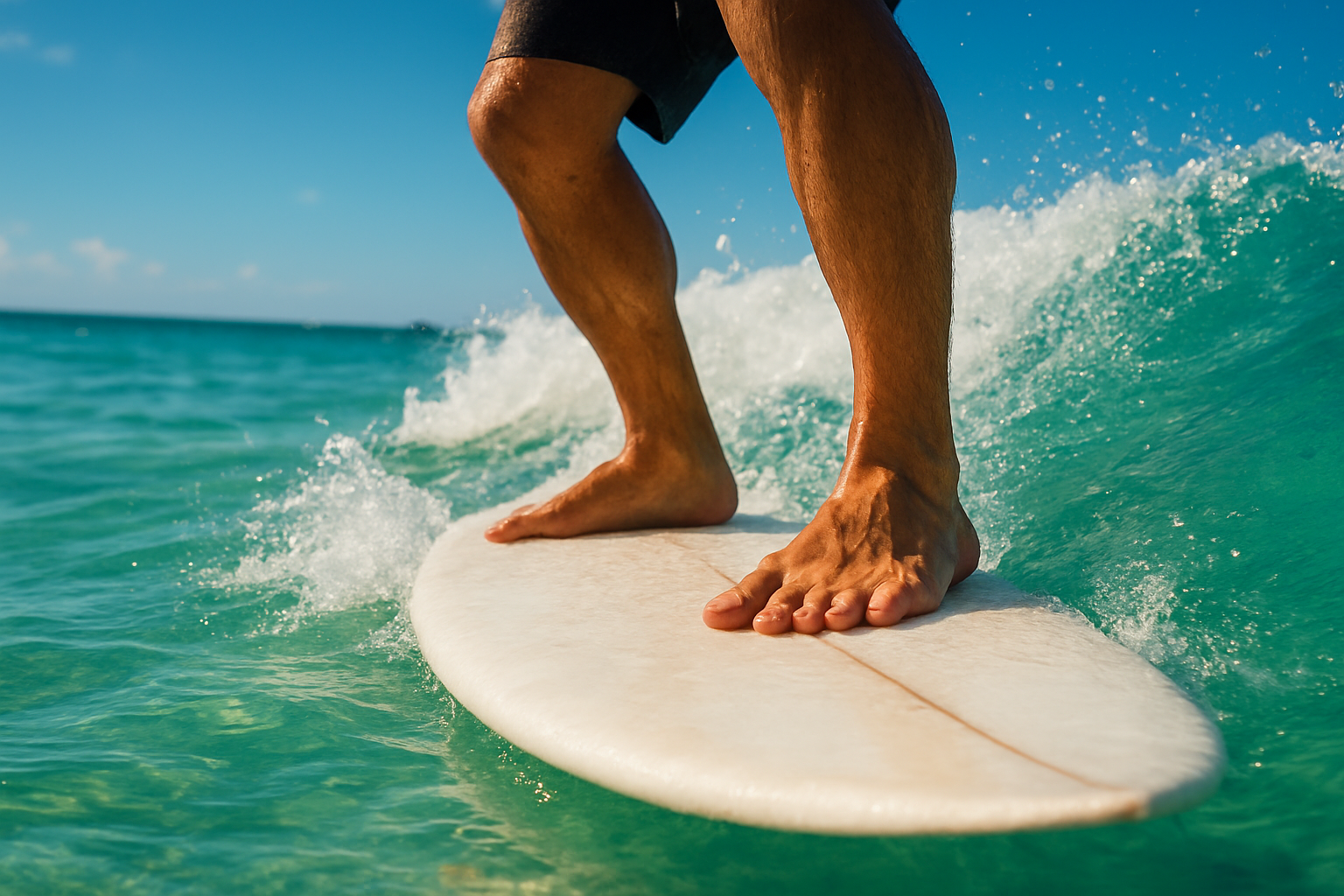
Proper foot placement and weight distribution are fundamental skills covered in every structured surfing lesson.
Mastering Paddling: The Foundation of All Surf Skills
Paddling is, without question, the most used skill in surfing. In fact, surfers typically spend 54% of their time in the water paddling, according to research published in the International Journal of Sports Physiology and Performance. Therefore, instructors who neglect paddling mechanics are setting their students up for unnecessary fatigue and missed waves.
Effective paddling requires the body to be centered on the board — not too far forward (which causes nose-diving) and not too far back (which creates drag). Arms should enter the water at full extension, pull through in a smooth arc, and exit cleanly near the hip. Above all, students should keep their head up and eyes forward to anticipate incoming waves.
Teaching Correct Stance: Regular vs. Goofy
One of the first questions instructors address is foot orientation. Regular stance places the left foot forward; goofy stance places the right foot forward. Neither is better — it simply reflects the student’s natural balance preference. A simple test: ask the student which foot they would put forward to slide across a slippery floor. That foot leads on the board.
Once stance is determined, instructors focus on foot placement. Feet should be shoulder-width apart, centered between the rails, with knees soft and arms extended for balance. Moreover, body weight should be distributed evenly to avoid rail-catching, which is one of the most common causes of wipeouts for new surfers.
Ocean Safety: A Non-Negotiable Part of Surf Instruction
Safety is woven into every element of quality surf coaching. However, it deserves dedicated attention as a standalone topic. Instructors must teach students how to identify and escape rip currents, how to fall safely, and how to behave responsibly in a shared lineup. For a deeper dive into this topic, our surfing safety tips every beginner must know covers these essentials in detail.
Falling correctly is a skill in itself. Students should always fall flat and away from the board, never diving headfirst into shallow water. When surfacing, covering the head with both arms protects against the board snapping back on the leash. These habits, when drilled early, prevent the majority of common surf injuries.
Teaching Wave Selection and Ocean Reading
Knowing which wave to catch — and when — separates improving surfers from frustrated beginners. Instructors teach students to observe sets from the shore before entering the water, identifying the break pattern, wave size, and any hazards. In particular, beginners should target slow-rolling whitewash waves that offer predictable, gentle rides.
As students progress, instructors introduce the concept of the peak — the highest point of an unbroken wave — and how to position themselves to catch it. This skill, combined with proper paddling timing, is what allows surfers to consistently catch waves rather than watching them pass by.
Progressing Beyond the Basics: Intermediate Surf Coaching
Once students can reliably pop up and ride whitewash, intermediate coaching introduces turning, trimming the board, and positioning in the open face of a wave. These skills require a more nuanced understanding of weight transfer and board dynamics. Consequently, intermediate sessions often feel like learning to surf all over again — but the progress is deeply rewarding.
If you are curious about how quickly these skills develop, our detailed breakdown of how long it takes to learn to surf provides realistic timelines based on lesson frequency and individual ability. Additionally, for those looking to accelerate their development, our complete expert guide to improving surfing skills quickly offers actionable strategies used by professional coaches.
Surf Training for Adults: It Is Never Too Late
A common misconception is that surfing is only for the young and athletic. In reality, adults of all ages and fitness levels can learn to surf with the right instruction and a progressive curriculum. Specifically, adult programs focus on building functional strength, improving flexibility, and developing water confidence at a comfortable pace. Our surf training for adults program is designed precisely for this audience.

With the right teaching surfing techniques, adults can experience the joy of riding their first wave in just a single lesson.
Surf Etiquette: The Social Side of Instruction
Teaching surf etiquette is just as important as teaching physical technique. The lineup — the area where surfers wait for waves — operates on an unwritten code of conduct. The surfer closest to the peak of the wave has right of way. Dropping in on someone else’s wave is disrespectful and dangerous. Similarly, paddling around the lineup rather than through it keeps the surf zone organized and safe for everyone.
Instructors who embed etiquette lessons early produce surfers who are welcomed in any lineup around the world. Furthermore, respectful behavior in the water reflects a deep understanding of surf culture — something that enriches the entire experience beyond the physical act of riding waves.
Frequently Asked Questions About Teaching Surfing Techniques
What are the most important teaching surfing techniques for beginners?
The most important teaching surfing techniques for beginners include proper paddling form, the pop-up movement, correct stance, and ocean awareness. Starting on land with dry drills before entering the water helps students build muscle memory safely and efficiently.
How long does it take a beginner to learn to surf?
Most beginners can stand on a board and ride a wave within their first one to three lessons. However, developing consistent technique and confidence typically takes several weeks of regular practice.
What is the correct surfing stance?
The correct surfing stance places feet shoulder-width apart, knees slightly bent, and arms out for balance. Regular stance means left foot forward; goofy stance means right foot forward — and neither is superior.
How do surf instructors teach the pop-up technique?
Surf instructors typically teach the pop-up on the beach first, using a board on flat ground. Students practice the explosive push-up motion repeatedly until it becomes automatic before attempting it in the water.
What safety rules should be taught before surfing?
Key safety rules include always wearing a leash, never surfing alone, learning surf etiquette, understanding rip currents, and knowing how to fall safely. These fundamentals protect both the student and everyone else in the water.
What board size is best for teaching beginners?
Longboards or foam boards between 8 and 10 feet are ideal for beginners because they offer more stability and buoyancy. A larger surface area makes it easier to paddle, balance, and catch waves without fighting the equipment.
How do instructors choose the right wave for a beginner?
Instructors select small, slow-breaking whitewash waves for beginners because they are predictable and gentle. As students progress, instructors gradually introduce them to slightly larger and more dynamic waves to build confidence incrementally.
Why is paddling technique so critical in surfing?
Paddling is the foundation of surfing because it determines how efficiently a surfer catches waves. Poor paddling form leads to fatigue, missed waves, and frustration, so instructors prioritize it from the very first lesson.
Can adults learn to surf, or is it only for younger people?
Adults of any age can absolutely learn to surf with the right instruction and progression. Programs tailored to adult learners focus on building strength, balance, and confidence at a comfortable, sustainable pace.
How do instructors teach surfers to read ocean conditions?
Instructors teach students to observe wave sets, identify rip currents, and assess wind direction before entering the water. Understanding ocean conditions is a skill that develops progressively over time with guided observation and experience.
What is surf etiquette and why does it matter?
Surf etiquette is the unwritten code of conduct in the lineup, including right-of-way rules and not dropping in on another surfer’s wave. It matters because it keeps everyone safe and ensures a respectful, enjoyable experience for all surfers sharing the break.
How should a beginner fall off a surfboard safely?
Beginners should fall flat and away from the board, never diving headfirst into shallow water. Covering the head with both arms when surfacing protects against the board rebounding on the leash and striking the surfer.
Conclusion: The Power of Teaching Surfing Techniques the Right Way
Teaching surfing techniques effectively requires a thoughtful blend of structured progression, clear communication, genuine patience, and deep respect for the ocean. When instructors invest in each of these elements, students don’t just learn to surf — they develop a lasting connection with the sea that enriches their lives for years to come. From the very first land drill to riding an unbroken wave independently, every step of the journey matters. Whether you are exploring ways to improve your surfing skills quickly or stepping into the water for the very first time, the right instruction makes all the difference. The team at starbeachboys.com is dedicated to delivering exactly that — expert-led, personalized surf coaching that turns ocean dreams into confident, wave-riding reality.