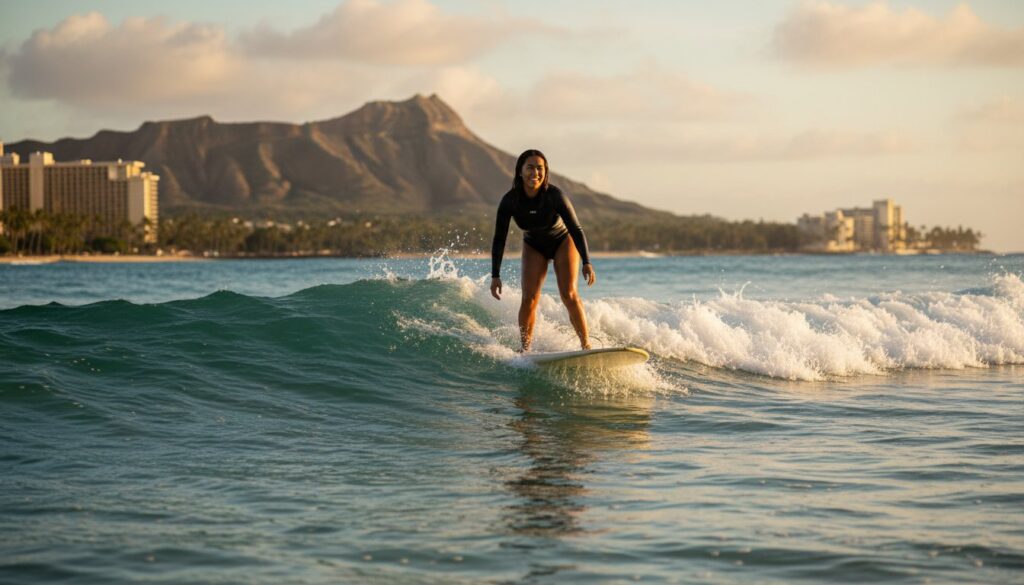
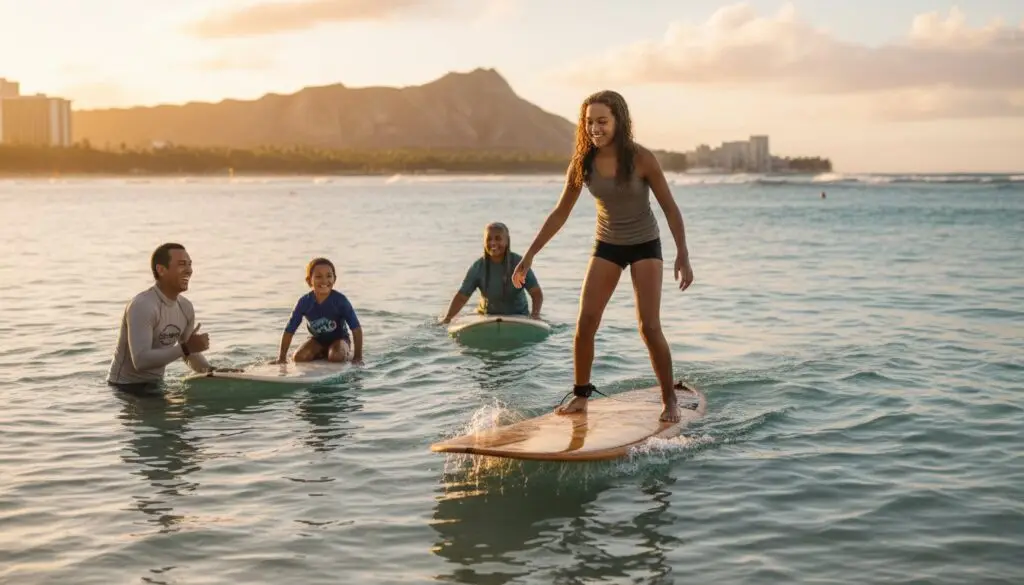
Surfing vacations Waikiki are widely considered the gold standard of learn-to-surf holidays — warm turquoise water, long-rolling waves, and a beach culture rooted in over a thousand years of Hawaiian tradition. For further reading, see our Waikiki surf guide. Whether you want a single morning session or a multi-day surf program that genuinely transforms your ability in the water, Waikiki delivers every element a surfer needs to thrive. This complete guide covers everything: the best surf breaks, how to choose the right lesson package, what to pack, how much to budget, and why this iconic stretch of Oahu coastline outperforms every other surf destination on the planet.
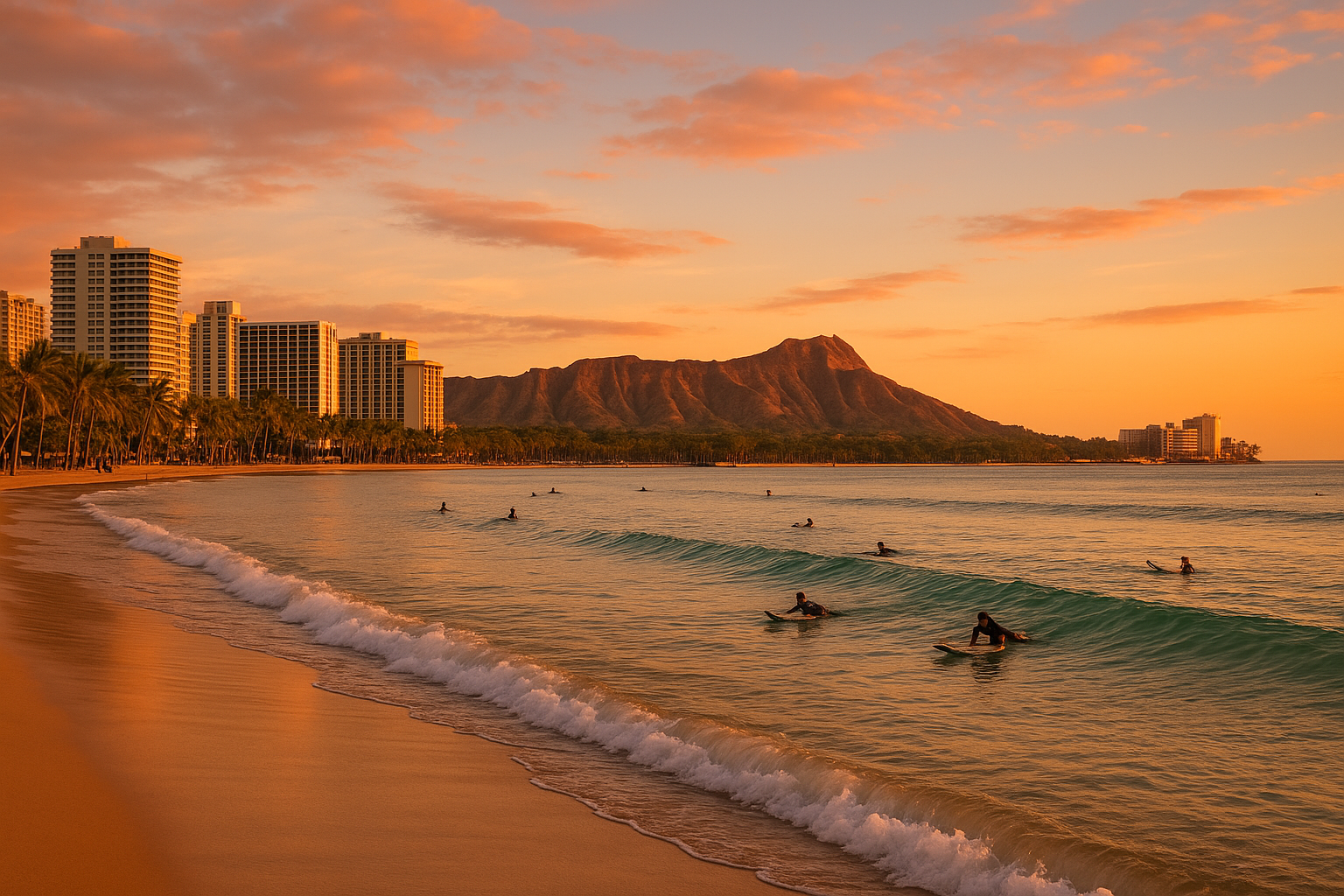
Waikiki’s gentle, long-rolling waves and iconic Diamond Head backdrop make it the world’s most welcoming surf destination for all skill levels.
Why Waikiki Is the World’s Best Place for a Surfing Vacation
Not every surf destination is welcoming to newcomers. Waikiki, however, is genuinely different. The reef and ocean floor geometry here produces wide, slow-rolling swells that give beginners ample time to find their footing — and enough length to actually enjoy the ride. According to the Hawaii Tourism Authority, water sports and beach activities consistently rank among the top motivators for choosing Oahu as a vacation destination, and surfing sits at the very top of that list.
Furthermore, the water temperature holds between 75°F and 80°F (24°C to 27°C) year-round. That means no wetsuit, no cold shock, and no barrier between you and the ocean. Wide sandy beaches, active lifeguard patrols, and professional surf schools operating directly on the sand round out a setup that is almost impossible to replicate elsewhere.
Above all, Waikiki is the birthplace of modern surfing. Ancient Hawaiians — known as kanaka maoli — practiced he’e nalu (wave sliding) on these shores for centuries before the sport spread globally. When you paddle out here, you’re joining a tradition that stretches back over a thousand years.
Key Surf Breaks Along Waikiki’s Shoreline
Waikiki’s main beach contains several distinct named breaks, each suited to a different skill level. Knowing which break matches your ability makes your surfing vacation far more productive — learn more about specific Waikiki surf breaks and where to practice.
- Canoes — The premier beginner break. Named after the outrigger canoe surfing that still happens here, Canoes produces long, gentle waves that give first-timers enough time and space to stand up successfully.
- Queens — A slightly more powerful break that intermediate surfers favor for its longer, more shapely rides. It sits just down the beach from Canoes and rewards those who have mastered the basics.
- Populars (Pops) — A versatile, consistent break that works well for both intermediate and advancing surfers seeking reliable sets throughout the day.
- Ala Moana Bowls — Located just west of Waikiki proper, this break delivers a more challenging experience for experienced wave riders looking for something beyond the beginner zones.
- Number Threes — A lesser-known but enjoyable intermediate break that tends to be less crowded, making it a good option during peak tourist season.
Explore more about Waikiki’s surf culture and beach scene to discover what makes this coastline so extraordinary for surfers of every level.
Single Lessons vs. Multi-Day Surf Packages in Waikiki
One of the most important decisions you’ll make when planning surfing vacations Waikiki is whether to book a single lesson or a multi-day surf package. If you want a deeper breakdown of package types and outcomes, see learn to surf in Waikiki. Both options have real merit, and the right choice depends entirely on your goals, timeline, and current skill level.
Single Surf Lessons: Perfect for a Quick Taste
A one-time group lesson typically runs 60 to 90 minutes. It includes a 15-to-20-minute land-based safety and technique briefing followed by 45 to 60 minutes of in-water coaching with a certified instructor. This format suits travelers who have limited time or simply want to experience surfing once as part of a broader Hawaii holiday.
Group lessons generally cost $50 to $100 per person. Private one-on-one sessions run $150 to $250 per hour and are worth considering if you want focused, personalized feedback rather than a shared experience — see our private surfing lessons options for faster progress.
Multi-Day Surf Packages: Where Real Progress Happens
If your goal is to genuinely learn to surf — not just stand up once — a multi-day surf package is the smarter investment. Specifically, consecutive daily lessons allow instructors to build on what you learned the day before, correcting technique in real time and introducing new skills progressively. Explore our Waikiki surf lessons for lesson formats and schedules.
Most multi-day packages in Waikiki span two to five days and include a combination of group instruction, supervised practice sessions, and video analysis in premium programs. As a result, surfers who commit to a structured package consistently outperform those who attend sporadic single lessons.
What a Strong Multi-Day Surf Package Should Include:
- Daily in-water sessions with a consistent, certified instructor who knows your progression
- Land-based technique practice each day before entering the water
- Skill-level reassessment between sessions so instruction advances as you improve
- Equipment — foam longboard, leash, and rash guard — included in the package price
- Small group sizes (4 to 6 students maximum) to ensure individual attention
- Flexible scheduling that fits around your broader vacation itinerary
For a detailed breakdown of available lesson formats and how to match them to your goals, see the complete guide to finding surfing lessons in Waikiki.
How to Plan a Surfing Vacation in Waikiki: Step-by-Step
Planning a successful surf trip requires more than booking a flight. Therefore, follow these steps to make the most of every session on the water: See our guide to Waikiki surf breaks to match conditions to your skill level.
- Choose the right time to visit. Summer months (May through September) produce smaller south swells that are ideal for beginners. Winter months bring slightly larger surf that intermediate surfers enjoy more. Waikiki is, however, surfable and welcoming every month of the year.
- Decide between a single lesson and a multi-day package. If you have three or more days available, a multi-day package will deliver dramatically better results. Single lessons work well for time-pressed travelers; learn where to find good surf lessons. Book either option well in advance — spots fill quickly between June and August.
- Book a reputable best surf lessons before you arrive. Look for certified instructors, small group ratios, and verifiable reviews across multiple platforms. Reserve directly with the school so you can discuss your skill level and customize the experience before landing in Honolulu.
- Arrange accommodation near Waikiki Beach. Staying within walking distance means you can surf in the morning, rest, and return for an afternoon session without wasting time on transport. Hotels along Kalakaua Avenue put you directly in the heart of the action.
- Prepare your gear and essentials. Pack reef-safe sunscreen (legally required in Hawaii since 2021), a rash guard, comfortable swimwear, and a reusable water bottle. Most surf schools supply boards and equipment — confirm with your provider so you don’t pack unnecessary extras.
- Attend every session and practice the fundamentals. Arrive on time. Pay close attention to the land-based safety briefing. Practice the pop-up technique before entering the water. Consistency across consecutive days will accelerate your progress faster than anything else.
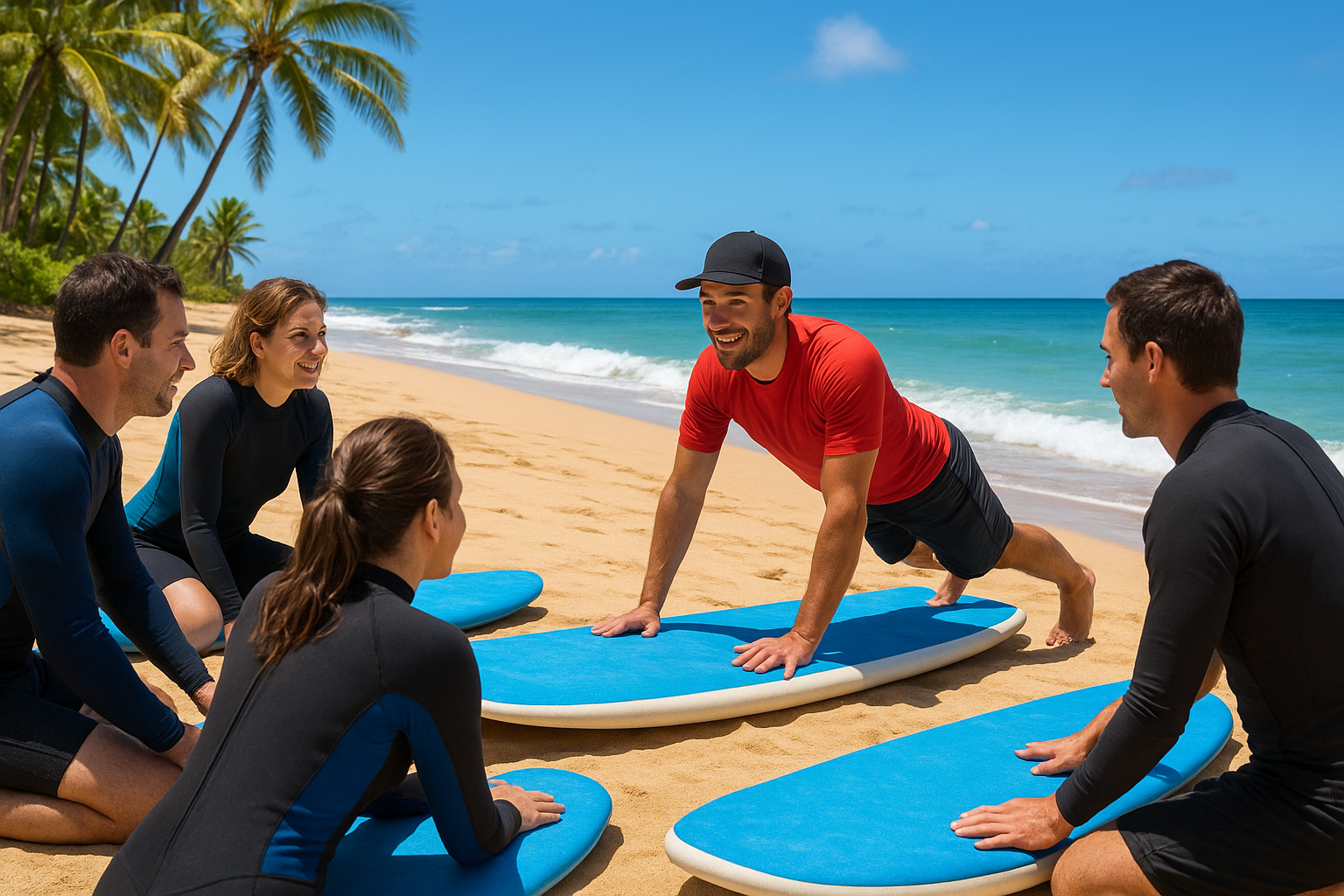
Professional surf instructors at Waikiki walk every student through on-land technique before entering the water — a critical step that builds confidence and ocean safety awareness.
Choosing the Right Surf School for Your Waikiki Vacation
Not all surf schools are equal. Specifically, look for these qualities when selecting a provider for your Waikiki surf experience:
- Certified instructors with recognized surf coaching credentials and current water safety certifications — not just enthusiastic surfers.
- Small instructor-to-student ratios — ideally 4 to 6 students per instructor for group lessons so every participant gets meaningful attention.
- Comprehensive safety briefings covering ocean awareness, rip current identification, board etiquette, and right-of-way rules before anyone enters the water.
- Positive, verified reviews from past students across multiple independent booking platforms — not just testimonials on the school’s own website.
- Programs for all skill levels, from absolute beginners on foam longboards to intermediate surfers refining specific techniques like bottom turns and cutbacks.
- Multi-day package options with structured skill progression rather than simply repeating the same beginner content each day.
Star Beach Boys meets all of these criteria. Operating directly on Waikiki Beach, the school’s highly trained instructors deliver personalized coaching in a structured, safety-first environment. Whether you’re a complete beginner or an intermediate surfer sharpening specific techniques, programs are designed to build ability progressively — and ensure every session is genuinely exhilarating.
What Skill Level Progression Looks Like Across Multiple Days
Day one focuses on the fundamentals: paddling technique, reading waves, and the pop-up. By day two, most students are catching unbroken whitewater waves consistently. Day three and beyond introduces positioning, timing, and the first elements of turning — skills that turn a tentative beginner into a confident, self-sufficient surfer.
In contrast, a single lesson leaves most participants at day-one level with no structured path forward. Consequently, multi-day packages represent far better value for anyone serious about learning to surf during their Waikiki vacation.
Family-Friendly Surf Experiences in Waikiki
Waikiki is exceptionally well-suited for family surf vacations. Many surf schools offer lessons for children as young as five, and the calm, shallow waters near shore create a genuinely safe learning environment for young surfers. Parents and kids can take lessons together — making surfing a shared family milestone rather than a solo activity.
In addition, Waikiki’s broader beach environment offers plenty of non-surfing options between sessions — snorkeling, outrigger canoe rides, beachside dining, and the iconic Duke Kahanamoku statue — so every family member stays happy even on rest days. For family-focused lesson plans and kid-friendly scheduling, see family surf lessons.
Surfboard Rentals, Gear, and Reef-Safe Sunscreen in Waikiki
Experienced surfers who prefer to paddle out independently will find surfboard rentals in Waikiki widely available along the beach. Rental rates typically range from $15 to $30 per hour, depending on board type and provider. For rental locations and tips, see surfboard rentals.
When renting, bring your own reef-safe sunscreen. Hawaii’s reef-safe sunscreen law, effective since January 2021, bans sunscreens containing oxybenzone and octinoxate — chemicals proven to harm coral reef ecosystems. This is both a legal requirement and a meaningful way to protect the very ocean environment you’re enjoying. Look for mineral-based formulas using zinc oxide or titanium dioxide instead.
Complete Packing List for Your Waikiki Surf Trip
- Reef-safe sunscreen — zinc oxide or titanium dioxide formula, SPF 30 or higher
- Rash guard — long-sleeve preferred for sun protection during multi-hour sessions
- Comfortable swimwear — board shorts or a one-piece that won’t shift in the water
- Reusable water bottle — staying hydrated in Hawaii’s heat is critical for performance
- Towel and dry bag — protect your phone and wallet while you’re in the water
- Light footwear for walking the beach and reef areas between sessions
- Snacks — especially for multi-day packages with back-to-back sessions
Most surf schools supply surfboards, leashes, and rash guards if needed — always confirm what’s included before your first session so you arrive fully prepared.
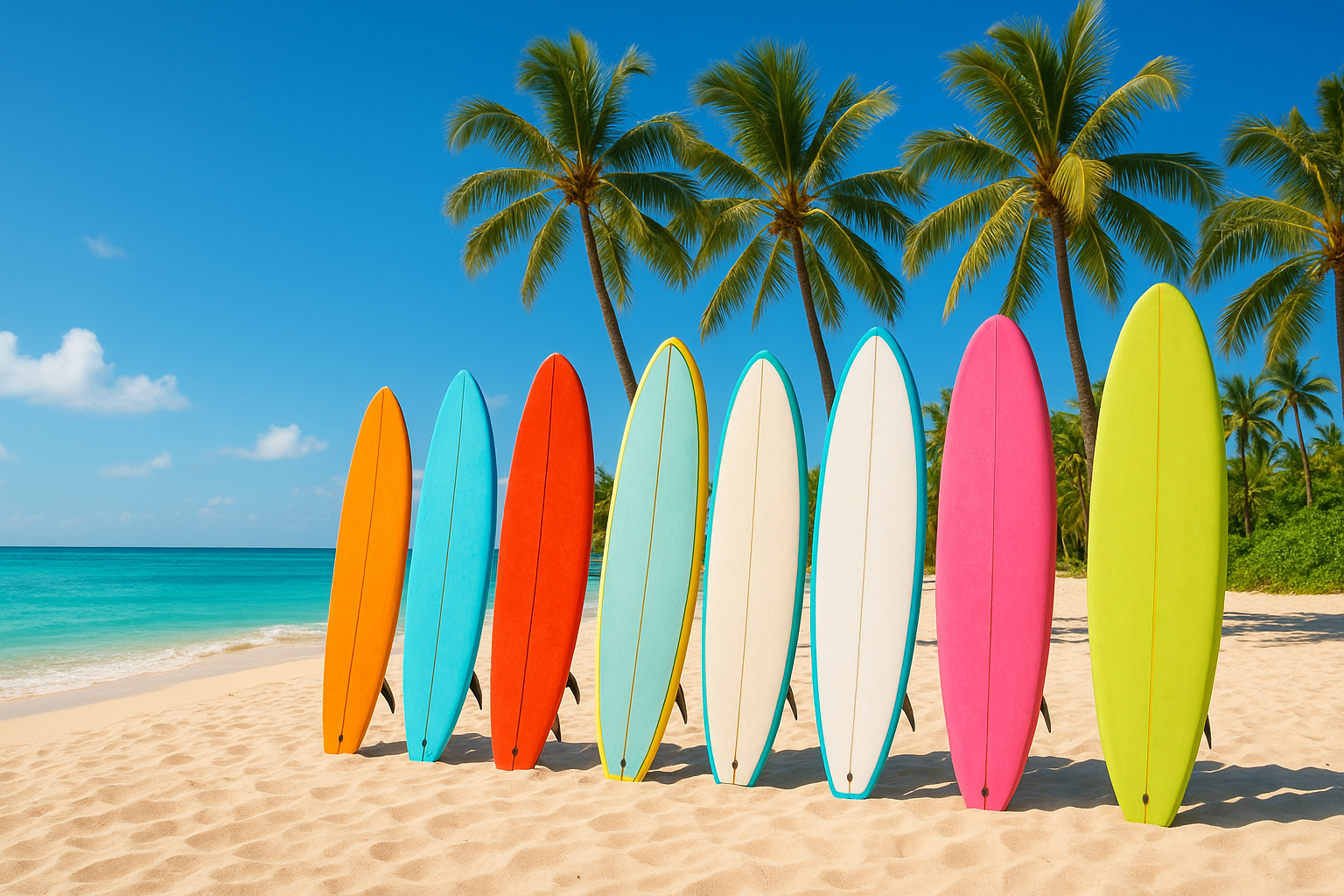
Surfboard rentals are readily available along Waikiki’s shoreline, giving experienced surfers immediate, flexible access to the waves.
The Cultural Legacy of Surfing in Waikiki
Understanding the cultural depth of surfing adds real meaning to any visit. Duke Kahanamoku, born in Honolulu in 1890, is widely credited with introducing surfing to the world stage. An Olympic swimming champion, Duke demonstrated surfing in Australia, the continental United States, and beyond — transforming a sacred Hawaiian practice into a global phenomenon. His bronze statue on Waikiki Beach, always adorned with fresh flower leis, stands as a permanent tribute to his legacy and to the sport’s Hawaiian roots.
Waikiki is, therefore, not simply a beach. It is the place where modern surfing culture was born, evolved, and shared with the world. When you take a surf lesson here, you’re participating in a living tradition that stretches back over a thousand years — and that sense of history makes every wave you catch feel genuinely extraordinary.
Beyond Surfing: What Else to Do During Your Waikiki Vacation
Surfing vacations Waikiki aren’t limited to time on the water. The surrounding area offers an extraordinary range of complementary activities that enhance your overall experience:
- Outrigger canoe rides — a traditional Hawaiian ocean experience that pairs beautifully with a surfing holiday
- Snorkeling at Hanauma Bay — one of Hawaii’s premier marine conservation areas, about 10 miles east of Waikiki
- Hiking Diamond Head Crater — a moderate trail offering panoramic views of Waikiki and the Pacific Ocean
- Stand-up paddleboarding (SUP) — a calmer, core-strengthening complement to surfing that builds useful balance and paddle skills
- Visiting the Bishop Museum — Hawaii’s foremost natural and cultural history museum, with dedicated exhibits on Hawaiian surf heritage
- Beachside dining — Kalakaua Avenue’s restaurants and food trucks offer everything from fresh poke bowls to shave ice, fueling your sessions between lessons
What to Expect From Your First Surfing Lesson in Waikiki
First-timers often arrive with a mix of excitement and nerves. Knowing exactly what to expect removes the uncertainty and lets you focus on the experience itself. Here’s how a typical beginner lesson at Waikiki unfolds:
On the sand (15–20 minutes): Your instructor introduces ocean safety — reading wave sets, identifying rip currents (channels of fast-moving water flowing away from shore), and understanding right-of-way rules in the lineup. For a complete overview of instruction options, consider our surf lessons in Waikiki. You’ll also practice the pop-up: the motion of going from lying flat on the board to standing in one fluid movement. Specifically, instructors focus on foot placement, body posture, and where to look (always toward the horizon, never down at the board).
In the water (45–60 minutes): Your instructor guides you into the whitewater (broken waves closer to shore) and pushes you into waves while coaching your timing. Most beginners stand up on their first or second attempt in Waikiki’s forgiving conditions. As a result, by the end of a 90-minute session, most first-timers have caught and ridden multiple waves independently. Learn about our family surf school options for kids and multi-person bookings.
Common Mistakes Beginner Surfers Make in Waikiki
Even in Waikiki’s forgiving conditions, beginner surfers make predictable errors. Recognizing them early saves significant frustration:
- Looking down at the board instead of the horizon — this throws off balance immediately and is the single most common cause of wipeouts for beginners
- Feet placed too close together — a narrow stance reduces stability; feet should be roughly shoulder-width apart in the center of the board
- Paddling with bent arms — efficient paddling requires long, deep strokes with extended arms; bent arms create drag and exhaust you quickly
- Standing up too early or too late — timing the pop-up to the exact moment the wave engages the board is a skill that improves dramatically across consecutive lesson days
- Grabbing the rails (sides) of the board during the pop-up — push directly down on the board’s deck instead for a clean, controlled stand
A qualified instructor identifies and corrects these habits immediately — which is precisely why taking at least a few lessons before paddling out independently is so strongly recommended, regardless of your athletic background.
Surfing Vacations Waikiki: Pricing and Budgeting Guide
Budgeting accurately for your Waikiki surf vacation helps you avoid surprises and ensures you can fit in the right number of sessions. Here is a realistic breakdown of what to expect:
Typical Waikiki Surf Lesson and Rental Costs
- Group surf lesson (1 session): $50–$100 per person
- Private surf lesson (1 hour): $150–$250 per person
- Multi-day group package (3–5 days): $150–$350 per person depending on session count
- Multi-day private package: $400–$800+ depending on duration and school
- Surfboard rental (per hour): $15–$30 depending on board type
- Surfboard rental (full day): $40–$75 at most beachside rental shops
Most schools include Surfboard Waikiki and basic equipment in lesson prices. However, always confirm what’s bundled — especially for multi-day packages — so you know exactly what you’re getting before committing.
In addition, factor in accommodation near the beach, reef-safe sunscreen (budget $15–$25 for a quality bottle), and post-surf meals. Staying on or very near Kalakaua Avenue gives you the shortest possible walk to the water, which matters more than it sounds across a week of daily sessions.
Frequently Asked Questions About Surfing Vacations in Waikiki
What makes surfing vacations Waikiki different from other surf destinations?
Surfing vacations Waikiki stand apart because of the combination of consistently gentle waves, warm year-round water, certified surf schools directly on the beach, rich Hawaiian surf heritage, and a welcoming beach atmosphere that suits every skill level. Few destinations in the world offer this many favorable factors in one place.
Do I need prior surfing experience to take lessons in Waikiki?
No prior experience is needed. Waikiki surf schools welcome absolute beginners and structure lessons to build confidence progressively. Most first-timers stand up on a board during their very first lesson, thanks to Waikiki’s uniquely forgiving wave conditions.
Should I book a single surf lesson or a multi-day package?
If your goal is to genuinely learn to surf, a multi-day package delivers far better results. Consecutive lessons allow instructors to build on your progress each day, introducing new skills progressively. Single lessons suit travelers with very limited time or those who simply want a one-time experience during a broader Hawaii holiday.
What is the best time of year for surfing vacations in Waikiki?
Waikiki is surfable year-round. Summer (May–September) brings smaller south swells perfect for beginners. Winter months can bring slightly larger, more energetic surf that intermediate surfers enjoy. Peak tourist season runs June through August, so book lessons well in advance if visiting then.
How long does a typical surf lesson in Waikiki last?
Most surf lessons in Waikiki run 60 to 90 minutes total — typically a 15-to-20-minute land-based safety and technique briefing followed by 45 to 60 minutes of in-water instruction with a certified instructor. Multi-day packages may include additional supervised practice time each day.
Is Waikiki safe for children to learn surfing?
Yes — Waikiki is one of the safest surf learning environments in the world for children. Waves are gentle, water is warm and clear, and reputable surf schools use foam boards and maintain close instructor supervision throughout every session. Many schools accept students as young as five years old.
How much does a surf lesson or package cost in Waikiki?
Group lessons typically run $50–$100 per person. Private lessons cost $150–$250 per hour. Multi-day group packages range from $150–$350 depending on the number of sessions. Multi-day private packages can reach $400–$800 or more. Surfboard rentals run $15–$30 per hour.
Can I rent a surfboard in Waikiki without taking a lesson?
Yes — surfboard rentals are widely available along Waikiki Beach for experienced surfers who prefer to paddle out independently. Rates range from $15 to $30 per hour depending on board type and provider. Foam longboards and fiberglass shortboards are both readily available.
What should I bring to a surf lesson in Waikiki?
Bring reef-safe sunscreen (legally required in Hawaii), a rash guard, comfortable swimwear, a reusable water bottle, and a towel. Most surf schools provide surfboards and leashes. Avoid wearing contact lenses in the ocean. Snacks are helpful for multi-session days.
Are there surf breaks in Waikiki for intermediate and advanced surfers?
Absolutely. While Canoes is the go-to beginner break, Queens and Populars offer longer, more shapely rides suited to intermediate surfers. Advanced surfers can explore Ala Moana Bowls for a more challenging experience. Number Threes is a less-crowded intermediate option worth knowing about.
How do I choose the right surf school for my Waikiki vacation?
Look for certified instructors, small group ratios (4 to 6 students maximum), strong safety records, positive independent reviews, and structured multi-day program options. Star Beach Boys on Waikiki Beach meets all of these standards and offers personalized coaching for every skill level.
What is the history of surfing in Waikiki?
Waikiki is widely regarded as the birthplace of modern surfing. Ancient Hawaiians practiced he’e nalu (wave sliding) here for over a thousand years. In the early 1900s, Duke Kahanamoku — Olympic champion and Waikiki native — introduced surfing to Australia and the mainland United States, cementing Waikiki’s permanent place in surf history.
Can families with young children enjoy surfing vacations in Waikiki?
Yes — Waikiki is one of the best family surf destinations in the world. Surf schools offer lessons for children as young as five, and the beach’s calm, shallow waters and active lifeguard patrols create a safe environment. Parents and kids can learn together, making surfing a shared family milestone.
What are the most common mistakes beginner surfers make in Waikiki?
The most common errors include looking down at the board instead of the horizon, placing feet too close together, paddling with bent arms, standing up too early or too late, and grabbing the board’s rails during the pop-up. A qualified instructor corrects these habits quickly — which is why at least a few lessons are strongly recommended before paddling out alone.
Conclusion: Start Planning Your Waikiki Surfing Vacation Today
In summary, surfing vacations Waikiki offer a combination of accessible waves, extraordinary cultural heritage, professional instruction, and tropical beauty that is genuinely impossible to replicate anywhere else. Whether you’re catching your very first wave at Canoes, progressing through a structured multi-day package, or refining your turns at Queens with an advanced coach, Waikiki delivers a surf experience that stays with you long after the tan fades. Therefore, if you’re ready to experience the ocean on its own terms — in the very place where surfing was born — start by booking your sessions with Star Beach Boys, a trusted surf school operating right on Waikiki Beach, and take the first paddle stroke toward the most exhilarating vacation of your life. Article by Star Beach Boys surf coaching team. Last updated: 2026-07-27.