Private Surfing Lessons Waikiki: The Complete Guide to Learning Fast
One-on-one coaching on Hawaii’s most iconic beach — everything you need to know before you book.
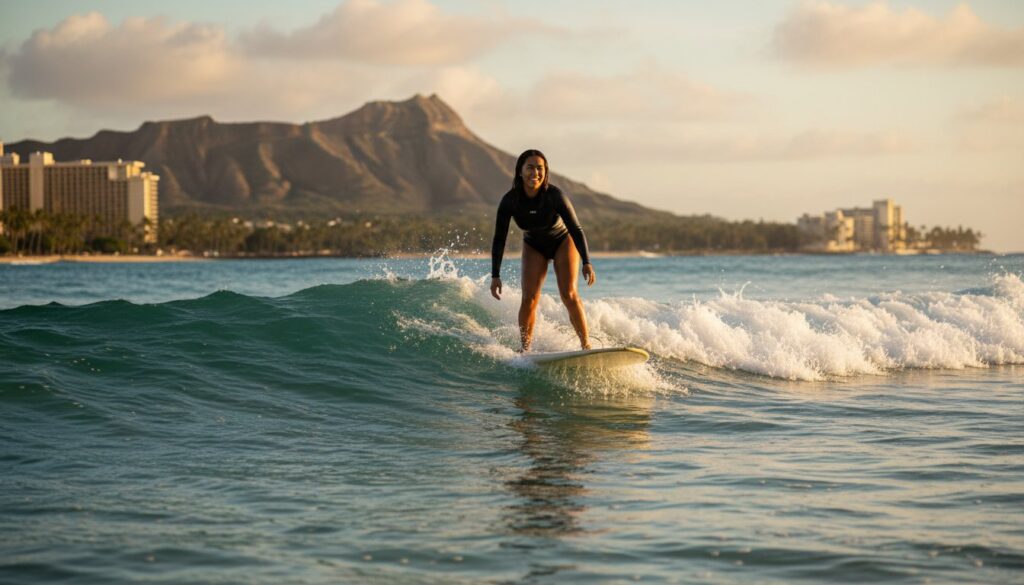
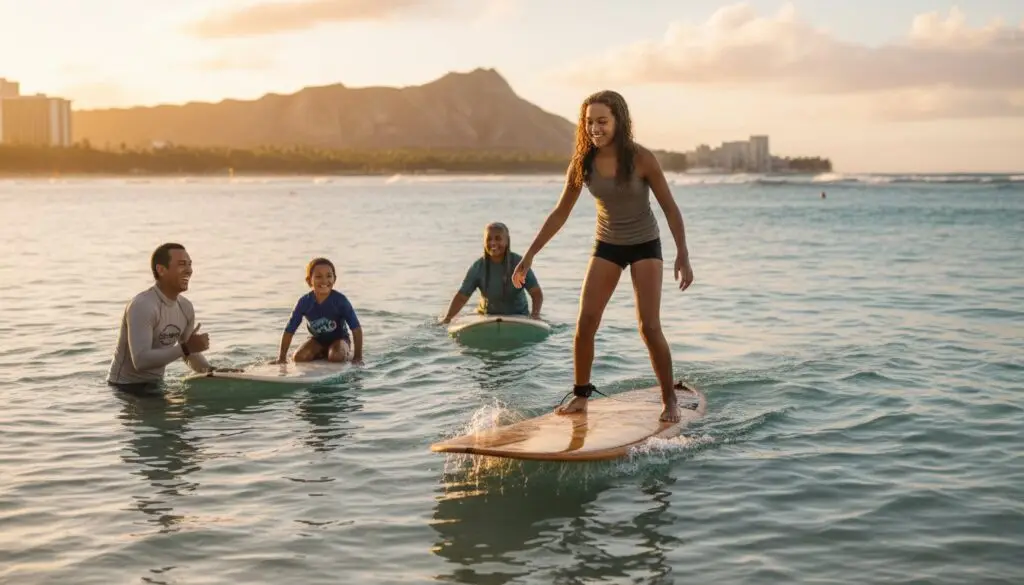
Private surfing lessons Waikiki are one-on-one coaching sessions held on Waikiki Beach, where a certified instructor devotes the entire session exclusively to your progress. Simply put, private surfing lessons Waikiki is the fastest, safest, and most effective way for any beginner or intermediate surfer to learn to surf in Hawaii. Most students stand up and ride their first wave during the very first session — a direct result of undivided coaching and Waikiki’s uniquely forgiving, long-rolling waves. Learn more: Private Surf Lessons Waikiki.
Private surf lessons in Waikiki deliver personalized, one-on-one instruction on one of the world’s best beginner surf beaches. Sessions run 60–90 minutes, cost roughly $100–$200 per person, and include board and rash guard. No experience is required — and nearly every student rides a wave on their first day. See broader lesson options: Hawaiian Surfing Lessons.
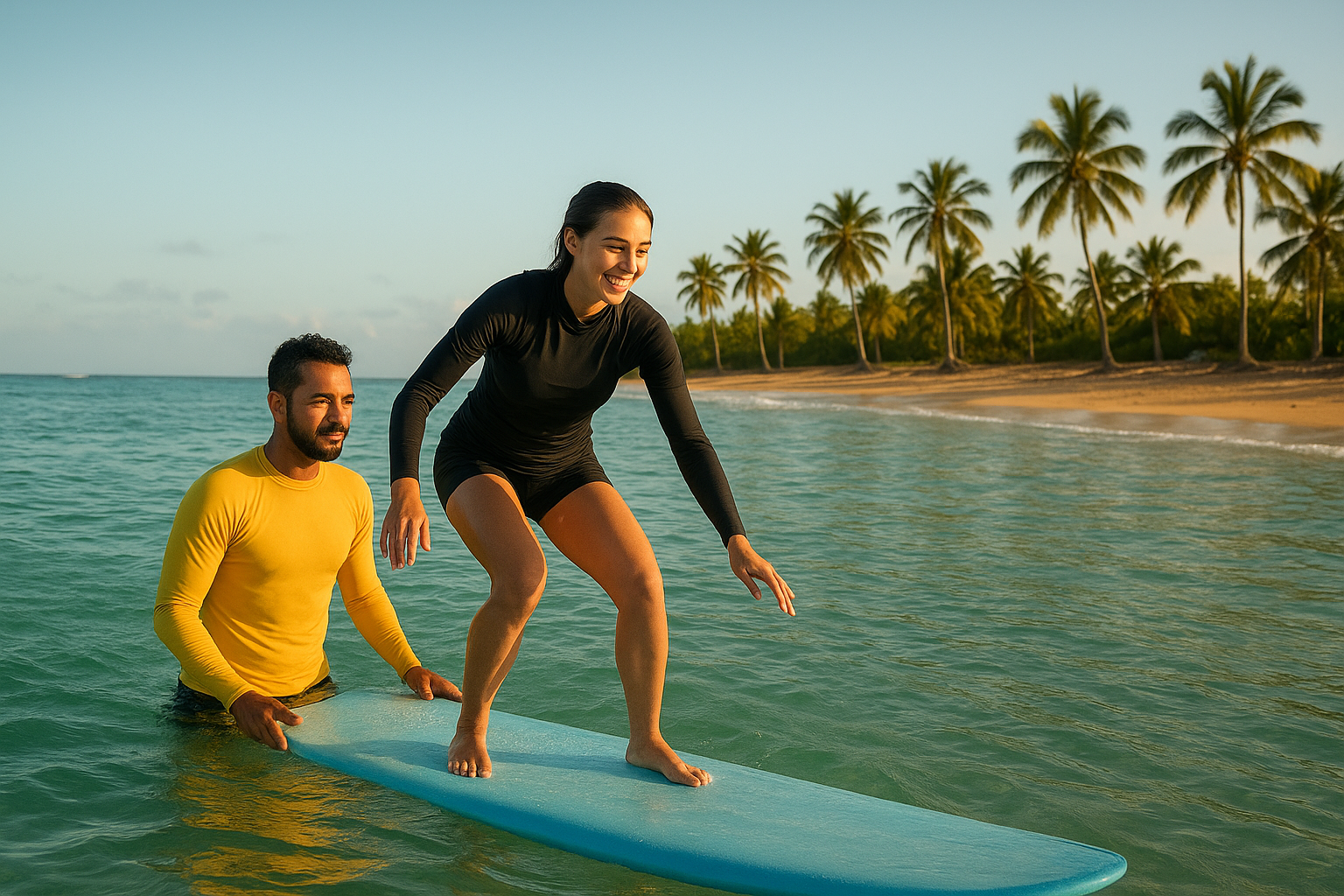
One-on-one instruction makes private surfing lessons at Waikiki dramatically more effective than group classes. See our Oahu surf lessons guide for detailed beginner drills and local wave tips.
What Are Private Surfing Lessons in Waikiki?
A private surfing lesson Waikiki is a structured, one-student-one-instructor session conducted directly on the water at Waikiki Beach. In contrast to group classes — where a single coach manages six or more students — a private lesson means every instruction, every push into a wave, and every piece of real-time feedback is aimed entirely at you.
Sessions are typically offered by licensed surf schools operating along the Waikiki beachfront. Furthermore, most reputable operators include soft-top longboard rental, a rash guard, and all beach safety equipment in the session fee — so you arrive, learn, and ride without needing to source any gear yourself.
Above all, the defining advantage of a private lesson is speed of progression. Research on motor skill acquisition consistently shows that targeted, immediate feedback shortens learning curves dramatically. In surfing terms, that means standing up and catching real waves on day one — not after three or four group sessions.
Why Waikiki Is the World’s Best Place to Learn to Surf
Waikiki’s offshore reef produces waves that are long, mellow, and remarkably consistent — a combination found almost nowhere else on earth. As a result, even complete beginners have a very high success rate during their first paddle-out. The waves break slowly and predictably, giving riders extra seconds to find their footing and balance.
Additionally, the water temperature hovers around 77°F year-round. No wetsuit is needed — removing one more barrier for first-timers who are already managing a lot of new information. In contrast to advanced breaks like Pipeline on Oahu’s North Shore, Waikiki’s gentle rollers let students focus entirely on technique rather than self-preservation.
Waikiki’s Historical Significance in Surfing
Waikiki Beach is widely regarded as the birthplace of modern surfing. For over a thousand years, Hawaiian royalty rode waves here on heavy koa wood boards. In the early 20th century, legendary waterman Duke Kahanamoku introduced surfing to the world from this very shoreline. Consequently, learning to surf at Waikiki isn’t just a vacation activity — it connects you to one of the oldest athletic traditions on earth.
Furthermore, the beach’s central location means hotels, restaurants, gear rentals, and transportation hubs are all within walking distance. Booking a private surf lesson here fits seamlessly into any Hawaii vacation itinerary without needing to rent a car or travel far from your resort.
Best Surf Spots Within Waikiki for Beginners
Waikiki Beach isn’t a single surf break — it’s a stretch of coastline with several distinct zones. Specifically, the most popular beginner areas include:
- Canoes: The most beginner-friendly break in Waikiki. Long, slow-rolling waves break far offshore, giving students maximum time to get to their feet. Most surf schools operate their lessons here.
- Queens: Slightly more advanced than Canoes, but still very manageable for first-timers. Good for students looking to progress after their first session.
- Populars: A reliable break popular with both beginners and intermediate surfers. Offers a bit more power than Canoes, making it an ideal next step.
- Castles: Located farther out, this break is better suited to intermediate and advanced surfers. However, it’s worth knowing about for your progression journey.
Your private instructor will select the most appropriate break based on that day’s conditions and your skill level. Therefore, you never need to worry about being placed in a spot that’s beyond your ability.
What Happens During a Private Surf Lesson at Waikiki?
A well-structured private surf lesson moves through three distinct phases. Understanding each phase in advance helps you get the most out of every minute you pay for.
Phase 1 — The Beach Briefing (10–15 Minutes)
Every private lesson begins on dry sand. Your instructor walks you through the pop-up technique (the explosive movement from lying flat to standing on the board), board positioning, paddling mechanics, and fundamental ocean safety. Because the lesson is private, every explanation is tailored to your fitness level, age, and any prior water experience.
Specifically, your instructor will teach you how to read incoming wave sets, how to position your body weight for maximum balance, and how to fall safely — a skill that protects you throughout your surfing life. Resist the urge to rush past this phase. The mental blueprint built on the sand is precisely what allows your body to execute automatically once you’re in the water.
Phase 2 — In the Water (45–70 Minutes)
Once in the ocean, your instructor positions you correctly on the board, reads incoming sets, and gives you a firm push at precisely the right moment. Meanwhile, they coach your stance, balance, and weight distribution in real time — adjustments that simply cannot happen in a group setting where the instructor must divide attention among six or more students.
Furthermore, your instructor monitors changing conditions throughout the session and repositions you at more suitable breaks if the surf shifts. This adaptive, moment-to-moment guidance is one of the most valuable aspects of private instruction that group lessons cannot replicate.
For intermediate surfers, in-water coaching focuses on refining specific skills: turning, cross-stepping on a longboard, reading wave shape for better positioning, and generating speed down the line. Consequently, a private lesson remains valuable well beyond the beginner phase.
Phase 3 — The Post-Session Debrief (5–10 Minutes)
The session closes with a structured debrief on the sand. Your instructor highlights what you executed well, identifies the one or two technical issues to prioritize, and outlines specific drills to practice independently. This feedback loop is one of the most underrated advantages of private coaching — it transforms a single lesson into a foundation for ongoing improvement.
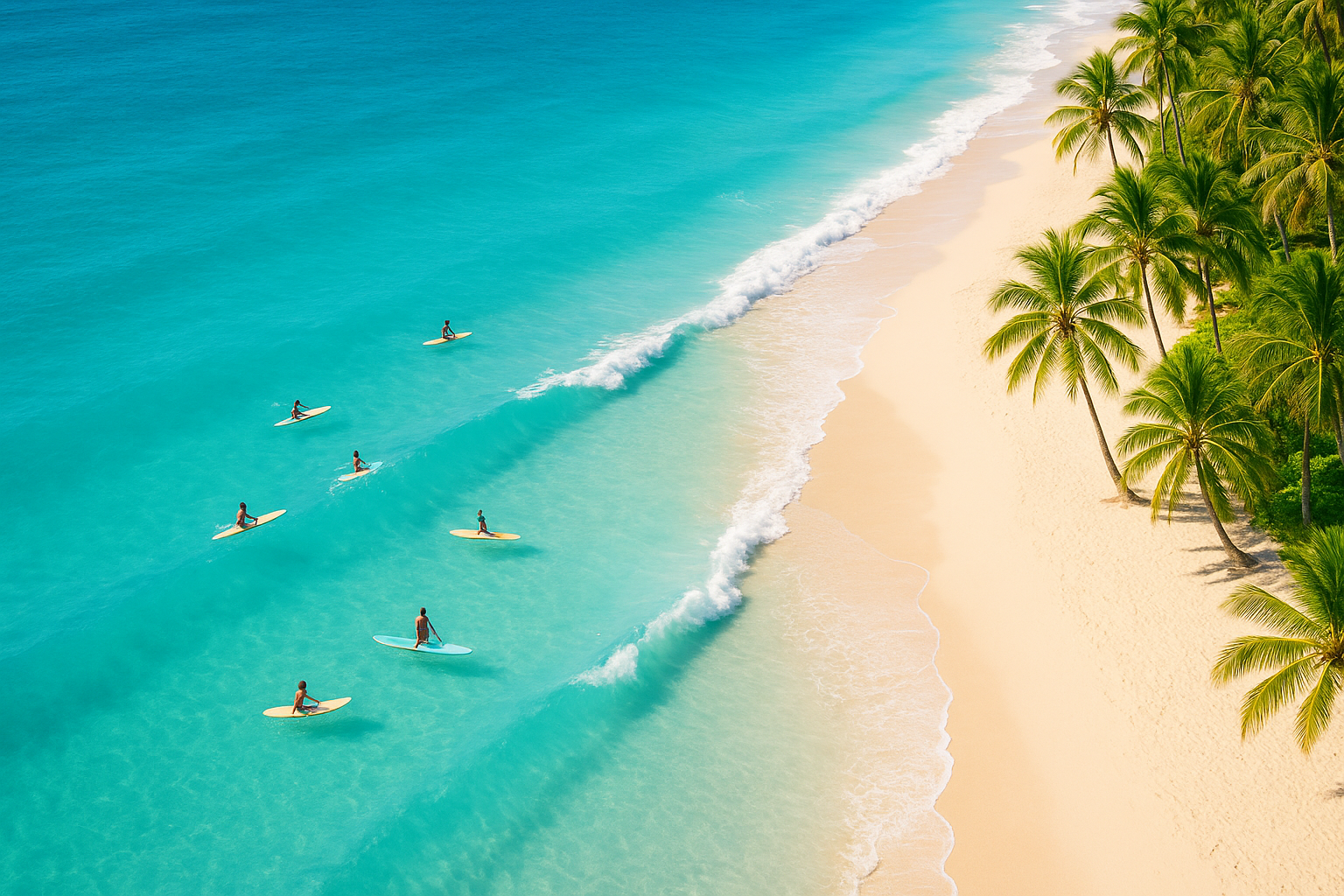
Waikiki’s long, rolling waves create ideal conditions for first-time surfers to build confidence quickly.
How to Prepare: 5 Steps Before Your Private Surf Lesson
- Choose a reputable, certified surf school. Read recent reviews on Google and TripAdvisor, confirm instructor certifications (look for WSA or similar credentials), and verify the school carries liability insurance. Established Waikiki operators like Star Beach Boys have multi-decade track records and experienced local instructors who grew up surfing these exact waves.
- Book at least 24 to 48 hours in advance. Private slots fill extremely quickly from June through August, and even shoulder-season spots go fast. Booking early also lets you choose your preferred time of day and instructor.
- Apply reef-safe sunscreen before you arrive. Hawaii state law bans oxybenzone and octinoxate sunscreens. Check your bottle before packing it. Additionally, wearing a rash guard — typically provided by your school — offers UV protection without any chemicals entering the reef ecosystem.
- Listen fully during the beach briefing. The on-sand phase is where instructors plant the mental blueprint for your pop-up and wave-reading instincts. Therefore, resist the urge to rush into the water — this phase directly determines how quickly you stand up.
- Commit fully to each wave. Hesitation is the single most common reason beginners miss rideable waves. Trust your instructor’s timing cues completely and go. The wave will do most of the work — your job is to execute the pop-up.
💡 Pro Tip: If you’re traveling with a partner or small family, a semi-private lesson — typically two to three students — can split the cost significantly while still delivering far closer instructor attention than a full group class. Most schools offer semi-private pricing that sits between private and group rates.
Private Surf Lessons vs. Group Lessons: A Detailed Comparison
Group lessons are a popular, budget-friendly option — and they work well for social learners. However, the trade-off is significant: in a standard group of six students, each person receives roughly ten minutes of direct instructor feedback during a one-hour session. The remaining fifty minutes are spent waiting, watching, or repeating errors without correction.
For travelers with limited vacation days, the efficiency of private instruction is invaluable. Additionally, private sessions are far easier to schedule around your personal agenda — including early morning slots before the beach fills up.
How Much Do Private Surfing Lessons in Waikiki Cost?
Private surfing lessons in Waikiki typically range from $100 to $200 per person for a 60–90 minute session. Pricing varies depending on the school’s reputation, the instructor’s experience level, and whether equipment rental is included. Most established operators bundle the soft-top longboard and rash guard into the session fee. Compare schools and value: Best Waikiki Surf Lessons.
What’s Typically Included in the Price
- Soft-top foam longboard — ideal for beginners due to its stability and safety
- Rash guard — protects against UV rays and board abrasion
- Full beach briefing — on-sand instruction covering pop-up technique, paddling, and ocean safety
- In-water coaching — instructor swims alongside you, pushes you into waves, and corrects technique
- Post-session debrief — personalised feedback on what to work on next
Is It Worth the Price?
Compared to group lessons, private sessions cost more upfront. However, when you calculate the effective coaching time — sixty uninterrupted minutes versus ten minutes in a group — the per-minute value of a private lesson is actually lower. Furthermore, faster skill progression means you may need fewer total lessons to reach a comfortable independent surfing level, which often saves money in the long run.
Common Beginner Mistakes — and How Private Instructors Fix Them Fast
Even on Waikiki’s forgiving waves, beginners consistently repeat a handful of predictable errors. Understanding them in advance helps you get more out of every minute in the water.
1. Looking Down at the Board
Looking down at your feet instead of the horizon is the single most common beginner error. Because your gaze directly controls your balance, this mistake causes the board to wobble and tip almost immediately. Private instructors correct it instantly by calling out a fixed landmark on the shoreline for students to focus on — a fix that often produces immediate, visible improvement.
2. Popping Up Too Slowly
The pop-up must happen in one explosive, fluid motion — not a slow, multi-stage climb. Slow pop-ups cause the nose of the board to dig into the wave, resulting in a wipeout before the ride even begins. Consequently, private instructors drill this movement on the sand repeatedly until it becomes muscle memory before students ever enter the water.
3. Feet Too Close Together
A narrow stance reduces stability dramatically. A shoulder-width stance with the back foot positioned over the fins gives riders far more control and allows for steering. Because a private instructor watches every single rep, this error is caught and corrected within the first few waves — rather than being reinforced through dozens of unmonitored repetitions.
4. Tensing Up and Gripping the Rails
Nervousness causes many beginners to tense their upper bodies and grip the side rails of the board during the pop-up. However, rigid arms disrupt balance and prevent fluid weight transfer. Specifically, instructors teach students to keep arms extended and relaxed — like a surfer on the face of a wave — which naturally stabilises the body during the pop-up movement.
5. Paddling at the Wrong Angle
Many first-timers paddle perpendicular to incoming waves, which makes catching them nearly impossible. Instead, the board should be angled slightly toward shore. As a result, the wave’s energy catches the tail of the board and propels the rider forward. Your private instructor will manage your positioning and angle on every single wave until this becomes intuitive.
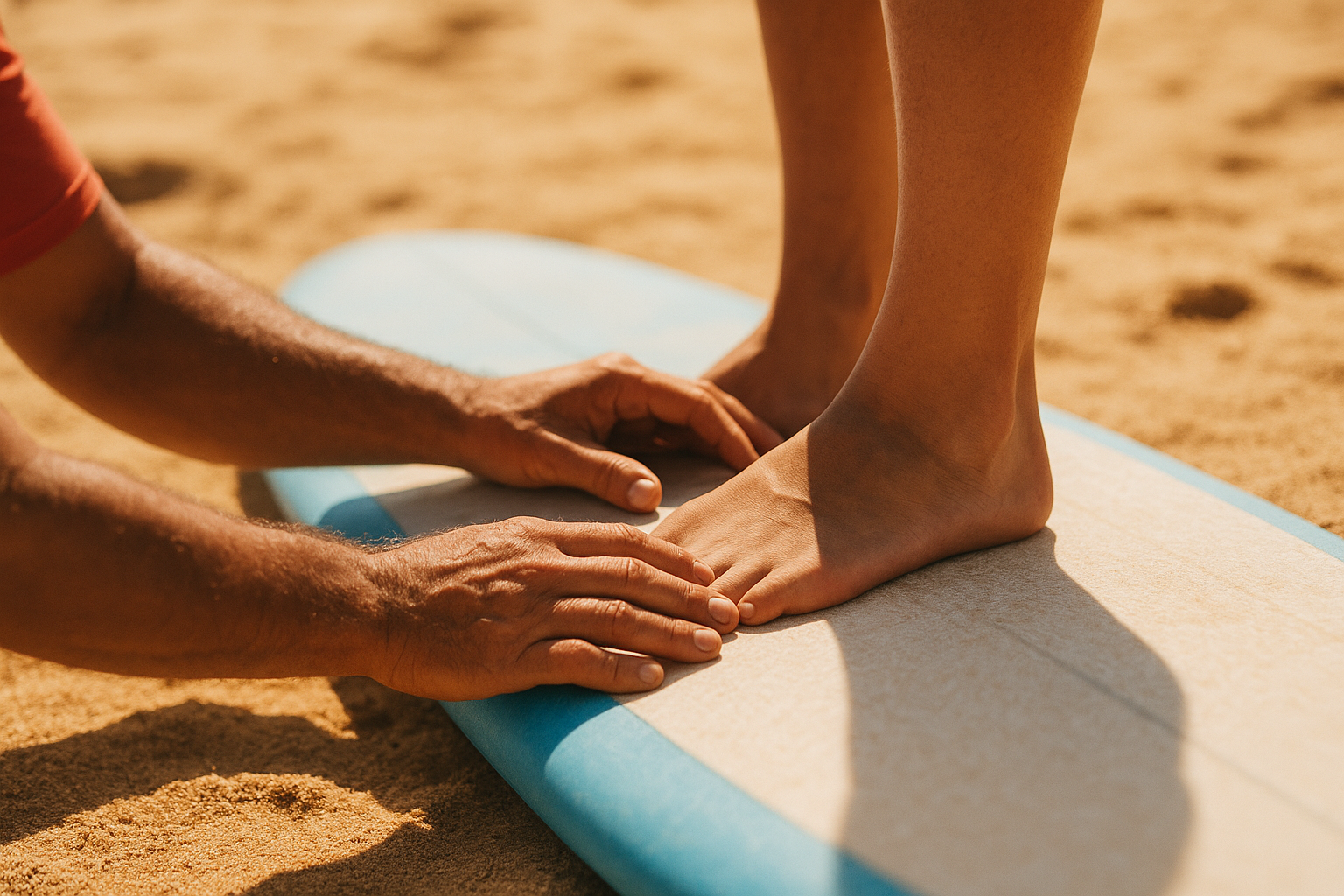
On-sand coaching before entering the water is a critical part of every private surf lesson at Waikiki.
Best Time of Day — and Best Season — for Private Surf Lessons at Waikiki
Optimal Daily Window
Early morning sessions between 7 AM and 9 AM are ideal for most students. The ocean surface is glassier, trade winds haven’t picked up yet, and the beach is far less crowded — meaning your instructor can work with you in a larger, uncongested break zone. In contrast, afternoon sessions can be windier and choppier, though Waikiki’s protected bay still keeps conditions very manageable.
Year-Round Surfing Season
Waikiki is a year-round surfing destination. However, summer months (May–September) produce smaller, south-swell waves that are particularly ideal for beginners and intermediate surfers. Winter months (November–February) bring slightly larger swells from the north, which are still very manageable at Waikiki’s protected breaks. Consequently, there is no bad time of year to book a private lesson here — conditions simply vary slightly.
📅 Peak Season Booking Note
June, July, and August are the busiest months on Waikiki Beach. Private lesson slots — especially early morning — sell out days in advance during peak season. Book at least 48 to 72 hours ahead to secure your preferred time.
Private Surf Lessons for Kids at Waikiki
Private surf lessons at Waikiki are an outstanding activity for children. Most reputable schools accept students from age 5 and up. Instructors use appropriately sized soft-top boards and keep young surfers in the shallowest part of the break zone at all times.
Furthermore, kids tend to progress exceptionally quickly — they have lower centers of gravity, less fear, and naturally athletic instincts. In many cases, children stand up and ride waves faster than adults during the same session. A private lesson for a child is therefore not just safe — it’s genuinely exhilarating and confidence-building.
For families, booking a private lesson for each child individually — or a semi-private lesson for two siblings — ensures each young surfer gets the focused attention they need without the chaos of a full group class.
What to Expect After Your First Private Session
After your first private lesson, most students feel a genuine sense of accomplishment — and an immediate urge to get back on the board. Therefore, many visitors book a second session for the following morning while their muscle memory is still fresh. Progress between lesson one and lesson two is often dramatic and highly motivating.
For those who catch the surfing bug, Waikiki’s consistent conditions make it a viable spot to practice independently between lessons. Board rentals are widely available along the beachfront, and the gentle break zone is safe for supervised solo practice once you have completed at least one professional session.
How Many Lessons Does It Take to Surf Independently?
Most students who take private lessons reach a confident, independently paddling and wave-catching level within two to four sessions at Waikiki. In contrast, students in group lessons often need six or more sessions to reach the same baseline. Specifically, the faster progression comes from real-time error correction on every wave — a compounding advantage that group lessons simply cannot match.
How to Choose the Right Surf School for Private Lessons in Waikiki
Not all Waikiki surf schools are equal. Here’s specifically what to look for when selecting a school for your private lesson:
- Verified instructor credentials: Look for instructors certified by the American Red Cross (water safety), WSA (World Surf Association), or equivalent. Ask directly if their instructors are certified — reputable schools answer immediately and clearly.
- Liability insurance: Any legitimate school operating on a public beach should carry liability insurance. This protects you in the unlikely event of injury.
- Recent reviews: Check Google and TripAdvisor reviews from the past six months. Look specifically for comments about private lesson quality, instructor attentiveness, and value for money.
- Instructor-to-student ratio guarantee: A true private lesson means one instructor and one student. Some schools advertise “private” but actually mean semi-private with two or three students. Confirm the ratio when booking.
- Equipment quality: Modern soft-top foam boards are far safer and more stable than hard fiberglass boards for beginners. Confirm the school uses appropriate beginner equipment.
- Local knowledge: Instructors who grew up surfing Waikiki know each break’s personality intimately — how it shifts with tides, swell direction, and wind. This local expertise translates directly into better wave selection and a more successful lesson for you.
Frequently Asked Questions About Private Surfing Lessons Waikiki
What are private surfing lessons in Waikiki?
Private surfing lessons Waikiki are one-on-one sessions with a certified surf instructor on Waikiki Beach, tailored entirely to your skill level and learning pace. Unlike group lessons, all coaching attention is focused exclusively on you throughout the entire session.
How long does a private surf lesson at Waikiki last?
Most private surf lessons at Waikiki last between 60 and 90 minutes. That window typically includes a 10–15 minute beach briefing on the sand and the remainder in the water with your instructor.
Do I need any experience to take a private surf lesson in Waikiki?
No prior experience is needed whatsoever. Private lessons are designed to meet you exactly where you are — whether you have never touched a surfboard or you are refining your turns and cross-stepping technique.
How much do private surfing lessons in Waikiki cost?
Private surfing lessons in Waikiki typically range from $100 to $200 per person for a 60–90 minute session. Pricing varies by school reputation, instructor experience, and whether equipment rental is included. Most top-tier schools bundle board and rash guard into the fee.
Why choose a private lesson over a group surf lesson at Waikiki?
Private lessons give you undivided instructor attention, real-time error correction on every wave, faster skill progression, and a schedule that fits your itinerary. Group lessons are more affordable but involve sharing instruction time — meaning each student receives roughly 10 minutes of direct coaching per hour.
What is the best time of day to take a private surf lesson at Waikiki?
Early morning sessions between 7 AM and 9 AM are generally ideal. The ocean surface is calmer, trade winds haven’t built yet, and the beach is less crowded — giving your instructor more space and better conditions to work with you.
Is Waikiki Beach good for beginner surfers?
Yes — Waikiki is widely considered one of the best beginner surf spots on earth. The waves are long, mellow, and consistent. The water is warm year-round. And the break is forgiving enough that most first-timers stand up and ride during their very first session.
What equipment is provided during a private surf lesson?
Most Waikiki surf schools include a soft-top foam longboard and a rash guard as part of the lesson fee. You typically only need to bring reef-safe sunscreen, a swimsuit, and water shoes if you prefer them.
How do I book private surfing lessons in Waikiki?
You can book directly through a local surf school’s website or visit the beach hut in person. Booking online in advance is strongly recommended, especially during peak travel months from June through August when private slots sell out days ahead.
Are private surf lessons safe for children?
Yes. Private surf lessons at Waikiki are safe for children from approximately age 5 and up. Instructors use age-appropriate boards and keep young surfers in the shallowest, gentlest part of the break zone. Kids often progress faster than adults due to lower centers of gravity and natural fearlessness.
What common mistakes do beginners make during surf lessons?
The most frequent errors include looking down at the board instead of the horizon, popping up too slowly, standing with feet too close together, tensing up during the pop-up, and paddling at the wrong angle to incoming waves. A private instructor corrects all of these in real time — significantly compressing the learning curve.
Will I actually stand up and surf during my first lesson?
Most students stand up and catch several waves during their very first private lesson at Waikiki. The combination of Waikiki’s gentle, consistent surf and one-on-one instruction creates optimal conditions for first-time success.
How many private surf lessons do I need before surfing on my own?
Most students reach a confident, independently functional surfing level within two to four private lessons at Waikiki. This is significantly faster than group lessons, where six or more sessions are often needed to reach the same baseline. Your private instructor will advise you specifically after each session.
Conclusion: Why Private Surfing Lessons at Waikiki Are Worth Every Dollar
For anyone visiting Hawaii with a desire to surf, private surfing lessons Waikiki represent the single most efficient investment you can make. The combination of one-on-one instruction, real-time error correction, and the world’s most forgiving beginner surf break produces results that group lessons — at any price point — simply cannot replicate. Moreover, the experience itself is unforgettable: catching your first real wave at the birthplace of modern surfing is a moment that stays with you long after you leave the island.
For a deeper walkthrough, see our Outrigger Canoe Club Honolulu: A Visitor’s Guide to the Real Waikiki Experience.
Whether you are a complete beginner, an intermediate surfer looking to refine your technique, or a parent booking an adventure for your children, private surfing lessons in Waikiki deliver a level of instruction, safety, and pure joy that no other activity on Oahu can match. Book early, arrive ready, and trust your instructor — your first wave is closer than you think.
Ready to Catch Your First Wave?
Private surfing lessons Waikiki are the fastest, most enjoyable way to experience one of Hawaii’s greatest traditions. Whether you’re visiting for a weekend or a full week, a one-on-one session with a local expert will be the highlight of your trip. For a deeper walkthrough, see our Star Beachboys Waikiki: The Ultimate Ocean Experience. This guide is written by a Star Beach Boys lead instructor — add an author bio, visible credentials, and a clear "Last updated" date at the top of the article.