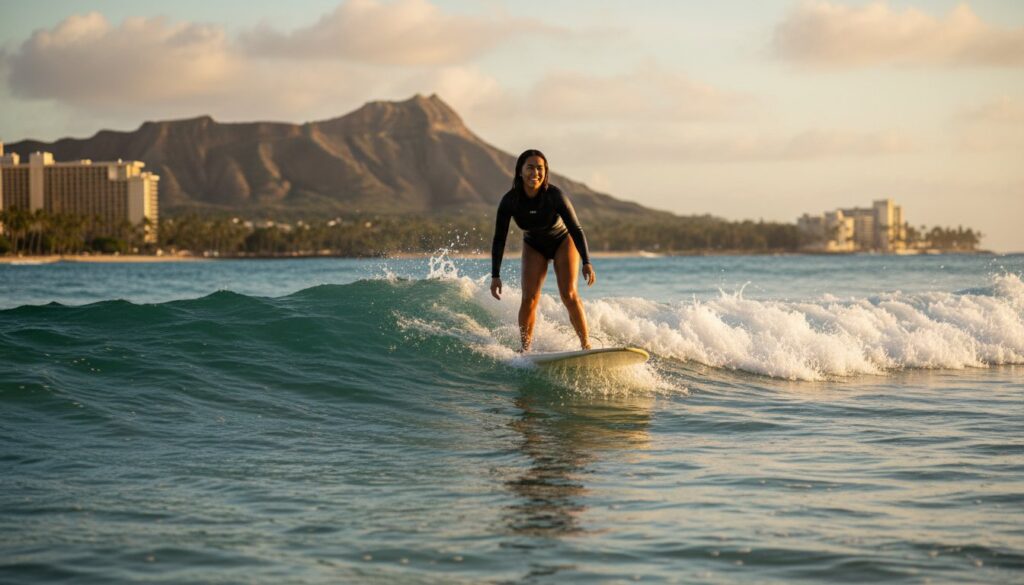
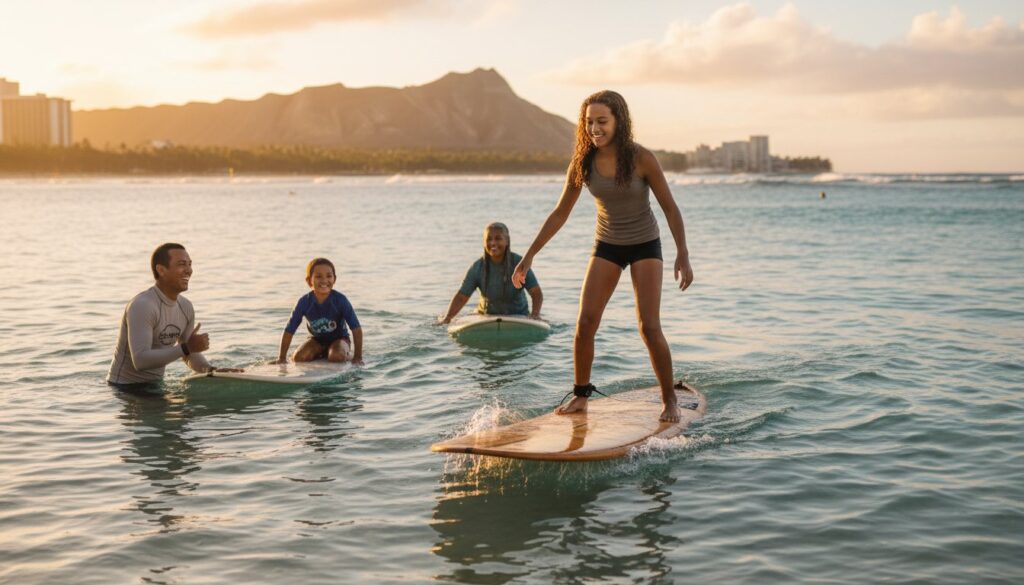
Wave riding lessons are structured, instructor-led surfing sessions designed to teach individuals of all ages and fitness levels how to safely and confidently ride ocean waves. Whether you have never touched a surfboard or you are looking to sharpen your technique, taking a proper lesson is the single fastest way to progress in the sport. In fact, studies from the Surf Industry Members Association suggest that first-time surfers who learn with a qualified instructor stand up on their board up to three times faster than those who attempt to self-teach.
Surfing is one of the world’s most beloved water sports, attracting millions of enthusiasts globally. However, it is also a skill that requires patience, physical coordination, and a genuine understanding of ocean dynamics. Therefore, investing in quality instruction from the very beginning sets the foundation for a lifetime of enjoyment on the water.
What Are Wave Riding Lessons and Who Are They For?
Wave riding lessons are organized surfing instruction programs led by certified coaches who teach students the fundamentals of the sport in a safe, controlled environment. These lessons cover everything from understanding how waves form to mastering the pop-up technique — the explosive move that takes you from lying on your board to standing and riding.
Importantly, surf lessons are not just for young athletes or experienced swimmers. They are designed to welcome tourists, families, older adults, and anyone curious about the ocean. Beginners receive the most benefit, but intermediate surfers also gain enormously from professional coaching that corrects bad habits and accelerates skill development.
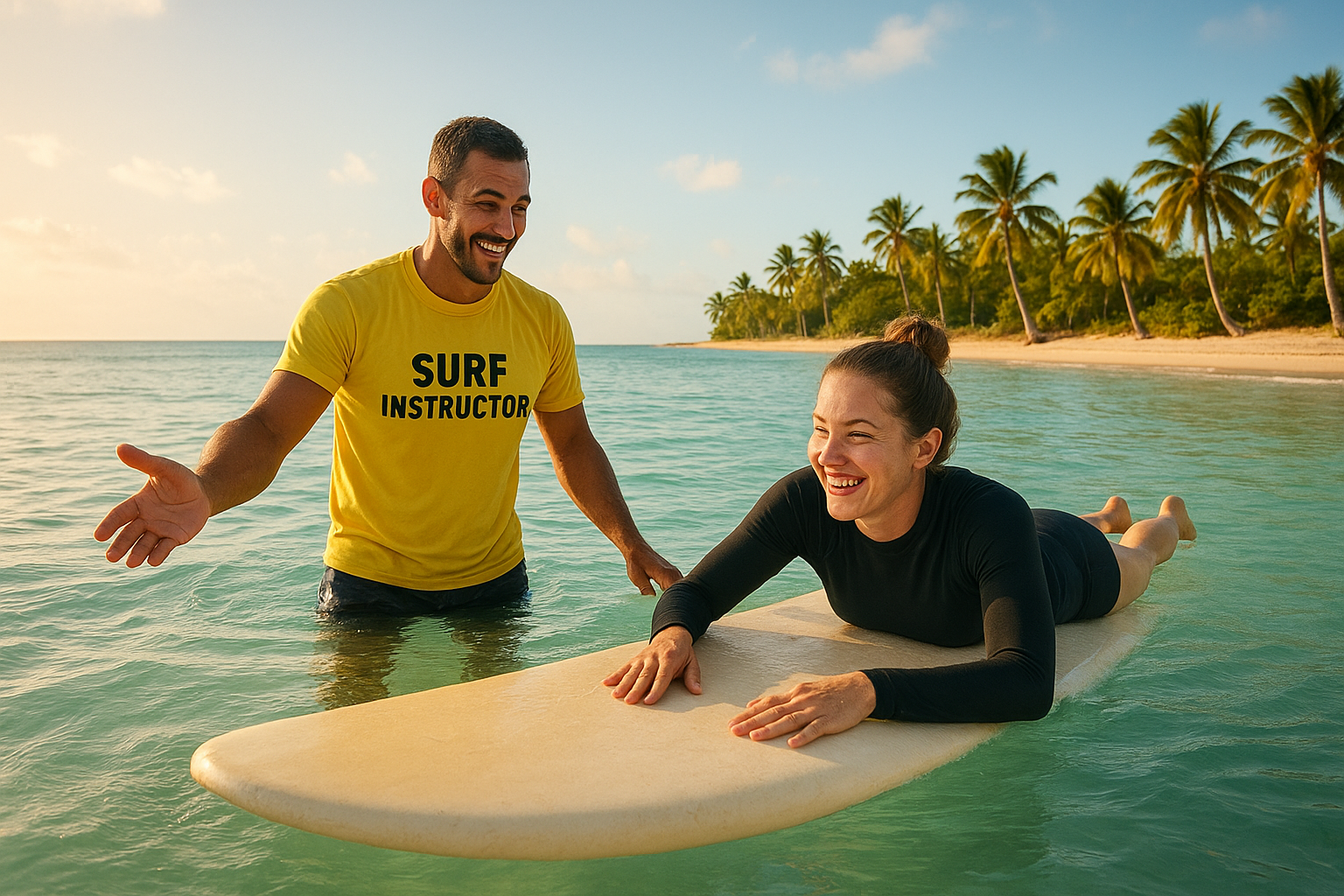
Expert-led wave riding lessons give beginners the confidence and skills to enjoy the ocean safely from day one.
The Core Benefits of Professional Surf Instruction
Learning to surf with a professional instructor offers advantages that go far beyond simply standing on a board. First, safety is dramatically improved. Instructors choose appropriate surf breaks for your level, teach ocean awareness, and supervise you closely in the water. As a result, the risk of injury or panic in the surf is significantly reduced.
Second, professional coaching accelerates your progress. An experienced eye can spot and correct technique errors — such as incorrect foot placement or improper paddle form — that would otherwise take months to identify on your own. Furthermore, instructors provide real-time feedback that builds muscle memory faster and more accurately.
Third, learning in a structured group or private lesson environment is simply more fun. The social energy of a group lesson, combined with the shared excitement of catching your first wave, creates memories that last a lifetime. For families and vacationers especially, this makes surf lessons one of the most rewarding beach activities available.
Ocean Safety: A Core Component of Every Lesson
Safety is never an afterthought in quality surf instruction. According to the United States Lifesaving Association, rip currents account for over 80% of ocean rescues on surf beaches. A good instructor teaches you how to identify and escape rip currents, understand wave sets, and respect surf etiquette — knowledge that keeps you and others safe in the water.
For a deeper dive into staying safe in the surf zone, the team at starbeachboys.com has compiled essential guidance in their surfing safety tips every beginner must know. Reading through these tips before your first lesson gives you a meaningful head start.
How to Get the Most Out of Your Wave Riding Lessons: Step-by-Step
Following a structured approach maximizes your progress and enjoyment. Here is a proven five-step process used by leading surf schools worldwide:
- Choose a reputable surf school. Research local options, look for certified instructors, read reviews, and confirm that safety protocols are in place before you book. A trustworthy school sets the tone for everything that follows.
- Prepare your body and mindset. Arrive well-rested and hydrated. Light stretching before entering the water helps prevent muscle strain. Equally important, arrive with an open and patient attitude — surfing rewards persistence.
- Master the basics on land first. Your instructor will walk you through the pop-up technique on the sand. Practice proper foot placement, balanced stance, and arm positioning on a stationary board until the movement feels natural.
- Enter the water and practice paddling. Wade into the beginner zone and focus on paddling with smooth, deep strokes. Keep your body centered on the board and your chin slightly lifted to maintain stability.
- Catch your first wave and stand up. With your instructor guiding the timing, paddle into an incoming wave, execute your pop-up, and shift your weight to your back foot to guide the board. Bend your knees, look forward, and enjoy the ride.
Additionally, if you want to know exactly what to expect before your session begins, the detailed guide on what to expect from wave riding lessons walks you through every stage of a typical lesson from arrival to your final wave.
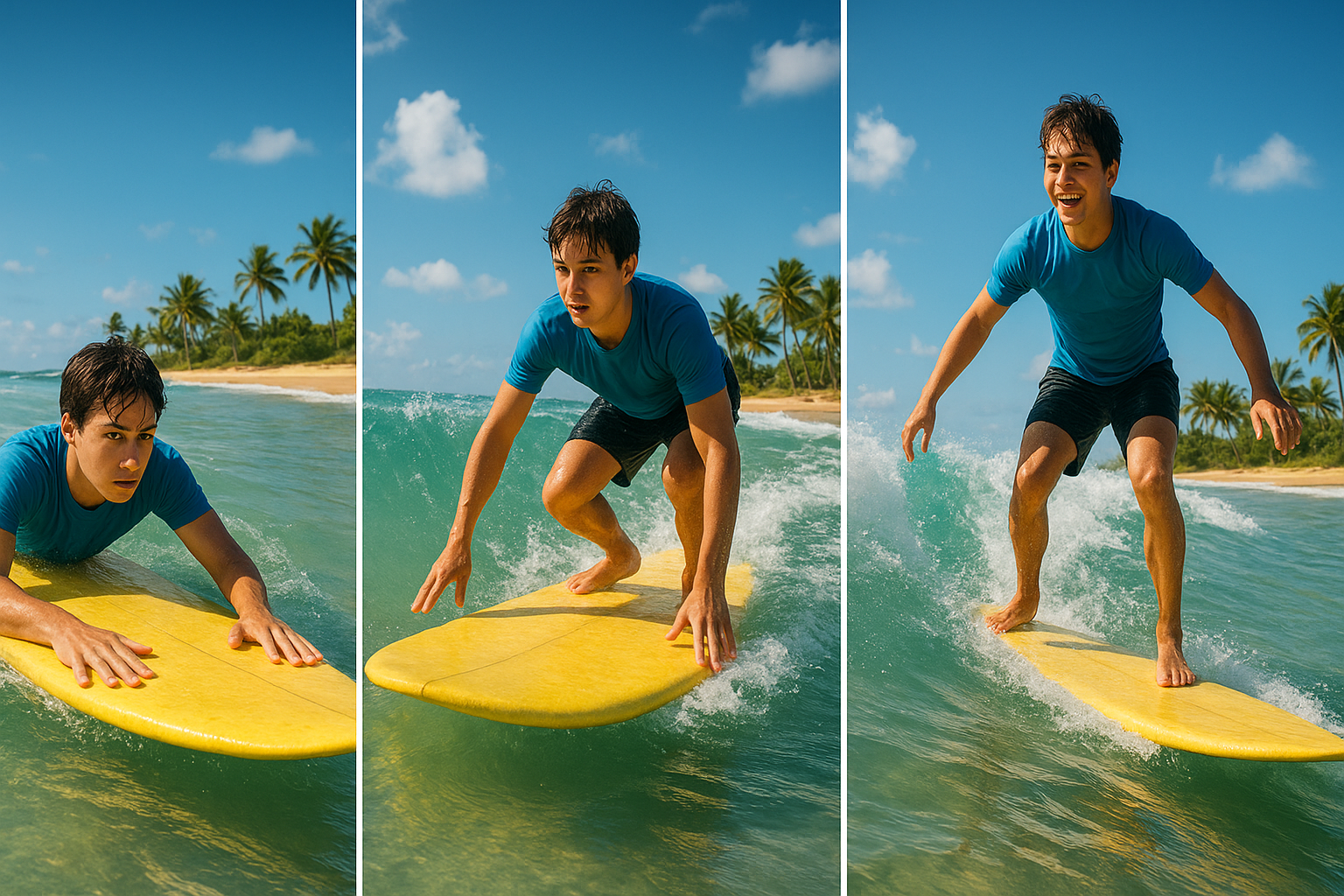
The pop-up technique — from lying flat to standing tall — is one of the first skills covered in any beginner surfing program.
What to Expect During Your First Surfing Session
A typical beginner surf lesson lasts between 90 minutes and two hours. The first 20 to 30 minutes are usually spent on the beach, where your instructor covers ocean safety, surf etiquette, and the fundamental mechanics of the pop-up. This land-based portion is essential — it prepares your body and mind before you ever touch the water.
Once in the water, your instructor will guide you to a calm, shallow area with small, consistent waves — ideal conditions for beginners. You will practice paddling, turning your board, and timing your entry into waves. Most students successfully stand up and ride at least one wave during their very first session, which is an incredibly rewarding experience.
Group Lessons vs. Private Instruction: Which Is Right for You?
Both group and private lessons have distinct advantages. Group lessons — typically 4 to 6 students per instructor — are more affordable, social, and energetic. They are ideal for families, friends traveling together, and solo travelers who enjoy a communal learning atmosphere.
Private lessons, in contrast, offer one-on-one attention that accelerates progress significantly. If you have a specific technique to work on, a tight schedule, or simply prefer personalized coaching, a private session is worth the additional investment. Many intermediate surfers choose private lessons specifically to break through plateaus in their skill development.
For adults specifically looking to build a solid foundation, the surf training for adults program at starbeachboys.com provides a progressive curriculum tailored to the unique learning needs and physical considerations of adult students.
Why Waikiki Is One of the World’s Best Locations for Surf Lessons
Location matters enormously in surfing. Waikiki Beach in Honolulu, Hawaii, is widely regarded as one of the most beginner-friendly surf destinations on the planet. Its long, gentle, rolling waves — generated by the unique underwater reef formations offshore — create ideal conditions for new surfers to learn and build confidence.
Furthermore, Waikiki has a rich surfing heritage. It is the birthplace of modern surfing as a global sport, historically associated with Hawaiian royalty and legendary watermen. Learning to surf here connects you to that tradition in a deeply meaningful way.
The team at starbeachboys.com offers expert-led lessons at Waikiki, combining this world-class location with highly trained instructors who are passionate about sharing the ocean with students of every background. Their Waikiki surf lessons are available for all skill levels and are structured to deliver real results, even within a single session.
For those planning a visit to Honolulu, the comprehensive guide to authentic surf lessons in Honolulu provides everything you need to know about booking, preparing, and making the most of your time in the water at Waikiki in 2026.

Waikiki’s gentle, consistent waves make it one of the world’s premier destinations for beginner surf lessons and ocean experiences.
Essential Equipment for Beginner Surfers
Most reputable surf schools provide all the equipment you need for your lesson, so you do not have to worry about purchasing gear before your first session. However, understanding what you will be using helps you feel more prepared.
Beginners almost always learn on soft-top longboards — wide, buoyant foam boards that are stable, forgiving, and much safer than fiberglass alternatives. These boards, sometimes called “foamies,” are specifically designed to help new surfers build balance and confidence quickly. According to surfboard design principles, longer and wider boards provide significantly more stability, which is exactly what beginners need.
Additionally, a surf leash — a cord that attaches your ankle to the board — prevents the board from drifting away after a wipeout. A rash guard, a lightweight protective shirt, shields your skin from sun exposure and board friction. Both are standard equipment in any quality lesson package.
Common Beginner Mistakes and How to Avoid Them
Even with great instruction, beginners tend to repeat a few predictable errors. Knowing these in advance helps you correct them faster. The most common mistakes include:
- Looking down at the board instead of forward toward the horizon — this throws off balance immediately.
- Popping up too slowly — the movement should be explosive and fluid, not hesitant.
- Incorrect foot placement — standing too far forward or too far back on the board reduces stability dramatically.
- Stiff knees — keeping your legs straight makes it nearly impossible to absorb the movement of the wave. Always bend your knees.
- Paddling with bent elbows — deep, straight-arm strokes generate far more power and speed when entering a wave.
Consequently, having an instructor watch and correct your form in real time is invaluable. These are precisely the kinds of errors that are very difficult to self-diagnose in the water.
Frequently Asked Questions About Wave Riding Lessons
What are wave riding lessons?
Wave riding lessons are structured surfing instruction sessions where a qualified coach teaches students how to read the ocean, paddle effectively, pop up on a surfboard, and ride waves safely. They are designed for all skill levels, from complete beginners to intermediate surfers.
How long does it take to learn to surf in wave riding lessons?
Most beginners can stand up and ride their first wave within a single 1- to 2-hour lesson. Developing consistent technique and wave-reading skills typically takes several sessions over days or weeks.
Do I need any experience before taking wave riding lessons?
No prior experience is needed. Wave riding lessons are specifically designed to welcome complete beginners and guide them from zero knowledge to confidently riding small waves.
What should I bring to my first surf lesson?
Bring a swimsuit, sunscreen, a towel, and a bottle of water. Most surf schools provide surfboards, leashes, and rash guards as part of the lesson package.
Are wave riding lessons safe for children?
Yes, wave riding lessons are generally safe for children when taught by certified instructors who use age-appropriate equipment and beginner-friendly surf spots. Most schools welcome kids aged 5 and up.
How much do wave riding lessons typically cost?
Group wave riding lessons typically range from $50 to $100 per person for a 1- to 2-hour session. Private lessons cost more, usually between $100 and $200 per hour, but offer personalized attention and faster skill development.
What is the best age to start surf lessons?
There is no single best age to start surfing. Children as young as 5 can begin with proper instruction, and adults of any age can learn to surf with the right guidance and patience.
What type of surfboard is used in beginner lessons?
Beginners typically use foam-top longboards, also called soft-top or foamie boards. These boards are wider, more stable, and much safer than fiberglass boards for new surfers.
How do instructors keep students safe during surf lessons?
Instructors maintain close supervision in the water, choose appropriate beginner-friendly breaks, teach ocean awareness and surf etiquette, and ensure students use proper safety equipment including leashes and rash guards.
What common mistakes do beginners make in surf lessons?
Common mistakes include looking down at the board instead of forward, standing too far back or too far forward, popping up too slowly, and not bending the knees enough. A good instructor corrects these issues early, preventing them from becoming ingrained habits.
Can I take wave riding lessons if I am not a strong swimmer?
Basic swimming ability is recommended before taking surf lessons. Most schools require students to be comfortable in the water and able to swim at least 50 meters unassisted for safety reasons.
How many people are typically in a group surf lesson?
Group lessons usually have a ratio of 4 to 6 students per instructor. Smaller groups allow for more personalized feedback while keeping the session social and enjoyable for everyone involved.
Conclusion: Start Your Journey With Wave Riding Lessons Today
Wave riding lessons are the most effective, safest, and most enjoyable way to begin your surfing journey. They combine professional instruction, ocean safety education, and the pure thrill of riding your first wave — all within a structured environment designed to help you succeed. Whether you are a first-time visitor to the beach or an adult finally ready to try something adventurous, a quality surf lesson delivers results that self-teaching simply cannot match.
Furthermore, by choosing an experienced and certified surf school — such as the expert team at starbeachboys.com — you gain access to world-class instruction in one of the finest surfing environments on earth. From Waikiki’s legendary gentle waves to personalized coaching that meets you exactly where you are, the experience is genuinely transformative. So grab a foam board, trust your instructor, and take that first paddle out. The ocean is waiting.