Surf experiences for vacationers are one of the most exhilarating and genuinely accessible ways to transform a beach holiday into something you will talk about for years. Whether you are visiting Hawaii for the first time or returning to a beloved coastal destination, stepping onto a surfboard under the guidance of a certified instructor turns an ordinary beach day into a lifelong memory.
According to the International Surfing Association, surfing is practiced by over 35 million people worldwide — and that number keeps climbing as more travelers seek authentic, active ocean adventures. Furthermore, beginner-friendly destinations like Waikiki Beach in Hawaii have made the sport approachable for virtually everyone, regardless of age, fitness level, or prior experience.
In this guide, you will find everything you need: what to expect from a vacation surf lesson, how multi-day surf retreats compare to single sessions, how to pick the right school, which destinations deliver the best conditions for beginners, and honest answers to every question a first-timer could have.

Surf experiences for vacationers bring together people of all backgrounds for a shared ocean adventure. For a deeper walkthrough, see our Fun Surf Experiences: Your Complete Guide to Riding Waves.
What Are Surf Experiences for Vacationers?
Surf experiences for vacationers are structured, guided ocean activities designed specifically for tourists and holiday travelers. These range from a single 90-minute beginner lesson to immersive multi-day surf retreats that combine daily wave riding with cultural exploration, yoga, and local cuisine.
Unlike renting a board and heading out alone, a guided surf experience provides hands-on coaching, ocean safety education, and a genuinely supportive environment. As a result, even complete beginners can stand up and ride a wave within their very first session. Specifically, most programs follow a proven format: a land-based warm-up and technique briefing, followed by in-water practice with an instructor close by.
In addition, reputable surf schools supply all necessary equipment — foam beginner boards, leashes, and rash guards — or can help you rent a surfboard, so you simply show up ready to have fun.
Single Lessons vs. Multi-Day Surf Retreats: Which Is Right for You?
A beginner surf lessons are ideal if you have limited time or simply want to try surfing once. However, multi-day surf retreats offer a deeper, more immersive experience. These programs — typically three to seven days long — include daily group lessons, progressive skill development, accommodation, meals, and cultural activities like snorkeling, yoga, or guided coastal hikes.
For vacationers who want more than a one-off activity, a retreat delivers measurable skill progression in a short time. Consequently, many travelers who book a single lesson end up returning for a multi-day program on their next trip. The table below summarizes the key differences:
| Feature | Single Lesson | Multi-Day Retreat |
|---|---|---|
| Duration | 60–90 minutes | 3–7 days |
| Skill Progression | Beginner basics | Beginner through intermediate |
| Included Extras | Board, rash guard | Accommodation, meals, activities |
| Typical Cost | $50–$250 | $800–$3,000+ |
| Best For | Quick tasters, day-trippers | Dedicated vacationers, groups |
Why Surfing Is the Ultimate Vacation Activity
Surfing offers something few other vacation activities can match: a full-body physical challenge combined with the raw, humbling power of the ocean. However, it is also surprisingly accessible. Modern foam boards are stable and forgiving, and professional instructors know exactly which waves suit a first-timer.
Beyond the physical thrill, surfing connects you to a culture and tradition that runs deep in coastal communities around the world. In Waikiki, for example, the art of surfing — or he’e nalu — has been practiced for centuries by native Hawaiians. Experiencing that heritage firsthand adds a meaningful cultural dimension to your holiday that a hotel pool simply cannot replicate.
Furthermore, surfing is a deeply social activity. Group lessons bring together travelers from all over the world. Consequently, many vacationers rate their surf lesson as the single highlight of their entire trip — not just an activity, but a defining memory.
Ocean Benefits Beyond the Wave
Research published by the National Institutes of Health suggests that spending time in and near the ocean significantly reduces stress hormones and improves overall mood. Therefore, combining a beach vacation with a surf lesson is not just fun — it is genuinely restorative.
In addition, surfing builds core strength, balance, and cardiovascular fitness. Even a single 90-minute session engages muscle groups that most gym routines overlook. So you return from vacation feeling refreshed, energized, and — often — a little bit hooked.
Surfing for Mental Wellness: What the Science Says
The psychological benefits of surfing are increasingly well-documented. A study from the BBC Future research series found that ocean environments — referred to as “blue spaces” — produce measurable reductions in anxiety and depressive symptoms. Surfing intensifies these effects by adding mindful focus: you cannot think about your inbox when a wave is coming.
For vacationers, this means a surf experience is simultaneously an adrenaline rush, a mindfulness practice, and a fitness workout — all wrapped into one 90-minute session.
How to Book and Prepare for Your Surf Experience: A Step-by-Step Guide
Planning ahead makes all the difference. Follow these six steps to ensure a smooth, enjoyable surf experience on your vacation.
- Choose the right surf school. Research certified surf schools at your destination by reading verified reviews and checking instructor credentials. Look for small class sizes (no more than 4 students per instructor) and a transparent safety policy. Resources like this guide to the best ocean experience surf schools can help you compare options before booking.
- Select your lesson type. Decide between a group lesson for a social, budget-friendly session or a private lesson for personalized one-on-one coaching. If you have more than three days, consider a multi-day surf retreat for structured skill progression.
- Book in advance. Reserve your spot at least 24 to 48 hours ahead, especially during peak travel seasons. Popular surf schools fill quickly. Early booking also lets you request specific time slots — morning sessions typically offer calmer, cleaner conditions.
- Prepare your gear and body. Wear a swimsuit, apply reef-safe sunscreen (important for protecting coral reefs), and eat a light meal at least one hour before your session. Arrive 10 to 15 minutes early to complete waivers and get comfortable with the environment.
- Attend the land briefing carefully. Your instructor will cover paddling mechanics, the pop-up technique (moving from lying to standing), wave timing, and ocean safety including rip current awareness. Pay close attention — this foundation determines your in-water success.
- Get in the water and commit. Follow your instructor’s lead, stay relaxed, and trust the process. Paddle hard, commit to the wave, and look toward the beach — not down at the board. Most beginners stand up in their first session when they commit fully.
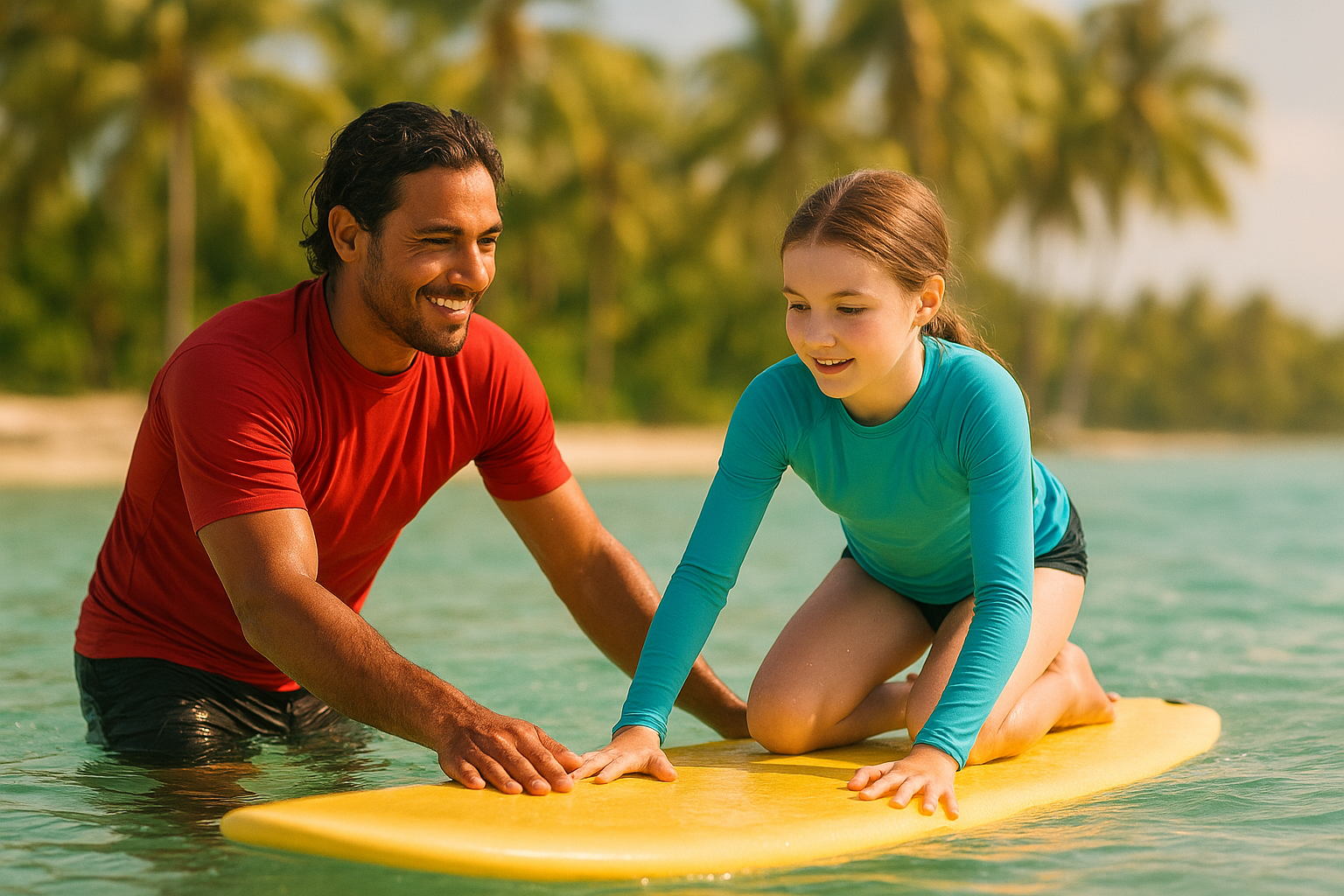
Expert instructors guide vacationers through each step, making the learning process safe and deeply rewarding.
Choosing the Best Surf Destination for Your Holiday
Not all surf destinations are created equal. For vacationers, the ideal location combines gentle, consistent waves with warm water, reliable sunshine, and a strong local surf school culture. Fortunately, several world-class destinations check every one of these boxes.
Waikiki Beach, Hawaii: The Gold Standard for Beginner Surfers
Waikiki Beach, Hawaii is widely regarded as the most beginner-friendly surf destination in the world. Its long, rolling waves break slowly and predictably, giving first-timers plenty of time to find their footing. Moreover, Waikiki’s surf culture is deeply rooted in aloha — a spirit of warmth, welcome, and community that makes every visitor feel instantly at home.
The water temperature averages 75–80°F year-round, meaning no wetsuit is required. In addition, Waikiki’s waves are consistent across all seasons, unlike many other destinations that offer good conditions for only part of the year. You can explore the authentic beach boy legacy of Waikiki surf lessons to understand what makes this destination so culturally rich and beginner-friendly.
Other World-Class Surf Destinations for Vacationers
Other popular destinations for vacation surfers include Bali, Indonesia, Byron Bay in Australia, and Tamarindo in Costa Rica. Each offers a unique mix of wave quality, local culture, and surf school infrastructure. However, for first-time surfers, Waikiki remains the gold standard because of its uniquely forgiving wave shape and unmatched surf school density.
Specifically, here is what each destination offers vacationers at different experience levels:
- Waikiki, Hawaii: Best for absolute beginners. Calm, rolling longboard waves, year-round warm water, rich Hawaiian surf heritage, dense surf school community.
- Bali, Indonesia: Best for beginner-to-intermediate surfers. Consistent swells, affordable lessons, vibrant surf culture, stunning scenery. Kuta and Seminyak beaches are most beginner-friendly.
- Tamarindo, Costa Rica: Best for intermediate surfers seeking variety. Multiple reef and beach breaks, diverse marine wildlife, eco-retreat options, lively surf community.
- Byron Bay, Australia: Best for surfers at all levels. Iconic beach, multiple surf schools, excellent year-round conditions, strong wellness retreat scene.
- Ericeira, Portugal: Best for intermediate-to-advanced surfers. World Surfing Reserve designation, powerful Atlantic waves, charming village atmosphere, growing surf tourism infrastructure.
What Makes a Great Surf School for Tourists?
A great surf school for tourists does more than hand you a board. It creates a complete ocean experience — one that is safe, educational, and deeply enjoyable. Specifically, look for schools that maintain a student-to-instructor ratio of no more than 4:1 for group lessons, so every student gets genuine attention and coaching. For practical advice on choosing providers, see choosing the right surf school.
In addition, the best schools employ instructors certified by recognized bodies such as the International Surfing Association. Certification ensures instructors are trained in both surf coaching methodology and water safety — a critical combination when working with beginners.
Key Qualities to Look for in a Vacation Surf School
- ISA-certified instructors with documented water safety training
- Small class ratios — 4 students or fewer per instructor for group lessons
- Transparent safety protocols covering rip currents, wave selection, and emergency procedures
- High-quality equipment — foam longboards for beginners, properly fitted rash guards, leashes in good condition
- Verified reviews from recent tourists on Google, TripAdvisor, or Yelp — look for consistent praise of safety and instructor quality
- Flexible scheduling — early morning sessions are typically best for calm, clean conditions
- Cultural authenticity — especially important in destinations like Waikiki, where the local surf culture is itself part of the experience For a deeper walkthrough, see our Are There Surf Lessons for Kids in Waikiki?.
Star Beachboys at Waikiki, for example, combines decades of local expertise with a genuine passion for sharing the ocean with visitors from around the world. Their programs build skills progressively, ensuring that every participant — from nervous first-timers to confident intermediate surfers — leaves the water feeling genuinely accomplished. You can learn more about their approach at the Star Beachboys Waikiki ultimate ocean experience page. This article was written by the Star Beachboys team, led by ISA-certified instructors; Last updated: 2026-07-12.
Group Surf Lessons vs. Private Lessons: A Complete Comparison
One of the most common decisions vacationers face is choosing between a group lesson and a private lesson. Both are excellent options — but they suit different goals and budgets. Here is an honest breakdown to help you decide.
Group Surf Lessons
Group lessons are the most popular choice for vacationers. They are affordable, social, and genuinely fun. Sharing the experience with other beginners creates a supportive, energetic atmosphere where everyone cheers each other on. Moreover, watching others attempt the pop-up technique can actually accelerate your own learning.
Group lessons typically cost $50 to $150 per person and accommodate four to eight students per instructor. They are ideal for families, couples, or solo travelers who want a sociable introduction to surfing.
Private Surf Lessons
Private lessons offer one-on-one coaching. Your instructor focuses entirely on your technique, adjusts the session in real time based on your progress, and selects waves specifically matched to your ability. As a result, skill progression is significantly faster than in a group setting.
Private sessions typically cost $100 to $250 or more. They are particularly suited to vacationers with specific goals, limited time, or a desire for a fully personalized experience. Similarly, they work well for children, older adults, or anyone with physical limitations that require individualized attention.
Is a Surf Lesson on Vacation Worth It?
This is one of the most common questions travelers ask before booking. The short answer: absolutely yes. Studies on experiential travel consistently show that activity-based vacation memories last significantly longer than passive ones. In other words, the memory of riding your first wave will stay with you far longer than an afternoon spent poolside.
Furthermore, surf lessons are surprisingly affordable relative to the value they deliver. A single group lesson often costs less than a restaurant dinner — yet the experience and the story you take home are priceless. Moreover, research in positive psychology consistently shows that spending money on experiences — rather than possessions — produces longer-lasting happiness and life satisfaction.
If you are still weighing the decision, this detailed breakdown of whether it is worth taking a surfing lesson on vacation covers costs, benefits, and what to realistically expect as a first-timer.
What to Realistically Expect as a First-Time Surfer
Setting realistic expectations prevents frustration and maximizes enjoyment. Here is an honest picture of what most first-timers experience:
- You will likely stand up in your first session — most beginners do, especially on beginner waves at spots like Waikiki with a qualified instructor.
- You will fall — often. This is not failure; it is part of the process. Foam boards and shallow practice waves make falls completely safe.
- Your arms will be tired. Paddling uses muscles most people rarely engage. This is normal and passes quickly.
- The second session is dramatically better than the first — muscle memory kicks in, and timing becomes more intuitive.
- The feeling of riding your first wave is unlike anything else. Most people describe it as a combination of shock, joy, and immediate addiction.
Practical Tips for Getting the Most from Your Surf Experience
To maximize your surf experience on vacation, keep these proven tips in mind before, during, and after your lesson:
- Stay relaxed. Tension in your body makes balancing on a board significantly harder. Consciously release your shoulders and jaw.
- Listen during the land briefing. Every tip your instructor gives on land directly translates to better performance in the water. Take it seriously.
- Look toward the beach or horizon when you stand up — not down at your feet. Your body follows your gaze.
- Paddle hard and commit. Hesitation is the most common reason beginners miss waves. When your instructor says go, commit fully.
- Embrace falling. It is a normal, expected part of learning. With proper technique and a foam board, it is never something to fear.
- Book a follow-up lesson. The second session is where most people truly find their rhythm and ride their first unassisted wave.
- Hydrate before and after. Ocean activity in direct sunlight is more dehydrating than it feels. Drink water before your session and bring a bottle to the beach.
- Apply reef-safe sunscreen. Standard sunscreens contain chemicals harmful to coral reefs. Reef-safe formulas protect you and the ocean ecosystem you are enjoying.
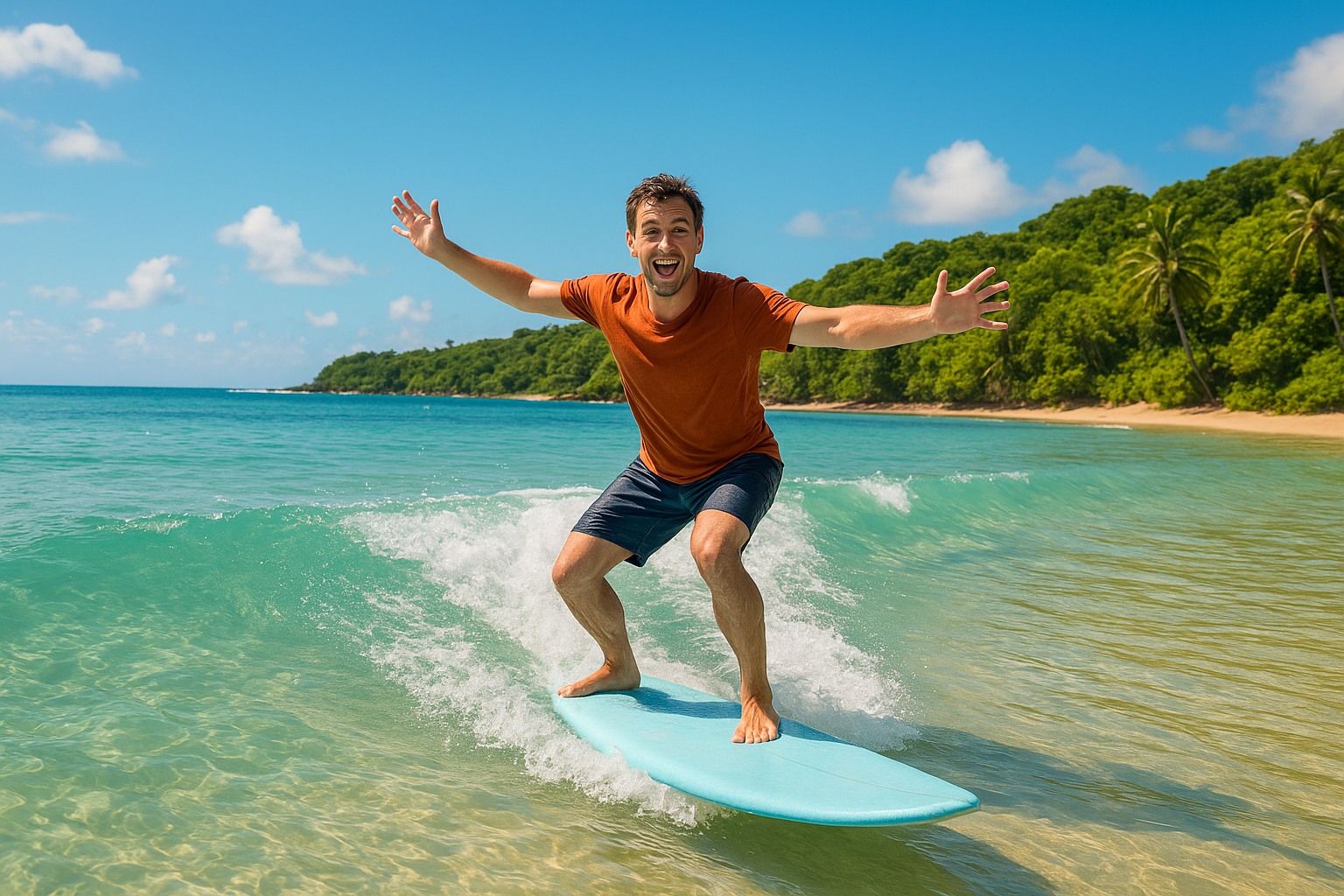
That first wave is one of the most rewarding surf experiences a vacationer can have — and it almost never gets old.
Surf Experiences for Families and Children: What Parents Need to Know
family surf lessons are one of the fastest-growing segments of vacation surfing. Children as young as five or six can take introductory surf lessons at beginner-friendly beaches like Waikiki, provided they are comfortable in the water and can follow basic safety instructions.
Specifically, look for surf schools that offer surf classes for families — where parents and children surf together. This format creates a shared, memorable experience while keeping children supervised by both the instructor and their parents. In addition, family sessions are often priced favorably compared to booking multiple individual lessons.
Safety Guidelines for Junior Surfers
- Children should be comfortable swimming at least 25 meters unassisted before their first lesson.
- Instructors should use extra-wide, ultra-buoyant foam boards for young surfers to maximize stability.
- Sessions for children are typically shorter — 45 to 60 minutes — to keep energy and focus high.
- Early morning sessions work best for families, as waves are typically calmer and beaches less crowded.
- Rash guards with built-in UV protection are essential for children, whose skin burns faster than adults’.
Ocean Safety: What Every Vacation Surfer Must Know
Ocean safety is the most important aspect of any surf experience. A reputable surf school covers safety thoroughly in the land briefing, but it helps to arrive with a basic understanding of ocean dynamics.
Understanding Rip Currents
Rip currents — fast-moving channels of water flowing away from shore — are the leading cause of surf-related rescues. However, they are easy to avoid and escape when you know what to look for. Learn more about surfing safety for beginners. According to the National Weather Service, rip currents are responsible for over 80% of lifeguard rescues at surf beaches.
If you are caught in a rip current, do not panic and do not swim directly against it. Instead, swim parallel to the shore until you are out of the current, then swim back to the beach at an angle. Your surf instructor will cover this in detail, but knowing it beforehand gives you real confidence in the water.
Essential Ocean Safety Rules for Beginner Surfers
- Never surf alone — always ensure someone on the beach knows you are in the water.
- Always hold your board between yourself and incoming waves; never let it become a hazard to others.
- Respect surf etiquette — the surfer closest to the peak of the wave has right-of-way. Drop-ins (cutting in front of another surfer) are dangerous and disrespectful.
- Check conditions before entering — ask your instructor or a local lifeguard about current conditions, especially wave height, rips, and hazards.
- Stay within your ability level. Beginner sessions take place in designated zones chosen by your instructor for their safety and appropriate wave size.
Frequently Asked Questions About Surf Experiences for Vacationers
What are surf experiences for vacationers?
Surf experiences for vacationers are guided ocean activities — typically surf lessons, group surf sessions, or multi-day surf retreats — designed for tourists who want to learn or enjoy surfing during their trip. These programs are led by certified instructors, include all necessary equipment, and are tailored to all skill levels from complete beginners to intermediate surfers.
Do I need prior experience to take a surf lesson on vacation?
No prior experience is needed. Most surf schools welcome absolute beginners and structure lessons to build confidence progressively. Instructors cover ocean safety, paddling technique, and wave reading before you ever stand on a board.
How long does a typical beginner surf lesson last?
A typical beginner surf lesson lasts between 60 and 90 minutes, including a 15–20 minute land-based briefing and 45–60 minutes of in-water practice with an instructor nearby. Multi-day retreat programs typically include two to three hours of daily surf time.
Is surfing on vacation safe for children and families?
Yes, surfing is safe for children and families when conducted with a certified surf school. Instructors choose appropriate beginner-friendly waves, provide buoyant foam surfboards, and maintain close supervision throughout the session. Children as young as five or six can participate at calm beginner beaches like Waikiki.
What should I bring to a surf lesson on vacation?
Bring a swimsuit, reef-safe sunscreen, a towel, and water to stay hydrated. Most surf schools provide boards and rash guards. Leave valuables at your accommodation to keep things simple and arrive 10 to 15 minutes early to complete any waivers.
How much do surf lessons typically cost for tourists?
Surf lesson prices for tourists generally range from $50 to $150 per person for a group lesson, and $100 to $250 or more for a private session. Multi-day surf retreats typically range from $800 to $3,000 or more, depending on accommodation and inclusions. Prices vary by destination, duration, and instructor experience.
What is the best beach destination for surf experiences for vacationers?
Waikiki Beach in Hawaii is widely considered the best destination for vacationer surf experiences. Its gentle, rolling waves, warm year-round water, and rich Hawaiian surf heritage make it ideal for beginners. Other excellent options include Bali, Tamarindo in Costa Rica, and Byron Bay in Australia.
How do I choose a reputable surf school on vacation?
Look for schools with ISA-certified instructors, strong verified reviews, a clear safety protocol, and small student-to-instructor ratios (4:1 or better). Checking a local surf lessons guide can help you evaluate options before booking.
Can I surf if I am not a strong swimmer?
Basic swimming ability is strongly recommended before taking a surf lesson. Most schools require that students can swim at least 50 meters unassisted. Instructors always keep beginners in shallow, manageable water, but confidence in the ocean is an important safety foundation.
What is the difference between a group surf lesson and a private surf lesson?
A group lesson is more affordable ($50–$150) and social, typically involving four to eight students per instructor. A private lesson ($100–$250+) offers one-on-one coaching, faster skill progression, and a fully personalized session — ideal for those with specific goals or limited vacation time.
Is it worth taking a surfing lesson on vacation?
Absolutely. Surfing lessons give vacationers a structured, safe, and deeply memorable way to connect with the ocean. Most first-timers stand up on their board within the first session. Research in positive psychology shows that experience-based spending produces longer-lasting happiness than purchasing possessions — making a surf lesson one of the best investments of your holiday budget.
What common mistakes do beginner surfers make on vacation?
Common mistakes include looking down at the board instead of the horizon, standing too far back or forward on the board, paddling too early or too late, and tensing up when a wave comes. A qualified instructor will correct these habits quickly during your lesson — often within the first few waves.
What is a surf retreat, and how is it different from a single surf lesson?
A surf retreat is a multi-day program — typically three to seven days — that combines daily surf lessons with accommodation, meals, and complementary activities like yoga, snorkeling, or cultural tours. Unlike a single lesson, a retreat delivers measurable skill progression and a fully immersive surf lifestyle experience. It is ideal for vacationers who want surfing to be the centerpiece of their entire trip.
What should I eat before a surf lesson on vacation?
Eat a light, easily digestible meal at least one hour before your session. Good options include fruit, toast, yogurt, or a small portion of oatmeal. Avoid heavy, greasy meals that can cause nausea during paddling. Stay well-hydrated the evening before and drink water on the morning of your lesson.
Conclusion: Make Surf Experiences Part of Your Next Vacation
Surf experiences for vacationers represent far more than a tick on a bucket list. They offer a genuine connection to the ocean, a physical and mental challenge that rewards effort almost immediately, and a cultural immersion that no museum or tour bus can replicate. Therefore, whether you are planning a week in Waikiki or a multi-day surf retreat at a tropical coastal destination, adding a surf lesson — or a full retreat — to your itinerary is one of the very best decisions you can make.
From choosing the right surf school to nailing your first pop-up, understanding ocean safety, and knowing which destination suits your goals, the planning process is as rewarding as the experience itself. Above all, the key is to choose a reputable, certified instructor who puts your safety and enjoyment first. Star Beachboys at Waikiki has built its reputation on exactly that — delivering world-class surf experiences that leave every vacationer with a smile, a story, and a deep new love for the sea. Last updated: 2026-07-27. Author: Star Beachboys team.