Surf classes for families are one of the most rewarding beach experiences you can give your children — and they are far more accessible than most parents expect. Whether your group includes a curious six-year-old, a fearless teenager, or a grandparent ready to try something new, a well-structured family surf lesson puts everyone on a board and smiling within a single session. According to the International Surfing Association (ISA), surfing participation among families and first-time learners has grown substantially year over year — and for good reason.
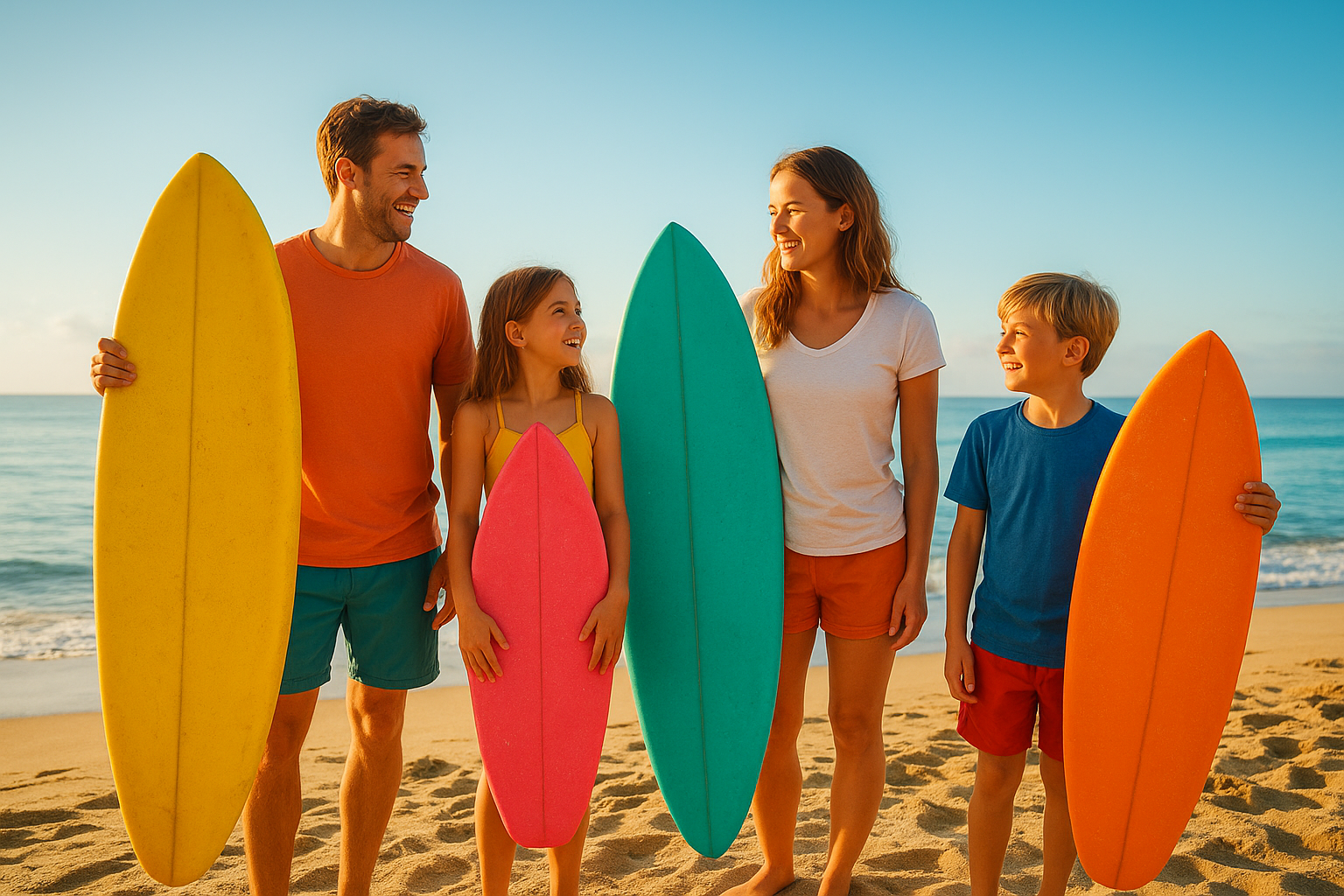
Family surf lessons create shared memories that last long after the waves have settled.
What Are Surf Classes for Families?
Surf classes for families are structured ocean lessons designed to teach parents and children together in a safe, supportive setting. Unlike standard adult group lessons, surf experiences for vacationers adapt instruction to multiple age groups and skill levels at the same time. Instructors use simplified language for young children while offering more technical cues to adults — all within one shared session.
These lessons typically begin on the sand. Instructors cover paddling posture, how to “pop up” onto the board, and basic ocean awareness. Consequently, even children who have never touched a surfboard feel prepared before stepping into the water.
Furthermore, most schools provide all necessary equipment — soft foam longboards, rash guards, and sometimes life vests for younger participants. This removes the barrier of gear costs and makes the experience genuinely plug-and-play for vacationing families.
How Family Surf Lessons Differ from Standard Group Classes
Standard group surf lessons are usually structured for adults of similar ability. Family surf programs, in contrast, are specifically engineered for mixed ages and mixed abilities. Instructors certified in family or youth instruction know how to communicate the same concept three different ways — once for a six-year-old, once for a twelve-year-old, and once for a parent. That distinction is what makes family-format classes uniquely effective.
In addition, family lessons often place a stronger emphasis on in-water positioning, since instructors must monitor multiple students simultaneously across different water depths. Schools that specialize in family surf instruction typically cap group sizes lower than their adult programs — often at a 4:1 student-to-instructor ratio or better.
Why Families Love Learning to Surf Together
Surfing together creates a powerful shared challenge. When a child catches their first wave, the pride on their face is matched only by the excitement of the parent cheering beside them in the water. As a result, family surf lessons often become the single most memorable activity of an entire vacation.
Beyond the fun factor, surfing builds real-world skills. Children develop balance, ocean awareness, physical fitness, and resilience. Similarly, adults rediscover a sense of playfulness and adventure that daily routines rarely offer. Research published through the National Institutes of Health confirms that outdoor physical activities shared between parents and children strengthen family bonds and improve emotional well-being across all age groups.
In addition, surf lessons offer something screens simply cannot: genuine unplugged time in nature, working toward a goal as a team.
The Physical and Mental Benefits of Surfing for Children
Surfing engages the entire body. Paddling builds upper body strength and cardiovascular endurance. Balancing on the board develops core stability and proprioception — the body’s sense of its own position in space. For children especially, these physical gains translate directly into better coordination, posture, and athletic confidence.
Mentally, the challenge of reading the ocean, timing a wave, and committing to a pop-up teaches focus, patience, and calculated risk-taking. Therefore, many child development experts recommend water sports as confidence-building activities during key developmental years. Surfing, in particular, rewards persistence — and children who fall and get back on the board learn that lesson in the most vivid way possible.
What Age Can Kids Start Surf Classes for Families?
Most reputable surf schools accept children as young as five or six years old for beginner family programs. Learn the best age to start in our detailed guide. However, the ideal starting age depends on the child’s comfort in the water, basic swimming ability, and attention span. Schools generally recommend that children can float or tread water independently before joining a surf class.
Teenagers, on the other hand, tend to progress very quickly. Their coordination and strength allow them to stand on the board faster than younger children — often within the first lesson. For this reason, many families find that mixed-age group lessons work well when instructors are experienced in managing varied skill levels.
If you are unsure whether your child is ready, contact the school directly. A good instructor will honestly assess readiness and suggest the most appropriate format for your family’s ages and experience.
Age-by-Age Breakdown: What to Expect at Each Stage
- Ages 5–7: Focus is on water comfort, paddling, and body boarding before attempting a full stand-up. Instructors prioritize fun and safety over technique at this stage.
- Ages 8–11: Most children in this range can attempt the pop-up successfully. They are strong enough to paddle small waves and coordinated enough to balance briefly on the board.
- Ages 12–17: Teenagers often progress the fastest. Many catch their first unassisted wave within the first session and are ready for more technical feedback by lesson two or three.
- Adults: Progress depends largely on fitness and ocean comfort. Most adults ride their first wave within 60 to 90 minutes with quality instruction. Specifically, the pop-up technique is the primary skill to master early on.
Group vs. Private Surf Lessons for Families: Which Is Right for You?
One of the most common questions families ask is whether to book group or private lessons. Both formats have clear advantages. The right choice depends on your group’s size, age range, budget, and learning goals. For a detailed side-by-side comparison, see our full guide on the difference between group and private surf lessons.
Group Lessons: Affordable and Social
Group lessons are more affordable and create an energetic, social atmosphere. See options for group surf lessons in Hawaii. Children often feel more at ease when they see peers attempting the same thing. However, group lessons may not provide enough one-on-one attention for very young children or those with specific needs.
Typically, group family surf lessons range from $50 to $100 per person per session. This makes them an excellent entry point for families who want to try surfing without a large financial commitment.
Private Lessons: Tailored for Every Family Member
Private lessons offer dedicated instructor attention for every family member. This format is especially valuable when your group spans a wide age range — for example, a six-year-old and a twelve-year-old learning alongside their parents. Instructors tailor every cue and drill to each individual, which accelerates progress significantly.
Private family surf lessons typically cost $150 to $300 or more depending on group size and location. Consequently, they are most popular with families where children are under eight, where one family member has specific fears, or where the group wants to maximize progress across a short vacation window.
Quick Tip: If your family includes children younger than eight or anyone with strong water anxiety, book a private lesson for your first session. Once everyone is comfortable, group lessons become a great — and more affordable — follow-up option.
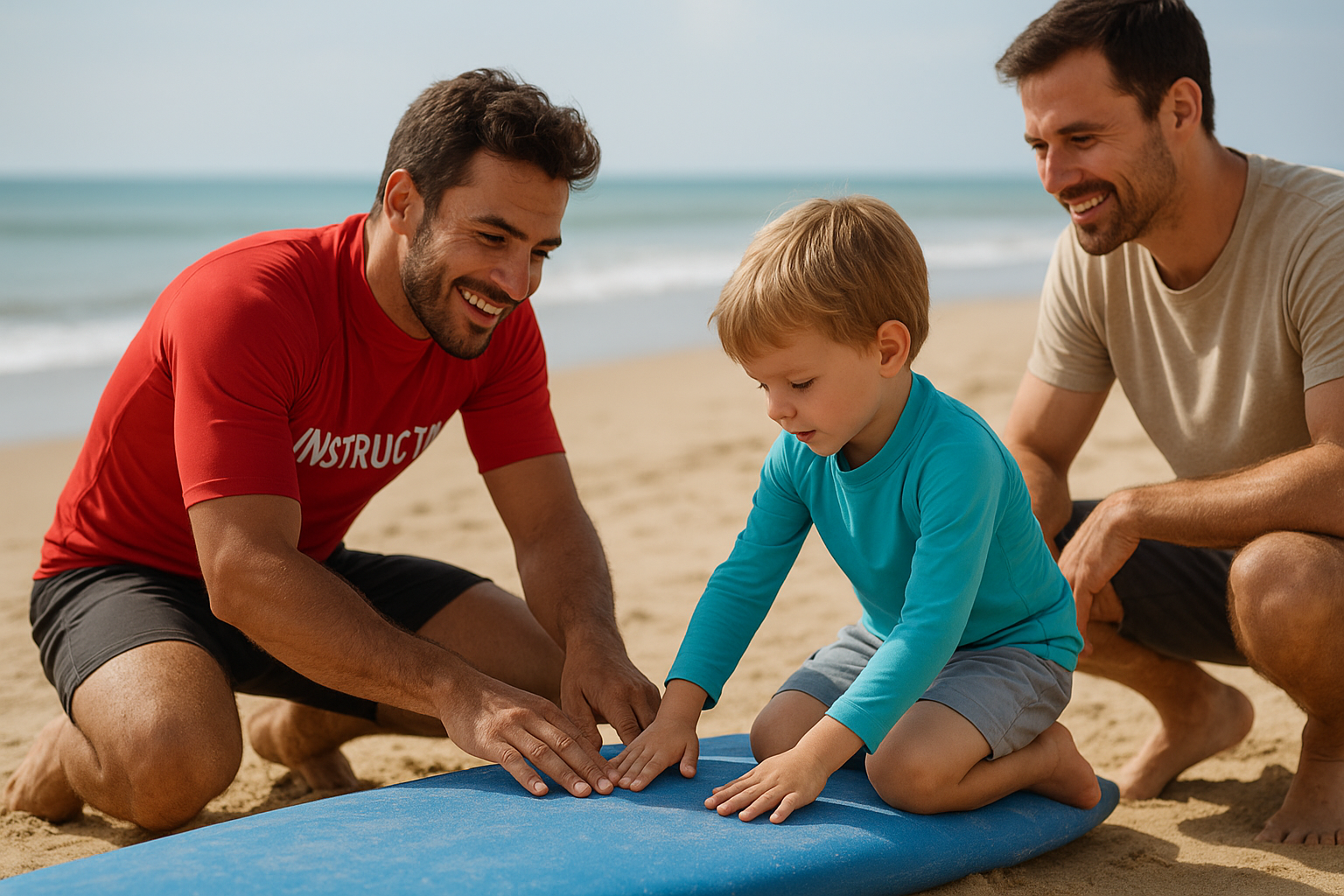
Experienced instructors tailor their coaching to each family member’s age and ability level.
How to Book and Prepare for Family Surf Classes
Booking a family surf lesson is straightforward when you know what to look for. For local comparisons, consult the best surf schools to match your family's needs. Follow these five steps to ensure a smooth, safe, and enjoyable experience for every member of your group:
- Research surf schools at your destination. Search specifically for certified schools that advertise family or beginner programs. Check reviews, instructor credentials, and stated safety policies before making contact. Look for ISA certification or equivalent national body recognition as a baseline standard.
- Confirm age requirements and group size limits. Contact the school directly to verify the minimum age for children and the recommended student-to-instructor ratio. A ratio of no more than 4:1 is generally considered safe for young beginners in surf classes for families.
- Book in advance and clarify included equipment. Reserve your session early — especially during peak travel seasons when demand is highest. Confirm what gear is provided so you know exactly what to bring from your accommodation.
- Prepare your family the day before. Ensure everyone gets adequate rest and eats a light meal a few hours before the lesson. Apply reef-safe sunscreen before leaving your accommodation — not at the beach, where application time cuts into lesson time. Review basic ocean safety with your children the evening prior.
- Arrive early and attend the full safety briefing. Arrive at least 15 minutes before your session starts. Pay close attention to the land-based safety briefing — it covers paddling technique, pop-up mechanics, rip current awareness, and how to fall safely. This information directly affects your safety in the water.
What to Wear and Bring to Family Surf Lessons
Wear comfortable swimwear that stays secure in the water. Board shorts and one-piece swimsuits are ideal. Most schools provide rash guards — lightweight UV-protective shirts that prevent board rash — but you can also bring your own. In cooler water, ask whether wetsuits are provided or available to rent.
Bring a towel, water bottle, and reef-safe sunscreen for after the session. Leave jewelry, watches, and loose accessories at your accommodation. Furthermore, bring a dry change of clothes and a snack for children who may be hungry after 90 minutes of physical activity in the sun.
Safety First: What Good Surf Schools Do Differently
Safety is the single most important factor when choosing a surf school for your family. The best schools hold certifications from recognized bodies such as the International Surfing Association (ISA), which sets global standards for surf instruction, water safety, and first aid training.
In addition to certified instructors, look for schools that use soft foam boards — often called “foamies” — for beginner lessons. These boards are lighter, more stable, and far less likely to cause injury than fiberglass shortboards. Furthermore, schools should conduct all family lessons in designated beginner zones where waves are gentle and manageable.
Always ask about the school’s emergency protocols before you book. Specifically, find out whether instructors hold current CPR and first aid certifications. Ask whether there are lifeguards on the teaching beach. A school that answers these questions confidently — and without hesitation — takes your family’s safety seriously.
Key Safety Questions to Ask Before You Book
- Are your instructors ISA-certified or recognized by an equivalent national body?
- What is the maximum student-to-instructor ratio during family sessions?
- Do you use foam boards for all beginner and family lessons?
- Are life vests available for children under a certain age or weight?
- Is there a lifeguard present on the beach during lessons?
- What is your emergency and evacuation protocol?
- Do instructors hold current CPR and first aid certifications?
Choosing the Right Surf School for Your Family
Beyond safety, the right school should feel welcoming and well-organized. Read through our comprehensive resource on choose a surf school for your family for a detailed checklist. Key factors to evaluate include instructor experience with children, class size, customer reviews from other families, and the school’s attitude toward beginners.
Additionally, consider the school’s beach location. Ideally, lessons should take place at a spot with consistent, small waves — not a beach known for heavy surf or strong rip currents. When traveling to Oahu, compare local options for family surf lessons Waikiki. Calm conditions make learning faster, more comfortable, and significantly safer for children of all ages.
For families visiting Hawaii, our detailed family surf lessons in Waikiki guide covers everything you need to know about learning to surf on Oahu’s iconic beginner-friendly shores.
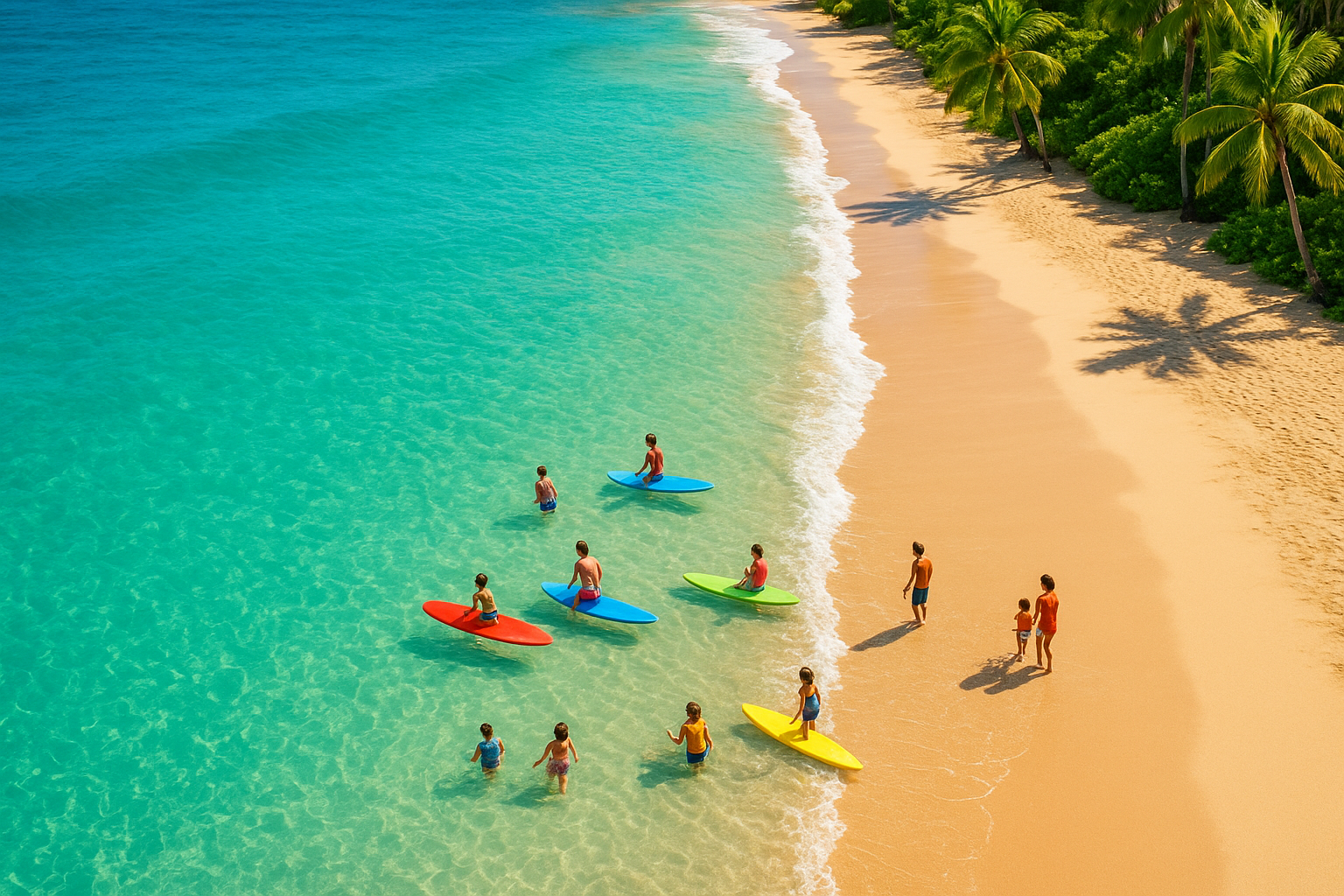
Calm, gentle surf conditions are essential for safe and enjoyable surf classes for families.
What to Expect During Your First Family Surf Lesson
Most surf classes for families follow a reliable, proven structure. The session begins with a 15 to 20 minute land-based segment where the instructor demonstrates stance, paddling technique, and the pop-up — the motion of going from lying flat on the board to standing upright in one fluid movement. Children typically find this part exciting, especially when they practice on the sand first.
After the land briefing, the family moves into shallow, calm water. Instructors guide each person individually, helping them paddle into small waves and coaching them through their first attempts to stand. Therefore, even complete beginners usually experience the thrill of riding a wave within their very first session.
Sessions typically run 60 to 90 minutes. However, many schools offer extended two-hour formats for families who want more time in the water. After the lesson, instructors often provide brief, personalized feedback and tips for improvement — particularly valuable for families planning multiple sessions during their trip.
A Minute-by-Minute Look at a Typical Family Surf Session
- 0–5 min: Meet your instructor, equipment fitting, and introductions.
- 5–20 min: Land-based safety briefing covering paddling posture, pop-up mechanics, and basic ocean safety rules including rip current awareness.
- 20–30 min: Enter the water. Practice paddling and board balance in shallow, ankle-to-knee-deep water.
- 30–70 min: Wave riding attempts with full instructor assistance. Each family member gets individual push-starts into small, rolling waves.
- 70–90 min: Independent practice with instructor nearby. Post-session feedback and photography opportunities.
For more guidance on finding the right provider, explore our tips on choosing the right surf school and our complete breakdown of family surf lessons that get everyone riding waves together.
How Many Sessions Does It Take a Family to Learn to Surf?
Most beginners can stand on a board and catch small waves within one or two lessons. However, building real confidence and consistency typically takes three to five sessions of regular practice. The pace varies significantly by age and prior water experience.
Specifically, children between eight and twelve often progress the fastest — their low center of gravity and fearlessness make them natural candidates for quick breakthroughs. Adults may take slightly longer to internalize the pop-up reflex, but consistent instruction closes that gap quickly.
For families visiting for a week or more, booking three to four lessons spread across the trip produces the most satisfying results. Consequently, many schools offer discounted family surf lessons Waikiki packages specifically designed for visiting families. Always ask about these packages when you first make contact.
Best Time of Day to Book Family Surf Lessons
Early morning is consistently the best time for surf classes for families. Winds are calmer at dawn, waves are more consistent, and the beach is significantly less crowded. These conditions create an ideal learning environment — quieter, safer, and more focused.
Late afternoon can also work well, particularly in tropical destinations where morning rainstorms are common. However, afternoon sessions mean stronger winds and more beach traffic in most coastal locations. Therefore, when in doubt, always opt for the earliest available slot — especially with young children whose energy and patience are freshest in the morning.
Top Destinations for Family Surf Classes Around the World
Not every beach is suited for family surf lessons. The ideal location has small, consistent waves, a sandy bottom, minimal rip current risk, and easy beach access. Fortunately, several world-class destinations meet all of these criteria and have well-established surf school ecosystems to support visiting families.
- Waikiki, Hawaii, USA: The birthplace of modern surfing and the world’s most famous beginner beach. See our Kids surf lessons in Waikiki guide. Long, rolling waves, warm water, and a dense concentration of experienced family surf schools make Waikiki the gold standard for surf classes for families.
- Byron Bay, Australia: Warm, mellow surf conditions and a thriving surf school culture. Excellent for families visiting the east coast of Australia.
- Tamarindo, Costa Rica: Consistent, gentle Pacific surf and schools that cater specifically to visiting families. Warm water year-round reduces the need for wetsuits.
- Newquay, Cornwall, UK: The UK’s surf capital, with sheltered bays and many schools that specialize in children’s and family programs.
- San Sebastián, Spain: Atlantic surf with family-friendly beginner beaches and a growing network of certified surf schools across the Basque region.
- Kuta, Bali, Indonesia: Gentle shore breaks, warm water, and affordable lesson rates make Bali one of the most accessible destinations for first-time family surfers in Asia.
According to Surfer Today’s global surf school guide, beginner and family-focused surf schools are among the fastest-growing segments of the surf industry worldwide — reflecting the surging demand from families looking for structured, safe ocean experiences.
Why Star Beach Boys Is a Trusted Choice for Surf Classes for Families
At starbeachboys.com, family surf experiences are at the heart of everything offered. Find local availability and book surf lessons near me to see current schedules and locations. The school’s highly trained instructors specialize in teaching participants of all ages and skill levels — from first-timers entering the ocean for the very first time to intermediate surfers refining their technique. Every program is built around three pillars: safety, progressive skill development, and genuine fun.
Specifically, the school welcomes vacationing families, local residents, and tourists alike. Operating in a coastal environment with ideal surf conditions, the team creates a personalized, structured learning environment that puts every family member at ease from the first moment on the beach. Consequently, Star Beach Boys has earned a strong reputation as a go-to destination for families seeking an authentic, memorable ocean experience.
Quick Answer: Surf classes for families are beginner-friendly ocean lessons where parents and children learn to surf together under the guidance of certified instructors. They typically last 60 to 90 minutes, include all necessary equipment, and are suitable for children as young as five or six years old with basic swimming ability. Article by Star Beach Boys instructors. Last updated: 2026-07-27. Author: StarBeachBoys Surf School. Last updated: 2026-06-27.
Frequently Asked Questions About Surf Classes for Families
What are surf classes for families?
Surf classes for families are structured ocean lessons designed to teach parents and children how to surf together in a safe, fun environment. Instructors adapt techniques to suit different ages and skill levels within the same group, making the experience accessible for everyone from age five upward.
What is the minimum age for children to join family surf lessons?
Most surf schools accept children as young as 5 or 6 years old for beginner family lessons, though policies vary by school. Always confirm the minimum age directly with the school before booking to avoid disappointment on the day.
Do kids need to know how to swim before taking surf lessons?
Basic swimming ability is strongly recommended before joining surf classes for families. Children should be comfortable in the water and able to float or tread water independently. Schools that teach in very shallow water may have more flexibility for young non-swimmers with parental supervision.
Are family surf lessons safe for young children?
Yes — reputable surf schools prioritize safety with ISA-certified instructors, foam boards, and calm beginner-friendly surf conditions. Life vests are typically available for very young participants. Always ask about safety protocols and CPR certification before booking.
How long does a typical family surf lesson last?
Most family surf lessons run 60 to 90 minutes. This includes a 15 to 20 minute land-based safety briefing, warm-up exercises on the sand, and time in the water with full instructor supervision. Extended two-hour formats are available at many schools.
Should we book group or private surf lessons for our family?
Private lessons offer personalized attention and are ideal for families with young children or mixed skill levels. Group lessons are more affordable and socially energetic. If your family includes children under eight or anyone with water anxiety, start with a private lesson and consider group sessions afterward.
What equipment is provided during family surf classes?
Most schools provide foam surfboards, rash guards, and sometimes wetsuits or life vests. Always confirm exactly what is included when booking so you know what to bring from your accommodation and can avoid unnecessary purchases.
How much do family surf lessons typically cost?
Group family surf lessons typically range from $50 to $100 per person per session. Private family lessons cost $150 to $300 or more depending on group size and destination. Many schools offer multi-lesson packages at a discounted rate for families booking three or more sessions.
What should families wear to a surf lesson?
Wear secure, comfortable swimwear — board shorts or one-piece suits work best. Schools provide rash guards, but you can bring your own. Apply reef-safe sunscreen before leaving your accommodation. Leave jewelry and watches behind.
How do I choose the right surf school for my family?
Look for ISA-certified instructors, a 4:1 or better student-to-instructor ratio, strong safety protocols, positive reviews from families, and foam boards for beginners. Visit the school’s website, read testimonials, and call ahead to ask the safety questions listed in this guide before committing.
Can parents and kids be in the same surf lesson together?
Yes — family-format surf lessons are specifically designed so parents and children learn side by side. Instructors trained in mixed-age teaching give age-appropriate guidance to each participant simultaneously, creating a shared experience rather than separating the family into different groups.
What is the best time of day to take family surf lessons?
Early morning is typically the best time. Winds are calmer, waves are more consistent, and the beach is less crowded — creating ideal learning conditions for all ages. Book the earliest available slot whenever possible, especially if your children are young.
How many sessions does it take for a beginner family to learn to surf?
Most beginners stand on a board and catch small waves within one or two lessons. Building real confidence and consistency takes three to five sessions. Families visiting for a week or more benefit most from booking three to four lessons spread across their stay.
What are the best destinations for family surf classes?
Top destinations include Waikiki in Hawaii, Byron Bay in Australia, Tamarindo in Costa Rica, Newquay in the UK, San Sebastián in Spain, and Kuta in Bali. Each offers gentle waves, warm water, and well-established family surf school ecosystems.
Conclusion
Surf classes for families offer something truly special: a shared adventure that builds confidence, strengthens bonds, and creates memories no vacation photo album can fully capture. From choosing the right school and confirming safety credentials to knowing what to wear, when to go, and what to expect in the water — preparation makes all the difference. Above all, the most important step is simply deciding to try. With the right instructors, the right location, and calm waves beneath your feet, every member of your family — regardless of age or fitness level — can experience the pure joy of riding a wave together. Start planning your family’s surf journey today, and discover why so many families return to the water again and again. For transparency and trust, include a short author bio and a clear “Last updated” date on this page so readers can see the instructor credentials and content freshness.