Personalized surf instruction is, hands down, the fastest and safest way to move from a nervous first-timer to a confident wave rider. Instead of following a rigid, one-size-fits-all curriculum, this coaching style shapes every drill, every correction, and every ocean session around you specifically — your skill level, your goals, your fitness, and the pace at which you actually learn best.
According to the International Surfing Association (ISA), structured, individualized coaching significantly shortens the time it takes new surfers to reach independent riding ability. Furthermore, personalized coaching lowers injury risk because students learn correct technique from the very first session rather than picking up bad habits in a crowded group lineup. In the sections below, we go far beyond the basics — covering lesson formats, real pricing considerations, instructor credentials, the best Hawaii locations for one-on-one coaching, and a full FAQ that answers every question a first-time or returning surfer might have.
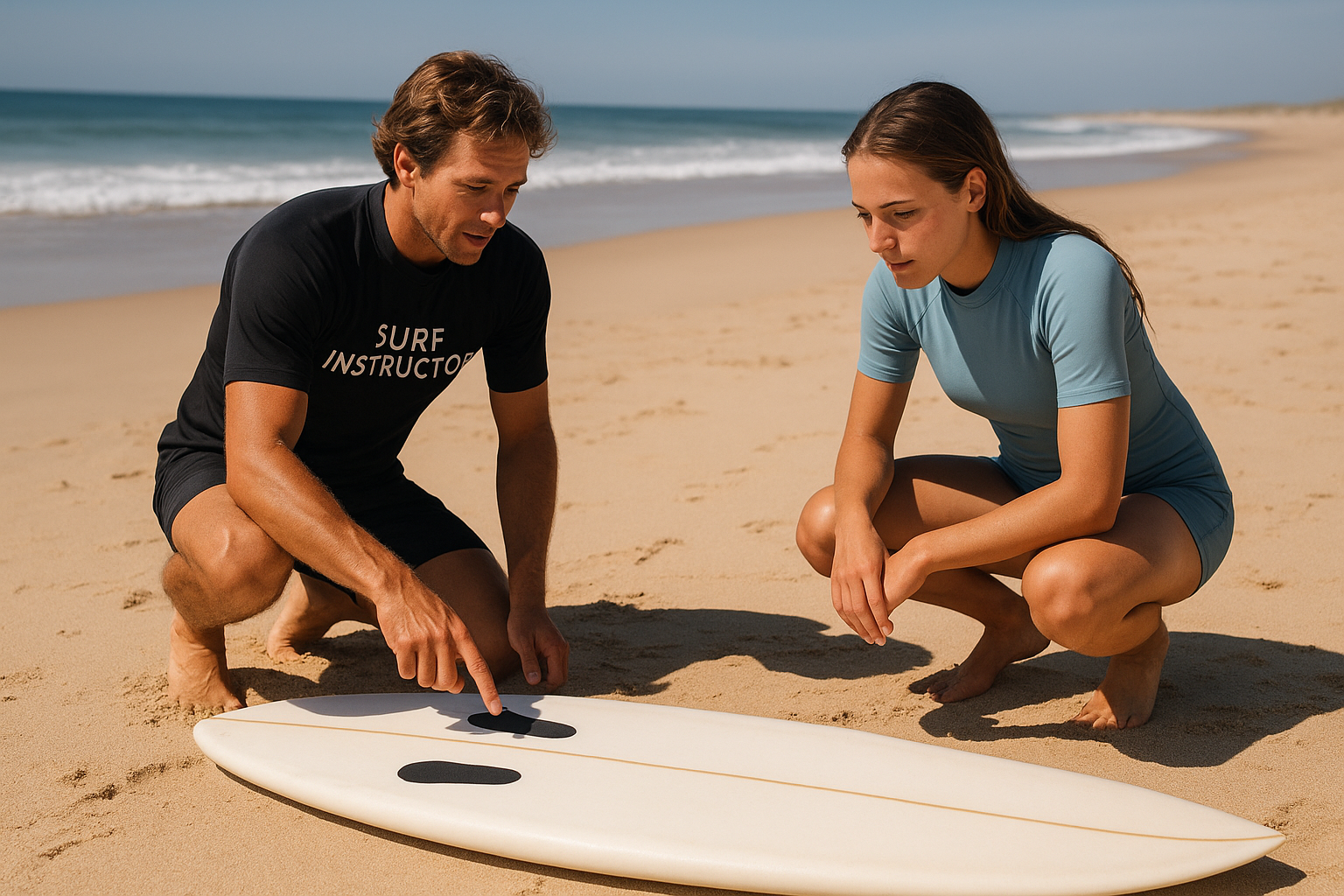
One-on-one beach coaching is a cornerstone of effective personalized surf instruction, building proper technique before a student ever paddles into the lineup.
What Is Personalized Surf Instruction?
Personalized surf instruction is a coaching model in which an experienced instructor designs and delivers a lesson specifically around one student, or a very small group. In contrast, large group classes force an instructor to split attention across many students at once, which means individual mistakes often go uncorrected. A personalized session flips that entirely: the instructor’s full focus stays on you, from the first safety briefing to the last wave.
This means your instructor assesses your swimming confidence, physical fitness, and any prior experience before you even touch a board. As a result, the lesson begins at exactly the right level, avoiding the frustration of content that’s either too advanced or insultingly basic.
For example, a complete beginner spends more time on beach safety, ocean awareness, and the pop-up technique, while an intermediate surfer might instead focus on reading wave faces or sharpening paddle efficiency. Therefore, every single minute in the water counts toward real, measurable progress — not generic repetition.
Why Tailored Surf Coaching Outperforms Generic Group Classes
Research in sports science consistently shows that individualized coaching accelerates skill acquisition. A study published in the Journal of Coaching Education found that athletes receiving individualized feedback improved technical skills up to 40% faster than those in standardized group programs. Surfing is no exception to this pattern.
In a group lesson, an instructor has to manage safety, coordinate timing, and split attention across multiple students simultaneously. Consequently, corrections often arrive late or stay vague rather than specific. In contrast, a personalized session lets the instructor catch a poor pop-up stance on the very first attempt and fix it immediately, before it becomes muscle memory.
Furthermore, personalized lessons adapt in real time. If you’re struggling with balance, your instructor can switch you to a wider longboard and pick gentler waves. If you’re progressing quickly, they can move you into more challenging conditions sooner. Simply put, this flexibility does not exist in a fixed group curriculum. To see exactly what this looks like in practice, review this breakdown of the benefits of private surfing lessons.
Key Benefits at a Glance
- Faster skill progression through targeted, real-time feedback
- Reduced injury risk from correct technique taught from day one
- Greater confidence in the water through gradual, managed challenge
- Flexible pacing that respects your comfort level and fitness
- Equipment matched precisely to your size, weight, and ability
- Instructor availability to answer questions the moment they come up
Types of Personalized Surf Instruction: Finding Your Perfect Fit
Not every student needs the exact same format, which is precisely why the strongest surf schools offer several tiers of personalized surf instruction rather than a single rigid product. Understanding these options in advance helps you book the right session the first time.
Private, one-on-one coaching gives you 100% of the instructor’s attention for the full lesson. This format works best for nervous beginners, dedicated adults chasing fast progress, and intermediate surfers correcting a specific flaw. For a detailed look at how this works on the North Shore and around Waikiki, see this guide to private surf coaching on Oahu with expert instructors.
Semi-private coaching pairs two or three students — often friends, couples, or siblings — with one instructor. This keeps costs lower than a fully private lesson while still allowing far more individual feedback than a standard group class of eight or more people.
Family-focused instruction adapts pacing, humor, and challenge level for mixed-age groups so that a seven-year-old and a forty-year-old parent can progress side by side. If you’re planning a trip with kids, compare these surf classes for families that are fun, safe, and beginner-friendly against this dedicated breakdown of which surf lesson packages are best for families.
Adult-specific coaching addresses the unique anxieties and physical considerations adults bring to the water. Many adult learners benefit from a slower entry into deeper water and more explanation of the “why” behind each drill. Start here: surf training for adults designed to get you riding waves today. And if you’re still deciding between formats, this comparison of whether private surfing lessons are better for beginners lays out the trade-offs clearly.
How to Get the Most from Your Surf Coaching Sessions
Making the most of personalized surf coaching requires preparation and active participation on your part. Follow these five steps to maximize your progress both in and out of the water.
- Assess your current skill level honestly. Before booking, evaluate your swimming confidence, any prior surfing experience, and your general fitness. This allows your instructor to plan the right session from the very start rather than discovering your baseline once you’re already in the water.
- Communicate your goals clearly to your instructor. Tell them exactly what you want to achieve — standing up for the first time, improving your pop-up, or reading waves more effectively. Specific goals allow your instructor to tailor every drill accordingly, instead of guessing.
- Practice land drills before entering the water. Spend adequate time on beach-based exercises such as the pop-up and paddle simulation. These drills build muscle memory that transfers directly into ocean performance, so do not rush through this phase.
- Apply real-time feedback immediately on the next wave. When your instructor gives a correction, apply it on your very next attempt rather than waiting. Immediate application dramatically speeds up skill retention and prevents bad habits from ever forming.
- Review your session and set goals for the next lesson. After each session, discuss what went well and what to focus on next time. Then practice independently between lessons to reinforce new skills and build genuine ocean comfort.
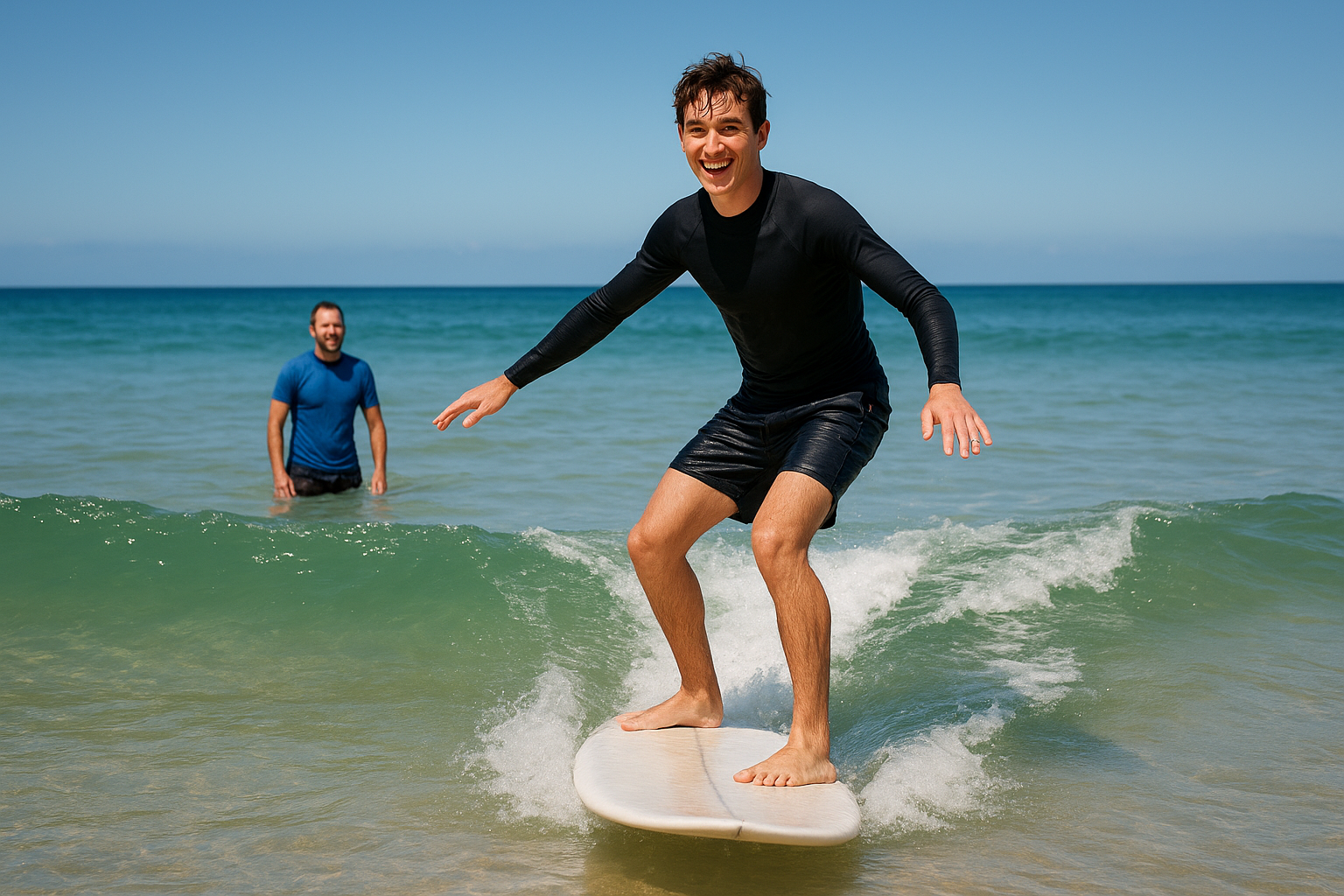
Successfully riding your first wave is a milestone that personalized surf instruction helps you reach sooner, and far more safely, than a crowded group class.
Who Benefits Most from One-on-One Surf Lessons?
Almost every type of surfer benefits from individualized coaching, but certain groups see especially dramatic results. Specifically, complete beginners gain the most immediate value because there are no established bad habits to unlearn, and every foundational skill gets built correctly from the ground up.
Similarly, intermediate surfers who feel stuck at a plateau often break through quickly with personalized attention. An experienced coach can spot subtle technique flaws — such as a twisted back foot or late paddle timing — that a surfer simply cannot see in themselves. Addressing these specific issues unlocks the next level of performance almost immediately.
Families with children also benefit enormously from tailored surf lessons. Children learn at different speeds and respond to different teaching styles. Consequently, an instructor working one-on-one, or in a very small family group, can adjust their communication, humor, and challenge level to keep young surfers engaged and safe.
Adult Learners and Ocean Confidence
Adults who are new to surfing often carry more anxiety about the ocean than younger learners do. Consequently, personalized instruction is especially valuable here because the instructor can pace the session around your comfort level rather than around a group’s average. In particular, the ability to pause, explain, and repeat a drill without holding up seven other students makes a measurable difference in how quickly adult anxiety turns into confidence.
What Does Personalized Surf Instruction Cost?
Price is naturally one of the first questions people ask, and it deserves a straightforward answer. Private personalized surf lessons typically cost more per session than group classes because you are paying for an instructor’s undivided time rather than a shared slot. However, that higher per-session rate often works out cheaper overall, since most students reach independent riding ability in far fewer total sessions.
Semi-private lessons sit in the middle, splitting the instructor’s rate between two or three students while still preserving most of the individualized feedback. Meanwhile, multi-lesson packages usually offer a lower rate per session than booking one-off lessons, which rewards students who commit to a structured progression. Before you book anywhere, it’s worth reading this comparison of which surf school offers the best value for lessons, since the cheapest listed price is not always the best overall value once progression speed and safety are factored in.
What to Look for in a Qualified Surf Instructor
Not all surf instructors offer the same quality of personalized coaching, so knowing what to look for before you book is essential. First and foremost, check for certification from a recognized body such as the International Surfing Association or a national surf coaching organization. These certifications confirm the instructor has been trained in teaching methodology, ocean safety, and first aid.
In addition to formal credentials, look for instructors who ask questions before the lesson even begins. A great coach wants to understand your background, your fears, and your goals before designing the session. If an instructor jumps straight into a standard routine without asking anything about you, that’s a clear sign the lesson may not be truly personalized.
Ocean safety knowledge matters just as much as coaching technique. The National Oceanic and Atmospheric Administration (NOAA) notes that rip currents are a leading cause of ocean rescues, which is precisely why a qualified instructor should brief every student on current awareness and safe re-entry before any lesson begins. Experience with diverse student types also matters greatly — an instructor who has taught children, adults, tourists, and competitive athletes brings a far broader toolkit to every session. At starbeachboys.com, the team of highly trained instructors brings exactly this kind of diverse, hands-on expertise to every lesson.
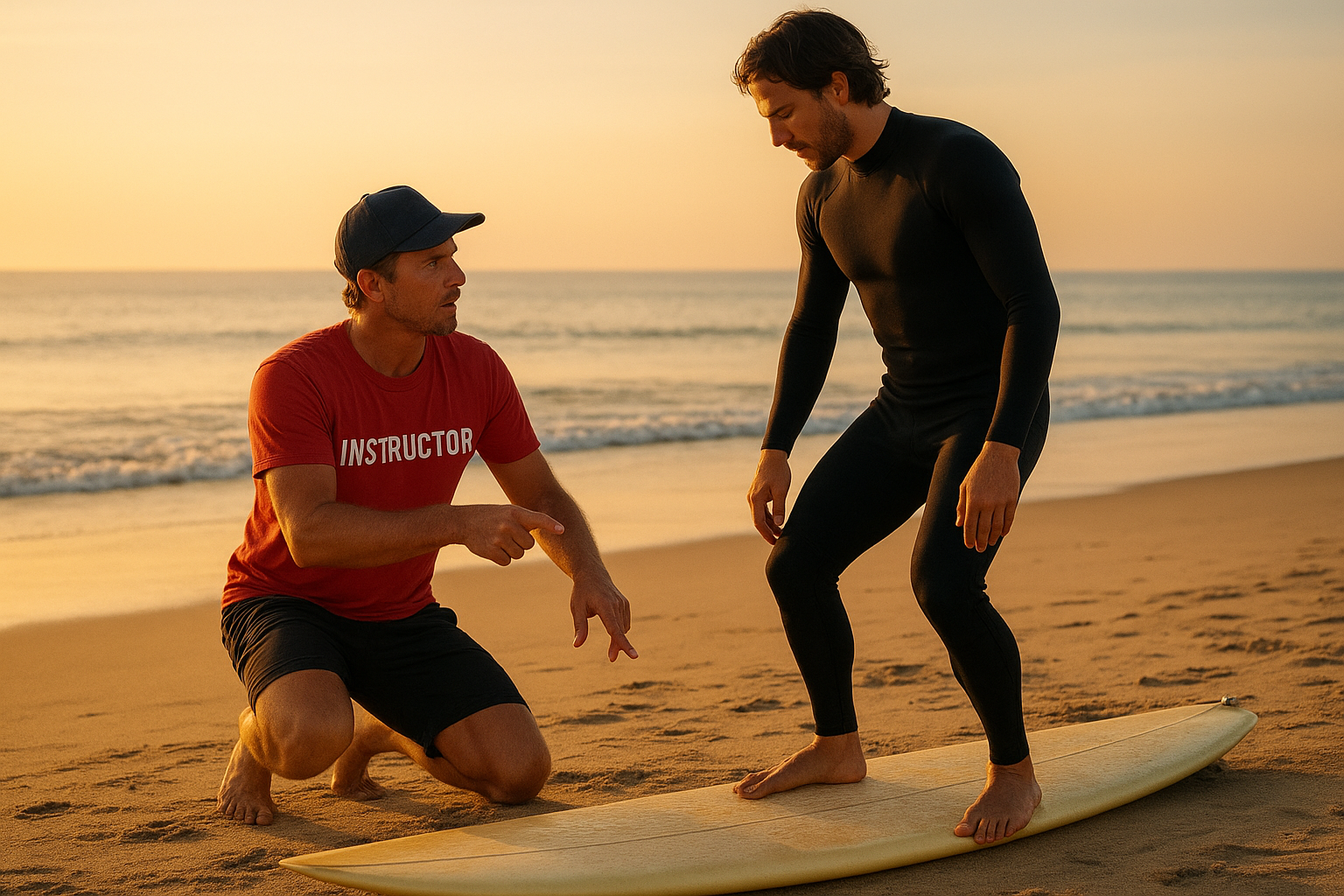
Certified instructors bring structured methodology and ocean safety expertise to every personalized surf instruction session.
Choosing the Right Surf School for Personalized Lessons
The quality of your personalized surf instruction depends heavily on the school you choose. Above all, look for a school that limits student-to-instructor ratios and explicitly offers individualized programs, rather than simply relabeling group lessons as “private” ones to charge more.
A reputable surf school will also match you with an instructor based on your profile, not just whoever happens to be available that morning. Furthermore, it will operate in surf conditions appropriate for your level, selecting breaks that are genuinely safe and productive rather than convenient for the school’s own logistics.
For a broader look at how different schools compare on the quality of their ocean experiences, this resource on which surf schools offer the best ocean experiences is worth reading before you decide.
Best Locations for Personalized Surf Instruction in Hawaii
Location genuinely matters for personalized surf instruction, since the right break for a beginner looks nothing like the right break for an advancing intermediate. Gentle, sandy-bottom breaks with slow-rolling waves are ideal for first sessions, while faster, more powerful breaks suit students ready to push their limits.
Oahu remains one of the best islands in the world for this kind of tailored coaching, thanks to its variety of beginner-friendly and advanced breaks within a short drive of each other. Learn more about how this works in practice with this guide to private surf coaching on Oahu with expert instructors. If Waikiki is on your itinerary, you can also explore Waikiki surf lessons, one of the world’s most iconic and forgiving surf destinations for personalized coaching.
Frequently Asked Questions About Personalized Surf Instruction
What is personalized surf instruction?
Personalized surf instruction is one-on-one or small-group coaching tailored to an individual surfer’s skill level, goals, and learning pace. Unlike generic group lessons, it adapts techniques and feedback specifically to each student.
How is personalized surf instruction different from group lessons?
Group lessons follow a fixed curriculum for all participants, while personalized instruction adjusts content, pacing, and feedback to the individual. This means faster skill development and more targeted corrections.
Is personalized surf instruction good for complete beginners?
Yes, personalized surf instruction is ideal for beginners because the instructor can focus entirely on foundational safety skills, ocean awareness, and board control from the very first session.
How many lessons do I need before I can surf on my own?
Most beginners can stand and ride small waves within one to three personalized sessions. However, building true confidence and independent skill typically takes five to ten lessons depending on the individual.
What age is appropriate for personalized surf lessons?
Surf lessons can be tailored for children as young as five years old through to adults of any age. Instructors adjust the approach, board size, and session length to suit each age group safely.
What should I bring to a personalized surf lesson?
You should bring sunscreen, a swimsuit or rash guard, a towel, and water. Most surf schools provide surfboards, leashes, and wetsuits as part of the lesson package. You can also purchase swim accessories like snorkel mask set.
Are private surf lessons more expensive than group lessons?
Private personalized surf lessons typically cost more per session than group lessons, but the accelerated learning and individual attention often make them more cost-effective overall. Many students reach their goals in fewer total sessions.
What is the difference between private and semi-private surf lessons?
Private lessons dedicate one instructor entirely to one student, while semi-private lessons split that same instructor’s attention between two or three students. Semi-private options cost less per person while still delivering far more feedback than a large group class.
Can intermediate surfers benefit from personalized surf coaching?
Absolutely. Intermediate surfers benefit greatly from personalized coaching because instructors can identify specific technique flaws and design drills to address them directly, which is difficult in a group setting.
What qualifications should a surf instructor have?
Look for instructors certified by recognized bodies such as the International Surfing Association (ISA) or national surf coaching associations. CPR and first aid certification is also important for water safety.
How do instructors customize a surf lesson to my skill level?
Before the lesson, a qualified instructor assesses your swimming ability, prior surf experience, and fitness level. They then select appropriate equipment, choose a suitable surf break, and design drills matched to your current ability.
Is personalized surf instruction safe for non-swimmers?
Non-swimmers should inform their instructor before the session. Lessons can be adapted to very shallow water with close supervision, but basic swimming ability is strongly recommended for safety in the ocean.
What common mistakes does personalized instruction help avoid?
Personalized instruction helps students avoid poor pop-up technique, incorrect foot placement, looking down at the board, and paddling inefficiency. Catching these errors early prevents bad habits from forming.
Conclusion: Why Personalized Surf Instruction Is Worth It
In summary, personalized surf instruction delivers faster progress, greater safety, and deeper confidence than any generic group class ever can. By tailoring every session to your specific skill level, goals, and comfort in the ocean, a qualified instructor transforms the learning curve from overwhelming into genuinely exciting.
Whether you’re stepping onto a surfboard for the very first time or working through a frustrating plateau as an intermediate surfer, personalized coaching gives you the targeted guidance that makes the difference. Above all, it ensures that every wave you catch is a step forward, not a random roll of the dice.
If you’re ready to experience the difference that truly personalized surf instruction can make, the expert team at starbeachboys.com is ready to build a program around you — your pace, your goals, and your ocean adventure. For a deeper walkthrough of the Waikiki area itself, see our Outrigger Canoe Club Honolulu: A Visitor’s Guide to the Real Waikiki Experience.