Surfing lessons in Honolulu are the fastest, safest way for a complete beginner to stand up on a board and ride real Pacific waves within a single two-hour session. Because Honolulu’s south shore breaks slowly over sand rather than reef, first-timers get long, forgiving rides instead of the steep, punishing waves found at more advanced surf spots. This guide goes further than any other resource online: it covers what happens minute-by-minute during your lesson, how much you should actually pay, which beach fits your comfort level, what certifications your instructor should hold, and the exact etiquette that keeps you safe in a crowded lineup. By the end, you will know more about booking Surfing Lessons in Hawaii than most people learn during their entire trip.
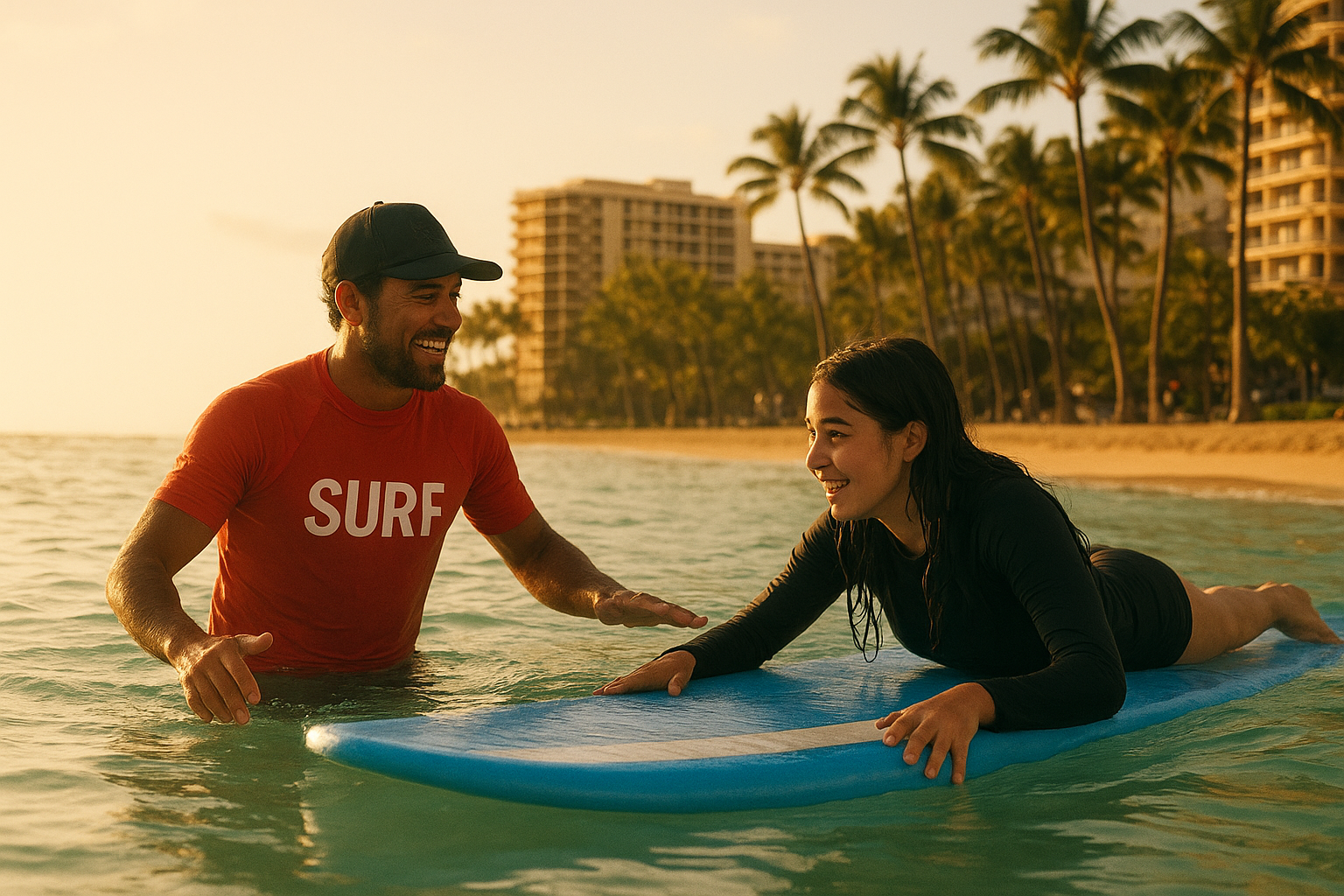
An instructor works one-on-one with a student during surfing lessons in Honolulu. For a deeper walkthrough of what to expect on the sand and in the water, see our Where to Find Surfing Lessons in Waikiki: The Complete Guide.
What Are Surfing Lessons in Honolulu?
Surfing lessons in Honolulu are structured, instructor-led sessions that teach paddling, wave selection, balance, and the standing motion known as the pop-up. Most sessions happen at beginner-friendly breaks such as Waikiki, where waves roll in slowly over a sandy, hazard-free bottom. As a result, first-timers can practice repeatedly without the intimidating drop-ins or sharp reef found at advanced spots elsewhere on Oahu.
These lessons typically include a short land-based briefing, followed by in-water coaching on catching and riding whitewater waves before progressing to unbroken swells. According to the surf education community referenced on Wikipedia’s overview of surfing, the sport originated in Polynesia, and Hawaii remains one of its most historically significant homes. Because of that heritage, learning to surf in Honolulu carries cultural meaning that goes well beyond the physical challenge of standing on a board.
Who Can Take Surfing Lessons in Honolulu?
Surf schools in Honolulu welcome participants of nearly every age and fitness level, from five-year-old children to grandparents celebrating a milestone vacation. In particular, programs are structured to progress gradually, so nobody is pushed beyond their comfort zone on their first wave. Families, honeymooners, solo travelers, and local residents all take part, which makes the lineup a genuinely social and welcoming environment rather than an intimidating one.
Why Learn to Surf in Honolulu Instead of Anywhere Else?
Honolulu offers a rare combination of warm year-round water, consistent small waves, and a long surf season that never really closes. Consequently, it is one of the most accessible places in the world for beginners to learn without waiting for a specific month. In contrast to colder surf destinations that require thick wetsuits and booties, Honolulu’s climate lets students focus purely on technique instead of fighting the cold — many visitors choose Waikiki surf lessons for beginner-friendly conditions and certified local instructors.
In addition, the density of experienced instructors in the area means students benefit from generations of local surf knowledge passed down through Waikiki’s beach communities. Above all, learning in Honolulu connects visitors to the very birthplace of modern surf culture, adding a meaningful layer to an already thrilling experience. If you want a wider island view, our guide to learning to surf in Oahu with the best spots and tips compares Honolulu against other beginner breaks around the island.
Quick Answer: The best surfing lessons in Honolulu happen at Waikiki Beach, where gentle, slow-breaking waves and certified local instructors create a low-risk environment for beginners to learn to paddle, stand, and ride their first wave — usually within the first hour.
Best Beaches for Surfing Lessons in Honolulu
Waikiki Beach remains the top choice for surfing lessons in Honolulu, thanks to its long, mellow rollers and sandy, hazard-free bottom. Specifically, spots like Canoes and Queens offer waist-high waves that break slowly, giving beginners extra time to find their footing before the wave fully forms. Similarly, Kuhio Beach provides a protected, family-friendly stretch that many local schools favor for very first lessons because lifeguards are stationed nearby.
Beyond Waikiki: Other Beginner-Friendly Honolulu Breaks
Ala Moana Bowls, on the west end of Waikiki, offers slightly more shape for students who have already stood up a few times and want a gentle step up. Meanwhile, White Plains Beach near Ewa Beach provides a quieter, less crowded alternative on days when Waikiki’s lineup fills with tourists. For those exploring beyond Honolulu proper, this guide to surfing lessons on Oahu covers additional beginner-friendly locations across the island, including the North Shore’s calmer summer conditions.
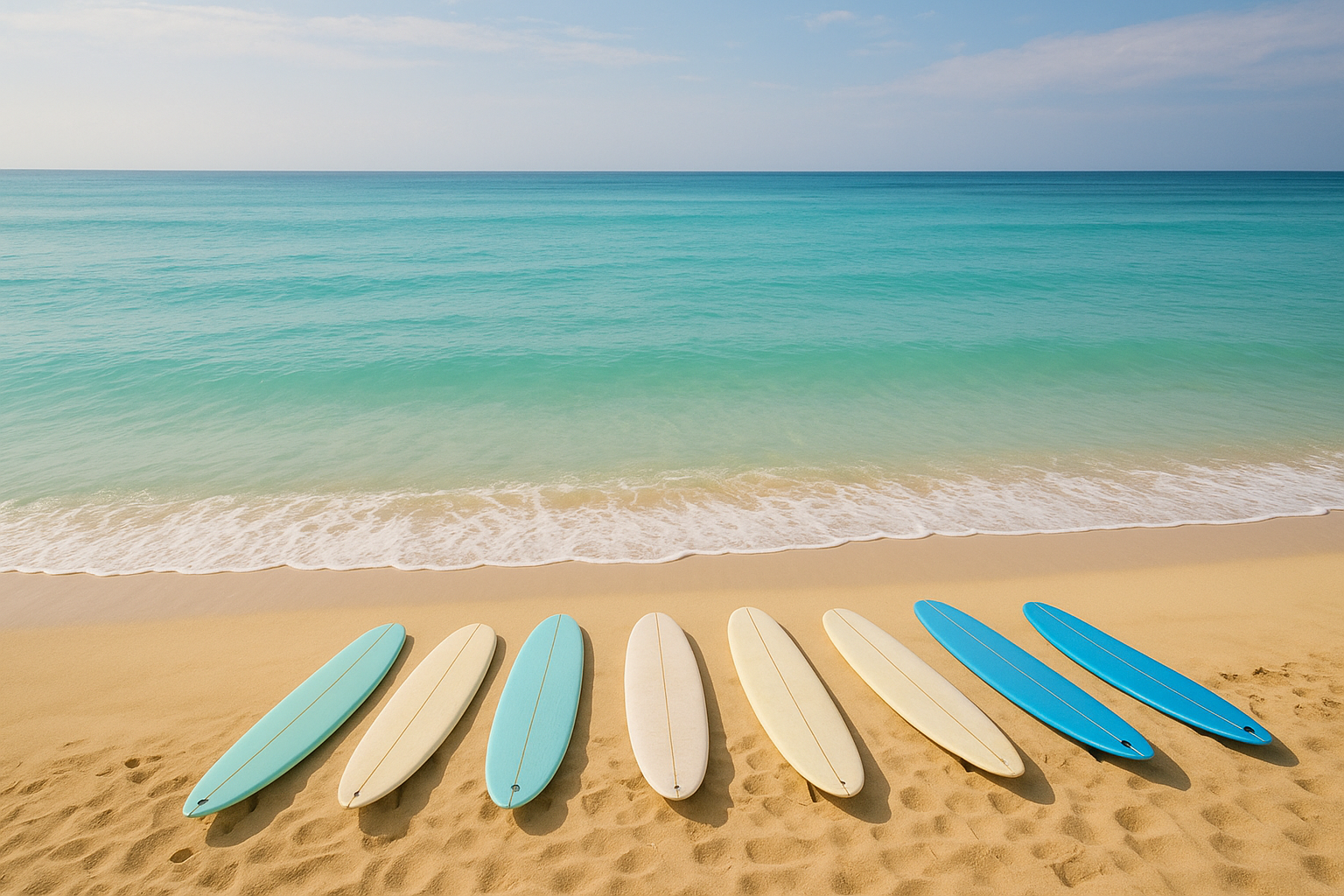
Boards lined up on the sand before a beginner group session.
What to Expect During Your First Surf Lesson
Your first surf lesson typically begins on the sand, where the instructor explains board anatomy, paddling technique, and the standing-up motion known as the pop-up. Afterward, the group heads into shallow water to practice paddling and catching small waves and follow our surf lessons in Hawaii guide. Therefore, by the time you attempt to stand, your body already has muscle memory for the motion, which dramatically shortens the learning curve.
Most beginners manage to ride at least one wave standing by the end of a two-hour session. However, progress varies by individual, and good instructors adjust pacing so nobody feels rushed or discouraged. For a detailed breakdown of pricing at this stage, see this resource on how much surfing lessons cost in Honolulu.
A Typical Two-Hour Lesson Timeline
- 0–15 minutes: Land briefing covering board parts, paddling posture, and pop-up mechanics.
- 15–40 minutes: Shallow-water practice catching whitewater from a prone position.
- 40–100 minutes: Instructor-assisted wave catches with real-time pop-up coaching.
- 100–120 minutes: Independent attempts and a recap of what to practice next time.
Types of Surfing Lessons in Honolulu: Group, Private, Semi-Private & Kids
Group lessons pair you with three to six other students under one instructor, which keeps costs low and adds a social, encouraging atmosphere. In contrast, private lessons dedicate the instructor’s full attention to you alone, which typically means standing up faster and correcting bad habits before they become ingrained. Semi-private lessons, booked with a partner or small family group, split the difference by keeping the price manageable while still offering close attention.
Kids’ lessons deserve special mention because instructors adjust board size, wave selection, and even the length of in-water time based on a child’s stamina and confidence. Consequently, a six-year-old’s lesson looks quite different from an adult session, even though both happen on the same stretch of Waikiki sand. Families traveling with mixed ages often book a semi-private slot so parents and children can learn side by side.
What to Wear and Bring to Your Surfing Lesson
Wear a swimsuit or board shorts that stay secure while paddling, and consider a rash guard to prevent chafing from lying on the board. Most reputable schools supply the surfboard itself, along with a rash guard and sometimes reef-safe sunscreen, so you rarely need to buy specialized gear beforehand. Still, it helps to bring your own towel, a reusable water bottle, and a hat for the walk to and from the beach.
Above all, apply reef-safe sunscreen at least twenty minutes before entering the water so it has time to bond with your skin. Finally, leave jewelry and loose accessories at your hotel, since they can slip off in whitewater and rarely get recovered from the sand.
Best Time of Year for Surfing Lessons in Honolulu
Unlike Oahu’s famous North Shore, which turns dangerous for beginners every winter, Honolulu’s south-facing beaches stay approachable year-round. That said, the calmest conditions for beginners usually arrive from May through September, when south swells stay small and consistent. Winter months can still work well for lessons, since Waikiki’s reef and sandbar configuration blocks most of the larger north swells that hit the other side of the island.
As a result, you can realistically book Oahu surfing lessons during any month of your trip without worrying about a missed surf season. Early morning slots, before the trade winds pick up, generally offer the smoothest, glassiest water for a first-timer’s balance and confidence.
How to Choose the Right Surf School in Honolulu
Selecting a quality surf school makes a significant difference in both safety and enjoyment. Below is a straightforward process to follow before booking your surf lessons in Hawaii.
- Check instructor certification and experience. Verify that instructors hold current lifeguard or coaching credentials and have logged real teaching hours in Honolulu’s waters.
- Compare student-to-instructor ratios. Smaller groups, ideally four students or fewer per instructor, mean more individual correction and faster progress.
- Read reviews and ask about safety protocols. Look into recent feedback and ask directly how the school handles changing surf and weather conditions.
- Confirm equipment quality and inclusions. Make sure board rental, rash guards, and safety gear are included and properly sized for beginners.
- Book in advance during peak season. Reserve your spot a few days ahead during busy months to avoid crowded lineups and limited availability.
If you want to compare specific options, this roundup of the best surfing schools in Oahu breaks down programs for every skill level, from total beginners to those chasing bigger swells. You can also review options for where to find surfing lessons throughout Hawaii if you plan to island-hop during your trip.
How Much Do Surfing Lessons in Honolulu Cost?
Group surf lessons in Honolulu generally cost between $75 and $100 per person for a two-hour session. Private lessons, in contrast, range from $150 to $250 depending on instructor experience and lesson length. Furthermore, multi-day packages often reduce the per-lesson price for students planning to practice several times during their stay.
- Group lessons: $75–$100 per person, 2 hours, 3–6 students per instructor.
- Semi-private lessons: $110–$160 per person, 1–2 partners per instructor.
- Private lessons: $150–$250, one-on-one coaching with faster progress.
- Multi-day packages: Often 10–20% cheaper per session than single bookings.
For a complete cost breakdown, including what factors influence pricing and how private lessons compare to group sessions, review this dedicated guide on surf lesson pricing in Honolulu. You can also explore booking options directly through Star Beach Boys, a local surf school offering lessons across skill levels.
Surf Instructor Certifications and Safety Standards
Reputable Honolulu surf schools employ instructors who hold current lifeguard certification, CPR training, and often coaching credentials recognized by bodies such as the International Surfing Association (ISA). Consequently, asking about certification before booking is not overcautious — it is one of the simplest ways to gauge a school’s professionalism. In addition, well-run schools carry general liability insurance and maintain a documented safety briefing for every session, not just for larger groups.
Ocean Safety Tips for Beginner Surfers in Honolulu
Ocean conditions can shift quickly, so understanding basic safety is essential before paddling out. The National Oceanic and Atmospheric Administration (NOAA) notes that rip currents, or narrow channels of fast-moving water, are a leading cause of ocean rescues worldwide. Consequently, a qualified instructor’s guidance on spotting these currents is invaluable for beginners.
Above all, always surf with a buddy or instructor, check daily surf reports through resources like the National Weather Service Honolulu office, and never surf beyond your comfort level. In addition, applying reef-safe sunscreen protects both your skin and the marine environment that makes Honolulu’s water so clear in the first place.
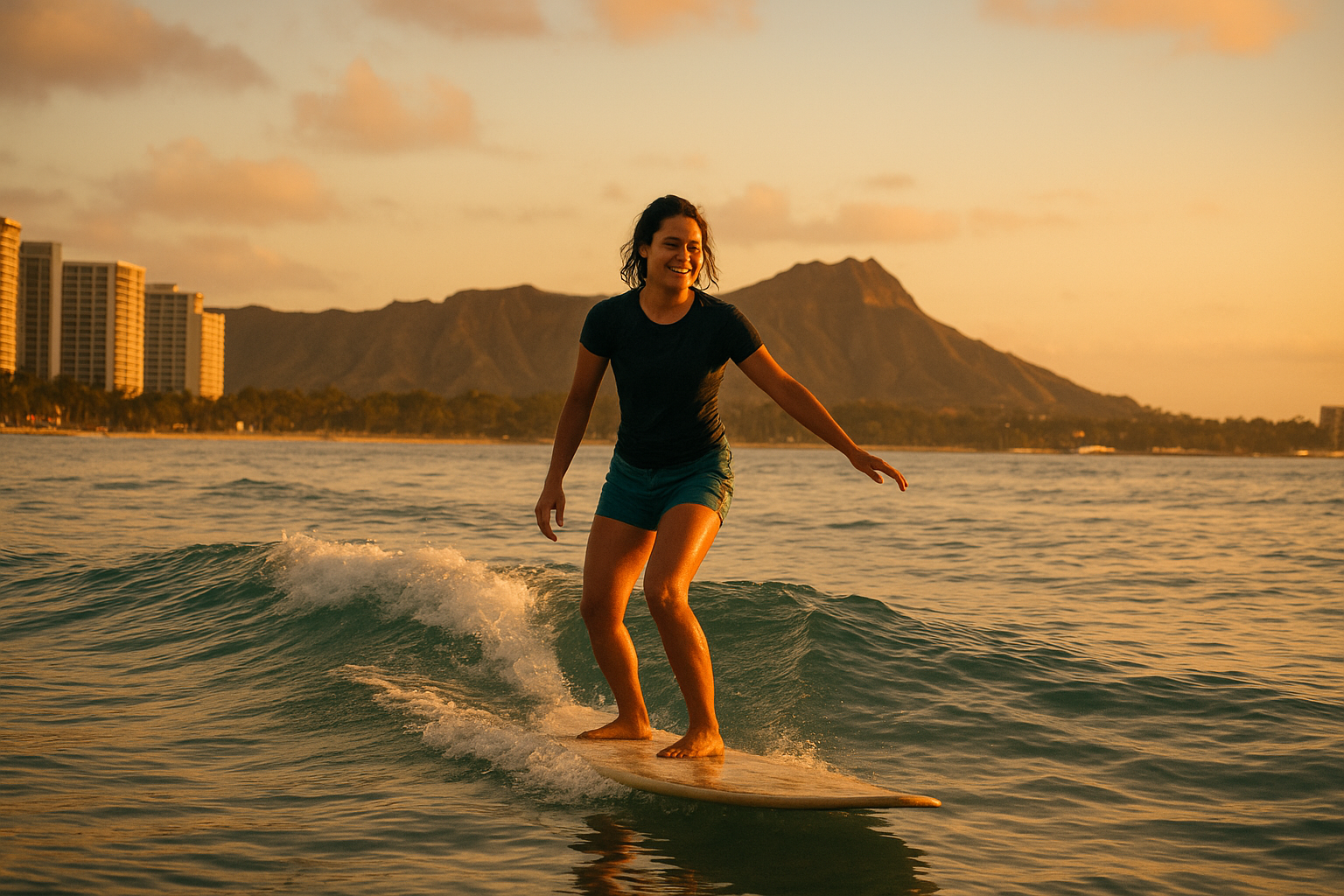
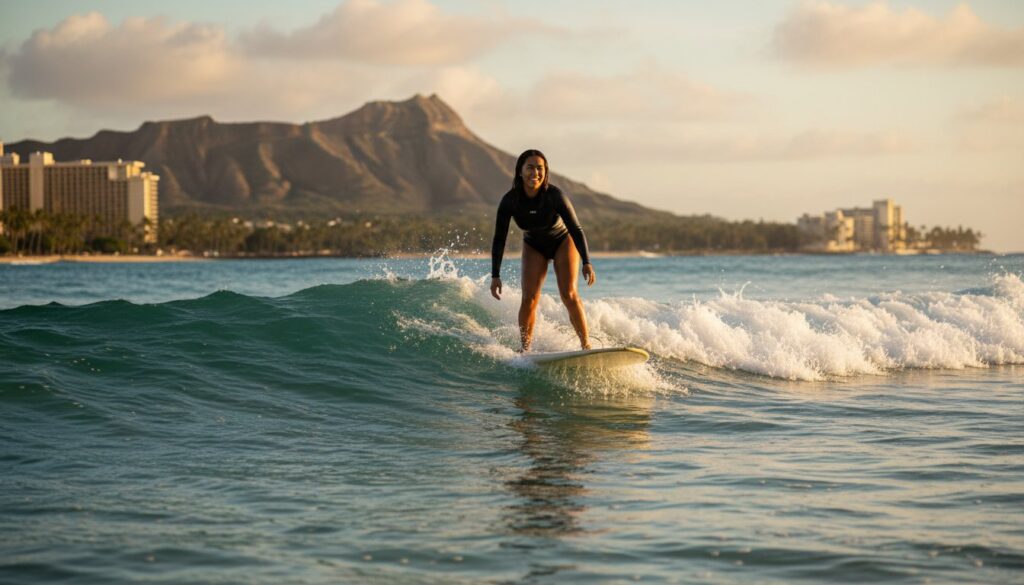
A student rides a gentle wave with Diamond Head framing the horizon.
Surf Etiquette 101: Lineup Manners Every Beginner Should Know
Every surfer waiting for a wave shares an unwritten rulebook, and understanding it early prevents collisions and awkward moments. The surfer closest to the wave’s breaking point, known as the peak, generally has priority and the right of way. Therefore, beginners should hold back rather than paddling for every wave that comes through, even when it looks tempting.
In addition, always paddle around the outside of a breaking wave rather than through the middle of the lineup, since this keeps you clear of other surfers riding toward shore. Finally, a simple nod or thank-you after someone yields a wave goes a long way toward being welcomed back into a crowded Waikiki lineup.
Tips for Making the Most of Your Honolulu Surf Lessons
First, arrive well-rested and hydrated, since paddling requires more stamina than most beginners expect. Second, wear reef-safe sunscreen and reapply it if your session runs long. Third, listen closely during the land briefing, as understanding wave etiquette prevents collisions in a crowded lineup.
Finally, keep an open mind about falling. Every surfer, no matter how skilled, spends plenty of time underwater while learning, and that is simply part of the process. If you are planning your trip around learning to ride waves in Hawaii, this Honolulu surf lesson planning guide offers additional preparation advice, and our complete beginner’s guide to surfing lessons in Honolulu covers the booking process step by step.
Finding the Right Beach School Near You
Many schools operate directly along Waikiki’s shoreline, making logistics simple for visitors staying nearby. However, some travelers prefer schools slightly outside the busiest tourist strip for a quieter learning environment. Either way, this comparison of surf lessons and beach schools on Oahu can help narrow down the best fit for your travel plans, and our related beginner’s guide to booking a surfing lesson in Honolulu walks through the reservation process in more detail.
Surfing Lessons in Honolulu vs. Other Oahu Surf Spots
Compared to the North Shore, where winter swells can exceed twenty feet, Honolulu offers a far gentler learning curve without sacrificing the classic Hawaiian surf atmosphere. Similarly, the West Side’s breaks often involve stronger currents and less instructor availability, making Honolulu the more practical choice for a structured first lesson. In short, no other part of Oahu combines beginner-friendly waves, instructor density, and easy access from hotels quite like Honolulu does.
Frequently Asked Questions About Surfing Lessons in Honolulu
What are surfing lessons in Honolulu?
Surfing lessons in Honolulu are guided instructional sessions teaching paddling, balance, and wave riding, usually at beginner-friendly spots like Waikiki. They include equipment and safety guidance from certified instructors.
How much do surfing lessons in Honolulu cost?
Group lessons typically cost $75 to $100 per person, while private lessons range from $150 to $250. Multi-day packages often lower the average cost per session.
Do I need to know how to swim to take surf lessons?
Yes, basic swimming ability is required before booking. Most schools recommend being comfortable swimming unassisted for at least a few minutes.
How long does a typical surf lesson last?
A standard lesson runs 90 minutes to two hours, including a land briefing and in-water coaching. Private lessons can sometimes be extended on request.
What is the best beach for beginner surf lessons in Honolulu?
Waikiki Beach is the top choice due to its gentle, slow-breaking waves and sandy bottom. Its consistent small swells suit first-time surfers especially well.
What should I bring to my first surfing lesson?
Bring a swimsuit, towel, sunscreen, and a willingness to fall a few times. Most schools supply the board, rash guard, and other necessary gear.
Is it better to take a group or private surf lesson?
Group lessons are more affordable and social, while private lessons offer faster, personalized progress. Nervous beginners often prefer the one-on-one attention of a private session.
What age is appropriate for kids to start surf lessons?
Most schools accept children around five or six years old. Instructors adjust board size and teaching pace based on the child’s confidence and age.
What are common mistakes beginners make when learning to surf?
Common errors include standing up too fast, poor board positioning, and weak paddling before catching a wave. A good instructor corrects these issues in real time.
How is surfing in Honolulu different from other locations?
Honolulu offers warm water year-round and gentle, beginner-friendly breaks unlike many colder or more advanced surf destinations. This makes it one of the most accessible places to learn worldwide.
Can I take surfing lessons if I am not very fit?
Yes, lessons are designed for all fitness levels, and instructors adapt the pace accordingly. Basic swimming ability and mobility are still necessary for safety.
What should I look for when choosing a surf school in Honolulu?
Look for certified instructors, small group sizes, positive reviews, and clear safety protocols. In addition, confirm that equipment is well-maintained and beginner-appropriate.
Are surfing lessons in Honolulu available year-round?
Yes, Honolulu’s south-facing beaches stay beginner-friendly all year, unlike the North Shore’s dangerous winter swells. May through September typically offers the calmest conditions.
How far in advance should I book surfing lessons in Honolulu?
Booking three to seven days ahead is usually enough, though peak season (June through August and winter holidays) can fill up faster. Reserve earlier if you need a specific private time slot.
Final Thoughts on Surfing Lessons in Honolulu
Surfing lessons in Honolulu remain one of the most rewarding ways to experience Hawaii’s coastline, whether you are a first-time visitor or a returning local looking to improve. From gentle beginner-friendly breaks at Waikiki to certified instructors who prioritize safety and etiquette, the island offers an ideal environment for building real skill in the water. As a result, most students leave their first session already planning their next one. This guide was written by a local surf instructor — add a byline, short bio with credentials, and a clear "Last updated" date to strengthen trust.
Ultimately, the best way to start is to choose a certified school, prepare with basic swimming confidence, pack reef-safe sunscreen, and stay open to the learning process. With the right guidance, catching your first wave during surfing lessons in Honolulu can become a memory that lasts far beyond your vacation.