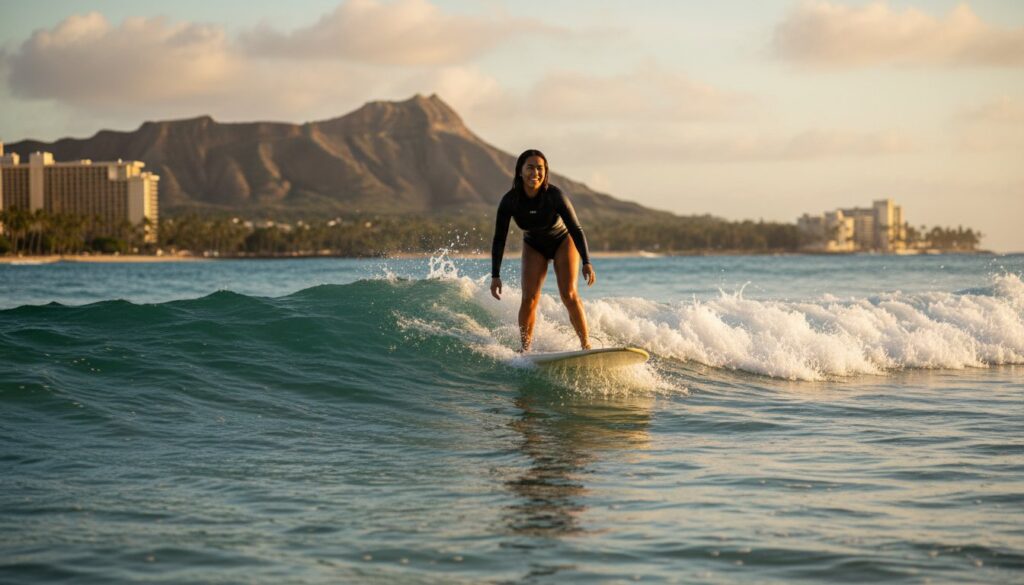
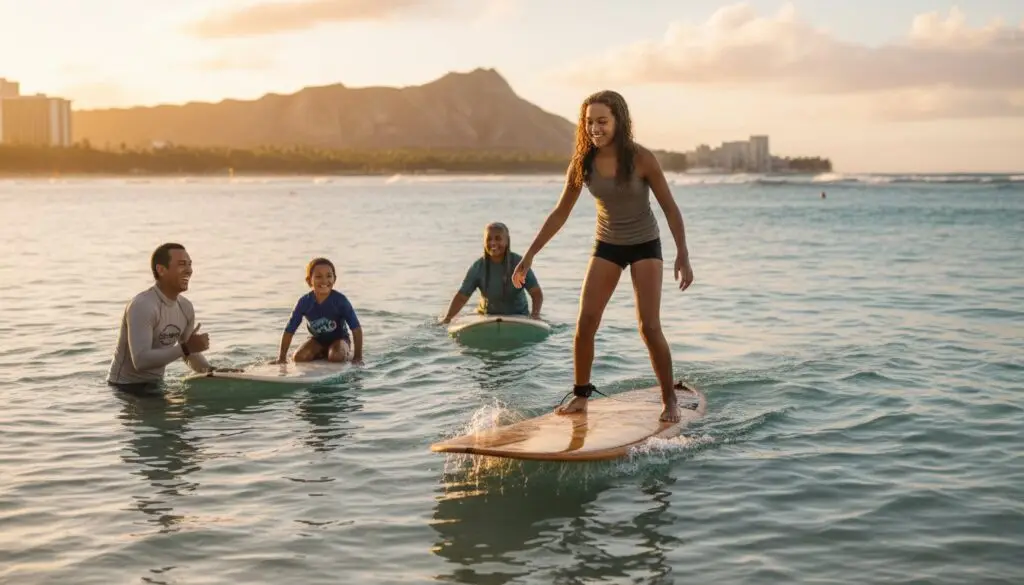
A surfing lesson honolulu instructor teaches usually blends safety, technique, and genuine Hawaiian ocean culture into one unforgettable morning. Because Waikiki’s gentle, rolling waves are famously forgiving, this stretch of coastline has become one of the best places on Earth for beginners to learn. In addition, expert coaching means you spend less time struggling and more time actually riding waves. This guide walks through cost, what to expect, and how to book the right lesson for your skill level.
Quick Answer: A surfing lesson honolulu typically costs between $75 and $150 per person for a two-hour group session at Waikiki Beach, and includes board rental, a rash guard, and hands-on instruction from a certified local surfer.
What Is a Surfing Lesson Honolulu?
A surfing lesson honolulu is a guided, instructor-led session that teaches beginners and intermediate surfers the fundamentals of catching and riding waves along Oahu’s south shore. Typically, these lessons take place at Waikiki Beach, where warm water and small, consistent swells create near-ideal learning conditions. As a result, students often stand up and ride their very first wave within the first hour.
Unlike renting a board and paddling out alone, a structured lesson includes water safety briefings, ocean awareness training, and hands-on coaching from a certified instructor. Furthermore, most programs are designed to progress at the student’s own pace, whether that’s a first-timer or someone polishing their pop-up before a bigger trip. You can learn more about how these sessions are structured at Honolulu surf lessons that teach you to ride waves in Hawaii.
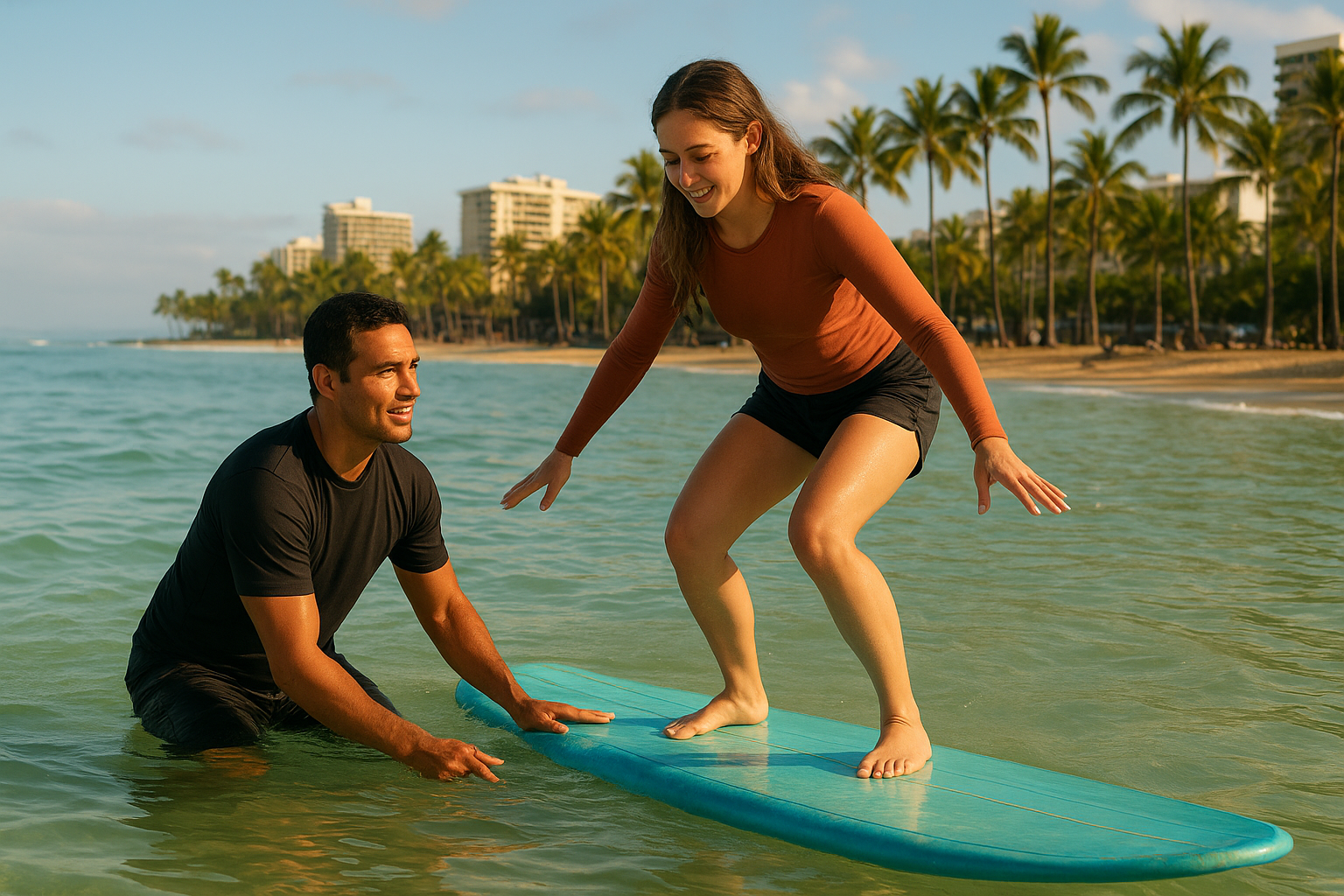
An instructor guiding a beginner through the basics of a surfing lesson honolulu style at Waikiki.
Why Take Surf Lessons in Honolulu
Honolulu’s south shore is home to some of the gentlest, most forgiving beginner waves anywhere in the world. Specifically, breaks like Canoes and Populars roll in slowly over a shallow reef, giving new surfers extra seconds to find their balance. In contrast, many mainland beach breaks are steep, fast, and far less forgiving for a first attempt.
Above all, this stretch of coastline carries deep surf history, dating back to the legendary Hawaiian waterman Duke Kahanamoku, who helped popularize surfing worldwide. Consequently, learning here connects visitors to both the sport’s roots and its future. Meanwhile, warm year-round water temperatures mean wetsuits usually aren’t necessary, which makes the whole experience more comfortable for beginners of every age.
How Much Do Honolulu Surf Lessons Cost?
Pricing for a surfing lesson honolulu generally falls between $75 and $150 per person for a two-hour group class, according to typical rates published by local surf schools. Private lessons, however, cost more since they include one-on-one attention and flexible scheduling. Semi-private lessons for couples or friends usually sit somewhere in between.
In addition, most packages include board rental, a rash guard, and sometimes photos of your session. For a full, up-to-date breakdown, see this detailed guide on how much surfing lessons cost in Honolulu. Therefore, it’s worth comparing group versus private options based on your budget and how quickly you want to progress.
How to Book Your First Surfing Lesson in Waikiki
Booking a lesson is simpler than most first-timers expect. Below is the process most students follow, from choosing a lesson type to catching that first wave.
- Choose your skill level and lesson type. Decide between a group lesson, which is social and budget-friendly, or a private lesson for faster, personalized progress.
- Check the surf and weather forecast. Review conditions a day or two ahead so you know roughly what to expect once you’re in the water.
- Book in advance. Reserve your spot online or by phone, especially during busy summer weeks when time slots fill quickly. Explore options at Oahu surfing lessons for learning to surf in Hawaii.
- Arrive early for your safety briefing. Show up roughly fifteen minutes early to complete paperwork and get fitted with equipment before heading to the sand.
- Paddle out and catch your first wave. Follow your instructor’s cues on timing and technique as they guide you into small, manageable waves near shore.
Similarly, if you’re still deciding where to start, this resource on where to find surfing lessons in Waikiki covers additional beach options and instructor tips.
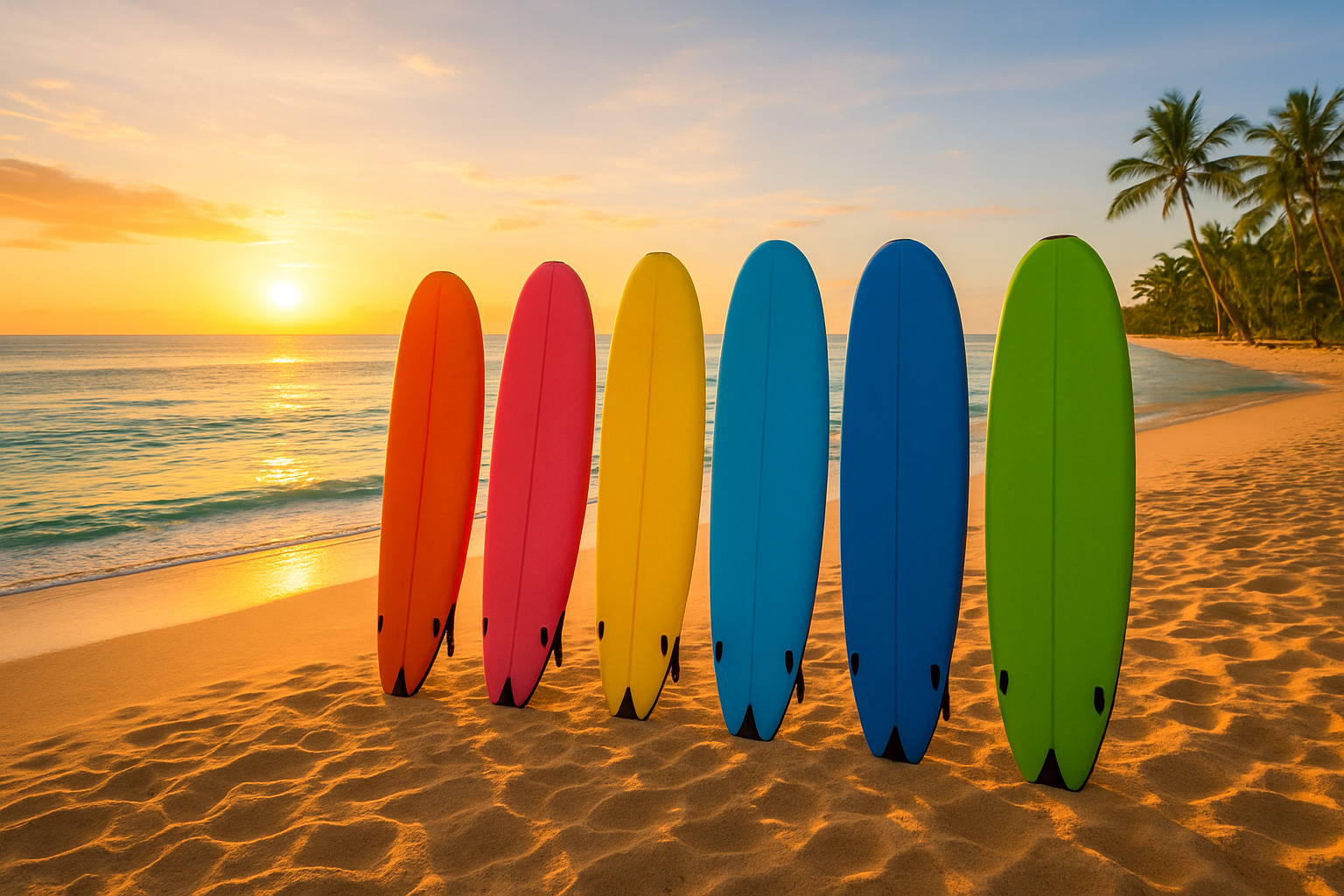
Soft-top boards set out for a morning group lesson near Waikiki.
Best Waikiki Beaches for Beginner Surfers
Not every stretch of Waikiki offers the same wave quality. Canoes and Populars, for example, are widely considered the friendliest spots for first-timers thanks to their slow, rolling shoulders. Queens, meanwhile, tends to draw a slightly more experienced crowd.
According to the Wikipedia entry on Waikiki, this shoreline has attracted surfers for over a century, largely because of its unique reef structure and consistent small swells. As a result, instructors can reliably choose safe, appropriate waves almost any day of the year.
What to Expect During Your Lesson
Most sessions begin on the sand with a short safety talk covering ocean hazards, board handling, and basic etiquette. Next, your instructor demonstrates the pop-up motion, which is the quick movement from lying flat to standing on the board. Afterward, you’ll practice this a few times on dry sand before heading into the water.
Once in the water, your instructor positions your board, watches for an appropriate wave, and gives you a push at exactly the right moment. Consequently, timing and coaching matter far more than raw strength or fitness. Before you know it, most students are standing and riding toward shore.
Tips to Get the Most from Your Hawaii Surf Lesson
A little preparation goes a long way toward a smoother, more enjoyable session. Consider the following before you paddle out:
- Apply reef-safe sunscreen at least twenty minutes before entering the water.
- Eat a light meal beforehand, since surfing burns more energy than expected.
- Keep your eyes looking forward, not down at your feet, once you’re standing.
- Stay relaxed; tension in your shoulders and legs makes balance harder, not easier.
- Ask questions throughout, since instructors expect and welcome beginner curiosity.
For general ocean safety guidance, the National Oceanic and Atmospheric Administration offers helpful background on currents, tides, and rip current awareness worth reviewing before any beach activity. You can also browse more programs directly on the Star Beach Boys homepage to compare lesson packages.
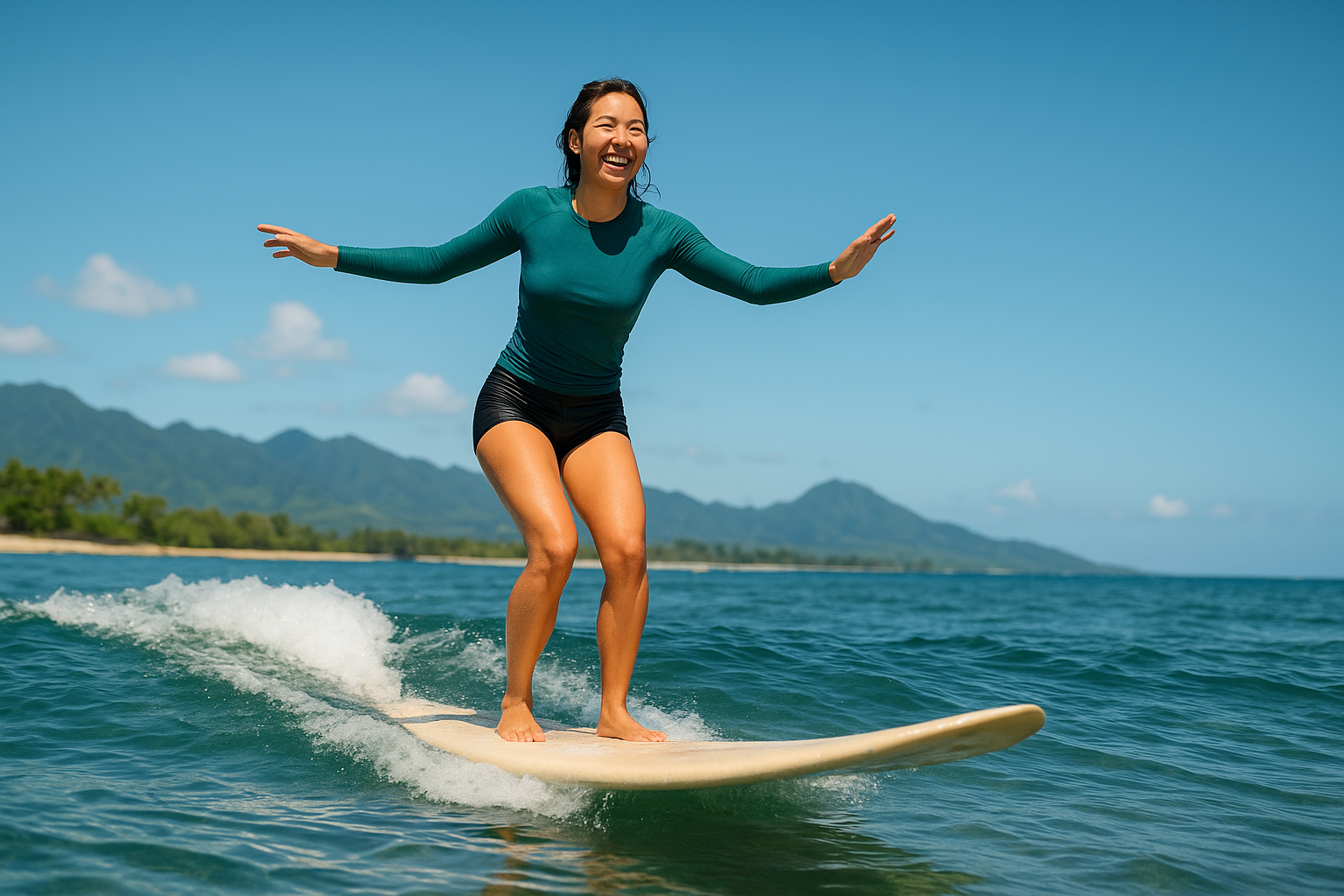
A student rides their first wave to shore during a surfing lesson honolulu session.
Frequently Asked Questions About Surfing Lesson Honolulu
What is a surfing lesson Honolulu?
A surfing lesson Honolulu is a guided session where a certified instructor teaches ocean safety, paddling, and wave-riding technique, usually at Waikiki Beach. Lessons typically run one to two hours and include equipment rental.
How much does a surfing lesson in Honolulu cost?
Group surf lessons generally range from $75 to $150 per person, while private lessons cost more due to one-on-one attention. Most prices include board and rash guard rental.
How long does a typical surf lesson last?
Most lessons last between 90 minutes and two hours, covering a land-based briefing followed by in-water coaching. Private lessons can be shorter but more intensive.
Do I need to know how to swim to take a surfing lesson?
Yes, basic swimming ability is required for safety before joining a lesson. Instructors stay close by, but comfort in the water is essential.
What is the best time of year for surf lessons in Honolulu?
Summer months, roughly May through September, bring the calmest south shore waves, which is ideal for beginners. However, lessons run year-round since Waikiki stays relatively sheltered.
How is a Honolulu surf lesson different from lessons elsewhere?
Honolulu surf lessons benefit from Waikiki’s uniquely gentle, slow-breaking waves, which are rare compared to steeper beach breaks elsewhere. This makes standing up noticeably faster for first-timers.
What should I bring to my first surfing lesson?
Bring sunscreen, a swimsuit, a towel, and water to stay hydrated. Most schools provide the surfboard, rash guard, and any additional safety gear.
Are surf lessons in Honolulu safe for kids?
Yes, many schools welcome children as young as five or six in Waikiki’s calm, shallow waters. Instructors adjust coaching style based on the child’s age and comfort level.
What common mistakes do beginners make during their first lesson?
Beginners often stand up too quickly or look down at their feet instead of ahead. Another common mistake is paddling too late and missing the wave’s momentum.
How many lessons does it take to stand up on a surfboard?
Most beginners stand up during their very first lesson thanks to Waikiki’s gentle swells and instructor assistance. Consistent riding without help typically takes two to four sessions.
What is included in a group versus private surfing lesson?
Group lessons pair you with two to four other students and one instructor, offering a fun, affordable experience. Private lessons provide one-on-one coaching and full scheduling flexibility.
What should I look for when choosing a surf school in Honolulu?
Look for certified instructors, small class sizes, positive reviews, and clear safety protocols before booking a surfing lesson Honolulu visitors recommend. It also helps to confirm equipment quality and cancellation policies in advance.
Final Thoughts on Booking a Surfing Lesson Honolulu
Ultimately, a surfing lesson honolulu offers one of the most accessible ways to learn a lifelong sport in genuinely ideal conditions. Between the gentle Waikiki swells, warm water, and experienced local instructors, beginners rarely face a steeper learning curve than a single morning session. Therefore, whether you’re planning a family vacation, a solo trip, or a weekend outing as a resident, booking ahead ensures you get the instructor and time slot you want.
In short, focus on choosing a reputable school, arriving prepared, and staying relaxed once you’re in the water. With the right guidance, standing up on your first wave is well within reach, and that feeling is exactly why so many visitors return for more lessons year after year.