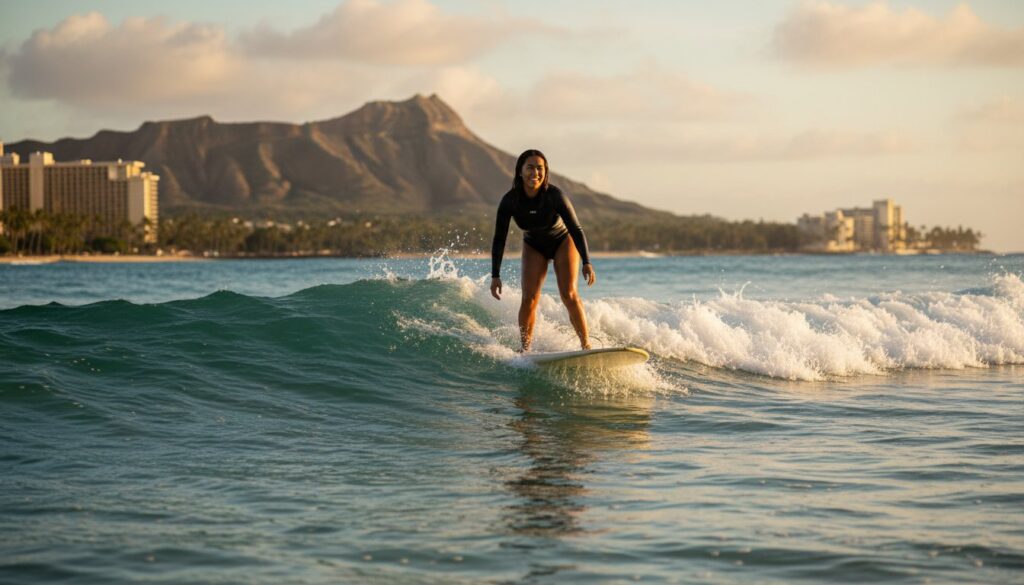
Oahu surf schools give beginners and experienced surfers a safe, expert-guided way to catch waves on some of Hawaii’s most famous beaches. Whether you are visiting Waikiki for a week or living on the island year-round, choosing the right instructor can turn a shaky first paddle into a lesson you never forget. In this guide, we break down what oahu surf schools actually offer, how much lessons typically cost, which lesson format suits your goals, and how to pick a program that matches your skill level from day one.
What Are Oahu Surf Schools?
Oahu surf schools are local businesses that pair certified instructors with students for guided ocean lessons. Most programs cover the basics: paddling technique, reading wave sets (the pattern of waves rolling in from the open ocean), popping up to a standing position, and general ocean safety.
Because Oahu’s south shore has small, forgiving waves for much of the year, it is one of the most popular places on earth to learn. As a result, dozens of schools operate along Waikiki Beach alone, ranging from large group operators to small, personalized outfits like Star Beach Boys, which focuses on progressive skill-building for surfers of all ages. In addition, several smaller boutique programs have built loyal followings by keeping class sizes tight and instructor experience high, which is exactly the combination first-time surfers should look for.
Why Oahu Is One of the Best Places to Learn to Surf
Oahu is often called the birthplace of modern surfing, and for good reason. Native Hawaiians rode waves here for centuries before the sport spread around the globe, a history documented in detail on the Wikipedia entry on surfing.
In addition, the island offers a rare combination: warm water year-round, consistent small swells on the south shore, and a laid-back beach culture that welcomes newcomers. For example, Waikiki’s gentle, rolling waves break over a sandy bottom, which makes wipeouts far less intimidating than on a reef.
Furthermore, oahu surf schools benefit from this natural advantage. Instructors can predict conditions accurately and plan lessons around the safest, most consistent windows of the day, which is one reason Oahu draws far more first-time surfers than almost anywhere else in the Pacific.
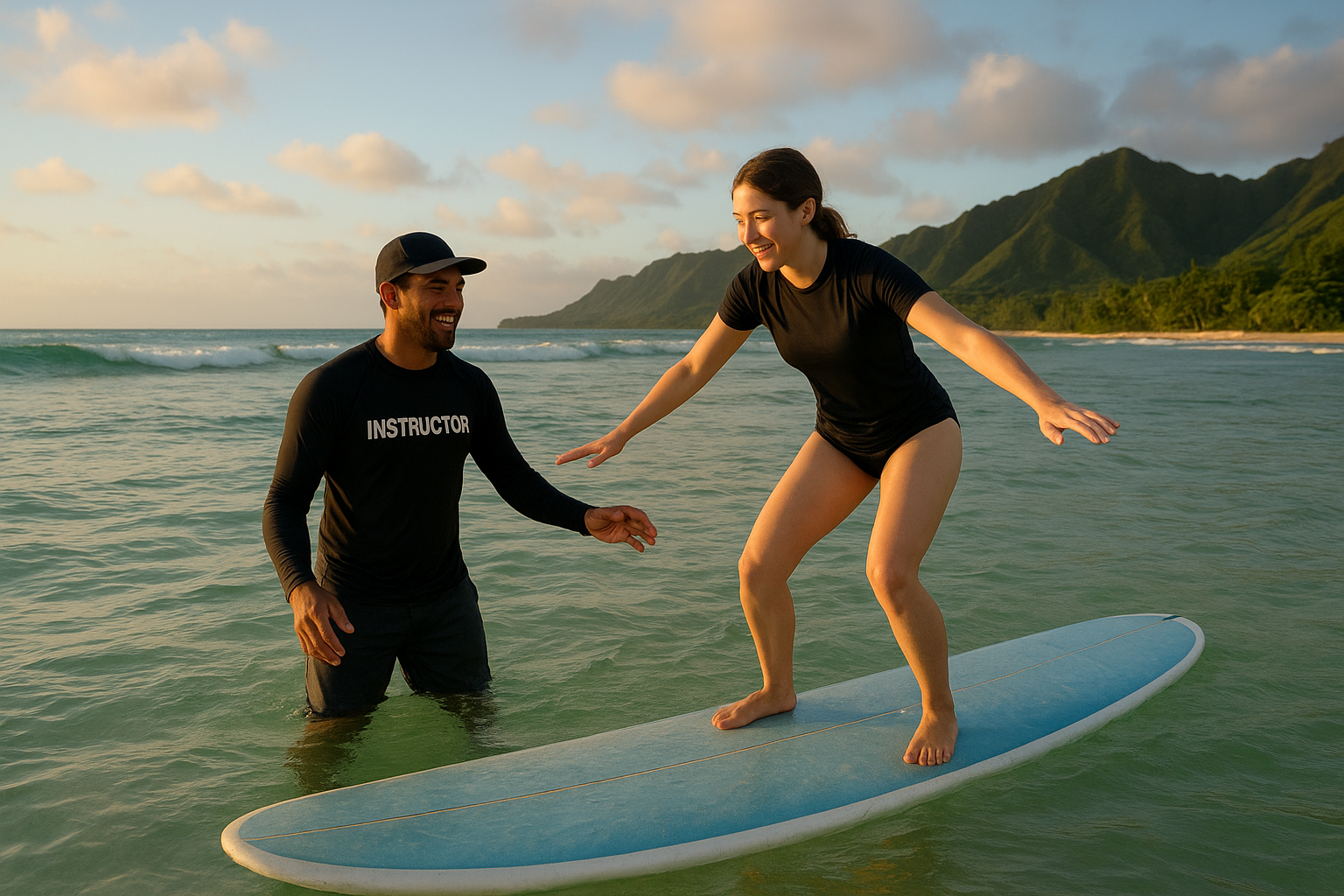
A patient, low student-to-instructor ratio is a hallmark of the best oahu surf schools.
Types of Lessons Offered by Oahu Surf Schools
Not every lesson format works the same way, so understanding the options helps you book the right one the first time. Most oahu surf schools offer a mix of the following:
- Group lessons: Typically four to eight students per instructor. These are the most affordable option and a great social way to learn alongside friends or family.
- Semi-private lessons: Usually two to three students per instructor. This format balances cost with more individual attention than a standard group class.
- Private lessons: One instructor focused entirely on you. Private coaching is the fastest way to build confidence, correct technique errors, and progress past the beginner stage.
- Multi-day packages and surf camps: Several consecutive lessons booked together, often at a discounted rate, designed to take a student from first paddle to independent riding within a week.
- Kids and family lessons: Shorter sessions with extra safety supervision, usually held at the calmest sections of Waikiki.
Consequently, it is worth deciding on your budget and goals before comparing programs. For a curated look at highly rated options across the island, this list of the most recommended surf schools in Oahu is a useful starting point.
How to Choose the Right Surf School in Oahu
With so many options, picking the right school can feel overwhelming. However, a few key factors make the decision much easier.
First, check instructor-to-student ratios. Small groups, ideally four students or fewer per instructor, mean more individual feedback and faster progress. Second, look for schools that emphasize safety briefings and ocean awareness, not just getting you standing on the board for a photo. Third, ask whether instructors hold recognized credentials, such as lifeguard training, CPR certification, or coaching standards set by organizations like the International Surfing Association.
Similarly, read recent reviews and ask how long the school has operated in the area. Local experience matters because instructors need to know how conditions change with tides, wind, and season. For a deeper breakdown of what separates top instructors from the rest, this expert guide to surf schools in Oahu is a useful resource.
Best Areas for Oahu Surfing Lessons
Not all beaches suit every skill level. In particular, several regions stand out for very different reasons. For a full breakdown of lesson formats by location, see this guide to Oahu surfing lessons in Hawaii.
Surf Lessons in Waikiki
Waikiki is the heart of Oahu’s beginner surf scene. Its gentle, slow-breaking waves and sandy bottom make it ideal for first-timers, families, and anyone easing back into the water after years away.
Because the surf here rarely exceeds a few feet, students can focus on fundamentals like balance and timing rather than fighting powerful currents. This guide to surf lessons on Oahu’s beaches breaks down specific Waikiki-area options in more detail.
North Shore and Advanced Breaks
In contrast, Oahu’s North Shore hosts some of the most powerful waves on the planet, including the famous Banzai Pipeline. These breaks suit experienced surfers only, especially during the winter swell season from November through February, as tracked by the National Weather Service office in Honolulu.
Consequently, most reputable oahu surf schools will not teach beginners at North Shore breaks. Instead, they reserve advanced coaching here for surfers who already have solid fundamentals.

North Shore swells are best left to advanced surfers, not beginner lessons.
Other Beginner-Friendly Spots Around Oahu
Beyond Waikiki, spots like Ala Moana Bowls and White Plains near Kalaeloa also host gentler days that some schools use for overflow lessons or intermediate progression sessions. That said, availability and suitability change with the swell direction, so a good instructor will always confirm the safest location on the morning of your lesson rather than committing to one beach months in advance.
What to Expect During Your First Lesson With Oahu Surf Schools
Most first lessons follow a predictable rhythm, which helps reduce nerves before you even touch the water. Typically, your instructor will start with a short talk about the day’s conditions, including wind direction, wave size, and any hazards to watch for.
Next, you will practice popping up on the sand, since building muscle memory on solid ground makes the transition to water far smoother. After that, your instructor will walk you into the shallows, help position your board, and time your first waves so you catch them at the right moment rather than paddling blindly.
Above all, expect plenty of encouragement and hands-on correction. Good instructors adjust their coaching style to each student, whether that means more physical assistance for nervous swimmers or more technical feedback for someone refining their pop-up. For a closer look at how lesson structure adapts across ages and abilities, see this guide on learning to ride the waves on Oahu.
How Much Do Oahu Surf Schools Cost?
Oahu surf schools typically charge between $75 and $150 for a group lesson, while private lessons range from $150 to $250 per hour. Most beginner packages include board rental, rash guard use (a snug-fitting shirt that prevents skin irritation from the board and sun), and 60 to 90 minutes of instruction.
- Group lesson: $75–$150 per person
- Semi-private lesson: $110–$180 per person
- Private lesson: $150–$250 per hour
- Multi-day package (3 lessons): typically 15–20% cheaper per session
Multi-day packages often lower the per-lesson cost. For example, a three-lesson package can save 15 to 20 percent compared with booking single sessions individually. If you are comparing options, this breakdown of Waikiki surf lesson packages outlines typical pricing tiers in more detail. Finally, remember that price is only one part of the equation; a slightly higher rate is usually worth it when it buys smaller class sizes and more experienced instructors.
Step-by-Step: How to Book Your First Surfing Lesson
Booking a lesson does not need to be complicated. Follow these steps to find and reserve the right class.
- Decide your skill level and goals. Be honest about whether you are a complete beginner, a returning surfer, or someone looking to refine technique, since this determines which class format fits best.
- Compare oahu surf schools and read recent reviews. Look at ratings from the last six to twelve months, since instructor lineups and quality can shift over time.
- Check group size and instructor certification. Ask directly how many students are assigned to each instructor and whether they hold lifeguard or CPR certification.
- Book in advance and confirm what is included. Reserve your spot at least a few days ahead during peak season and confirm whether board rental, photos, or transportation are part of the price.
- Arrive early and follow the safety briefing closely. Show up 15 to 20 minutes before your start time so your instructor can fit your board and walk you through ocean conditions for the day.
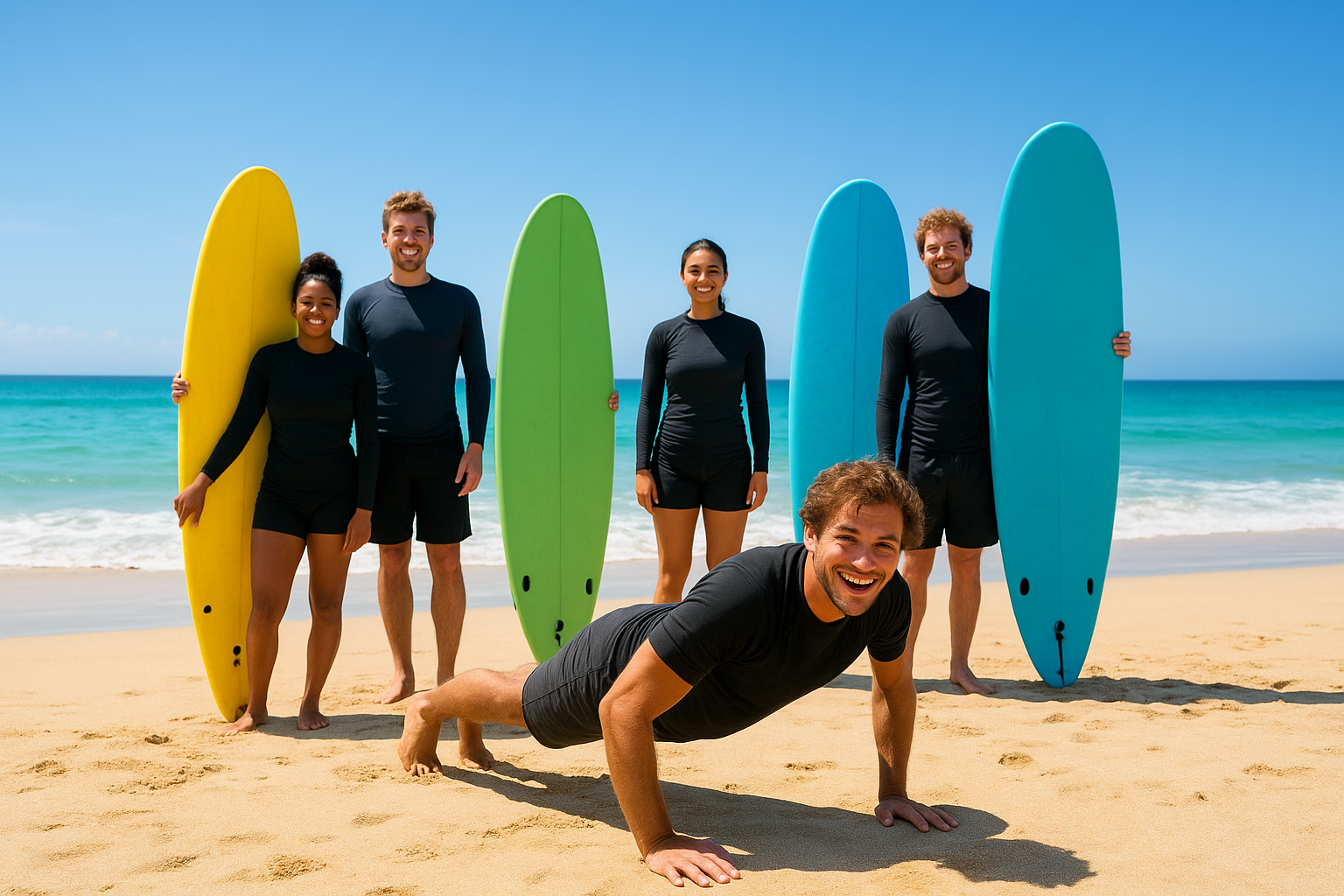
A land practice session, like this one, comes before every water lesson at quality oahu surf schools.
Surf Etiquette and Ocean Safety Every Beginner Should Know
Learning proper etiquette matters just as much as learning to pop up. For instance, beginners should never drop in on another surfer already riding a wave, since this is both dangerous and considered a serious breach of surf etiquette worldwide.
In addition, always hold onto your board in crowded lineups, apologize if you accidentally cut someone off, and give more experienced local surfers the right of way when unsure. Similarly, learning to identify rip currents (strong, narrow channels of water flowing away from shore) before entering the water is essential; the Hawaii Department of Land and Natural Resources publishes updated ocean safety advisories that every visitor should check before a lesson.
Consequently, reputable oahu surf schools spend real time on this material during the safety briefing rather than rushing straight to the water. A short delay for education now prevents a much longer, scarier problem later.
Common Mistakes to Avoid With Oahu Surf Lessons
Even well-meaning beginners make avoidable mistakes. Recognizing them ahead of time can save both money and frustration. For a deeper walkthrough, see our Can I Learn to Surf at Any Age? A Complete Guide for Beginners.
For instance, booking the cheapest option without checking instructor qualifications often leads to disappointing, overcrowded classes. Similarly, skipping sunscreen or proper hydration can cut a lesson short before you even catch your first wave.
Above all, ignoring the instructor’s ocean safety briefing is the biggest mistake of all. Local instructors understand rip currents and other hazards that are not obvious to visitors. You can explore Star Beach Boys’ lesson formats as one example of a program built around this kind of safety-first approach.
Surfing Oahu Sustainably: Reef and Marine Safety
Because Oahu’s coastal waters support fragile coral reefs and marine life, responsible surf schools also teach environmental awareness alongside surf technique. Specifically, students are encouraged to use reef-safe, mineral-based sunscreen rather than chemical formulas, since certain ingredients have been linked to coral bleaching.
Furthermore, good instructors remind students to avoid standing on reef, keep a respectful distance from sea turtles, and never touch or chase marine wildlife. These practices protect the very ecosystem that makes Oahu such a rewarding place to learn, and they reflect the kind of local knowledge that separates experienced oahu surf schools from generic tour operators.
Frequently Asked Questions About Oahu Surf Schools
What are Oahu surf schools?
Oahu surf schools are professional surf instruction businesses that teach beginners and intermediate surfers how to catch and ride waves. They typically offer group lessons, private coaching, and multi-day packages led by certified instructors.
How much do Oahu surf schools cost?
Most Oahu surf schools charge $75 to $150 per person for a group lesson and $150 to $250 per hour for private instruction. Multi-lesson packages often reduce the per-session price by 15 to 20 percent.
What is the best surf school in Oahu for beginners?
The best schools for beginners operate at gentle, sandy-bottom breaks like Waikiki and keep small student-to-instructor ratios. Look for programs, such as Star Beach Boys, that emphasize personalized coaching and structured skill progression.
Do I need to know how to swim to take surf lessons?
Yes, most schools require basic swimming ability for safety reasons. Instructors will often ask about swimming comfort before the lesson begins.
What is the best time of year to surf in Oahu?
Summer months, from May through September, bring the calmest, most beginner-friendly waves to Oahu’s south shore. Winter swells favor experienced surfers on the North Shore instead.
How long is a typical surf lesson?
Most beginner lessons last 60 to 90 minutes, including a safety briefing, land practice, and time in the water. Private lessons can be extended based on preference.
What should I bring to my first surf lesson?
Bring reef-safe sunscreen, a swimsuit or rash guard, water, and a towel. Most schools provide the surfboard and any additional safety equipment.
Are group lessons or private lessons better?
Group lessons are more affordable and social, while private lessons offer faster, more personalized progress. Beginners nervous about the ocean often benefit most from one-on-one attention.
Can kids take surf lessons in Oahu?
Yes, many schools welcome children starting around age five, especially at calm Waikiki breaks. Family and youth-friendly packages are common during peak vacation seasons.
What is the difference between Waikiki and North Shore surf lessons?
Waikiki offers small, slow waves ideal for beginners, while the North Shore produces powerful, advanced swells, especially in winter. Reputable schools reserve North Shore coaching for experienced surfers only.
How do I choose the right surf school in Oahu?
Compare instructor-to-student ratios, certifications, recent reviews, and how long the school has operated locally. Prioritizing safety practices over the cheapest price usually leads to a better experience.
What common mistakes should I avoid when booking a surf lesson?
Avoid choosing solely based on price, skipping sunscreen or hydration, and ignoring the instructor’s ocean safety briefing. These mistakes are common but easy to prevent with a little preparation.
What certifications should Oahu surf instructors have?
Look for lifeguard training, CPR and first-aid certification, and coaching credentials aligned with organizations like the International Surfing Association. These qualifications indicate a stronger commitment to student safety.
Is it safe to surf in Oahu without taking a lesson first?
It is not recommended. Local currents, reef hazards, and crowded lineups are hard to judge without experience, so a lesson from one of the established oahu surf schools is the safer starting point.
Final Thoughts on Choosing Oahu Surf Schools
Choosing among oahu surf schools ultimately comes down to matching your skill level, budget, and goals with the right instructor and location. Waikiki remains the top choice for beginners, while the North Shore rewards experienced surfers willing to handle bigger swells.
As you compare options, prioritize small class sizes, certified instructors, and clear safety practices over the lowest price tag. Whether you choose a large operator or a personalized program like Star Beach Boys, taking a lesson from qualified oahu surf schools is one of the best ways to experience Hawaii’s ocean culture safely and confidently.