Surf lessons with ocean safety training Waikiki give beginners and experienced riders a way to enjoy Hawaii’s famous waves while learning how conditions actually work beneath the surface. Waikiki Beach draws visitors from around the world, and for good reason: its gentle, rolling waves make it one of the most forgiving places on Earth to learn to surf. However, even mellow surf spots carry real risks, including rip currents, reef hazards, and crowded lineups. That is why choosing a program that pairs hands-on surf coaching with genuine ocean safety education matters so much for first-time surfers and families alike.
Quick answer: Surf lessons with ocean safety training Waikiki combine beginner-friendly wave riding instruction with essential water safety skills, such as rip current identification, reef awareness, and ocean etiquette, typically taught by certified local instructors during a two-to-three-hour session.
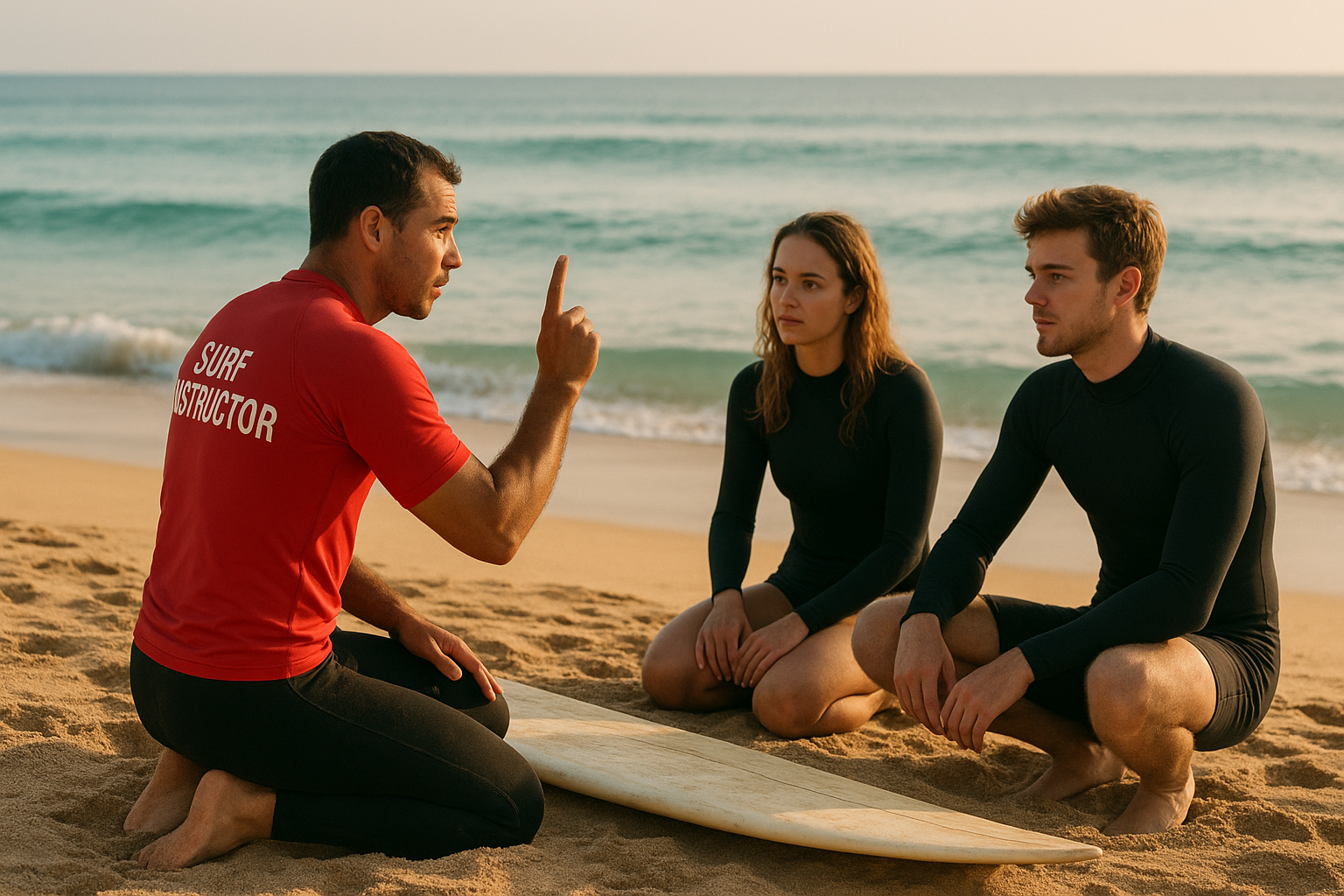
A beach-side safety briefing is often the first step in surf lessons with ocean safety training Waikiki programs use.
Surf Lessons with Ocean Safety Training Waikiki: What to Expect
Surf lessons with ocean safety training Waikiki typically begin on land, well before anyone touches a surfboard in the water. Instructors first explain that day’s ocean conditions, including wave height, wind direction, and any hazards near the break. Consequently, students understand what they are stepping into rather than simply following instructions blindly.
After the briefing, coaches move on to paddling mechanics and the pop-up motion, practicing repeatedly on dry sand. In particular, this land-based repetition helps beginners build confidence before facing real waves. Once in the water, instructors stay close, offering physical support and verbal cues while continuously scanning for changing conditions around the group.
What Are Surf Lessons with Ocean Safety Training in Waikiki?
Surf lessons with ocean safety training in Waikiki are structured coaching sessions that teach surfing technique alongside water safety awareness, rather than treating the two as separate topics. In short, students learn to surf and to read the ocean at the same time.
Ocean safety training, in this context, refers to practical skills like recognizing rip currents (narrow channels of water pulling away from shore), understanding reef locations, and knowing how to signal for help if needed. Similarly, instructors cover basic etiquette, such as right-of-way rules in the lineup, since crowded surf zones can create their own hazards. As a result, students leave with more than surfing skill; they gain genuine ocean literacy that carries over to any beach they visit afterward.
Why Waikiki Beach Is Ideal for Beginner Surf Instruction
Waikiki’s reputation as a beginner-friendly surf destination is not accidental. Its offshore reef breaks the swell early, producing smaller, slower waves that roll gently toward shore. For example, first-time surfers often catch their first wave within the opening hour of a lesson, something rarely possible at steeper, faster-breaking beaches.
In addition, Waikiki benefits from year-round warm water and consistent, predictable surf patterns, according to general oceanographic descriptions of the region on Wikipedia’s Waikiki overview. Meanwhile, the presence of trained lifeguards and established surf schools adds another layer of reassurance for visiting families. Because of these combined factors, Waikiki remains a top choice for anyone seeking their first real surfing experience without unnecessary risk.
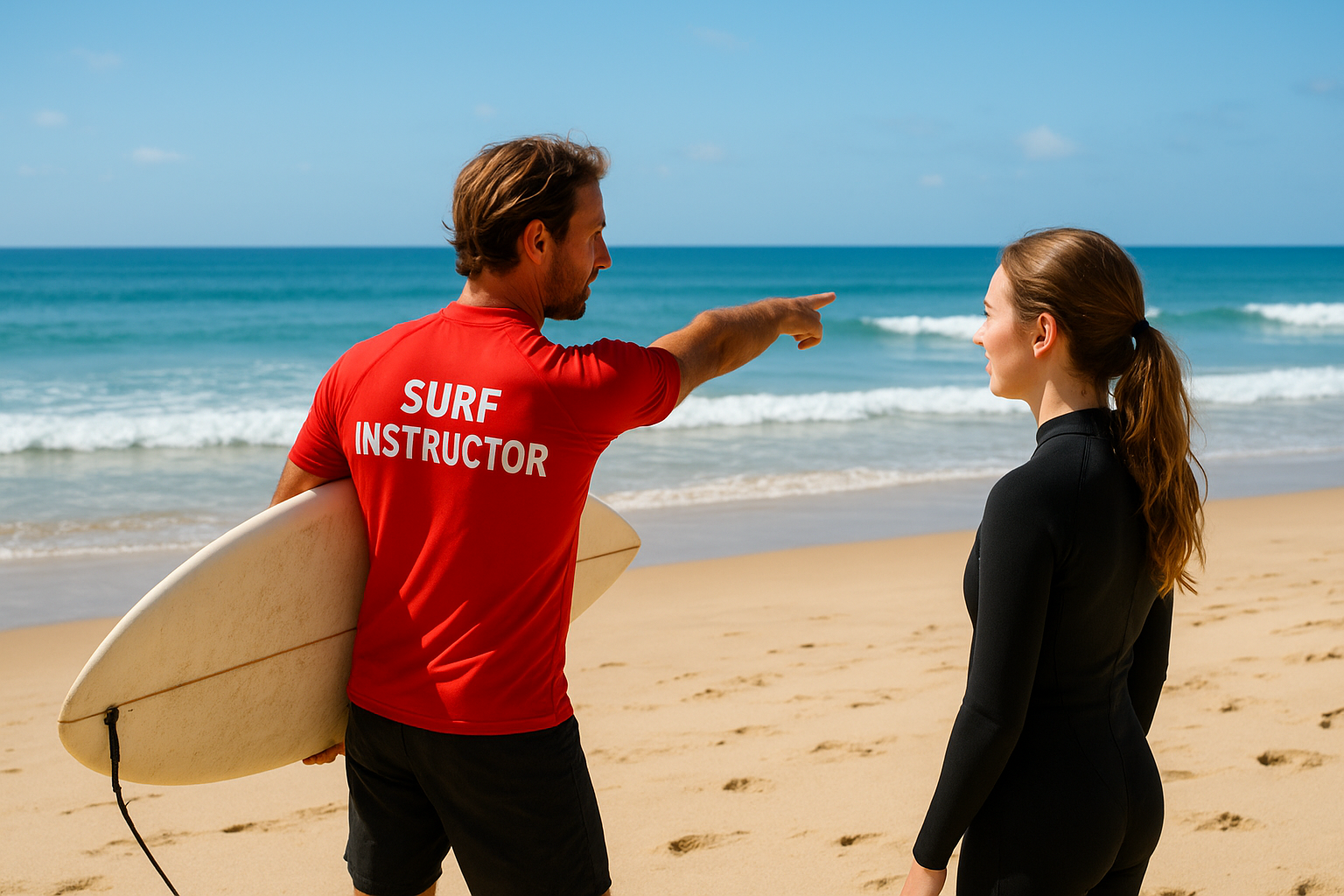
Reading wave patterns is a core skill taught during ocean safety-focused surf coaching.
How Ocean Safety Skills Are Taught Step by Step
Reputable surf schools follow a consistent teaching sequence to make sure safety knowledge sticks before students face open water. The process below reflects how many Waikiki programs, including offerings described in the Star Beach Boys safety overview, structure a typical lesson.
- Beach safety briefing: Instructors review current tides, wind, and hazard zones before anyone enters the water.
- Reading waves and currents: Students learn to spot rip currents and sandbar channels visually from shore.
- Land-based practice: Paddling and pop-up motions are rehearsed on the sand to build muscle memory.
- Guided in-water coaching: Instructors stay close, offering hands-on support during early wave attempts.
- Independent riding with supervision: As confidence grows, students ride waves with less assistance while safety monitoring continues.
Notably, according to the NOAA National Ocean Service, rip currents account for the majority of beach rescues nationwide, which is precisely why steps two and four receive so much instructor attention during any quality lesson.
Choosing a Surf School with Strong Safety Standards
Not every surf school treats safety with equal seriousness, so it helps to know what to look for. Above all, confirm that instructors hold recognized certifications and maintain small student-to-teacher ratios, ideally no more than four or five students per coach.
Furthermore, ask whether the curriculum explicitly includes ocean safety education or simply focuses on standing up on a board. According to the United States Lifesaving Association, rip currents alone are linked to more than 100 drowning deaths annually in the United States, underscoring why safety-first instruction genuinely matters. You can review how one Waikiki-based provider approaches this balance directly on starbeachboys.com.
Surf Lessons for Every Age and Skill Level
Because Waikiki’s waves are so forgiving, surf lessons here work well across a wide range of ages and abilities. Younger children often benefit from playful, patient coaching styles, while older adults typically prioritize stability and a slower learning pace.
For instance, families researching options for grandparents can review this dedicated guide to surf lessons for seniors on Oahu, while parents of young children may find this breakdown of the safest surf lessons for kids in Waikiki especially useful. Likewise, travelers wanting a broader ocean adventure beyond surfing might explore this complete guide to Waikiki ocean experience tours. In every case, the underlying safety curriculum remains consistent, even as teaching pace and style adapt to the group.
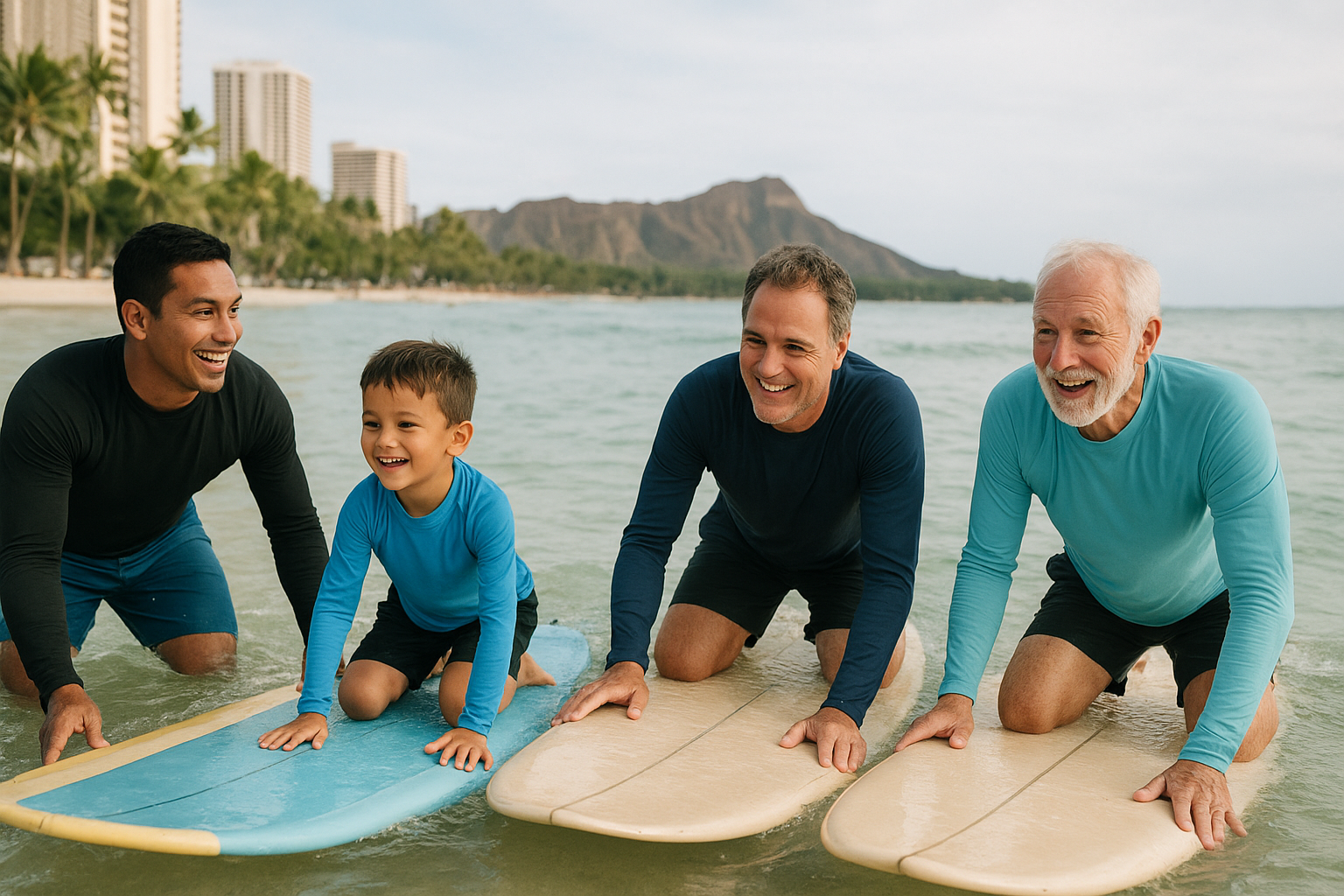
Surf lessons in Waikiki are designed to welcome surfers of nearly every age and fitness level.
Frequently Asked Questions About Surf Lessons with Ocean Safety Training Waikiki
What is surf lessons with ocean safety training Waikiki?
Surf lessons with ocean safety training Waikiki are guided surf sessions that combine wave-riding instruction with practical ocean survival skills, such as spotting rip currents and reading wave sets. Certified instructors teach both the fun and the safety side of the sport together.
How long does a Waikiki surf lesson with safety training take?
Most Waikiki surf lessons run between two and three hours, including a land-based safety briefing and in-water practice. Group lessons may run slightly longer to allow every student individual coaching time.
Is Waikiki safe for beginner surfers?
Yes, Waikiki is widely regarded as one of the safest places in the world to learn to surf because of its gentle, slow-breaking waves and sandy bottom. However, beginners should still take lessons that include ocean safety training to avoid rip currents and crowded lineups.
What ocean safety skills will I learn during a surf lesson?
Students typically learn how to identify rip currents, judge wave size, read reef and sandbar hazards, and understand surf etiquette in the lineup. Instructors also cover basic self-rescue techniques in case conditions change unexpectedly.
How much do surf lessons with ocean safety training cost in Waikiki?
Group surf lessons in Waikiki generally range from around 70 to 120 dollars per person, while private lessons cost more due to one-on-one instructor attention. Pricing often depends on group size, lesson length, and included equipment.
What age can start surf lessons in Waikiki?
Many Waikiki surf schools welcome children as young as five or six for beginner lessons, while there is generally no upper age limit for adults in good health. Instructors adjust their teaching pace and board choice based on each student’s age and comfort level.
Do I need to know how to swim to take surf lessons?
Basic swimming ability is strongly recommended before taking a surf lesson, even in calm Waikiki waters. Instructors can adapt lessons for nervous swimmers, but comfort in the water significantly improves both safety and enjoyment.
What is a rip current and how are surfers taught to handle one?
A rip current is a narrow, fast-moving channel of water flowing away from shore, and it is one of the leading causes of ocean rescues worldwide. Instructors teach students to recognize rip current signs and to swim parallel to shore rather than against the current if caught in one.
How do surf lessons for seniors differ from lessons for kids?
Senior surf lessons typically focus on stability, gentler entry points, and slower-paced coaching, while kids’ lessons emphasize playfulness alongside close supervision. Both age groups receive the same core ocean safety training, just delivered at a different pace.
What should I bring to a Waikiki surf lesson?
Bring reef-safe sunscreen, a swimsuit, a towel, and water to stay hydrated before and after the session. Most surf schools provide boards, rash guards, and leashes as part of the lesson package.
What’s the biggest mistake beginner surfers make regarding ocean safety?
The most common mistake is paddling out without checking ocean conditions or understanding rip currents beforehand. Skipping a qualified instructor and safety briefing significantly increases the risk of getting into trouble in the water.
How do I choose a surf school with strong safety standards in Waikiki?
Look for a surf school with certified instructors, small student-to-teacher ratios, and a clear ocean safety curriculum built into every lesson. Reading reviews and confirming local lifeguard familiarity are also good ways to gauge safety standards.
Final Thoughts
Ultimately, surf lessons with ocean safety training Waikiki offer far more than a fun afternoon in the water; they build lasting respect and understanding of the ocean itself. Whether you are bringing young children, planning a family trip with grandparents, or simply want to learn safely on your own, choosing a program that treats safety as seriously as skill development pays off. Therefore, before booking your next Waikiki adventure, take time to confirm that ocean safety training is genuinely built into the lesson plan, not just offered as an afterthought. For more details on lesson options and safety practices, visit Star Beach Boys directly.