Ocean guided surf tours Waikiki give visitors and locals alike the chance to ride Hawaii’s famous reef breaks with a trained instructor by their side from paddle-out to pop-up. Unlike renting a board and figuring things out alone, a guided tour pairs real-time coaching with local wave knowledge, which makes the whole experience safer and far more enjoyable. Whether you are a first-time paddler or a returning surfer polishing your style, these tours are built around steady, supportive progress in the water.
Quick answer: Ocean guided surf tours Waikiki are instructor-led sessions where a certified coach guides riders through wave selection, positioning, and technique in real time, typically lasting 90 minutes to two hours and suitable for beginners through intermediate surfers.
What Are Ocean Guided Surf Tours Waikiki?
Ocean guided surf tours Waikiki are structured surfing sessions in which an instructor stays with the group in the water, choosing appropriate waves and correcting technique on the spot. This differs from a standard rental setup, where a surfer paddles out alone with little guidance beyond a quick beach demo.
In particular, guides read the reef break, position students at the right takeoff spot, and give a push at the exact moment a wave is catchable. As a result, beginners often stand up on their very first wave, something that is far less likely without hands-on coaching. Furthermore, guides monitor currents, other surfers, and fatigue levels throughout the session, which adds a meaningful safety layer that self-guided sessions simply do not offer.

An instructor helps a first-time rider find balance during ocean guided surf tours Waikiki.
Why Choose a Guided Surfing Experience Over Going Solo
Many first-time visitors assume renting a board and watching a few online videos is enough preparation. However, Waikiki’s reef breaks, while generally gentle, still require reading swell direction, timing sets, and avoiding shallow coral in certain spots. A guided surfing experience removes that guesswork.
For example, an instructor can immediately tell a student whether their paddling angle is off or whether they are popping up too late. Consequently, progress happens faster, and frustration drops significantly compared to trial-and-error learning. In addition, guided tours build genuine ocean literacy: guests learn to identify rip currents, respect right-of-way etiquette, and understand basic reef safety, echoing guidance published by the NOAA National Ocean Service on coastal hazard awareness.
Above all, having a trained guide nearby means help is immediate if something unexpected happens, which matters most for families and nervous first-timers.
What to Expect During Your Waikiki Surf Adventure
A typical Waikiki surf adventure begins on the sand with a short briefing covering paddling technique, pop-up mechanics, and basic ocean safety signals. Instructors then walk students through the shallows before heading out to a break suited to the group’s skill level.
Once in the lineup, guides position each rider individually, calling out timing and giving a stabilizing push as the wave arrives. Similarly, intermediate riders receive feedback on stance, weight distribution, and turning, rather than just a push toward the wave. Sessions usually close with a debrief on the beach, where instructors highlight what went well and what to practice next time.
Groups are intentionally kept small, generally two to eight guests per guide, so everyone gets meaningful water time rather than standing in line waiting for a turn.
How to Book an Ocean Guided Surf Tour in Waikiki
Booking a guided tour is straightforward once you know what to look for. The following steps outline the typical process from research to your first wave.
- Research certified surf schools: Compare instructor certifications, group sizes, and recent guest reviews to find a program matching your comfort level.
- Check surf and weather conditions: Review swell forecasts so you can select a date with calmer, beginner-friendly waves.
- Reserve your preferred time slot: Book online or by phone a few days ahead, particularly during summer when demand peaks.
- Prepare gear and arrive early: Pack reef-safe sunscreen and water, then arrive fifteen minutes early for check-in and a safety briefing.
- Join your instructor in the water: Follow positioning and timing cues closely, since this real-time coaching is what makes the tour effective.
Guests can explore booking details and package options directly through Star Beach Boys, where instructors tailor each session to the group’s experience level.
Best Conditions and Seasons for Waikiki Surf Tours
Waikiki’s reef-protected breaks offer surfable waves nearly year-round, which is part of why the area remains one of the most popular learning destinations on the planet. That said, conditions do shift seasonally.
Specifically, summer months from May through September tend to bring smaller, more consistent swells, making them ideal for beginners and families. In contrast, winter can bring larger north and west swells to other parts of Oahu, though Waikiki’s south-facing breaks typically stay manageable. Therefore, guided tours run comfortably throughout most of the year, with instructors adjusting the exact break location based on daily conditions.
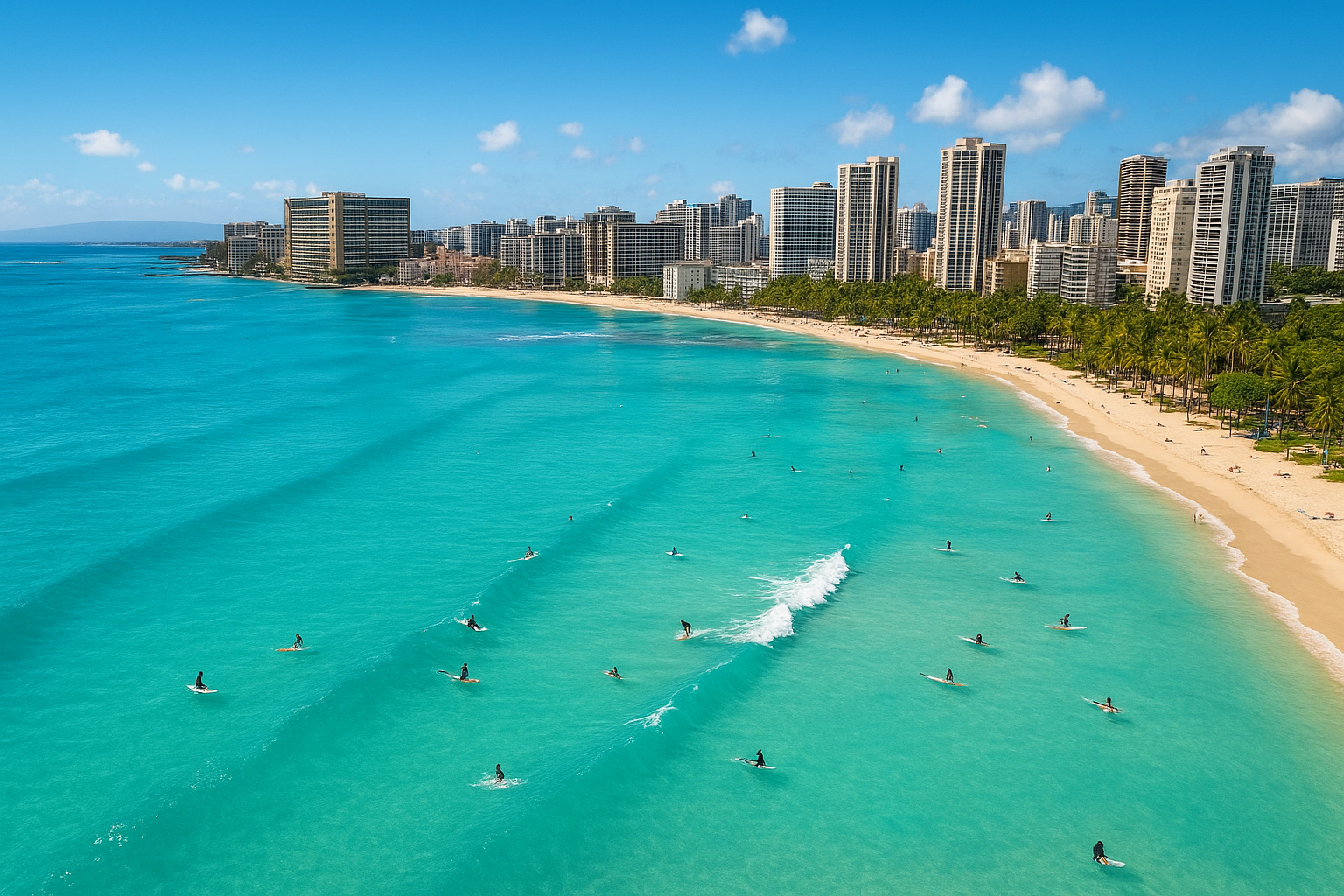
Waikiki’s reef breaks offer steady, learner-friendly waves for most of the year.
Choosing the Right Surf School for Your Ocean Adventure
Not every surf school offers the same level of guidance, so it helps to compare a few key factors before booking. Above all, confirm the instructor-to-student ratio, since smaller groups generally translate into more personalized coaching and safer wave selection.
In addition, ask whether the school welcomes families and mixed skill levels within the same session, as this flexibility matters for groups traveling together. For readers planning a trip with children, a dedicated resource on the best surf school options for families in Waikiki breaks down what to look for in more detail. Likewise, first-timers researching general lesson formats may find it useful to review this guide on where to find surfing lessons in Waikiki before narrowing down a choice.
Finally, transparent pricing and clear cancellation policies are strong indicators of a well-run operation, since reputable schools rarely hide fees behind vague package descriptions.
Safety Standards for Guided Surf Experiences
Safety is the backbone of any credible guided surf experience. Instructors should hold current CPR and water rescue certification, and schools should follow ocean safety guidance published by agencies such as the Hawaii Department of Land and Natural Resources, which monitors beach conditions and hazard flags across the islands.
Consequently, a well-run tour will always include a briefing on rip currents, reef hazards, and hand signals before anyone enters the water. Similarly, equipment such as leashes and soft-top boards reduces injury risk for beginners who are still developing balance and control.
Guests interested in a broader overview of the sport’s history and technique fundamentals can also reference the general Wikipedia entry on surfing for background context before their lesson.
Planning Your Full Waikiki Ocean Itinerary
Many visitors pair their guided surf session with other ocean activities to make the most of a Waikiki trip. For instance, a broader look at combined ocean activities is available in this ocean experience tours Waikiki guide, which covers options beyond surfing alone.
Similarly, travelers wanting a deeper dive into adventure-style surf packages may enjoy this Waikiki surf adventure tours guide, and those planning ahead for next season can check the newest 2026 guide to authentic Waikiki surf lessons for updated booking tips.
Frequently Asked Questions About Ocean Guided Surf Tours Waikiki
What are ocean guided surf tours Waikiki?
Ocean guided surf tours Waikiki are instructor-led surfing sessions where a professional coach accompanies riders in the water from start to finish. They combine wave selection, safety supervision, and real-time coaching so participants of any skill level can catch waves confidently.
How much do ocean guided surf tours Waikiki cost?
Prices typically range from about $75 to $150 per person for a group session, while private guided tours often cost more. Rates depend on group size, session length, and whether equipment rental is included.
How long does a guided surf tour in Waikiki last?
Most guided surf tours run between 90 minutes and two hours, including a land briefing and time in the water. Some extended packages include multiple wave sessions or photo add-ons.
Do I need prior experience to join a guided surf tour?
No prior experience is required for most guided tours, since instructors teach fundamentals on the beach before entering the water. Beginners, families, and returning surfers can all join the same style of program.
What should I bring to a Waikiki surf tour?
Bring reef-safe sunscreen, a swimsuit, a towel, and water to stay hydrated. Most surf schools provide boards, rash guards, and safety leashes as part of the tour.
How are ocean guided surf tours Waikiki different from private lessons?
Guided tours usually involve small groups moving together through a set route of waves, while private lessons focus one-on-one on technique correction. Both include instructor supervision, but private lessons offer more individualized feedback.
What is the best time of year for surfing in Waikiki?
Waikiki offers surfable conditions year-round because its reef breaks create gentle, consistent waves. Summer months, roughly May through September, generally bring the calmest water, which is ideal for beginners.
Are ocean guided surf tours Waikiki safe for children?
Yes, many surf schools welcome children starting around age five, provided they can swim comfortably. Instructors adjust pacing, board size, and wave selection to match a child’s confidence and ability.
What common mistakes should beginners avoid on a surf tour?
Beginners often stand up too early, choose waves that are too steep, or ignore their instructor’s positioning cues. Following the guide’s timing and staying relaxed on the board resolves most early mistakes quickly.
How do I choose the best surf school for a guided tour?
Look for certified instructors, small group ratios, transparent pricing, and positive reviews from recent guests. Confirming that the school follows local ocean safety guidelines is also an important best practice.
What gear is included in a guided surf tour?
Most packages include a soft-top surfboard, a leash, and sometimes a rash guard for sun protection. Wetsuits are rarely needed in Waikiki’s warm water, but some schools offer them for sensitive skin.
Can non-swimmers join an ocean guided surf tour?
Non-swimmers are generally not recommended for open water surf tours because of safety risks. However, some schools offer shallow-water introductory sessions with flotation support for hesitant beginners.
How many people are typically in a guided surf tour group?
Group sizes usually range from two to eight participants per instructor, keeping the ratio manageable for safety and coaching quality. Smaller groups generally receive more individual attention during each wave.
What certifications should surf instructors have?
Qualified instructors typically hold CPR and lifeguard or water rescue certification along with recognized surf coaching training. Asking a school about instructor credentials is a smart step before booking.
How do I book an ocean guided surf tour in Waikiki?
Most tours can be booked online through the surf school’s website or by phone, usually a few days in advance during peak season. Confirming your group size, skill level, and preferred time slot ahead of arrival helps secure the best spot.
In summary, ocean guided surf tours Waikiki offer a structured, safer, and faster path to catching real waves than going it alone. By choosing a certified instructor, understanding seasonal conditions, and following a simple booking process, both first-timers and returning surfers can enjoy Waikiki’s famous breaks with confidence. Ultimately, the right guided tour turns a single beach day into a lasting connection with the ocean.