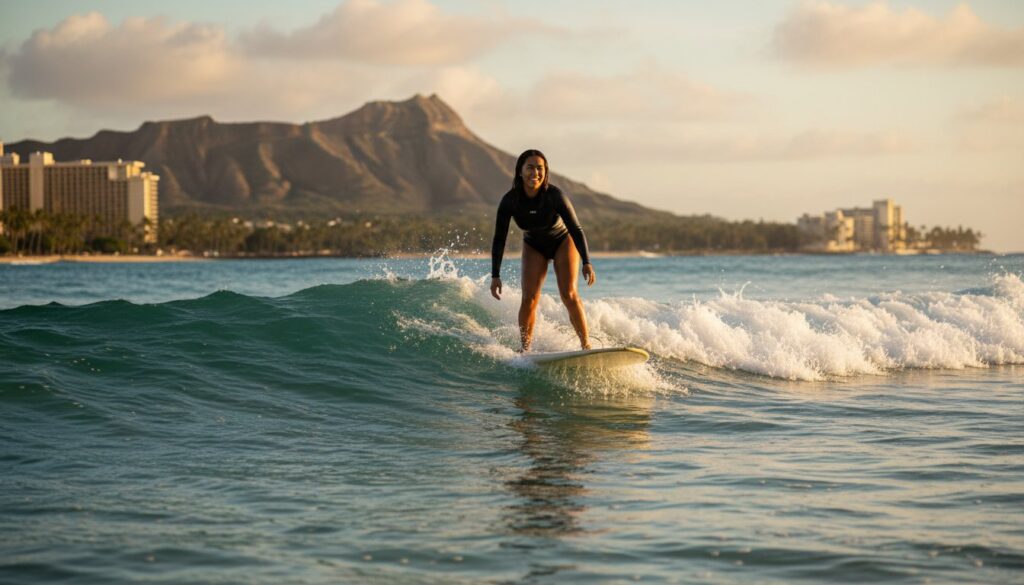
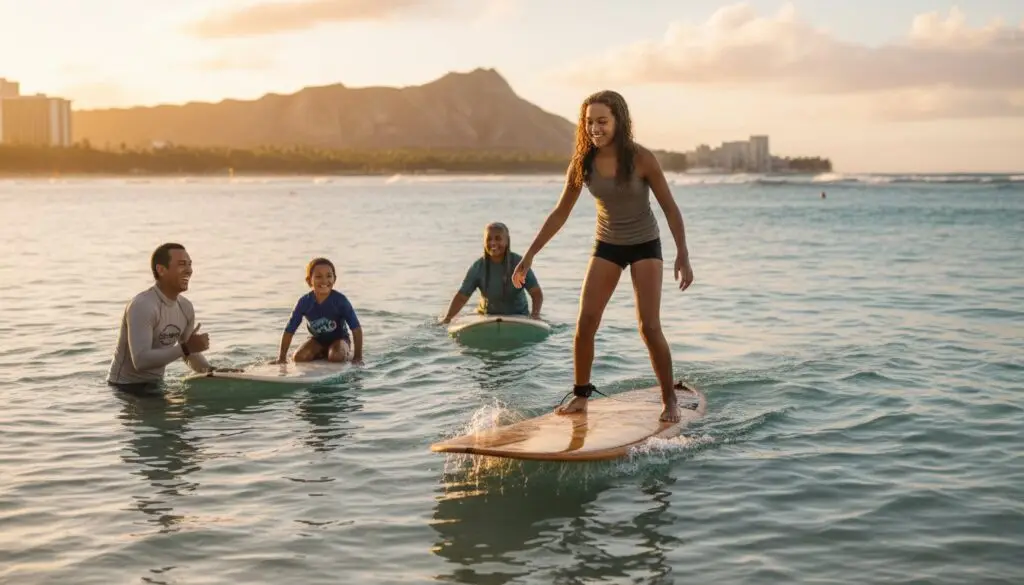
Oahu surfing lessons are the fastest, safest, and most exhilarating way to experience Hawaii’s legendary surf culture — whether you’re stepping onto a board for the very first time or returning to build on previous experience. With warm turquoise water, year-round gentle swells at Waikiki, and a deep cultural heritage tied to the ocean, Oahu stands apart from every other beginner surf destination on the planet. This guide was written by Star Beach Boys instructors (certified lifeguards and surf coaches). Last updated: 2026-06-27.
But not all surf lessons are the same — and choosing the wrong school, the wrong beach, or arriving unprepared can turn a dream experience into a frustrating one. This comprehensive guide covers everything you need to know: where to learn, what to expect minute by minute, how much it costs, safety rules, common mistakes, how to pick the best instructor, what to bring, and answers to every question first-time surfers ask. By the time you finish reading, you’ll be ready to catch your first wave with confidence.
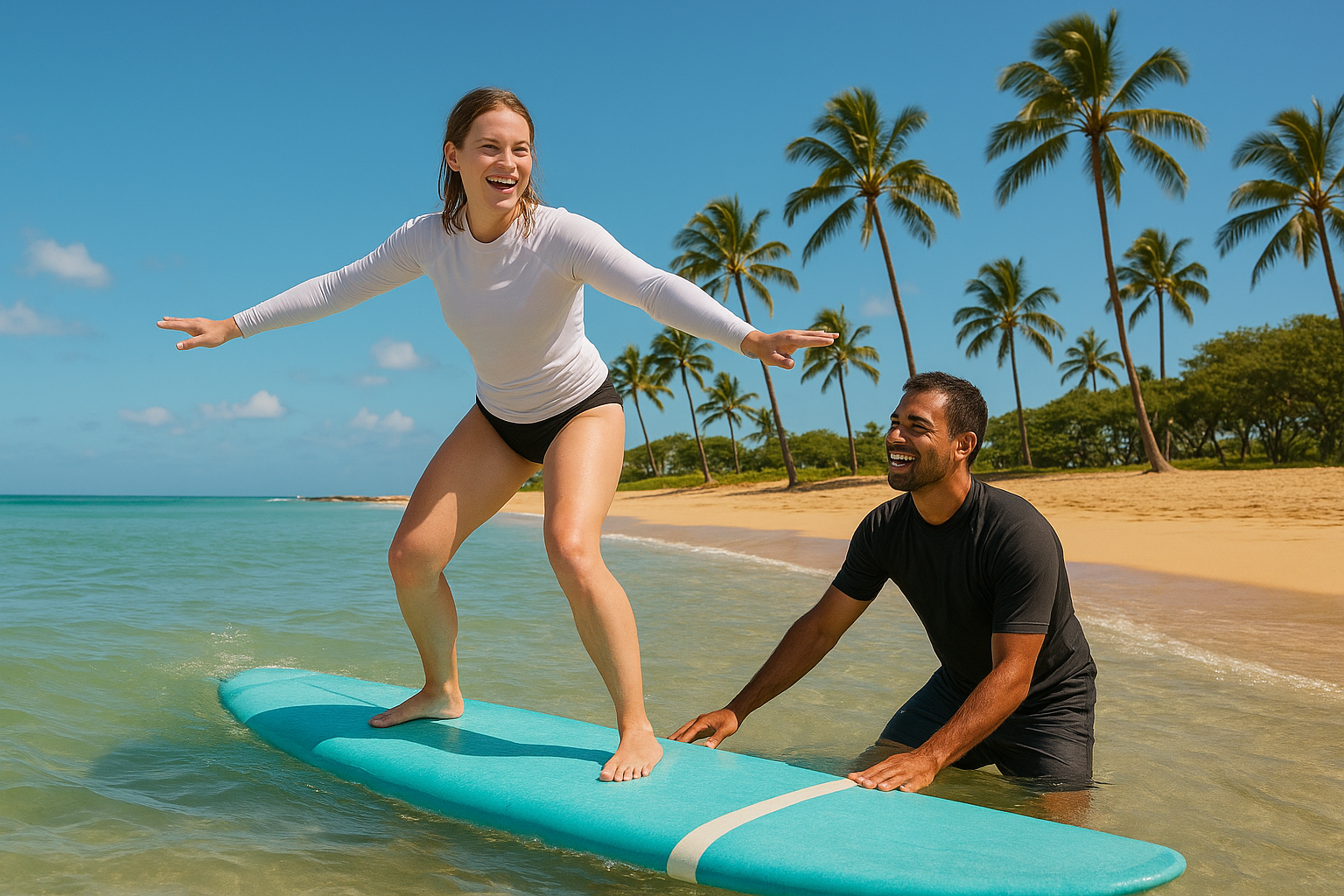
Oahu surfing lessons typically begin in shallow, calm water with a certified instructor close by for safety and personalized guidance.
Why Oahu Surfing Lessons Are the Best Choice for Beginners
Oahu doesn’t just offer good surf conditions — it is the birthplace of modern surfing. The Hawaiian practice of he’e nalu (wave sliding) has been central to local culture for over a thousand years, and that tradition is woven into every lesson taught on the island today. When you take Oahu surfing lessons, you’re not just learning a sport — you’re participating in something genuinely historic.
From a purely practical standpoint, Oahu’s geography makes it extraordinary for beginners. The island’s south-facing shore — particularly Waikiki Beach — is naturally sheltered from the largest Pacific swells, producing long, slow-rolling waves that are forgiving, predictable, and perfectly sized for learning. Water temperatures stay between 75°F and 82°F year-round, so no wetsuit is needed. The sandy ocean floor cushions wipeouts, and the wide, shallow surf zone gives instructors room to stay close to students at all times.
In contrast, the famous North Shore of Oahu — home to breaks like Pipeline and Sunset — produces some of the most powerful and dangerous waves on Earth during winter months. These breaks are strictly for experienced surfers. Beginners should always start at Waikiki, where the conditions are engineered by nature itself to help new surfers succeed.
Best Beaches for Surfing Lessons on Oahu — which beaches
While Waikiki dominates the beginner surf scene, Oahu has several beaches suited to different skill levels and lesson formats. Understanding the differences helps you pick the right spot for your goals.
Waikiki Beach — Best for Absolute Beginners
Waikiki’s waves break slowly and consistently, roll across a sandy bottom, and rarely exceed two to three feet during summer. The high concentration of certified surf schools along the beachfront means you’ll have access to quality equipment and experienced instructors within minutes of arriving. Most visitors who find surfing lessons in Waikiki stand up on their board within the first session.
Canoes and Queen’s Break — Classic Waikiki Spots
Within Waikiki, the “Canoes” break near the Sheraton and the “Queen’s” break near the Duke Kahanamoku statue are the most popular beginner zones. Both offer long rides, manageable crowds during weekday mornings, and easy paddling distances from shore.
Ewa Beach & Makaha — For Intermediate Surfers
Once you’ve completed a few beginner lessons, some schools offer intermediate programs at less crowded breaks on the west shore of Oahu. These spots offer slightly larger and more powerful waves suitable for students ready to progress beyond the basics.
What Happens During Your First Oahu Surfing Lesson — Minute by Minute
One of the most common questions first-timers ask is: what exactly happens during a surf lesson? Here is a precise breakdown of how a typical 90-minute beginner session unfolds at Waikiki.
Minutes 0–15: Meet Your Instructor & Beach Briefing
Your instructor introduces themselves, checks you in, and reviews your experience level. They explain ocean safety rules, right-of-way etiquette in the lineup, and what to do if you wipe out. This is also when you’ll be fitted with a rash guard and have your leash attached.
Minutes 15–35: On-Land Practice (The Sand Session)
The sand session is one of the most underrated parts of any surf lesson. Your instructor places your board on flat sand and walks you through the pop-up technique — the explosive movement from lying flat to standing upright in one fluid motion. You’ll practice this five to ten times until it feels natural. You’ll also learn proper paddling form, how to read wave direction, and how to position your feet in a balanced stance. Building this muscle memory on dry land dramatically increases your success rate in the water.
Minutes 35–60: First Waves in Shallow Water
You’ll wade out into waist-deep water carrying a large foam longboard — typically 9 to 10 feet long and extremely stable. Your instructor positions you perpendicular to the incoming wave, coaches your paddle timing, and pushes you into the wave at exactly the right moment. Most students successfully stand up within their first three to five attempts. Instructors provide real-time corrections between each wave, adjusting your foot position, arm placement, and gaze direction.
Minutes 60–90: Independent Riding & Refinement
By the second half of the lesson, most beginners are catching waves on their own. Your instructor shifts from pushing you into waves to coaching you on self-paddling technique — learning to read approaching swells and time your own takeoffs. By the end of a 90-minute session, the majority of students can paddle into a wave, pop up, and ride it all the way to shore independently.
How to Prepare for Your Oahu Surfing Lesson: Step-by-Step
A little preparation makes a massive difference in how much progress you make during your lesson. Follow these steps before you arrive at the beach.
- Research and book a certified surf school. Look for schools whose instructors hold current lifeguard certifications, have strong recent reviews on Google and TripAdvisor, and clearly state their student-to-instructor ratios. Schools like Star Beach Boys have established reputations on Waikiki Beach with beginner-focused programs. Book at least 48 hours in advance — popular time slots fill quickly, especially in summer.
- Apply reef-safe sunscreen 20 minutes before you arrive. Hawaii state law restricts the sale of sunscreens containing oxybenzone and octinoxate to protect coral reefs. Choose a mineral-based SPF 50 formula and apply it to all exposed skin well before you enter the water. Bring extra to reapply after the lesson.
- Wear the right clothing. A swimsuit or board shorts are ideal. Your surf school will provide a rash guard, surfboard, leash, and usually reef shoes on request. Leave jewelry, watches, and loose accessories behind — they can cause injury in the water.
- Eat a light meal 60 to 90 minutes before your lesson. Surfing is more physically demanding than it looks. A light, high-carbohydrate meal gives you paddling energy without making you feel sluggish in the water. Avoid heavy meals right before your session.
- Take the sand session seriously. When your instructor demonstrates the pop-up on the beach, commit fully. Repetition on dry land is the single most effective predictor of success in the water. Don’t treat it as a formality — treat it as your first real training session.
- Paddle out and commit to the pop-up. When your instructor times your wave and signals you to go, commit completely. The most common reason first-timers miss their first wave is hesitation at the critical moment. Trust your instructor’s timing — they’ve done this hundreds of times.
- Stay hydrated and rest between wave attempts. Paddling burns significant energy. Bring a water bottle and take short breaks between sets so you maintain your form and energy throughout the lesson.
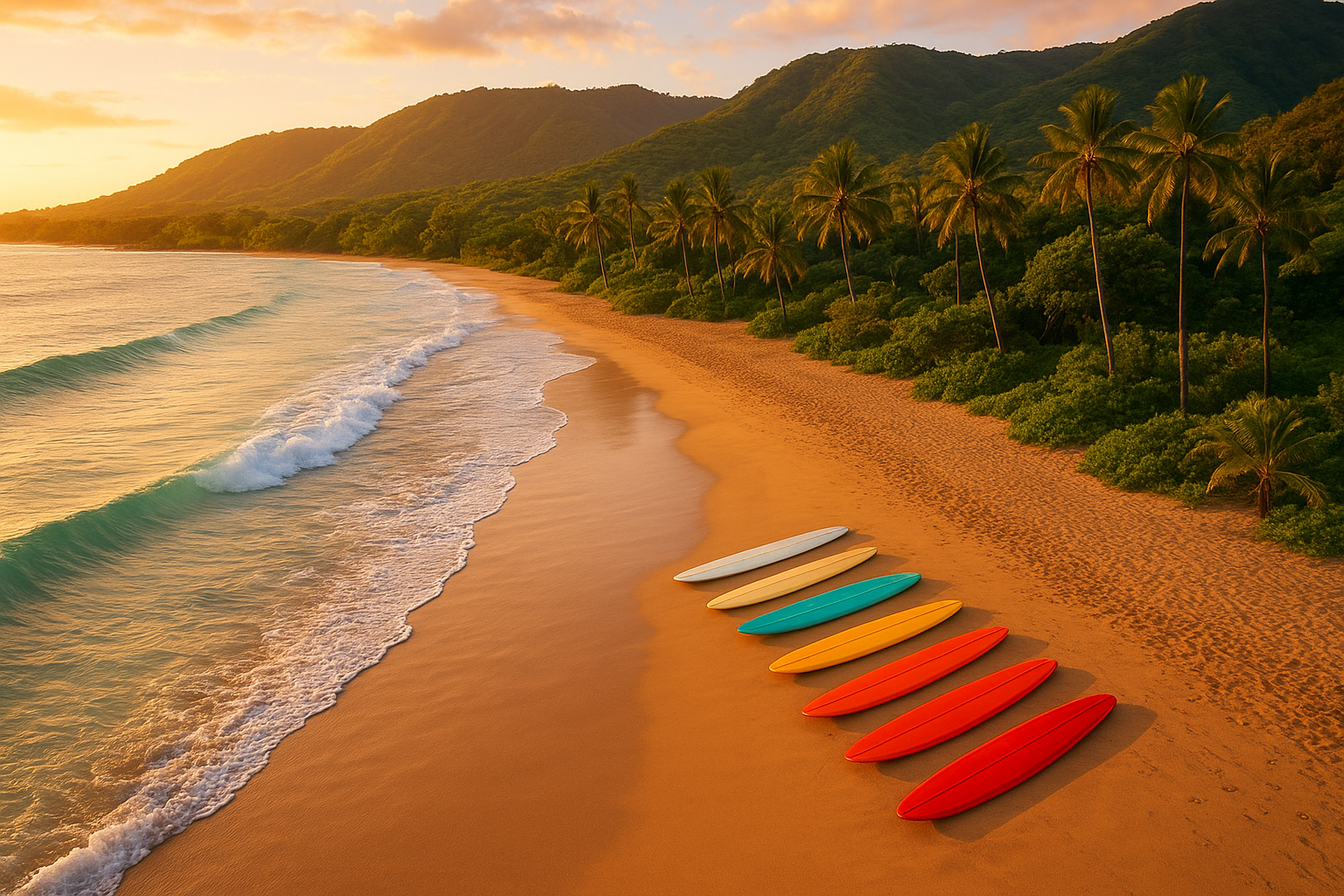
Foam longboards are the standard equipment for beginner Oahu surfing lessons — wide, buoyant, and stable for first-time riders.
For a deeper walkthrough, see our Learn Surfing in Hawaii: The Complete Beginner’s Guide.
Oahu Surfing Lesson Costs: What You’ll Actually Pay
Pricing for Oahu surfing lessons varies depending on lesson type, group size, instructor experience, and whether equipment is included. Here is a transparent breakdown of what to expect.
Group Lessons
- Typically $50–$85 per person
- 90-minute session standard
- Board, leash, rash guard included
- Instructor ratio of 1:4 to 1:6
- Social, energetic atmosphere
- Ideal for families, couples, solo travelers
- Best value for first-time learners
Private Lessons
- Typically $100–$200 per hour
- Fully personalized coaching
- All equipment provided
- 1:1 instructor attention throughout
- Faster skill progression
- Flexible session length & focus
- Best for specific goals or faster progress
💡 Money-Saving Tip: Many Oahu surf schools offer multi-lesson packages at a discounted rate — typically 3 lessons for the price of 2.5. If you’re staying on the island for a week or more, booking a package significantly reduces your per-lesson cost and accelerates your progress.
For most first-time visitors, a group lesson is the ideal starting point — it’s affordable, social, and more than sufficient to get you standing up on your first wave. Private lessons become a worthwhile investment once you’ve had one or two sessions and want to target specific weaknesses or accelerate toward intermediate surfing.
Group vs. Private Surfing Lessons on Oahu: Which Is Right for You?
The choice between group and private lessons isn’t just about budget — it’s about your learning style, pace, and what you want to get out of the experience.
Choose a group lesson if: you’re a complete beginner on a vacation budget, traveling with family or friends, or enjoy learning alongside other people. The social energy of a group session — cheering each other on, laughing through wipeouts — often makes the experience more memorable than the surfing itself. Group lessons are also excellent for children, who tend to respond well to peer motivation.
Choose a private lesson if: you’ve already had a lesson or two and want focused feedback, have specific technical goals (like improving your pop-up or learning to turn), need to work around a physical limitation, or simply prefer one-on-one attention. Private instructors can tailor every wave, every tip, and every drill specifically to your body, your timing, and your goals.
Consider a semi-private lesson (2–3 people) as a middle ground. Many Oahu group surfing lessons offer this option at a price between group and private rates — perfect for couples or small groups of friends who want more instructor attention without the full private lesson cost.
How to Choose the Best Oahu Surf School
With dozens of surf schools operating along Waikiki Beach, find the best beach school can feel overwhelming. These are the exact criteria that separate excellent schools from mediocre ones.
1. Instructor Certification and Lifeguard Training
Every instructor at a reputable school should hold current lifeguard certification and have demonstrated ocean safety training. This is non-negotiable. Don’t hesitate to ask a school directly about their instructors’ credentials before booking.
2. Student-to-Instructor Ratio
The best beginner programs keep groups to a maximum of four to six students per instructor. Schools that accept ten or more students per instructor sacrifice individual attention and safety. Ask about the ratio before you book.
3. Quality and Condition of Equipment
Beginners need large, high-quality foam longboards — ideally 9 to 10 feet — that are properly maintained and free of cracks or dings. Well-maintained equipment is safer and makes learning significantly easier. Check recent reviews for mentions of equipment quality.
4. Recent Reviews on Multiple Platforms
Read reviews on Google, TripAdvisor, and Yelp — and pay attention to how recent they are. Look for patterns: consistent mentions of patient instructors, fun atmosphere, and high success rates at standing up. A school with 200+ five-star reviews over recent months is a much better signal than one with 500 older mixed reviews.
5. Transparent Pricing and Flexible Rescheduling
A trustworthy school lists all pricing clearly upfront — including what’s included in the lesson fee — and offers a rescheduling policy if ocean conditions make lessons unsafe. Avoid schools that charge hidden fees for equipment or require non-refundable prepayment without weather exceptions.
6. Cultural Respect and Aloha Spirit
The best Oahu surf instructors teach more than technique — they teach the aloha spirit that defines Hawaiian surf culture. Look for schools that educate students on ocean stewardship, respect for local surfers, and the cultural significance of surfing in Hawaii. Star Beach Boys is one long-standing example of a Waikiki school known for combining professional instruction with authentic Hawaiian hospitality.
Common Beginner Mistakes — and How to Fix Them Fast
Even with an excellent instructor, most beginners make the same five or six mistakes repeatedly. Knowing about them in advance allows you to self-correct faster and spend more time riding waves.
❌ Mistake 1: Looking Down at the Board — for more practical drills and progress tips see surfing tips.
The Fix: The instant you pop up, fix your gaze on the horizon — not your feet, not the nose of the board. Keeping your eyes forward naturally centers your weight, improves balance, and steers the board in the right direction.
❌ Mistake 2: Feet Too Narrow or Too Close Together
The Fix: Your stance should be shoulder-width apart with your dominant foot positioned toward the tail of the board. Think of your stance like a squat — low center of gravity, weight evenly distributed. Wider equals more stable.
❌ Mistake 3: Paddling with Bent Arms
The Fix: Keep your arms straight and reach as far forward as possible with each stroke, pulling through the water with your full arm — not just your forearm. Long, deep strokes are significantly more powerful than rapid shallow ones.
❌ Mistake 4: Hesitating on the Pop-Up
The Fix: The pop-up must be explosive and decisive — one fluid movement from flat to standing. Slow, hesitant pop-ups result in losing the wave or falling sideways. Commit fully every time, even if your technique isn’t perfect yet.
❌ Mistake 5: Lying Too Far Forward or Too Far Back on the Board
The Fix: Find the board’s “sweet spot” by positioning your body so the nose sits about 2–3 inches above the waterline. Too far forward and the nose digs in (a “pearl dive”); too far back and you lose speed and miss the wave entirely. Your instructor will help you find this balance during the sand session.
❌ Mistake 6: Tensing Up and Holding Your Breath
The Fix: Surfing requires relaxed, fluid movements. Tense muscles slow your pop-up and throw off your balance. Take a deep breath before each wave attempt, relax your shoulders, and focus on making smooth movements rather than powerful ones.
Ocean Safety: What Every New Surfer Must Know
Every reputable Oahu surf school prioritizes ocean safety — but understanding these fundamentals yourself makes you a safer, more confident surfer from day one.
Stay With Your Board
Your foam longboard is a large flotation device. In any wipeout or moment of exhaustion, clinging to your board keeps you afloat. Never swim away from your board when you fall — let the wave carry you, then climb back on.
Understand Rip Currents
Rip currents are channels of water flowing away from shore. If caught in one, do not fight it by swimming directly toward shore — you’ll exhaust yourself. Instead, swim parallel to the beach until you’re out of the current, then angle back to shore. Your instructor will point out current patterns specific to your lesson location.
Surf Lineup Etiquette
The surfer closest to the peak of the wave (the “inside” position) has right of way. Dropping in on another surfer’s wave is dangerous and disrespectful — it’s one of the most serious violations of surf culture. Your instructor will explain how to observe the lineup and pick your waves safely without interfering with other surfers.
Reef-Safe Sunscreen: A Legal & Environmental Requirement
Hawaii law bans sunscreens containing oxybenzone and octinoxate — chemicals proven to damage coral reef ecosystems. Mineral-based sunscreens using zinc oxide or titanium dioxide are reef-safe and widely available on Oahu. Apply generously at least 20 minutes before entering the water and reapply after your session.
Never Surf Alone as a Beginner
Regardless of your confidence level after your first lesson, never paddle out alone until you have sufficient experience and understand the local break. Always surf with a buddy or within sight of a lifeguard station. On Waikiki, lifeguard towers are spaced regularly along the beach for immediate assistance.
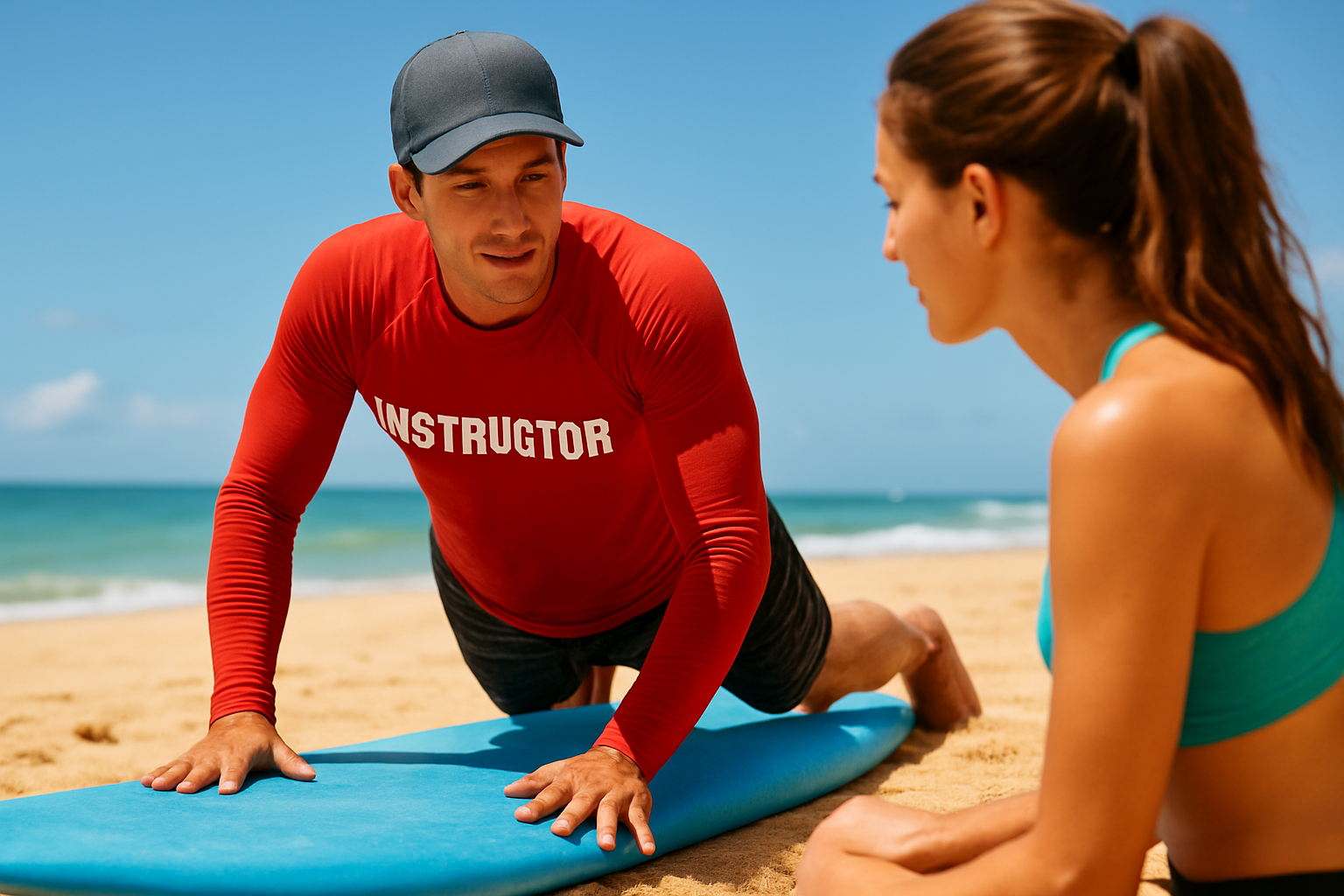
The on-land pop-up demonstration is the most critical part of every beginner Oahu surfing lesson — mastering it on sand dramatically improves your first water attempt.
What to Bring to Your Oahu Surf Lesson: The Complete Packing List
Most surf schools provide the core equipment, but arriving prepared with the right personal gear makes your session more comfortable and enjoyable.
✅ Provided by the School
- Foam longboard (9–10 ft)
- Surf leash
- Rash guard (UPF 50+)
- Reef shoes (some schools)
- All instruction and coaching
🎒 Bring Yourself
- Swimsuit or board shorts
- Reef-safe mineral sunscreen (SPF 50+)
- Water bottle (stay hydrated)
- Towel and dry change of clothes
- Waterproof bag for valuables
- Light snack for before/after
Best Time of Year for Oahu Surfing Lessons
One of the great advantages of booking Oahu surfing lessons is that the island’s south shore is suitable for beginners year-round. However, different seasons offer different experiences.
Summer (May–September) — Peak Beginner Season
South swells during summer produce the smallest and most consistent beginner waves at Waikiki — typically one to three feet. Water temperatures peak around 82°F, tourism is highest, and lesson slots fill fastest. Book at least a week in advance during summer school holidays and July–August peak season.
Fall (October–November) — Ideal Shoulder Season
Crowds thin significantly in fall, lesson availability is highest, and the south shore still delivers excellent beginner conditions. Pricing may be slightly lower than peak summer. This is arguably the best overall window for first-time surfers seeking quality instruction with more personal attention.
Winter (December–April) — Lessons Still Available
While the North Shore is generating massive swells during winter, Waikiki’s protected south-facing location remains manageable. Waves may be slightly larger and more irregular than summer, but experienced instructors choose appropriate breaks for beginners regardless of season. Water temperatures remain warm at 75–78°F.
Surfing Lessons for Kids on Oahu: Everything Parents Need to Know
Oahu is one of the best places in the world to introduce children to surfing. Waikiki’s calm, shallow water, warm temperatures, and gentle waves create an environment where kids can learn safely and build confidence quickly.
Most surf schools on Oahu accept children as young as 5 to 7 years old for beginner lessons. Look for schools that offer dedicated kids’ programs with instructors experienced in working with young learners. Smaller group sizes (1:2 or 1:3 for children) are preferable for safety and engagement.
For family lessons, consider booking a semi-private session that includes parents and children together — many families find that learning alongside each other creates some of the most treasured vacation memories. Children typically learn the pop-up faster than adults because of their lower center of gravity and natural fearlessness in the water.
After Your First Lesson: How to Keep Improving
Your first Oahu surfing lesson will almost certainly leave you wanting more. Here’s how to build on that foundation and keep progressing during the rest of your trip — and beyond.
Book a Second or Third Lesson
The biggest leap in surfing skill usually happens between lesson one and lesson three. The first lesson establishes the foundation; lessons two and three build consistency. If your trip allows, spacing two or three lessons across your stay produces dramatically better results than a single session.
Rent a Board and Practice on Your Own
Most beachside rental shops along Waikiki offer foam longboards for $20–$35 per hour. After your first lesson, renting a board and spending an hour practicing what you’ve learned — even just paddling and attempting small waves — dramatically accelerates your improvement. Always rent a board appropriate to your current skill level.
Watch Other Surfers
Spend 15–20 minutes watching more experienced surfers from the beach before paddling out. Notice how they read waves, time their paddle, and position their weight. Observation is one of the fastest learning tools in surfing and costs nothing.
Consider a Multi-Day Surf Camp
Several schools on Oahu offer 3-day and 5-day surf camps for visitors who want structured progression. These programs combine daily lessons with video analysis, fitness drills, and ocean knowledge sessions — ideal for travelers who want to leave Oahu as a genuine surfer rather than just someone who tried it once.
The Cultural Significance of Surfing in Hawaii
Learning to surf on Oahu isn’t just a tourist activity — it’s a connection to one of the world’s oldest and most spiritually significant ocean traditions. Ancient Hawaiians called surfing he’e nalu, which translates roughly to “wave sliding,” and it was practiced by everyone from commoners to ali’i (royalty). Chiefs were revered for their surfing skill, and breaking waves was considered a gift from the ocean gods.
Duke Kahanamoku — born in Honolulu in 1890 — is credited with introducing surfing to the world during his travels as an Olympic swimmer. His statue stands on Waikiki Beach today, arms outstretched toward the ocean, and serves as a powerful reminder of what it means to surf with aloha. When you take your first lesson at Waikiki, you’re learning in the very waters where this global tradition began.
The best Oahu surf instructors honor this heritage in their teaching — emphasizing respect for the ocean, respect for other surfers, and the understanding that waves are a shared gift, not a competitive resource. Arriving with that mindset will make you a better student and a more welcome presence in the water.
Frequently Asked Questions About Oahu Surfing Lessons
What are Oahu surfing lessons and what do they include?
Oahu surfing lessons are guided instruction sessions taught by certified instructors on Oahu’s beaches — most commonly at Waikiki. A typical lesson runs 60 to 90 minutes and includes an on-land sand session covering the pop-up technique and paddling form, followed by supervised wave riding in shallow water. All equipment — foam board, leash, and rash guard — is provided in the lesson fee. Instructors also cover ocean safety, right-of-way etiquette, and reef-safe sunscreen requirements.
How much do surfing lessons in Oahu cost?
Group surfing lessons on Oahu typically cost $50–$85 per person for a 90-minute session, with all equipment included. Private lessons range from $100–$200 per hour. Many schools offer multi-lesson packages at discounted rates — usually three lessons for the price of two and a half — which is the best value for visitors staying a week or more.
Where is the best beach for surfing lessons on Oahu?
Waikiki Beach is universally regarded as the best location for beginner Oahu surfing lessons. Its gentle, rolling waves break slowly over a sandy bottom, the water temperature stays 75–82°F year-round, and dozens of certified surf schools operate directly on the beach. Beginners specifically benefit from the Canoes and Queen’s breaks within Waikiki, which offer long, manageable rides perfect for first-time surfers.
Do I need any experience to take surfing lessons on Oahu?
No prior surfing experience is required. Oahu surf schools offer beginner programs specifically designed for people who have never surfed before. Every lesson starts on dry land with a full technique briefing before anyone enters the water. Basic swimming ability is recommended, but you do not need to be an advanced swimmer to participate in beginner lessons at Waikiki.
How long does it take to learn to surf on Oahu?
Most beginners successfully stand up and ride their first wave within a single 60–90 minute lesson at Waikiki. Consistently catching waves independently typically develops over three to five sessions. Building intermediate skills — including turning, reading waves without instruction, and paddling out through whitewater — usually takes several weeks of regular practice after initial lessons.
What should I bring to a surfing lesson on Oahu?
Bring a swimsuit or board shorts, reef-safe mineral sunscreen (SPF 50+), a water bottle, a towel, and a waterproof bag for your phone and valuables. Your surf school provides the foam board, leash, and rash guard. Leave jewelry, watches, and accessories at your hotel. Eat a light meal 60–90 minutes before your lesson for sustained paddling energy.
Is surfing on Oahu safe for kids?
Yes — Oahu is one of the safest and most welcoming places in the world for children to learn to surf. Most schools accept kids as young as 5–7 years old. Waikiki’s calm, shallow waves and warm water create an ideal environment for young learners. Look for schools offering dedicated children’s programs with experienced instructors and small group ratios (1:2 or 1:3 for young children).
What is the best time of year for Oahu surfing lessons?
Summer (May–September) offers the smallest and most consistent beginner waves at Waikiki and is peak lesson season. Fall (October–November) is arguably the best value window — crowds thin, lesson slots are more available, and conditions remain excellent. Winter lessons are also possible at Waikiki’s protected south shore, though waves can be slightly larger. Lessons run successfully year-round on Oahu.
Should I book a group or private surfing lesson on Oahu?
Group lessons ($50–$85) are ideal for first-time visitors, families, and social learners — they’re affordable, energetic, and more than sufficient to get you riding waves. Private lessons ($100–$200) are worth the investment if you’ve already had a session or two and want personalized coaching to fix specific weaknesses or accelerate progress. Semi-private lessons (2–3 people) offer a great middle ground for couples and small friend groups.
Do Oahu surf schools provide all equipment?
Yes — virtually all Oahu surf schools include a foam longboard (9–10 ft), surf leash, and rash guard in the lesson fee. Some schools also provide reef shoes and reef-safe sunscreen on request. You do not need to purchase or rent any equipment separately for your first lesson.
What are the most common beginner mistakes during Oahu surfing lessons?
The most common mistakes include looking down at the board instead of the horizon, standing with feet too close together, paddling with bent arms, hesitating on the pop-up, lying in the wrong position on the board (too far forward causes nose-diving; too far back loses speed), and tensing up between attempts. A good instructor corrects these during the sand session and provides real-time feedback between waves.
Can I take surfing lessons on the North Shore of Oahu?
The North Shore is not suitable for beginners — winter swells can produce waves exceeding 20–30 feet at breaks like Pipeline, and even summer conditions are far more powerful than Waikiki. Beginners should always start at Waikiki or other south shore spots. Most reputable surf schools operate exclusively on the south shore for beginner and intermediate programs, reserving North Shore sessions for advanced students only.
What should I look for when choosing an Oahu surf school?
Look for schools with certified, lifeguard-trained instructors, small group ratios (maximum 1:6), well-maintained foam longboard equipment, transparent pricing with no hidden fees, flexible rescheduling policies for poor ocean conditions, and strong recent reviews on Google and TripAdvisor. Bonus points for schools that incorporate Hawaiian surf culture and ocean stewardship into their teaching.
Your first Oahu surfing lesson is waiting. Whether you’re a total beginner, a family looking for a shared adventure, or a returning visitor finally ready to stand up on a board — Waikiki’s warm water, gentle waves, and world-class instructors make success not just possible but likely on your very first day. Book with a certified school, arrive prepared, and commit fully when your instructor pushes you into that first wave. The ocean will do the rest.