Knowing how to surf safely as a beginner is the single most important factor in turning a nerve-wracking first paddle-out into a lifelong love of the ocean. Surfing rewards patience and preparation, and most injuries happen not because the sport is inherently dangerous, but because new surfers skip the basics of reading waves, handling a board, and respecting currents.
Quick answer: Surf safely as a beginner by taking lessons from a certified instructor, using a soft-top board in small waves, checking ocean conditions and flags before entering, and learning how to escape a rip current by swimming parallel to shore. Confidence and safety both come from steady, guided practice rather than guesswork.
Understanding How to Surf Safely as a Beginner
Surfing combines balance, timing, and ocean literacy, so safety starts well before you ever stand on a board. In addition to physical skill, beginners need to understand how waves form, how currents move, and how to communicate with other surfers in the water. According to the United States Lifesaving Association, rip currents are involved in a large share of ocean rescues at beaches each year, which is why ocean awareness is treated as seriously as surf technique at most reputable schools, including Star Beach Boys.
Consequently, learning to surf safely is less about avoiding the water and more about building a repeatable routine: check conditions, warm up, paddle out carefully, and surf within your limits. For a deeper look at whether the sport suits complete newcomers, see this guide on whether surfing is safe for complete beginners.
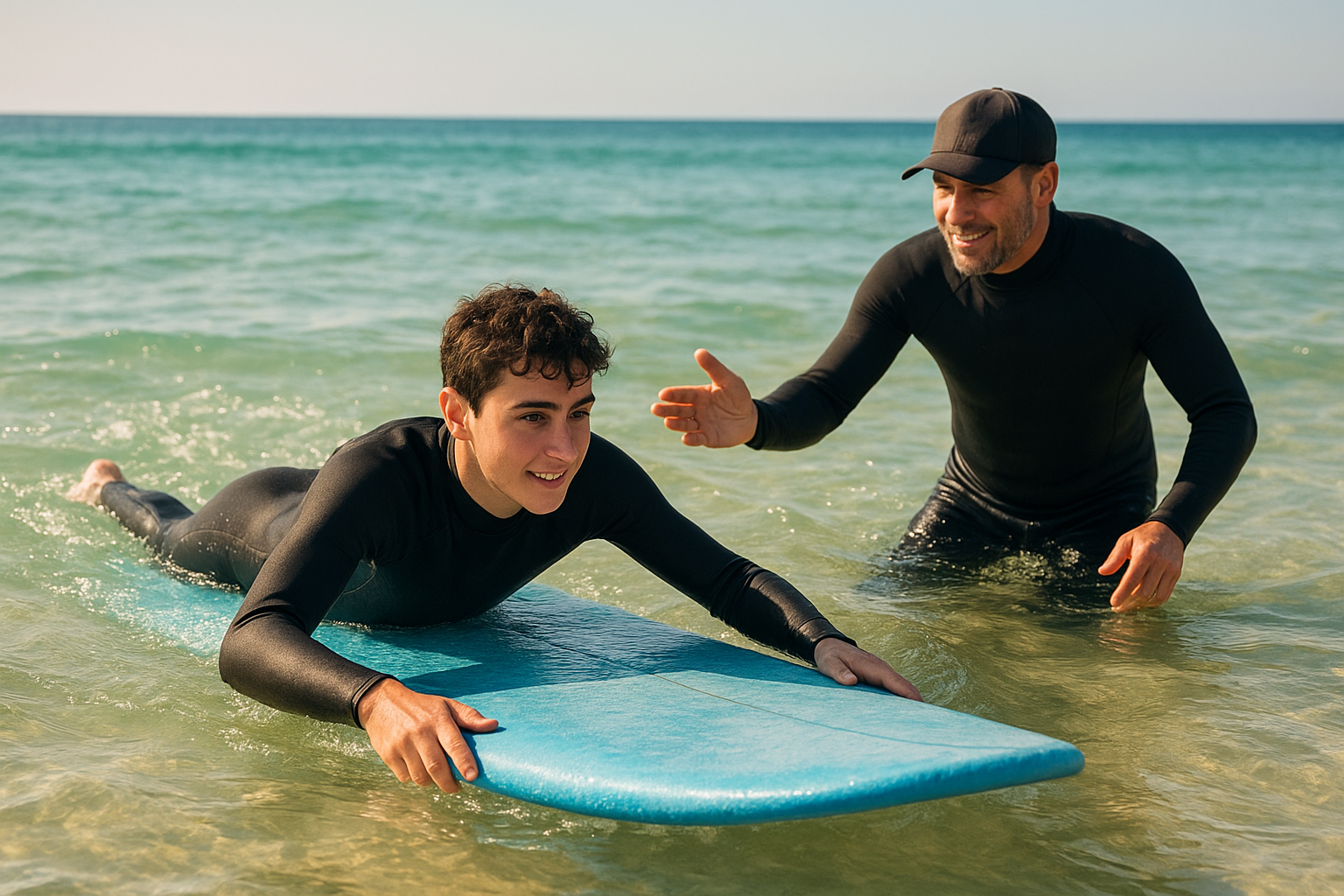
Guided practice is one of the fastest ways to learn how to surf safely as a beginner.
What Is Safe Beginner Surfing?
Safe beginner surfing is the practice of learning to ride waves in low-risk conditions while using appropriate equipment, supervision, and ocean awareness to minimize injury. It typically means small waves, a soft board, a leash, and either a lifeguard or instructor nearby. In particular, safety at this stage depends more on judgment and preparation than on raw athletic skill.
For a broader overview of foundational safety habits, the article on surfing safety tips every beginner must know expands on many of the principles covered here.
Essential Beginner Surf Safety Gear
Choosing the right equipment is one of the easiest ways to reduce risk before you even touch the water. A soft-top, foam-core surfboard is strongly recommended for new surfers because it floats better and causes far less impact injury than a hard fiberglass board. Similarly, a properly sized leash keeps the board from drifting toward swimmers or rocks after a fall.
Beyond the board itself, a well-fitted wetsuit or rash guard protects against sun, rash, and minor scrapes from the board or reef. Reef-safe sunscreen is also important, both for your skin and for protecting marine ecosystems, as noted by the National Oceanic and Atmospheric Administration (NOAA). Together, this gear forms the foundation of safe, comfortable surfing.
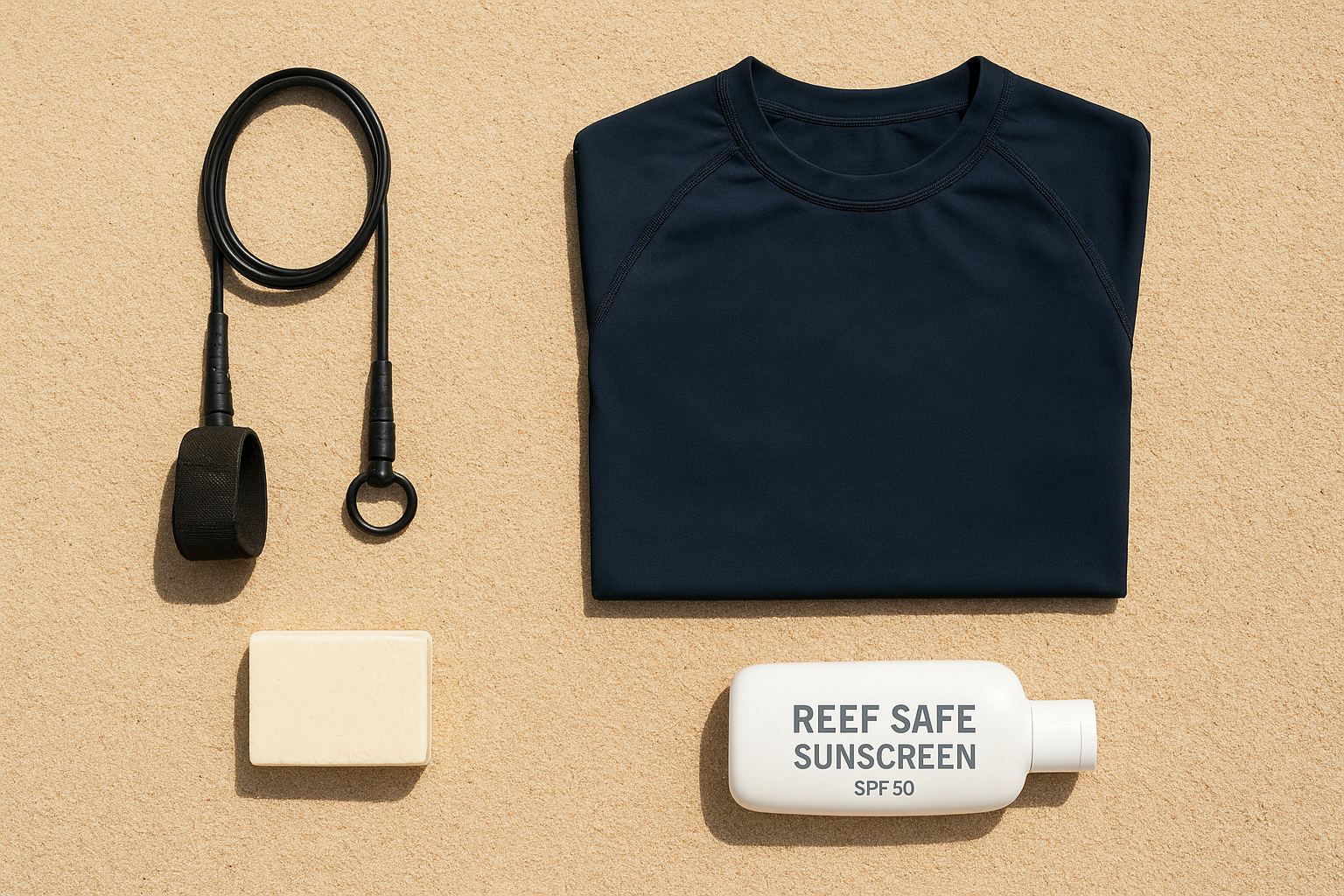
The right gear supports safe surfing habits from day one.
Reading Ocean Conditions Before You Paddle Out
Before entering the water, experienced surfers always assess conditions first. Checking the lifeguard flag system, swell height, tide stage, and wind direction tells you whether conditions suit a beginner. For example, a small, slow, waist-high wave on an incoming tide is generally far safer than a fast, overhead swell with offshore wind chop.
As a result, many surf schools build a conditions check into every lesson, and this habit is detailed further in this beginner’s guide to wave-riding lessons.
Rip Currents and How to Escape Them
A rip current is a narrow, fast-moving channel of water flowing away from shore, and it is one of the leading hazards for new ocean swimmers and surfers alike. If you are caught in one, the safest response is to stay calm, avoid fighting the current directly, and swim parallel to the beach until you escape its pull before turning back toward shore. The Wikipedia entry on rip currents offers a useful visual explanation of how these currents form near sandbars and inlets.
Surf Etiquette Every New Surfer Should Know
Surf etiquette exists primarily to prevent collisions, and following it is a core part of surfing safely around others. The most important rule is right of way: the surfer closest to the breaking part of the wave, known as the peak, has priority. Dropping in on someone else’s wave is not only impolite, it also creates a genuine collision risk.
In addition, beginners should hold onto their board rather than letting it float freely in a crowded lineup, since an unsecured board can strike another surfer. Paddling around breaking waves, instead of straight through the impact zone, further reduces the chance of being hit by someone else’s board or losing your own.
Step-by-Step: How to Practice Safe Surfing Techniques
Building a consistent pre-surf routine helps beginners turn safety knowledge into habit. The following sequence reflects what most certified instructors teach during a first lesson.
- Check conditions and flags: Confirm wave size, tide, and lifeguard flag status match your skill level before entering the water.
- Warm up and stretch: Loosen your shoulders, back, and legs for five to ten minutes to reduce strain during paddling.
- Attach your leash and walk in slowly: Secure the leash, enter sideways, and walk out until the water reaches your waist.
- Paddle out through gaps in the waves: Use channels where waves are not breaking, and push through smaller whitewater sections steadily.
- Catch a wave and fall safely: Pop up smoothly, and if you lose balance, fall flat and away from the board with arms covering your head.
For more technique-focused coaching, see these surfing techniques for beginners designed to build confidence step by step.

Falling correctly is one of the most overlooked beginner surf safety skills.
Common Mistakes Beginner Surfers Make
Even motivated beginners tend to repeat a few predictable mistakes. Recognizing them in advance makes it easier to avoid costly setbacks.
- Paddling out beyond skill level: Choosing waves that are too large or fast-breaking often leads to panic and exhaustion.
- Ignoring the lineup: Not watching other surfers increases the risk of collisions and dropped-in waves.
- Diving headfirst off the board: This raises the risk of hitting a sandbar or rock in shallow water.
- Skipping a warm-up: Cold, tight muscles are more prone to cramping during long paddling sessions.
Why Professional Lessons Matter for Surfing Safely
Although self-teaching is possible, structured lessons dramatically shorten the learning curve and reduce risk. A certified instructor can read conditions on your behalf, correct unsafe habits in real time, and intervene immediately if a current or wave catches you off guard. This hands-on supervision is particularly valuable for families, tourists, and first-time swimmers in unfamiliar surf.
The International Surfing Association encourages beginner instruction as a foundation for lifelong safe surfing, and this complete guide to safe surfing lessons for beginners outlines what a well-structured program typically includes.
Frequently Asked Questions About How to Surf Safely as a Beginner
How to surf safely as a beginner without years of experience?
You can surf safely as a beginner by starting with proper instruction, choosing a soft-top beginner board, and practicing in small, gentle waves with a lifeguard present. Professional lessons shorten the learning curve and reduce the chance of injury.
What is the safest surfboard for a beginner?
A longer, wider soft-top foam board is the safest choice for beginners because it floats easily, paddles stably, and causes less injury on impact than a hard fiberglass board. Most surf schools provide these boards for first-time students.
How do I escape a rip current while surfing?
Stay calm and swim parallel to the shoreline until you exit the current’s pull, then angle back toward the beach. Never try to swim directly against a rip current, as it will exhaust you faster than it carries you.
Is it safe for complete beginners to surf without lessons?
Surfing without any lessons is riskier because beginners often misjudge waves, currents, and board handling. Taking at least one guided lesson significantly improves safety and speeds up skill development.
What safety gear should a beginner surfer wear?
A leash to keep the board attached, a properly fitted wetsuit or rash guard, and reef-safe sunscreen are essential safety gear for beginners. In cooler or rocky conditions, surf booties add extra protection.
How long does it take to learn to surf safely?
Most beginners can learn the fundamentals of safe surfing within three to five lessons, though consistent ocean confidence often takes several weeks of practice. Progress varies based on fitness, swimming ability, and wave conditions.
What is the biggest mistake beginner surfers make?
The most common mistake is paddling out in conditions beyond their skill level, such as strong currents or overhead waves. This often leads to panic, exhaustion, or collisions with other surfers.
How much do beginner surf lessons typically cost?
Group beginner surf lessons generally range from affordable rates for shared classes to higher prices for one-on-one private coaching. Costs vary by location, lesson length, and whether equipment rental is included.
What surf etiquette rules keep beginners safe?
Beginners should never drop in on another surfer’s wave, should hold onto their board in crowded lineups, and should always paddle around breaking waves rather than through them. Following these rules prevents collisions and injuries.
Can children learn how to surf safely as beginners?
Yes, children can safely learn to surf when guided by a certified instructor in calm, shallow waves suited to their size and swimming ability. Supervision and proper-fitting gear are essential for young beginners.
What ocean conditions are best for beginner surfers?
Small, slow-breaking waves of one to two feet with a sandy bottom and minimal current are ideal for beginners. Checking local surf reports and lifeguard flags before entering the water helps confirm safe conditions.
How do beginner surfers avoid getting hit by their own board?
Beginners should fall flat and away from the board rather than diving headfirst, and always cover their head with their arms when surfacing near the board. A properly fitted leash also keeps the board from drifting toward others.
Do beginners need to know how to swim before surfing?
Yes, basic swimming competence is a safety requirement before attempting to surf, since paddling, duck diving, and self-rescue all depend on water confidence. Most reputable surf schools ask about swimming ability before booking a lesson.
Final Thoughts on Surfing Safely as a Beginner
Ultimately, learning how to surf safely as a beginner comes down to preparation, humility about your limits, and a willingness to learn from experienced instructors. Start with the right gear, respect ocean conditions, practice rip current awareness, and follow basic lineup etiquette. With consistent practice and guided lessons, such as those offered through Star Beach Boys, most beginners build both the skill and the confidence to enjoy surfing safely for years to come.