Eco-conscious surf lessons Waikiki give travelers and residents a way to enjoy Oahu’s legendary breaks while actively protecting the coral reefs, marine life, and shoreline that make this coastline so special. As a result, more surf schools are swapping petroleum-based wax and harsh chemical sunscreens for reef-safe alternatives, and many now teach ocean stewardship right alongside pop-up technique. For anyone searching for a lesson that respects the environment as much as it respects the waves, understanding what makes a program genuinely eco-conscious is the first step toward choosing wisely.
Quick answer: Eco-conscious surf lessons Waikiki are surf instruction programs that combine certified coaching with environmentally responsible practices—reef-safe sunscreen, biodegradable wax, small groups, and marine conservation education—to minimize impact on Waikiki’s reef ecosystem while still teaching safe, confident surfing.

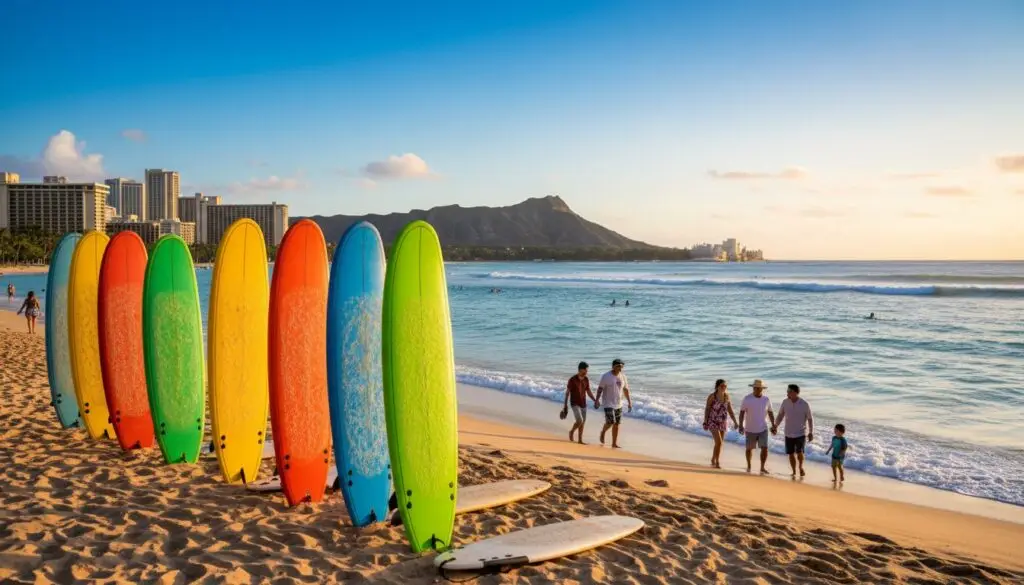
Morning sessions like this are a hallmark of eco-conscious surf lessons Waikiki offers to beginners and families alike.
What Are Eco-Conscious Surf Lessons Waikiki All About?
Eco-conscious surf lessons Waikiki are guided sessions that pair hands-on surf coaching with reef-friendly gear and low-impact teaching methods. Instructors generally limit class sizes, supply biodegradable surf wax, and require mineral-based sunscreen to cut down on chemical runoff. In short, the lesson builds surfing confidence while protecting the very ocean environment that makes Waikiki famous worldwide.
Beyond gear choices, these programs often weave in short briefings about reef anatomy, tide behavior, and why avoiding contact with coral matters. Consequently, students leave with more than a new skill; they gain a working understanding of the ecosystem beneath their board. Many Hawaii-based schools, including those featured in this guide to eco-friendly surf schools in Hawaii, now treat conservation messaging as a core part of the curriculum rather than an afterthought.
Why Sustainable Surf Instruction Matters in Hawaii
Sustainable surf instruction matters because Waikiki’s nearshore reef is both a surf break and a living ecosystem. Specifically, coral reefs cover less than one percent of the ocean floor yet support roughly a quarter of all known marine species, according to NOAA’s Ocean Service. Because so much biodiversity depends on a small, fragile habitat, even minor pollutants can cause outsized damage over time.
Data point: Hawaii’s reef-safe sunscreen law, effective since 2021, prohibits the sale of sunscreens containing oxybenzone and octinoxate statewide to reduce coral-harming chemical exposure.
In addition, the coral reef ecosystem around Waikiki acts as a natural wave break, meaning its health directly affects surf quality. Therefore, surf schools that train instructors in sustainable practices are not just being charitable; they are protecting the long-term viability of their own surf breaks.
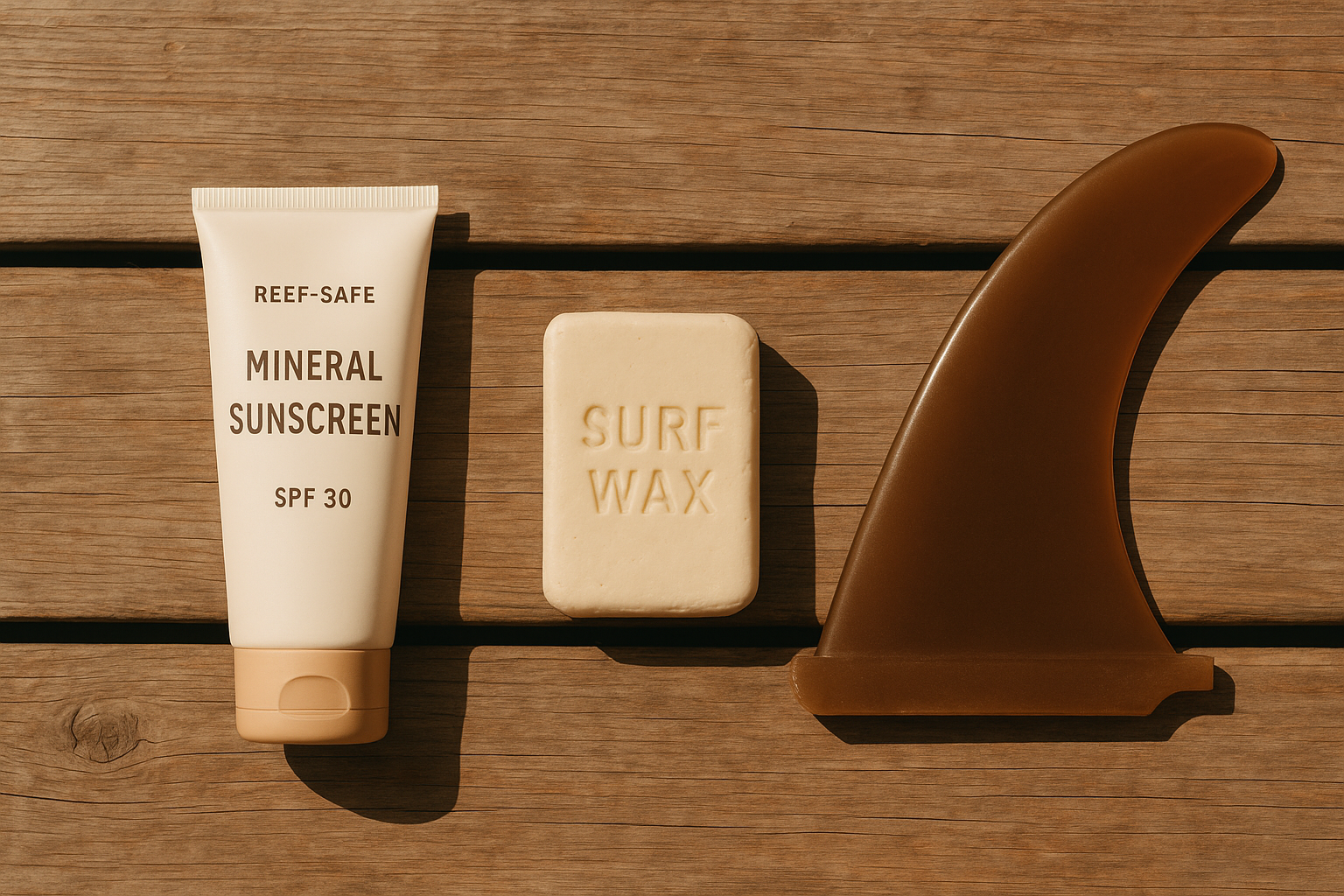
Reef-safe products are a simple but essential part of sustainable surf instruction.
How to Choose an Eco-Friendly Surf School in Waikiki
Choosing an eco-friendly surf school in Waikiki takes a little research, but the process is straightforward once you know what to look for. Use the steps below to evaluate a program before booking.
- Ask about sunscreen and wax policies. Contact the surf school directly and ask whether they require reef-safe mineral sunscreen and provide biodegradable surf wax for every student before the lesson begins.
- Check group size and instructor ratio. Confirm the maximum number of students per instructor, since smaller groups reduce crowding near the reef and allow for more personalized coaching.
- Look for conservation partnerships. Search for evidence that the school participates in beach cleanups, reef monitoring, or partnerships with local marine conservation organizations in Hawaii.
- Confirm safety and certification credentials. Verify that instructors hold current lifeguard or water safety certifications, since safety training often accompanies responsible environmental habits.
- Read reviews mentioning sustainability. Review recent customer feedback for mentions of reef-safe products and respectful ocean etiquette rather than vague marketing claims alone.
Green Surf Practices That Protect Waikiki’s Reefs
Green surf practices extend well beyond sunscreen choices. For example, well-run schools maintain their boards regularly to prevent fiberglass fragments from shedding into the water, and they enforce a strict no-touch policy around exposed coral heads. Similarly, smaller lesson groups mean fewer bodies standing in shallow reef zones at once, which reduces physical stress on the ecosystem.
Above all, consistent education is what separates a marketing claim from a genuine commitment. Schools covered in this roundup of eco-friendly Hawaii surf schools typically brief every student on tide safety and reef etiquette before entering the water. Furthermore, agencies such as the Hawaii Department of Land and Natural Resources publish ongoing guidance on protecting nearshore marine habitats, which responsible operators reference when training staff.

Smaller class sizes support both learning and reef protection during eco-conscious surf lessons Waikiki schools provide.
Is Star Beach Boys a Sustainable Choice for Surf Lessons?
Star Beach Boys operates as a Waikiki-based surf school built around personalized coaching from experienced instructors, serving tourists, families, and local residents alike. Because the team focuses on structured, skill-based progression rather than rushed group sessions, students naturally spend more one-on-one time with coaches who can reinforce safe, respectful ocean habits.
That said, no surf school exists in isolation from the reef it teaches on, which is why evaluating instructor training and group size matters just as much as checking reviews. Readers can learn more about the school’s approach in this breakdown of why visitors choose Star Beach Boys for surf lessons, or explore lesson options directly at starbeachboys.com.
Eco-Conscious Surf Lessons for Families, Beginners, and Seniors
Eco-conscious surf lessons are not limited to any single age group; in fact, Waikiki’s gentle, reef-protected inside breaks make it one of the more forgiving places in the world to learn. Families traveling with children often look for programs that balance patience with safety, which is covered in detail in this complete guide to family-friendly surf schools in Waikiki.
Meanwhile, complete beginners worried about safety can review this resource on finding beginner surf lessons with a strong safety focus before booking. Older adults are also well served; this guide to safe surf lessons for seniors on Oahu outlines pacing adjustments that make the sport accessible without sacrificing environmental responsibility.
Frequently Asked Questions About Eco-Conscious Surf Lessons Waikiki
What are eco-conscious surf lessons Waikiki?
Eco-conscious surf lessons Waikiki are surf instruction programs that combine professional coaching with reef-safe sunscreen, biodegradable wax, and small class sizes to reduce impact on the marine environment. They also often include education about local reef ecosystems and ocean etiquette.
How much do eco-conscious surf lessons in Waikiki cost?
Group eco-friendly surf lessons in Waikiki typically range from around $75 to $150 per person, while private sessions can cost more due to one-on-one instructor time. Prices vary based on group size, lesson length, and included equipment.
How long does a typical eco-friendly surf lesson last?
Most eco-friendly surf lessons in Waikiki last between 90 minutes and two hours, including beach instruction and in-water coaching time. Longer multi-day packages are also available for students who want to build skills progressively.
Why is reef-safe sunscreen required for surfing in Hawaii?
Hawaii law prohibits the sale of sunscreens containing oxybenzone and octinoxate because these chemicals contribute to coral bleaching. Reputable surf schools require mineral-based alternatives to protect the reef that supports the surf breaks themselves.
What is the difference between a regular surf lesson and an eco-conscious one?
A regular surf lesson focuses mainly on technique, while an eco-conscious surf lesson adds environmental practices such as reef-safe products, limited group sizes, and conservation education. The teaching goals stay the same, but the methods protect the ocean more actively.
What should I bring to an eco-conscious surf lesson?
Bring reef-safe mineral sunscreen, a reusable water bottle, and swimwear suited for sun protection. Many schools provide biodegradable wax and rash guards, so checking ahead can help you avoid single-use plastic items.
Are eco-conscious surf lessons suitable for complete beginners?
Yes, eco-conscious surf lessons are designed for all skill levels, including first-time surfers. Instructors typically start in gentle, shallow waves and build skills gradually while reinforcing respectful ocean habits from the very first session.
What common mistakes should surfers avoid to protect the reef?
Common mistakes include standing on coral, using chemical sunscreen, and surfing in overcrowded lineups without spacing. Avoiding these habits reduces physical damage to the reef and lowers chemical runoff into the water.
How do surf schools reduce their environmental impact in Waikiki?
Surf schools reduce their impact by limiting class sizes, maintaining boards to avoid fiberglass shedding, hosting beach cleanups, and training instructors in reef-safe practices. Some also partner with local conservation groups for ongoing education.
What age groups can join eco-friendly surf lessons in Waikiki?
Most eco-friendly surf schools welcome participants from young children through seniors, as long as basic swimming comfort is present. Instructors typically adjust pacing and board selection based on age and fitness level.
Is it safe to surf near coral reefs in Waikiki?
Surfing near Waikiki’s reefs is generally safe when lessons are led by trained instructors who understand tide patterns and reef locations. Staying off exposed coral and following instructor guidance significantly reduces injury risk to both surfers and marine life.
What best practices make a surf school genuinely eco-conscious?
Genuine eco-conscious surf schools use reef-safe products, maintain small instructor-to-student ratios, educate students on marine conservation, and support local reef protection initiatives. Transparency about these practices is also a strong indicator of authenticity, as noted in this overview of surfing as a sport.
Final Thoughts on Choosing Eco-Conscious Surf Lessons
Ultimately, eco-conscious surf lessons Waikiki offer a way to enjoy world-class waves without ignoring the reef ecosystem that makes those waves possible in the first place. By asking the right questions about sunscreen, group size, and conservation partnerships, surfers of any level can choose a program that protects the ocean while still delivering a genuinely exciting introduction to the sport. Whether booking for a family vacation, a solo beginner trip, or a lesson tailored to seniors, prioritizing sustainability alongside safety leads to a more rewarding experience in the water and a healthier coastline for the surfers who come after.