Beginner surf programs with certified instructors give first-time wave riders a safe, structured way to learn ocean fundamentals without guesswork or unnecessary risk. These programs pair trained coaches with step-by-step lesson plans, so students progress from standing on sand to catching their first green wave with confidence. For visitors and locals exploring a coastal destination, choosing a school built around certified instruction, rather than informal tips from a friend, often makes the difference between a frustrating day and a lifelong passion for surfing.
What Are Beginner Surf Programs With Certified Instructors?
In short, beginner surf programs with certified instructors are guided lesson tracks where every coach has completed recognized training in ocean rescue, wave assessment, and teaching methodology. Consequently, students are never left guessing about safety protocol or technique.
Most programs follow a similar structure: a short classroom-style briefing on the beach, a supervised paddling and balance session in shallow water, and finally, guided wave catching under direct instructor watch. Organizations such as the International Surfing Association set the baseline standards many certified coaching programs follow worldwide. You can review how one working example structures this training through Star Beach Boys, which builds its beginner curriculum around these same safety-first principles.
Why Certified Surf Instructors Matter for New Surfers
Certification matters because the ocean is unpredictable. Specifically, trained coaches know how to read rip currents, shifting sandbars, and crowd dynamics that untrained helpers often miss entirely. As a result, students avoid common hazards before they ever become a problem.
According to the National Oceanic and Atmospheric Administration, rip currents are responsible for the majority of surf beach rescues performed by lifeguards each year. Because certified surf instructors are trained to spot these currents early, lessons led by qualified coaches carry significantly lower risk than informal, unsupervised attempts. In addition, certified instructors tend to correct posture and paddling errors faster, which shortens the overall learning curve. If you are curious how instructor experience varies across skill levels, this breakdown of instructor experience across skill levels explains the training progression in more detail.
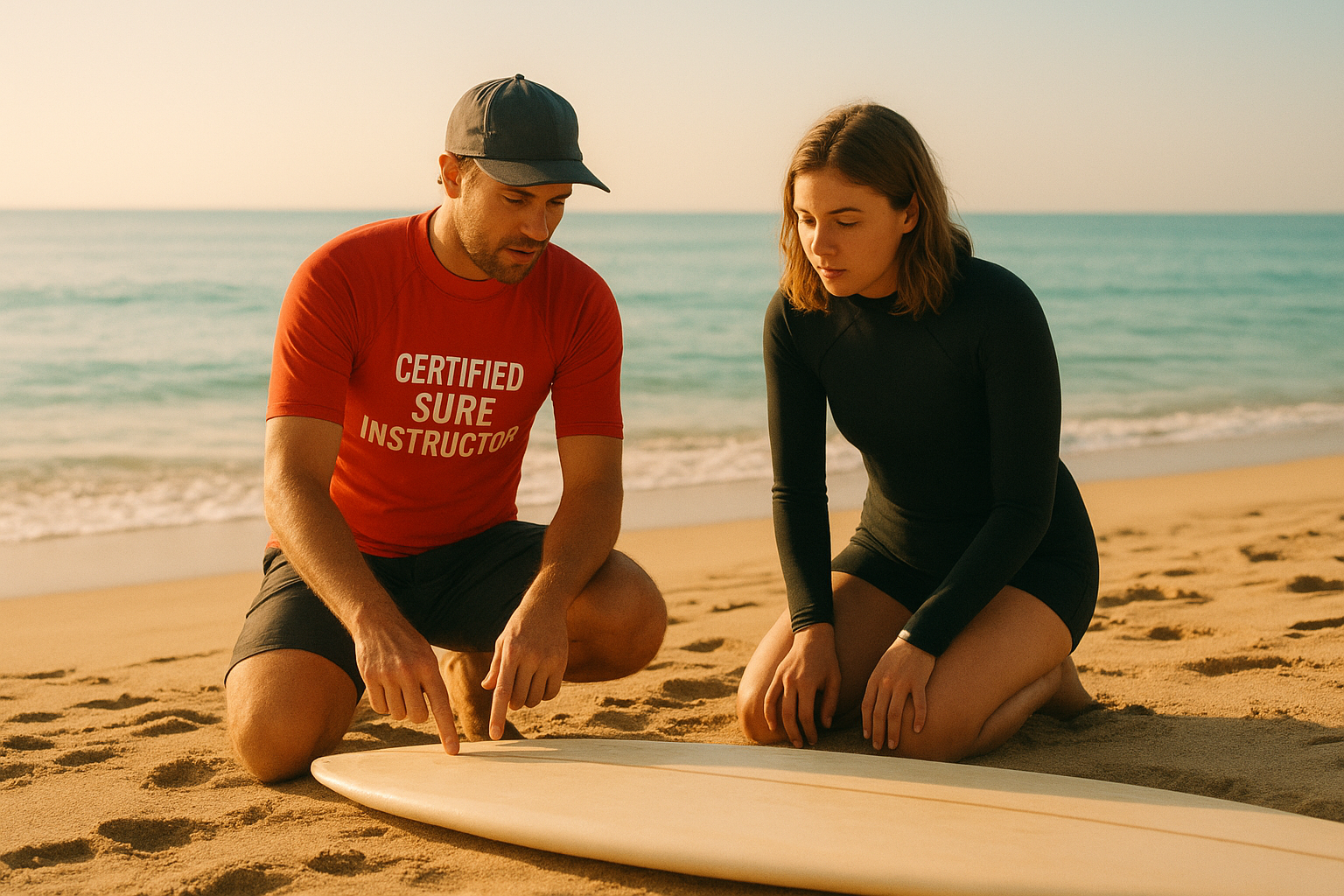
A safety briefing on the sand is the first step in most beginner surf programs with certified instructors.
What to Expect From Beginner Surf Lessons
Typically, a first lesson lasts between 90 minutes and two hours. During that time, instructors cover ocean safety basics, demonstrate paddling technique on the sand, and then move students into shallow whitewater for supervised practice. Above all, pacing is adjusted to each student’s comfort level rather than a fixed schedule.
For families or groups, instructors often split attention so every participant gets personal correction without feeling rushed. Furthermore, many beginner-friendly schools cap class sizes deliberately, which keeps the student-to-coach ratio low. Those planning a trip with children may find it useful to read more about how family surf classes are structured for safety and fun simultaneously.
How to Start Your First Surf Program: A Step-by-Step Guide
Getting started is simpler than most beginners expect. Follow this sequence to move from complete novice to confident paddler with minimal frustration.
- Research certified surf schools. Compare local options and confirm instructors hold recognized certifications, carry proper insurance, and maintain visible safety records before booking any beginner lesson.
- Book a level-matched lesson. Select a beginner package that matches your swimming ability and fitness level, and communicate concerns so instructors can adjust the session accordingly.
- Complete the land briefing. Attend the pre-surf briefing covering wave safety, board handling, ocean etiquette, and rip current awareness before entering the water.
- Practice paddling and the pop-up. Work through paddling technique and the pop-up motion in shallow water under direct instructor supervision until balance feels consistent.
- Catch guided waves and build independence. Catch small, supervised waves with instructor assistance, then gradually practice reading waves across multiple sessions to build lasting confidence.
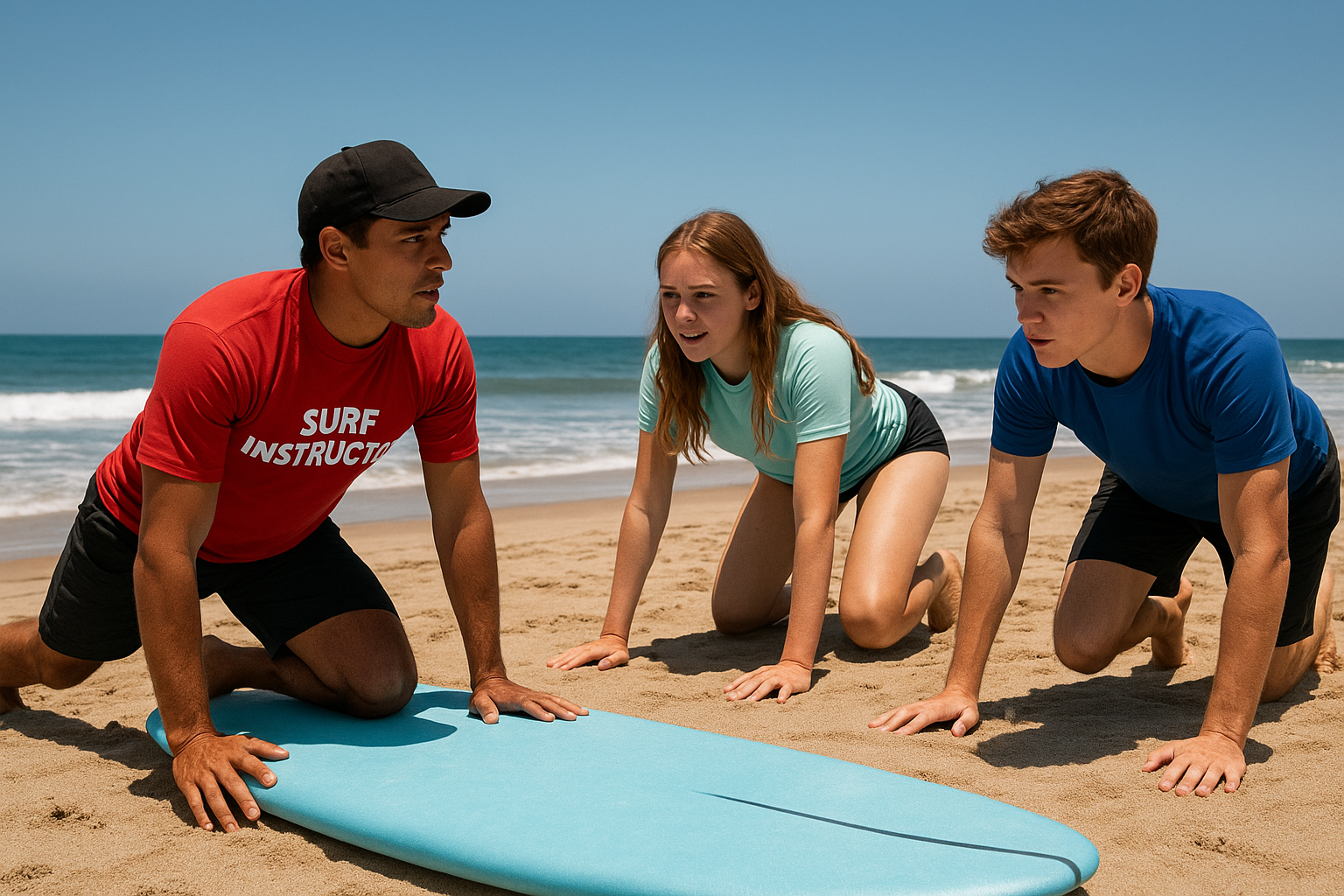
Land-based practice helps beginners master the pop-up before paddling into live waves.
Picking a Program That Fits You
Not every program suits every traveler. Therefore, it helps to think about group size, location convenience, and whether the school specializes in your particular situation, such as traveling with kids or visiting on a tight schedule.
For example, someone searching nearby options might start with a guide to finding beginner surf lessons nearby, while travelers heading to the islands may prefer a resource on beginner surfing programs in Hawaii. Similarly, anyone wanting a broader overview before committing can review this beginner’s guide to wave riding for extra context.
Safety, Qualifications, and Peace of Mind
Safety remains the single biggest reason to choose certified instruction over casual coaching. Instructors trained through recognized bodies typically hold CPR and first-aid certification alongside water rescue training, which means they can respond quickly if conditions change unexpectedly.
In particular, understanding basic ocean science helps too. The history and physics of surfing show why wave selection and timing matter so much for beginners. Consequently, a coach who understands swell direction and tide timing can place students in the safest possible part of the lineup, rather than leaving that judgment to chance.

Families often choose guided sessions so every member, regardless of age, learns under the same safety standards.
Frequently Asked Questions About Beginner Surf Programs With Certified Instructors
What are beginner surf programs with certified instructors?
Beginner surf programs with certified instructors are structured surf lessons led by coaches holding recognized safety and teaching credentials. They combine land-based instruction, supervised ocean time, and progressive skill-building so new surfers learn safely from the first session.
How long does it take to learn to surf as a beginner?
Most beginners stand and ride a small wave within their first one or two lessons. Comfortable, independent surfing on gentle waves usually takes four to six supervised sessions over several days or weeks.
Why should I choose certified instructors over casual coaching?
Certified instructors understand ocean hazards, rescue techniques, and proper technique sequencing, which lowers injury risk. Casual coaching often skips safety briefings and can reinforce habits that slow long-term progress.
What is the difference between beginner and intermediate surf lessons?
Beginner lessons focus on paddling, balance, and standing up safely in small whitewater waves. Intermediate lessons shift toward reading unbroken waves, angled takeoffs, and basic turning.
How much do beginner surf lessons typically cost?
Group beginner lessons often range from roughly 60 to 100 dollars per person, while private sessions cost more due to one-on-one attention. Multi-day packages usually lower the per-lesson rate.
What should I bring to my first surf lesson?
Bring a swimsuit, towel, sunscreen, and water to stay hydrated. Most surf schools supply boards, leashes, and rash guards or wetsuits as part of the lesson package.
Are beginner surf programs safe for children and families?
Yes, reputable schools design family-friendly sessions with age-appropriate boards, shallow practice areas, and close supervision. Certified instructors adjust pacing so children and parents can learn together comfortably.
What qualifications do certified surf instructors hold?
Certified surf instructors typically complete training recognized by bodies like the International Surfing Association, covering water rescue, CPR, wave assessment, and teaching methodology. Many also hold lifeguard certifications.
How many lessons do I need before surfing independently?
Most beginners need between four and eight guided lessons before surfing small, familiar waves without direct supervision. Progress depends on swimming ability, fitness, and practice frequency.
What common mistakes do beginners make when learning to surf?
Common mistakes include standing up too quickly, looking down instead of ahead, and choosing waves that are too large. Certified instructors correct these habits early, which speeds up progress.
Can I learn to surf if I’m not a confident swimmer?
Basic swimming comfort is recommended, but many schools welcome nervous swimmers in shallow, controlled conditions with close supervision. Discuss your swimming ability honestly when booking so the lesson can be adjusted.
What equipment is included in beginner surf programs?
Beginner programs usually include a soft-top surfboard, leash, and rash guard or wetsuit depending on water temperature. Some schools also provide reef booties and sun protection gear.
How do I choose the best surf school for beginners?
Look for verified instructor certifications, small class sizes, transparent safety policies, and positive reviews from other beginners. Confirm that lessons are matched to your fitness level and swimming comfort.
What is the best time of year to take surf lessons?
Many coastal destinations offer learnable, gentle waves year-round, though some seasons bring calmer conditions better suited for beginners. A certified instructor can recommend the safest time slot based on local swell patterns.
Final Thoughts
Ultimately, beginner surf programs with certified instructors remove the guesswork from learning to surf by pairing qualified coaching with a safety-first structure. Whether you are a tourist carving out one afternoon on vacation or a local resident finally ready to paddle out, choosing certified instruction gives you a faster, safer path to standing on your first wave. For a closer look at how a certified program is run day to day, visiting Star Beach Boys is a practical next step toward booking your own lesson.