Wave riding coaching for beginners is the fastest, safest way to move from standing nervously on the sand to confidently catching your first green wave. At Star Beach Boys, certified instructors guide first-timers through every stage of ocean entry, paddling, and standing up, so the learning curve feels exciting rather than overwhelming. In particular, structured coaching removes the guesswork that often leads to frustration or injury when people try to teach themselves.
For tourists, vacationing families, and local residents alike, a guided introduction to surfing turns an intimidating ocean into a playground. Because every beginner progresses at a different pace, a good coaching program adapts lesson structure rather than forcing everyone through the same routine. As a result, students leave their first session with real skills instead of just a sunburn and a sore paddling arm.
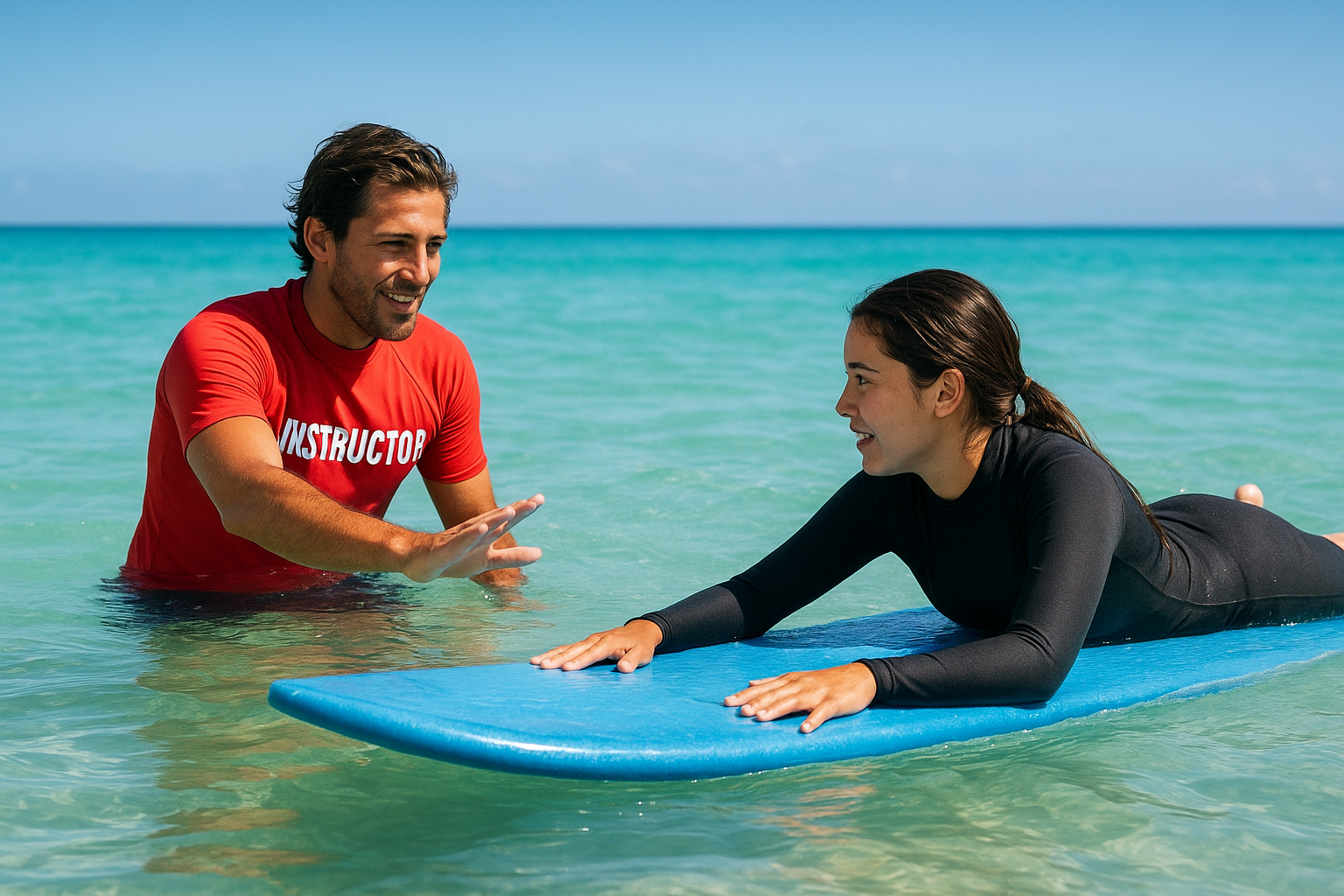
Hands-on wave riding coaching for beginners starts in shallow, controlled whitewater.
What Is Wave Riding Coaching for Beginners?
Wave riding coaching for beginners is structured, instructor-led surf training that covers ocean safety, paddling mechanics, pop-up technique, and basic wave selection. Unlike self-taught attempts, it pairs clear verbal cues with in-water correction so students understand exactly what their body should be doing at each stage.
Typically, a session begins on dry sand with a demonstration of the pop-up motion, which is the quick transition from lying flat to standing. Afterward, the coach moves students into shallow water, selects appropriately sized whitewater, and physically positions the board to maximize the chance of a successful first ride. Consequently, beginners experience several successful attempts within a single lesson rather than spending the whole session paddling without results.
Why Beginner Surf Lessons Matter for Ocean Confidence
Beginner surf lessons matter because the ocean is an unpredictable environment, and confidence grows fastest under expert supervision. The sport of surfing demands balance, timing, and respect for currents, all of which a trained eye can correct instantly.
Furthermore, drowning and water-related injuries remain a significant public safety concern. According to the Centers for Disease Control and Prevention, unintentional drowning causes thousands of deaths annually in the United States alone, which underscores why professional supervision matters for anyone entering ocean water for the first time. A coach who understands rip currents, wave sets, and timing dramatically reduces this risk while teaching the sport itself.
In addition, coached students tend to stick with surfing longer because early frustration is minimized. When a beginner catches a wave on their first or second attempt, motivation to continue practicing increases sharply compared to struggling alone for hours.
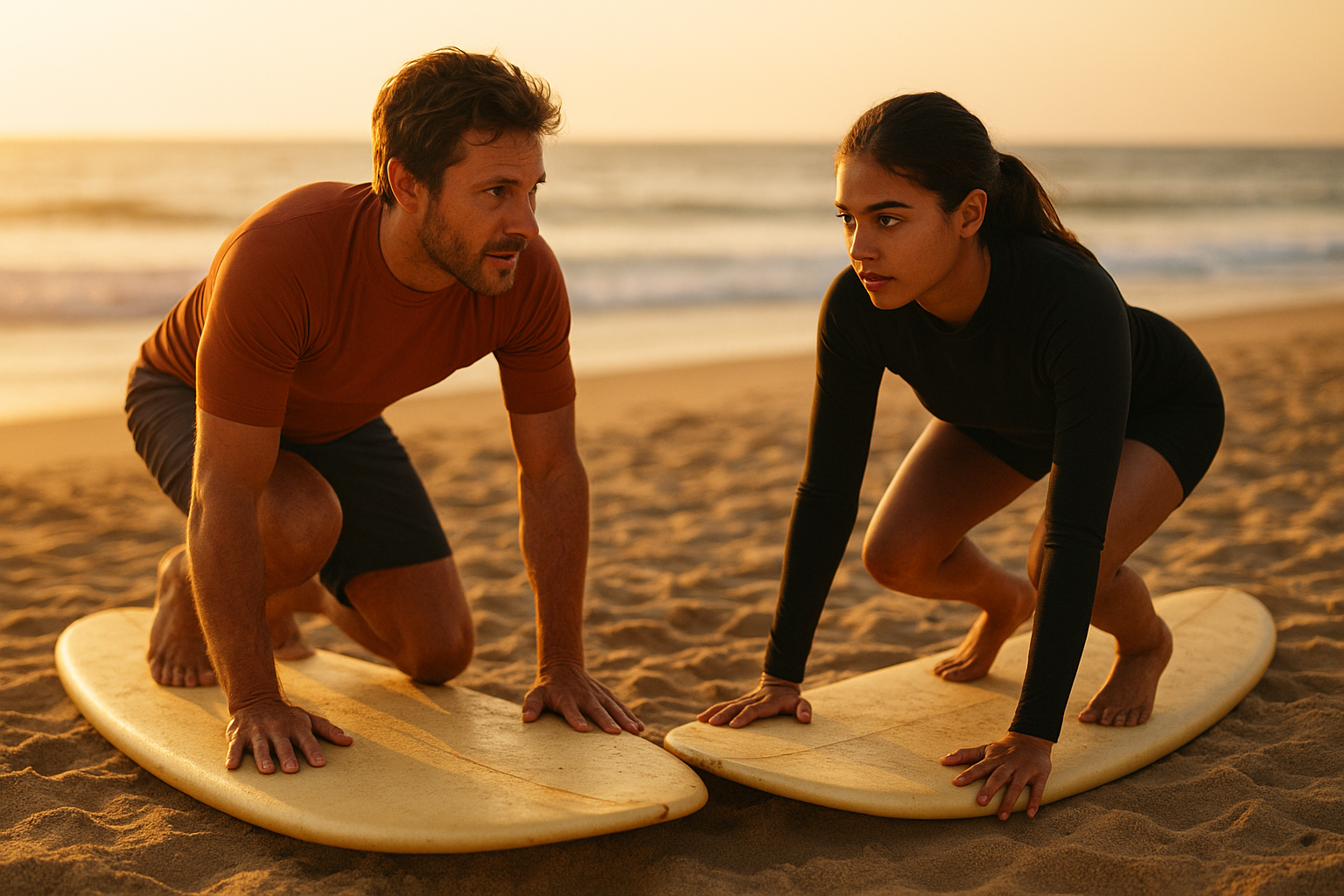
On-land technique practice builds muscle memory before paddling out.
How to Choose the Right Surf Coaching Program
Choosing a surf coaching program carefully matters just as much as the lessons themselves. The following steps help narrow down a safe, effective option for complete beginners.
- Research certified instructors and confirm they hold recognized surf coaching credentials with safe student-to-teacher ratios.
- Match the program to your skill level, choosing beginner-specific classes rather than mixed-level sessions.
- Confirm safety protocols, including soft-top boards, leashes, rash guards, and lifeguard support during lessons.
- Check group size, since smaller ratios allow more individual coaching time and faster corrections.
- Book a trial lesson first to evaluate communication style and personal comfort before committing to a full package.
Star Beach Boys applies all five of these principles, pairing small class sizes with instructors who specialize in progressive, confidence-first teaching. For a deeper breakdown of what a first session actually involves, this beginner’s guide to wave riding lessons walks through the full process.
What to Expect From Your First Wave Riding Lesson
A typical first wave riding lesson starts with a safety briefing covering currents, wave etiquette, and how to fall correctly. From there, the instructor walks students through paddling posture and the pop-up motion on dry sand before heading into the water.
Once in the ocean, the coach positions the student’s board, times the push with an incoming wave, and offers verbal cues like “paddle, paddle, up” at the exact right moment. Specifically, this hands-on timing is what separates guided lessons from solo attempts, where timing errors are the most common reason beginners fail to stand up. For a complete walkthrough, see what you should expect from your first surfing lesson.
By the end of a typical two-hour session, most beginners have stood up and ridden whitewater at least a few times. Similarly, lessons often conclude with feedback on what to practice next, turning one session into a clear roadmap for continued progress.

Celebrating a first successful ride is often the moment confidence takes hold.
Essential Gear and Safety Tips for New Surfers
New surfers benefit enormously from using the right equipment from day one. A soft-top foam board, for instance, is wider and more buoyant than a performance board, which makes balancing far easier while learning.
Moreover, a leash keeps the board attached to the ankle, preventing it from becoming a hazard to other swimmers after a fall. Reef-safe sunscreen, a rash guard, and plenty of water for hydration round out the essential gear list for a comfortable session.
Safety-wise, understanding basic ocean conditions is just as important as technique. The National Oceanic and Atmospheric Administration notes that rip currents are a leading cause of beach rescues, which is why coached lessons always include guidance on identifying and avoiding them. Students who want to accelerate their progress beyond the basics can also review this guide on how to improve surfing skills quickly.
Common Mistakes Beginners Make When Learning to Ride Waves
Even with good coaching, certain mistakes appear consistently among people learning to ride waves. Recognizing them in advance helps students correct faster and avoid repeating bad habits.
First, many beginners look down at their feet instead of ahead toward the shore, which throws off balance immediately. Second, popping up too slowly or too early causes most missed waves, since timing with the wave’s push is critical. Third, choosing waves that are too steep or fast overwhelms new surfers before they have built basic board control.
Therefore, a coach’s real-time feedback becomes invaluable. Instead of repeating the same error dozens of times alone, a beginner under proper wave riding coaching for beginners gets corrected within seconds, which compresses weeks of trial and error into a single productive session. Readers curious about realistic expectations can also check what to expect from wave riding lessons before booking.
Frequently Asked Questions About Wave Riding Coaching for Beginners
What is wave riding coaching for beginners?
Wave riding coaching for beginners is structured, instructor-led surf training that teaches newcomers ocean safety, paddling, pop-up technique, and basic wave selection. It combines on-land demonstration with in-water guidance so students build skills progressively and safely.
How long does it take to learn to surf with a coach?
Most beginners can stand and ride a small whitewater wave within their first one or two lessons. Consistent coaching over 5 to 10 sessions typically builds enough confidence to surf independently in gentle conditions.
Why is professional coaching better than teaching yourself to surf?
A qualified coach corrects posture, timing, and wave judgment in real time, which shortens the learning curve dramatically compared to trial and error. Professional guidance also reduces injury risk by teaching proper fall technique and ocean awareness from day one.
What should I bring to my first surf lesson?
Bring swimwear, a towel, sunscreen, and water to stay hydrated. Most reputable surf schools supply the board, leash, and rash guard as part of the lesson package.
How much does beginner surf coaching typically cost?
Group lessons generally range from affordable introductory rates to higher prices for private, one-on-one sessions. Multi-lesson packages often reduce the per-session cost significantly compared to booking single classes.
What age can children start wave riding coaching?
Many surf schools welcome children as young as six or seven, provided they are comfortable in water and can follow basic instructions. Instructors adjust teaching pace and board size to suit younger students safely.
Is wave riding coaching for beginners safe for non-swimmers?
Basic water comfort is recommended before starting, since lessons take place in the ocean. However, experienced coaches often start non-swimmers in very shallow, controlled whitewater with close supervision and flotation support.
What’s the difference between group and private surf lessons?
Group lessons are more affordable and social but offer less individual feedback, since the instructor splits attention among several students. Private lessons cost more but allow fully personalized coaching tailored to one student’s pace and goals.
What common mistakes do beginners make when learning to surf?
Beginners often stand up too late or too early, look down instead of ahead, and choose waves that are too steep or fast for their skill level. A coach corrects these habits quickly, which prevents frustration and speeds up progress.
How many lessons do I need before surfing independently?
Most students need roughly 8 to 12 coached sessions before they can safely read waves, manage currents, and surf without direct supervision. Progress varies based on fitness, water confidence, and frequency of practice.
What gear is included in beginner surf coaching packages?
Standard packages usually include a soft-top beginner board, a leash, and sometimes a rash guard or wetsuit depending on water temperature. Equipment is matched to the student’s size and skill level for easier learning.
Can I get wave riding coaching for beginners if I’m older or out of fitness?
Yes, reputable surf schools adapt pacing, board choice, and wave selection for older adults or those returning to fitness. Coaches focus on manageable goals, like standing on a stable board in gentle whitewater, before progressing further.
Final Thoughts on Starting Your Surf Journey
Ultimately, wave riding coaching for beginners removes the guesswork, danger, and frustration that often come with teaching yourself to surf. With a structured program, proper gear, and an instructor who corrects technique in real time, most newcomers stand up and ride their first wave far sooner than they expect. Whether you are a first-time vacationer or a local resident finally ready to try the sport, the right coaching program makes the ocean feel welcoming instead of intimidating. To take the next step, explore this complete guide to learning to ride waves as a beginner or visit Star Beach Boys directly to book a lesson with an experienced coach.