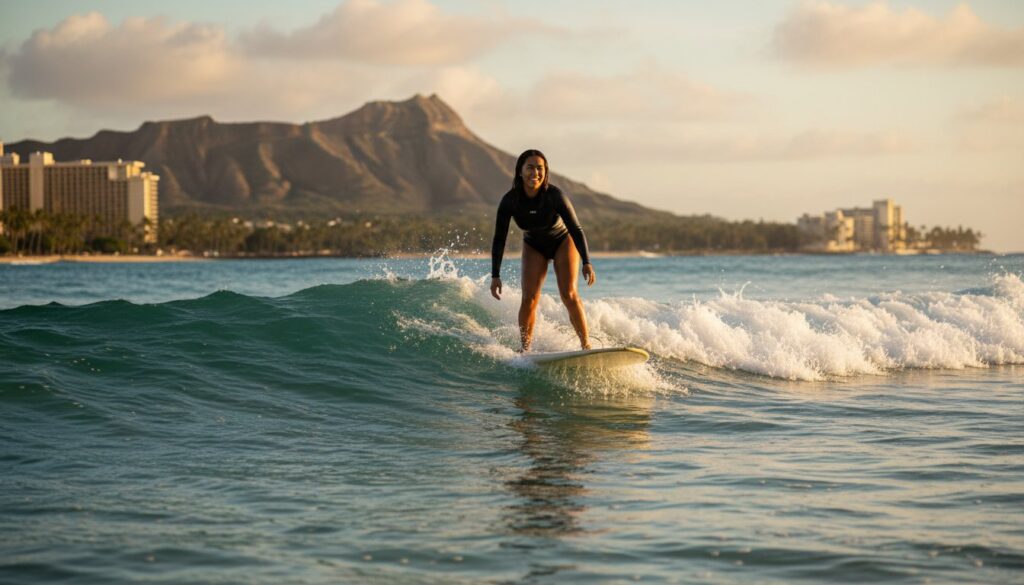
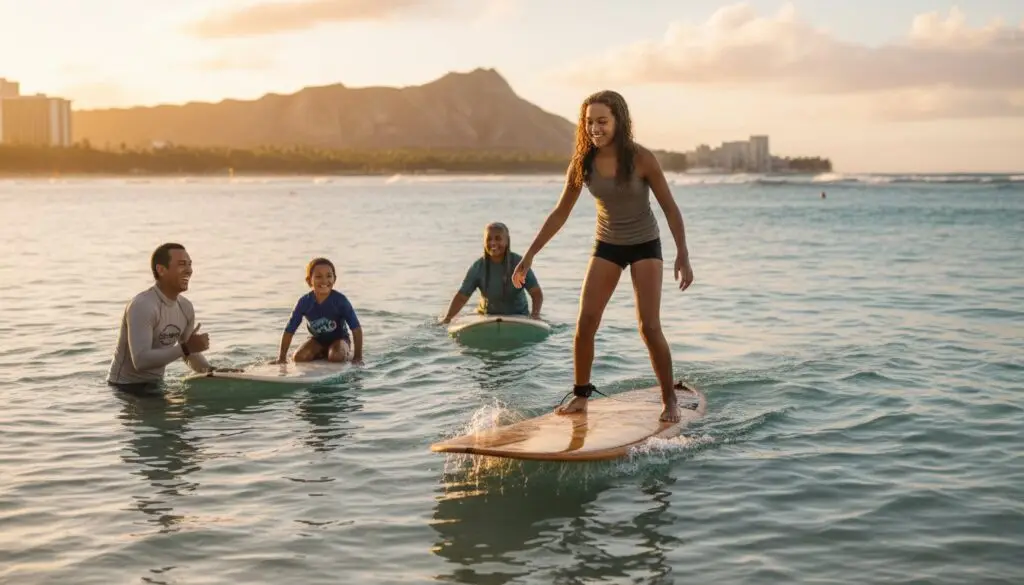
Beginner surf camps Hawaii programs give first-time surfers a safe, structured way to catch their first wave under the guidance of certified instructors. Hawaii’s warm water, gentle beach breaks, and year-round swell make it one of the most forgiving places on Earth to learn this iconic sport. Whether you’re a solo traveler, a family on vacation, or a local resident ready to try something new, a well-designed camp turns nervous energy into confident paddling within just a few sessions. As a result, thousands of visitors choose the islands each year specifically to learn surfing from the ground up.
Quick answer: Beginner surf camps Hawaii are multi-day or single-session coaching programs held on gentle, sandy-bottom beach breaks, combining land-based instruction with supervised ocean time. They’re built for people with little or no experience and typically include equipment, safety briefings, and small-group or private guidance.
What Is a Beginner Surf Camp in Hawaii?
A beginner surf camp is a program built specifically for people who have never surfed, or who have only tried it a handful of times. In particular, these camps focus on the fundamentals: paddling technique, reading small waves, and the pop-up motion that gets a surfer from lying down to standing on the board.
Unlike a single drop-in lesson, many camps run across several days, which allows instructors to build on each session’s progress. Consequently, students often leave with far more confidence than they would after one isolated try. For a deeper walkthrough of what a typical week looks like, this complete beginner’s guide to learning to surf covers the full progression in more detail.
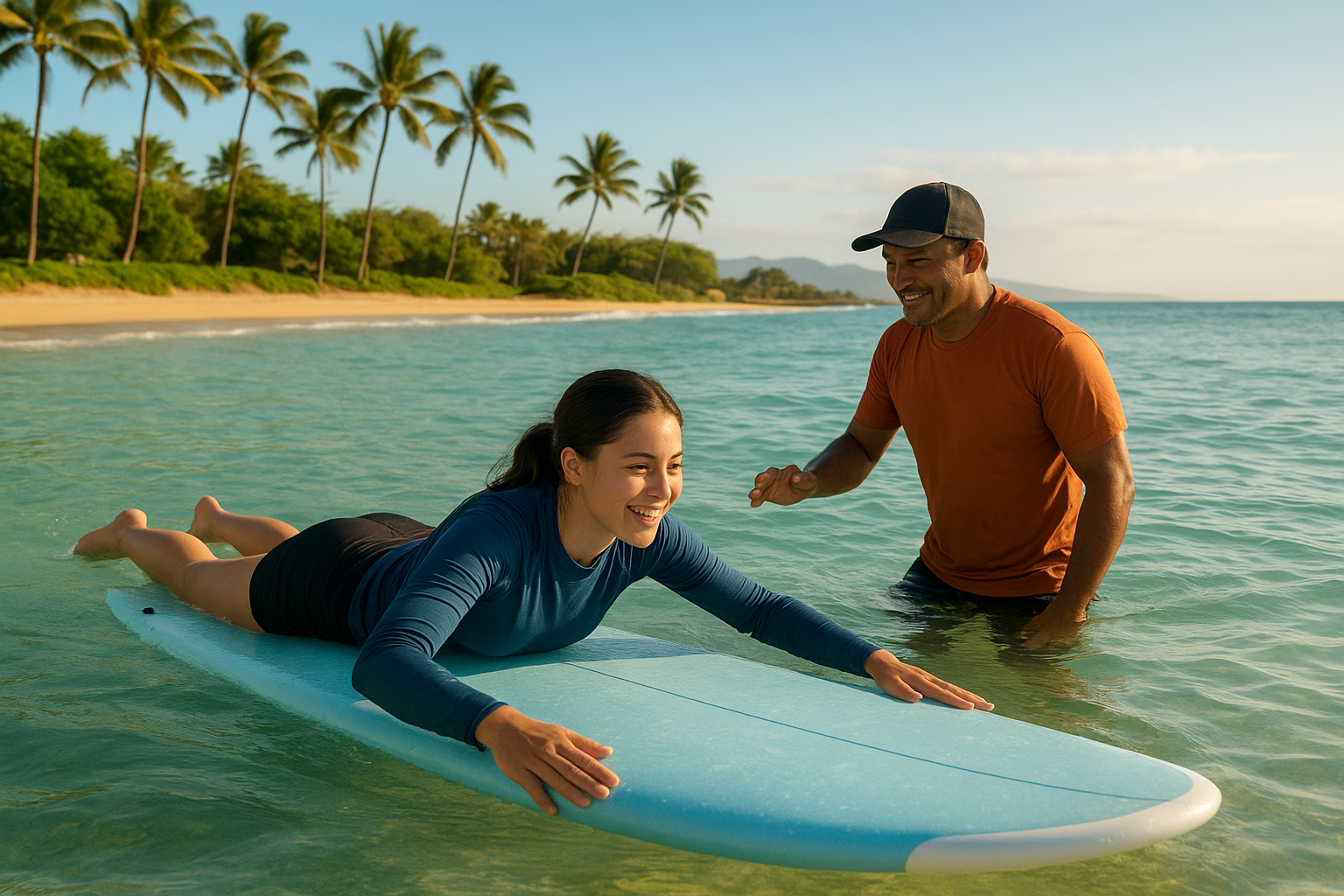
Paddling practice is often the first skill taught at beginner surf camps Hawaii offers to newcomers.
Why Beginner Surf Camps Hawaii Are Ideal for First-Time Surfers
Hawaii’s geography makes it uniquely suited to new surfers. Specifically, many beaches on Oahu and Maui have shallow, sandy bottoms and predictable wave patterns, which reduces the intimidation factor that rocky or reef-heavy coastlines can create elsewhere.
In addition, the islands have decades of established surf culture, so instructors are typically highly experienced and accustomed to teaching absolute beginners rather than only advanced athletes. According to the National Oceanic and Atmospheric Administration, understanding local ocean hazards such as rip currents is a key part of water safety, and trained instructors are equipped to spot these conditions before a lesson begins. Similarly, Hawaii’s mild year-round temperatures mean camps run consistently, so travelers can book a session almost any time of year.
For readers weighing whether a structured program is worth it compared to teaching themselves, these beginner surfing programs designed for first-timers outline exactly what professional coaching adds to the experience.
Core Features of Top Hawaii Surf Schools for Beginners
Not every program is created equal, so it helps to know what separates a strong Hawaii surf school from an average one. Above all, look for small class sizes, since fewer students per instructor means more individual feedback on your paddling and pop-up form.
Furthermore, well-run schools maintain clear safety standards, including pre-lesson ocean assessments and modern, well-maintained equipment. Certification from a recognized surf instruction body is another good sign, as it indicates the coach has formal training in both technique and water rescue.
Signs of a quality beginner surf camp:
- Certified, experienced instructors with a strong safety record
- Small group sizes or private coaching options
- Beaches with gentle, sandy-bottom beach breaks
- Clear pre-session safety briefings and equipment checks
5 Steps to Prepare for Your First Surf Lesson
Preparation makes the actual lesson far less stressful. Therefore, follow this simple sequence before you paddle out for the first time.
- Book your beginner surf camp in Hawaii at least two to three weeks in advance so instructors can match you with the right skill group and equipment size.
- Pack the essentials, including reef-safe sunscreen, a rash guard, swimwear, and a reusable water bottle, to stay protected and hydrated throughout your ocean session.
- Attend the safety briefing and arrive early so instructors can explain wave patterns, hand signals, and beach etiquette before you enter the water.
- Practice on the sand by repeating the pop-up technique on land, since this motion builds muscle memory before you try it on a moving board.
- Paddle out with your instructor, stay patient through wipeouts, and focus on small wins like standing up for even a second or two.
Group Lessons vs Private Coaching: Which Fits Beginners Best?
Most beginner surf camps offer both group and private formats, and the right choice depends on budget, learning style, and comfort in the water. Generally speaking, groups are more social and affordable, while private sessions offer faster, more personalized correction.
| Format | Best For | Typical Group Size |
|---|---|---|
| Group Lessons | Solo travelers, friends, budget-conscious visitors | 3–6 students |
| Private Coaching | Nervous beginners, families with young kids | 1–2 students |
For travelers who enjoy meeting other surfers, these group surf lessons pair beginners together at a similar pace. Meanwhile, families or anyone wanting extra one-on-one attention often prefer private sessions instead.
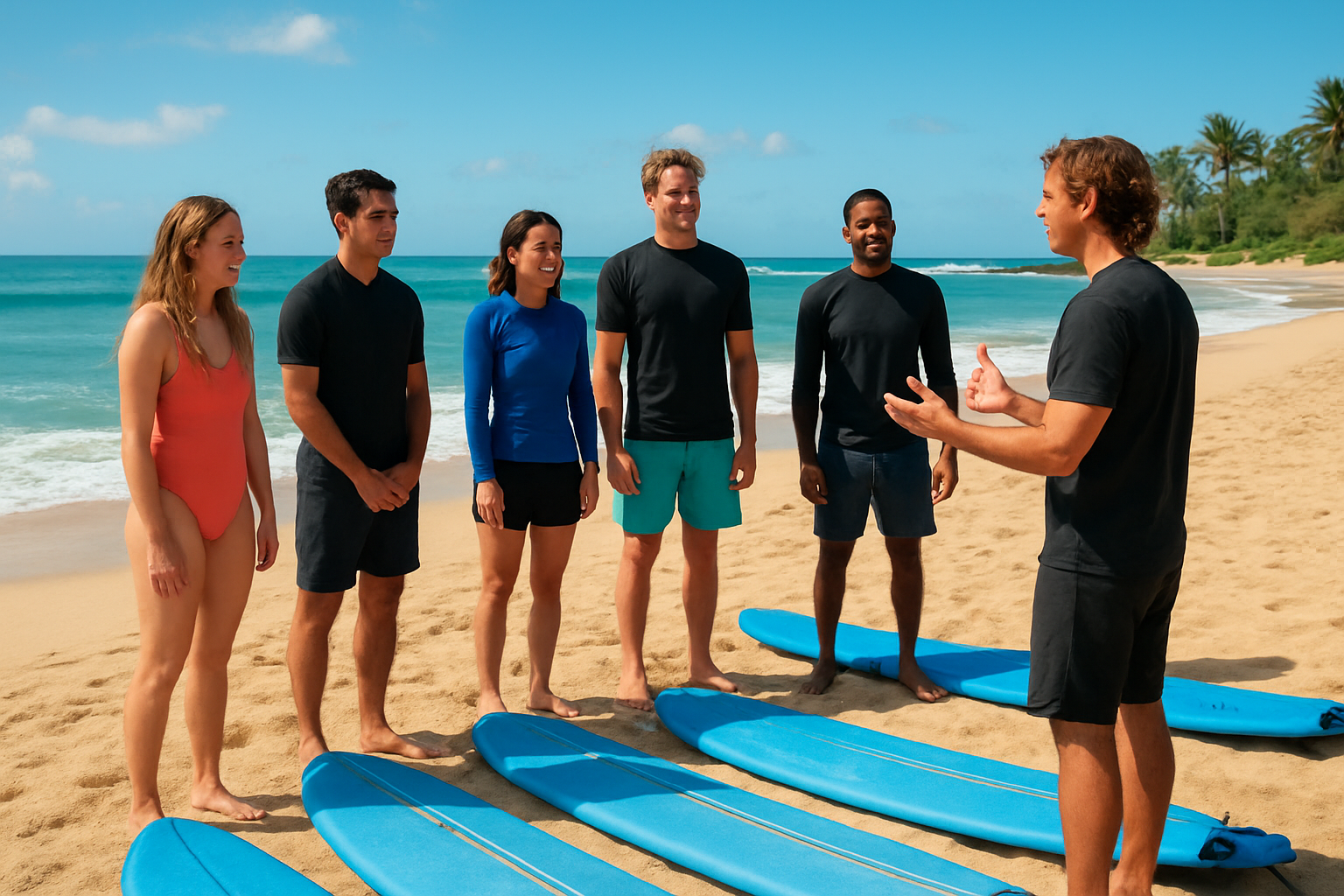
Group sessions are a popular, budget-friendly option among beginner surf camps Hawaii visitors choose most often.
Safety Standards Every Beginner Surfing Program Should Follow
Safety should always come first, especially for anyone entering the ocean for the first time. As such, reputable programs conduct a pre-lesson assessment of swimming ability and comfort level before assigning a wave zone.
Moreover, instructors should monitor current conditions throughout the session, since ocean conditions can shift quickly even on calm days. The general background on surfing available through Wikipedia notes that wave dynamics and local hazards vary widely by location, which is exactly why local, experienced guidance matters so much. If safety is your top priority when choosing a program, this resource on safety-focused surf lessons breaks down what to look for before booking.
Finally, official guidance from Hawaii’s own coastal authorities, such as the Department of Land and Natural Resources, offers additional context on beach conditions and seasonal hazards worth reviewing before any ocean activity. To see how one established school structures its safety-first approach, you can also visit Star Beach Boys directly.
Choosing the Right Beginner Surf Camps Hawaii Has to Offer
With so many options across the islands, narrowing down a choice can feel overwhelming. However, a simple checklist helps: confirm instructor credentials, ask about group size, and check whether the beach used matches your comfort level.
In addition, consider logistics such as camp length, included gear, and cancellation policies for weather. For a broader overview comparing different program types side by side, this surfing lessons guide is a useful next stop before you commit to booking.
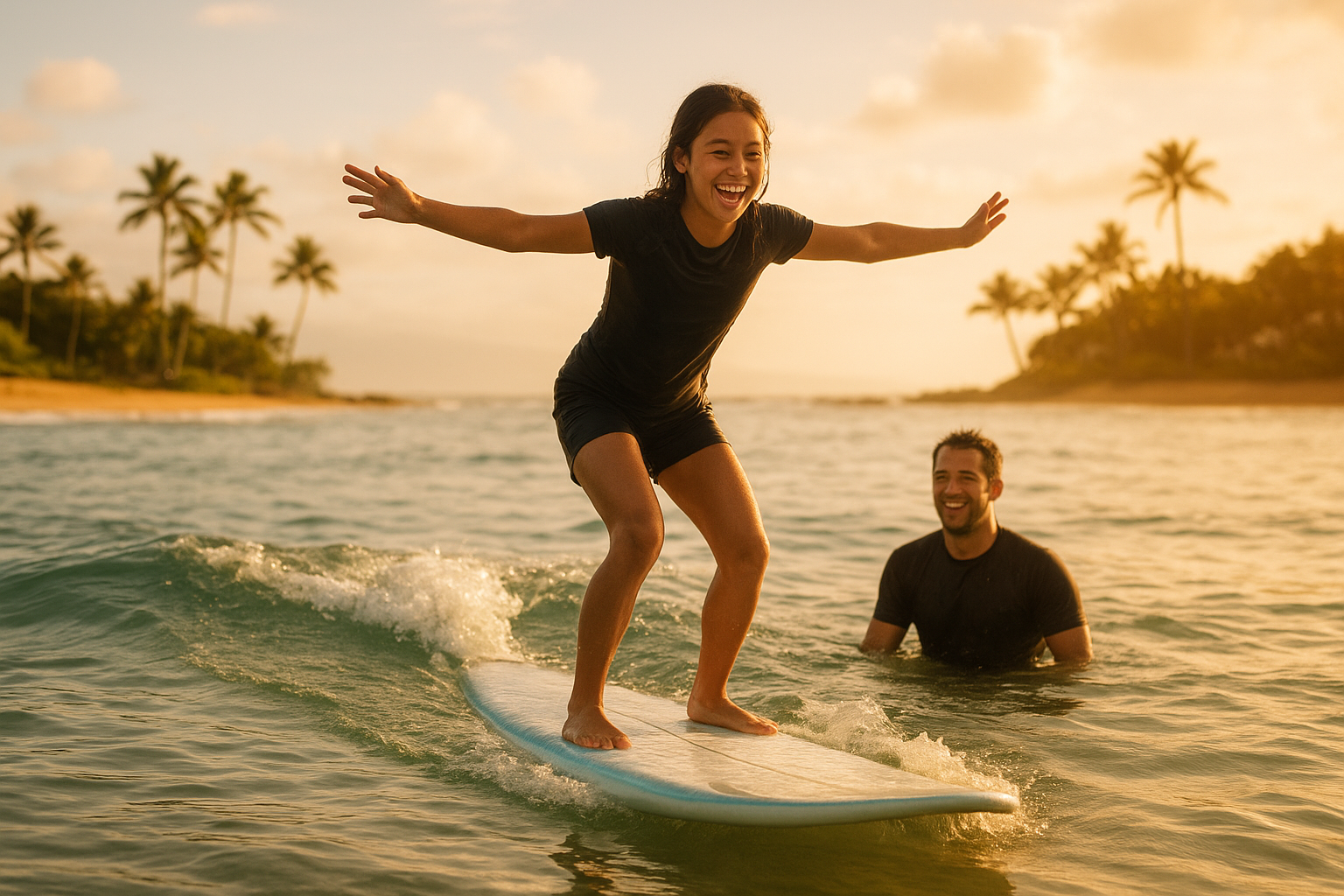
That first successful ride is often the highlight of any beginner surf camp experience.
Frequently Asked Questions About Beginner Surf Camps Hawaii
What are beginner surf camps in Hawaii?
Beginner surf camps Hawaii are structured multi-day or single-session programs where certified instructors teach paddling, balance, and pop-up technique in gentle, beginner-friendly surf. They typically include equipment, a safety briefing, and small-group or private coaching.
How do I choose the best beginner surf camp in Hawaii?
Look for a camp with certified instructors, small student-to-teacher ratios, and beaches known for calm, forgiving waves. Reading reviews and confirming the school’s safety protocols before booking also helps you avoid a poor experience.
Why is Hawaii a good place for beginners to learn to surf?
Hawaii offers warm water year-round, sandy-bottom beach breaks, and consistent small swells that are ideal for first-timers. Its deep surf culture also means highly experienced instructors are widely available.
How much do beginner surf camps in Hawaii cost?
Group lessons often range from roughly $80 to $150 per session, while private coaching and multi-day camps can cost several hundred dollars depending on duration. Prices vary by island, instructor experience, and group size.
How long does it take to learn to surf at a beginner camp?
Most beginners can stand up and ride a wave to shore within their first one to two sessions. Building real confidence and control, however, usually takes several sessions spread across a few days.
What should I bring to a beginner surf camp?
Bring swimwear, a rash guard, reef-safe sunscreen, a towel, and a water bottle. Most beginner surf camps in Hawaii provide the surfboard, leash, and any flotation aids needed for the lesson.
Are beginner surf camps in Hawaii safe for kids and families?
Yes, reputable beginner surf camps welcome families and children, using shallow, gentle beach breaks and close supervision. Instructors typically adjust their teaching pace to match a child’s comfort and swimming ability.
What’s the difference between a surf camp and a single surf lesson?
A single lesson is usually a one-time, hour-or-two session covering the basics, while a surf camp spans multiple days with progressive skill-building. Camps often include more personalized feedback and repeated ocean time.
What common mistakes do beginners make when starting surf camps?
Common mistakes include choosing a beach with waves too advanced for their level, skipping the land-based pop-up practice, and paddling out without watching the ocean first. Rushing the learning process instead of following instructor pacing also slows progress.
Do I need to know how to swim to join a beginner surf camp?
Basic swimming ability is generally required for safety, since surfing involves paddling and occasional falls into the water. Some schools offer flotation vests or extra supervision for weaker swimmers, so it’s worth asking in advance.
What is the best time of year for beginner surf camps in Hawaii?
Summer months typically bring calmer, smaller waves on south-facing shores, making them ideal for beginners. Winter swells tend to be larger and are usually better suited to more experienced surfers.
Can complete beginners with no experience join a group surf lesson?
Yes, group surf lessons are specifically designed to welcome first-timers with no prior experience. Instructors start with land-based basics before guiding the group into gentle, beginner-appropriate waves.
What gear is provided at beginner surf camps in Hawaii?
Most beginner surf camps provide a soft-top surfboard, a leash, and sometimes rash guards or flotation aids. Participants usually only need to bring their own swimwear, sunscreen, and a positive attitude.
Ready to Ride Your First Wave?
In summary, beginner surf camps Hawaii offer one of the most accessible ways to learn surfing thanks to warm water, gentle beach breaks, and instructors who specialize in first-timers. Whether you choose a lively group lesson or the focused attention of private coaching, the right camp turns an intimidating ocean into a welcoming classroom. Above all, prioritize safety, small class sizes, and experienced guidance when comparing your options. With a little preparation and the right instructor by your side, standing up on your first wave is closer than you think.