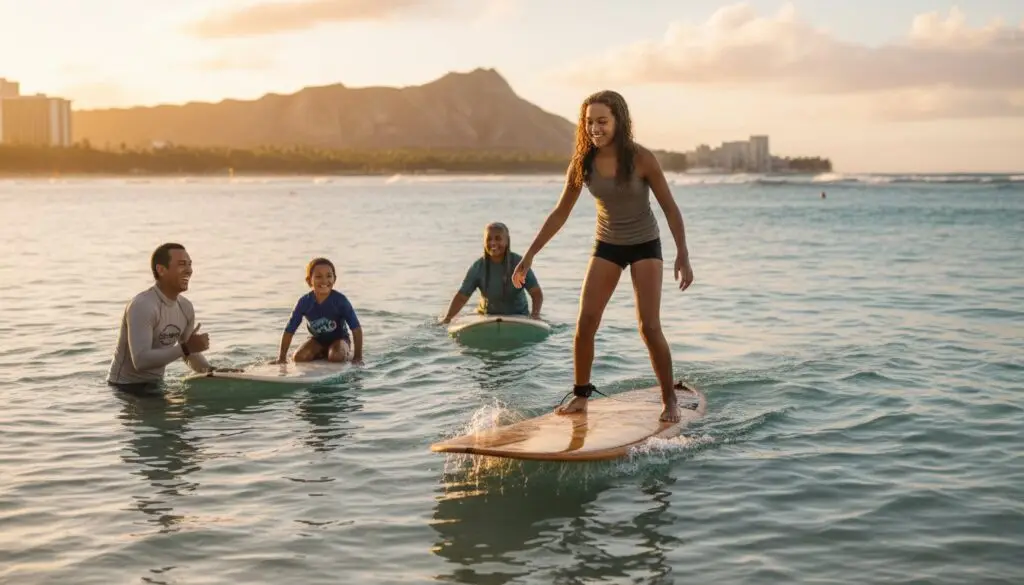
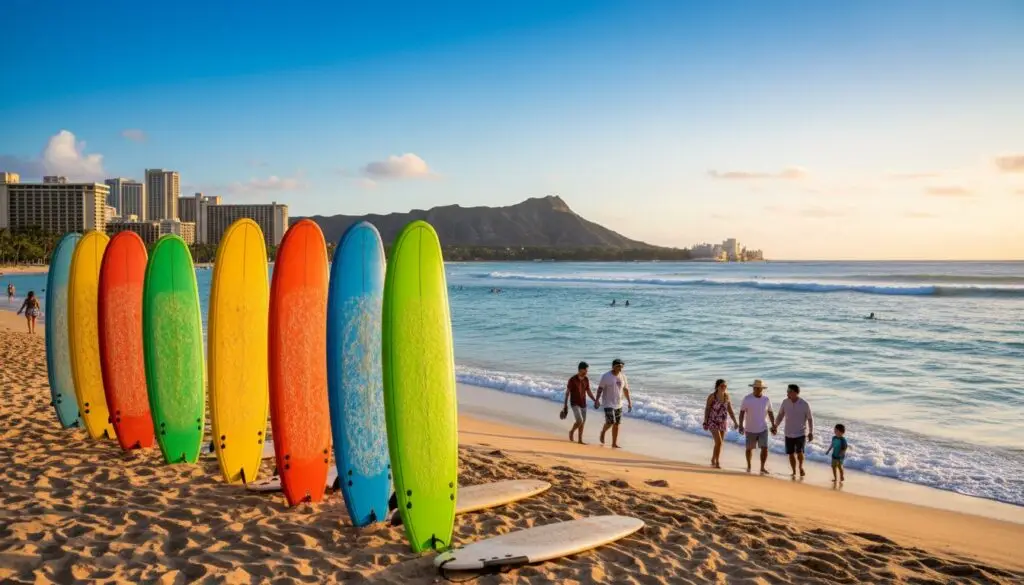
Honolulu surf lessons give visitors and locals alike the fastest, safest path to standing up on a surfboard in the very waters where modern surfing was born. Held almost exclusively along the gentle breaks of Waikiki Beach on Oahu, these guided sessions pair beginner-friendly waves with experienced local instructors, foam softboards, and real-time coaching in the water. Whether you have never touched a board or want to sharpen a shaky pop-up, Honolulu remains one of the most forgiving and rewarding places on the planet to learn.
Warm, clear water and consistently rolling south swells make Waikiki nearly perfect for first-timers. As a result, the overwhelming majority of students stand up and ride a wave during their very first session — a milestone that keeps people coming back long after their vacation ends. This guide covers everything Page A originally offered and then goes considerably further: exact pricing, step-by-step lesson mechanics, fitness requirements, seasonal timing, kid-friendly logistics, gear lists, common mistakes, and a full FAQ built around every question a first-time surfer could possibly ask.
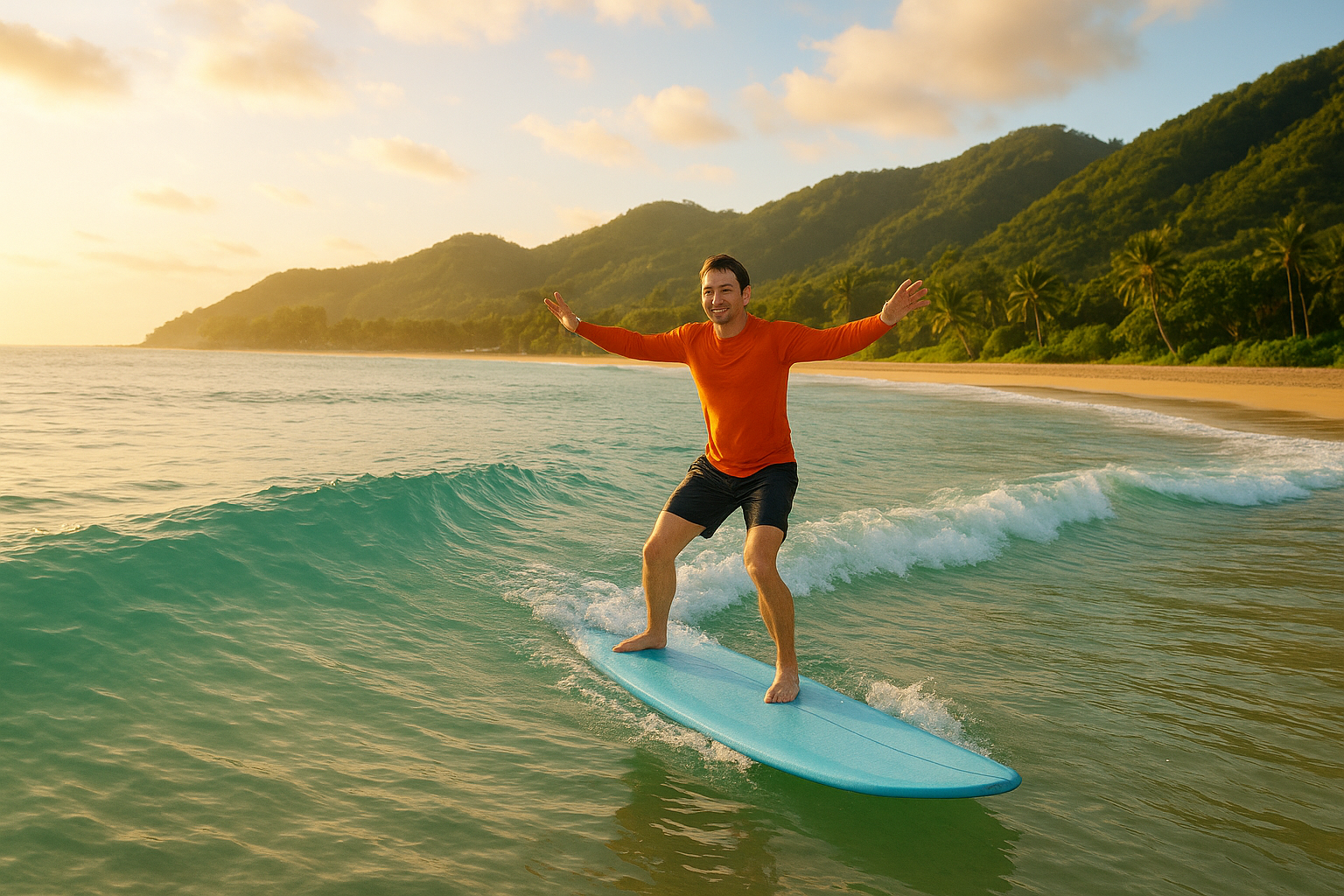
Waikiki’s gentle rolling waves make it the ideal setting for first-time Honolulu surf lessons. For a deeper walkthrough, see our Family Surf Lessons in Waikiki, Oahu: The Ultimate 2026 Ohana Guide.
Why Waikiki Beach Is the World’s Best Classroom for Honolulu Surf Lessons
According to Wikipedia’s entry on Waikiki, this stretch of coastline has anchored Hawaiian surf culture for centuries, famously popularized worldwide by Duke Kahanamoku in the early twentieth century. Therefore, when you book Honolulu surf lessons here, you are stepping directly into a living tradition rather than a generic beach vacation activity.
Waikiki’s waves break slowly and predictably, which gives beginners extra time to pop up and find balance before the wave passes. In addition, the sandy ocean floor and shallow water mean that falls feel far less intimidating than at rocky or reef-heavy breaks elsewhere on the island. Because water temperatures hover around 76–80°F year-round, no wetsuit is required — just a swimsuit and reef-safe sunscreen.
In contrast to steeper, faster-breaking waves found on Oahu’s North Shore, Waikiki’s gentle slope gives instructors precious extra seconds to coach you mid-wave and correct your stance in real time. That immediate, in-water feedback is one of the biggest reasons students progress so quickly during their first Honolulu surf lesson.
What Happens During Your First Honolulu Surf Lesson
A typical beginner session runs between 90 minutes and two hours. First, your instructor walks you through ocean safety, board handling, and paddling technique on the sand. Next, you practice the “pop-up” — the motion of moving from lying flat to standing — repeatedly on land before ever entering the water. If you’d like a fully illustrated walkthrough of this process, our complete beginner’s guide to surfing lessons in Honolulu breaks down each stage in more depth.
Quick answer: Most beginners catch and ride their first wave within the first 30 minutes of water time during Honolulu surf lessons. The combination of Waikiki’s forgiving waves and hands-on coaching makes standing up achievable for nearly everyone on day one.
Step 1 — Book With a Reputable Surf School
Not all surf schools are created equal, so it pays to research before booking. Look for a small student-to-instructor ratio — ideally four students per instructor or fewer — and confirm that instructors hold current water safety or lifeguard certifications. For example, Star Beach Boys is a well-established Waikiki surf school staffed by local instructors who have taught on these exact waves for years. Reading recent reviews on Google or TripAdvisor helps you gauge instruction quality before you commit.
Step 2 — Reserve Your Lesson in Advance
Waikiki is one of the most visited beaches on earth, so popular time slots fill quickly, especially in summer. As a result, booking online at least two to three days ahead is strongly recommended. When you reserve, confirm exactly what’s included: board rental, rash guard, photos, and any age or weight restrictions. Our detailed cost breakdown for Honolulu surfing lessons can help you compare packages before you pay a deposit.
Step 3 — Pack the Right Gear
Hawaii state law requires reef-safe sunscreen at all state beaches, so pack that specifically rather than a standard chemical formula. Beyond sunscreen, bring a swimsuit you can move freely in, a towel, and a refillable water bottle. Most schools provide foam softboards and rash guards, but it is always worth confirming before you arrive at the beach.
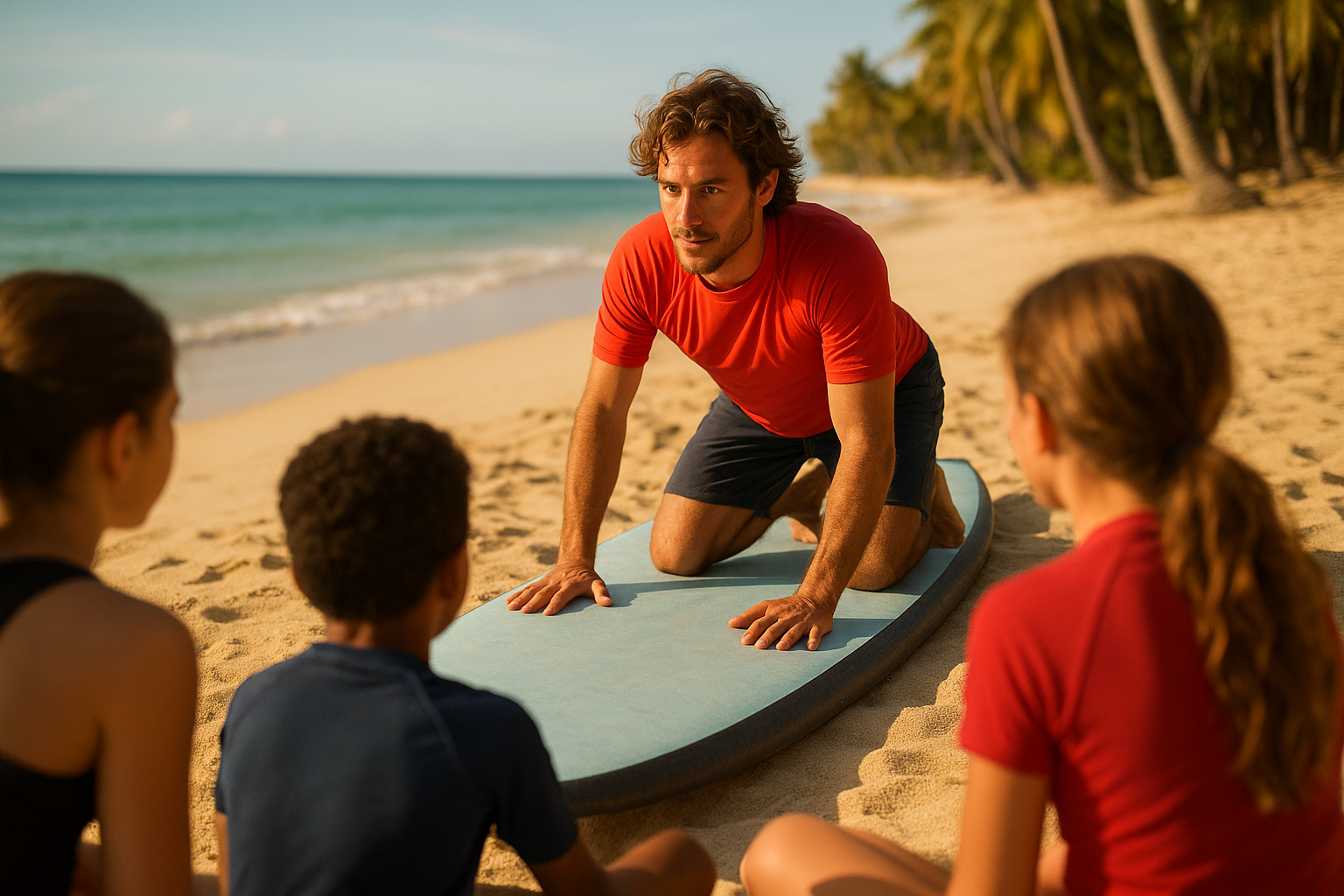
On-land pop-up practice is a key part of every beginner surf lesson in Honolulu.
Step 4 — Master the On-Land Briefing
The beach briefing might feel like a formality, but it is actually where most technical learning happens. Pay close attention to the pop-up sequence: chin up, hands flat near your chest, push up explosively, and land with feet shoulder-width apart. Because muscle memory builds quickly, repeating this motion five to ten times on the sand makes a measurable difference once you’re on the water.
Step 5 — Paddle Out and Catch Your First Wave
Once in the water, your instructor guides you into position and watches the incoming set. Keep your eyes fixed on the horizon rather than looking down at the board, since this naturally improves your balance. Finally, when the wave lifts the tail of the board, execute your pop-up and ride it toward shore. The feeling, students consistently report, is unforgettable.
Step 6 — Ride, Fall, and Get Back Up
Falling is a normal, expected part of every lesson, not a sign of failure. Cover your head with your arms as you fall to avoid the board on the way down, then swim back to your instructor to reset for the next set. Repetition across several waves in a single session is exactly how muscle memory and confidence build together.
Honolulu Surf Lesson Pricing in 2025: What You’ll Actually Pay
Pricing for Honolulu surf lessons varies by format and provider. However, the ranges below give a reliable 2025 benchmark, and our standalone Honolulu surf lesson cost guide covers add-ons like private photography and multi-day discounts in more detail.
| Lesson Type | Duration | Typical Price |
|---|---|---|
| Group Lesson | 90 min – 2 hrs | $50 – $80 per person |
| Semi-Private (2–3 people) | 1 – 2 hrs | $80 – $130 per person |
| Private Lesson | 1 – 1.5 hrs | $100 – $200 per person |
| Multi-Day Package (3 sessions) | Varies | $150 – $250 per person |
In most cases, equipment rental is included in the lesson price. Even so, always confirm this when booking to avoid unexpected charges at the beach.
Group, Semi-Private, or Private: Choosing the Right Format for Your Honolulu Surf Lesson
Group lessons suit budget-conscious travelers and social learners who don’t mind sharing instructor attention across four or five students. In contrast, private lessons deliver one-on-one coaching for every single wave, which typically accelerates progress for nervous swimmers or anyone with limited time on the island. Semi-private sessions strike a middle ground, ideal for couples or small families who want personalized attention without the private price tag.
If you’re specifically weighing one-on-one instruction, our page on private surf coaching with Oahu’s expert instructors explains exactly how those sessions are structured and who benefits most from them.
Common Mistakes Beginners Make in Honolulu Surf Lessons
Even with great instruction, beginners tend to repeat a handful of predictable errors. Being aware of them in advance can save considerable frustration in the water.
- Looking down at the board — This shifts your weight forward and causes nose-dives. Instead, keep your gaze fixed on the shore.
- Standing too far back or forward — Your back foot should sit over the fins, front foot centered. Practice this placement on land first.
- Paddling too slowly — You need enough speed to match the wave. Therefore, commit to strong, deep paddle strokes before you pop up.
- Tensing up — Rigid muscles make balancing harder. Bend your knees slightly and let your arms float out for natural balance.
- Skipping land practice — The pop-up drill might feel silly, but it directly translates into faster success in the water.
- Ignoring wave etiquette — Cutting off another surfer’s wave, known as dropping in, is unsafe and considered poor form; always wait your turn in the lineup.
Is Surfing in Honolulu Right for Your Fitness Level?
Surfing engages your core, shoulders, back, and legs simultaneously. Although beginner Honolulu surf lessons at Waikiki are low-impact compared to advanced surfing, you should be comfortable swimming at least 50 meters unassisted. In addition, being able to kneel and stand from a prone position without help matters for executing a smooth pop-up.
Most surf schools welcome students aged five and older, with no upper age limit. In practice, healthy adults in their fifties and sixties regularly enjoy a first surf lesson at Waikiki without difficulty. If you have joint concerns, consult your physician and tell your instructor before the session begins so they can adjust their coaching approach accordingly.
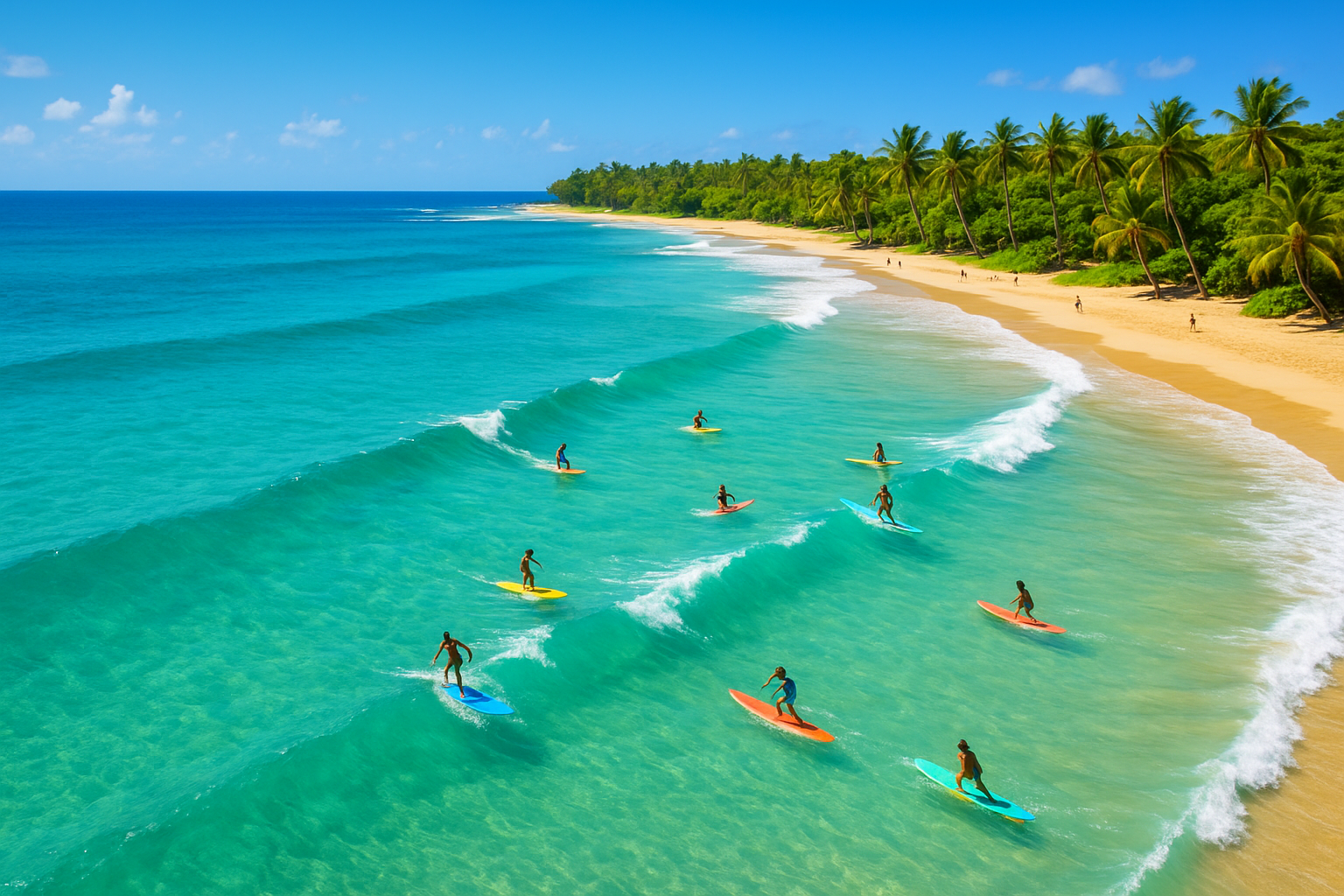
Waikiki’s warm, shallow waters are welcoming for surfers of all ages and fitness levels.
Best Time of Year for Surf Lessons in Honolulu
Honolulu is a year-round surf destination, which is unusual compared to most coastal cities. Specifically, summer months from May through September bring smaller, gentler south swells that suit complete beginners perfectly. Winter, by contrast, sends larger north swells toward Oahu’s north-facing shores, which experienced surfers chase but which have little effect on Waikiki’s south-facing beach.
Because Waikiki faces south, it stays relatively calm even during Oahu’s winter surf season, so beginners can realistically book Honolulu surf lessons in any month. For real-time surf and swell forecasts before you travel, the National Weather Service’s Honolulu forecast office publishes updated marine conditions.
Honolulu Surf Lessons for Kids and Families
Families frequently ask whether young children can safely participate, and the answer is reassuring. Most reputable schools accept children starting at age five, using oversized foam boards that make it easy for instructors to steady a child mid-wave. Furthermore, instructors keep young surfers in shallow, calm water under close one-on-one supervision throughout the lesson.
Parents who want a shared experience often book semi-private or private group sessions so the whole family surfs together rather than splitting into separate lessons. For a broader look at planning a multi-generational beach day, revisit our Family Surf Lessons in Waikiki, Oahu: The Ultimate 2026 Ohana Guide for practical scheduling tips.
How to Choose the Best Honolulu Surf School
Before you book, run through this checklist. Above all, prioritize safety credentials over flashy marketing, since a certified instructor matters far more than a fancy website.
- Confirm a student-to-instructor ratio of four to one or smaller for group lessons.
- Ask whether instructors hold current lifeguard or water-safety certification, following standards set by organizations like the United States Lifesaving Association.
- Read recent reviews focused specifically on beginner experiences, not just scenery photos.
- Verify that board rental and rash guards are included in the quoted price.
- Check cancellation and rescheduling policies in case of unexpected weather or flight changes.
Our full step-by-step Honolulu surfing lesson guide for beginners walks through vetting questions to ask before you hand over a deposit, and our Waikiki surf lessons page details our own instructor certifications and booking process directly.
What to Pack for Your Honolulu Surf Lesson
Packing light is the goal here. A swimsuit or board shorts you can move freely in, reef-safe (mineral-based) sunscreen required under Hawaii state law, a beach towel, a dry bag for your phone, and a refillable water bottle will cover almost everyone’s needs. Sunglasses with a strap and a hat are useful before and after your session, though you’ll remove both once you’re in the water.
Beyond Waikiki: Other Honolulu Surf Spots Worth Knowing
While Waikiki remains the go-to location for Honolulu surf lessons, nearby spots like Canoes, Queens, and Populars offer slightly different wave shapes once you’re past the absolute beginner stage. These breaks sit just offshore from Waikiki and are typically included in the same lesson package, so instructors can move your group to the most suitable peak depending on conditions that day.
After Your Lesson: What Comes Next
After completing a first session, many students immediately want to book a second one. Consequently, many Honolulu surf schools offer multi-day packages that provide a structured progression from basic wave riding to turning and reading the ocean. These packages typically save 15–25% compared to booking individual sessions separately.
Between lessons, consider renting a board and practicing paddling and positioning independently in calm, shallow water. Watching more experienced surfers from the beach is also a surprisingly effective learning tool, since you begin to recognize wave patterns and timing you can apply in your next lesson.
For ongoing resources, the team at Star Beach Boys can advise on board rentals, wave conditions, and lesson scheduling throughout your stay in Honolulu. For a deeper walkthrough, see our How Can I Improve My Surfing Skills Quickly? A Complete Expert Guide.
Conclusion: Your Honolulu Surf Lessons Journey Starts Now
Honolulu surf lessons offer something genuinely rare — the chance to learn one of the world’s most exhilarating sports in the very place where modern surfing was born. With warm water, consistent gentle waves, and world-class instructors available year-round, Waikiki removes nearly every barrier that makes learning to surf feel intimidating elsewhere. Whether you’re visiting for a week or living on Oahu full time, booking even a single lesson is one of the most rewarding things you can do on the island. Show up, listen to your instructor, and trust the wave — the rest genuinely takes care of itself.
Frequently Asked Questions About Honolulu Surf Lessons
What are Honolulu surf lessons and who are they for?
Honolulu surf lessons are guided surfing instruction sessions held at Waikiki Beach on Oahu, designed for all skill levels from complete beginners to intermediate surfers. Instructors provide boards, safety briefings, and hands-on coaching in the water. They are suitable for children, adults, and seniors alike.
How much do surf lessons in Honolulu cost?
Group surf lessons typically cost between $50 and $80 per person for a one- to two-hour session. Private lessons generally range from $100 to $200 per hour depending on the instructor and school.
Do I need any experience to take surf lessons in Honolulu?
No prior experience is needed. Most Honolulu surf schools welcome complete beginners and structure lessons so first-timers can stand up on the board within their very first session.
What is the best beach in Honolulu for surf lessons?
Waikiki Beach is widely regarded as the best location for surf lessons in Honolulu. Its long, gentle rolling waves, warm water, and sandy bottom make it ideal for beginners learning to surf.
How long does a typical Honolulu surf lesson last?
Most group surf lessons last between one and two hours, including a 15- to 20-minute on-land safety and technique briefing followed by water time with an instructor.
What should I bring to a surf lesson in Honolulu?
You should bring a swimsuit, reef-safe sunscreen (required by Hawaii state law), a towel, and water. Most surf schools provide surfboards and rash guards, but confirm with your provider beforehand.
Is surfing in Honolulu safe for children?
Yes, surfing at Waikiki is generally safe for children aged five and up. Reputable surf schools use large foam boards and keep young surfers in shallow, calm water under close instructor supervision.
What is the best time of year to take surf lessons in Honolulu?
Honolulu is an excellent surf destination year-round. However, summer months (May through September) typically offer calmer south swells ideal for beginners, while winter brings larger north swells better suited for advanced surfers on other shores.
Will I actually stand up on the surfboard during my first lesson?
Most beginners do stand up during their first Honolulu surf lesson, especially at Waikiki where the gentle waves make it easier. Instructors give you a push at the right moment and coach your stance in real time. For a deeper walkthrough, see our Fun Surf Experiences: Your Complete Guide to Riding Waves.
How do I choose the right surf school in Honolulu?
Look for a school with certified instructors, small student-to-instructor ratios (ideally 4:1 or fewer), positive reviews, and equipment included in the price. Established providers like Star Beach Boys at Waikiki are a strong choice.
What type of surfboard is used in beginner lessons?
Beginner surf lessons in Honolulu use large foam softboards, typically eight to ten feet long. These boards are stable, buoyant, and soft enough to minimize injury risk for first-time surfers.
Can I rent a surfboard in Honolulu without taking a lesson?
Yes, many surf schools and beach concessions on Waikiki offer standalone surfboard rentals. However, taking at least one lesson first is strongly recommended for safety and to develop proper technique before surfing independently.
Is a cancellation or rescheduling policy typical for Honolulu surf lessons?
Most reputable schools allow free rescheduling if ocean conditions turn unsafe or if you need to change your booking 24 to 48 hours in advance. Always confirm the specific policy in writing before you pay a deposit.