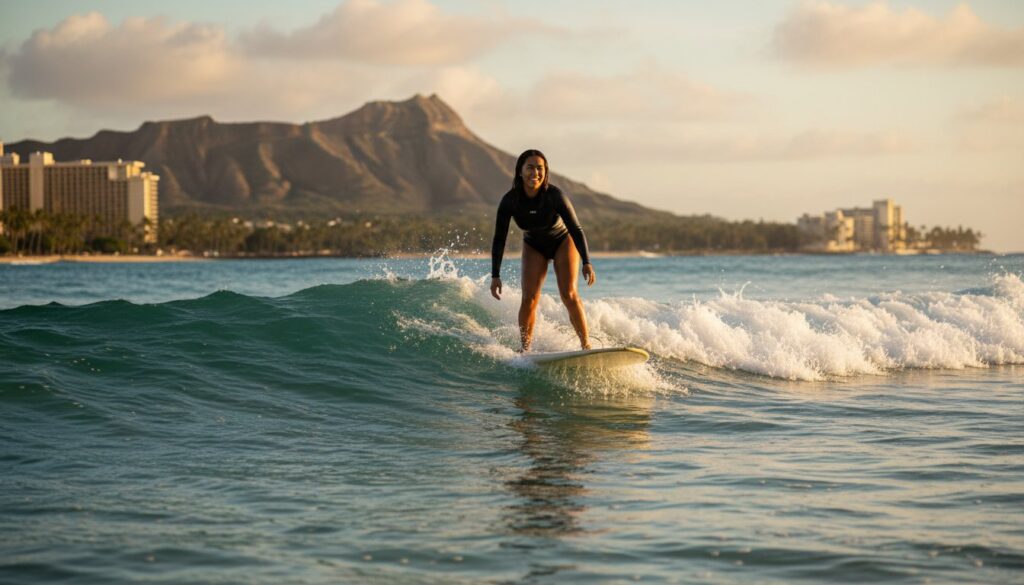
Kids surf lessons in Waikiki are one of the most memorable activities a family can experience on Oahu, offering children the chance to ride real waves under the guidance of experienced, safety-focused instructors. Waikiki’s warm, shallow water and gentle rolling surf have made it the world’s most welcoming beach for first-time surfers of all ages — especially young ones. Whether your child is five or fifteen, this guide covers everything you need to know before booking a lesson.
Kids Surf Lessons in Waikiki — Why This Beach Is Ideal for Beginners
Waikiki Beach sits on the south shore of Honolulu and is naturally sheltered by a shallow coral reef that breaks the force of open-ocean swells. As a result, waves arriving at the shoreline are small, consistent, and slow-rolling — exactly the kind a child needs to find their footing on a board. Additionally, the sandy bottom and warm water temperature (averaging around 78°F year-round) create a forgiving environment where mistakes feel like fun rather than frightening.
Because of these natural conditions, Waikiki has been a surf instruction hub for over a century. In fact, the tradition of teaching visitors to surf here dates back to the legendary Hawaiian watermen of the early 1900s. Today, that same spirit of aloha drives every lesson on the beach.
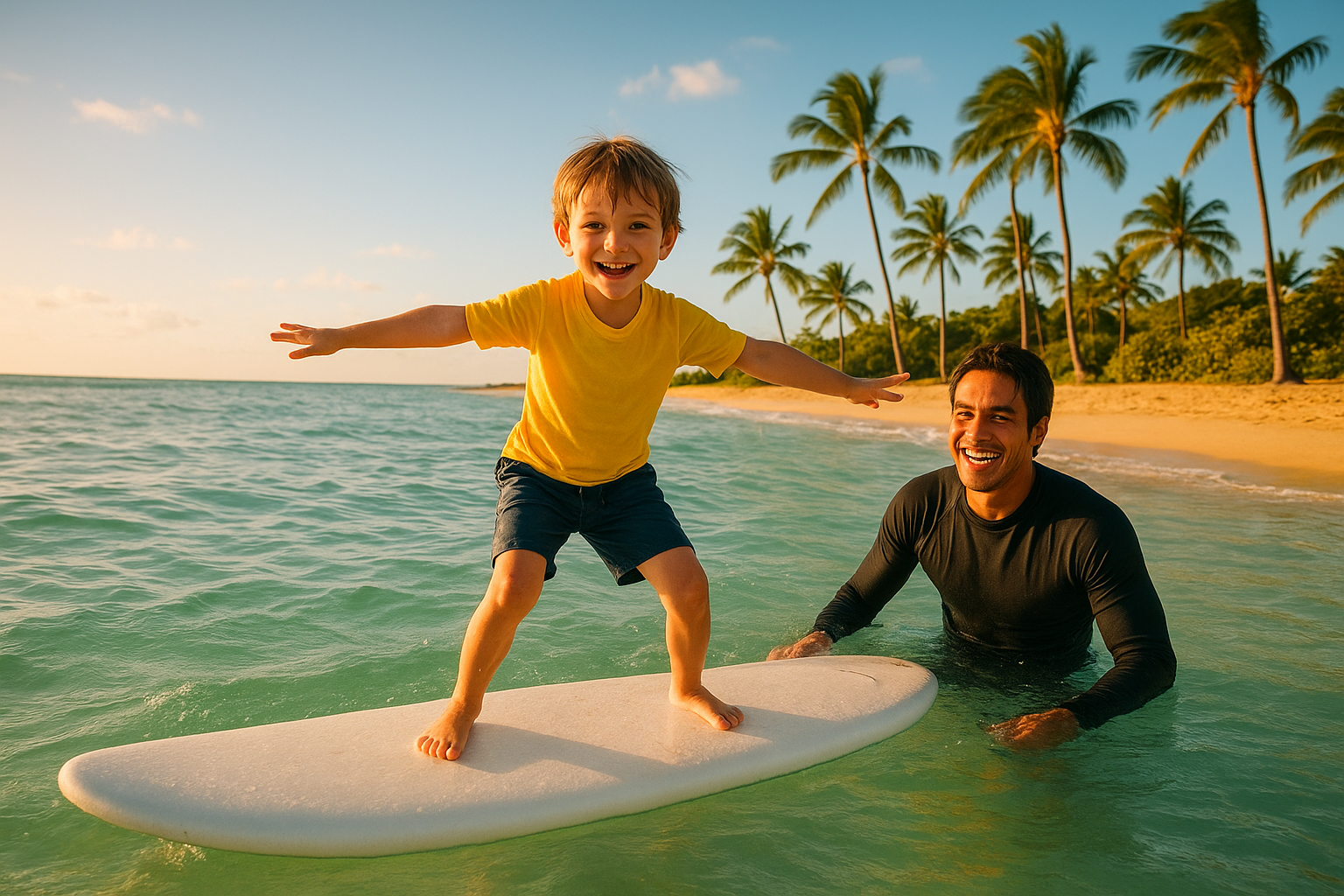
Waikiki’s gentle, rolling waves make it the ideal setting for kids surf lessons, giving children the confidence to stand up on their very first try. For a deeper walkthrough, see our Learn to Surf in Waikiki: The Ultimate Guide to Riding the Waves of Aloha.
What Age Can Kids Start — and What Skills Do They Need?
Most reputable surf schools in Waikiki accept children as young as five years old. For guidance on timing and readiness see best age to start. However, instructors typically assess each child’s comfort in the ocean before entering the surf zone. Therefore, basic swimming ability is strongly recommended — your child does not need to be a competitive swimmer, but they should be able to float and move comfortably in water.
Beyond swimming, the most important quality is a willingness to listen and follow instructions. Surfing involves quick decisions and body awareness, so children who can focus for short periods tend to progress faster. Meanwhile, instructors are trained to work with varying attention spans and energy levels, so even wiggly, excited kids do just fine.
What Happens During a Typical Lesson
A standard kids surf lesson in Waikiki runs between 60 and 90 minutes. For more detail see our kids surf lessons guide. The session typically begins on the sand, where the instructor demonstrates how to pop up from lying flat to standing — a move called the “pop-up.” Children practice this motion on the board while it rests on dry land, building muscle memory before they ever touch the water.
Once in the water, the instructor wades out to waist depth and physically assists each child in catching waves. Because Waikiki’s waves are slow and predictable, instructors can time each push precisely, giving kids the best possible chance of riding all the way to shore. Finally, after several successful rides, the lesson wraps up with a cool-down and a quick debrief on the beach.
Quick Answer: What Are Kids Surf Lessons in Waikiki?
Kids surf lessons in Waikiki are structured, instructor-led surfing sessions designed specifically for children, held on the calm, shallow waters of Waikiki Beach in Honolulu, Hawaii. They typically include land-based coaching followed by in-water practice on wide, foam surfboards, with a certified instructor guiding each wave.
How to Choose Kids Surf Lessons in Waikiki for Your Child
Not all surf schools are created equal, so choosing the right one matters for both safety and enjoyment. First, look for schools that maintain a low student-to-instructor ratio — ideally no more than three children per instructor. This ensures your child receives personalized attention and that the instructor can respond quickly in the water.
Second, verify that instructors hold current certifications in water safety and first aid. Additionally, check whether the school uses soft-top foam boards, which are significantly safer for beginners than hard fiberglass boards. Schools like Star Beach Boys have built a strong reputation on Waikiki Beach for exactly these standards, combining expert local knowledge with a genuine passion for sharing surf culture with families.
Finally, read recent reviews from other parents. Feedback about instructor patience, communication, and how well they engaged younger children is especially valuable when making your decision.
How to Prepare Your Child in 5 Simple Steps
Preparation makes a big difference in how much your child enjoys their first surf experience. Follow these steps and our best surf school guide to set them up for success:
- Choose a reputable surf school — Research certified schools on Waikiki Beach that specialize in children’s instruction and maintain safe student-to-instructor ratios.
- Book in advance — Reserve your child’s lesson at least a few days ahead, especially during peak summer months when spots fill quickly. See our kids surf lessons guide for detailed booking tips.
- Pack the right gear — Bring a rash guard, swimsuit, reef-safe sunscreen, a towel, and a change of clothes. Most equipment is provided by the school.
- Arrive early — Get to the beach 15 minutes before the lesson so your child can acclimate to the sand and water before instruction begins.
- Encourage and celebrate progress — Cheer from the shoreline and celebrate every milestone, whether they paddle confidently or stand up for the first time.
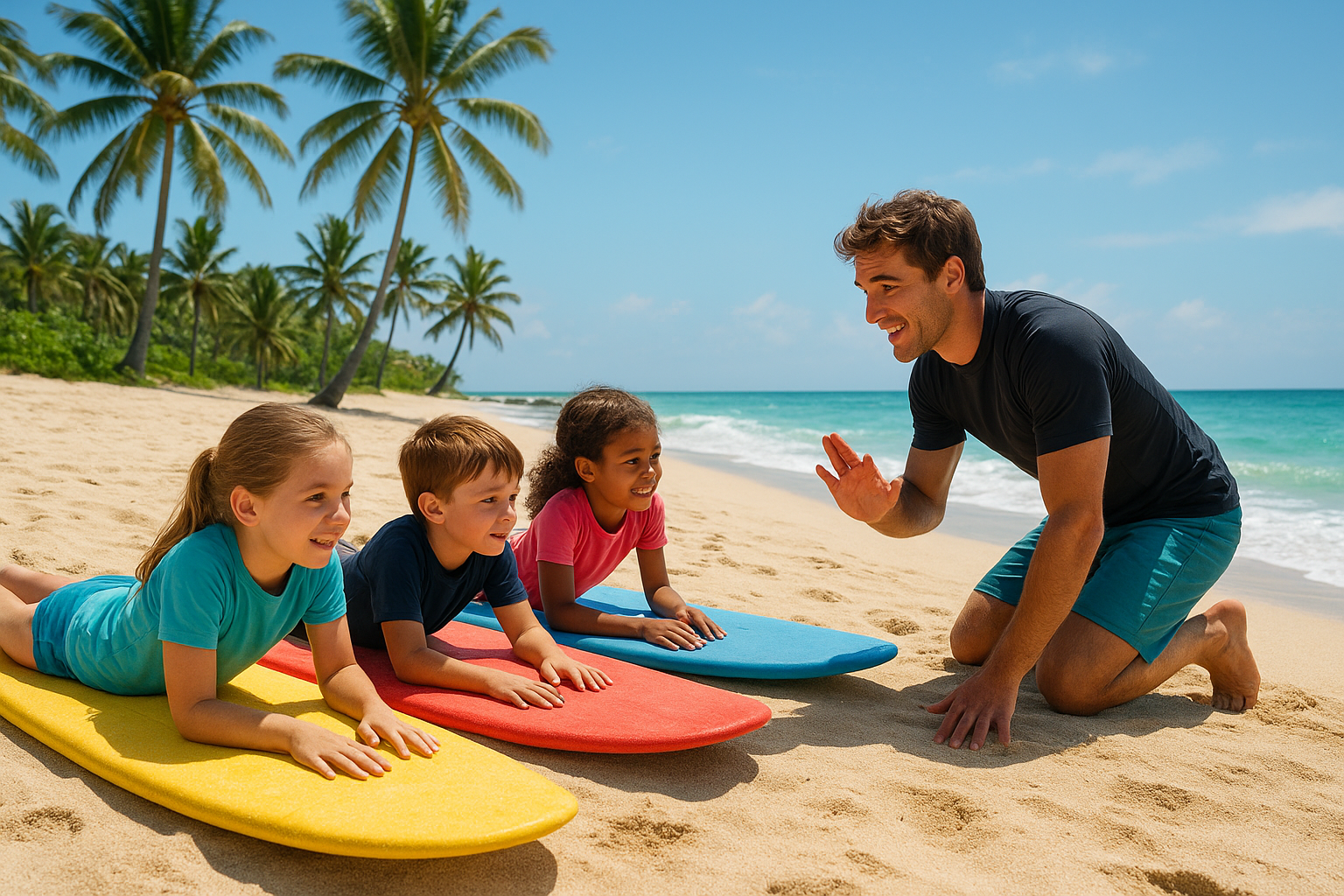
Land-based practice is a key part of every beginner surf lesson, helping children build confidence before they paddle into the ocean.
What to Expect in Terms of Cost and Timing
Group lessons for children in Waikiki typically range from $50 to $80 per child, while private one-on-one sessions cost between $100 and $200 per hour. For families traveling on a budget, group lessons offer excellent value — children often benefit from watching their peers catch waves, which builds excitement and motivation.
In terms of timing, summer months from June through August bring the calmest south swells to Waikiki, making them the most popular period for beginner lessons. However, because the reef shelters the bay year-round, conditions remain consistently learnable even during the winter months. Therefore, families visiting outside of peak season should not hesitate to book a lesson.
Common Mistakes Parents Make When Booking Surf Lessons
One of the most common mistakes is waiting until the day of your visit to book. During busy periods, lessons sell out quickly, and last-minute bookings often mean less desirable time slots or larger group sizes. Instead, reserve your spot online as soon as your travel dates are confirmed.
Another frequent error is choosing a school based on price alone. Although cost is a valid consideration, the quality of instruction and the instructor’s ability to connect with children matters far more. A slightly more expensive lesson with a patient, enthusiastic instructor will leave your child with a lifelong love of the ocean — whereas a cheaper, impersonal experience might discourage them from trying again.
Finally, some parents forget to apply reef-safe sunscreen before the lesson begins. Hawaii law requires reef-safe formulas to protect coral ecosystems, and most schools will remind you — but applying it at least 20 minutes before entering the water provides much better protection for your child’s skin.
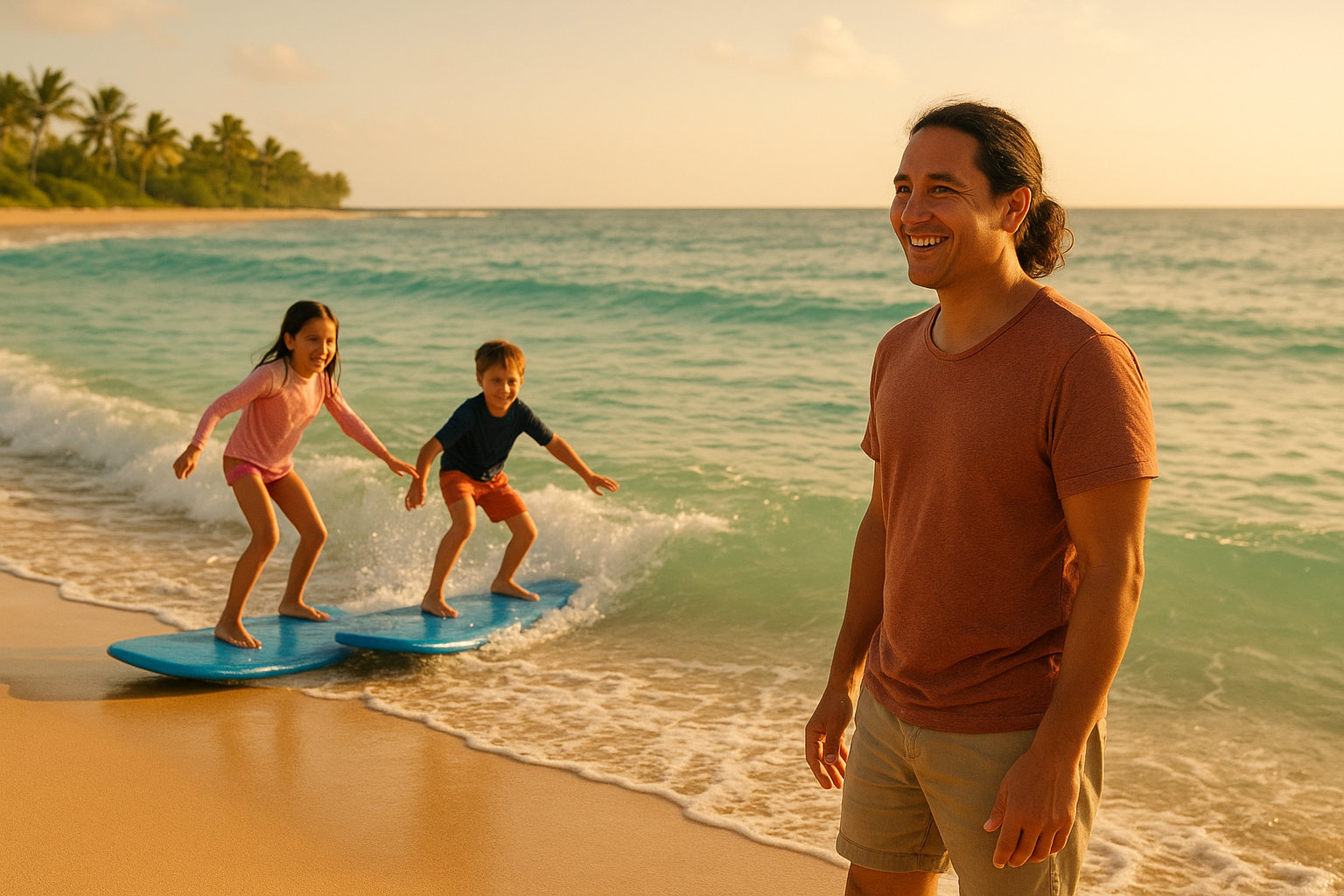
Parents are always welcome to watch from the shore and capture the moment their child rides their first wave.
Benefits Beyond the Wave: What Surfing Teaches Kids
Surfing offers children far more than just a thrilling ride. Because the sport demands balance, timing, and quick decision-making, it builds coordination and spatial awareness in ways few other activities can match. Additionally, learning to read ocean conditions introduces children to a basic understanding of tides, currents, and weather — a meaningful connection to the natural world.
Perhaps most importantly, surfing builds resilience. Children fall off their boards repeatedly before they succeed, and each attempt teaches them that persistence pays off. As a result, many parents report that their children return from Waikiki surf lessons with noticeably higher self-confidence — not just in the water, but in everyday challenges too.
For families looking to book an authentic, safety-focused experience, Star Beach Boys offers lessons directly on Waikiki Beach with instructors who bring both professional credentials and genuine aloha spirit to every session.
In Summary
Kids surf lessons in Waikiki combine the world’s most beginner-friendly waves with certified, child-focused instruction. Whether your child is five or fifteen, Waikiki offers a safe, joyful, and unforgettable introduction to surfing that they will carry with them long after the vacation ends. For a deeper walkthrough, see our complete kids surf lessons guide.
Frequently Asked Questions
What age can kids start surf lessons in Waikiki?
Most Waikiki surf schools accept children as young as 5 years old. Instructors assess each child’s comfort in the water before entering the surf zone, so younger children are evaluated individually.
Do kids need to know how to swim before taking surf lessons?
Basic swimming ability is strongly recommended. Children should be comfortable in the water and able to float independently, though instructors and flotation devices provide additional safety throughout the lesson.
How long does a typical lesson last?
A standard lesson runs about 60 to 90 minutes, including 15 to 20 minutes of beach instruction followed by in-water practice. Some schools offer extended 2-hour family sessions as well.
What should kids wear to a surf lesson?
Children should wear a rash guard, swim shorts or a one-piece swimsuit, and reef-safe sunscreen. Most surf schools provide rash guards and soft-top surfboards at no extra cost.
Is Waikiki Beach safe for beginner child surfers?
Yes — Waikiki is widely considered one of the safest beaches in the world for beginner surfers. Its shallow, sandy bottom and consistently small, rolling waves make it ideal for children learning to surf.
How much do kids surf lessons in Waikiki cost?
Group lessons typically range from $50 to $80 per child, while private lessons cost between $100 and $200 per hour. Prices vary by school, group size, and lesson duration.
What is the best time of year to book surf lessons for kids in Waikiki?
Summer months from June through August offer the calmest south swells, making them perfect for beginner lessons. However, Waikiki’s protected bay provides learnable conditions year-round, so off-season visits are also excellent.
How many children are typically in a group lesson?
Most reputable schools maintain a ratio of one instructor to every two or three students. Smaller groups allow for more personalized coaching and better water safety monitoring.
Will my child stand up on the board during the first lesson?
Many children successfully stand up on a surfboard during their very first lesson at Waikiki. The gentle waves and wide foam boards make it easier for beginners to find their balance quickly, though every child progresses at their own pace.
Do surf schools in Waikiki provide all the equipment?
Yes — all equipment including soft-top surfboards and leashes is typically included in the lesson fee. Some schools also provide rash guards and reef-safe sunscreen for young surfers.
Can parents watch the lesson from the beach?
Absolutely — parents are welcome to watch from the shore and take photos. Instructors will brief you on what to expect before the lesson begins so you know exactly where to stand for the best view.
What is the difference between a group lesson and a private lesson for kids?
Group lessons are more affordable and allow kids to share the excitement with peers, while private lessons offer one-on-one coaching that can accelerate skill development. For shy or younger children, private lessons often build confidence faster.