Surfboard safety tips for beginners are the first thing every new surfer should learn before paddling past the shallows. Each year, countless first-time surfers head into the water excited to catch a wave, yet many underestimate how a careless moment with a board can cause real injury. However, with the right habits — proper board handling, a secured leash, and smart wave judgment — most accidents are entirely preventable. This guide, shaped by the hands-on coaching approach used at starbeachboys.com, walks through practical, beginner-friendly safety steps for every stage of your first sessions in the water.
Quick Answer: Surfboard safety tips for beginners include choosing a soft-top board sized for your weight, always wearing a leash, checking surf conditions before entering the water, learning the proper fall technique, and giving other surfers the right of way. Together, these habits dramatically lower your risk of injury while you build confidence in the waves.
What Are Surfboard Safety Tips for Beginners?
Surfboard safety tips for beginners are a set of practical guidelines that help new surfers avoid the most common causes of injury in the water. In particular, they cover board selection, leash use, fall technique, and awareness of other people sharing the lineup. Because surfboards are rigid and can move quickly in whitewater, even a small board can cause a bruise, cut, or concussion if handled carelessly.
As a result, surf schools typically teach these fundamentals before a student ever stands up on a wave. Similarly, the goal is not to make surfing feel restrictive but to build habits that let beginners relax and enjoy the ocean with far less risk.

Learning proper board-carrying habits is one of the simplest surfboard safety tips for beginners.
Why Surfboard Safety Matters for New Surfers
Surfboard safety matters because the board itself, not marine life or the seafloor, causes a large share of surfing injuries. In fact, several surf-injury reviews cited by sports medicine researchers have found that a surfer’s own board is involved in close to half of all reported surfing injuries, more than any other single factor. Consequently, learning how to control and respect your board is one of the most effective ways to avoid getting hurt.
Furthermore, beginners are statistically more likely to be injured than experienced surfers, largely because they are still learning balance, timing, and board awareness. For that reason, structured instruction from a resource like these beginner surfing tips can shorten the learning curve and reduce avoidable mishaps during those first sessions.
Above all, understanding wave dynamics plays a role too. The sport of surfing depends heavily on reading swell, tide, and crowd behavior, so safety and skill development naturally go hand in hand.
Essential Surfboard Safety Tips for Beginners
The following steps outline a practical process for handling a surfboard safely, from the moment you check conditions to the moment you walk back onto the sand. Specifically, following these in order builds muscle memory that becomes automatic within a few sessions.
- Check conditions first. Look at posted flags, lifeguard warnings, swell size, and crowd levels before you pick up your board.
- Attach your leash correctly. Secure the cuff snugly around your back ankle and confirm the cord has no knots.
- Wax and inspect the board. Fresh wax improves grip, and a quick check for cracked fins or rails prevents surprises mid-session.
- Enter the water with the board beside you. Keep the nose pointed toward incoming waves so you are not knocked backward.
- Fall safely when you wipe out. Cover your head with your arms and push the board away rather than diving headfirst.
- Exit the surf zone holding the board. Carry it out of shallow water instead of dragging it near other swimmers.
Meanwhile, if you want a deeper breakdown of stance and timing once you are past the basics, this guide on surfing techniques for beginners builds directly on these safety fundamentals.
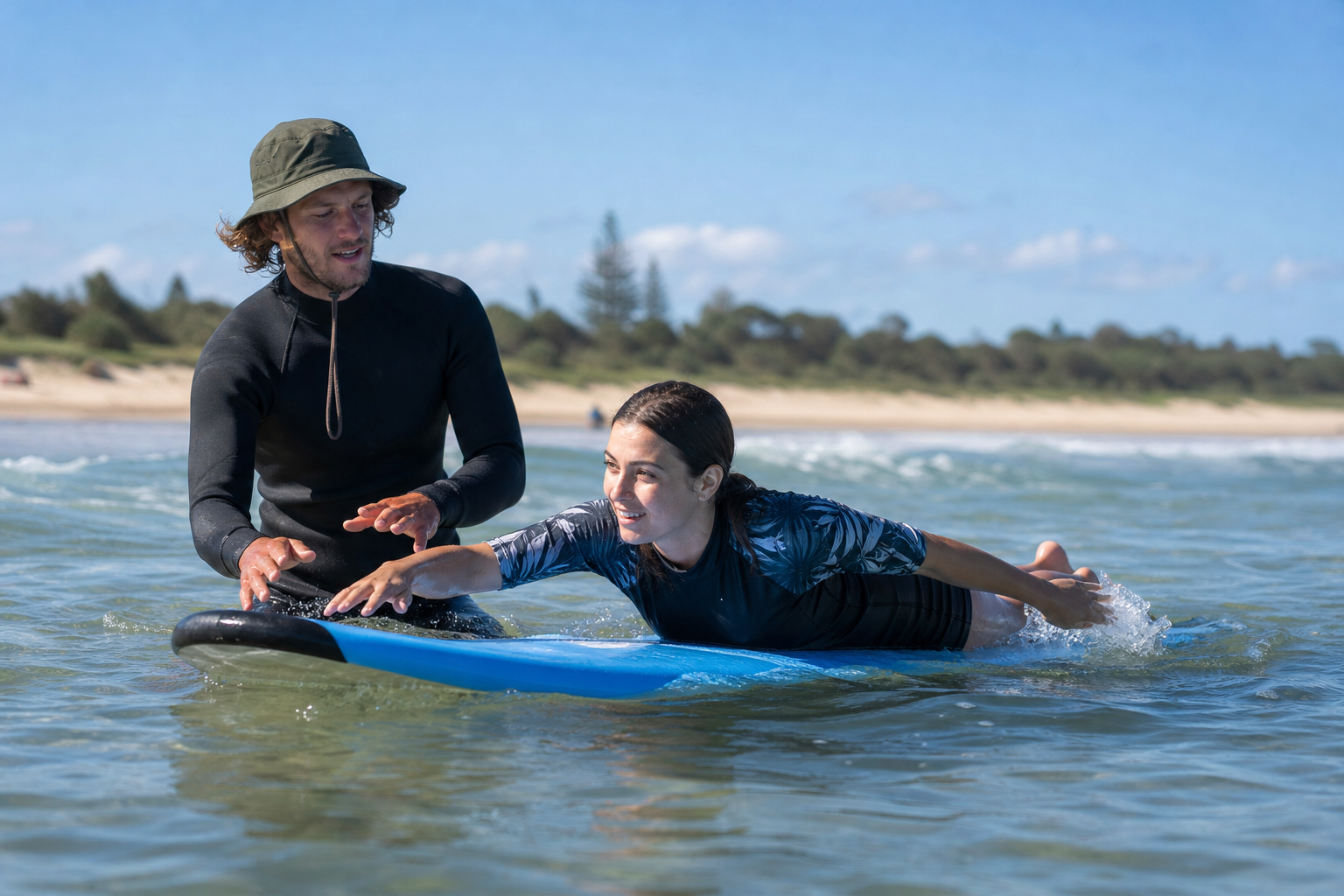
Guided practice helps reinforce surfboard safety tips for beginners in real conditions.
Choosing the Right Surfboard for Beginner Safety
Choosing a board that matches your size and skill level is one of the most overlooked safety decisions. Generally, beginners should pick a board that is longer, wider, and thicker than what a more advanced surfer would ride, since extra volume improves stability and float.
In contrast, a board that is too small or too narrow forces a beginner to fight for balance, which increases fall frequency and fatigue. Therefore, most instructors recommend an 8 to 9 foot soft-top board for first-timers, regardless of age, because the extra surface area makes paddling and standing far more forgiving.
Additionally, soft-top foam construction reduces impact severity compared to hard epoxy boards, which matters most during crowded lessons or family outings. Those seeking athletic progression can later explore fast-track surf classes for athletic beginners once foundational safety habits are solid.
Beginner Surf Safety Gear Checklist
Beyond the board itself, a short list of gear supports safer sessions. The table below summarizes the essentials and why each one matters.
| Gear | Why It Matters |
|---|---|
| Ankle leash | Keeps the board attached to you instead of drifting into swimmers |
| Rash guard | Protects skin from wax rash and sun exposure during long sessions |
| Reef-safe sunscreen | Shields skin without harming coral or marine ecosystems |
| Surf booties | Protects feet from reef cuts or sharp rocks near the shoreline |
Likewise, keeping gear in good condition matters just as much as owning it. This guide to surf lessons with board maintenance tips explains how routine checks extend both board life and safety.
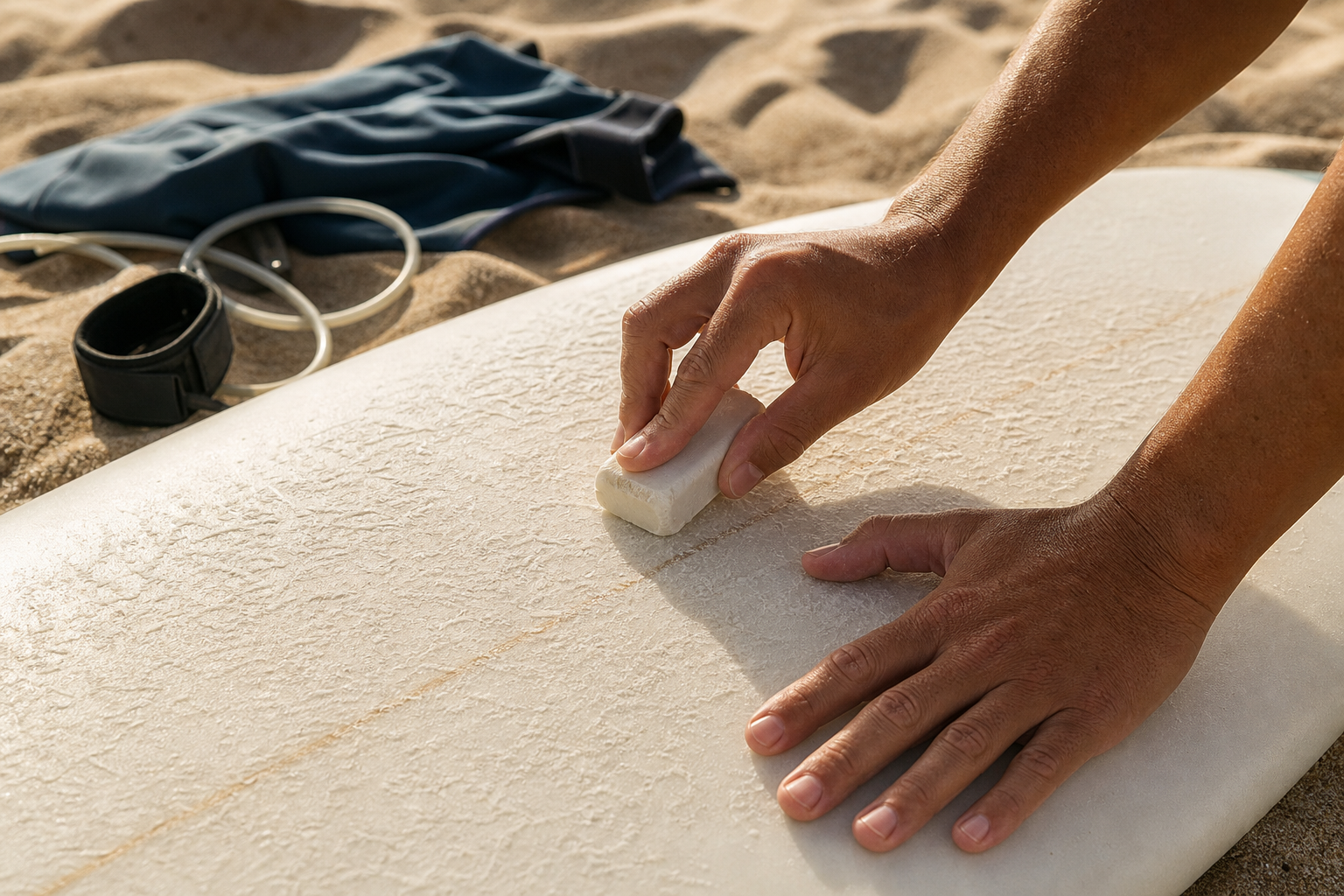
Proper gear checks, like waxing and leash inspection, support safer surfboard handling for beginners.
Common Surfboard Safety Mistakes New Surfers Make
Even motivated beginners repeat a handful of predictable mistakes. For instance, skipping the leash because it feels unnecessary in small waves is one of the most frequent errors, and it is also one of the easiest to fix.
Similarly, paddling out directly in front of someone already riding a wave, known as dropping in, causes many lineup collisions. Meanwhile, ignoring posted beach flags or lifeguard guidance leads surfers into rip currents or shore break they are not ready to handle. The NOAA Ocean Service notes that rip currents are a leading cause of ocean rescues, which makes condition-checking a non-negotiable habit.
Finally, surfing alone in unfamiliar breaks removes the safety net that a buddy or instructor provides. For a broader look at these pitfalls, this complete surf safety guide for adult beginners expands on condition awareness and lineup etiquette.
How Professional Surf Lessons Improve Board Safety Skills
Structured lessons accelerate safe habits far more reliably than self-teaching. Specifically, an instructor can correct leash placement, stance, and fall technique in real time, before a small mistake becomes a repeated bad habit.
At starbeachboys.com, for example, coaching sessions are built around personalized guidance for complete beginners through intermediate surfers, with safety woven into every stage of instruction rather than treated as a separate lecture. As a result, students tend to progress faster while avoiding the common injuries that self-taught surfers often experience in their first weeks.
Moreover, organizations such as the United States Lifesaving Association emphasize that supervised ocean activity, including surf lessons near lifeguard towers, significantly reduces water-related incidents for newcomers. Choosing a qualified school is therefore not just about faster progress; it is a direct safety decision.
Frequently Asked Questions About Surfboard Safety Tips for Beginners
What are surfboard safety tips for beginners?
Surfboard safety tips for beginners include choosing a soft-top board, always wearing a leash, checking ocean conditions, learning how to fall safely, and respecting other surfers in the lineup. Following these basics prevents most common beginner injuries.
How do I choose the right size surfboard for safety?
Beginners should pick a longer, wider, and thicker board than their final goal board because extra volume improves stability and makes paddling easier. A qualified instructor can measure your weight and fitness level to recommend the safest size.
Why is a leash important for new surfers?
A leash keeps your board attached to your ankle so it cannot become a projectile that hits you or another swimmer. Without one, a loose board can travel quickly in whitewater and cause serious injury to anyone nearby.
What should I do if I fall off my surfboard?
Cover your head and neck with your arms as you fall, since the board or the seafloor poses the biggest injury risk. Try to fall flat and away from the board rather than diving headfirst.
How can I avoid hitting other surfers with my board?
Always look both directions before paddling out, hold the nose of your board down in whitewater, and never drop in on someone already riding a wave. Clear communication and spacing in the lineup prevent most collisions.
What is the best surfboard material for beginner safety?
Soft-top foam boards are generally the safest choice for beginners because the foam deck and softer rails reduce the severity of impacts. Hard epoxy or fiberglass boards can cause more serious cuts or bruises during a fall.
How much does a beginner surf lesson usually cost?
Group beginner lessons often range from roughly $50 to $90 per person, while private lessons can cost $100 or more depending on location and instructor experience. Many schools include board and leash rental in that price.
How long does it take to learn basic surfboard safety?
Most beginners grasp core safety habits like leash use, falling technique, and basic etiquette within one or two lessons. Consistent practice over several sessions is still needed to make these habits automatic.
What common mistakes do beginners make with surfboard safety?
Common mistakes include skipping the leash, surfing in conditions beyond their skill level, and paddling out directly in front of other surfers. Ignoring posted beach flags or lifeguard warnings is another frequent error.
Should a beginner ever surf alone?
No, beginners should avoid surfing alone, especially in unfamiliar breaks or when conditions are changing. Surfing with a buddy, instructor, or near a lifeguard tower allows for quick help if something goes wrong.
What safety gear do beginner surfers need besides a leash?
A rash guard, reef-safe sunscreen, and a properly fitted wetsuit for cold water are all useful additions. In reef or rocky areas, surf booties also protect the feet from cuts.
How do rip currents affect surfboard safety?
Rip currents can pull a surfer and their board far from shore quickly, increasing fatigue and panic risk. Beginners should learn to recognize rip current signs and always check conditions, such as those explained by NOAA, before entering the water.
What’s the difference between soft-top and hard-top boards for safety?
Soft-top boards have a foam deck that cushions impact, making them noticeably safer for first-timers. Hard-top boards offer better performance for advancing surfers but carry a higher risk of cuts or bruises during falls.
Final Thoughts on Staying Safe on a Surfboard
In the end, surfboard safety tips for beginners are not about limiting fun; they are about building the confidence to enjoy every session without unnecessary risk. From selecting a soft-top board to respecting lineup etiquette, each habit compounds over time into instinctive, safer surfing. Therefore, whether you practice on your own or train with a structured program like the one at starbeachboys.com, prioritizing these fundamentals early will help you ride more waves and recover from fewer falls, which is ultimately what keeps beginners coming back to the water.