Surf training programs are structured, instructor-led experiences designed to take you from standing on the sand to confidently riding real waves — safely, progressively, and with lasting technique. With over 35 million active surfers worldwide, according to the International Surfing Association, demand for quality surf coaching has never been higher. Whether you are a total beginner or an intermediate rider stuck at a plateau, this guide covers everything you need to choose, prepare for, and get the most out of a surf training program. Surf training for adults
Surfing looks effortless from the shore. In reality, it combines ocean literacy, physical coordination, timing, and mental composure — all at once. Therefore, structured training is not just helpful. It is genuinely the fastest, safest route to becoming a capable surfer.
What Are Surf Training Programs — and Why Do They Work?
Surf training programs are purposefully sequenced coaching curricula. They are not random beach sessions. Instead, they build your ocean skills layer by layer — covering water safety, paddling mechanics, wave reading, board positioning, and the pop-up technique (the motion of rising from lying flat to standing on the board) in a logical progression.
The difference between a structured program and solo practice is significant. Research in motor skill acquisition consistently shows that deliberate, feedback-driven practice produces faster and more durable improvement than unguided repetition. In surfing, this means fewer bad habits, fewer injuries, and a much shorter path to genuine competence.
Furthermore, surf training programs taught by certified instructors embed ocean safety as a foundation — not an afterthought. According to Wikipedia’s overview of surfing, understanding wave dynamics and ocean conditions is fundamental to the sport, and credible schools dedicate meaningful time to this before students ever enter the water.
The Core Components of a Quality Surf Program
Every reputable surf training program — regardless of level — shares several key building blocks. Specifically, these include:
- Ocean safety education — rip current identification, right-of-way etiquette, leash use, and how to fall safely without injuring yourself or others.
- Paddling technique and positioning — the mechanics of moving through the water efficiently and reaching waves before they break.
- Wave reading — learning to identify which waves are rideable, where to position yourself, and how to time your take-off.
- The pop-up technique — the explosive, coordinated movement from prone paddling position to standing, practiced first on the sand until it becomes muscle memory.
- Progressive wave riding — moving from white-water waves (broken, foamy surf close to shore) to green, unbroken waves as skills and confidence develop.
- Instructor feedback and video analysis — many advanced programs now use video review so students can see and understand exactly what their body is doing on the board.
Types of Surf Training Programs: Beginner to Advanced
Surf training programs are not one-size-fits-all. In fact, the best schools offer a tiered structure that meets you exactly where you are. Understanding the different program types helps you choose the right entry point — and plan the right progression.
Beginner Surf Programs
Beginner programs are designed for people with no prior surfing experience. They typically run for one to three hours per session and focus exclusively on the fundamentals: ocean awareness, paddle mechanics, and the pop-up. Most include equipment — boards and wetsuits — in the program fee. Immersive surf experiences
The standard format starts on the beach. Instructors demonstrate each technique on dry land before anyone touches the water. Consequently, students enter the ocean already knowing what to do — which dramatically reduces anxiety and the risk of poor technique forming under pressure.
Beginners are started on large, wide foam boards — sometimes called “foamies” or “soft-tops.” These boards are significantly more buoyant and stable than performance shortboards, making it far easier to develop foundational balance before transitioning to narrower shapes. See our beginner surf lessons to get started with guided sessions.
Intermediate Surf Training Programs
Intermediate programs serve surfers who can already stand up and ride waves consistently but want to refine their technique. These programs introduce turning fundamentals (bottom turns and top turns), wave selection strategy, reading the lineup (the area where surfers wait for waves), and more efficient paddling. For technique drills and coaching drills, see our teaching surfing techniques guide.
Importantly, intermediate surfers benefit enormously from a structured environment even if they feel they have already “got the basics.” Solo practice tends to reinforce existing errors rather than eliminate them. Professional video analysis at this stage can identify subtle weight distribution issues, weak pop-up mechanics, or paddle inefficiencies that the surfer is completely unaware of.
Advanced and Performance Coaching Programs
Advanced coaching programs are built for experienced surfers aiming to compete, master high-performance maneuvers, or surf larger, more powerful waves. These programs often include surf-specific fitness training — strength conditioning, flexibility work, breath-hold exercises, and cardiovascular endurance sessions tailored to the demands of high-performance surfing.
Furthermore, many advanced programs incorporate cross-training disciplines such as yoga for flexibility, swimming for paddle strength, and balance board work for core stability. These off-the-water components are now considered essential rather than optional by elite surf coaches.
Surf Camps and Immersive Multi-Day Programs
Multi-day surf camps represent perhaps the most accelerated form of surf training available. By combining multiple daily sessions with structured accommodation, land training, and coach-led video review, these programs produce months’ worth of progress in just a few days. They are especially effective for adults who cannot commit to a weekly lesson schedule but can dedicate a long weekend or a full week to intensive improvement.
Additionally, surf camps create a genuinely immersive social environment. The shared challenge of learning accelerates camaraderie, and the peer encouragement typical of group camp settings meaningfully motivates individual participants.
Who Should Enroll in a Surf Training Program?
The short answer: almost everyone benefits. Complete beginners gain the most obvious advantages — they avoid the dangerous habits and frustrating plateaus that come from self-teaching in an unpredictable ocean environment. However, the benefits extend far beyond first-timers. Read how to build surfing confidence through structured training.
- Children (ages 6–12) — Surf programs for children emphasize fun, water confidence, and basic safety. Small group sizes and patient instructors make the ocean approachable rather than intimidating for younger learners.
- Teenagers and young adults — This group often learns fastest due to physical agility and fearlessness. Structured programs harness that energy and channel it into proper technique rather than reckless trial and error.
- Adult beginners — Adults may take slightly longer to develop motor patterns, but they bring patience and analytical thinking to sessions. A quality program meets them at their pace without pressure.
- Intermediate surfers at a plateau — If you have been surfing solo for a year or two but feel stuck, a structured intermediate program is the most effective way to break through and add new skills.
- Tourists and travelers — surfing lesson on vacation? A multi-day program gives you far more usable skill from a short window than renting a board and trying alone.
- Returning surfers — Years out of the water means rusty technique. A structured refresher session with a certified instructor rapidly re-establishes good habits and updates your ocean safety knowledge.
Schools like Star Beach Boys welcome participants across all ages and fitness levels, making ocean-based learning genuinely accessible rather than exclusive or intimidating.
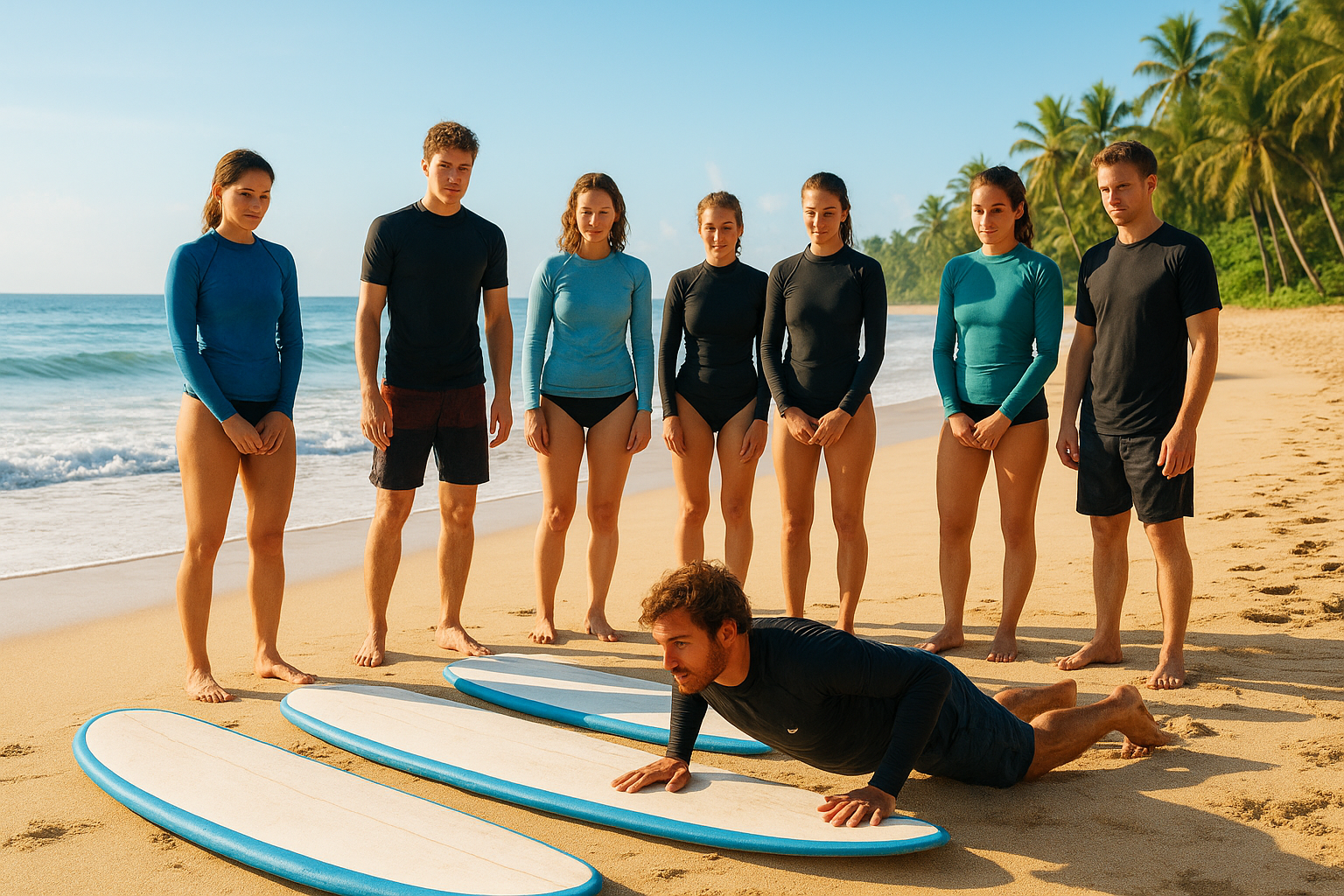
Every surf training program begins on dry land — where instructors teach the pop-up technique before any student enters the water.
How to Choose the Right Surf Training Program
With so many surf schools operating worldwide, choosing well requires knowing exactly what to look for. The following five steps will help you make a confident, informed decision — and avoid the common pitfalls that lead to wasted money and disappointing experiences. See our best surf schools guide for school comparisons.
-
1
Assess your current skill level honestly. Are you a complete beginner, a casual paddler with some water time, or an intermediate surfer who can already ride waves? Your honest self-assessment determines the right program tier — and prevents you from placing yourself in a group that moves too fast or too slow. -
2
Verify instructor certifications. Look specifically for instructors credentialed by the International Surfing Association or an equivalent national body. Certified instructors have completed formal training in ocean safety, first aid, and structured teaching methodology. Read recent, verified student reviews — and check whether the school maintains a clear, publicly stated safety protocol. -
3
Confirm student-to-instructor ratios. This is one of the most important quality indicators of any surf program. Reputable schools maintain a maximum of six students per instructor for group sessions. Larger ratios reduce the quality of individual feedback and compromise safety supervision in dynamic ocean conditions. -
4
Match the program to your goals, schedule, and budget. A single introductory lesson ($50–$100 for group sessions) works for tourists wanting a taste of the sport. Multi-day beginner packages provide the repetition needed to truly build technique. Private sessions ($100–$200+ per session) deliver the most focused, personalized instruction. Confirm location, session timing, and what equipment is included before booking. -
5
Prepare your body and gather the right gear before Day 1. Build basic cardiovascular fitness ahead of your first session. Swimming is ideal — it directly trains the muscles used in paddle out. Confirm what equipment the school provides (most supply boards and wetsuits). Additionally, pack sunscreen, a rash guard, water, and a light snack for energy.
For a more detailed breakdown of what to look for, the guide on tips for choosing the right surf school is an excellent companion to the steps above. For a deeper walkthrough, see our Surf Waikiki Hawaii: The Ultimate Guide to the Birthplace of Surfing (2026).
Why Instructor Certification Is Non-Negotiable
Not all surf instructors are equally qualified. Certified coaches have completed formal coursework in ocean safety, first aid, water rescue, and pedagogical (teaching) methodology. As a result, they are far better equipped to handle unexpected situations in the water — rip currents, equipment issues, panicked students — and to deliver feedback that actually translates to improved performance.
Certification also signals a commitment to ongoing professional development. The ocean is a genuinely dynamic environment, and the best instructors continually update their knowledge of evolving safety standards and teaching methods. Always ask to see instructor credentials before enrolling. It is your right as a paying participant — and a straightforward indicator of program quality.
What a Surf Training Program Session Actually Looks Like
Knowing the structure of a typical session removes anxiety and allows you to focus entirely on learning when you arrive. While programs vary, the format below is broadly representative of what you will experience in a high-quality beginner surf training program.
Phase 1: Beach Safety Briefing (15–20 minutes)
Every session begins on dry land with a thorough safety briefing. Instructors explain rip current identification and escape technique, right-of-way rules in the lineup, how to fall safely (away from your board), how to handle a wiped-out board in the impact zone, and how to use your leash correctly.
This phase also includes a brief physical warm-up — dynamic stretching of the shoulders, hips, and thoracic spine — to reduce the risk of muscle strain during paddling.
Phase 2: Land Pop-Up Drill Practice (15–25 minutes)
Students practice the pop-up on boards laid flat on the sand. The instructor demonstrates the motion repeatedly, then watches each student individually and provides real-time corrections. This phase is far more important than it might appear — the pop-up must become reflexive before students enter the water, because there is no time to think once a wave is moving beneath you.
Common corrections at this stage include hand placement (too wide or too narrow), foot positioning (stance width and angle), and head position (looking forward, not down at the board).
Phase 3: Shallow-Water Paddle and Balance Drills (10–15 minutes)
Before catching waves, students enter waist-deep water to practice paddling mechanics, board balance, and duck-diving (pushing the nose of the board under incoming whitewater). This transition phase bridges the gap between sand drills and actual wave riding.
Phase 4: Wave Riding in the White Water (45–60 minutes)
With safety knowledge, pop-up technique, and paddle mechanics established, students begin catching white-water waves (already-broken surf close to shore). The instructor typically pushes the board to match the wave’s speed, helping students feel the sensation of being propelled forward before they manage the catch independently.
Consequently, most beginners stand up and ride their first wave during this phase — often within the first session. That immediate success experience is one of the most powerful motivators for continuing the program.
Phase 5: Debrief and Next-Session Goals (10 minutes)
After the water session, quality programs include a structured debrief. The instructor reviews what each student did well and identifies one or two priority focus areas for the next session. This closes the learning loop and maintains a clear sense of progressive development rather than random practice.
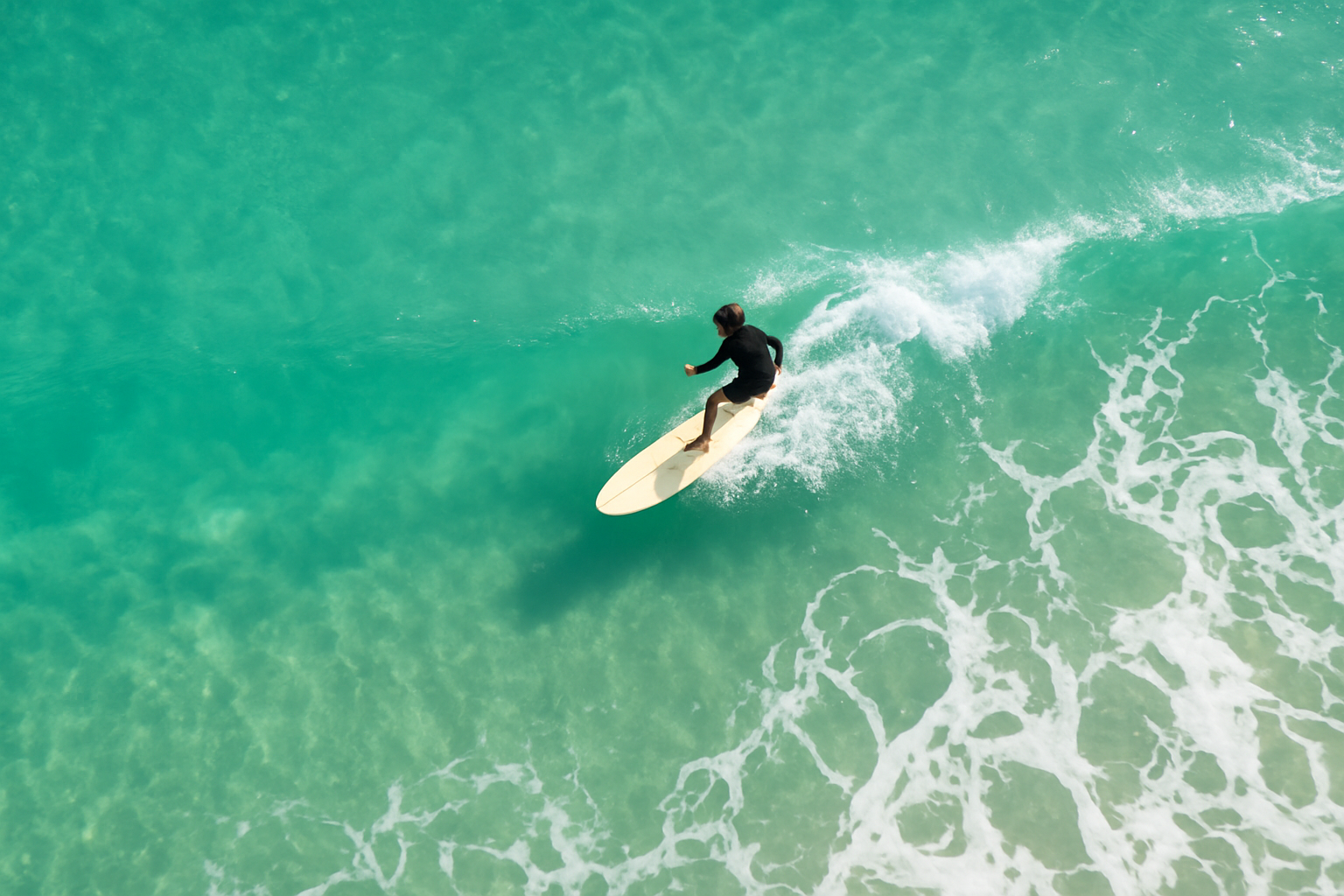
Progressive surf training programs move students from white-water practice to confidently riding unbroken green waves.
The Real Benefits of Surf Training Programs
The advantages of enrolling in a structured surf program extend well beyond learning to stand on a board. Specifically, participants gain across several interconnected dimensions of wellbeing — physical, cognitive, and social.
Physical Fitness and Body Composition
Surfing is a full-body workout. Paddling develops shoulder, back, and arm strength. The pop-up engages explosive hip flexor and core power. Wave riding builds lower-body stability and proprioception (balance awareness). According to research on wave sport physiology, experienced surfers demonstrate measurably superior core stability and cardiovascular endurance compared to non-surfers of similar age and weight.
Moreover, because surf sessions are inherently variable — no two waves are identical — the body continuously adapts to novel challenges, producing a more functional and athletically well-rounded form of fitness than repetitive gym exercises alone.
Mental Health and Ocean Wellbeing
Surfing demands total present-moment attention. You simply cannot be worrying about tomorrow’s to-do list when a wave is approaching. As a result, many surfers describe the sport as one of the most effective forms of active mindfulness they have experienced. Studies on blue space and mental health published in health research journals consistently find that time spent in and near the ocean reduces anxiety, lowers cortisol levels, and improves overall mood.
Surf programs specifically accelerate access to these benefits by removing the frustration and anxiety that come with self-teaching. When you know what you are doing — because a skilled instructor taught you — the experience is joyful rather than stressful.
Ocean Safety Knowledge for Life
The ocean safety knowledge embedded in surf training programs is not just relevant to surfing — it applies to any ocean activity. Rip current awareness, understanding wave sets, knowing how to read changing conditions — all of this information protects you and your family whenever you are near the ocean, for the rest of your life.
In addition, a structured program gives you the confidence to make sound decisions about when and where to surf — which is ultimately the most important safety skill of all.
Social Connection and Community
Learning to surf in a group setting creates a uniquely strong social bond. The shared vulnerability of trying something genuinely difficult — and the shared joy of succeeding — builds real camaraderie quickly. Many participants find that relationships formed in surf programs extend well beyond the beach. For a comprehensive overview of these advantages, the guide on the benefits of taking a surf lesson covers the topic in depth.
Surf Training Programs: Costs, Duration, and What to Expect
Understanding the typical pricing landscape helps you budget accurately and identify programs offering genuine value versus those overcharging for minimal instruction.
| Program Type | Typical Duration | Approximate Cost | Best For |
|---|---|---|---|
| Single group lesson | 1.5–2 hours | $50–$100 | Tourists, first-timers |
| Beginner multi-day package | 3–5 sessions | $150–$350 | Committed learners |
| Private coaching session | 1–1.5 hours | $100–$200+ | Rapid skill development |
| Intermediate coaching plan | 4–8 weeks | $300–$700 | Plateau-busting |
| Surf camp (immersive) | 3–7 days | $500–$2,000+ | Accelerated improvement |
Note that most programs include equipment in the stated price. However, always confirm this before booking — especially for wetsuits, which are essential in colder water environments. Additionally, some schools offer discounted packages for families or repeat bookings, so it is always worth asking.
How Long Does It Take to Learn Through a Structured Program?
Timeline expectations vary by individual, but broadly speaking:
- Session 1: Most students stand up and ride a white-water wave for the first time.
- Sessions 2–5: Pop-up becomes more consistent. Students begin catching waves independently and practicing basic directional control.
- Sessions 6–12: Students begin transitioning to green (unbroken) waves. Paddle-out technique and wave selection improve significantly.
- 3–6 months of regular sessions: A committed surfer with structured training begins developing basic turning ability and confident wave reading.
For a comprehensive expert breakdown of the fastest strategies for improvement, the article on how to improve your surfing skills quickly provides detailed, evidence-backed guidance worth reading alongside your program enrollment.
Common Mistakes That Slow Surf Progress
Even within structured programs, students sometimes undermine their own progress. Knowing these pitfalls in advance accelerates your development and prevents unnecessary frustration.
- Rushing past land drills. The pop-up must become reflexive before the water. Skipping or half-heartedly performing sand practice leads to awkward, ineffective technique when the adrenaline of a real wave hits.
- Starting on the wrong board. Beginners on shortboards face an exponentially steeper learning curve. Foam boards are not training wheels — they are the correct tool for the skill level. Accept them gladly.
- Tensing the body on the board. Rigid, stiff posture makes balance far harder. Soft knees, relaxed shoulders, and a natural bend at the hips create a stable, adaptable stance.
- Looking down at the board. Your gaze should be forward — toward the shore, not at your feet. Looking down shifts your weight forward and destabilizes your position almost immediately.
- Ignoring ocean conditions. Always check local surf reports before arriving. Furthermore, listen to your instructor’s assessment of the day’s conditions — they have often been watching the ocean for hours before you arrive.
- Quitting after one or two sessions. Surfing has a real initial learning curve. Therefore, committing to at least five sessions before assessing your progress gives the motor learning process enough time to produce visible results.
- Neglecting ocean safety rules. Right-of-way priority, giving way when paddling out, and never ditching your board toward other surfers are non-negotiable. Violating these rules creates dangerous situations in crowded lineups.
Cross-Training to Accelerate Your Progress Between Sessions
The fastest-improving surf students do not confine their training to the ocean. Cross-training between sessions builds the physical attributes that directly support surfing performance. Specifically, the most beneficial activities include:
- Swimming — builds paddle endurance and shoulder strength directly transferable to surfing.
- Yoga — develops hip flexibility, spinal mobility, and balance — all critical for a stable, powerful surfing stance.
- Balance board training — simulates the instability of wave riding and directly trains the small stabilizer muscles of the foot, ankle, and core.
- Strength training (focus on pull-ups, rows, and core work) — targets the muscles most taxed during paddle-out, pop-up, and wave riding.
- Breath-hold training (static apnea) — particularly relevant for surfers progressing to more powerful waves, where hold-down wipeouts require composure and breath awareness underwater.
Surf Training Programs for Specific Needs and Goals
Beyond the standard beginner-to-advanced pathway, specialized surf training programs now exist for a wide range of specific contexts and objectives. Understanding these options helps you identify the most directly relevant format for your situation. Learn to surf as an adult
Junior Surf Programs (Ages 6–16)
Junior programs are purpose-built for children and teenagers, with age-appropriate instruction methods, smaller board sizes, and a curriculum that emphasizes ocean safety, water confidence, and fun. Many junior programs in competitive surf destinations serve as pathways to junior competitive circuits. The foundational habits built in these early programs — respect for the ocean, right-of-way etiquette, controlled aggression in the lineup — form the bedrock of a lifetime of safe surfing.
Women-Only Surf Programs
Women-only surf programs have grown dramatically in popularity over the past decade. These programs create a supportive, non-intimidating environment where female learners can develop skills without the social dynamics of mixed lineups. Moreover, many feature female instructors — which research in sports pedagogy suggests improves comfort levels and uptake of feedback for many women learners.
Adaptive Surf Programs for People with Disabilities
Adaptive surfing — surfing adapted for people with physical disabilities — has become a recognized and growing discipline. The ISA now hosts annual World Adaptive Surfing Championships, and certified adaptive surf programs exist globally. These programs use specialized equipment, one-on-one or two-on-one instruction ratios, and modified techniques to make wave riding accessible to surfers with limb differences, visual impairments, and other physical challenges.
Online and Remote Surf Coaching Programs
A newer but rapidly expanding category, online surf coaching programs allow surfers to submit video footage of their sessions for remote analysis and feedback. This model is particularly useful for intermediate and advanced surfers who have consistent access to the ocean but limited access to local coaching expertise. Coaches provide detailed written or video feedback identifying specific technique issues and prescribing targeted drills — often with remarkable precision.
Similarly, digital surf training platforms now offer structured video curricula covering technique, fitness, wave knowledge, and mental strategy. These are best used as supplements to in-water instruction rather than replacements for it.
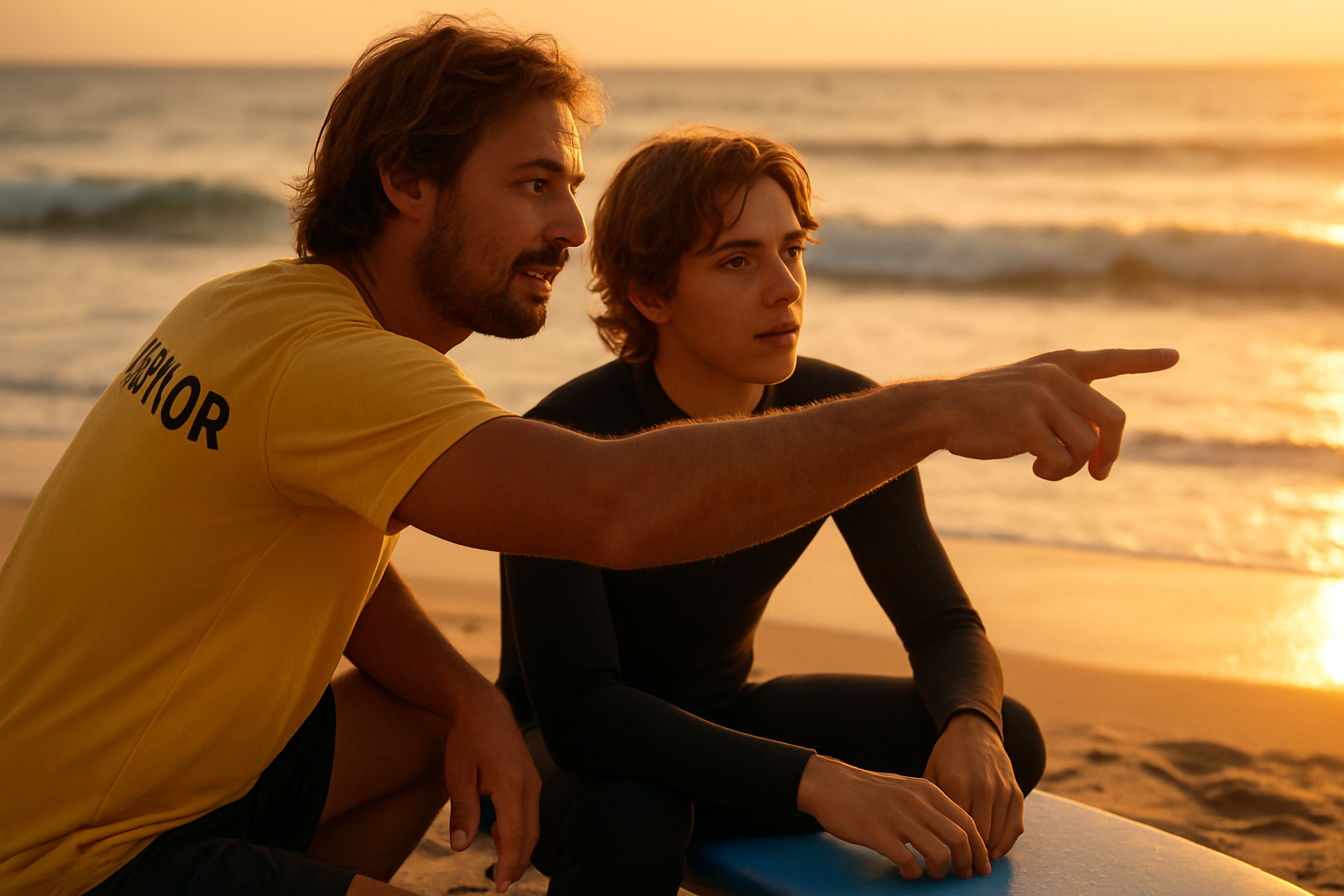
Personalized, one-on-one coaching is one of the most powerful differentiators between structured surf programs and self-directed practice.
Surf Equipment Used in Training Programs
Most surf training programs supply all essential equipment as part of the program fee. However, understanding what equipment is used — and why — helps you appreciate each item’s role in your learning and safety.
Foam Boards (Soft-Tops)
Large foam boards — typically 8 to 10 feet in length — are the standard tool for beginner surf programs worldwide. Their high volume provides maximum buoyancy, making it far easier to catch waves and maintain balance while developing foundational technique. The soft foam deck is also considerably safer than a fiberglass board when collisions occur — inevitable in the early stages of learning. According to surfing equipment guides on Wikipedia’s surfboard overview, soft-tops now dominate the beginner and casual surf market precisely because of their safety and ease-of-use advantages.
Wetsuits
Wetsuits provide thermal insulation, sun protection, and minor abrasion protection. Most programs supply wetsuits in a range of sizes, and instructors will help you select the right thickness for water temperature. In tropical surf destinations, a 1mm to 2mm shorty (short-arm, short-leg wetsuit) may be sufficient. In cooler waters, a 3mm to 5mm full suit is appropriate.
Leashes
A surf leash — a urethane cord attaching your ankle to the tail of your board — is a non-negotiable safety device in surf programs. It prevents your board from becoming a dangerous projectile when you wipe out, and it ensures you always have your flotation device nearby in the water. Leash length is matched to board length: typically, you use a leash equal to or slightly longer than your board.
Frequently Asked Questions About Surf Training Programs
What exactly are surf training programs?
Surf training programs are structured, instructor-led coaching curricula designed to teach individuals how to surf safely and progressively. They cover ocean safety, paddling technique, wave reading, the pop-up, and progressive wave riding — typically guided by certified surf instructors using a planned, skill-sequenced format.
How long does it take to learn to surf in a structured program?
Most beginners ride their first white-water wave in Session 1. Building consistent, independent technique across a range of conditions typically takes 10–20 sessions spread over several weeks or months. Surf training programs accelerate this timeline significantly compared to unguided self-teaching.
Are surf training programs suitable for complete beginners with no ocean experience?
Yes, absolutely. Beginner surf programs are specifically designed for people with zero prior surfing experience. Certified instructors start with ocean safety and dry-land technique before anyone enters the water, making the process approachable and safe for true first-timers.
What is the minimum age to join a surf training program?
Most surf schools accept children as young as six years old, provided they can swim independently. Junior programs use age-appropriate equipment and teaching methods. There is no maximum age — adults in their sixties and beyond successfully complete beginner programs when their physical condition allows comfortable paddling.
Do I need to bring my own surfboard or wetsuit?
No. The vast majority of surf training programs include boards and wetsuits in the program fee. Beginners are placed on large, stable foam boards appropriate for their skill level. You should, however, bring sunscreen, a rash guard, water, and a snack — and confirm what is included when you book.
How do surf training programs differ from trying to learn alone?
Structured surf training programs provide expert real-time feedback, a progressive curriculum, ocean safety supervision, and appropriate equipment — none of which solo practice can offer. Unguided learners typically reinforce incorrect technique, develop unsafe habits, and progress far more slowly than students in structured programs.
What should I look for when choosing a surf training program?
Prioritize ISA-certified instructors, a maximum student-to-instructor ratio of 6:1, a clearly stated safety protocol, positive recent reviews, appropriate class sizes, and a structured curriculum rather than ad-hoc instruction. Location, schedule flexibility, and what equipment is included also matter practically.
How much do surf training programs cost?
Single group sessions typically cost $50–$100. Multi-day beginner packages range from $150–$350. Private coaching sessions run $100–$200+ per session. Immersive multi-day surf camps range from $500 to over $2,000 depending on location, accommodation, and program intensity.
Is ocean safety taught in surf training programs?
Yes — ocean safety is a foundational element of every reputable surf training program. Instructors cover rip current identification and escape, right-of-way rules, leash use, safe falling technique, and how to read changing ocean conditions before students enter the water.
Can intermediate surfers benefit from structured training programs?
Definitely. Intermediate surfers frequently plateau because solo practice reinforces bad habits rather than correcting them. Structured intermediate programs use video analysis and expert coaching to identify and fix subtle technique errors — in paddle mechanics, pop-up timing, weight distribution, and wave selection — that the surfer cannot perceive alone.
What is the ideal student-to-instructor ratio in a surf training program?
No more than 6 students per instructor is the widely accepted standard for group surf sessions. Smaller ratios — particularly 3:1 or 4:1 — allow for more individualized feedback. Private (1:1) sessions provide the most focused instruction and are especially effective for intermediate and advanced surfers targeting specific technique improvements.
Do surf training programs include physical fitness training?
Many intermediate and advanced surf programs now incorporate structured fitness training alongside water sessions. This typically includes core strengthening, shoulder mobility work, cardiovascular conditioning, flexibility training, and sometimes breath-hold preparation for surfers progressing to larger waves.
Are there surf training programs for people with disabilities?
Yes. Adaptive surfing programs exist globally and are certified by the ISA, which hosts the annual World Adaptive Surfing Championships. These programs use modified equipment, specialized techniques, and high supervision ratios to make surfing accessible for people with a wide range of physical disabilities.
Conclusion: Why Surf Training Programs Are the Smartest Way to Start
Surf training programs represent the single most effective investment you can make as someone entering — or returning to — the sport of surfing. They compress the learning curve dramatically, embed safe ocean habits from day one, and provide a structured environment that solo practice simply cannot replicate. Furthermore, the physical fitness, ocean awareness, and mental resilience you develop through structured surfing lessons extend well beyond the sport itself, enriching your relationship with the sea for years to come. Consider personalized surf instruction for faster progress and one-on-one feedback.
Whether you are a first-time beginner ready to stand on a board for the first time, an intermediate surfer stuck at a frustrating plateau, or a parent looking for a genuinely enriching ocean activity for your children, a quality surf training program — with ISA-certified instructors, a structured curriculum, and a strong safety culture — is the clearest path forward. Explore what Star Beach Boys offers and take your first confident step toward riding your own waves. Last updated: 2026-07-27. Author: Star Beach Boys.