Surf training camps with certified coaches are structured, multi-day programs where qualified instructors teach technique, ocean safety, and wave judgment step by step. If you want to improve faster and stay safer than you would by paddling out alone, this format is built for you. This guide explains what these camps include, how to judge a coach’s credentials, and how to pick the right one.
Quick answer: Choose a camp whose coaches hold first aid and ocean safety training, who keep groups small, and who follow a daily plan of briefing, land drills, water practice, and feedback.
What Are Surf Training Camps With Certified Coaches?
Surf training camps with certified coaches are programs that run across several sessions and are led by instructors who hold recognized safety and teaching credentials. Unlike a one-off lesson, a camp builds skills in a planned order. Students repeat key movements, receive daily feedback, and gradually move to more demanding waves.
The format suits tourists, families, and local residents alike. Beginners learn paddling and pop-ups. Intermediate surfers refine turns, timing, and wave selection.
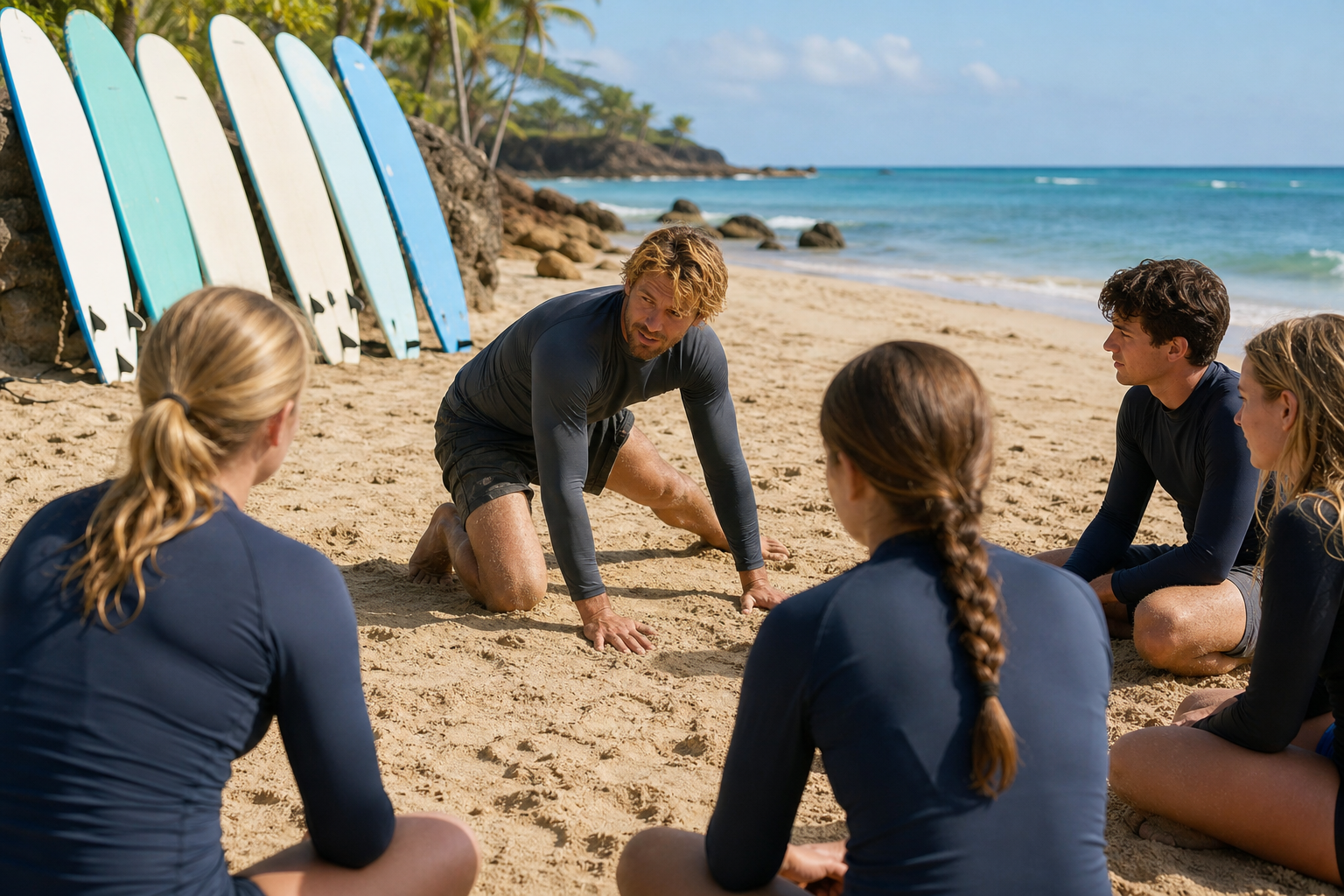
A coach walks students through the pop-up on dry sand before anyone enters the water.
Why Certified Surf Instructors Matter
The ocean changes constantly. Therefore, a coach needs more than good surfing skills. They must read currents, tides, and swell, and know how to respond if a student is in trouble.
Safety Credentials to Look For
- First aid and CPR certification.
- Ocean rescue or lifeguard training.
- A recognized surf coaching qualification, such as those supported by the International Surfing Association.
- Local knowledge of the break, including rip currents.
Requirements vary by country and region, so ask each camp what applies where it operates. The National Oceanic and Atmospheric Administration also publishes beach safety information worth reading before any session. To meet one team’s instructors, see who the expert instructors at Star Beach Boys Surf School are.
What a Typical Camp Day Looks Like
Good camps follow a predictable rhythm. As a result, students know what to expect and can focus on learning.
| Phase | What happens |
|---|---|
| Safety briefing | Conditions, hazards, hand signals, and etiquette. |
| Land drills | Paddling, pop-ups, stance, and balance on the sand. |
| Water session | Supervised wave practice with real-time coaching. |
| Debrief | Feedback, goals for the next session, and rest. |
For a closer look at how programs are organized, read what to know before you start a surf training program.
Beginner and Intermediate Surf Coaching Programs
For First-Timers
Beginners need patience, small waves, and clear instruction. Camps designed for them focus on paddling, timing, and falling safely. You can see the features of beginner surf camps at Star Beach Boys for an example.
For Surfers Ready to Progress
Intermediate students work on trim, turns, and reading the wave face. Coaches often use video review to show habits that are hard to feel in the moment. Likewise, personalized surf instruction helps address one student’s specific weak points, and ongoing training programs keep progress steady after a camp ends.
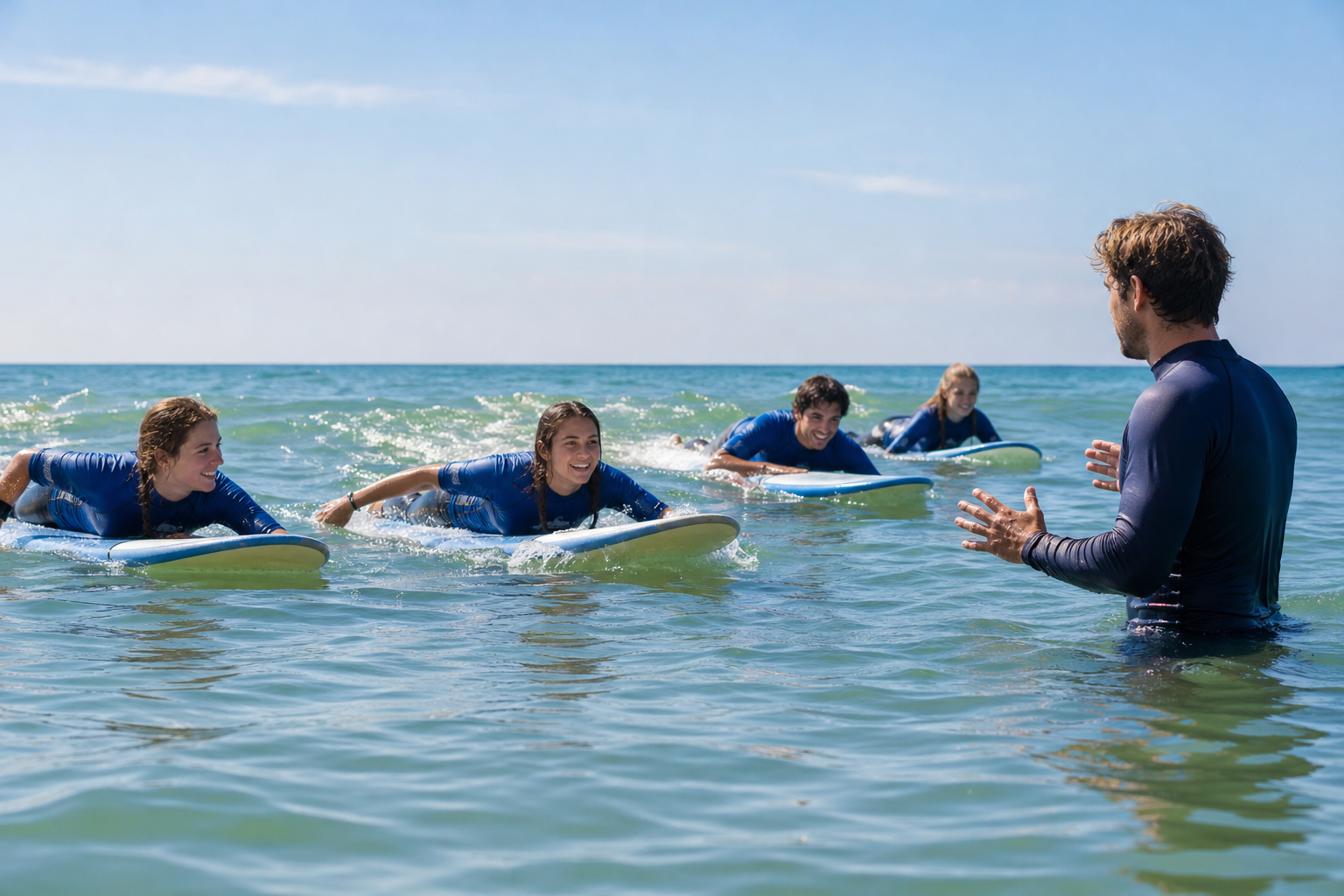
Small groups and in-water supervision keep beginner sessions both safe and productive.
How to Choose the Right Surf Camp
Use this five-step process to compare options.
- Define your level and goals, such as standing up or improving turns.
- Ask about coach credentials and how often they are renewed.
- Check student-to-coach ratios in the water.
- Review the daily structure for briefing, drills, practice, and feedback.
- Confirm the beach and how coaches adapt to changing conditions.
Avoid the most common mistakes: choosing on price alone, skipping credential checks, and joining a group above your level. Moreover, plan rest days, because surfing is physically demanding.
Surf Camps at Star Beach Boys
Star Beach Boys is a surf school and ocean experience company that offers expert-led lessons for all skill levels. Its programs serve tourists, families, and local residents, and they emphasize personalized guidance, student safety, and progressive skill building. Visit the Star Beach Boys website to ask about current options.
Frequently Asked Questions
What are surf training camps with certified coaches?
They are structured, multi-session surf programs led by instructors who hold recognized safety and coaching credentials. Students learn technique and ocean awareness in a supervised setting.
Do I need experience to join a surf camp?
No. Most camps welcome complete beginners, and many also offer intermediate groups. Tell the camp your level so you are placed correctly.
How long does it take to learn to stand up on a board?
Many beginners stand on small waves within their first few lessons, though it varies with fitness, conditions, and practice time. Coaching shortens the learning curve.
What certifications should a surf coach have?
Look for first aid and CPR certification, ocean rescue or lifeguard training, and a recognized surf coaching qualification. Requirements differ by country, so ask what applies locally.
How is a camp different from a single surf lesson?
A camp runs over several days with progressive goals, while a single lesson covers the basics once. Repetition and daily feedback make camps better for lasting improvement.
What should I bring to a surf camp?
Bring swimwear or a rash guard, reef-safe sunscreen, a towel, water, and a hat. Boards and basic gear are usually provided, but confirm with the camp.
Are surf camps safe for children?
They can be, when coaches are certified, groups are small, and conditions are chosen for young students. Ask about age policies and in-water supervision.
What is a good student-to-coach ratio?
Smaller is better, especially for beginners. Many schools aim for roughly four to six students per coach, but ask for the camp’s exact policy.
How fit do I need to be?
Basic swimming ability and moderate fitness are enough for most beginner camps. Paddling is tiring, so rest breaks are built into good programs.
What are common mistakes when booking a surf camp?
Common mistakes include choosing on price alone, skipping credential checks, and joining a group above your level. Overbooking sessions without rest days is another.
Can intermediate surfers benefit from coaching?
Yes. Coaches can fix timing, positioning, and turning habits that are hard to spot alone. Video review is often part of intermediate sessions.
How do I choose surf training camps with certified coaches?
Compare coach credentials, group size, daily structure, and how the camp handles conditions. Then match the program to your level and goals.
Conclusion
Surf training camps with certified coaches combine safety, structure, and personal feedback, which is why they help students progress faster than solo practice. Check credentials, confirm small groups, and look for a clear daily plan. With those points covered, you can paddle out with confidence and enjoy the learning process.