Surf lessons with multi-lingual instructors give travelers and local residents the chance to learn to ride waves without a language barrier getting in the way. Whether a student speaks English, French, German, Spanish, or Greek, having an instructor who can explain technique, safety rules, and ocean conditions in a familiar language makes the learning curve far less intimidating. At Star Beach Boys, this approach to coastal education sits at the center of how every session is run, because clear communication in the water matters just as much as a strong pop-up technique.
In particular, coastal destinations that attract international visitors benefit enormously from this kind of instruction. Tourists, vacationing families, and local beginners all arrive with different comfort levels, and a single shared language can quickly become a barrier when speed and clarity matter most, such as during a safety briefing before paddling out.
What Are Surf Lessons with Multi-Lingual Instructors?
Surf lessons with multi-lingual instructors are structured surfing classes taught by coaches fluent in two or more languages, so students receive instruction, safety briefings, and feedback in the language they understand best. As a result, confusion during critical water safety moments is reduced, and students tend to absorb technique more quickly.
This format differs from a standard lesson mainly in how corrections are delivered. For example, instead of a single translated phrase shouted over the sound of waves, a multilingual coach can quickly switch languages mid-sentence to make sure a correction lands clearly and immediately. Because Star Beach Boys serves a mixed audience of tourists, vacationers, families, and local residents, this flexibility has become a core part of the teaching method rather than an occasional accommodation.
Readers can learn more about the full range of programs by visiting Star Beach Boys directly, where lesson formats and scheduling details are outlined for visitors planning a coastal trip.
Why Multilingual Surf Instruction Matters for International Visitors
Surfing, as documented on Wikipedia’s overview of the sport, has grown from a regional Pacific tradition into a global pursuit practiced on coastlines around the world. The International Surfing Association estimates that surfing is now enjoyed by more than 35 million people across over 100 countries, and a large share of new participants are tourists trying the sport for the first time while on vacation.
Consequently, surf schools in popular coastal destinations regularly welcome guests who do not share a first language with their instructor. Multilingualism, as explained in general linguistic research summarized on Wikipedia’s entry on the topic, refers to the ability to use more than one language fluently, and instructors who hold this skill can adapt instantly to whoever is standing in front of them. In addition, this flexibility helps reduce the anxiety that often comes with trying a new physical activity in an unfamiliar country.

Clear, patient coaching is at the heart of surf lessons with multi-lingual instructors.
Benefits of Learning to Surf With Instructors Who Speak Your Language
Learning any physical skill involves a mix of listening, watching, and adjusting in real time. Therefore, removing the extra step of mental translation lets a student focus entirely on balance and timing rather than decoding instructions.
- Faster skill progression, since corrections are understood the first time they are given.
- Stronger safety outcomes, because warnings about currents or nearby surfers register instantly.
- Greater confidence in the water, particularly for first-time surfers in an unfamiliar environment.
- A more personal connection with the instructor, which often makes the overall experience more enjoyable.
Families in particular benefit from this setup, since children and parents may have different comfort levels in a second language. For a closer look at how lessons are adapted for younger surfers, see this guide on taking surf lessons as a family with kids of different ages.
How Star Beach Boys Structures Lessons for All Skill Levels
A well-organized lesson plan matters just as much as the instructor’s language skills. Below is the general process most multilingual surf lessons follow, from the first conversation on the sand to the final feedback session.
- Initial consultation and language match: the instructor assesses swimming ability, prior experience, and preferred language, then explains the plan and safety expectations before touching any equipment.
- Land-based technique training: on the sand, the instructor demonstrates the pop-up technique, which is the quick motion of moving from lying flat to standing on the board, repeating key cues until the movement feels natural.
- Guided shallow water practice: the instructor stays close in shallow, controlled waves, giving real-time verbal cues in the student’s chosen language while watching conditions closely.
- Feedback and progression planning: after the session, the instructor reviews what went well, flags specific improvements, and suggests a pace for future lessons.
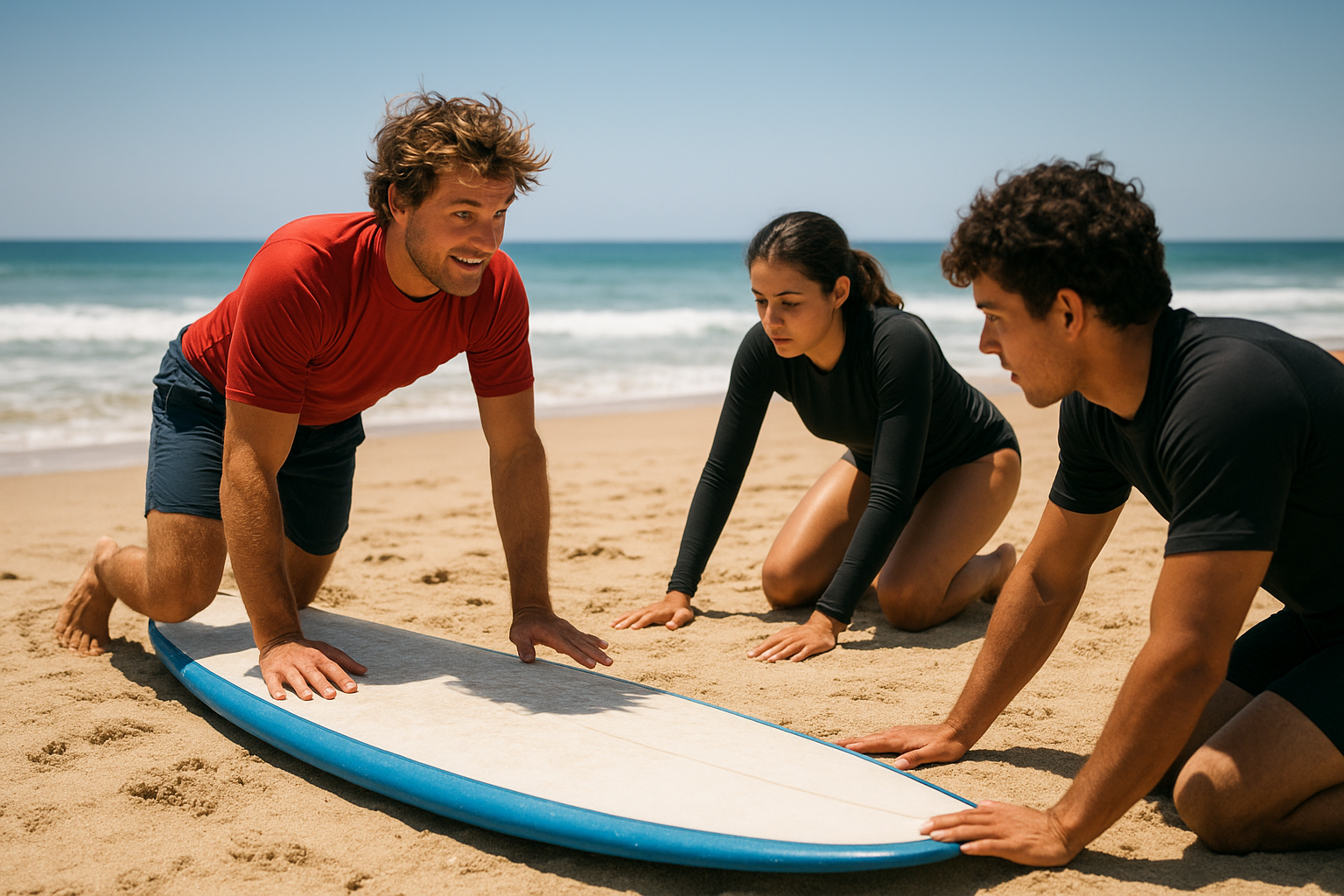
Land-based drills prepare every student before entering the water.
Safety and Communication in the Water
Above all, ocean safety depends on clear communication. Conditions such as rip currents can change quickly, and the National Oceanic and Atmospheric Administration (NOAA) notes that rip currents are a leading cause of water rescues along open coastlines, which is why instructors brief every student on how to recognize and respond to them before a single wave is attempted.
Similarly, multilingual instruction ensures that these warnings are never lost in translation. For a detailed look at the specific protocols used on the water, readers can review this breakdown of how student safety is maintained during every lesson.
Who Can Join Surf Lessons with Multilingual Instructors?
These lessons are designed for a wide range of people, including complete beginners, intermediate surfers refining technique, tourists on short trips, and local residents building a long-term hobby. Furthermore, age is rarely a barrier, since instructors routinely adjust pacing for children, teens, adults, and older beginners within the same program. Travelers curious about the broader range of coastal activities available nearby can also explore this comparison of surf schools offering well-rounded ocean experiences.
Finding the Best Value Surf School With Multilingual Coaches
Price matters, but it should never be the only factor. In contrast, the real value of a lesson comes from how much a student actually learns and how safely that learning happens. Group lessons tend to cost less per person, while private sessions offer faster, more individualized progress. Those comparing pricing structures across different providers may find this guide on finding the best value for surf lessons helpful before booking.
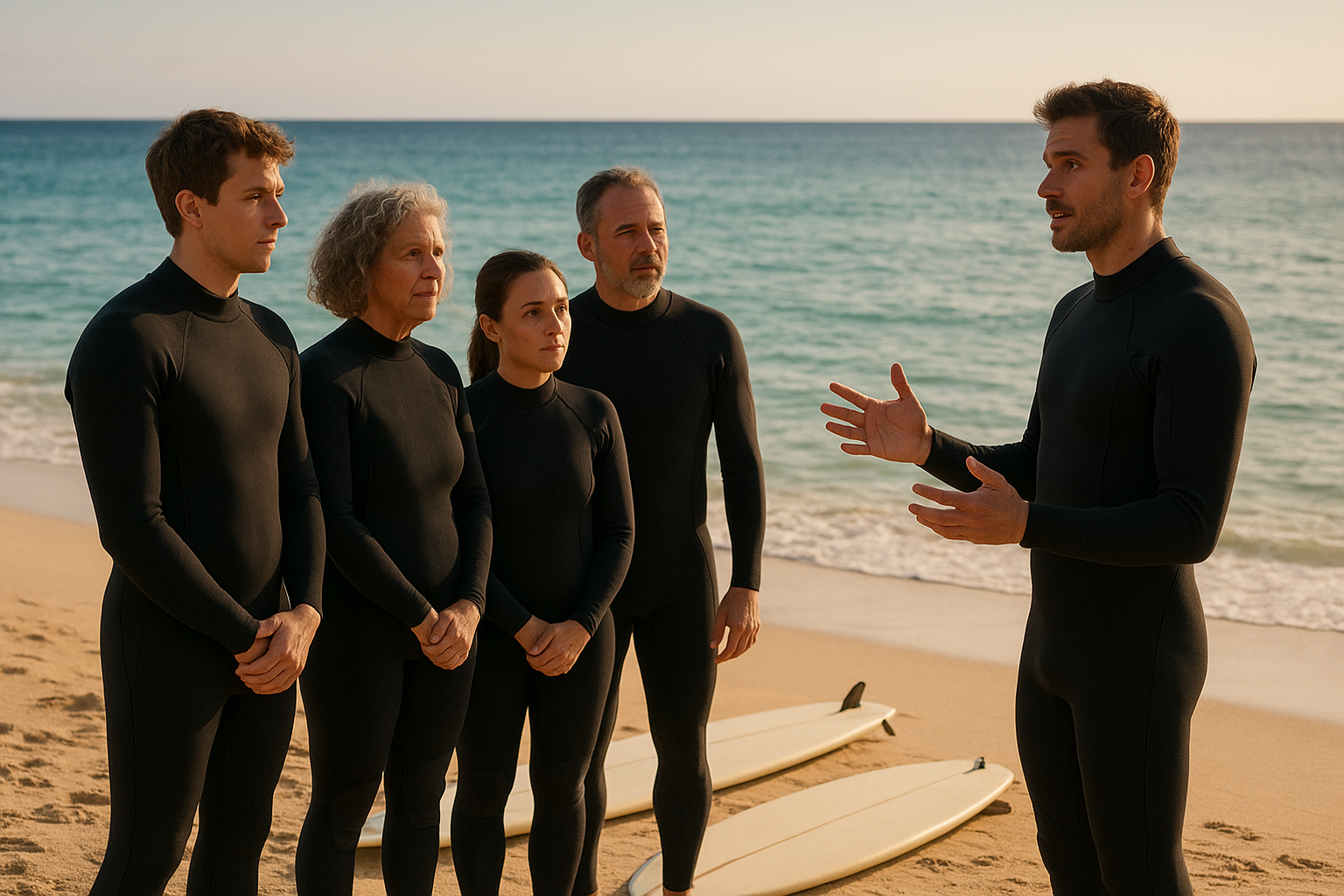
Safety briefings are delivered clearly before every group heads into the water.
Frequently Asked Questions About Surf Lessons with Multi-Lingual Instructors
What are surf lessons with multi-lingual instructors?
Surf lessons with multi-lingual instructors are coached sessions where the surf teacher speaks two or more languages, so students receive instruction and safety guidance in a language they fully understand. This reduces confusion and builds confidence faster than lessons taught in only one language.
How do multilingual surf instructors communicate safety instructions in the water?
Instructors use clear verbal cues, hand signals, and short phrases repeated in the student’s preferred language before and during each wave attempt. Above all, safety briefings on currents, board handling, and paddling etiquette are covered on land first, in the student’s own language, before anyone enters the water.
Why should beginners choose a surf school with multilingual instructors?
Beginners often feel nervous in new water conditions, and language confusion can add unnecessary stress. Choosing multilingual instruction means every correction, warning, and encouragement is understood immediately, which speeds up skill development.
How much do surf lessons with multilingual instructors typically cost?
Pricing varies by location, lesson length, and group size, but most beginner sessions range from a single private lesson rate to a lower per-person group rate. For exact pricing, reviewing a school’s value comparison page is the best way to compare options.
How long does it take to learn basic surfing skills?
Most beginners can stand and ride a wave within their first one to three lessons, though consistent balance and wave reading typically take several sessions to develop. Consequently, many surf schools recommend booking a short multi-day package for faster progress.
What languages do instructors at Star Beach Boys typically speak?
Instructors commonly communicate in English, along with additional languages that reflect the international visitors the school regularly serves, such as French, German, or other widely spoken European languages. This allows clear instruction for a broad range of tourists and local residents.
Can children take surf lessons with multilingual instructors?
Yes, many surf schools welcome children of various ages alongside adults, with instructors adjusting their language and teaching pace for younger learners. Families looking for age-appropriate coaching can review a dedicated family surf lesson guide for more detail.
What is the difference between private and group surf lessons?
Private lessons offer one-on-one attention and a pace tailored entirely to the student, while group lessons are more social and typically cost less per person. In contrast, private sessions usually see faster individual progress because the instructor’s full focus is on one surfer.
What should I bring to my first surf lesson?
Swimwear, a towel, sunscreen, and a reusable water bottle are the essentials for most beginner sessions. In addition, most surf schools provide the board, wetsuit if needed, and safety equipment as part of the lesson package.
What common mistakes do beginners make when learning to surf?
Common mistakes include standing up too early, positioning too far back or forward on the board, and paddling with the head down instead of watching the horizon. Multilingual instructors can correct these habits immediately and clearly, since the feedback is given in a language the student fully understands.
Are surf lessons with multi-lingual instructors safe for non-swimmers?
Reputable surf schools assess swimming ability before placing anyone in the water and use flotation aids, shallow water starts, and close instructor supervision for weaker swimmers. However, individuals with little to no swimming experience should disclose this upfront so the lesson can be adjusted safely.
What equipment is provided during surf lessons?
Most surf schools supply the surfboard, rash guard or wetsuit, and any required safety gear such as a leash, as part of the lesson fee. Therefore, students typically only need to bring personal items like sunscreen and swimwear.
How do I choose the best surf school for my skill level?
Look for a school with certified instructors, strong safety protocols, positive reviews, and lesson plans structured by experience level, from complete beginner to intermediate refinement. Similarly, checking whether instructors speak your language can make a noticeable difference in how quickly you learn.
Do multilingual instructors also teach ocean safety and etiquette?
Yes, ocean safety, including rip current awareness and surf etiquette such as right of way on a wave, is a core part of most structured surf lesson programs. Instructors typically cover this information in the student’s language before any water time begins.
What age groups can participate in surf lessons with multilingual instructors?
Surf lessons are commonly offered to participants from young children through adults and seniors, with instructors adjusting technique and pacing for each age group. As a result, families can often book lessons together even when skill levels and ages differ.
Final Thoughts
In summary, surf lessons with multi-lingual instructors remove one of the biggest obstacles facing new surfers: understanding instructions quickly enough to react safely in the water. From the first land-based briefing to the final feedback session, clear communication shapes every part of the learning process, and that clarity becomes even more valuable when families, tourists, and local beginners are learning side by side.
Ultimately, choosing a school built around this kind of instruction, such as Star Beach Boys, means every student gets guidance they can actually follow, in a language that feels natural, so they can focus on what matters most: catching the next wave with confidence.