Surf lessons tailored for fitness levels give every student, from first-time paddlers to seasoned athletes, a coaching plan that matches their real strength, stamina, and balance. At Star Beach Boys, instructors assess each guest before stepping into the water, then adjust pacing, wave selection, and technique drills accordingly. As a result, a retiree on a relaxed beach vacation and a triathlete chasing an adrenaline rush can both leave the lesson feeling confident instead of overwhelmed. Because fitness varies so widely among surfers, a one-size-fits-all lesson plan simply does not work for most people.
What Are Surf Lessons Tailored for Fitness Levels?
Surf lessons tailored for fitness levels are structured coaching sessions that adjust intensity, duration, and skill progression based on a student’s cardiovascular endurance, strength, flexibility, and swimming ability. Instructors use a short assessment, then assign techniques and wave conditions that match that profile. This keeps beginners safe while still challenging stronger swimmers.
In practice, this means two people booking the same group class might receive noticeably different coaching cues. For example, a student with limited physical fitness, meaning the body’s overall capacity for sustained exercise and exertion, may spend more time on land learning the pop-up motion before paddling out. Meanwhile, a student with strong cardiovascular endurance might head straight into deeper water to practice wave timing. Similarly, this approach is already used in the surf programs designed for all fitness levels at Star Beach Boys.
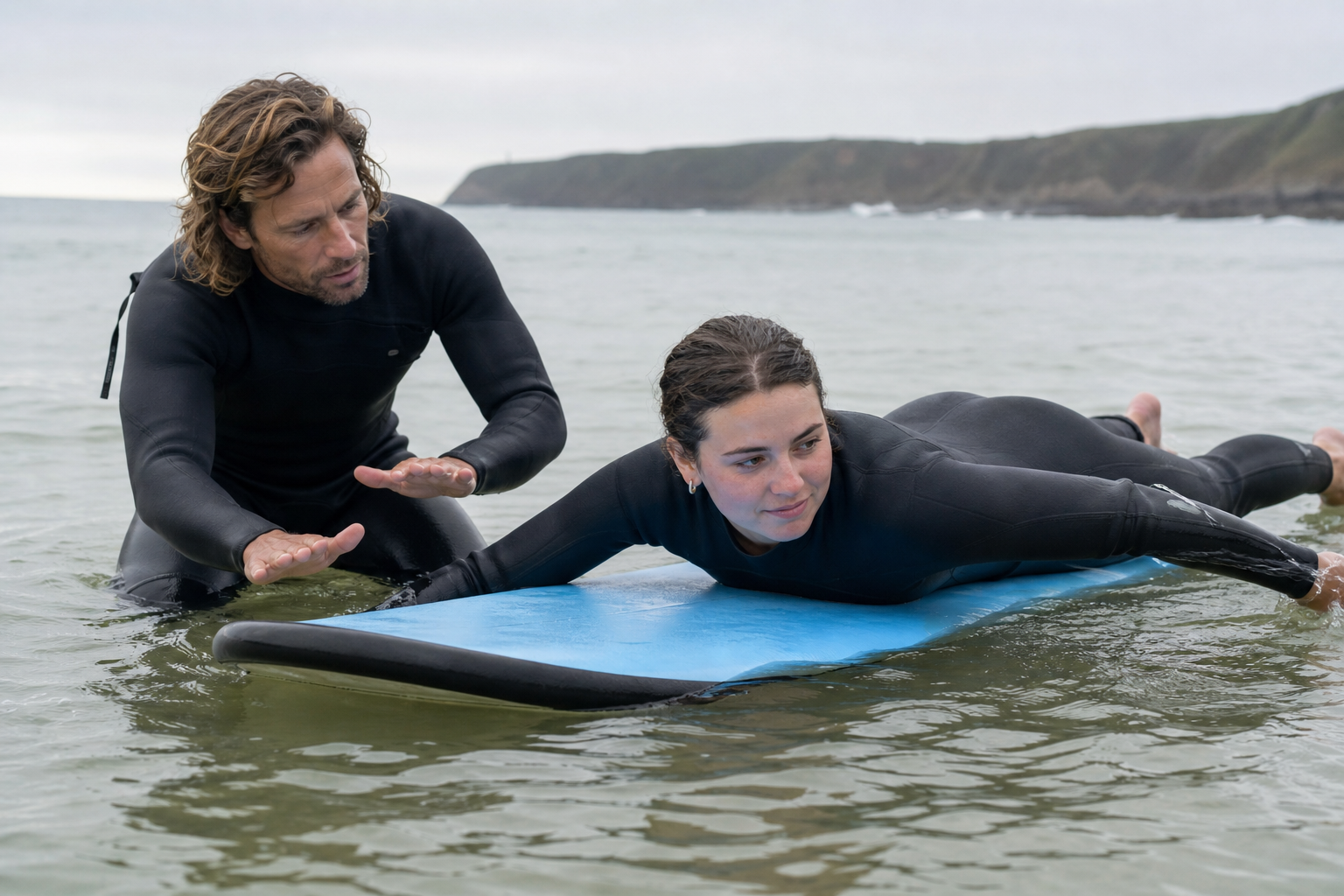
A one-on-one check helps instructors build surf lessons tailored for fitness levels from the very first minute.
Why Fitness-Based Surf Instruction Matters
Fitness-based surf instruction matters because the ocean does not adjust itself to a student’s energy level. In fact, the Centers for Disease Control and Prevention reports that a large share of U.S. adults fall short of recommended weekly physical activity, which means many first-time surfers arrive with lower baseline stamina than they expect. Consequently, pushing every student through the same intense paddling drill can lead to exhaustion, poor technique, or an unsafe wipeout. In contrast, a fitness-aware lesson spreads effort across shorter intervals, allowing the body to recover between waves.
Above all, matching intensity to ability protects against fatigue-related mistakes, which are a leading cause of minor surf injuries among beginners. For further reading on activity guidelines, the CDC’s physical activity guidance for adults offers helpful context on baseline fitness expectations.
How Surf Schools Assess Your Fitness Level
Before assigning a lesson plan, instructors typically follow a short, repeatable process. The following steps outline how that assessment usually unfolds.
- Initial Fitness Consultation: Discuss your swimming comfort, exercise habits, past injuries, and any board sports experience with your instructor before entering the water.
- On-Land Warm-Up and Mobility Check: Complete a short warm-up and pop-up practice on the sand so the instructor can observe balance, flexibility, and core strength in a low-pressure setting.
- Water Confidence and Paddling Assessment: Paddle a short distance in shallow water while the instructor watches stamina, breathing control, and comfort level to confirm the right starting point.
- Personalized Lesson Plan and Wave Selection: Receive a tailored plan that sets board size, wave size, session length, and rest breaks according to the fitness profile gathered in the earlier steps.
Surf Programs for Different Fitness Levels
Specifically, Star Beach Boys organizes coaching into a few broad tracks so that each student lands in the right group from the start.
Beginner-Friendly Surf Lessons
Beginner tracks focus on short paddling bursts, gentle whitewater waves, and plenty of rest between attempts. Therefore, even students with limited stamina can enjoy steady progress without feeling rushed. These sessions pair well with the structured guidance found in the fast-track lessons built for athletic beginners for those who want quicker progression.
Intermediate and Advanced Coaching
Intermediate and advanced students spend more time paddling beyond the break, reading swell patterns, and working on turns. As a result, these sessions demand higher cardiovascular output and are scheduled with longer water time and fewer land breaks.
Family and Senior-Friendly Options
Families and older guests often prefer slower-paced sessions with softer boards and shallower water. In particular, these groups benefit from instructors who understand joint mobility and pacing, a theme covered in depth in the guide to surfing for all fitness levels.
| Fitness Level | Typical Session Length | Focus Area |
|---|---|---|
| Beginner / Low Activity | 90 minutes | Balance, gentle whitewater paddling |
| Moderate Fitness | 2 hours | Pop-up timing, short wave rides |
| Athletic / Advanced | 2 to 2.5 hours | Wave selection, turning technique |
Benefits of Choosing Surf Coaching Matched to Your Fitness
Choosing a lesson that respects your current fitness brings several clear advantages. Specifically:
- Lower risk of fatigue-related falls or poor technique during paddling.
- Faster skill progress because effort is matched to ability rather than wasted on overly hard drills.
- Greater enjoyment, since students are challenged without being overwhelmed.
- Safer outcomes for families, seniors, and anyone with pre-existing health considerations.
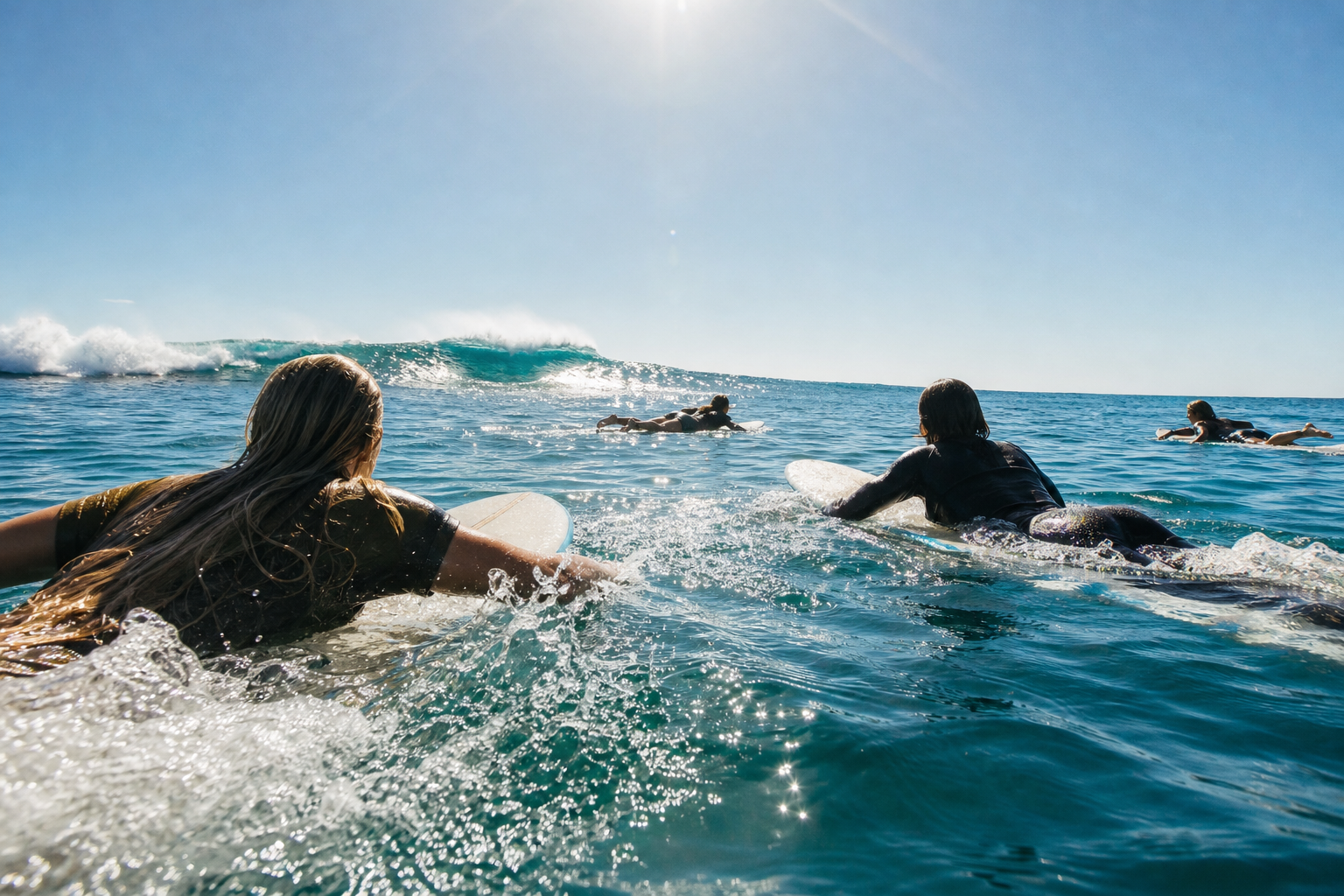
Stronger paddlers move into deeper water sooner once their coaching plan reflects their fitness.
Safety Considerations for Every Fitness Level
Safety remains the top priority regardless of ability. For instance, instructors continuously watch rip currents, swell size, and student fatigue throughout each session. In addition, students with lower stamina are kept closer to shore, while stronger swimmers may be guided slightly further out under close supervision. This careful, ongoing monitoring is explained further in the dedicated guide on ocean safety skills during surf lessons. For general background on wave dynamics and safety, Wikipedia’s overview of surfing is also a useful reference.
How to Choose the Right Surf School for Your Fitness Level
When comparing surf schools, ask whether instructors perform a real fitness conversation before the lesson starts, rather than placing everyone into a generic group. Furthermore, consider whether private coaching might suit your situation better, since one-on-one attention allows pacing to shift in real time. The comparison in private versus group surf lessons explains how personalized sessions can accelerate progress for students with specific fitness needs. You can also review current programs directly at Star Beach Boys before booking.
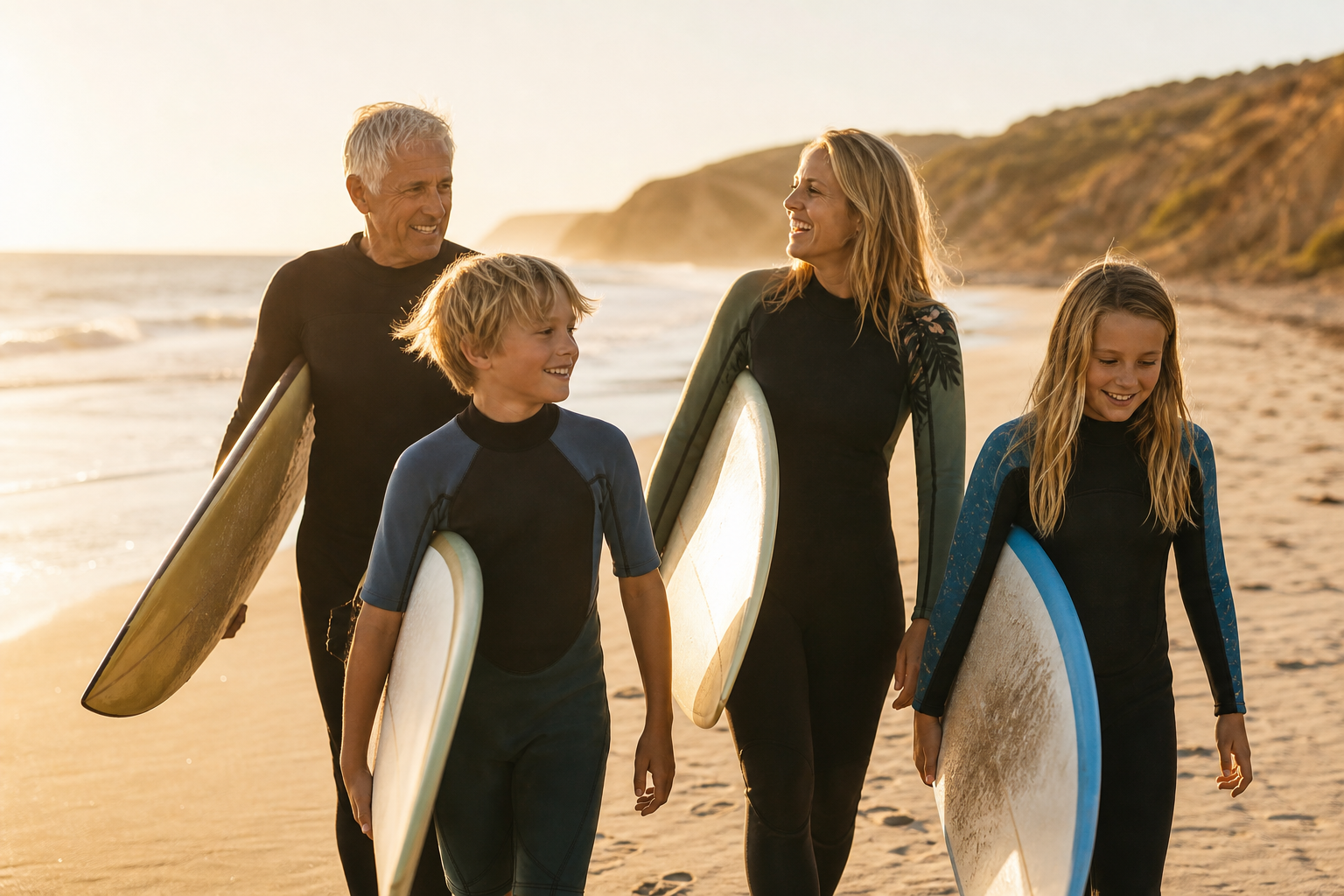
Family sessions often combine lower-intensity pacing with plenty of encouragement.
Frequently Asked Questions About Surf Lessons Tailored for Fitness Levels
What are surf lessons tailored for fitness levels?
Surf lessons tailored for fitness levels are coaching sessions that adjust pacing, drills, and wave selection based on a student’s strength, stamina, and swimming ability. Instructors assess each surfer before the lesson begins and build a plan around that profile.
How long does a typical fitness-based surf lesson last?
Most fitness-based lessons run between 90 minutes and two hours, including warm-up, water time, and cool-down. Higher-fitness students may spend more time actively paddling, while beginners spend extra time on land-based preparation.
Do I need to be a strong swimmer to take surf lessons?
You do not need to be an elite swimmer, but basic comfort in water is important for safety. Instructors adjust the depth, wave size, and board choice for swimmers who are less confident in the ocean.
What is the best age to start surfing lessons?
There is no single best age; children as young as seven and adults well into their seventies can learn with the right adjustments. Instructors modify board size, wave conditions, and session length to suit each age group.
How much do private surf lessons cost compared to group classes?
Private lessons typically cost more than group classes because they include one-on-one coaching and a fully personalized pace. Many surfers find the faster progress worth the extra cost, especially when fitness levels vary widely within a group.
Can older adults or seniors take surf lessons safely?
Yes, seniors can surf safely when lessons account for joint mobility, balance, and cardiovascular capacity. Instructors often use softer boards, gentler waves, and shorter paddling distances for older students.
What should I eat or do before a surf lesson for better stamina?
A light meal with carbohydrates and water about an hour beforehand helps maintain energy during paddling. Avoiding heavy meals and dehydration are two of the most common mistakes new surfers make.
How many lessons does it take to stand up on a surfboard?
Many beginners stand up on their first lesson with instructor assistance, though consistent balance usually takes three to five sessions. Progress depends heavily on fitness, prior board sports experience, and wave conditions.
What safety equipment is used during surf lessons?
Standard equipment includes a leash, a soft-top or foam board suited to skill level, and sometimes a rash guard for sun and board friction protection. Instructors also monitor ocean conditions continuously throughout the lesson.
Is surfing a good workout for improving overall fitness?
Surfing works the shoulders, core, and legs while also building cardiovascular endurance through repeated paddling. Many students notice improved balance and stamina after just a few sessions.
What’s the difference between beginner and intermediate surf coaching?
Beginner coaching focuses on paddling technique, pop-up mechanics, and wave reading in gentle conditions. Intermediate coaching shifts toward wave selection, turning, and building stamina for longer sessions in more dynamic surf.
How do I know which surf school fitness program is right for me?
Look for a school that performs an honest fitness and comfort assessment before matching you to a program. A good fit should feel challenging but manageable, never overwhelming or unsafe.
Final Thoughts
Ultimately, surf lessons tailored for fitness levels remove the guesswork from learning to ride waves, whether you are a cautious beginner, a returning intermediate, or a grandparent joining the family on vacation. Because instructors assess stamina, strength, and comfort before the first paddle, each session stays both safe and genuinely enjoyable. In addition, the right program adapts as your fitness improves, so progress continues lesson after lesson. Above all, choosing a school that takes fitness seriously, like the programs at Star Beach Boys, gives every surfer the best chance of standing up, catching a wave, and wanting to come back for more.