Surf lessons focusing on ocean safety skills give beginners and intermediate surfers the confidence to handle real ocean conditions, not just stand up on a board. Whether you are a first-time visitor or a parent signing up the whole family, understanding how waves, currents, and tides behave is just as important as balance and paddling technique. In this guide, we break down what safety-focused surf instruction looks like, why it matters, and how a structured lesson plan protects beginners from the ocean’s most common hazards.
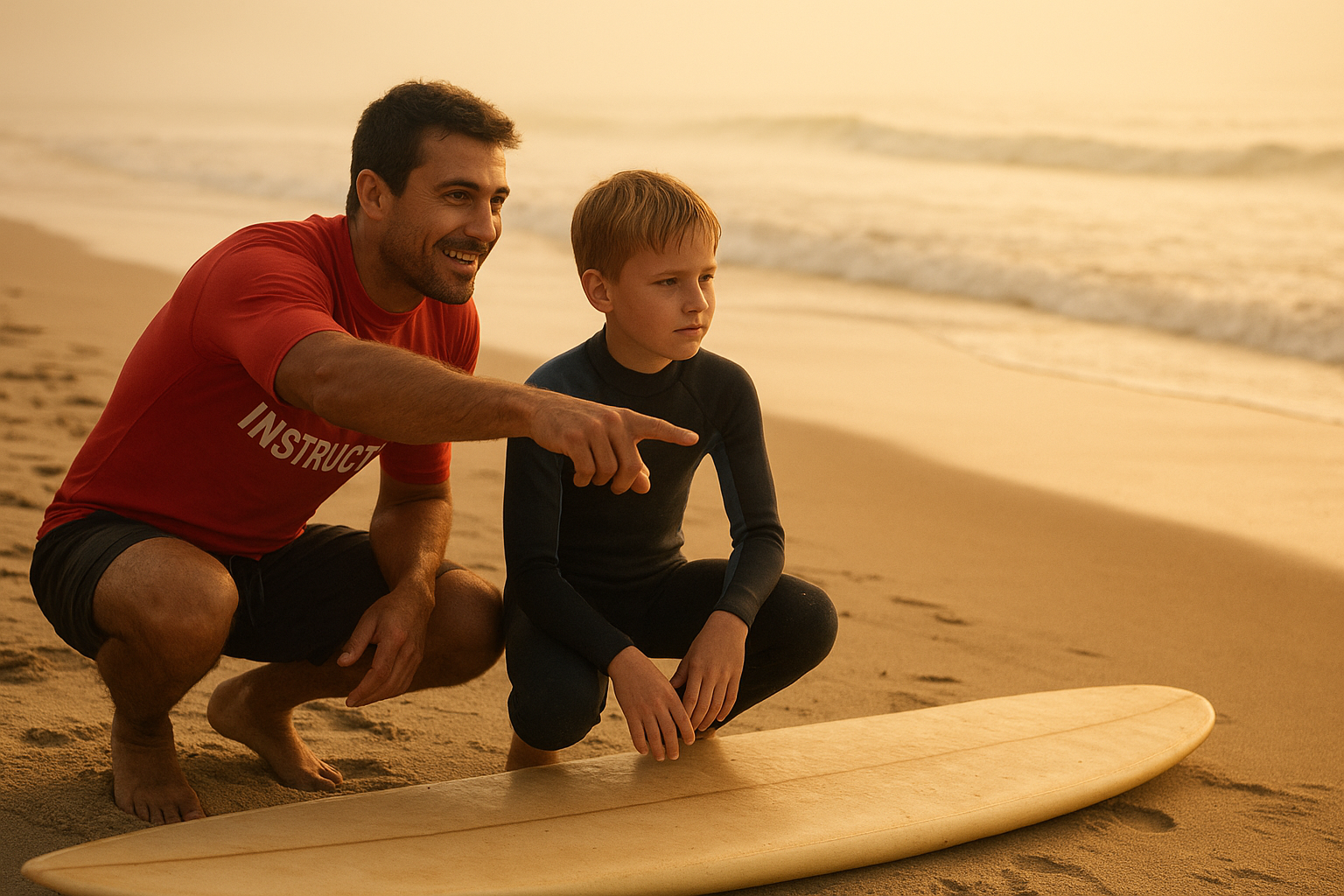
Clear communication before paddling out is a core part of surf lessons focusing on ocean safety skills.
What Are Surf Lessons Focusing on Ocean Safety Skills?
Surf lessons focusing on ocean safety skills are structured surf classes that combine board-riding technique with hands-on training in rip current awareness, wave reading, and self-rescue. Rather than teaching only stance and paddling, instructors dedicate real lesson time to recognizing dangerous conditions, understanding beach flag systems, and practicing calm responses so students can surf independently long after the lesson ends.
Consequently, these lessons look different from a casual “stand-up-and-go” surf class. For instance, a student might spend the first ten minutes on the sand simply learning to identify a rip current, a narrow, fast-moving channel of water flowing away from shore, as defined by Wikipedia’s overview of rip currents. In addition, instructors often reference tide charts and local wave forecasts before every session begins.
Why Ocean Safety Training Matters for Every Surfer
Above all, the ocean does not behave like a swimming pool. Conditions shift within minutes as tides turn, wind picks up, or a new swell arrives. As a result, surfers who only learn board mechanics are often unprepared when real hazards appear.
According to the United States Lifesaving Association, rip currents are responsible for the vast majority of lifeguard rescues performed at surf beaches each year. Similarly, the National Oceanic and Atmospheric Administration notes that dozens of drowning deaths in the United States are linked to rip currents annually. Therefore, ocean safety training is not an optional add-on; it is the foundation that makes surfing genuinely enjoyable rather than risky. For a deeper breakdown of these risks, this ocean safety course guide covers hazard types in more detail.
Core Water Safety Skills Every Beginner Should Learn
In particular, a well-designed curriculum covers several recurring skills regardless of location or student age. These skills build on each other, so instructors usually introduce them in a specific order.
- Identifying rip currents by spotting calmer, murkier channels of water between breaking waves.
- Reading wave sets to know when a lull offers a safer window for paddling out.
- Understanding beach flag warning systems used by lifeguards at most public beaches.
- Practicing self-rescue, including how to stay calm and float if caught in a current.
- Learning proper board etiquette to avoid collisions with other surfers in the lineup.
How to Read Rip Currents and Wave Patterns
Specifically, instructors teach students to scan the water from an elevated vantage point before entering. Darker, choppier patches that interrupt the normal breaking pattern of waves usually indicate a rip current. For additional reference material, NOAA’s rip current safety resources offer diagrams that are useful to review before your first lesson. Meanwhile, wave sets tend to arrive in groups followed by a calmer lull, and recognizing that rhythm helps beginners time their paddle-out safely rather than fighting through a breaking wave.
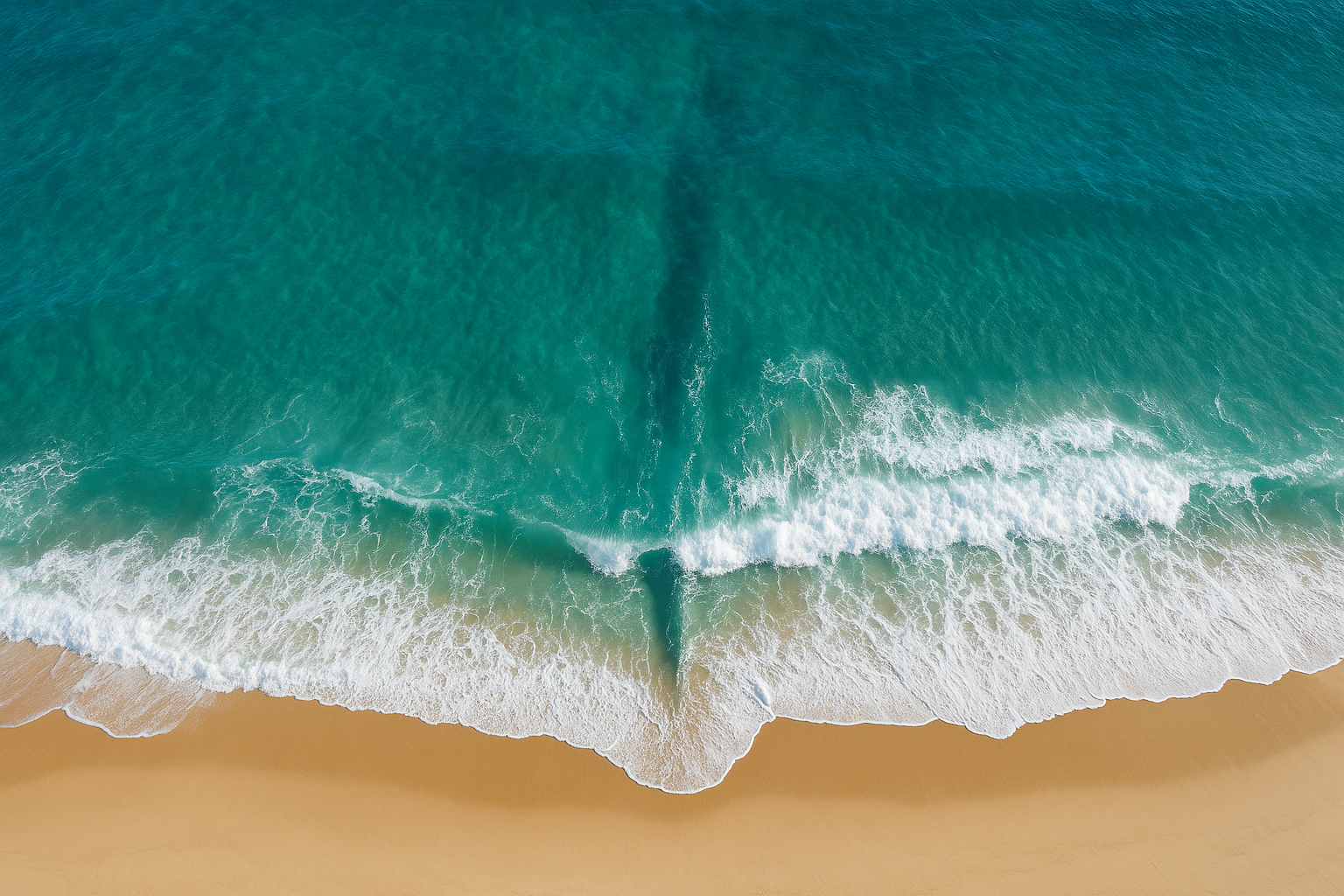
Recognizing a rip current from shore is one of the first water safety skills taught in a beginner lesson.
What to Expect in a Safety-Focused Surf Lesson
Although every surf school structures lessons slightly differently, most safety-focused programs follow a similar sequence. Below is a typical progression you can expect:
- Instructors start every session with a beach safety briefing that covers current wave height, rip current locations, tide stage, and posted warning flags before anyone enters the water.
- Students practice paddling position, pop-up technique, and board control on the sand so muscle memory forms before facing the added challenge of moving water.
- In waist-deep water, instructors teach students to judge wave sets, hold their board correctly in whitewater, and recognize the telltale signs of a developing rip current nearby.
- Students catch their first waves with an instructor positioned close by, offering real-time correction on positioning, timing, and how to bail out safely if a wave turns dangerous.
- As confidence grows, students surf with reduced assistance while the instructor watches from shore, followed by a debrief covering what safety skills to keep practicing on future visits.
For a closer look at how this progression builds long-term confidence, this guide on riding waves confidently walks through the full student journey from first lesson to independent surfing.
Choosing a Surf School With Strong Safety Standards
Naturally, not every surf school treats safety instruction with the same seriousness. When comparing options, look for certified instructors, low student-to-teacher ratios, and a curriculum that explicitly names ocean hazards rather than focusing only on technique. In addition, it is worth asking how instructors monitor conditions throughout the day, since surf and tide conditions can change within a single session.
Furthermore, beginner-friendly schools typically publish clear guidance on what to expect before you ever book a lesson. This beginner surf safety tips guide is a useful starting point, while this breakdown of student safety practices on the water explains the specific measures one school uses to protect every skill level.
Surf Lessons at Star Beach Boys: Ocean Safety in Practice
As an example, Star Beach Boys structures its programs around exactly this philosophy. The school pairs personalized coaching with safety-first fundamentals, guiding complete beginners and returning surfers alike through progressive skill-building in the water. Because the team is made up of highly trained instructors familiar with local surf and tide patterns, students receive guidance that reflects the specific conditions of the day rather than generic instruction.
In particular, families, tourists, and local residents looking to build real ocean confidence can review this Waikiki surf lesson and ocean safety training guide for details on how lessons are structured in that location. You can also visit Star Beach Boys directly to compare class sizes, instructor experience, and available lesson times before booking.
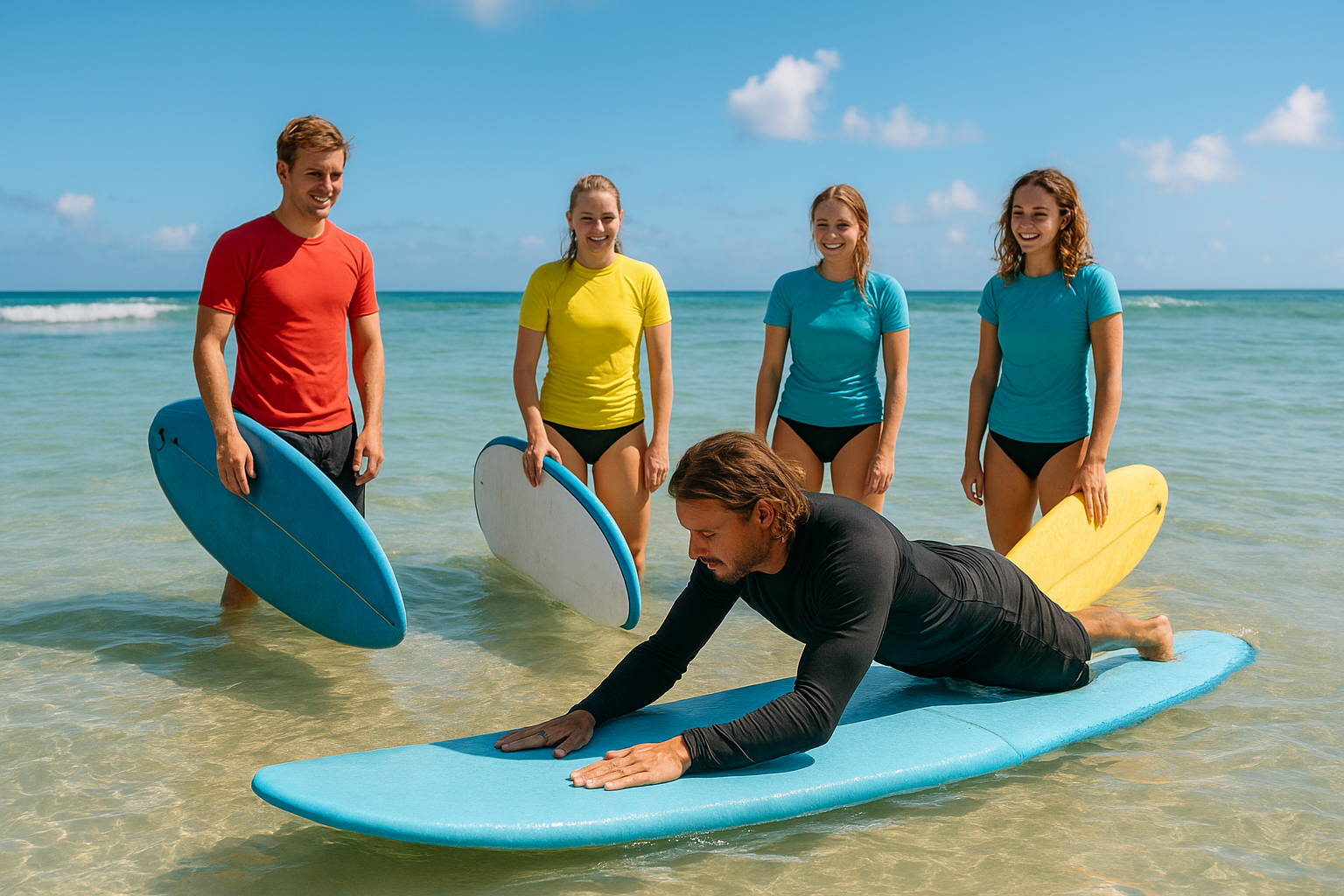
Small group sizes allow instructors to keep a close eye on every student’s safety during the lesson.
Frequently Asked Questions
What are surf lessons focusing on ocean safety skills?
Surf lessons focusing on ocean safety skills are structured classes that teach rip current awareness, wave reading, and self-rescue alongside standard surfing technique. They prepare students to surf independently and respond calmly to changing ocean conditions.
How long does it take to learn basic ocean safety skills?
Most beginners grasp the core fundamentals, such as spotting rip currents and reading wave sets, within one to two lessons. Building full confidence usually takes three to five sessions of consistent practice.
What is a rip current and why is it dangerous?
A rip current is a narrow, fast-moving channel of water flowing away from shore, and it is dangerous because it can quickly pull swimmers and surfers away from the beach. The United States Lifesaving Association notes that rip currents cause the majority of beach rescues nationwide.
Do surf lessons teach CPR or rescue skills?
Many safety-focused surf schools cover basic self-rescue and signaling for help, though formal CPR certification is usually a separate course. Instructors are typically trained in water rescue and remain close by during every lesson.
What age can children start safety-focused surf lessons?
Most surf schools welcome children starting around age six or seven, provided they are comfortable in the water. Younger children often begin with shallow-water balance drills before progressing to wave riding.
How much do surf lessons with ocean safety training typically cost?
Group surf lessons with safety instruction generally range from 70 to 120 dollars per person, while private lessons cost more due to one-on-one attention. Package deals for multiple sessions often lower the per-lesson price.
What should I bring to my first surf safety lesson?
Bring swimwear, reef-safe sunscreen, a towel, and water to stay hydrated between sets. Most surf schools provide the board, leash, and rash guard as part of the lesson.
How are rip currents different from regular waves?
Regular waves push water toward the shore, while rip currents pull water away from the beach through a narrow channel. Instructors teach students to identify the calmer, murkier strip of water that often signals a rip current.
What is the biggest mistake beginner surfers make with ocean safety?
The most common mistake is swimming or paddling directly against a rip current, which quickly exhausts a surfer. Safety-focused lessons teach swimmers to paddle parallel to shore until free of the current’s pull.
Can surf lessons help with general swimming confidence?
Yes, surf lessons build comfort in open water, improve breath control, and strengthen swimming endurance over time. Many students report feeling more confident in the ocean even outside of surfing.
What safety equipment do instructors use during lessons?
Instructors commonly use soft-top foam boards, ankle leashes, and rash guards to reduce injury risk for beginners. Many also carry rescue tubes or buoys and monitor conditions using posted beach flag warnings.
How do I choose a surf school with strong safety standards?
Look for certified instructors, small student-to-teacher ratios, and a curriculum that explicitly covers ocean hazards, not just board technique. Reading reviews and asking about rescue training can also reveal how seriously a school treats safety.
Final Thoughts
Ultimately, surf lessons focusing on ocean safety skills turn a thrilling but unpredictable environment into one you can navigate with real confidence. From spotting rip currents to reading wave sets and practicing self-rescue, these skills matter just as much as learning to stand on a board. Therefore, whether you are planning a family vacation activity or looking to finally learn to surf as a local resident, choosing a program that prioritizes safety alongside technique will serve you far beyond your first lesson.