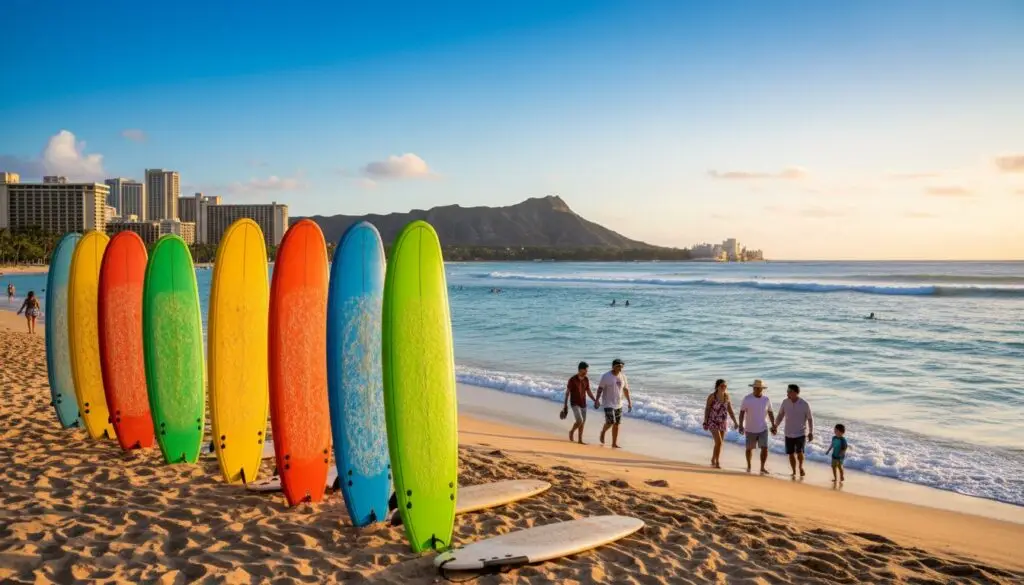
Surf lesson prices typically range from $25 to $250 depending on location, lesson format, and what is included — and knowing that range before you book can save you a significant amount of money. A surf lesson is a structured, instructor-led session in the ocean designed to teach you how to ride waves safely. Understanding exactly what drives surf lesson prices — and what to look for when comparing schools — ensures you get real value, not just the lowest headline number.
In this complete guide, we break down average costs by lesson type, format, and destination worldwide. Furthermore, we explain what is included in a typical lesson fee, reveal the warning signs of a school cutting corners, and share proven strategies to reduce your spend without sacrificing quality or safety.
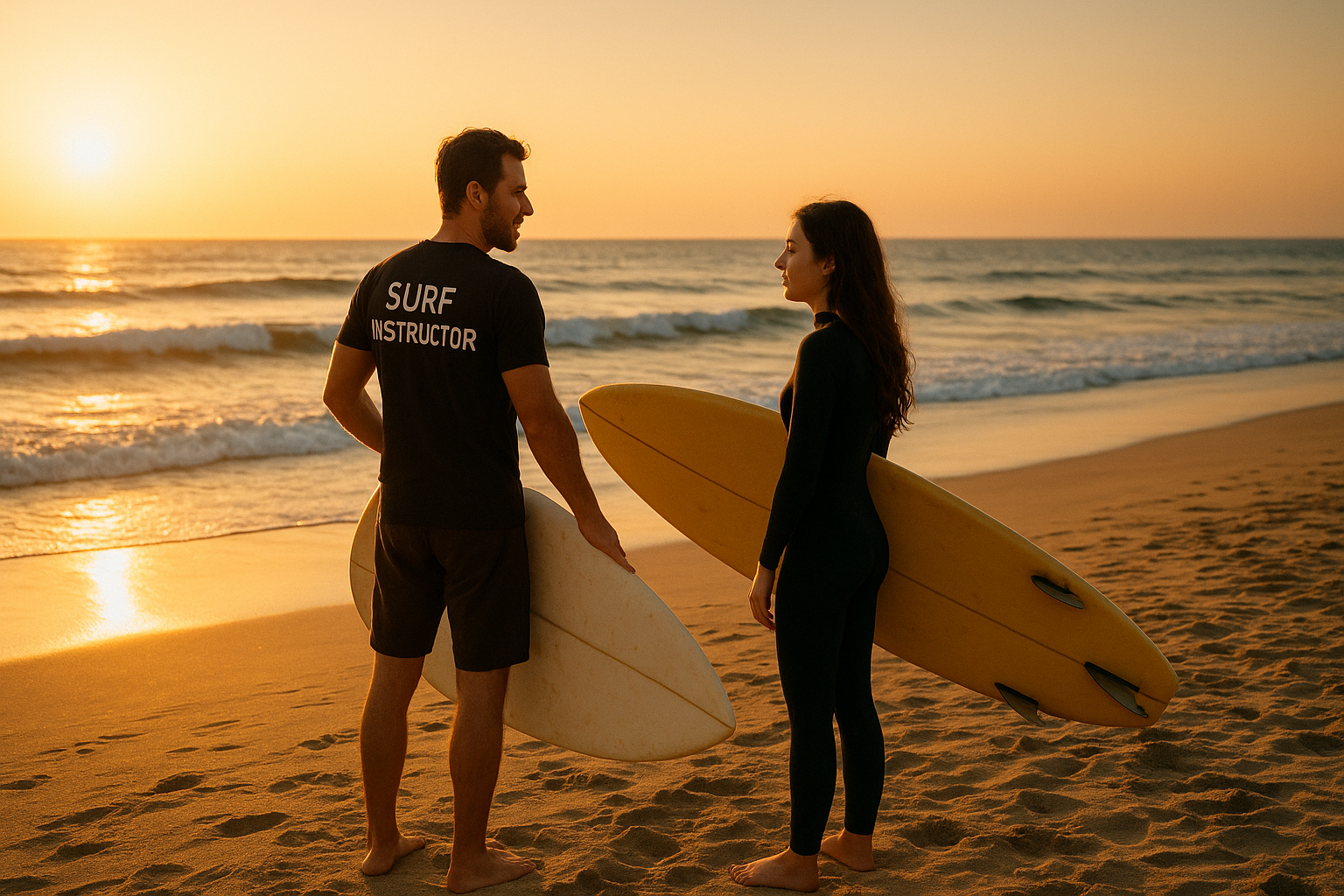
Understanding surf lesson prices before you book helps you choose the right school and format for your goals.
What Do Surf Lesson Prices Actually Include?
Before comparing numbers across schools, it is essential to understand what a typical lesson fee covers. Most reputable surf schools bundle several elements into a single price — so you are rarely paying for instruction alone. In contrast, some schools advertise a low headline rate and then charge separately for every additional item.
- Surfboard rental — almost always a wide, stable foam longboard ideal for beginners. Foam boards (also called “foamies”) are forgiving and buoyant, making them the safest learning tool.
- Wetsuit or rash guard — provided depending on water temperature. A wetsuit (a neoprene suit that traps body heat) is standard in cooler destinations; a rash guard (a lightweight UV-protective top) is common in the tropics.
- Professional instruction — including a land-based safety briefing, technique coaching, and in-water guidance from a certified instructor.
- Liability insurance — many accredited schools include basic coverage in the fee. Always confirm this before you book.
- Photos or video review — offered as an add-on at most schools, or included at premium providers. Video analysis is particularly valuable for intermediate students working on technique.
- Water safety briefing — a non-negotiable component at any reputable school covering rip currents, right of way, and board handling in surf.
Therefore, when two schools appear to offer different rates, always verify exactly what each price includes. A $40 lesson that charges board rental and wetsuit hire separately can easily exceed the cost of an $80 all-inclusive session. Consequently, the true cost comparison requires you to add up every component before deciding.
Lesson Length: How Duration Affects the Price
Most standard surf lessons run between 90 minutes and 2 hours. This typically includes a 20- to 30-minute land-based briefing followed by 60 to 90 minutes in the water. However, some budget schools offer 60-minute sessions — these are shorter than the industry standard and may limit how much water time you actually receive.
Specifically, look for schools that clearly state their in-water time separately from the total session length. A 2-hour booking that includes a 45-minute briefing gives you less surf time than a 90-minute session with a 20-minute briefing. For this reason, total water time is a more meaningful comparison metric than total session length alone.
Surf Lesson Prices by Format: Group vs. Private vs. Semi-Private
The single biggest pricing variable is the lesson format. Whether you book a group session, a semi-private lesson, or a one-on-one private session determines not only the cost but also the type of experience you receive. Below is a clear breakdown of each format and what you can expect to pay.
Group Lessons
$25 – $100 per person. Groups typically have four to eight students per instructor.
Best for: beginners, social learners, and budget-conscious travellers.
Limitation: less individual feedback. However, watching other beginners make and correct mistakes is genuinely useful as a learning tool.
Semi-Private Lessons
$75 – $150 per person. Two to three students share one instructor.
Best for: couples, friends travelling together, or anyone who wants more individual attention without the full private price.
Often the best overall value. Furthermore, sharing a session with one other person rarely compromises instruction quality.
Private Lessons
$80 – $250 per hour. One-on-one with a dedicated instructor.
Best for: intermediate surfers refining technique, travellers with limited time, or anyone with specific goals.
The fastest route to skill progression. As a result, many returning surfers prefer private sessions even if they learned in a group.
In practice, the semi-private format is the one most commonly overlooked by first-time bookers. Similarly to how a personal trainer costs less per person when shared between two people, the semi-private lesson splits instructor time efficiently without significantly reducing quality. For couples or pairs of friends, it is almost always the smarter financial choice.
Average Surf Lesson Prices by Destination Worldwide
Location is the second most powerful driver of cost differences in surf lesson pricing. According to surfing’s global growth as a sport, schools now operate on every inhabited continent — and regional economics, local wage levels, and tourism demand heavily influence what schools charge. For detailed breakdowns on how Hawaii compares to other destinations, see this Hawaii lesson costs guide.
However, a lower destination price does not automatically mean lower instruction quality. When comparing surf lesson prices across destinations, consider instructor experience and local costs — many instructors in Bali, Morocco, and Sri Lanka have surfed their local breaks for 15 to 20 years and provide genuinely expert coaching. Additionally, lower accommodation costs in those regions mean your total trip budget stretches further — allowing more lessons per dollar spent overall.
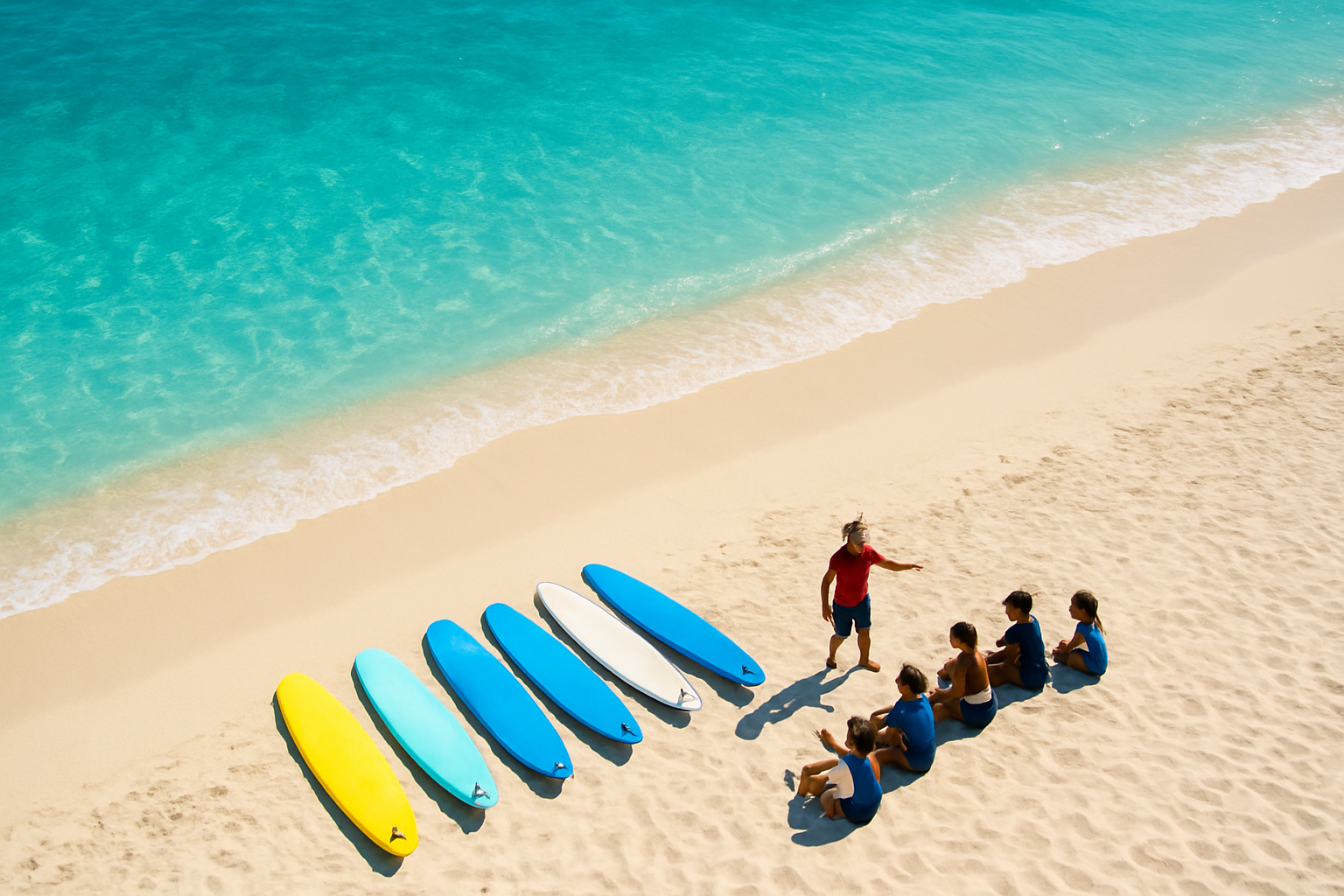
Surf schools in tropical destinations often offer lower prices while maintaining high instruction quality.
What Skill Level Are You? How Experience Changes Pricing
Not all surf lessons are designed for the same student. Specifically, the skill level you are targeting affects both the price and the format that makes the most sense for your goals.
Beginner Surf Lessons
Beginner lessons are the most widely available and typically the most affordable format. These sessions focus on paddling technique, pop-up mechanics (the motion of jumping from lying flat to standing), wave reading, and water safety. Group sessions are ideal at this stage because the fundamentals are identical for every beginner in the water.
Most beginners can stand up on a surfboard within one or two lessons under proper instruction. As a result, three to five consistent sessions usually lead to riding small, unbroken waves (called “whitewash”) independently.
Intermediate Surf Lessons
Intermediate lessons focus on transitioning from whitewash to unbroken “green” waves, improving paddling efficiency, and learning to read line-ups (the area where surfers wait for waves). These sessions are almost always priced higher than beginner group classes because they typically require smaller groups or private sessions to address individual technical issues.
Furthermore, intermediate surfers often benefit most from video analysis. Consequently, many schools include this as standard in intermediate private packages — so the higher price reflects real added value.
Advanced Coaching Sessions
Advanced coaching — covering manoeuvres like bottom turns, cutbacks, and tube riding — is almost exclusively delivered as a private session. Prices at this level typically range from $150 to $300+ per session, particularly if the coach is a competition-level surfer or former professional. These sessions often include detailed video review and wave selection coaching.
Multi-Lesson Packages, Surf Camps, and Clinics
For anyone serious about learning to surf — rather than just ticking it off a bucket list — multi-lesson packages represent far better value than individual sessions. Most schools offer bundles of three, five, or ten lessons at a 15 to 30 percent discount compared to single-session pricing. Additionally, consistent instruction across multiple sessions accelerates progression significantly more than isolated one-off bookings.
Surf Camps: All-Inclusive Pricing
Surf camps take the multi-lesson concept further by combining daily lessons with accommodation, meals, and a community of fellow learners. This format eliminates the logistical friction of organising accommodation, transport, and sessions separately — and the per-lesson cost is substantially lower as a result.
Typical surf camp price ranges:
- Budget camps (Bali, Morocco, Sri Lanka): $400 – $900 per week, including accommodation, meals, and daily group lessons.
- Mid-range camps (Portugal, Costa Rica, South Africa): $900 – $1,600 per week.
- Premium camps (Hawaii, California, Australia): $1,600 – $3,000+ per week, often with private coaching options included.
Although the upfront cost of a surf camp appears higher, breaking it down per lesson hour typically reveals it as 40 to 60 percent cheaper than booking equivalent individual sessions and accommodation separately. For example, Star Beach Boys offers structured lesson packages designed to take beginners through the fundamentals progressively — a far more effective approach than isolated one-off sessions booked at random intervals.
Surf Clinics for Specific Skills
Beyond camps and packages, many schools now offer clinics — focused, short-form intensive sessions targeting a specific skill. Examples include paddling clinics, pop-up mechanics workshops, and wave reading sessions. Clinics typically run two to four hours and cost $60 to $150. They are specifically designed for surfers who are already competent but want to break through a particular plateau. In contrast to standard lessons, clinics often include video analysis as a core component.
7 Practical Ways to Save on Surf Lesson Prices
Knowing average prices is helpful. However, finding ways to reduce what you spend without compromising on safety or quality is more valuable. Below are seven strategies that consistently work across destinations worldwide.
- Book a multi-lesson package instead of single sessions. Even a three-session bundle typically saves 15 to 20 percent. Furthermore, the consistency of consecutive sessions dramatically accelerates your progression compared to sporadic bookings.
- Travel during the shoulder season. Prices drop noticeably in spring and autumn at most destinations. Meanwhile, wave conditions are frequently more consistent and beaches are significantly less crowded — a genuine win on both fronts. If you want local options and where to book lessons in Hawaii specifically, check Find lessons in Hawaii.
- Start with group lessons. As a beginner, the core fundamentals are identical for every student. Therefore, a group setting is equally effective for your first two or three sessions at a fraction of the private lesson cost.
- Book online in advance. Many schools offer 10 to 15 percent discounts for advance online bookings versus walk-in rates. Additionally, you secure your preferred time slot rather than settling for whatever is available on arrival.
- Bring a friend and request a semi-private lesson. Splitting a private session between two people almost always reduces the per-person cost by 30 to 40 percent compared to two separate private bookings.
- Ask about loyalty and referral programmes. Established surf schools often reward returning students and customers who refer new bookings. It is always worth asking directly before paying full price.
- Consider a budget destination for your first lessons. If you are flexible on location, learning in Bali, Morocco, or Sri Lanka instead of California or Hawaii will cost 50 to 70 percent less for the same quality of instruction — in many cases from more experienced local instructors.
Red Flags When Comparing Surf Lesson Prices
Not every low-priced lesson represents good value. In contrast, certain warning signs suggest a school is cutting corners in ways that affect both your safety and your experience.
For a deeper walkthrough, see our Star Beachboys Waikiki: The Ultimate Ocean Experience.
- Student-to-instructor ratios above 8:1 — this is a safety issue, not just a quality concern. In surf, an instructor cannot effectively monitor more than six to eight students in the water at the same time.
- No mention of instructor certifications — look specifically for qualifications from bodies such as the International Surfing Association (ISA) or national equivalents like Surfing Australia or Surfing England.
- Board rental and wetsuit charged separately after an attractive headline price — always ask for a fully itemised total before committing.
- No water safety or first-aid briefing — a non-negotiable component of any legitimate session. If a school does not mention it, ask specifically.
- No recent reviews or verifiable social proof — a school without current Google or TripAdvisor reviews should be treated with caution, regardless of price.
Reputable schools like Star Beach Boys are transparent about what is included, maintain safe instructor ratios, and employ certified instructors — which makes meaningful comparison straightforward rather than a guessing game.
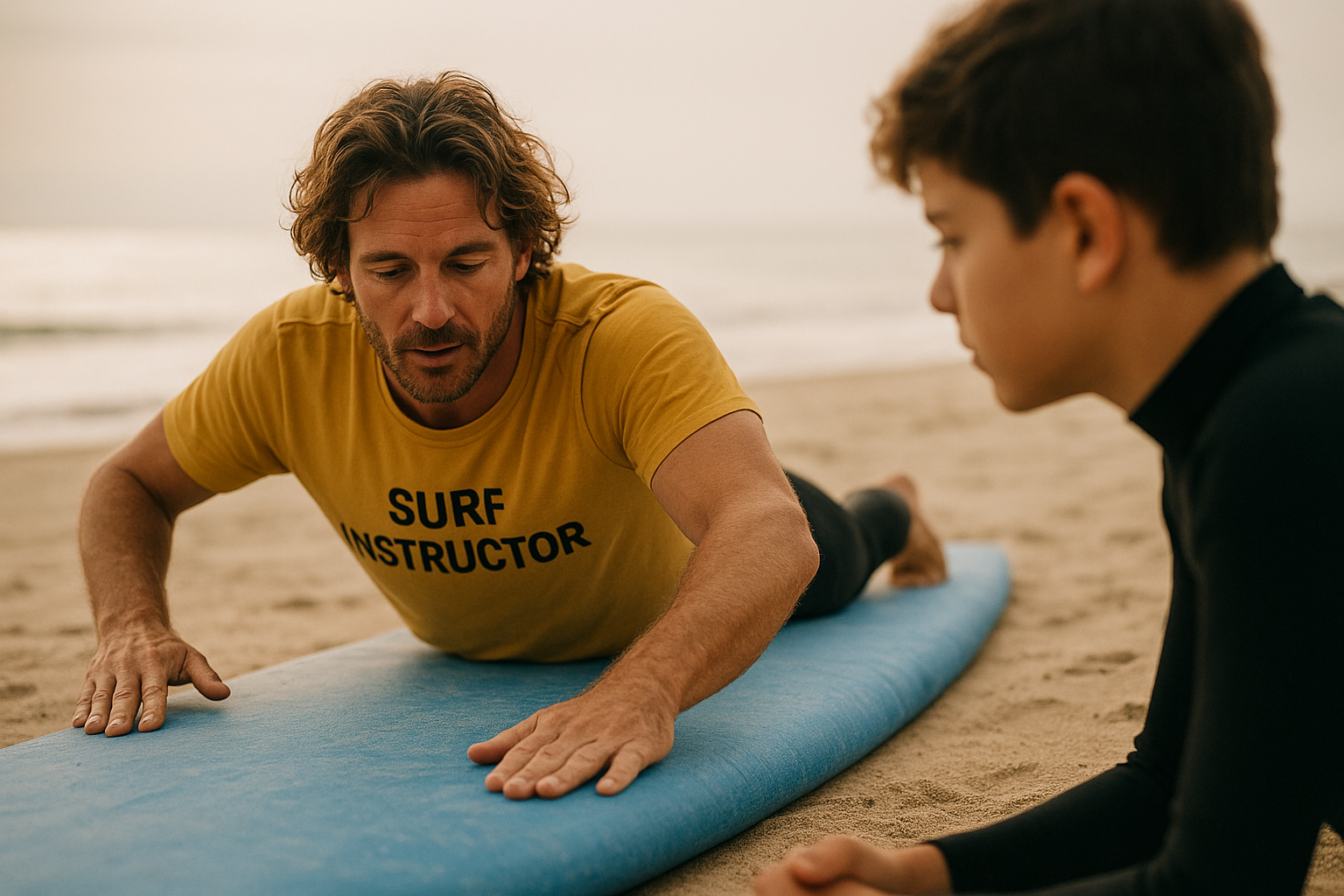
A thorough land briefing is a sign of a quality school and should always be included in the lesson price.
Kids’ Surf Lessons: What Parents Should Know About Pricing
Most surf schools offer dedicated children’s lessons, and prices are typically 10 to 20 percent lower than adult rates. However, the instructor-to-student ratio is more important for kids’ lessons than for adults — specifically, look for schools that cap children’s group sessions at a maximum of four to five students per instructor.
For a deeper walkthrough, see our Are There Surf Lessons for Kids in Waikiki?.
Additionally, many schools offer family packages. These bundle two adult sessions with one or two children’s sessions at a combined discount of 15 to 25 percent. Consequently, families booking together typically pay significantly less per person than individuals booking separately.
For children under eight, most schools recommend private or semi-private sessions rather than group lessons. This is not purely a safety measure — younger children learn more effectively with closer individual attention, and the additional cost is generally justified by faster progress.
Instructor Certification: Why It Matters to Pricing and Quality
Certification from a recognised body like the International Surfing Association is the clearest signal that a school takes instructor quality and student safety seriously. ISA certification requires instructors to pass examinations in surf technique, water safety, first aid, and teaching methodology. Schools with certified instructors legitimately charge higher prices — and that premium is worth paying.
In contrast, schools that cannot name a recognised certification body for their instructors are a red flag — regardless of how affordable their prices appear. Specifically, the risk is not just a poor experience; it is a water safety concern in an environment that demands real expertise.
Furthermore, certification level often correlates directly with the quality of feedback you receive. An ISA Level 2 or equivalent instructor understands biomechanics well enough to diagnose why your pop-up is failing — not just encourage you to try again. For intermediate and advanced learners in particular, this diagnostic quality is what justifies a higher per-session investment.
Frequently Asked Questions About Surf Lesson Prices
What are typical surf lesson prices for beginners?
Beginner surf lesson prices typically range from $25 to $100 for a group session and $80 to $200 for a private lesson. The exact cost depends on location, lesson length, instructor certification level, and what equipment is included in the fee. See our Hawaii price guide for island-specific averages and booking tips.
How long does a standard surf lesson last?
Most surf lessons last between 90 minutes and 2 hours. This includes a 20- to 30-minute land-based safety and technique briefing, followed by 60 to 90 minutes of in-water instruction. Some budget providers offer 60-minute sessions — always check how much of that time is actually in the water.
Is a private surf lesson worth the extra cost?
Yes — for most learners beyond the absolute beginner stage. Private surf lessons provide one-on-one attention, faster skill progression, and personalised feedback that is difficult to replicate in a group. If you have specific goals or limited time, the higher price is a worthwhile investment.
What is included in the price of a surf lesson?
Most surf lesson prices include board rental, a rash guard or wetsuit, and professional instruction. Many reputable schools also include a safety briefing and liability insurance. Photos or video review are sometimes included at premium schools or available as an add-on. Always confirm the full breakdown before booking.
Are surf lessons cheaper in some countries than others?
Yes, surf lesson prices vary significantly by country. Destinations like Bali, Sri Lanka, and Morocco offer group lessons from as little as $20 to $45. In contrast, lessons in the USA, Australia, or Hawaii typically cost $75 to $200 or more. Importantly, lower price does not mean lower quality — many affordable destinations have highly experienced local instructors.
How many surf lessons do I need to stand up on a board?
Most beginners can stand up on a surfboard within one or two lessons under proper instruction. Consistent practice over three to five sessions typically leads to riding small, unbroken whitewash waves independently. Progression beyond that depends on lesson quality, physical fitness, and the frequency of your sessions.
Do surf lesson prices change by season?
Yes. Prices are generally 10 to 30 percent higher during peak tourist seasons — typically summer in Europe and the USA, and December–February in many tropical destinations. Booking during the shoulder season saves money and often means better wave conditions and fewer crowded lineups.
What is the difference between a surf lesson and a surf camp?
A surf lesson is a single session lasting 90 minutes to 2 hours. A surf camp is a multi-day programme combining daily lessons with accommodation, meals, and a learning community. Surf camps typically offer 40 to 60 percent better value per lesson hour than booking individual sessions and accommodation separately.
Can kids take surf lessons, and do they cost the same?
Most surf schools offer dedicated children’s lessons priced 10 to 20 percent lower than adult rates. Many schools also offer family packages that reduce the per-person cost further. For children under eight, semi-private or private sessions are recommended over large group formats.
What mistakes do first-timers make when booking surf lessons?
Common mistakes include choosing the cheapest option without checking instructor certifications, not asking about the student-to-instructor ratio, failing to confirm what is included in the price, and booking during the wrong tidal or swell conditions. Always research the school’s safety record, instructor qualifications, and recent reviews before committing.
How can I save money on surf lessons?
You can save money by booking multi-lesson packages, travelling during the shoulder season, choosing group lessons for your first few sessions, booking online in advance, bringing a friend and splitting a semi-private lesson, and considering budget destinations like Bali or Morocco. Additionally, some schools offer referral and loyalty discounts for returning students.
What student-to-instructor ratio should I expect?
A reputable group surf lesson should have no more than six students per instructor. Ratios above 8:1 are a genuine safety concern in surf environments, not just a quality issue. Always ask about this before booking — any school reluctant to answer should be avoided.
Does surf lesson pricing differ for intermediate or advanced students?
Yes. Intermediate and advanced surf sessions are typically priced higher than beginner group lessons because they require smaller groups, more specialised coaching, and often include video analysis. Advanced coaching from a competition-level instructor can cost $150 to $300 or more per session — and for serious surfers focused on progression, that investment is well justified.
How to Choose the Right School for Your Budget
Price comparison alone is not enough. Instead, use a structured checklist to evaluate any school you are considering. This approach ensures you are comparing real value rather than just headline numbers.
- Confirm the all-in price — board, wetsuit or rash guard, and instruction all included.
- Ask for the student-to-instructor ratio — six or fewer students per instructor is the target.
- Verify instructor certification — ISA or national equivalent as a minimum standard.
- Check that a water safety briefing is included — this should never be an optional extra.
- Read recent reviews — prioritise Google and TripAdvisor over testimonials on the school’s own website.
- Ask about cancellation and weather policies — a reputable school will offer a rescheduling option for poor conditions.
Above all, the best value comes from a school that is transparent, safety-focused, and structured to build real skills progressively — not one optimised to fill slots and collect fees. Specifically, avoid any school that cannot readily answer questions about instructor credentials or safety protocols.
Conclusion: Getting the Best Value on Surf Lesson Prices
Surf lesson prices reflect a combination of destination economics, lesson format, instructor quality, and seasonal demand. However, the most expensive option is not always the best — and the cheapest is rarely the smartest choice either. The key is understanding exactly what drives those price differences and using that knowledge to find real value rather than just the lowest number.
In summary: start with group lessons as a beginner, consider semi-private sessions as you progress, invest in multi-lesson packages over single bookings, and prioritise certified instructors with safe student ratios over attractive headline prices. Furthermore, if your schedule allows flexibility, travel during the shoulder season and consider budget destinations — the instruction quality in places like Bali, Morocco, and Sri Lanka is genuinely excellent.
Whether you are planning your first surf holiday or looking for lessons close to home, having a clear picture of surf lesson prices puts you in control of the decision. Research the school thoroughly, ask the right questions, and choose a provider that prioritises your progression and safety — not just your booking fee. The best session you will ever have starts with the right school at the right price.