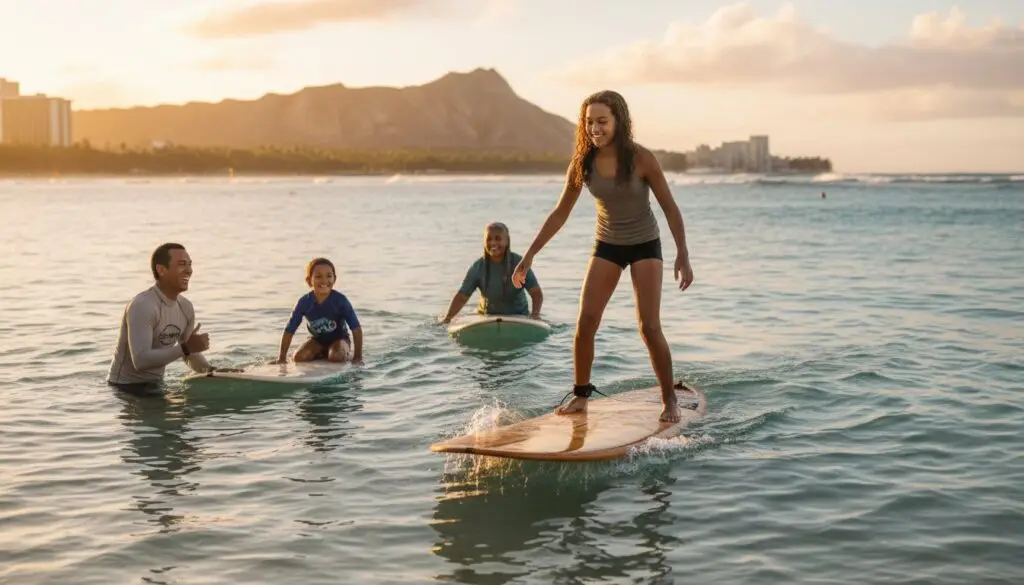
Surf classes for athletic beginners are designed for people who already have strength, balance, and cardio fitness but have never stood on a surfboard before. Unlike traditional beginner lessons that spend extra time building basic water confidence, these programs move faster, layering athletic ability onto proper wave-riding technique from the very first session. At Star Beach Boys, instructors recognize that a triathlete, gymnast, or weekend hiker needs a different coaching pace than someone stepping into open water for the very first time.
Therefore, the goal of this guide is simple: explain how fitness translates to faster wave skills, what to expect in your first lesson, and how to pick a program that matches your pace rather than holding you back.
Quick Answer: Surf classes for athletic beginners combine fast-paced skill progression with proper wave safety, letting fit newcomers stand up and ride within their first one or two sessions instead of spending days on land drills alone.
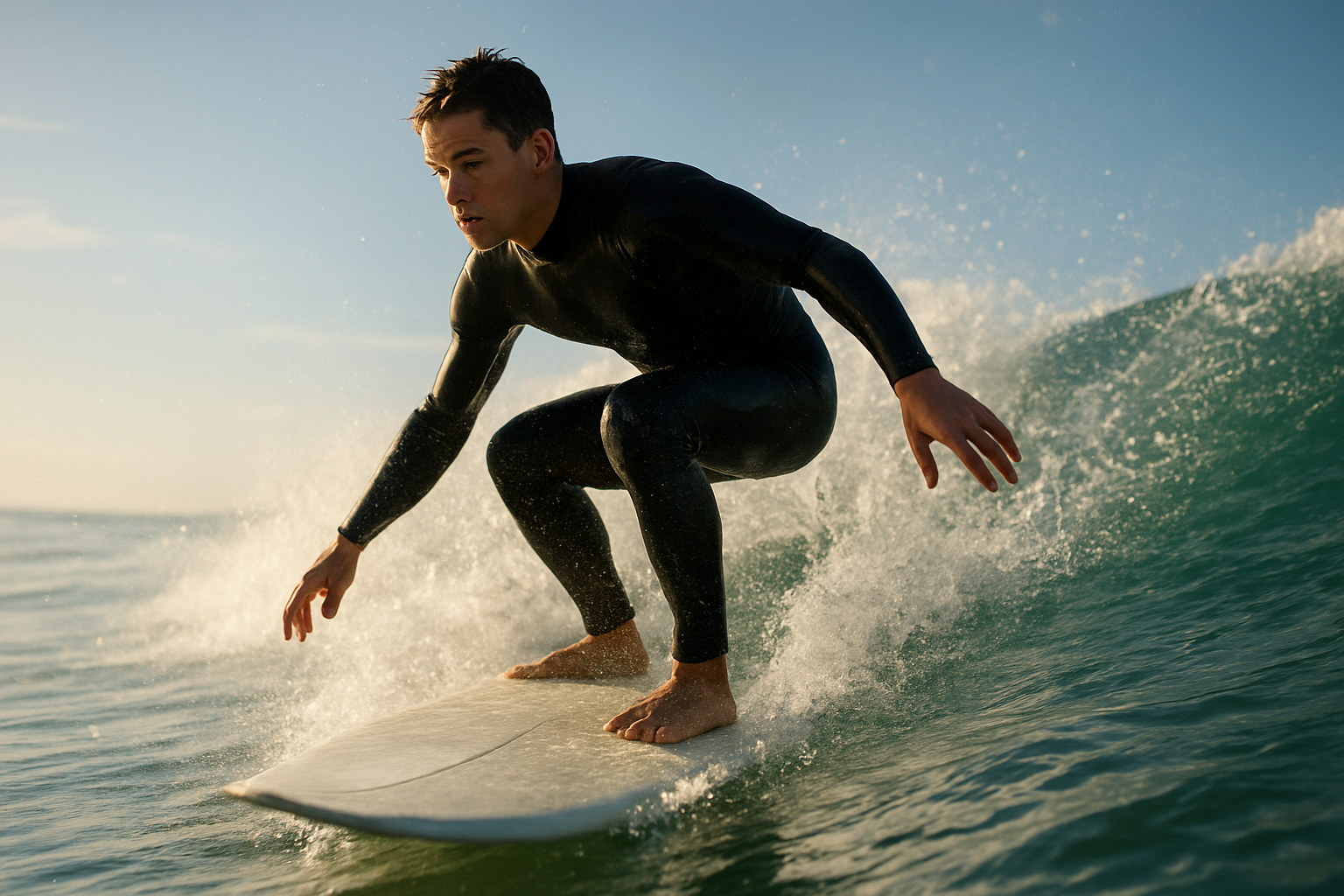
Surf classes for athletic beginners emphasize fast pop-up timing over long land drills.
What Are Surf Classes for Athletic Beginners?
In short, surf classes for athletic beginners are structured lessons that assume a student already has decent core strength, balance, and coordination, and build surf-specific skills on top of that foundation. Instructors typically reduce the time spent on static balance exercises and move students into the water sooner.
Specifically, these programs still cover safety, board control, and reading waves, but they do so with shorter explanations and more repetitions in real surf conditions. As a result, fit students often catch their first green wave within the same session, rather than waiting until a second or third lesson.
According to the general history of surfing, the sport has always rewarded balance and timing more than brute strength, which is exactly why athletic beginners tend to progress quickly once they understand wave mechanics.
How Surf Lessons for Fit Beginners Differ From Standard Classes
Standard beginner lessons often dedicate thirty minutes or more to basic paddling drills on the sand. In contrast, surf lessons for fit beginners usually spend less time on land because balance and coordination transfer faster from other sports.
Furthermore, instructors at Star Beach Boys surf instructors are trained to recognize this difference and adjust feedback immediately rather than repeating basics a fit student has already mastered. Consequently, lesson time gets reinvested into timing the takeoff, reading wave shoulders, and correcting foot placement.
If you are still deciding where to start, this guide to finding your first wave nearby walks through what to look for in a local program before booking.
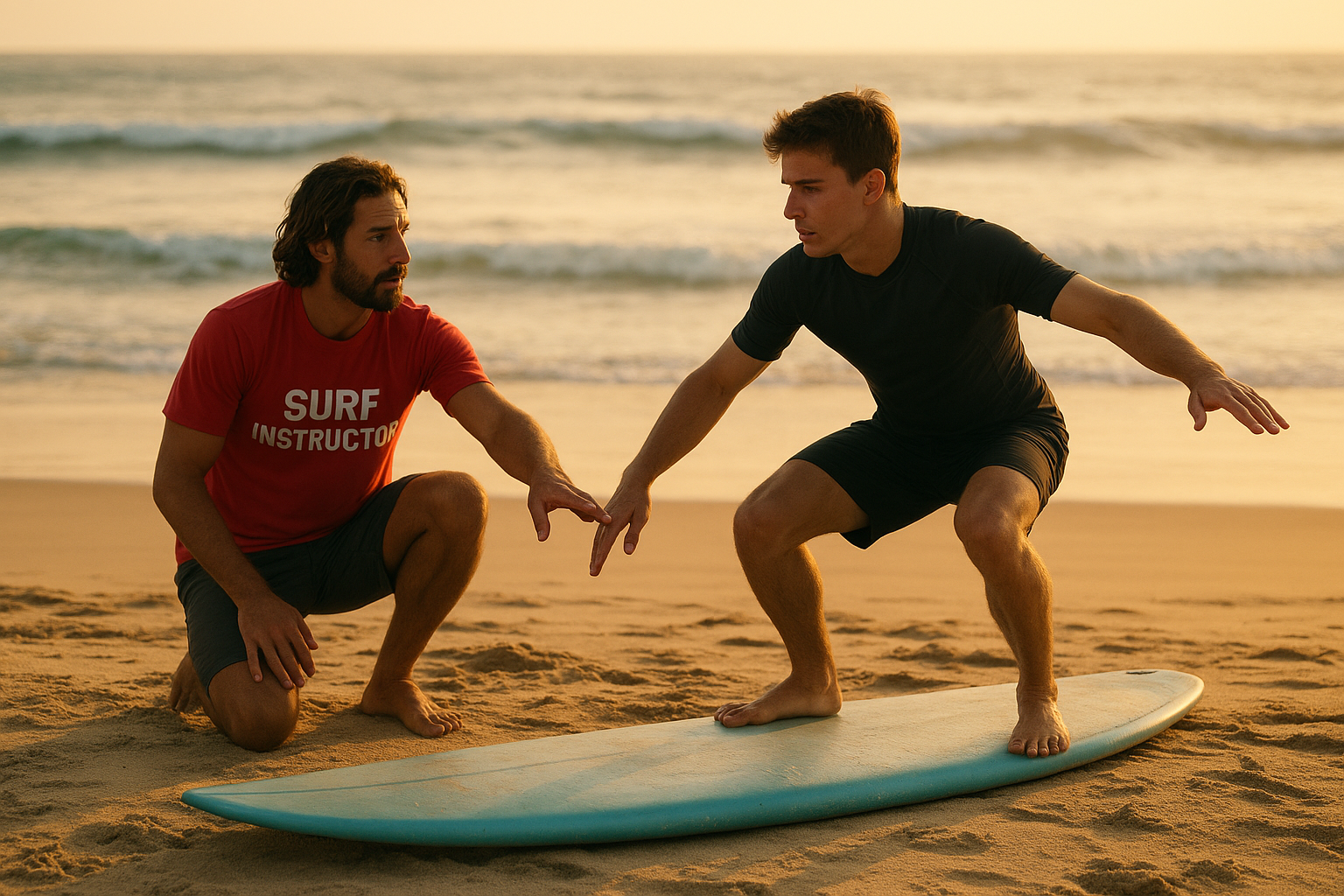
A short land briefing is all most fit beginners need before paddling out.
How to Choose the Right Surf Program for Your Fitness Level
Above all, picking the right program matters more than picking the cheapest one. The following steps help athletic beginners avoid a mismatched class pace.
- Assess your water comfort honestly. Rate your swimming comfort separately from your general fitness, since paddling and handling whitewater require specific water skills that gym training does not fully cover.
- Choose private or small-group coaching. Select private or small-group lessons for faster progression, since one-on-one coaching lets instructors skip basic drills and focus on timing right away.
- Confirm the instructor adjusts pace. Ask whether the program tailors pace for athletic students, because a lesson built only for complete beginners may move too slowly.
- Check the conditions and location. Verify the beach offers gentle, consistent waves suitable for fast skill-building, since advanced breaks can slow progress even for fit beginners.
- Book multiple sessions for consistency. Schedule at least three to five sessions close together, because consistent practice turns early fitness advantages into lasting muscle memory.
Similarly, it helps to ask in advance whether instructors have coached other athletic clients before, since this affects how quickly feedback gets tailored to your level.
Building Surf Fitness and Wave Skills Together
Meanwhile, general fitness only goes so far on its own. Surf-specific conditioning, like paddling endurance and explosive pop-up strength, closes the remaining gap between gym fitness and real wave performance.
For this reason, pairing lessons with dedicated conditioning can accelerate results even further. The resource on surf fitness classes that build strength for waves outlines exercises that translate directly to better paddling power and pop-up speed.
A 2023 overview from the International Surfing Association notes that shoulder endurance and rotational core strength are two of the biggest predictors of early surf progress, which lines up closely with what athletic beginners already bring to the water.
What to Expect During Your First Athletic Surf Lesson
Typically, a first lesson begins with a short safety briefing covering currents, wave zones, and hand signals. After that, instructors demonstrate the pop-up on the sand just once or twice before heading into the water.
Next, most of the session happens in shallow whitewater, where instructors push students into waves and give real-time feedback on timing and weight distribution. In particular, athletic beginners often surprise themselves by standing on the very first or second attempt.
Finally, expect a short debrief at the end covering what worked, what to adjust, and whether you are ready to try catching unbroken waves on your next visit.
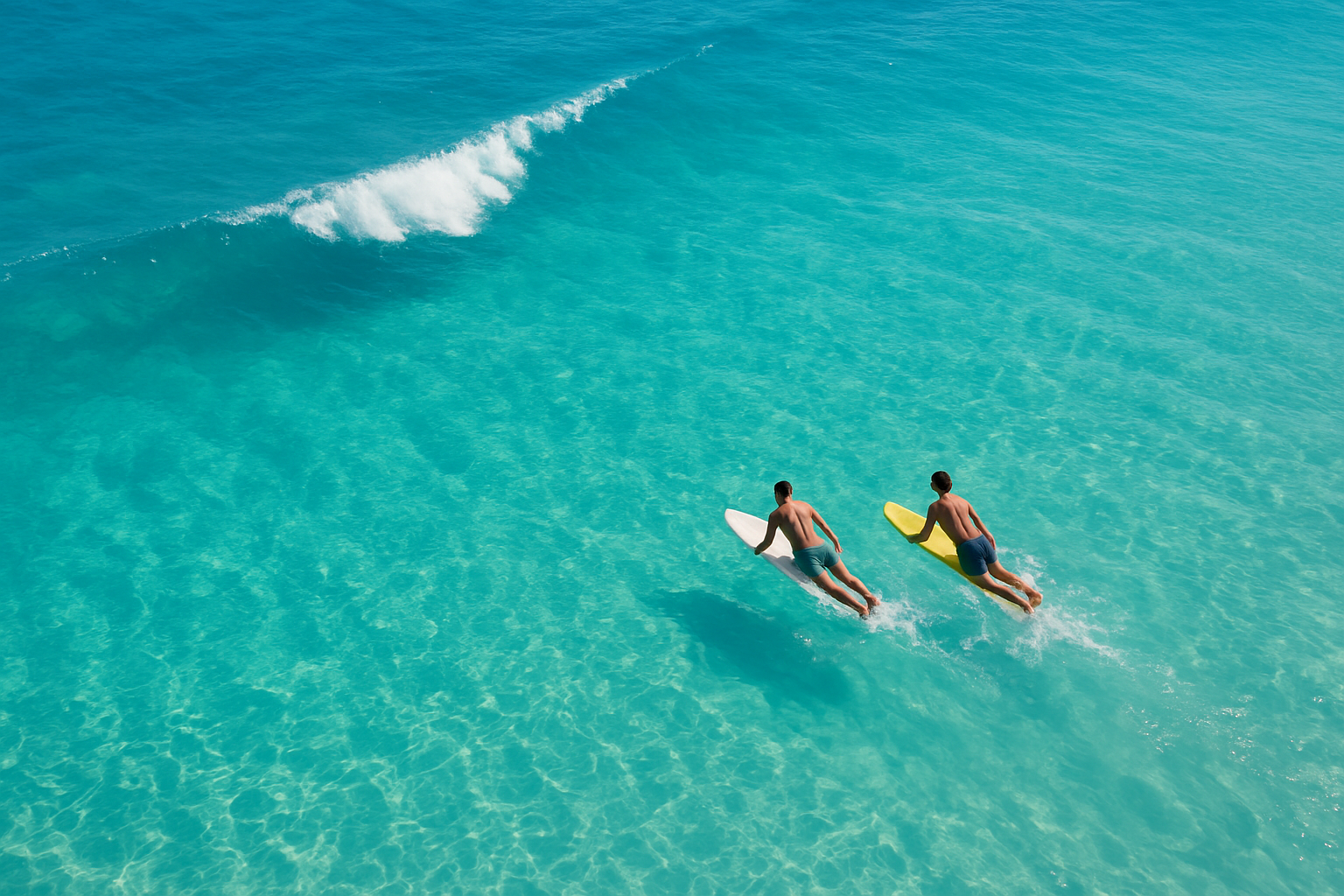
Paddling endurance from other sports often shortens this part of the learning curve.
Private Lessons, Group Classes, and Safety for Fast-Track Surfers
On the other hand, group classes remain a good social option, but they move at the pace of the slowest participant. If faster progress matters more to you, this comparison of private surfing lessons versus group classes explains the trade-offs clearly.
However, athletic ability is not a substitute for water confidence. Strong swimming skills still matter for handling currents and recovering after a wipeout, so it is worth reviewing whether you need extra reassurance before booking, especially if you are not yet a strong swimmer.
In addition, the National Weather Service rip current safety guidance is a useful reference for understanding ocean hazards that fitness alone cannot prevent, regardless of athletic background.
Frequently Asked Questions About Surf Classes for Athletic Beginners
What are surf classes for athletic beginners?
Surf classes for athletic beginners are lessons built for people who have never surfed but already have good balance, cardio fitness, and body control from other sports. Instructors shorten the land-drill phase and move faster toward wave riding because the usual physical learning curve is already partly covered.
How long does it take an athletic beginner to stand up on a surfboard?
Most athletic beginners stand up and ride a whitewater wave within their first one to two sessions. Core strength, balance, and quick reflexes from other sports usually speed up pop-up timing considerably.
Do I need strong swimming experience for surf classes for athletic beginners?
Comfortable swimming ability helps, but athleticism alone is not a substitute for water confidence. It is worth reviewing whether lessons are suitable for weaker swimmers before booking a session.
How is this different from a standard beginner surf lesson?
Standard beginner lessons often spend extra time on balance drills and basic water comfort. Athletic beginner programs compress that stage and focus earlier on timing, wave selection, and board control.
How much do beginner surf lessons typically cost?
Group beginner surf lessons commonly cost less per person than private coaching, which charges a premium for one-on-one attention. Private sessions usually deliver faster, more individualized progress in exchange for the higher rate.
Are private lessons better than group classes for fit beginners?
Private lessons generally suit athletic beginners well because coaching can match their faster pace without holding back a mixed-level group. Group classes still work for those who enjoy a social, lower-cost learning environment.
What should I bring to my first athletic surf lesson?
Bring a swimsuit, sunscreen, a towel, and a willingness to fall down often while learning. Most surf schools supply the board, leash, and sometimes a wetsuit depending on water temperature.
What is the most common mistake athletic beginners make when learning to surf?
Many athletic beginners try to muscle through the pop-up instead of trusting timing and wave positioning. Surfing rewards rhythm and patience more than raw strength, so overpowering the wave usually backfires.
Does gym fitness or strength training really speed up surf progress?
Yes, general fitness improves paddling endurance, balance recovery, and the explosive pop-up movement needed to stand on the board. However, surf-specific coaching is still required to translate that fitness into correct technique.
How many sessions does it take to surf independently?
Athletic beginners often reach basic independence, catching and riding green waves without constant instructor assistance, within three to five sessions. Consistency between lessons makes a noticeable difference in retention.
Are surf classes for athletic beginners safe for people with some water hesitation?
Yes, when instructors assess comfort level first and adjust conditions accordingly. Safety briefings on currents, wave zones, and signals remain essential regardless of a student’s fitness background.
What age groups can join athletic beginner surf programs?
Most programs welcome teenagers through active adults, with instructors adjusting pace for age and prior athletic background. Younger children with strong swimming skills can often join lighter versions of the same coaching approach.
How do instructors tailor coaching for athletic beginners versus complete novices?
Instructors skip repetitive balance drills for athletic students and instead focus early feedback on wave timing, paddle power, and positioning. Complete novices typically need more time on basic stance and paddling before any wave work begins.
Final Thoughts
Ultimately, surf classes for athletic beginners work best when the coaching pace matches the fitness a student already brings to the water. As shown throughout this guide, fit newcomers can often stand up within their very first session, provided they choose instructors who adapt rather than default to a slower, one-size-fits-all approach. Therefore, take the time to confirm instructor experience, pick a program length that allows for consistent practice, and never skip the safety basics, no matter how athletic you are. With the right coaching, surf classes for athletic beginners can turn existing fitness into real, confident wave-riding skill in just a handful of sessions.