Safe surfing lessons for beginners give first-time surfers the confidence, technique, and ocean awareness needed to enjoy the water without unnecessary risk. Because the ocean can be unpredictable, proper instruction often makes the difference between a fun first session and a frightening one. Whether you are visiting the coast for a week or a local resident finally ready to try the sport, structured lessons taught by trained instructors help you understand wave behavior, board control, and water safety from day one. This guide explains what makes surf instruction genuinely safe, how to prepare, and what to expect from your first time in the whitewash.
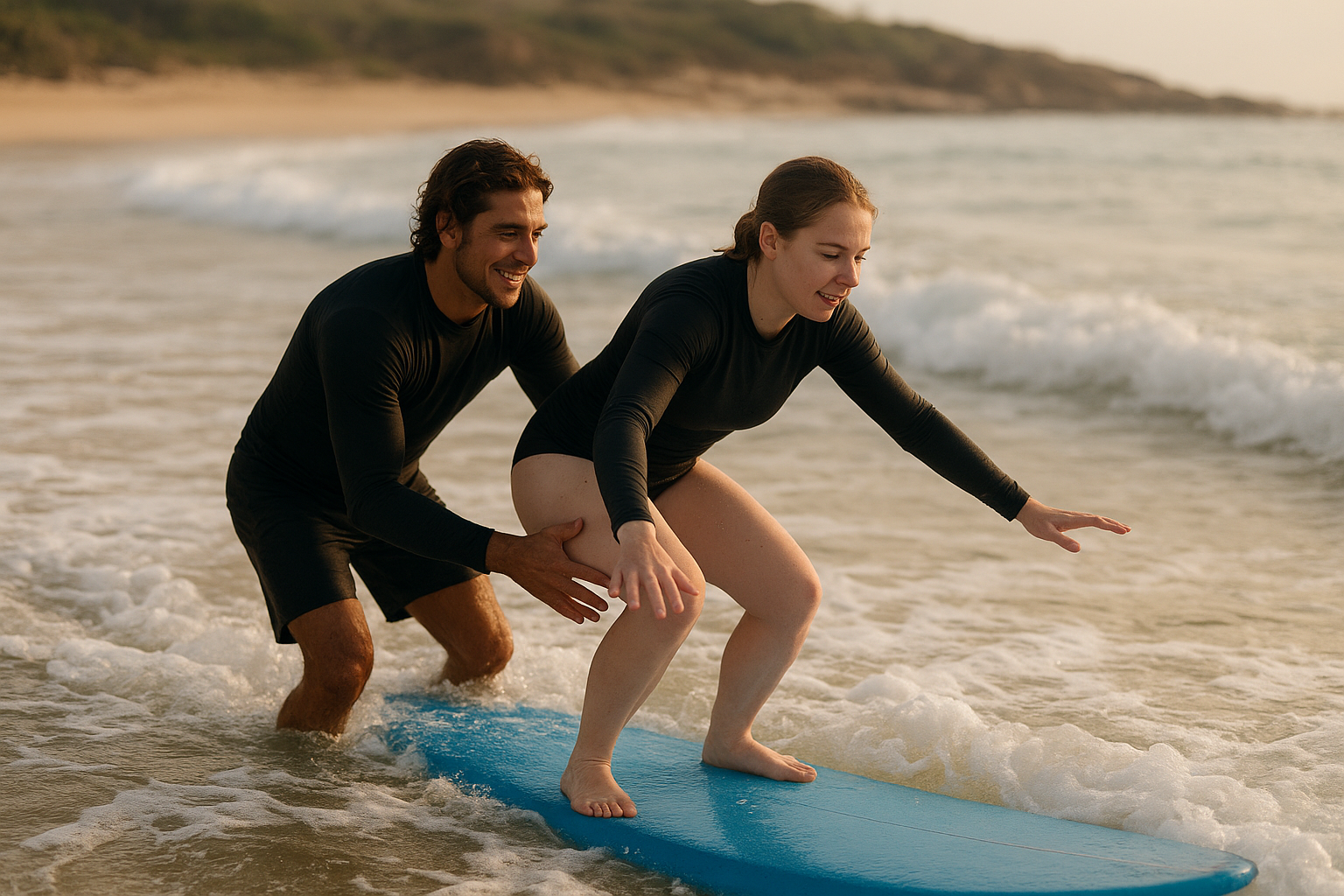
Certified instructors guide every step of safe surfing lessons for beginners, from paddling to standing.
What Are Safe Surfing Lessons for Beginners?
Safe surfing lessons for beginners are structured, instructor-led programs designed specifically for people with little or no ocean experience. In particular, these lessons combine a land-based safety briefing, small class sizes, and gentle wave conditions to reduce risk while still building real skill on the water.
Unlike simply renting a board and paddling out alone, guided instruction ensures a trained professional is watching every wave, current, and student reaction. As a result, mistakes get corrected immediately rather than after they lead to injury. You can read more about what a typical first session involves in this guide to wave riding lessons. Similarly, understanding the basics of the sport itself helps set realistic expectations, and Wikipedia’s overview of surfing offers useful background on the sport’s history and technique.
Why Ocean Safety Comes First When Learning to Surf
Above all, learning to surf safely depends on understanding the ocean itself, not just the board. Rip currents, shifting sandbars, and sudden swell changes can catch even confident swimmers off guard. Therefore, reputable instructors spend the first portion of every lesson explaining how to spot hazards before anyone paddles out.
For example, the National Oceanic and Atmospheric Administration notes that rip currents are a leading cause of ocean rescues along open beaches, which is exactly why instructors choose sheltered, patrolled locations for beginner sessions. In addition, according to the United States Lifesaving Association, trained lifeguards perform tens of thousands of water rescues nationwide each year, underscoring how quickly conditions can change. If you are wondering whether the sport is realistic for total beginners, this breakdown of surfing safety for complete beginners addresses common concerns directly.
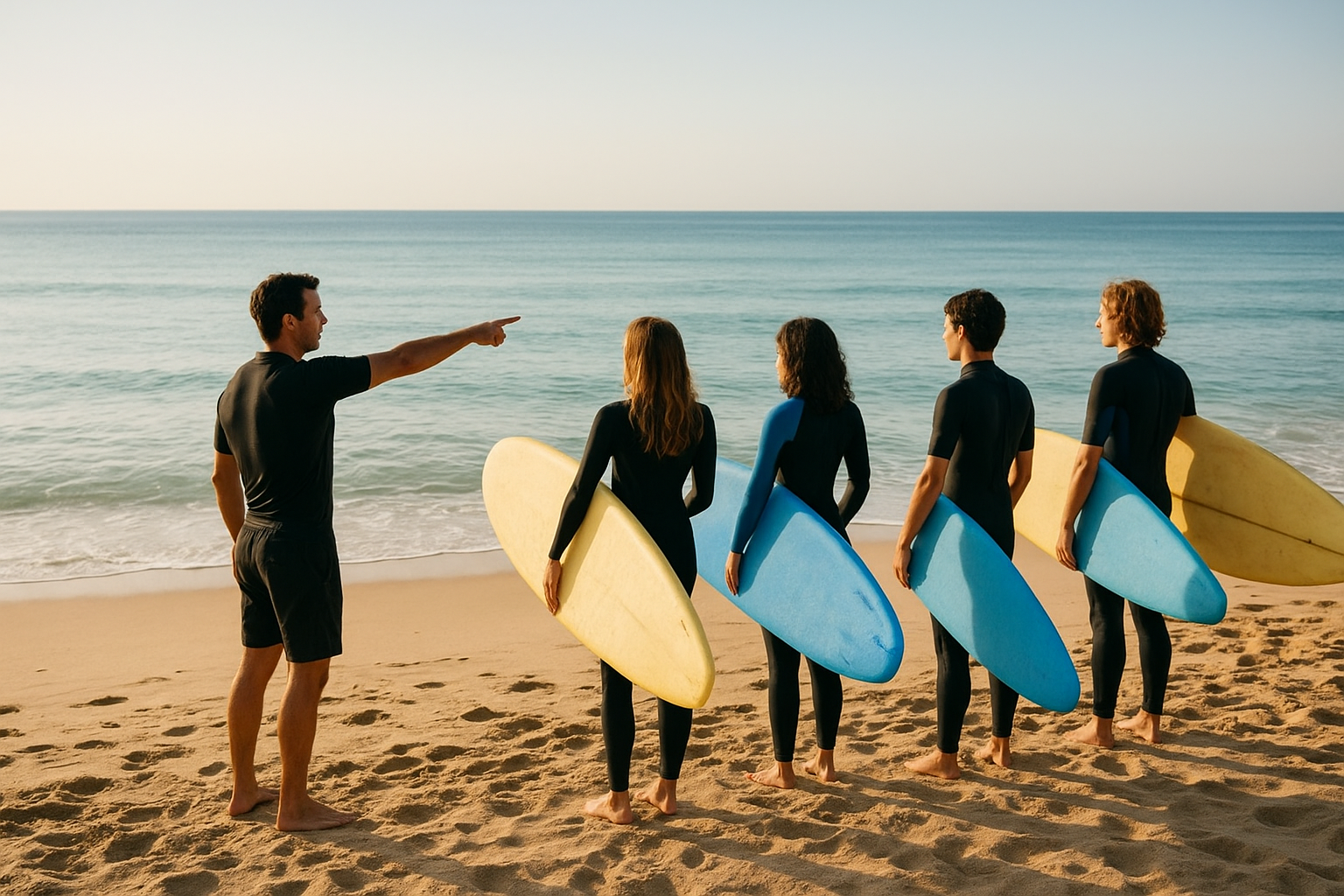
A pre-lesson safety briefing is a core part of every well-run beginner surf program.
How to Prepare for Your First Safe Surf Lesson
Consequently, a little preparation goes a long way toward making your first lesson both safer and more enjoyable. The following steps outline what to do before you ever touch the water.
- Check surf and weather conditions. Review wave height, tide, and wind forecasts before booking so your lesson falls during calm, beginner-friendly conditions.
- Choose a certified surf school. Select a school with experienced instructors, positive reviews, and a clear focus on beginner safety and small class sizes.
- Wear proper swimwear and sunscreen. Put on a swimsuit or rash guard and apply reef-safe sunscreen at least twenty minutes before entering the water. Consider pairing protective clothing with appropriate snorkeling or beach gear like a anti-fog snorkeling mask when planning family beach activities.
- Complete the land-based safety briefing. Listen carefully to instructions on paddling, standing up, currents, and hand signals before touching the water.
- Practice the pop-up on sand. Rehearse the movement from lying to standing several times so your muscles remember it once you paddle into a wave.
For a more detailed walkthrough, this first surf lesson preparation guide covers what to pack, eat, and expect on lesson day.
Choosing a Surf School That Prioritizes Beginner Safety
Not every surf school approaches beginner instruction the same way, so it pays to ask questions before booking. In particular, look for low student-to-instructor ratios, soft-top boards, and instructors trained in CPR and water rescue.
Star Beach Boys, for instance, structures its programs around personalized guidance and progressive skill-building for tourists, families, and local residents alike, with instructors who prioritize student safety in a coastal environment known for reliable, beginner-friendly conditions. If you are searching locally, this guide to finding beginner surf lessons nearby can help you compare options. You can also explore lesson formats directly at Star Beach Boys to see how programs are structured for different skill levels and view related beach gear such as a beach hammock for family comfort.
Essential Safety Gear and Techniques for New Surfers
In addition to instructor supervision, the right equipment plays a major role in keeping beginners safe. Soft-top foam boards reduce impact injuries, while an ankle leash keeps the board from drifting into other swimmers after a fall. Rash guards protect against sun and board rash, and consider a snorkeling mask for kids and families who will also explore shallow water activities.
Rash guards protect against sun and board rash, and wetsuits may be recommended in cooler water. Beyond gear, technique matters just as much; specifically, learning correct paddling posture and wave timing reduces fatigue and panic in the water. This beginner surfing techniques guide breaks down the pop-up, paddling, and positioning fundamentals in more depth.
Common Mistakes Beginner Surfers Make
Even in a controlled setting, certain habits increase risk unnecessarily. For example, paddling too far from shore before mastering balance is one of the most frequent errors, often leading to exhaustion and poor wave judgment.
Similarly, turning your back on incoming waves, gripping the board too tightly during a fall, or ignoring an instructor’s hand signals can all turn a minor stumble into a real hazard. Consequently, staying close to your instructor and communicating openly about fatigue or discomfort remains one of the simplest ways to stay safe throughout the lesson.
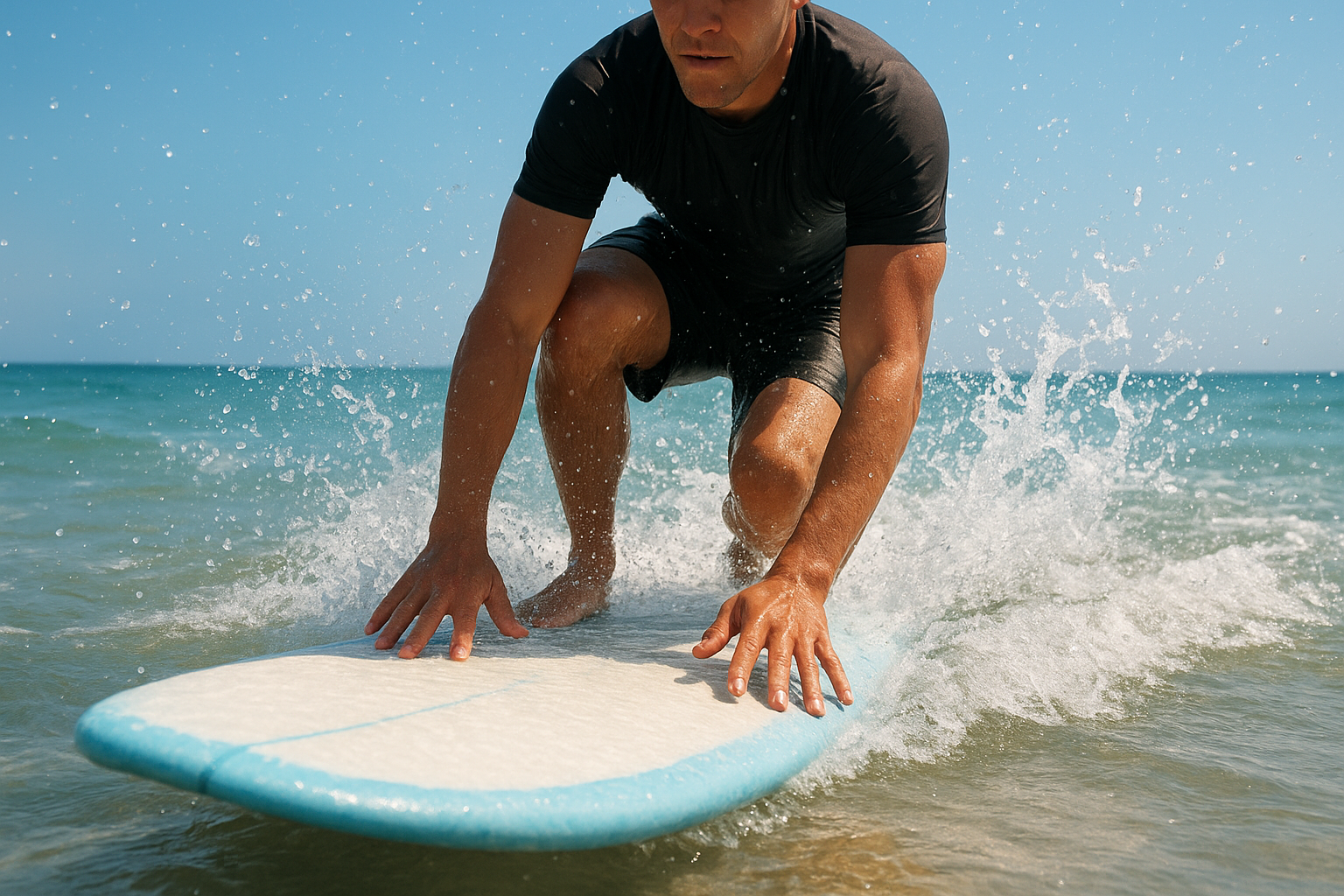
Repeating the pop-up technique in shallow water builds muscle memory before catching real waves.
Frequently Asked Questions
What is the safest way for beginners to learn to surf?
The safest way to learn is through certified, instructor-led lessons that take place in small, gentle waves with close supervision. Instructors teach proper technique, ocean awareness, and etiquette before students paddle out alone.
How long does it take to learn safe surfing techniques?
Most beginners can stand and ride whitewash waves within their first one to three lessons. However, developing consistent, safe technique in open water typically takes several sessions over a few weeks.
What age is appropriate for beginner surf lessons?
Most surf schools accept children as young as six or seven alongside adults of any age. Instructors adjust pace and board size based on the student’s age, strength, and comfort in water.
Are safe surfing lessons for beginners really safe?
Yes, safe surfing lessons for beginners are designed to minimize risk through soft-top boards, shallow practice areas, and constant instructor supervision. No water activity is completely risk-free, but structured lessons dramatically reduce common hazards.
How much do beginner surf lessons cost?
Group lessons typically range from affordable rates for shared classes to higher pricing for private, one-on-one instruction. Costs vary by location, lesson length, and equipment included.
What safety gear is used during beginner surf lessons?
Beginners typically use soft-top foam surfboards, ankle leashes, and rash guards for sun and board protection. Some schools also provide wetsuits depending on water temperature.
What is the biggest mistake beginners make when learning to surf?
The most common mistake is paddling out too far, too soon, before mastering balance and paddling technique closer to shore. This often leads to fatigue and difficulty judging wave timing.
How do surf instructors ensure student safety in the water?
Instructors position themselves in the water to spot waves, guide timing, and physically assist students during their first attempts. They also monitor currents, other surfers, and weather changes throughout the session.
What should I wear to my first surf lesson?
A swimsuit or board shorts with a rash guard is usually ideal, along with reef-safe sunscreen. Avoid jewelry or loose clothing that could catch on the leash or board.
Is prior swimming experience required for surf lessons?
Basic swimming ability and comfort in water are strongly recommended before booking a lesson. Most reputable schools will ask about swimming skill level during booking to plan accordingly.
How are group lessons different from private safe surfing lessons for beginners?
Group lessons offer a social, budget-friendly setting with shared instructor attention, while private safe surfing lessons for beginners provide one-on-one coaching tailored to individual pace. Both formats prioritize safety, but private lessons allow faster, more personalized correction.
What weather and wave conditions are best for beginner surfers?
Small, slow-breaking waves in the one to two foot range with light wind are ideal for beginners. Instructors typically schedule lessons around tide and swell forecasts to find the safest conditions.
How soon can beginners stand up on a surfboard?
Many first-time surfers stand briefly on their very first wave with instructor assistance. Consistent, unassisted standing usually develops after a few lessons of practicing the pop-up motion.
What certifications should a surf instructor have?
Look for instructors certified in CPR, first aid, and water rescue, along with formal surf coaching credentials where available. These certifications indicate the instructor can respond effectively to emergencies.
Can children take safe surfing lessons for beginners?
Yes, many surf schools offer safe surfing lessons for beginners specifically tailored to children, using smaller boards and shorter sessions. Parents should confirm instructor-to-student ratios for younger age groups.
Final Thoughts on Getting Started Safely
Ultimately, safe surfing lessons for beginners combine certified instruction, appropriate gear, and calm ocean conditions to turn an intimidating sport into an accessible, confidence-building experience. As a result, first-time surfers who choose structured lessons over guesswork tend to progress faster and enjoy the water with far less anxiety. By preparing properly, choosing a reputable school, and respecting ocean conditions, anyone, from curious tourists to local families, can safely learn to ride their first wave.