Ocean safety courses for surfers teach essential skills like reading rip currents, executing rescue techniques, and understanding wave patterns so that time in the water stays enjoyable rather than dangerous. Whether you are a first-time visitor to the coast or a seasoned local rider, however, understanding ocean hazards matters just as much as mastering your pop-up technique. In this guide, we will explore what these courses cover, why they matter, and how to find the right program for your skill level.
Quick answer: Ocean safety courses for surfers are short, structured sessions that teach hazard recognition, self-rescue floating, and basic emergency response before or alongside standard surf lessons. Most sessions run two to four hours and are suitable for beginners and experienced surfers alike.
What Are Ocean Safety Courses for Surfers?
Ocean safety courses for surfers are hands-on training programs focused entirely on hazard awareness rather than board technique. Instructors teach students to identify rip currents, a fast-moving channel of water flowing away from shore, along with sandbars, shifting swells, and marine life risks specific to the local coastline.
In addition, these courses usually include practical self-rescue drills. Students practice floating calmly instead of panicking, signaling nearby swimmers or lifeguards, and, in more advanced sessions, assisting another person safely. As a result, graduates leave with a toolkit they can rely on long after the class ends.
Why Ocean Safety Matters for Every Surfer
Surfing is often described as one of the world’s most beloved water sports, yet the ocean remains unpredictable even on calm days. According to the National Weather Service, rip currents cause a significant share of coastal rescues in the United States each year, and many of those incidents involve otherwise capable swimmers who simply misjudged the water.
Because of this, ocean safety training benefits surfers of every level, not only beginners. Experienced riders sometimes take unnecessary risks precisely because they feel confident on the board, so a refresher on hazard awareness keeps that confidence grounded in reality. You can learn more about the reasoning behind structured instruction in our overview of the benefits of taking a surf lesson.
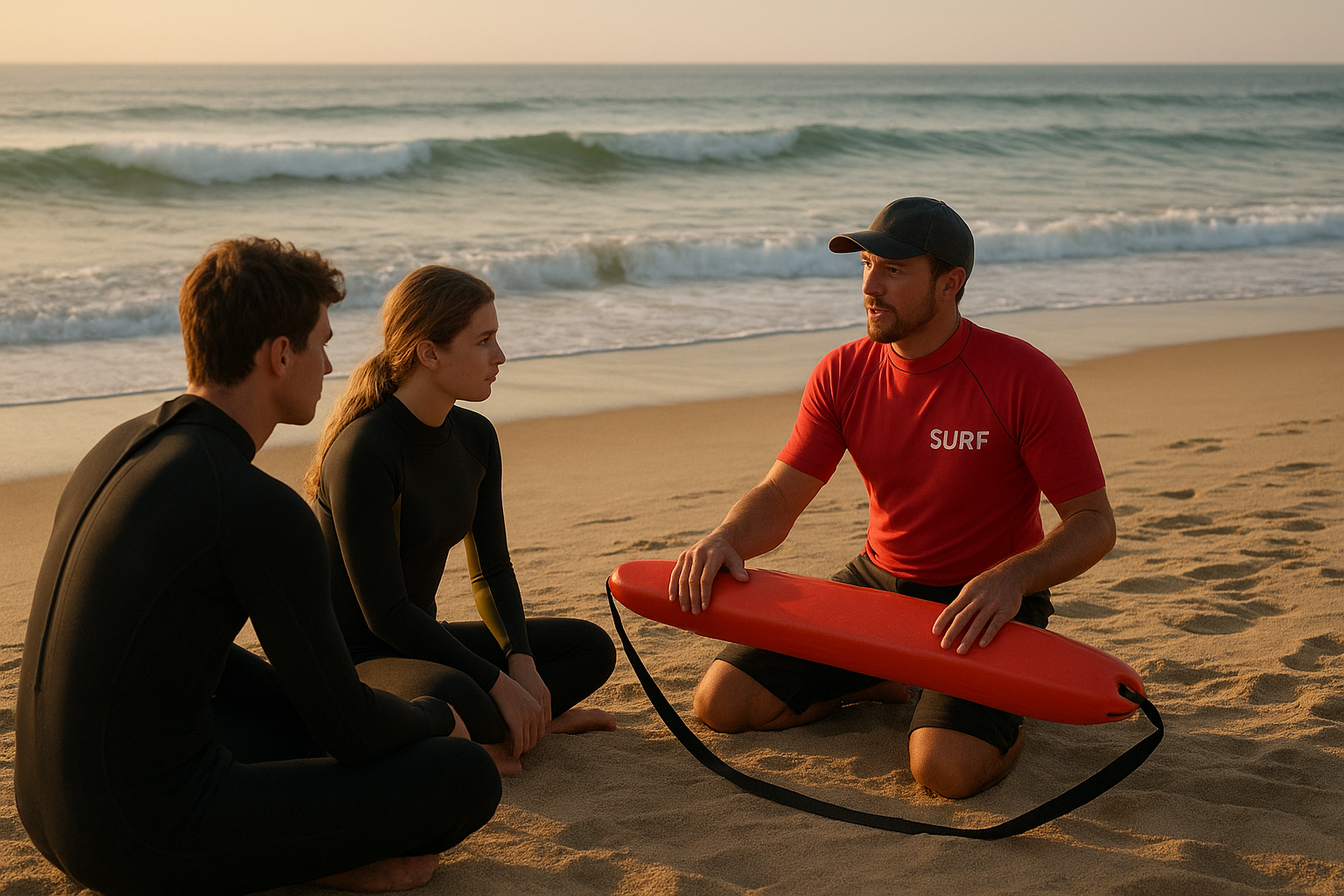
Hands-on demonstrations are a core part of ocean safety courses for surfers.
Core Skills Covered in Surf Safety Training
Surf safety training generally covers a consistent set of core topics, regardless of which school teaches it. Specifically, students learn to read tide charts, recognize wave sets, and interpret flag warning systems used by lifeguards along most beaches.
Beyond hazard recognition, students also practice physical response skills. These include floating to conserve energy, swimming parallel to shore when caught in a current, and basic first aid for minor injuries like coral scrapes or jellyfish stings. Similarly, some advanced sessions introduce CPR basics, following guidance similar to that offered by the American Red Cross.
For a closer look at how instructors apply these principles in real lessons, our guide on safety measures during lessons breaks down the process step by step.
How to Choose an Ocean Safety Class That Fits Your Needs
Not every ocean safety class is built the same way, so it helps to ask a few questions before booking. First, confirm whether the instructor holds any recognized lifeguard or water safety credential. Next, check whether the course includes practical open-water practice or only classroom theory.
Group size matters too. Smaller groups generally allow more individual feedback, which is why families and nervous beginners often prefer private surfing lessons paired with safety instruction. On the other hand, group sessions can be a more social and affordable way to learn alongside friends or fellow travelers.
Step-by-Step: What Happens During an Ocean Safety Course
Although each surf school structures its program slightly differently, most ocean safety courses for surfers follow a similar progression from theory to practice.
- Classroom orientation: Students begin with a land-based briefing covering wave formation, tide charts, and how to spot rip currents from the shoreline before entering the water.
- Shoreline hazard spotting: Instructors walk the group along the beach to point out real-time examples of sandbars, channels, and current patterns unique to that day’s conditions.
- Self-rescue floating practice: In shallow water, students practice conserving energy by floating on their backs and signaling for help rather than fighting directly against a current.
- Partner-assisted rescue drills: Working in pairs, students learn how to approach a struggling swimmer safely using a rescue board or tube without putting themselves at additional risk.
- Supervised open-water application: The course concludes with supervised practice in real surf conditions, allowing instructors to confirm each student can apply hazard awareness while actually surfing.
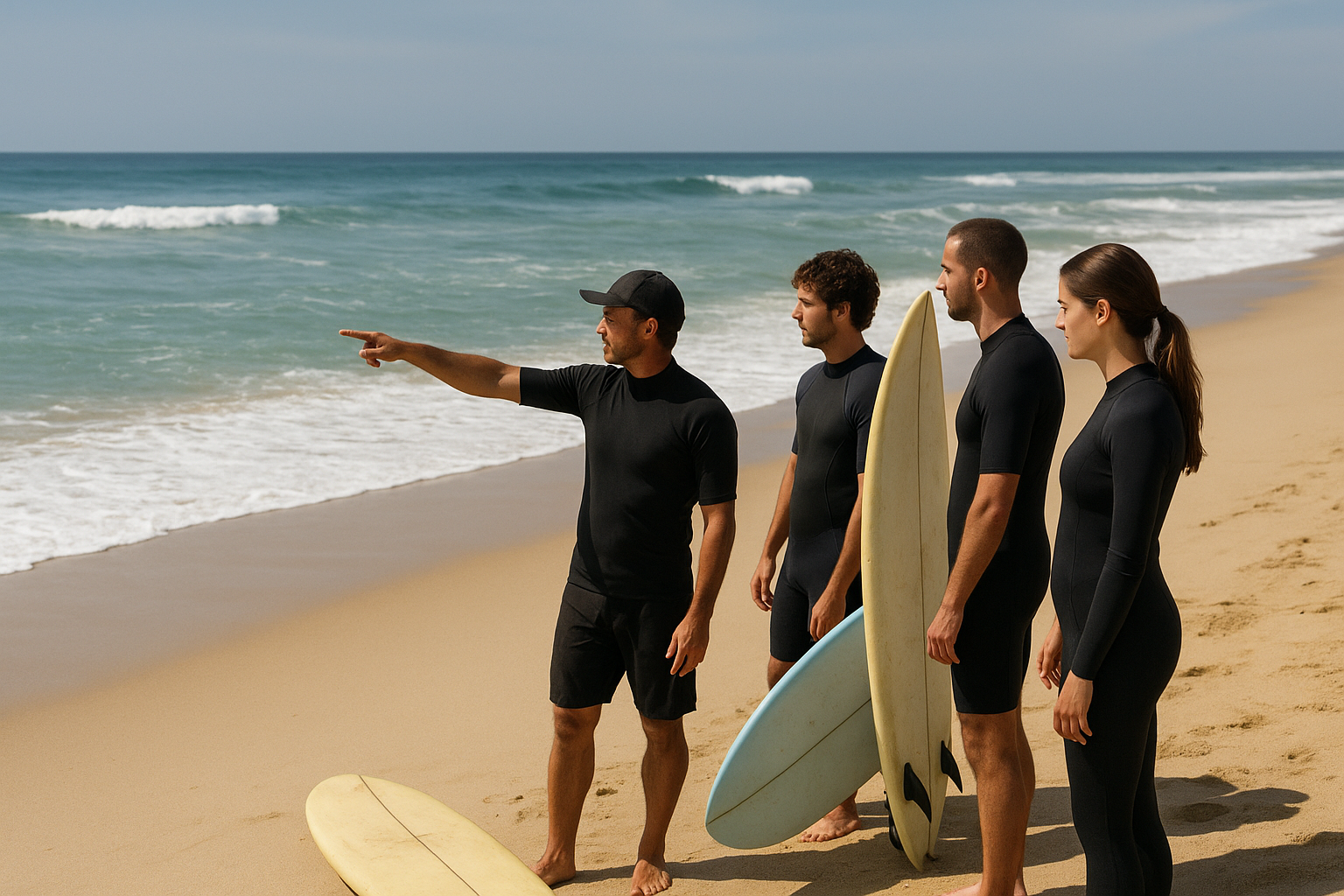
Identifying rip currents from shore is one of the first skills taught in a safety class.
Common Mistakes Surfers Make With Ocean Safety
One of the most frequent errors is paddling directly against a rip current instead of swimming parallel to shore until free of it. This single mistake accounts for a large share of preventable ocean rescues, according to NOAA safety data.
Another common issue is skipping safety instruction entirely because a surfer already feels physically fit. Fitness helps with paddling, but it does not replace hazard awareness. Likewise, surfing alone in unfamiliar breaks without checking conditions first increases risk significantly. For newer riders specifically, our article on surfing safety for beginners covers additional pitfalls worth avoiding.
Ocean Safety Courses for Surfers at Star Beach Boys
Star Beach Boys integrates ocean safety courses for surfers directly into its coaching programs, rather than treating safety as an afterthought. Instructors are trained to brief every student, from complete beginners to intermediate riders refining technique, on local conditions before any board work begins.
Because the team works daily in the same coastal waters, they can point out hazards specific to that day rather than relying on generic advice. If you would like a fuller sense of what a session feels like from start to finish, explore our immersive surfing experience overview, or visit Star Beach Boys directly to check current course availability.
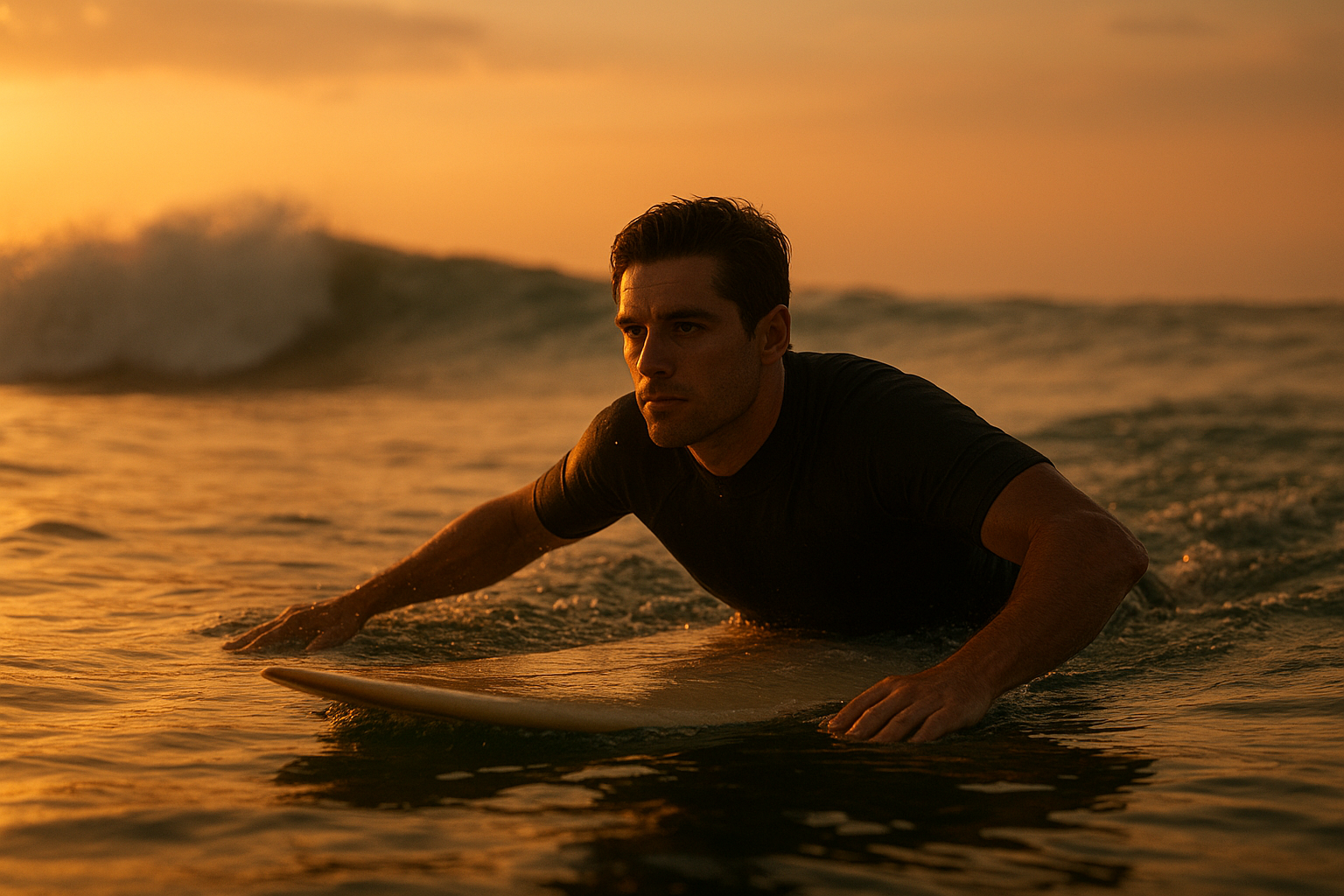
Confidence in the water grows naturally once safety fundamentals become second nature.
Frequently Asked Questions About Ocean Safety Courses for Surfers
What is an ocean safety course for surfers?
An ocean safety course for surfers is a structured training program that teaches wave reading, rip current identification, and basic rescue skills. It focuses purely on hazard awareness rather than surf technique, though the two are often combined in beginner programs.
How long does an ocean safety course typically take?
Most ocean safety courses run between two and four hours for a single session. Multi-day programs that include practical rescue drills can extend across several sessions over a week.
How much do ocean safety courses for surfers cost?
Pricing typically ranges from affordable group workshops to higher-cost private sessions, depending on location and instructor experience. Many surf schools bundle safety instruction into their standard lesson packages at no extra charge.
Why do surfers need ocean safety training instead of just lessons?
Standard lessons focus on paddling and standing up, while safety training addresses hazards like rip currents and shifting swells that lessons rarely cover in depth. Consequently, combining both gives surfers a fuller, more realistic picture of ocean conditions.
What is the difference between a surf lesson and an ocean safety course?
A surf lesson emphasizes board handling, balance, and wave riding, whereas an ocean safety course emphasizes hazard recognition and emergency response. Many quality surf schools blend both elements into one cohesive program.
What skills will I learn in an ocean safety course?
Participants typically learn rip current identification, self-rescue floating techniques, signaling for help, and basic first aid. Some advanced courses also cover CPR and partner-assisted rescues.
Are ocean safety courses suitable for beginners?
Yes, ocean safety courses are especially valuable for beginners since they have the least experience reading ocean conditions. In fact, many instructors recommend safety training before a beginner ever paddles past the shallows.
Do I need my own equipment for an ocean safety class?
No, most surf schools provide rescue tubes, boards, and any required flotation gear for the class. Wearing swimwear suited for extended water exposure is usually all that is required.
What is the most common mistake surfers make regarding ocean safety?
The most common mistake is underestimating rip currents and paddling against them instead of alongside the shoreline. This single error causes a significant share of ocean rescue incidents each year.
Can children take ocean safety courses for surfers?
Yes, many programs welcome children from around age eight with a parent or guardian present. Content is typically simplified and paired with close supervision in shallow, controlled water.
Will I receive a certification after completing the course?
Some surf schools issue a completion certificate, though it is generally informal rather than a government-recognized lifeguard qualification. It still serves as useful documentation of safety training for travel or club requirements.
How often should surfers refresh their ocean safety training?
Refreshing training annually, or whenever surfing in unfamiliar waters, is generally recommended. Ocean conditions and personal fitness both change over time, so periodic review keeps skills sharp.
In conclusion, ocean safety courses for surfers give riders of every level the tools to recognize hazards, respond calmly, and enjoy the water with far greater confidence. From rip current awareness to self-rescue floating and partner-assisted drills, these skills often matter just as much as balance or paddling strength. Whether you are booking your first surf lesson or refreshing skills after years in the water, prioritizing safety training is one of the smartest steps any surfer can take before paddling out. For further reading on rip currents and coastal hazards, resources from the National Weather Service and Wikipedia’s rip current overview offer helpful additional context alongside guidance from the American Red Cross.