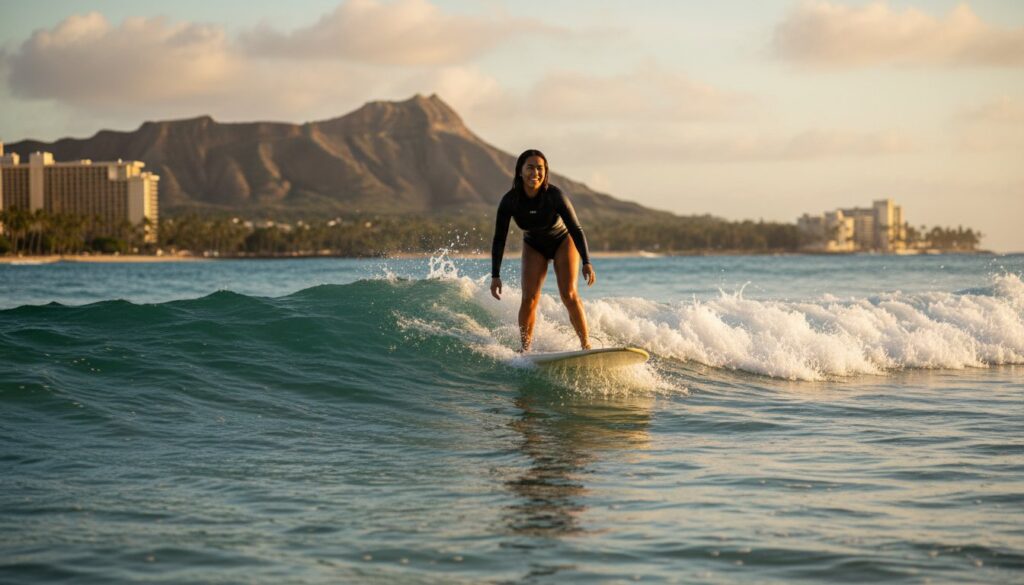
To learn to surf in Waikiki is to experience one of the most joyful, approachable introductions to ocean sports anywhere on the planet. Waikiki’s gently rolling waves, warm turquoise water, and long sandy beach have made it the world’s most celebrated destination for first-time surfers — and for very good reason.
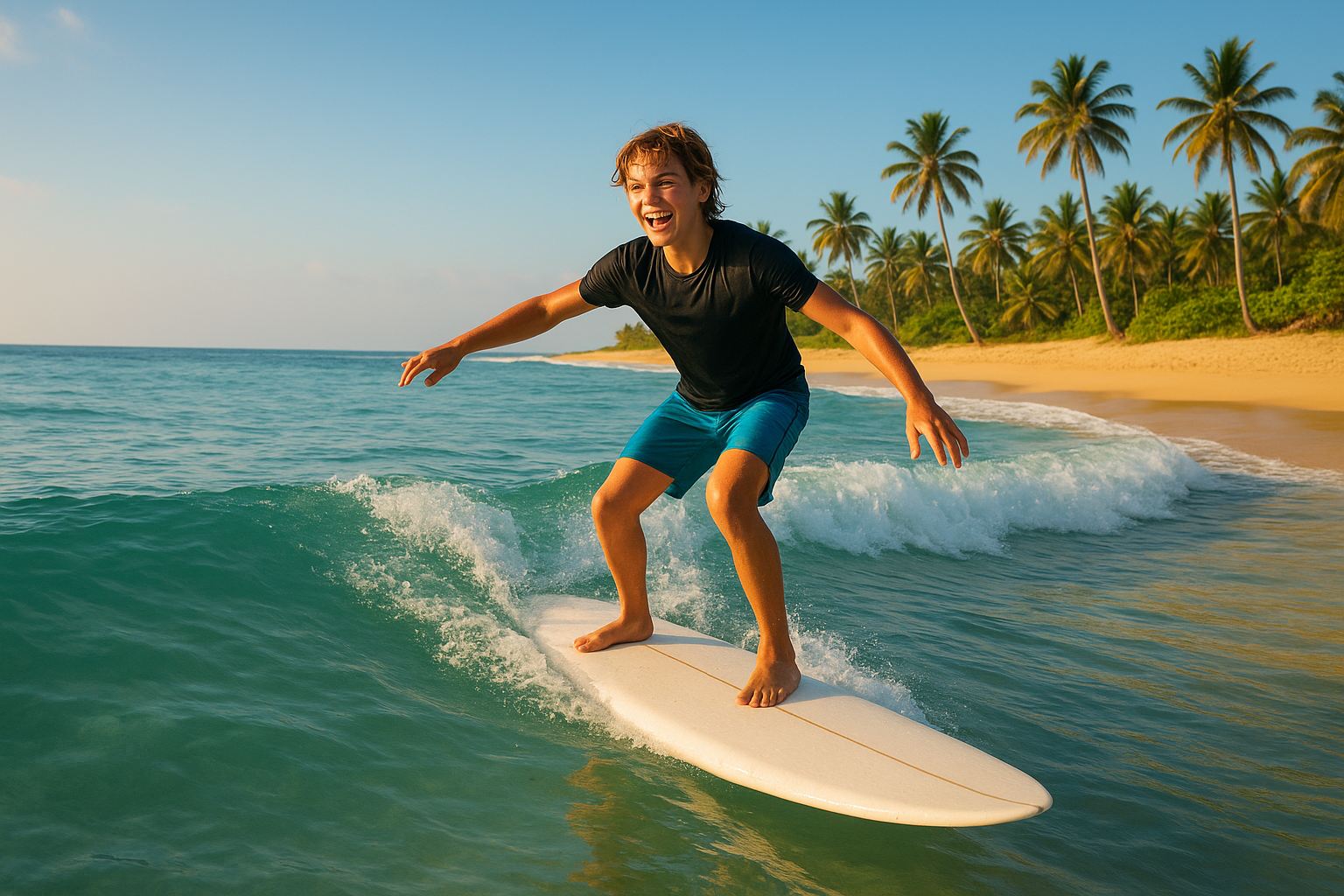
Waikiki’s gentle, rolling waves make it the perfect setting for anyone learning to surf for the first time.
Why Waikiki Is the World’s Best Place for Beginner Surfers
Waikiki Beach, located on the south shore of Honolulu, has been a surfing hub for over a century. According to Wikipedia’s entry on Waikiki, this iconic stretch of coastline is historically linked to Hawaiian royalty who surfed its waters long before tourism existed. Today, that same geography still delivers the ideal beginner conditions.
The waves here break slowly and predictably over a sandy bottom, which means there is very little consequence for a wipeout. Additionally, the water temperature hovers around 78°F to 82°F year-round, so there is no need for a wetsuit. As a result, beginners can focus entirely on technique rather than discomfort.
Furthermore, the sheer number of experienced instructors operating on this beach means you will never struggle to find qualified, professional guidance. The surf culture here is welcoming, patient, and deeply rooted in the Hawaiian spirit of aloha.
What to Expect From Your First Surf Lesson
A typical beginner surf lesson in Waikiki lasts between 60 and 90 minutes. However, the experience begins before you ever touch the water. Most lessons start with a land-based orientation where your instructor covers ocean awareness, surf etiquette, and how to fall safely.
Next, you will practice the pop-up — the motion of going from lying on your board to standing — on the sand. This step is crucial because muscle memory built on land transfers directly to the water. Most first-timers are surprised by how quickly this movement clicks.
Once in the water, your instructor will guide you into the whitewash zone — the area of broken, foamy waves closest to shore. This is the safest and most forgiving part of the ocean for new surfers. In practice, most beginners stand up on their very first or second attempt here.
Quick Answer: Learning to surf in Waikiki means taking a structured lesson on a wide foam longboard in calm, warm waves under the guidance of a certified local instructor. Most beginners stand up on their first wave within the first hour, making Waikiki the fastest and most enjoyable place in the world to get started in surfing.
How to Choose the Right Surf School
With dozens of surf schools operating along Waikiki Beach, choosing the right one can feel overwhelming. Therefore, it helps to know exactly what to look for before you book.
First, look for schools with certified instructors who hold current water safety credentials. Second, check the student-to-instructor ratio — ideally no more than 4 or 5 students per instructor so you receive enough individual attention. Third, read recent reviews to gauge how responsive and encouraging the staff actually are in the water.
Operators like Star Beach Boys bring decades of local expertise and a genuine passion for sharing surfing with visitors. Their instructors are deeply familiar with how Waikiki’s waves behave at different tides and times of day, which is an advantage that goes beyond what any generic review can capture.
Step 1: Book Your Lesson in Advance
Waikiki is one of Hawaii’s busiest destinations, especially between June and August. Consequently, the best surf schools fill their morning slots quickly. Booking at least two to three days ahead guarantees you get a morning session when the ocean tends to be glassiest and the crowds thinnest.
Step 2: Attend the Safety Briefing on the Beach
Every reputable school begins with a thorough land briefing. Pay close attention here — understanding rip currents, right-of-way rules, and how to protect yourself during a wipeout will make your time in the water far more confident and enjoyable.
Step 3: Master the Pop-Up on Dry Land
Lie face-down on the board with your hands beside your chest, then push up and swing your feet under your body in one fluid motion. Your front foot should land roughly in the center of the board, with your back foot near the tail. Practice this at least ten times before entering the water.
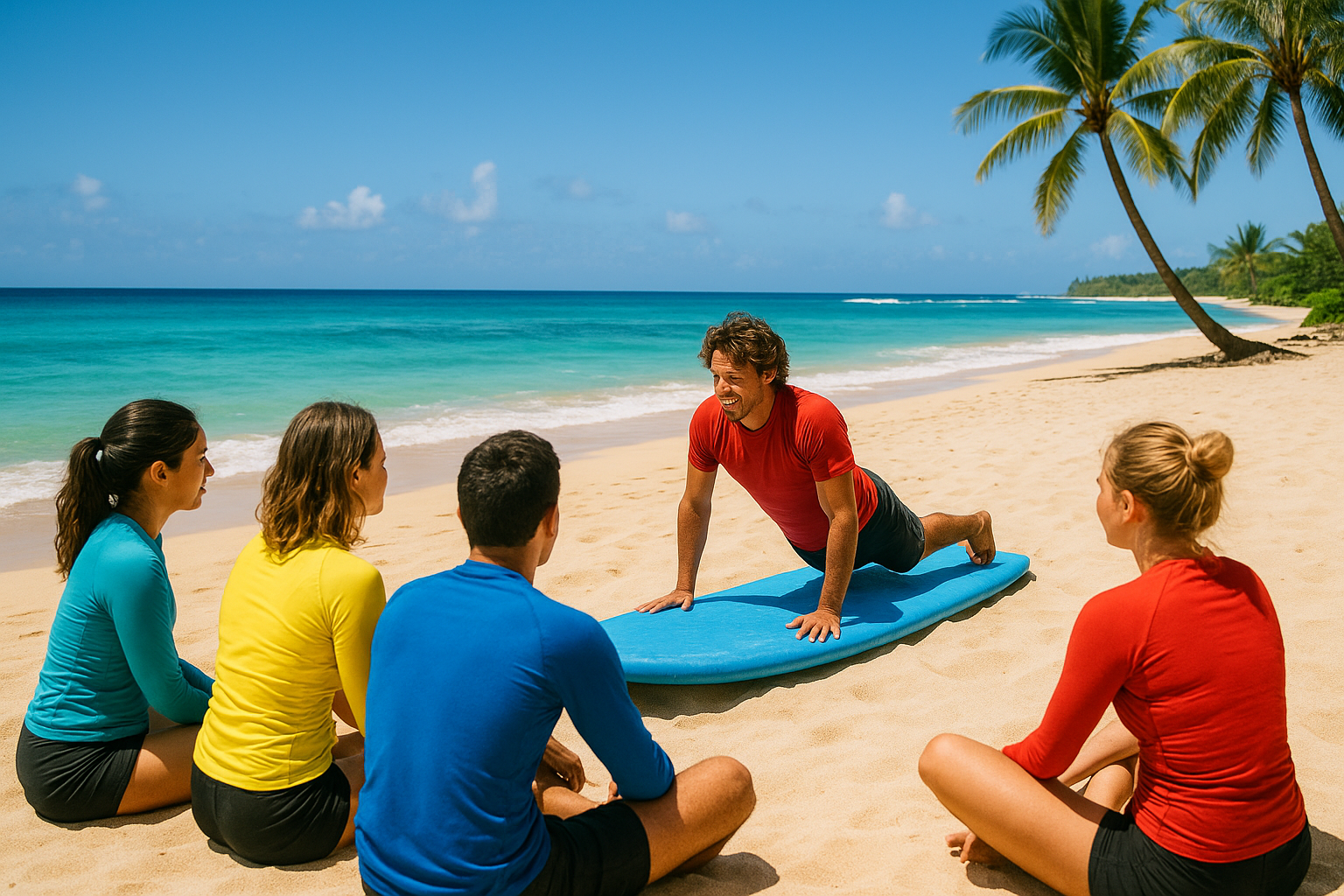
Practicing the pop-up on the sand is one of the most important steps before hitting the Waikiki waves.
Step 4: Paddle Out Into the Whitewash
Keep your body centered on the board — too far forward and the nose will dive; too far back and you will struggle to paddle. Use long, deep arm strokes and keep your chin up. Meanwhile, your instructor will walk alongside you in the shallow water to offer real-time adjustments.
Step 5: Catch Your First Wave and Stand Up
When your instructor calls “paddle,” give three to five powerful strokes. As the wave lifts the tail of the board, execute your pop-up immediately. Look toward the beach — not down at your feet — and bend your knees slightly. Finally, spread your arms out for balance and enjoy the ride.
Choosing the Right Board for Beginners
Board selection is not something most beginners think about, but it makes an enormous difference. For your first session, always use a foam longboard — sometimes called a “foamie” or “soft-top” — that is at least 9 feet long and 22 inches wide.
These boards provide maximum buoyancy and stability, which means you spend more time standing and less time falling. In contrast, shorter performance boards are designed for experienced surfers who generate their own speed and control through advanced technique. Avoid them entirely until you are consistently riding waves with confidence.
All reputable Waikiki surf schools provide foam boards as standard equipment for beginners. Therefore, you do not need to worry about renting or buying your own board for a first lesson.
Common Mistakes That Slow Your Progress
Even in ideal conditions, certain habits can hold beginners back. Recognizing them early helps you improve much faster.
- Looking down at the board — Instead, fix your gaze on the beach ahead. Your body follows your eyes, so looking forward naturally improves your balance.
- Popping up too slowly — The pop-up must be one explosive movement, not a gradual climb. Hesitation causes the wave to pass underneath you.
- Standing with feet too close together — A wider stance lowers your center of gravity significantly, which makes balancing far easier.
- Tensing up — Stiff arms and locked knees work against you. Relax your body and let the board move beneath you naturally.
- Paddling with bent elbows — Straight arms and cupped hands generate far more power and speed when catching a wave.
What to Bring and How to Prepare
Preparation makes a real difference in how much you enjoy your session. Because Hawaii’s sun is intense even on overcast days, apply reef-safe sunscreen at least 20 minutes before entering the water. This protects both your skin and the coral reef ecosystem.
Wear a swimsuit you can move freely in, and ask your surf school whether a rash guard is provided. Most schools include one. Additionally, bring a towel, a change of clothes, and a water bottle — paddling is a surprisingly effective workout and you will finish the session thirsty.
Finally, arrive at least 15 minutes early. This gives you time to check in, apply sunscreen properly, and mentally prepare before the briefing begins.
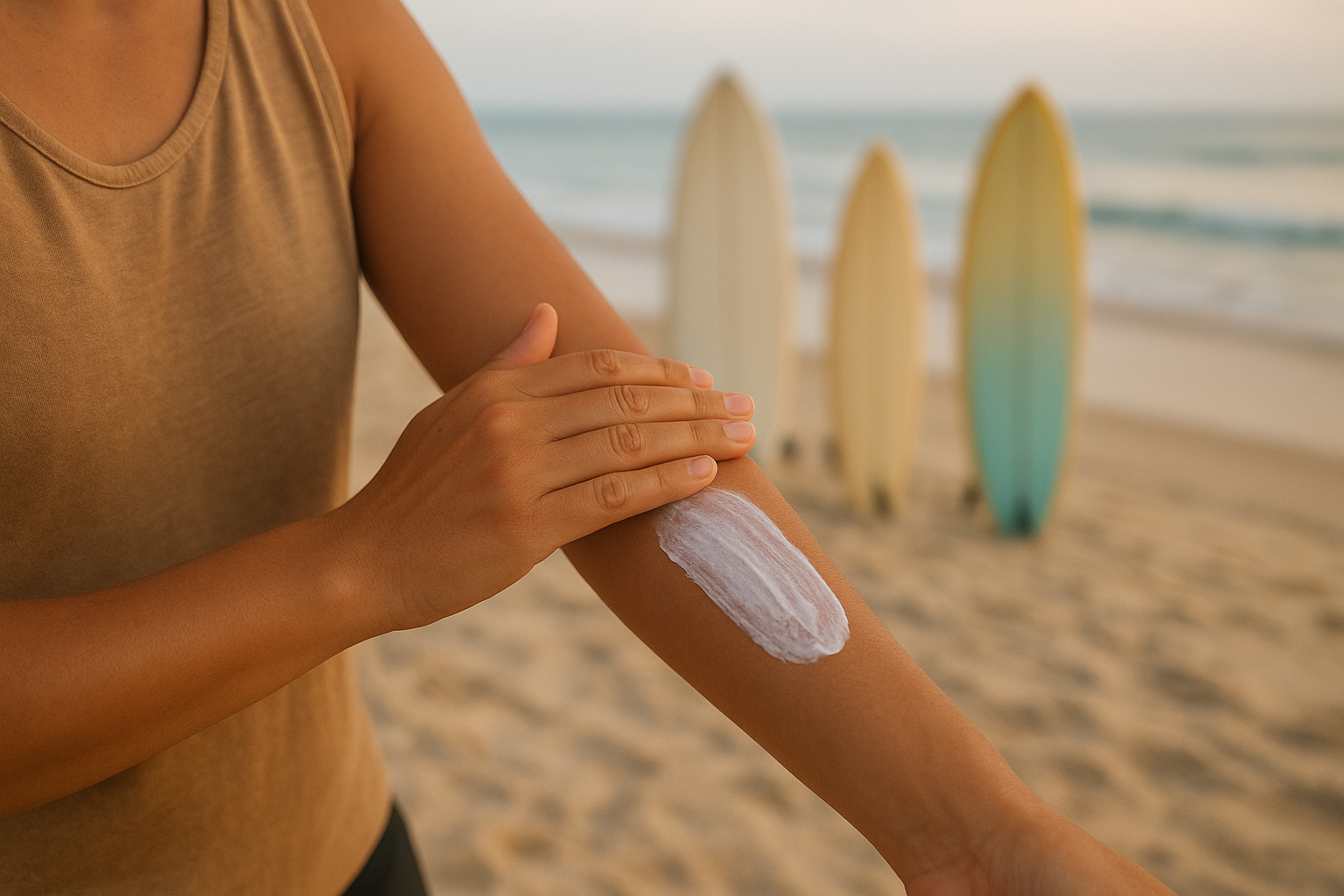
Applying reef-safe sunscreen before your lesson protects both your skin and Hawaii’s fragile coral reef ecosystem.
How to Keep Improving After Your First Lesson
One lesson is enough to catch your first wave, but consistent improvement requires repetition. If you are staying in Waikiki for several days, book two or three lessons on consecutive mornings. Each session builds directly on the last, and progress accelerates rapidly once your body internalizes the basic movements.
Between lessons, rent a foam board and spend time in the whitewash zone on your own. Simply paddling and practicing your pop-up without instruction reinforces muscle memory effectively. Additionally, watching experienced surfers from the beach is genuinely educational — observe how they read waves and position their bodies.
Resources like Star Beach Boys offer multi-day lesson packages specifically designed to take beginners from their first pop-up to confidently riding open-faced waves. This structured progression is the fastest path to real surfing ability.
Key Takeaway
To learn to surf in Waikiki successfully, book a certified lesson, use a large foam board, master the pop-up on sand first, and trust the process. Waikiki’s waves are genuinely forgiving — almost everyone rides their first wave here within the first session.
Frequently Asked Questions
Is Waikiki a good place to learn to surf?
Yes — Waikiki is widely considered one of the best places in the world to learn to surf. The beach offers consistently gentle, rolling waves, a sandy bottom, and warm water year-round, making it ideal for absolute beginners.
How long does it take to stand up on a surfboard in Waikiki?
Most beginners stand up on their first wave within the first 30 to 60 minutes of a lesson. The forgiving conditions and wide foam boards used in lessons make early success very achievable.
Do I need any experience to take a surf lesson in Waikiki?
No prior experience is required. Instructors start with beach safety and basic technique before entering the water, so complete beginners are fully welcome and well catered for.
What type of surfboard should beginners use?
Beginners should use a large foam longboard, typically 9 to 10 feet long. These boards provide maximum stability and buoyancy, which makes it much easier to balance and catch waves. Your surf school will provide one as standard.
How much does a surf lesson in Waikiki cost?
Group surf lessons typically cost between $30 and $60 per person for a 1- to 2-hour session. Private lessons generally range from $80 to $150 per hour depending on the instructor and school.
What is the best time of year to surf in Waikiki?
Waikiki is suitable for beginner surfing year-round. However, summer months from May to September tend to produce smaller, calmer south swells that are especially gentle for first-timers.
What should I wear for a surf lesson?
Wear a swimsuit you can move freely in and apply reef-safe sunscreen before your lesson. Many surf schools provide rash guards for sun protection, so check when booking whether one is included.
Is surfing in Waikiki safe for children?
Yes — Waikiki’s calm waves and shallow sandy bottom make it one of the safest surf spots for children. Most surf schools accept students as young as 5 or 6 years old, provided they are comfortable in the water.
How many people are in a typical group lesson?
Group lessons in Waikiki usually maintain a student-to-instructor ratio of 4:1 or 5:1. This balance allows instructors to give meaningful individual feedback while keeping the experience affordable.
What common mistakes do beginners make when surfing?
Common mistakes include looking down at the board, popping up too slowly, and standing with feet too close together. A qualified instructor will identify and correct these habits early so they do not become ingrained.
Can I rent a surfboard without taking a lesson?
Yes, board rentals are widely available along Waikiki Beach. However, taking at least one lesson first is strongly recommended so you understand ocean safety, right-of-way rules, and basic paddling technique before heading out independently.
How do I choose a reputable surf school in Waikiki?
Look for schools staffed by certified instructors with strong safety records and positive reviews. Operators with deep local roots, such as Star Beach Boys, bring genuine expertise and enthusiasm that makes learning both safe and memorable.
Your First Wave Is Waiting
There is truly no better place on Earth to learn to surf in Waikiki than right here, where the ocean is warm, the waves are forgiving, and the culture of surfing runs deeper than anywhere else in the world. Whether you are visiting for a week or spending a month in Hawaii, a surf lesson at Waikiki is one experience you will carry with you long after you leave the island.
Book your lesson with a certified local school, show up ready to have fun, and trust the process. Because the moment that first wave lifts you and you find your feet — that feeling is something no amount of preparation can fully describe. You simply have to experience it for yourself.