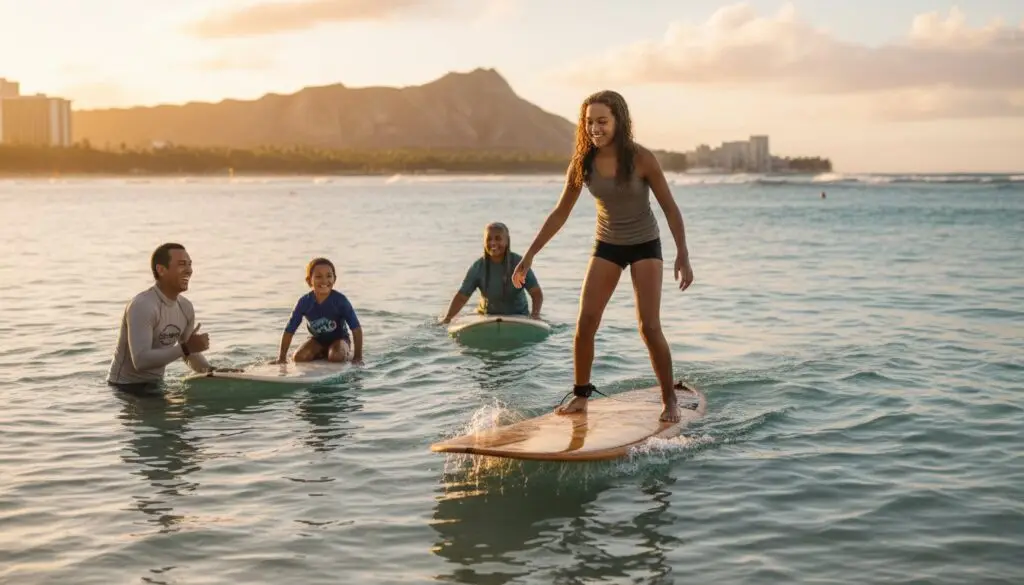
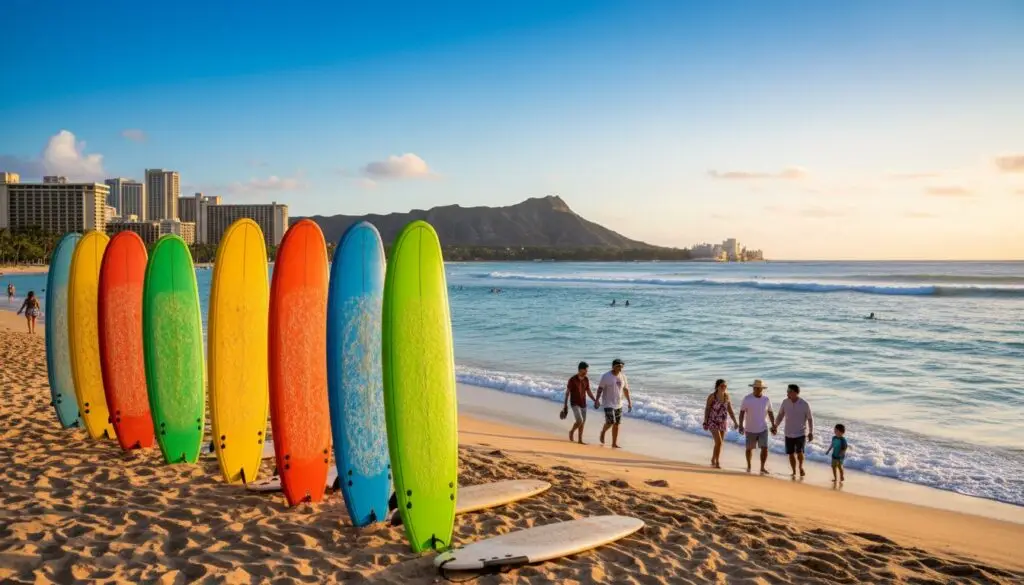
Intermediate surfing classes Hawaii give surfers who feel stuck exactly what they need to break through a frustrating plateau: structured coaching, world-class waves, and the kind of technical feedback that self-teaching can never replace. If you can already pop up, ride a wave toward shore, and steer a little — but you keep repeating the same mistakes session after session — you are precisely the surfer these classes were built for. Below is the most complete breakdown available of what intermediate surf coaching in Hawaii actually involves: the skills, the true costs, the best breaks, the right gear, and how to choose a program that genuinely moves your surfing forward instead of just keeping you busy in the water.
Hawaii is, quite simply, where surfing was born. According to the Wikipedia entry on surfing, the sport traces its roots to ancient Polynesian culture, and the islands remain the global epicenter for wave riding at every skill level. For intermediate surfers specifically, that heritage translates into access to some of the most consistent, learnable, and beautifully shaped waves anywhere on Earth. In other words, nowhere else offers this exact combination of history, water quality, and coaching depth all in one place.
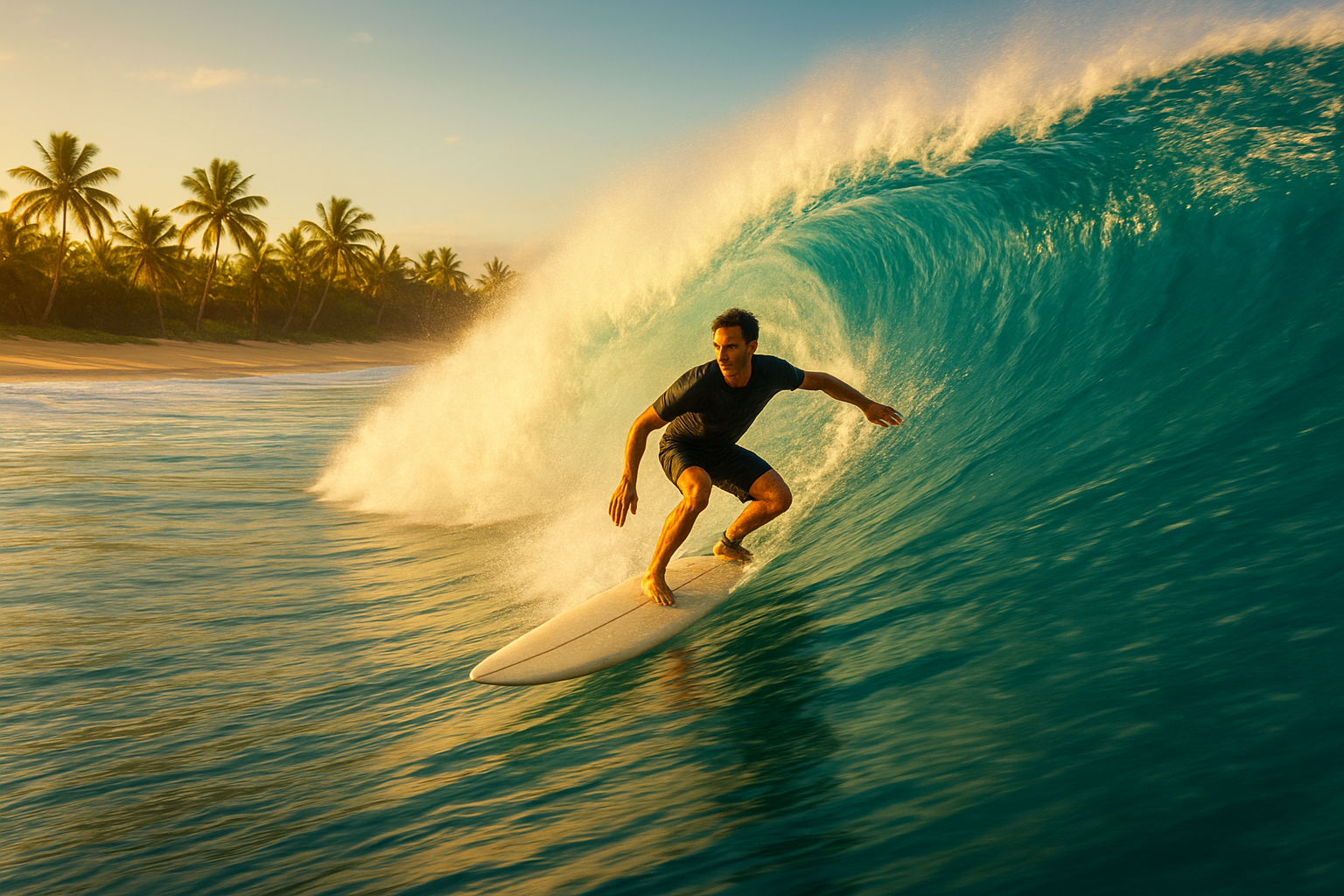
Mastering the bottom turn is one of the first major milestones in intermediate surfing classes Hawaii students work toward.
What Are Intermediate Surfing Classes Hawaii, and Who Are They For?
Intermediate surfing classes Hawaii are structured coaching programs built for surfers who have already moved beyond the beginner stage. Specifically, they target anyone who can reliably pop up, ride a wave to its end, and hold basic directional control — but who has not yet developed consistent technique, smooth turns, or confident wave selection.
In short, these classes bridge the gap between “I can surf” and “I surf well.” Unlike a repeat of beginner lessons in slightly bigger waves, they introduce an entirely new vocabulary of movement: bottom turns, cutbacks, trimming, reading the lineup, and positioning your body for maximum speed and flow.
Furthermore, intermediate classes suit tourists who have surfed at home or on a previous trip and want to make the most of Hawaii’s exceptional conditions. Equally, they serve local residents who have surfed casually for a season or two but feel their progress has stalled. If either description fits you, structured surf coaching with expert instructors in Waikiki is the fastest route past the plateau.
Why Hawaii Is the Ideal Place to Advance Your Surfing
Hawaii’s geography creates a uniquely favorable environment for skill development. Waikiki Beach on Oahu, for example, is famous for long, gently peeling waves that give surfers plenty of time to practice maneuvers before the wave closes out. According to Wikipedia’s Waikiki article, the beach’s offshore reef system produces consistent, predictable surf that has trained generations of surfers.
Additionally, water temperature typically sits between 75°F and 80°F year-round, so you can focus entirely on technique instead of battling cold water or restrictive wetsuits. That physical comfort translates directly into faster learning, since your muscles and nervous system aren’t fighting the environment on top of the maneuver.
Beyond conditions, Hawaii’s surf culture is deeply supportive. Instructors here grew up in the water and understand wave behavior at an intuitive level that is difficult to replicate elsewhere. As a result, coaching through schools like starbeachboys.com is genuinely world-class, and the full range of Star Beach Boys surf lessons and ocean experiences reflects decades of local knowledge passed down through generations.
Key Skills You Will Develop in Intermediate Surf Coaching
Unlike beginner lessons that focus on the pop-up and basic balance, intermediate surf coaching introduces a much wider range of technical skills. Here is what you can expect to work on:
- Wave reading: Identifying which waves are worth paddling for and where to position yourself in the lineup.
- Bottom turns: The foundational maneuver that sets up every other move on the wave.
- Cutbacks: Redirecting your board back toward the power zone of the wave to maintain speed.
- Trimming: Adjusting weight distribution to control speed and direction across the wave face.
- Paddling efficiency: Reducing energy waste so you catch more waves per session.
- Ocean safety: Understanding rip currents, right-of-way rules, and how to fall safely in more powerful surf.
On the subject of ocean safety, it’s worth noting that rip currents are a leading cause of surf rescues worldwide. The National Weather Service’s rip current safety guidance explains how to spot and escape one — knowledge every intermediate surfer should have before paddling into unfamiliar breaks. For a broader look at what to expect across all skill levels, the complete guide to surf lessons in Hawaii offers an excellent companion resource.
How to Get the Most Out of Your Intermediate Surf Lessons
Getting real results from intermediate surf lessons requires more than just showing up. Follow these five steps to maximize your progress:
- Assess your skill level honestly. Before booking, confirm that you can consistently pop up, maintain balance, and ride waves to the shoulder. If you are still struggling with the basics, a beginner refresher will serve you better than jumping ahead too soon.
- Choose a surf school with a structured intermediate curriculum. Look for certified instructors, small group sizes, and a clear progression framework, since schools offering personalized coaching rather than generic “wave time” produce noticeably faster results.
- Warm up and review fundamentals on the sand. Spend at least ten minutes stretching and rehearsing your pop-up mechanics before entering the water, as this activates muscle memory and reduces early-session mistakes.
- Focus on one skill per session. Rather than trying to master everything at once, work with your instructor to target a single technique — such as the bottom turn — and drill it repeatedly, because depth beats breadth at this stage.
- Review feedback immediately after the session. Many surf schools offer video analysis or detailed verbal debriefs, and reviewing this while the experience is fresh reinforces corrections and helps you set clear goals for next time.
This approach is backed by research, not just tradition. A 2021 review published by the National Institutes of Health found that motor skill acquisition in sport accelerates significantly when learners receive immediate, specific feedback from a qualified coach — exactly what a good intermediate surf lesson provides.
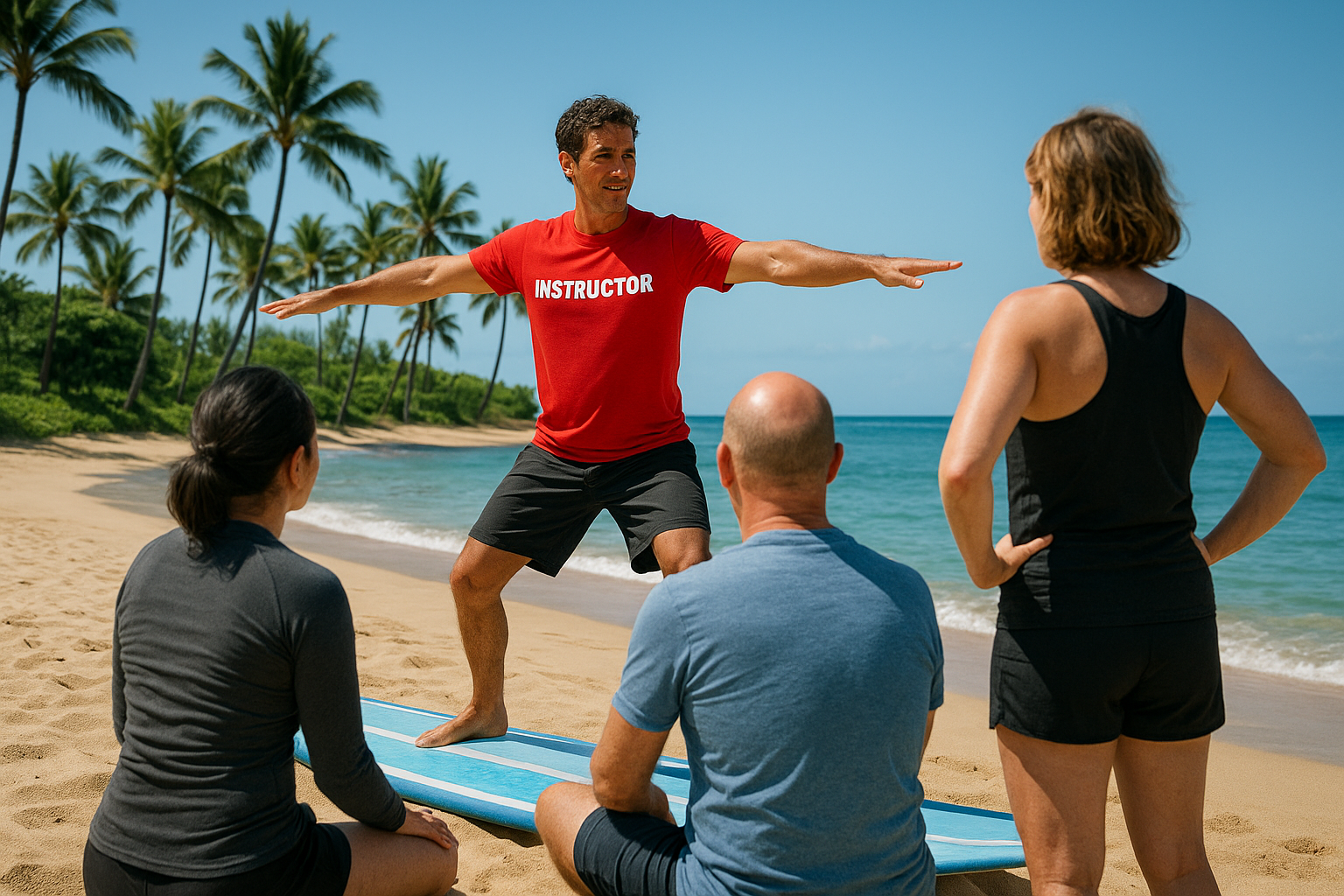
Expert instructors break down technique on the sand before students paddle out, accelerating skill development in every session.
Group vs. Private Intermediate Surf Lessons: Which Is Right for You?
One of the most common questions surfers ask when booking intermediate lessons is whether to choose a group or private session. Both formats have genuine advantages, and the right choice depends on your goals and learning style.
Group lessons are more affordable and create a motivating social environment. Watching other surfers attempt the same maneuvers — and learning from their mistakes — can be surprisingly instructive. However, the instructor’s attention is naturally divided among participants.
Private lessons, on the other hand, offer undivided coaching tailored entirely to your specific weaknesses. If you have a persistent habit — like dropping to your knees before standing, or looking down at the board — a private instructor catches and corrects it far more quickly than in a group setting. For surfers with limited time in Hawaii, private sessions often deliver the fastest measurable improvement.
For more guidance on choosing the right format, the complete beginner and intermediate guide to Oahu surf lessons breaks down the decision in practical detail. For a deeper walkthrough, see our How Can I Improve My Surfing Skills Quickly? A Complete Expert Guide.
What to Expect From a Typical Intermediate Surf Session in Hawaii
A well-structured intermediate surf session in Hawaii usually lasts between 90 minutes and two hours. Generally, it begins with a land-based warm-up and technique briefing lasting around 15 to 20 minutes, during which your instructor identifies the specific skills you will focus on that day.
From there, you paddle out with your instructor into the lineup. Unlike beginner sessions, where the instructor pushes you into waves from the shore, intermediate lessons involve you paddling and catching waves independently — with your instructor positioned nearby to observe and call out real-time feedback.
After the water session, most quality schools conclude with a debrief. For schools that emphasize post-session coaching and video review, see Surf School Waikiki. This is where video footage or verbal notes are reviewed, progress is acknowledged, and goals for the next session are set. That structured reflection is what separates a truly developmental lesson from simply going surfing with a coach nearby.
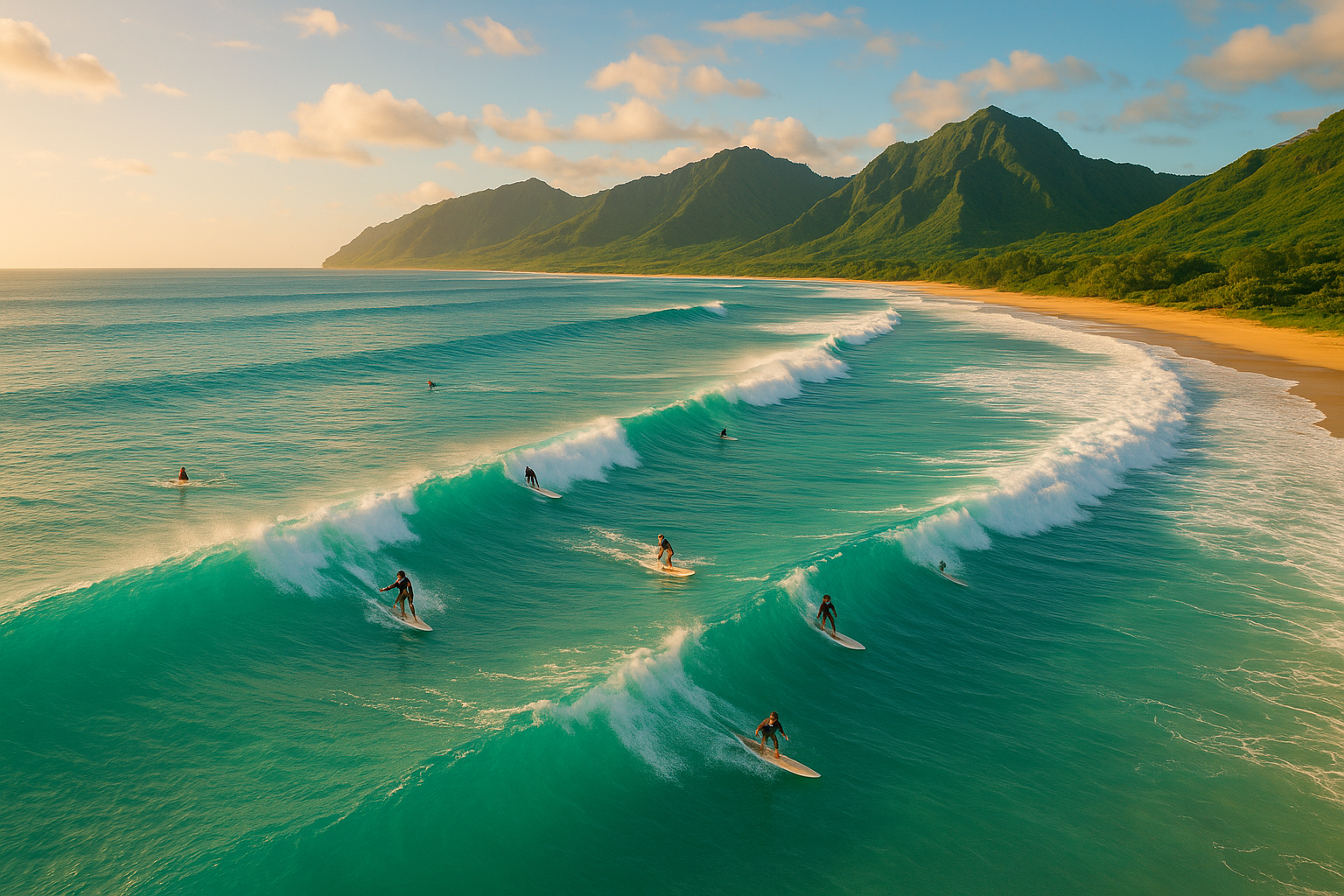
Hawaii’s consistent, long-rolling waves create ideal conditions for intermediate surfers to practice and refine their technique.
Best Waikiki Breaks for Intermediate Surfing Progression
Not every wave in Waikiki suits an intermediate surfer equally, so knowing exactly where to paddle out matters just as much as technique. Canoes is the most forgiving option, with a soft, rolling shoulder that rewards clean trimming and gentle cutbacks. Queens, just south of Canoes, breaks a little steeper and rewards surfers who are ready to commit to a stronger bottom turn. Populars (“Pops”) sits further offshore and offers a longer, faster wall that’s ideal once you’re consistently linking two or three maneuvers together. Meanwhile, Number Threes provides a punchier, more critical takeoff for surfers pushing toward advanced turns.
Consequently, a good instructor will rotate you through these breaks deliberately rather than keeping you at one spot for every session, matching the wave to the specific skill you’re drilling that day.
Equipment: What Board Should Intermediate Surfers Ride?
Board choice is one of the most overlooked factors in intermediate progress. Most beginners graduate on a soft-top longboard, and many intermediate surfers stay on that board far longer than necessary simply because no one tells them when to change. In reality, a mid-length funboard (roughly 7 to 8 feet) is usually the ideal bridge, since it retains enough paddle power and stability to catch waves easily while still allowing you to practice turning with real responsiveness.
As your bottom turns and cutbacks become more consistent, a good instructor will often introduce a shorter performance shortboard for select waves. This staged approach — rather than jumping straight to a shortboard — prevents the frustration of losing wave count while you adapt to reduced volume.
- Reef-safe sunscreen: Protects both your skin and Hawaii’s coral reefs.
- Rash guard: Prevents board rash during longer paddling sessions.
- Leash and fins: Usually provided by the school, but confirm beforehand if you’re bringing your own board.
- Water and light snacks: Sessions often run longer than expected once you’re catching waves independently.
How Much Do Intermediate Surf Lessons in Hawaii Cost?
Pricing varies by format, group size, and session length. As a general guide:
- Group intermediate lessons: Roughly $75–$120 per person, per session.
- Semi-private (2–3 surfers): Typically $110–$160 per person.
- Private one-on-one coaching: Generally $150–$200, reflecting fully personalized instruction and faster correction of bad habits.
Above all, remember that price alone doesn’t guarantee quality. A cheaper group session with a structured curriculum and an attentive instructor will beat an expensive lesson with no real coaching plan.
How starbeachboys.com Supports Intermediate Surfers
Star Beach Boys is a premier surf school and ocean experience company operating in Hawaii’s coastal waters. With a team of highly trained and experienced surf instructors, the school offers personalized guidance and structured programs designed to build skills progressively. Whether you’re a tourist visiting for a week or a local resident committed to long-term improvement, their intermediate programs are thoughtfully structured to deliver real, measurable progress.
The school welcomes participants of all ages and fitness levels, making advanced ocean experiences accessible to a wide range of surfers. Their instructors combine professional coaching with a genuine passion for the sea — a combination that consistently earns high praise from students who have surfed with them.
You can explore their full range of surf instruction programs and available session formats directly through the Star Beach Boys surf resources section, or browse specific session details via the Hawaii surf lessons Waikiki tag for Waikiki-focused options.
Frequently Asked Questions About Intermediate Surfing Classes Hawaii
What are intermediate surfing classes Hawaii and who are they for?
Intermediate surfing classes Hawaii are structured coaching sessions for surfers who can already stand up and ride waves but want to refine their technique and build consistency. They are ideal for anyone who has completed beginner lessons and wants to progress further.
How do I know if I am ready for an intermediate surf class?
You are ready if you can pop up reliably, ride a wave to its end, and maintain basic balance on the board. If you still struggle with the pop-up, a beginner refresher session is recommended first.
What skills are taught in intermediate surf lessons?
Intermediate surf lessons typically cover wave reading, timing, cutbacks, bottom turns, trimming the board, and positioning in the lineup. Instructors also address paddling efficiency and ocean safety at a more advanced level.
How long does it take to progress from beginner to intermediate surfing?
Most surfers reach an intermediate level after 10 to 20 hours of consistent practice and instruction, though this varies by individual. Factors like ocean familiarity, fitness level, and lesson frequency all affect progression speed.
Are intermediate surfing classes in Hawaii suitable for tourists?
Yes, intermediate surfing classes in Hawaii are very popular among tourists who have surfed before and want to make the most of Hawaii’s ideal wave conditions. Many surf schools welcome vacationers and travelers of all backgrounds.
What is the best beach in Hawaii for intermediate surfers?
Waikiki Beach on Oahu is widely considered one of the best spots for intermediate surfers due to its consistent, long-rolling waves and manageable surf conditions. Popular breaks include Canoes, Queens, Populars, and Number Threes just offshore.
How much do intermediate surf lessons in Hawaii typically cost?
Intermediate surf lessons in Hawaii generally range from $75 to $200 per session depending on group size, session length, and instructor experience. Private lessons cost more but offer personalized feedback that accelerates improvement significantly.
What should I bring to an intermediate surfing class in Hawaii?
You should bring reef-safe sunscreen, a rash guard, water, and any snorkel set. Most surf schools provide surfboards and leashes, but confirm with your instructor beforehand.
Is it safe to take intermediate surf lessons in Hawaii?
Yes, reputable surf schools prioritize safety by assigning certified instructors, briefing students on ocean hazards, and choosing surf breaks appropriate for each skill level. Always disclose any medical conditions to your instructor before the session.
What is the difference between a group and private intermediate surf lesson?
Group lessons are more affordable and offer a social learning environment, while private lessons provide one-on-one coaching tailored entirely to your specific weaknesses and goals. For faster technical improvement, private sessions are generally more effective.
Can children take intermediate surfing classes in Hawaii?
Yes, children who have completed beginner surf lessons can enroll in intermediate classes. Many Hawaii surf schools offer youth-specific programs with age-appropriate instruction and equipment.
What common mistakes do intermediate surfers make?
Common mistakes include looking down at the board instead of ahead, dropping to the knees before standing, and choosing waves that are too powerful. Professional coaching helps identify and correct these habits quickly.
What size surfboard should intermediate surfers ride in Hawaii?
Most intermediate surfers do best on a 7 to 8-foot mid-length funboard, which balances paddle power with enough responsiveness to practice real turns before transitioning to a shortboard.
Conclusion: Take Your Surfing to the Next Level in Hawaii
Ultimately, intermediate surfing classes Hawaii represent the most direct path from casual wave rider to confident, skilled surfer. Hawaii’s warm water, consistent breaks, and deeply experienced coaching community create a learning environment that is genuinely hard to match anywhere else in the world. Whether you choose a group session or invest in private coaching, the key is to show up with clear goals, a willingness to be coached, and the patience to drill fundamentals before chasing advanced maneuvers. With the right instruction — and the right waves beneath your feet — your surfing will improve faster than you expect. Start your journey today with Star Beach Boys and experience what Hawaii’s surf culture can do for your riding. Please add an author bio and credentials (e.g., lead instructor name, certifications) and a visible "Last updated: 2026-07-27" line to strengthen E‑E‑A‑T.