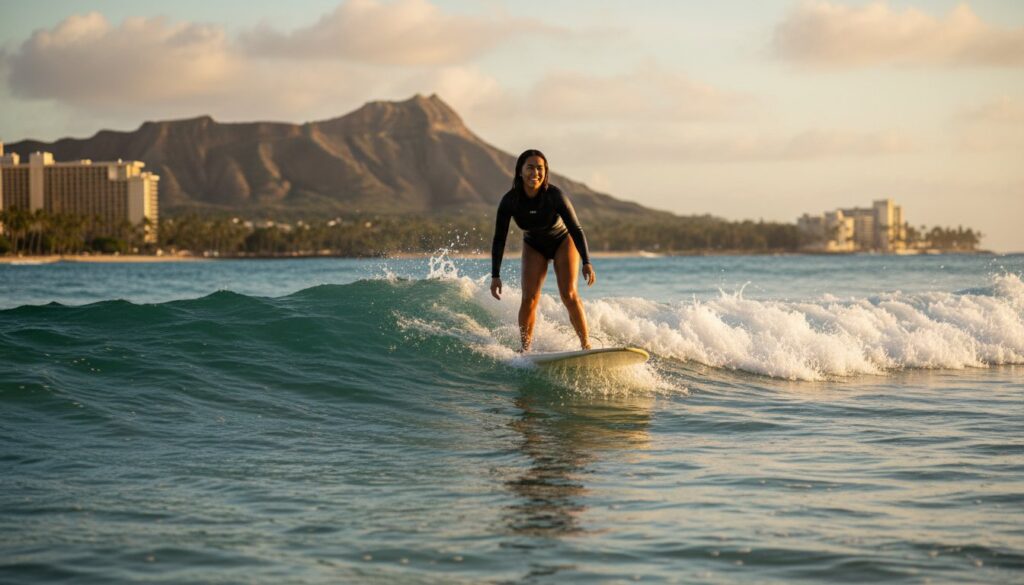
Group surf lessons Hawaii are one of the most exhilarating ways to experience the islands, combining professional instruction, the energy of fellow learners, and the world-famous waves of the Pacific. Whether you are a first-time visitor or a returning traveler looking to finally conquer the ocean, a group lesson offers an accessible, social, and affordable path to riding your first wave. Hawaii’s warm water, gentle beginner breaks, and deeply rooted surf culture make it the ideal destination to learn this iconic sport.
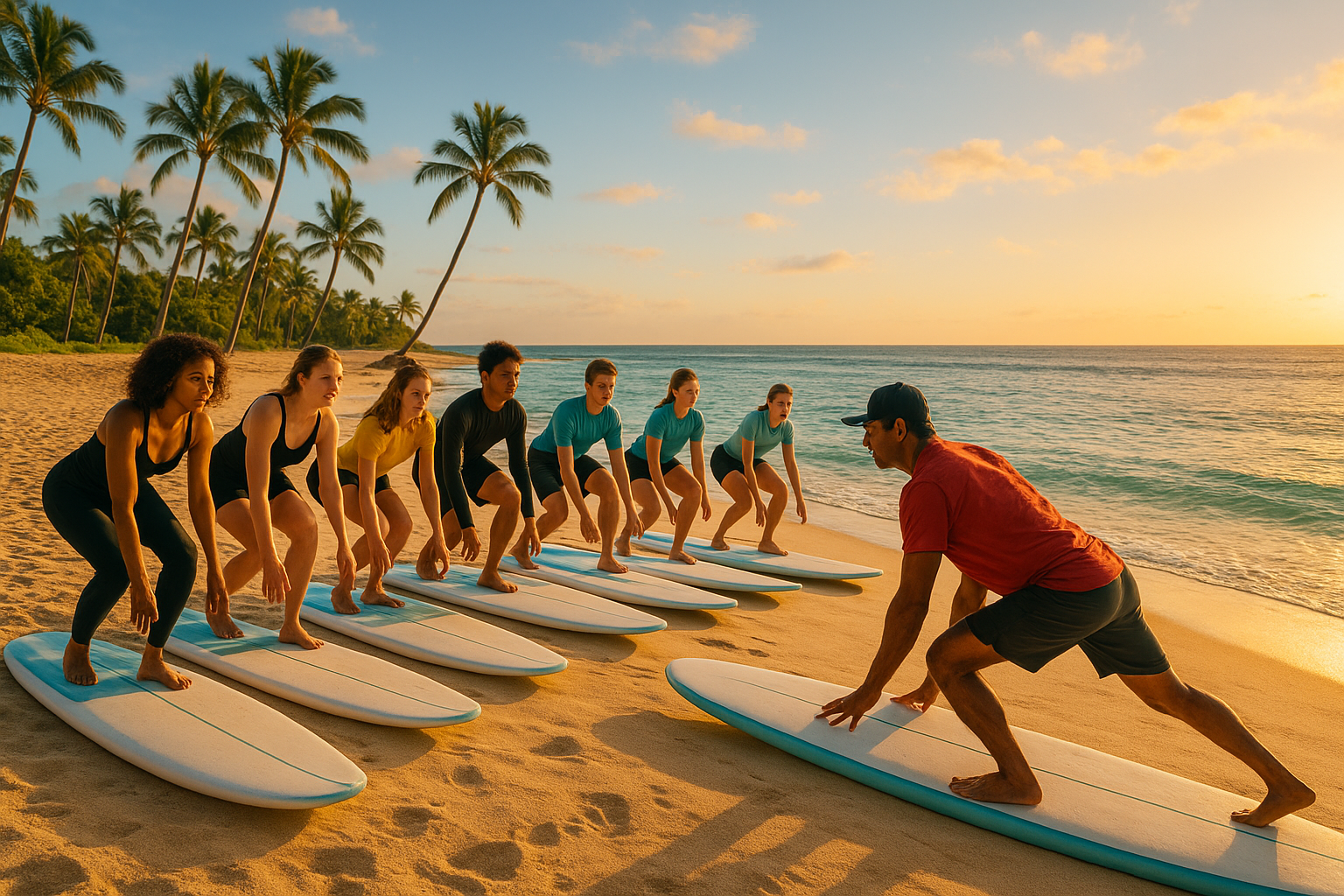
Group surf lessons Hawaii begin on the sand, where instructors cover stance, paddling, and safety before anyone enters the water.
What Makes Hawaii the Perfect Place to Learn Surfing?
Hawaii is considered the birthplace of modern surfing, with a cultural history stretching back centuries to ancient Polynesian voyagers. Today, that heritage lives on at beaches like Waikiki, where long, rolling waves break slowly over a shallow reef, giving beginners plenty of time to find their footing. Because of this, Waikiki has become the global benchmark for beginner surf instruction.
Additionally, the water temperature in Hawaii stays between 73°F and 80°F year-round, so there is no need for a wetsuit. As a result, students can focus entirely on technique rather than staying warm. The consistent trade winds and seasonal swells also mean that instructors can nearly always find a calm, protected pocket of ocean suitable for new learners.
Why Choose a Group Lesson Over a Private Session?
Many visitors wonder whether to invest in a private lesson or join a group. In practice, group surf lessons offer several compelling advantages that make them the preferred choice for most beginners. First, the cost is significantly lower — typically $35 to $75 per person compared to $100 to $200 for a private session. For families or friend groups, those savings add up quickly.
However, the financial benefit is only part of the story. Group lessons create a shared energy that is genuinely motivating. When you watch a fellow student stand up for the first time, you feel inspired to push through your own hesitation. Instructors also use group dynamics strategically, offering real-time feedback to one student while others observe and internalize the lesson. Therefore, learning in a group can actually accelerate your progress in unexpected ways.
Furthermore, group lessons are an excellent social experience. Many travelers book them for bachelorette parties, family reunions, school trips, and corporate team-building events. The shared challenge of learning to surf creates lasting memories and genuine bonds between participants.
What to Expect During Your First Lesson
A typical group lesson in Hawaii lasts between 1.5 and 2 hours. The session begins on dry sand, where your instructor walks the group through ocean safety, surfboard handling, paddling mechanics, and the all-important pop-up — the motion of going from lying flat to standing on the board. This land-based briefing usually takes 20 to 30 minutes and is essential for building muscle memory before you ever touch the water.
Once in the water, instructors position students in the break zone and physically push boards into waves while calling out timing cues. Most beginners successfully stand up during their very first session, particularly at gentle breaks like Waikiki. Although it may feel awkward at first, the wide foam longboards used in beginner lessons provide exceptional stability, making the pop-up far more achievable than most people expect.
How to Prepare for Your Lesson
Preparation is straightforward. Follow these five steps to make the most of your time on the water:
- Choose the right surf school — Look for certified instructors, strong reviews, and a clear safety policy. Schools like Star Beach Boys have built strong reputations for quality instruction at Waikiki.
- Book in advance — Peak season fills up fast, so reserve your spot online as early as possible to guarantee availability.
- Wear a swimsuit and apply reef-safe sunscreen — Boards, leashes, and rash guards are typically provided, so you only need to bring yourself and sun protection.
- Arrive 10 to 15 minutes early — This allows you to complete any waivers and be fully present for the on-beach safety briefing.
- Follow your instructor’s timing cues — Commit to the pop-up, stay relaxed, and trust the process. Tension in your body is the most common reason beginners fall.
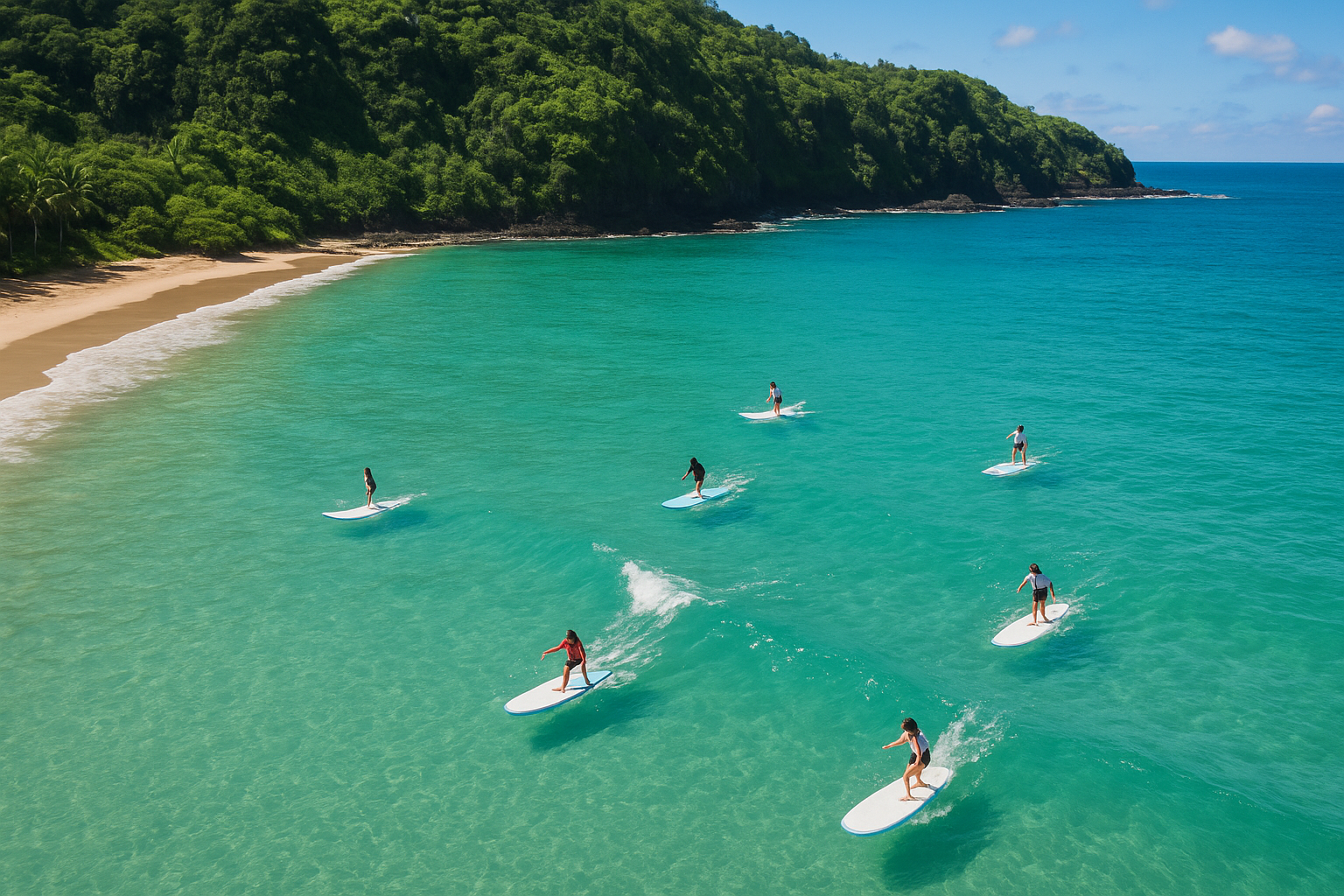
Hawaii’s calm, warm bays provide the ideal setting for beginner surfers learning to catch their first waves.
Choosing the Best Location Across the Islands
While Oahu’s Waikiki Beach is the most popular destination for beginner lessons, several other locations across the Hawaiian Islands are equally welcoming. On Maui, Lahaina and Kihei offer warm, sheltered breaks with consistent small surf. Meanwhile, Poipu Beach on Kauai provides a picturesque and calm environment that is particularly well-suited to children and nervous beginners.
On the Big Island, Kahaluu Beach Park near Kona is a favorite among local surf schools. However, it is worth noting that the Big Island has fewer beginner-friendly surf spots compared to Oahu or Maui, so it is important to book with a school that knows the local conditions well. In contrast, Oahu’s sheer number of certified schools and instructors makes it the most reliable choice for a first-time group lesson experience.
Safety Standards and What to Look for in a Surf School
Safety is the most important factor when choosing a surf school. Reputable schools maintain an instructor-to-student ratio of no more than 1:6, ensuring that every participant receives adequate supervision. Additionally, instructors should hold current lifeguard certifications and CPR training. Before booking, always confirm these credentials directly with the school.
Beyond certifications, look for schools that use appropriate equipment. Beginners should always learn on soft-top foam longboards, which are far safer than hard fiberglass boards in crowded lineups. Quality schools also conduct thorough pre-water briefings that include ocean hazard awareness, rip current identification, and etiquette rules for sharing waves with other surfers.
For a trusted example of what a well-run surf school looks like, Star Beach Boys is a well-regarded option at Waikiki that combines experienced local instructors with a strong safety-first approach to group instruction.
Common Mistakes Beginners Make and How to Avoid Them
Even with excellent instruction, certain mistakes tend to appear repeatedly among new surfers. Understanding them in advance gives you a meaningful advantage. First, many beginners look down at their feet instead of forward toward the horizon. This shifts your weight backward and causes the nose of the board to rise, stalling your momentum. Instead, fix your gaze on the shore and let your peripheral vision manage your footing.
Second, students often hesitate on the pop-up. Because surfing waves move quickly, any delay between the instructor’s cue and your movement means the wave passes beneath you. Therefore, practice your pop-up motion on the sand until it becomes automatic before entering the water.
Finally, tension is the enemy of balance. Beginners who grip the rails of the board tightly or stiffen their knees tend to fall more frequently than those who stay loose and let their core absorb the board’s movement. Bending your knees slightly and keeping your arms wide for balance makes an enormous difference in your first session.
Frequently Asked Questions About Group Surf Lessons Hawaii
What are group surf lessons in Hawaii?
Group surf lessons Hawaii are structured surfing sessions where a certified instructor teaches multiple students simultaneously on the beach and in the water. Lessons typically cover safety, paddling technique, pop-up mechanics, and wave selection. They are ideal for beginners and those who enjoy learning alongside others.
How much do group surf lessons in Hawaii cost?
Group surf lessons typically range from $35 to $75 per person depending on location, instructor experience, and lesson duration. Group rates are significantly more affordable than private lessons, which can cost $100 to $200 per hour.
Where is the best place to take group surf lessons in Hawaii?
Waikiki Beach on Oahu is widely considered the best location for beginner group lessons due to its gentle, consistent waves and warm shallow water. Other popular spots include Lahaina on Maui and Poipu Beach on Kauai.
Do I need prior surfing experience for a group lesson?
No prior experience is required. Instructors design beginner lessons to start from scratch, covering ocean safety and fundamental techniques before anyone enters the water.
How long does a typical group surf lesson last?
Most group surf lessons in Hawaii last between 1.5 and 2 hours. This typically includes 20 to 30 minutes of on-beach instruction followed by 60 to 90 minutes of supervised water time.
What should I bring to a group surf lesson in Hawaii?
Bring sunscreen, a swimsuit, a towel, and a water bottle. Most surf schools provide boards, leashes, and rash guards, so you do not need to bring your own equipment.
What is the instructor-to-student ratio in a group surf lesson?
Reputable surf schools in Hawaii maintain a ratio of one instructor for every four to six students in group lessons. This ensures each participant receives adequate attention and safety supervision.
Are group surf lessons in Hawaii safe for children?
Yes, group surf lessons are generally safe for children aged 5 and older when taught by certified instructors. Instructors use foam longboards and choose calm, shallow break zones appropriate for young learners.
Can I book group surf lessons for a large party or corporate event?
Absolutely. Many Hawaii surf schools offer group bookings for families, bachelor and bachelorette parties, school trips, and corporate team-building events. Custom packages are often available for larger groups.
What is the best time of year for group surf lessons in Hawaii?
Hawaii’s warm climate makes group surf lessons enjoyable year-round. However, summer months from May through September offer calmer south swells that are ideal for beginners on the south shores of Oahu and Maui.
Will I actually stand up on a surfboard during my first group lesson?
Most beginners do stand up during their first lesson, especially at beginner-friendly breaks like Waikiki. Instructors select appropriate waves and assist with timing to maximize your chances of success.
What is the difference between a group and a private surf lesson?
A group lesson is shared with multiple students and is more affordable, while a private lesson offers one-on-one instruction tailored precisely to your skill level. Many beginners start with group lessons and upgrade to private sessions as they progress.
Do Hawaii surf schools provide surfboards and equipment?
Yes, virtually all surf schools in Hawaii include surfboard rental, leashes, and rash guards in the lesson fee. Beginners are typically given large, stable foam longboards that are easier to balance on.
Ready to Book Your Group Surf Lesson in Hawaii?
Group surf lessons Hawaii deliver an experience that is hard to replicate anywhere else in the world. From the rich cultural heritage of Waikiki to the patient expertise of certified local instructors, every element of the Hawaiian surf lesson environment is designed to help you succeed. Whether you are traveling solo, with family, or as part of a larger group, the ocean is waiting.
Therefore, do not let uncertainty hold you back. Book with a trusted, safety-focused school, show up ready to learn, and embrace the challenge. As a result, you will leave the water with more than just a new skill — you will carry the unique joy of having ridden a Hawaiian wave for the very first time.