Beginner ocean safety tips for Waikiki surfers are the habits that keep a first session fun: check conditions, stay near lifeguards, understand currents, and respect the lineup. Waikiki is famous for gentle, rolling waves, yet the ocean is never risk-free. Therefore, a little preparation goes a long way. This guide walks you through the essentials, step by step.
Quick answer: Check the forecast, talk to a lifeguard, watch the waves before entering, use a leash and a large board, and swim parallel to shore if a current pulls you out. A lesson with a qualified instructor speeds up all of it.
What Are Beginner Ocean Safety Tips for Waikiki Surfers?
They are practical rules that help new surfers read the water, protect themselves, and avoid common accidents. In short, they cover conditions, currents, reef, gear, and etiquette. Moreover, they apply whether you surf once on vacation or live nearby.
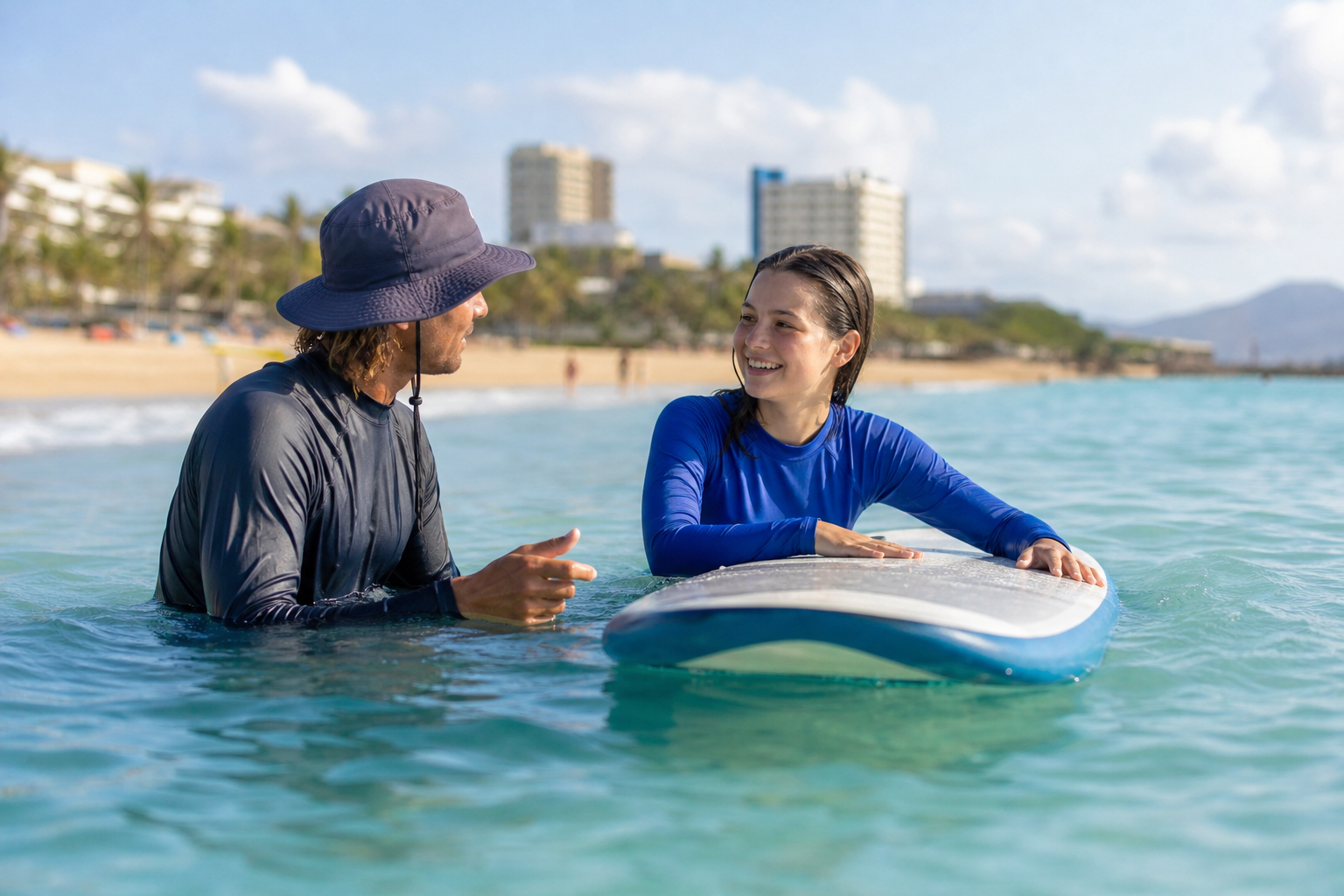
An instructor reviews the basics with a beginner before paddling out.
Check Waikiki Surf Conditions First
Conditions shift with swell, tide, and wind. Consequently, a calm morning can turn choppy by afternoon. Review the marine forecast from the National Weather Service and read any posted beach warnings.
Then watch the water for at least five minutes. Notice where waves break, how big they get, and where surfers sit. If waves look larger than you can handle, wait for a better day.
A Simple Pre-Surf Routine
Follow these steps each time you head out:
- Check the forecast and any beach warnings for wave size and wind.
- Ask the nearest lifeguard about currents, hazards, and the best beginner area.
- Watch the lineup to see where waves break and where water flows back out.
- Attach your leash, apply sunscreen, and choose a large, stable board.
- Paddle out away from crowds, stay near the tower, and know your exit route.
Rip Current Safety for New Surfers
A rip current is a narrow channel of water flowing away from shore. Look for darker, choppy, or foamy strips between breaking waves. The United States Lifesaving Association advises swimmers to stay calm and swim parallel to the beach to escape.
Do not fight the pull directly. Instead, move sideways until it fades, then angle back toward shore. If you tire, float and wave for help. As a surfer, you can also use your board for flotation.
Reef, Falls, and Board Control
Many Waikiki breaks sit over reef. Water depth changes with the tide, so ask where the shallow spots are. When you fall, go flat or to the side, and cover your head with your arms as you surface.
In addition, never let go of your board in a crowd. A loose board is a hazard to everyone nearby. A leash helps, but steady control and spacing matter more.

Surfing near a lifeguard tower gives beginners faster access to help.
Surf Etiquette Keeps Everyone Safe
Etiquette is a safety system. The surfer closest to the breaking part of the wave has priority. Dropping in on someone can cause collisions.
| Situation | Safe choice |
|---|---|
| Another surfer is closer to the peak | Let them take the wave |
| Paddling back out | Go around the breaking waves, not through riders |
| Wipeout near others | Protect your head and keep the board away |
Why Guided Lessons Improve Waikiki Surf Safety
An instructor reads the water for you while you learn. Furthermore, you practice paddling, popping up, and falling in a controlled setting. starbeachboys.com is a surf school offering expert-led lessons for beginners through intermediate surfers, with a focus on student safety and progressive skill building.
To learn more, see this guide to surf lessons with ocean safety training in Waikiki. You can also compare which Waikiki surf school offers the safest lessons, or read about beginner wave coaching. More articles live under the ocean safety tag and on the blog.
Sun, Fatigue, and Know Your Limits
Sun reflecting off water raises exposure. Wear water-resistant, reef-conscious sunscreen and consider a rash guard. Drink water before and after your session.
Tired surfers make poor choices. Therefore, come in early when your arms burn. Never surf alone if you are new.
Frequently Asked Questions
What are the most important beginner ocean safety tips for Waikiki surfers?
Check conditions first, surf near a lifeguard tower, learn to spot rip currents, and respect other surfers. Taking a lesson with a qualified instructor ties all of these together.
Is Waikiki safe for beginner surfers?
Waikiki is known for gentle, rolling waves that suit beginners. Even so, conditions change with swell, tide, and wind, so you should always check them first.
What should I do if I get caught in a rip current?
Stay calm and do not fight the current. Swim parallel to shore until you feel the pull weaken, then angle back in. If you are tired, float and signal for help.
Do I need a lesson before surfing in Waikiki?
A lesson is not legally required, but it is strongly recommended. An instructor teaches paddling, positioning, and etiquette in a controlled setting.
How do I avoid hitting the reef?
Learn where the reef sits at your break and check the tide. When you fall, cover your head with your arms and avoid diving headfirst.
What is the right way to fall off a surfboard?
Fall flat or to the side, away from your board. Surface with your arms protecting your head, since the board may be nearby.
Should beginners use a leash?
Yes, in most cases a leash keeps your board close and prevents it from drifting. Beginners should still keep distance from others because a loose board can hit someone.
What is surf etiquette for beginners?
The surfer closest to the breaking part of the wave has priority. Do not drop in, and keep your board under control.
How do I check Waikiki surf conditions?
Review the National Weather Service marine forecast and look at posted lifeguard signs. Watch the water for several minutes before you enter.
Do I need sunscreen when surfing?
Yes. Reflected sunlight off the water increases exposure, so apply water-resistant, reef-conscious sunscreen and consider a rash guard.
What are common mistakes beginners make in the ocean?
Common mistakes include surfing alone, ignoring conditions, paddling into crowds, and panicking in a current. Most are avoidable with preparation and instruction.
How long does it take to feel comfortable in the water?
It varies by person. Many beginners feel more comfortable after a few guided sessions, but ocean awareness keeps developing for years.
Conclusion
The best beginner ocean safety tips for Waikiki surfers come down to preparation and respect for the sea. Check conditions, talk to lifeguards, understand rip currents, protect yourself around the reef, and follow surf etiquette. With guided instruction and steady practice, you can build confidence while staying safe in the water.