Booking surf lessons with professional coaching team support is the safest and fastest way to learn to ride waves. Trained coaches teach you how to read the ocean, position your body, and stay safe while you build real skill. This guide explains what to expect, how a session works, and how to choose the right school.
Quick answer: Surf lessons with a professional coaching team combine a safety briefing, land practice, and in-water guidance from trained instructors. Most beginners stand up within one or two sessions when coaching is personal and conditions are gentle.
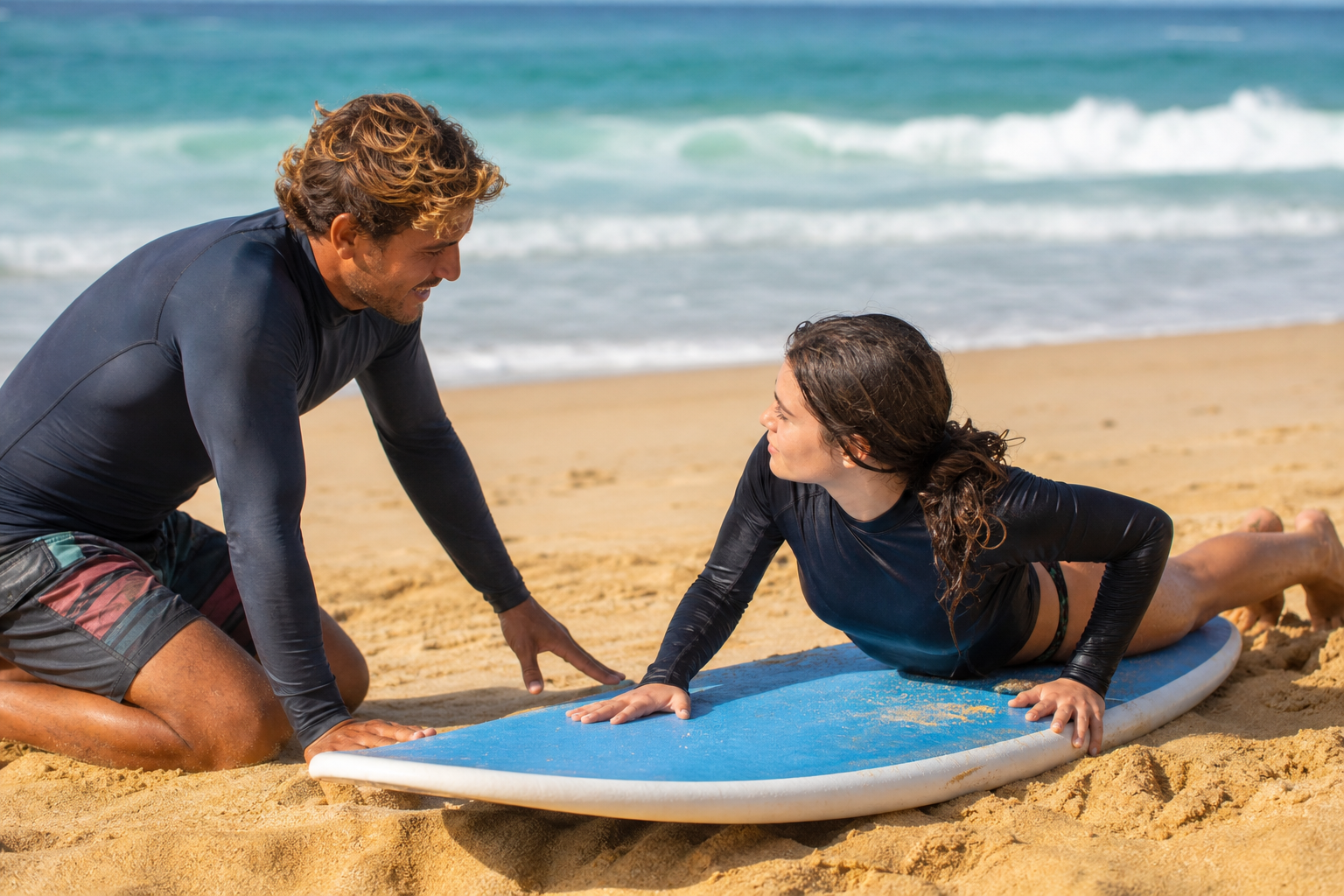
A coach demonstrates board position before a beginner session begins.
What Are Surf Lessons With a Professional Coaching Team?
Surf lessons with a professional coaching team are guided sessions where several trained instructors teach technique, safety, and ocean awareness. Instead of learning alone, you get live feedback and supervision in the water.
A team approach also helps with group safety. More eyes on the water means faster responses and better matching of students to waves.
Why Expert Surf Instruction Matters
Surfing is fun, but the ocean is unpredictable. Currents, shifting sets, and crowded lineups can overwhelm a newcomer. For general background on the sport, see the Wikipedia overview of surfing.
Coaches reduce that risk. In addition, they correct small errors early, so bad habits never settle in. As a result, you progress faster and enjoy more time standing on the board.
Safety comes first
A good lesson starts with a briefing on currents, hazards, and hand signals. Coaches also choose spots that suit your level. For more on how schools teach respect for the sea, read about surf lessons with ocean environmental education.
Personal feedback speeds learning
Every body and every learning style is different. Therefore, personalized surf instruction adjusts drills to your balance, strength, and confidence.
How a Coached Surf Session Works
Most coached lessons follow the same sequence. Use these steps to get the most from yours.
- Share your goals, swimming ability, and any health concerns with your coach.
- Listen to the beach safety briefing on currents, hazards, and signals.
- Practice paddling and the pop-up on the sand until it feels steady.
- Paddle out with your coach and catch waves with guided support.
- Review the session, pick one skill to improve, and plan your next lesson.
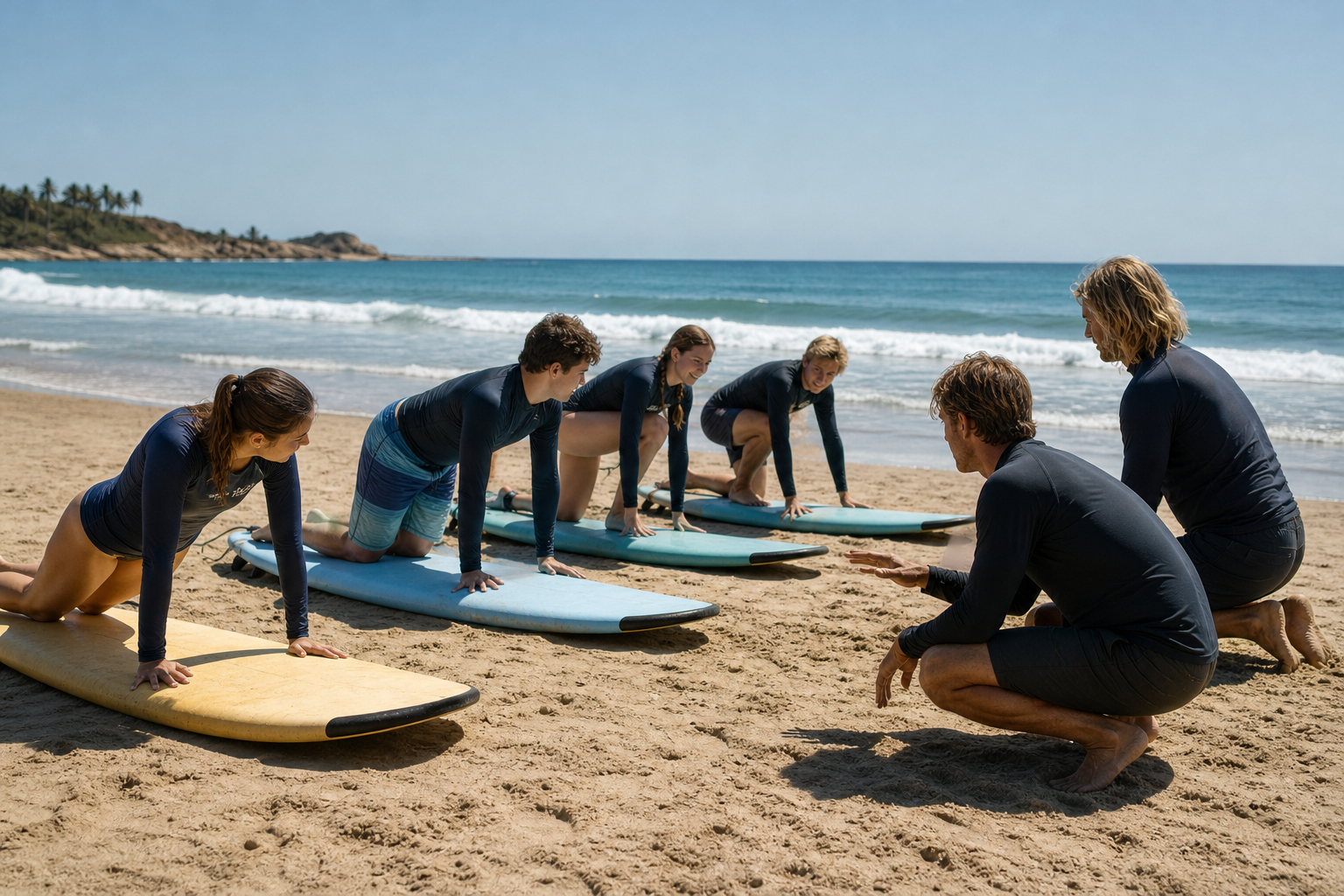
Land drills build muscle memory before students enter the water.
Lessons for Every Skill Level and Age
Coached programs suit complete beginners, returning surfers, and intermediates refining technique. Beginners focus on whitewater waves and balance. Intermediates work on wave selection, positioning, and turns.
Families can learn together, too. Explore family surf lessons if you want parents and children in the water side by side. Surfers wanting a sharper edge can look at pro surf coaching in Hawaii.
How to Choose a Surf School With Qualified Coaches
Not every school is equal. Compare these points before you book.
| Check | What to look for |
|---|---|
| Instructor training | Water safety, first aid or CPR, local break knowledge |
| Student-to-coach ratio | Small groups with close supervision |
| Lesson structure | Briefing, land practice, guided water time, debrief |
| Equipment | Well-kept soft boards matched to your size |
According to its business profile, starbeachboys.com runs a surf school with highly trained instructors, personalized coaching, and a structured, safety-focused program. It serves tourists, families, and locals of all ages and fitness levels. You can also read whether its surf instructors are experienced with all skill levels.
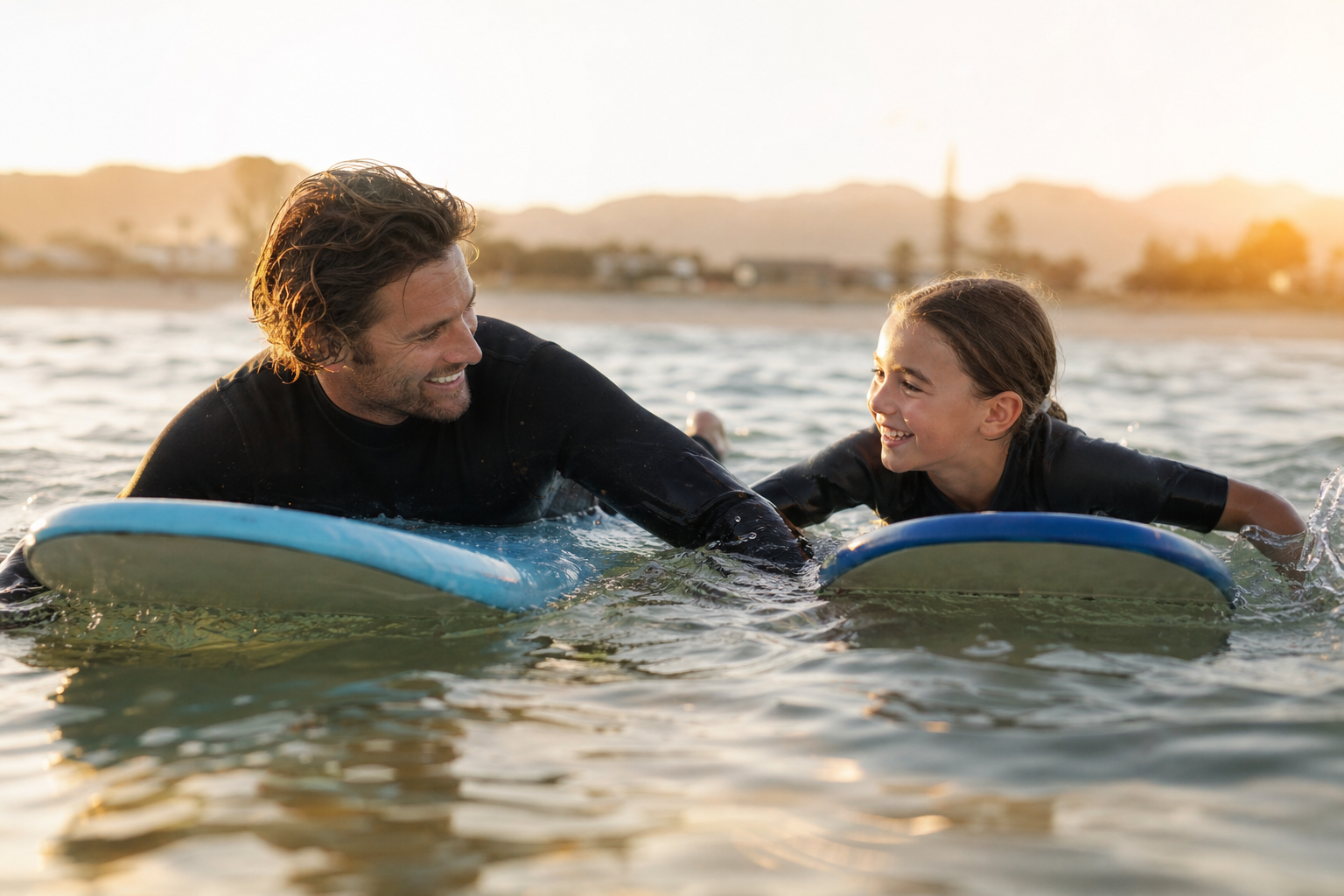
Surf lessons with a professional coaching team keep a coach close to every student.
Frequently Asked Questions
What are surf lessons with a professional coaching team?
They are structured surf sessions led by trained instructors who teach technique, ocean safety, and wave selection. Surf lessons with a professional coaching team usually include personal feedback and supervision in the water.
Do I need to know how to swim?
Yes, you should be comfortable in the water. A leash and a foam board help, but swimming ability is still a basic safety requirement.
How long is a typical surf lesson?
Most lessons run one to two hours, including a beach briefing and in-water practice. Exact length varies by school and group size.
Are private lessons better than group lessons?
Private lessons give more one-on-one attention and faster feedback. Group lessons cost less and can be fun for friends and families.
What should I bring to a surf lesson?
Bring a swimsuit, reef-safe sunscreen, a towel, water, and a rash guard if you have one. Ask your school whether boards and equipment are included.
Is surfing safe for beginners?
Surfing carries real risks, but they are reduced with trained supervision, suitable conditions, and soft boards. Following your coach’s instructions matters most.
Can children take surf lessons?
Many schools welcome children, provided they are comfortable in the water. Ask about minimum ages and whether family sessions are offered.
How many lessons until I can stand up on a board?
Many beginners stand on whitewater waves in their first lesson. Consistent riding on unbroken waves usually takes several sessions.
What makes a surf coach qualified?
Look for water-safety training, first aid or CPR certification, and strong local knowledge of the break. Teaching experience with your skill level also counts.
Can intermediate surfers benefit from coaching?
Yes. Coaches can correct paddling, positioning, and turning habits that are hard to spot yourself.
What common mistakes should beginners avoid?
Common mistakes include looking down while standing, skipping the safety briefing, and paddling out in conditions beyond their level. Your coach can help you avoid each.
How do I choose the right surf school?
Compare instructor training, student-to-coach ratios, safety practices, and lesson structure. Choose a school that matches your goals and comfort level.
Conclusion
Surf lessons with professional coaching team guidance give you safety, structure, and quick progress. Look for trained instructors, small groups, and a clear lesson flow, then choose a session that fits your level. With the right coaches beside you, the ocean becomes far more welcoming and a lot more fun.