Surf lessons for active seniors are quickly becoming one of the most rewarding ways for older adults to stay fit, build confidence, and reconnect with the ocean. In particular, Waikiki’s gentle, sandy-bottom waves make it an ideal classroom for anyone over 50 who wants to try surfing for the first time, or pick it back up after decades away from the water.
Direct answer: Surf lessons for active seniors are specially paced beginner sessions that use stable longboards, calm beach breaks, and joint-friendly coaching techniques. As a result, most healthy older adults can safely stand up and ride their first wave within a single lesson, under the close guidance of a trained instructor.
What Are Surf Lessons for Active Seniors?
Surf lessons for active seniors are instruction programs built specifically around the strengths and limitations of older bodies. Unlike a standard beginner class, these sessions slow down the pacing, use wider and more buoyant boards, and give extra attention to safe entries and exits from the water.
Instructors typically start with a land-based briefing, then move into shallow whitewater before progressing toward slightly larger waves. Because every senior arrives with different mobility, balance, and fitness levels, a good instructor will adjust the lesson in real time rather than following one rigid script.

Surf lessons for active seniors often begin with a relaxed briefing on the sand before entering the water.
Why Older Adults Are Taking Up Surfing
Surfing lessons for older adults have grown in popularity partly because travelers and retirees are looking for active, memorable experiences rather than passive sightseeing. Furthermore, surfing offers a unique mix of mental focus, light cardio, and ocean connection that few other sports can match.
Many seniors are also drawn to surfing because it feels playful rather than purely exercise-driven. Consequently, lessons tend to attract first-timers who never pictured themselves on a surfboard, alongside former surfers returning to a sport they loved decades earlier.
According to the Centers for Disease Control and Prevention, adults aged 65 and older benefit significantly from a mix of moderate aerobic activity and balance training each week, both of which surfing provides naturally through paddling and wave riding.
Health Benefits of Senior Surf Instruction
Senior surf instruction offers more than just fun in the sun; it delivers measurable physical benefits. Paddling strengthens the shoulders, chest, and back, while standing on a moving board sharpens balance and core stability, two areas that often decline with age.
In addition, the ocean environment itself encourages mindfulness. Many seniors report reduced stress and improved mood after a lesson, which aligns with broader research connecting outdoor physical activity to better mental wellbeing in older populations.
For a deeper look at how surfing supports overall health across adulthood, this guide on whether learning to surf as an adult is beneficial explores the physical and mental upside in more detail.
What to Expect in Your First Senior Surf Lesson
A typical first lesson follows a clear, structured progression. Understanding the steps ahead of time helps reduce nerves and sets realistic expectations for the day.
- Get medical clearance. Talk with your doctor about any heart, joint, or balance concerns before booking a lesson, especially if you have existing conditions that could affect balance or stamina in the water.
- Choose a senior-friendly surf school. Book with an instructor experienced in teaching older adults who can adapt boards, pacing, and technique to match your fitness level and comfort in the ocean.
- Warm up before paddling out. Spend ten minutes stretching your shoulders, back, and hips on the sand to loosen joints and reduce the risk of strain once you start paddling and popping up.
- Practice the pop-up on land. Rehearse the slow, controlled pop-up motion on the sand several times so your body remembers the movement pattern before attempting it on a moving wave.
- Start in small whitewater waves. Catch your first few rides in gentle, already-broken whitewater close to shore, which lets you build balance and confidence before facing unbroken ocean swells.
Choosing the Right Surf School for Senior Surfers
Not every surf school is set up to work well with senior surfers, so it pays to ask the right questions before booking. Specifically, look for instructors who have hands-on experience coaching older students, not just children or athletic young adults.
Group size matters too. Smaller groups, or private lessons, allow instructors to give more individual attention, which is especially valuable for seniors managing balance issues or past injuries. Star Beach Boys, for example, structures lessons around the student’s pace rather than a fixed timeline, which tends to suit older beginners well.
For location-specific guidance, this resource on Waikiki surf instruction for seniors outlines what a safe first session in these waters typically looks like.
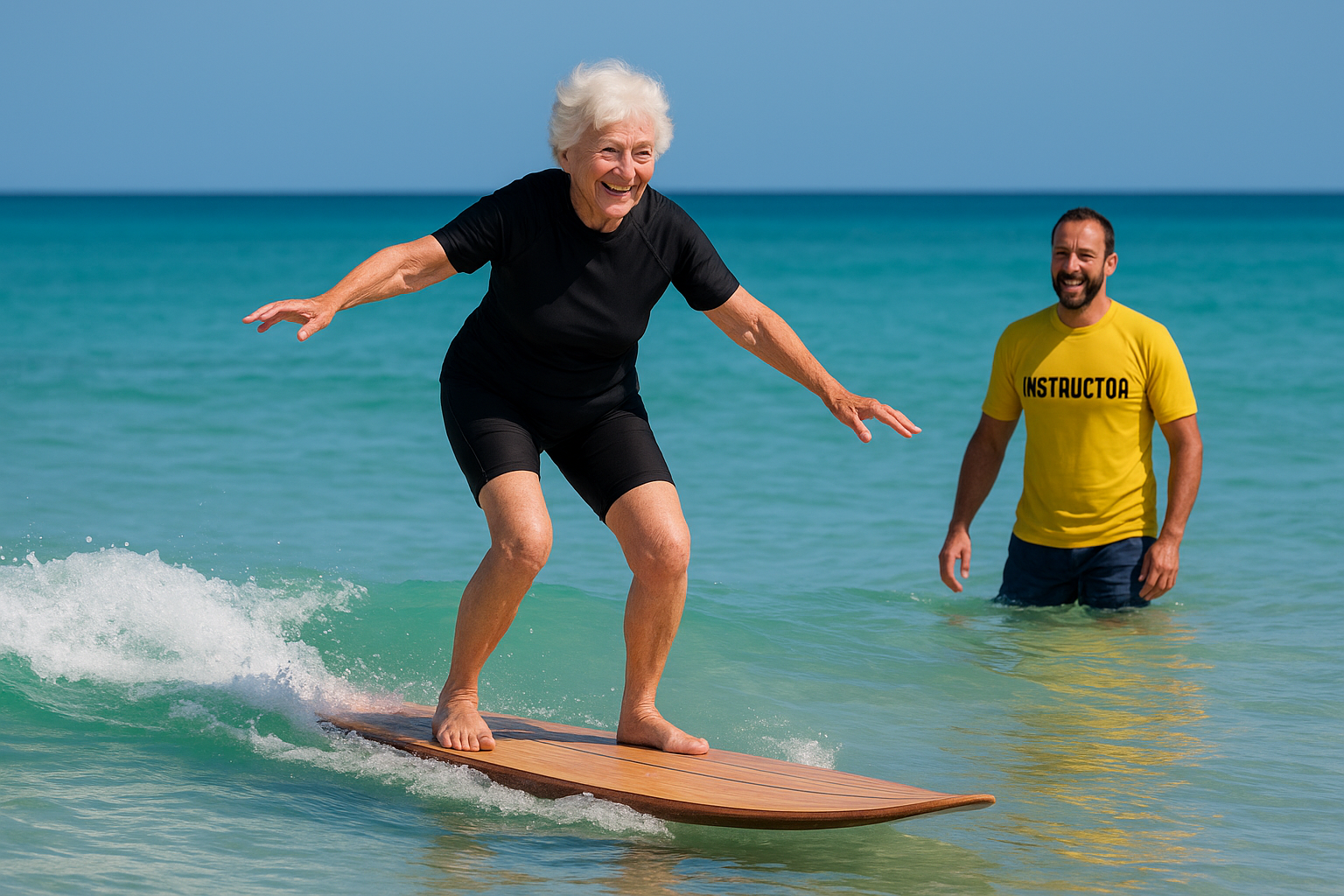
With patient coaching, surf lessons for active seniors often lead to a confident first ride within the opening session.
Safety Tips for Active Senior Surfers
Safety should always come first, especially for surfers who are newer to ocean conditions. Above all, choosing a beach with small, slow-breaking waves and a sandy bottom dramatically lowers the risk of injury compared with rocky or fast reef breaks.
Hydration and sun protection matter just as much as technique. Seniors should wear reef-safe sunscreen, take regular breaks in the shade, and avoid lessons during peak midday heat whenever possible. Similarly, staying close to the instructor at all times ensures quick help if fatigue or dizziness sets in.
It’s also worth reviewing general safety information from a recognized source like the Wikipedia entry on surfing, which outlines the basics of wave dynamics and board handling that apply to surfers of any age.
Those curious whether age itself is ever truly a barrier can read more in this piece on whether you can learn to surf at any age, which addresses common concerns directly.
Finding the Right Fit in Oahu
Oahu’s south shore, and Waikiki in particular, has earned a reputation among instructors worldwide for being one of the most forgiving places to learn. The reef sits far enough offshore that waves lose much of their power before reaching the beach, creating long, slow, rolling whitewater that is perfect for first-time senior surfers.
For a fuller walkthrough of what makes this stretch of coastline so well suited to older beginners, see this guide to surf lessons for seniors in Oahu. It’s also worth exploring the broader benefits of taking a surf lesson if you’re still deciding whether this is the right activity for your next beach trip.
Visitors planning a trip can learn more about available programs directly through Star Beach Boys, whose instructors are experienced in working with tourists, families, and local residents of all ages and fitness levels.
Frequently Asked Questions
What are surf lessons for active seniors?
Surf lessons for active seniors are beginner-friendly surf classes designed around the pace, balance, and safety needs of older adults. They combine gentle warm-ups, slow-moving longboards, and patient coaching so seniors can stand up and ride waves with confidence.
How old is too old to learn to surf?
There is no upper age limit for learning to surf, and many schools successfully teach students in their 60s, 70s, and even 80s. As long as a doctor clears basic water activity, age alone is not a barrier.
Are surf lessons safe for seniors with joint issues?
Yes, surf lessons can be adapted for seniors with joint issues by using wide, stable longboards and calm, shallow surf spots. Instructors also modify the pop-up technique to reduce strain on knees, hips, and shoulders.
How much do surf lessons for active seniors cost?
Pricing for senior surf lessons generally falls in line with standard beginner group or private rates, often ranging from around 80 to 200 dollars depending on group size and lesson length. Private lessons cost more but offer closer one-on-one attention.
How long does it take to learn to surf as a senior?
Most active seniors can stand up and ride a small whitewater wave within their first one to two lessons. Building lasting comfort and technique typically takes three to five sessions spread over a week or two.
What should seniors wear for their first surf lesson?
A comfortable swimsuit or rash guard with board shorts or leggings works best for a first surf lesson. Reef-safe sunscreen, a hat for the beach, and water shoes for rocky entries are also recommended.
Do I need to be a strong swimmer to take surf lessons?
You do not need to be a strong swimmer, but basic comfort in water and the ability to float are important. Reputable surf schools assess swimming comfort before the lesson and keep instructors close at all times.
What are common mistakes seniors make when learning to surf?
Common mistakes include trying to stand up too quickly, choosing boards that are too small, and skipping proper warm-up stretches. Rushing the pop-up motion without building balance first also leads to more falls.
How do surf lessons for active seniors compare to regular group lessons?
Senior-focused lessons move at a slower pace, use larger boards, and include more rest breaks than standard group lessons. Instructors also spend more time on safe entries, exits, and joint-friendly technique adjustments.
What physical benefits can seniors expect from surfing?
Surfing improves balance, core strength, cardiovascular fitness, and flexibility, all of which support healthy aging. Paddling also provides a low-impact, joint-friendly upper body workout.
Can seniors with arthritis or back pain still surf?
Many seniors with mild arthritis or back pain can still surf safely after medical clearance and with instructor modifications. Gentle warm-ups, supportive boards, and shorter sessions help manage discomfort during the lesson.
What equipment is used in senior surf lessons?
Senior surf lessons typically use soft-top longboards for stability, along with leashes, rash guards, and sometimes knee pads for added comfort. Wider, thicker boards make balancing and catching waves noticeably easier.
How do I choose the best surf school for seniors?
Look for a surf school with certified instructors, experience teaching older adults, and calm beginner-friendly beach locations. Reading reviews and asking directly about senior-specific accommodations helps confirm a good fit.
Is Waikiki a good place for senior surf lessons?
Waikiki is considered one of the best locations worldwide for senior surf lessons because of its gentle, consistent waves and sandy bottom. The calm inshore reef break makes it ideal for building confidence safely.
Final Thoughts
Ultimately, surf lessons for active seniors prove that age is rarely the limiting factor people assume it to be. With the right instructor, a stable board, and a calm beach like Waikiki, most healthy older adults can safely learn to stand up and ride their first wave, often within a single session.
Therefore, if you’ve been curious about trying surfing but worried it’s “too late,” consider starting with a short, well-guided lesson designed specifically for your pace. Whether you’re a first-time beginner or returning to the water after years away, surf lessons for active seniors offer a safe, joyful way to build strength, balance, and a lasting connection to the ocean.