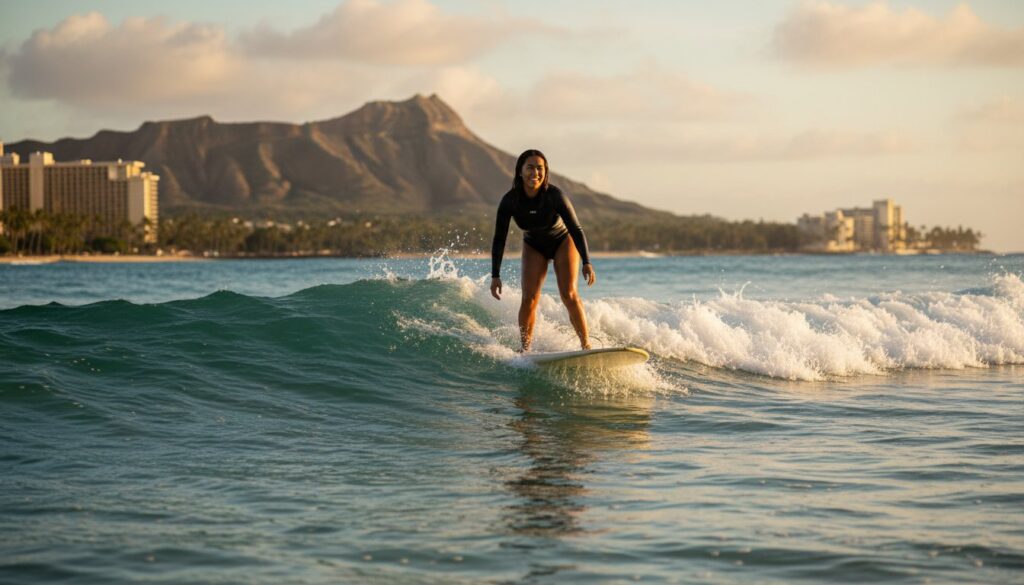
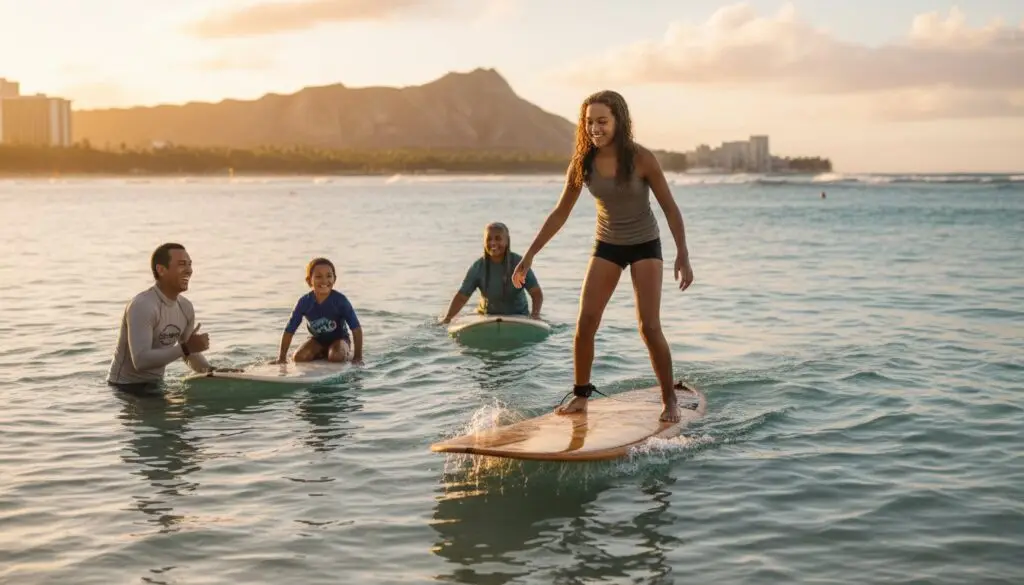
Surf camps for beginners Oahu attract thousands of visitors every year who want to learn how to ride waves safely under expert supervision. Because Oahu’s south and west shores offer gentle, forgiving swells for much of the year, the island has become one of the most popular places on earth to start surfing. However, not every camp offers the same quality of instruction, safety standards, or beach access. In this guide, you will discover how to choose the right beginner surf camp, what to expect during your first lesson, and which beaches on the island work best for new surfers.
What Are Surf Camps for Beginners Oahu?
Surf camps for beginners Oahu are multi-day or single-session group programs that combine structured instruction, ocean safety briefings, and supervised wave time on beginner-friendly breaks. Most sessions include soft-top boards, rash guards, and small-group coaching so new surfers can build confidence quickly.
Unlike casual board rentals, these camps follow a progressive curriculum. Instructors typically start on the sand, teaching paddling posture and the pop-up motion, before moving students into shallow, whitewash waves. As a result, students build muscle memory before ever facing a steeper, faster-breaking wave.
Camps also differ from private lessons in structure. Specifically, group camps rotate students through wave sets while an instructor watches from the water, offering corrections after each attempt. This format works especially well for families, school groups, and solo travelers who enjoy learning alongside others.
Why Choose a Beginner Surf Camp Over Private Lessons
Choosing between a group camp and a private lesson often comes down to budget, personality, and learning style. Group camps generally cost less per person, which makes them appealing for families or friends traveling together. In contrast, private lessons offer more individual attention but at a higher hourly rate.
Furthermore, group surf camps encourage a social learning environment. Watching other beginners fall, adjust, and try again often reduces performance anxiety. Meanwhile, instructors still provide one-on-one corrections during quieter moments between wave sets, so students do not lose personalized feedback entirely.
For visitors researching options, resources like the complete beginner guide to Oahu surf lessons can help clarify which lesson format fits a specific travel schedule and comfort level in the water.
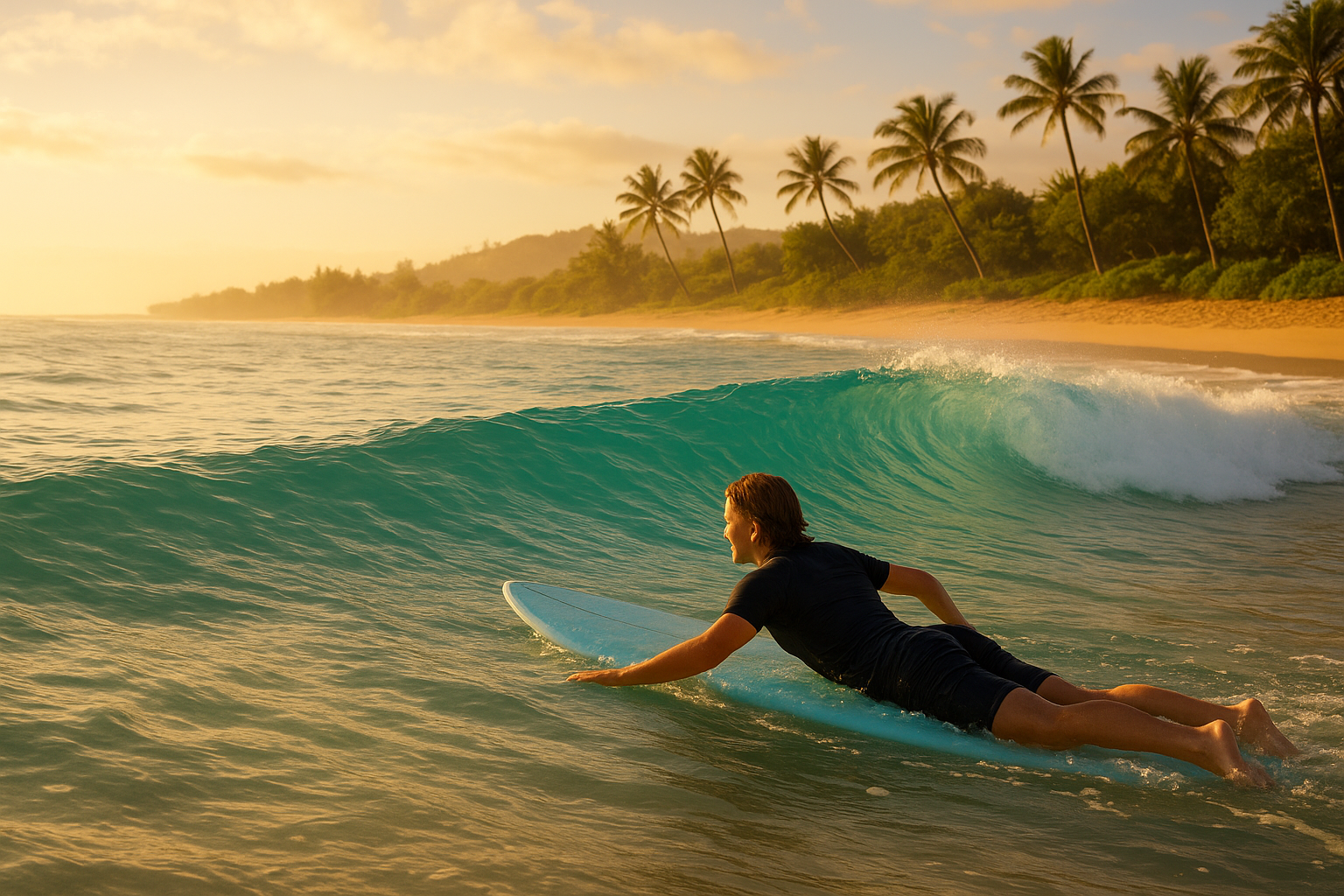
A surf camp for beginners Oahu setting, where gentle whitewash waves make early attempts easier and safer.
Top Features to Look for in a Beginner Surf Program
Not every listing labeled a “beginner camp” delivers the same experience. Therefore, it helps to compare a few core features before booking.
- Certified instructors: Look for coaches trained in ocean rescue and lifeguard-level safety awareness.
- Small group ratios: Four to eight students per instructor generally allows more individual wave coaching.
- Included gear: Soft-top boards, leashes, and rash guards reduce injury risk for first-timers.
- Beach selection: Camps that use gentle, sandy-bottom breaks are safer than reef-heavy locations.
- Progressive curriculum: Land drills followed by shallow-water practice build skill in a logical order.
In particular, gear quality matters more than beginners often expect. A properly sized soft-top board floats easily and forgives shaky balance, while an undersized or hard board can slow progress and increase the chance of minor injuries.
Best Beaches for Surf Camps for Beginners Oahu
Waikiki Beach remains the island’s most popular choice for surf camps for beginners Oahu because its long, slow-rolling waves break gradually over a sandy bottom. This gentle break gives new surfers extra seconds to find balance before the wave fully forms.
Additionally, White Plains Beach on the island’s south shore offers a quieter, less crowded alternative with similarly forgiving conditions. During summer months, some North Shore spots also mellow out enough for supervised beginner sessions, though instructors typically reserve those breaks for calmer swell windows.
Travelers can compare specific beach recommendations in this guide to the best Oahu surf spots for beginners, which breaks down wave conditions by season.
How to Choose the Right Surf Camp for Beginners in Oahu
Selecting the right program does not need to be complicated. Instead, following a short checklist can help narrow the options quickly.
- Assess your swimming comfort and fitness level. Honestly evaluate how comfortable you feel swimming in open water with waves, since most camps require basic swimming ability before allowing students into the surf.
- Compare instructor certifications and group sizes. Look for certified, experienced instructors and small student-to-teacher ratios, since smaller groups typically mean more individual coaching and safer supervision.
- Check included gear and lesson duration. Confirm whether boards, leashes, and rash guards are provided, and verify total lesson length so you know exactly how much ocean time you are paying for.
- Read reviews from past beginner students. Search for feedback specifically from other first-time surfers, since their experience better reflects what a true beginner should expect.
- Book during optimal beginner wave conditions. Schedule sessions during calmer swell periods, typically summer months on south shores, for gentler and safer learning waves.
For a deeper breakdown of scheduling and skill progression, the complete beginner-to-intermediate lesson guide outlines how students typically advance from whitewash waves to small green waves.
What to Expect During Your First Beginner Surf Lesson
Most beginner sessions start on dry sand. Instructors demonstrate proper paddling posture, then walk students through the pop-up motion, which is the quick movement from lying flat to standing on the board. Practicing this on land first helps students avoid confusion once they reach the water.
Once in the shallows, instructors typically hold or push the board during the first few waves to help students feel the timing of standing up. Consequently, most beginners manage to stand briefly within their very first hour, even if balance still feels shaky.
According to the International Surfing Association, structured beginner instruction significantly shortens the learning curve compared to self-taught attempts, largely because early habit correction prevents bad technique from becoming permanent. This is one reason certified surf camps for beginners Oahu remain popular with both tourists and local families.
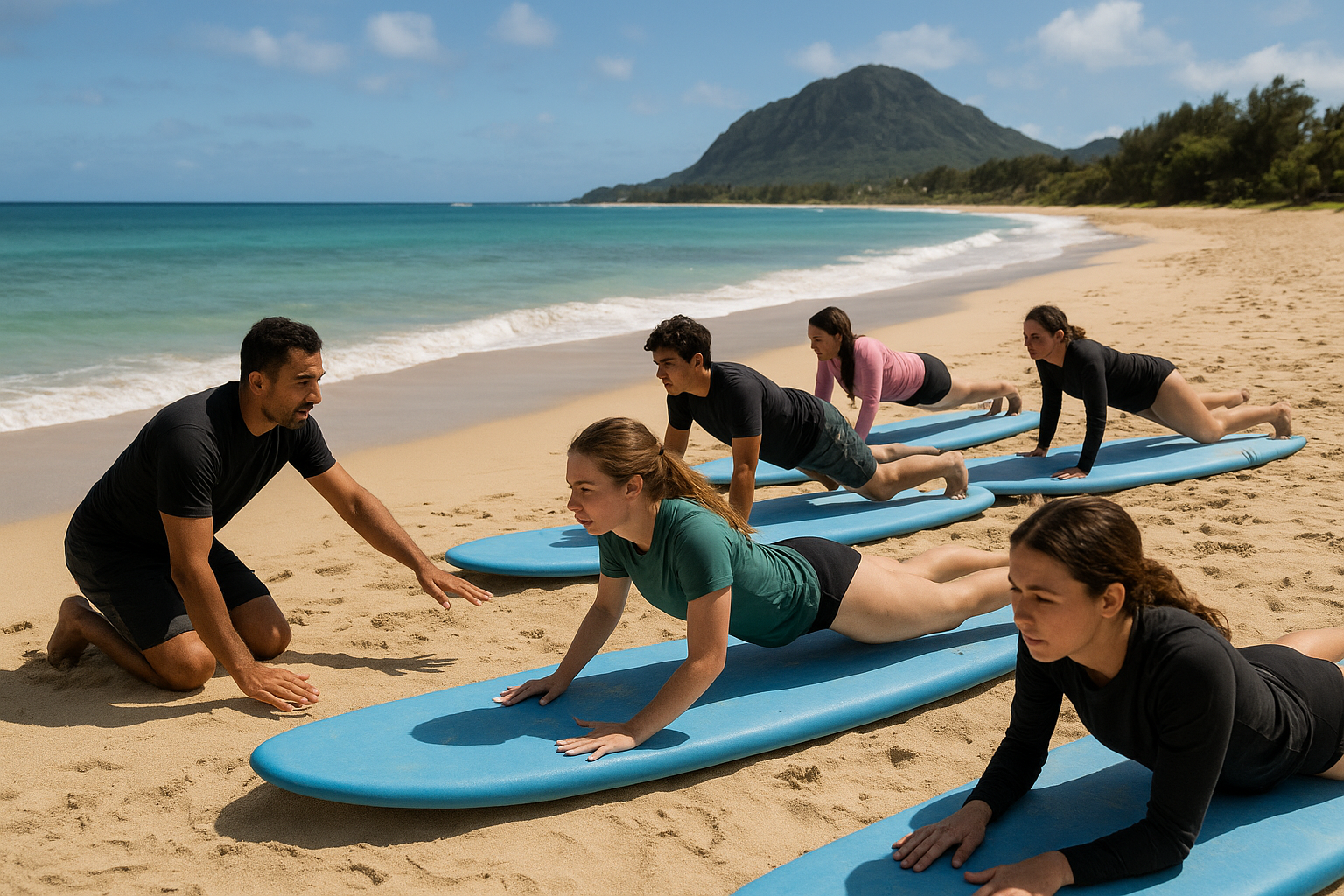
Land drills like the pop-up practice help beginners feel ready before entering the water.
Safety Tips for New Surfers in Oahu Waters
Ocean safety deserves just as much attention as technique. In fact, rip currents pose one of the biggest hidden risks for beginners. The National Weather Service notes that rip currents contribute to more than 100 drowning deaths in the United States annually, which is why instructors always brief students on current patterns before entering the water.
Beyond currents, sun exposure and dehydration are common beginner mistakes. Therefore, reef-safe sunscreen, a hat, and steady water intake should be part of every surf camp packing list. Similarly, students should always ask instructors about reef locations, since shallow reef breaks can cause scrapes if a surfer falls in the wrong spot.
Learning basic surf etiquette also matters. For instance, understanding right-of-way rules on a wave helps prevent collisions once a beginner starts sharing lineups with other surfers. The general concept of surfing etiquette and wave priority is well documented on Wikipedia’s surfing overview, which explains how experienced surfers typically yield to whoever is closest to the wave’s peak.
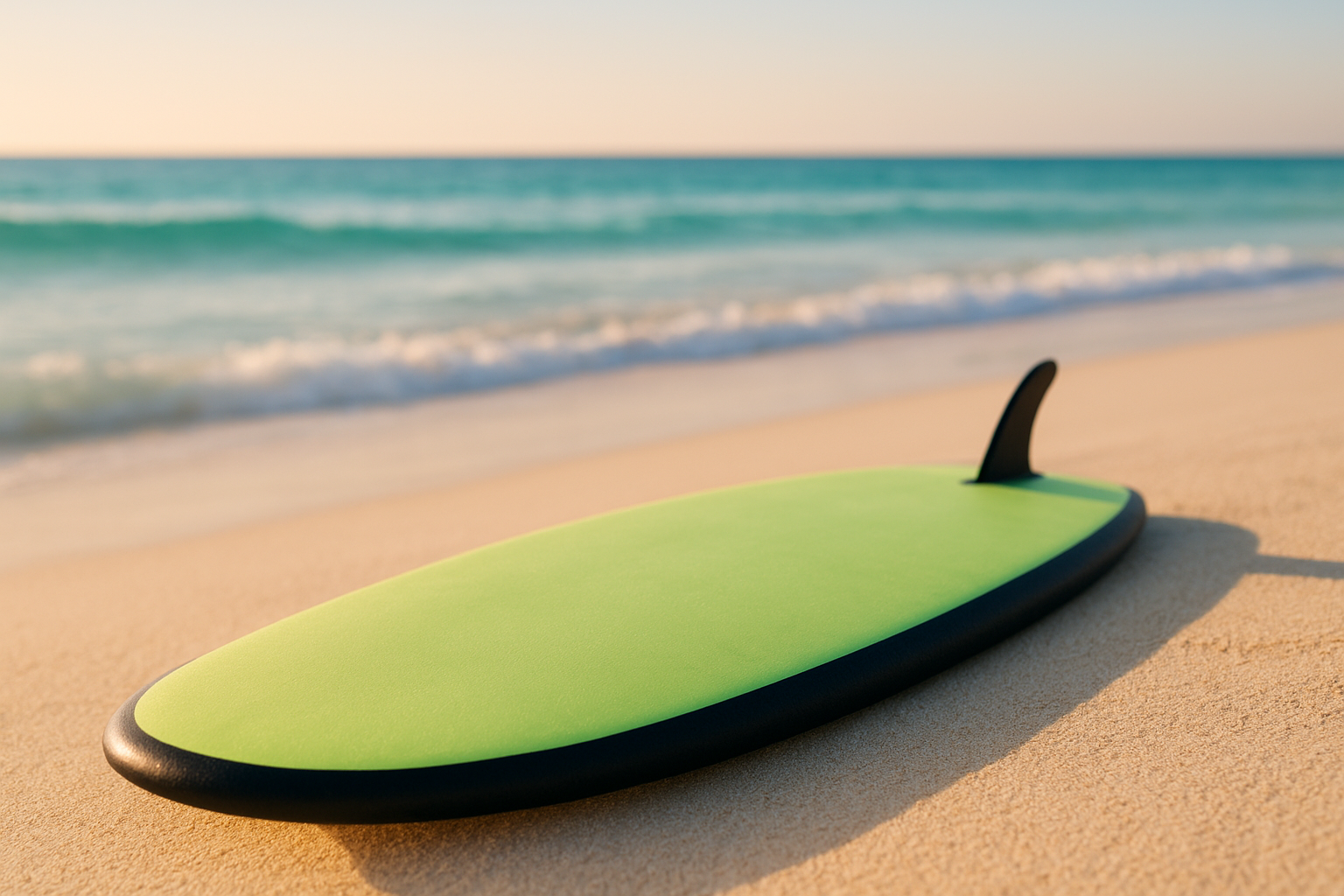
Soft-top boards like this one reduce injury risk for first-time surfers.
Finding a Trusted Surf School on Oahu
Once you understand what to look for, comparing local providers becomes much easier. Star Beach Boys, for example, offers guided beginner and intermediate surf instruction with experienced coaches who focus on progressive, safety-first learning for tourists, families, and local residents alike. Visiting starbeachboys.com is a practical first step for anyone comparing beginner-friendly options on the island.
Additionally, guides like the confidence-building Oahu surf lessons overview and the Honolulu surf lessons guide offer additional context for travelers deciding between Waikiki-based camps and lessons closer to Honolulu.
Frequently Asked Questions About Surf Camps for Beginners Oahu
What are surf camps for beginners Oahu?
Surf camps for beginners Oahu are structured group or semi-private programs that teach ocean safety, paddling, and standing techniques on gentle, beginner-friendly waves. Most sessions include soft-top boards, safety gear, and small-group coaching from certified instructors.
How much do beginner surf camps in Oahu typically cost?
Group surf camp sessions in Oahu generally range from roughly $75 to $150 per person. Multi-day packages cost more overall but often include additional coaching hours and gear rental.
How long does it take to learn to surf at a beginner camp?
Most beginners can stand and ride a small wave within their first one to two hour lesson. However, building consistent balance and reading waves confidently usually takes three to five sessions.
What is the best age to start a surf camp for beginners?
Children as young as five or six can start with supervised, shallow-water lessons, while adults of nearly any age can begin safely with proper instruction. The best age depends more on swimming comfort than actual years.
Do I need to know how to swim before joining a surf camp?
Yes, basic swimming ability and comfort in open water are required for safety reasons. Instructors typically ask about swimming experience before matching students with an appropriate beach and wave size.
Which Oahu beaches are best for beginner surf camps?
Waikiki Beach is the most popular choice because of its long, slow-breaking waves and sandy bottom. Other beginner-friendly spots include White Plains and parts of the North Shore during summer’s calmer months.
What should I bring to my first surf camp session?
Bring a swimsuit, reef-safe sunscreen, a towel, and water for hydration. Most surf camps for beginners Oahu offer boards, leashes, and rash guards as part of the lesson package.
Are surf camps safer than private lessons for beginners?
Surf camps and private lessons can both be safe when led by certified instructors, though private lessons offer more individual attention. Camps often teach group safety awareness, which is valuable for social learners.
What is the most common mistake beginner surfers make?
Standing up too quickly before mastering paddling and positioning is the most frequent mistake. As a result, many beginners lose balance repeatedly instead of building steady technique.
How many people are usually in a beginner surf camp group?
Beginner group lessons typically include four to eight students per instructor to balance safety with personal coaching. Smaller ratios generally allow more wave time per student.
What type of surfboard is used in beginner surf camps?
Most camps use long, wide soft-top foam boards because they float easily and are safer than hard fiberglass boards for new surfers. The extra stability helps beginners stand up sooner.
Is it better to book a multi-day surf camp or a single lesson?
Multi-day camps generally produce faster skill progress because muscle memory builds through repetition. A single lesson works well for a first-time trial, but consistent practice speeds up learning noticeably.
Final Thoughts on Choosing a Beginner Surf Camp
Ultimately, the best surf camps for beginners Oahu combine certified instruction, forgiving wave conditions, and quality gear into one supervised experience. Whether you choose a single group lesson or a multi-day program, focusing on safety, small class sizes, and beach selection will make the biggest difference in how quickly you progress. As you plan your trip, comparing local providers and beach options ahead of time helps ensure your first waves are both fun and safe, setting the foundation for many more surf sessions to come.