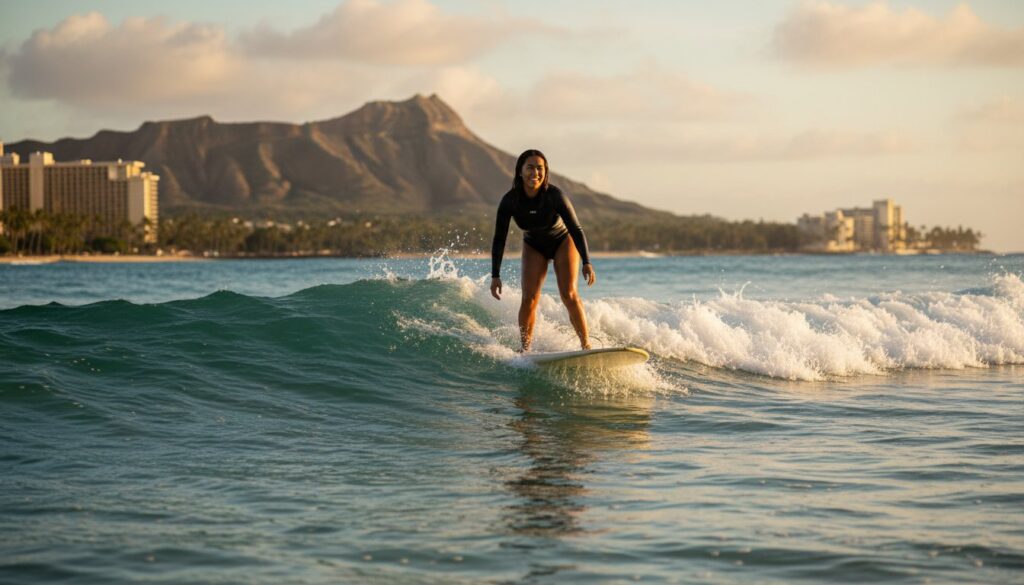
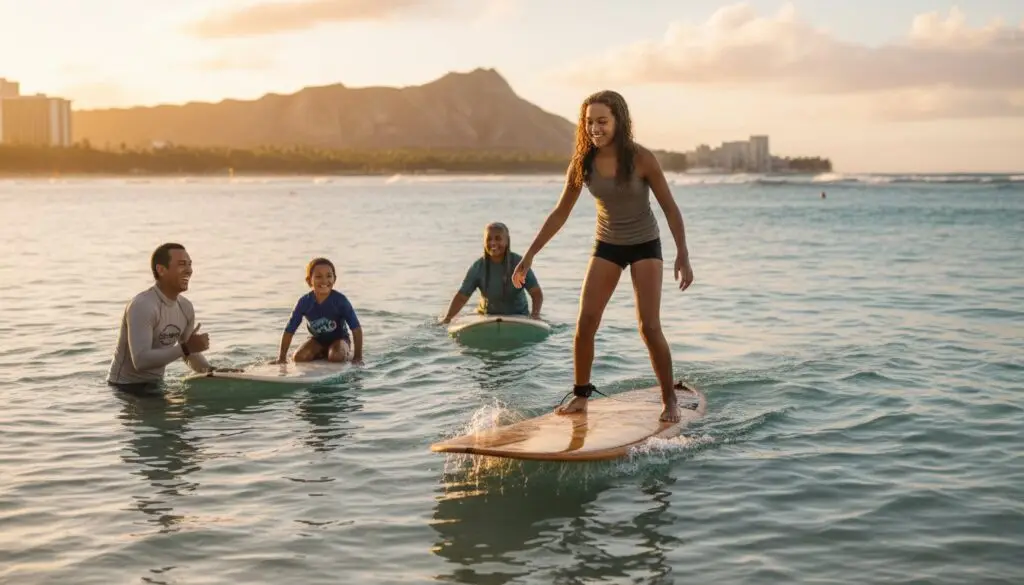
Surf lessons for seniors Oahu are becoming one of the most requested experiences among older travelers who want to try something bold without taking unnecessary risks. Waikiki’s gentle, slow-rolling waves make it possible for people well into their 60s, 70s, and beyond to stand up on a board, often on their very first attempt. This guide explains what makes senior-friendly surf instruction different, what to expect in the water, and how to choose a school that matches your pace.
Direct answer: Surf lessons for seniors Oahu are typically held at Waikiki Beach, where instructors use soft-top longboards, shallow water, and slower-breaking waves to help older adults safely learn to paddle, balance, and stand up on a surfboard, regardless of prior athletic experience.
What Are Surf Lessons for Seniors Oahu?
Surf lessons for seniors Oahu are structured, one-on-one or small-group sessions designed around the physical realities of learning a new sport later in life. Unlike standard beginner classes, these lessons slow down the pacing, add extra rest breaks, and rely on instructors who understand joint sensitivity, balance concerns, and stamina limits. In addition, most sessions take place in Waikiki because its long, gradually breaking waves give students more time to react than steeper, faster beach breaks elsewhere on the island.
Consequently, seniors are not asked to compete with younger, more athletic beginners in the same lesson. Instead, the focus stays on comfort, confidence, and enjoying the ocean at a pace that feels manageable. As a result, many first-time senior surfers report standing up on a wave during their very first outing.
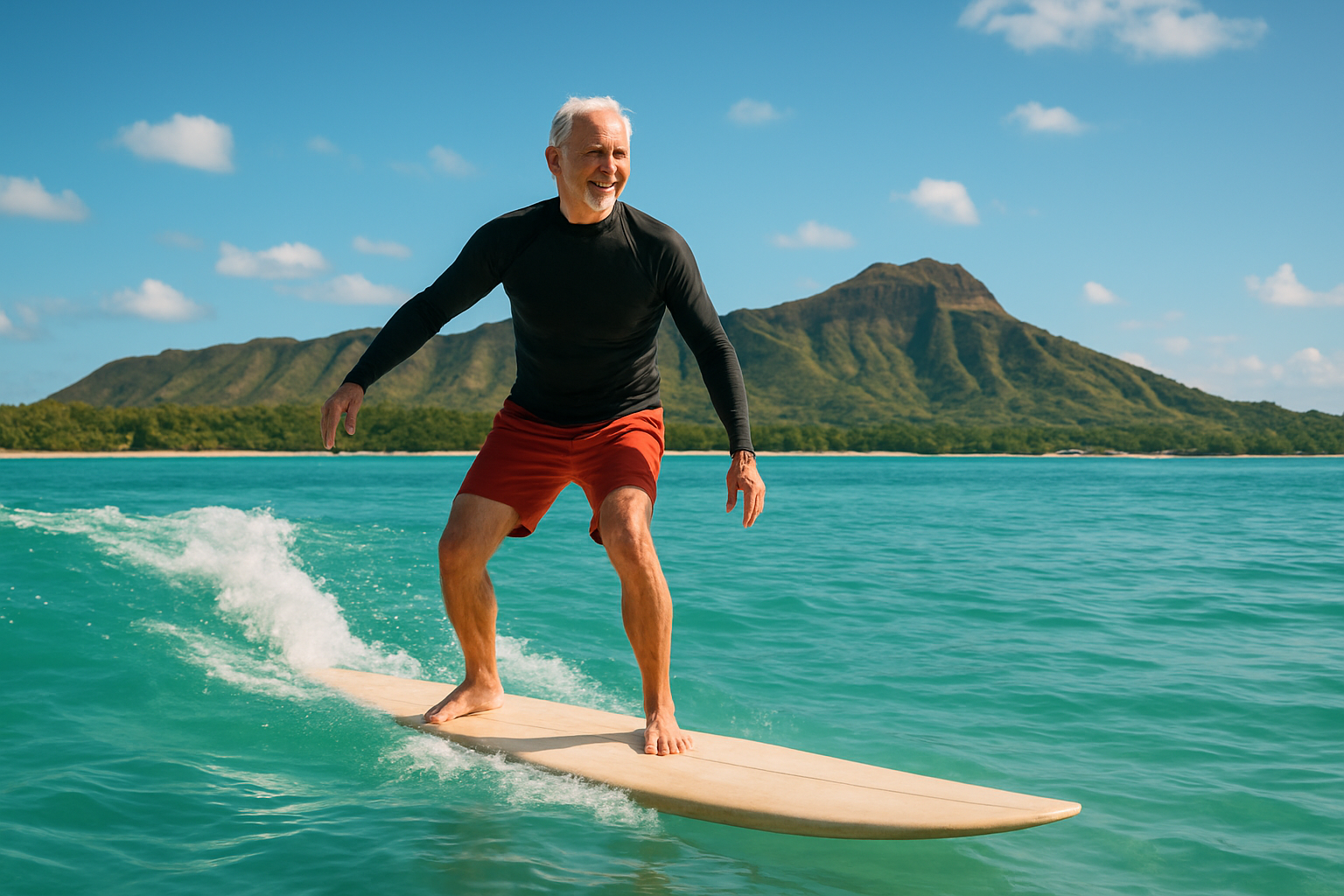
Surf lessons for seniors Oahu often take place in Waikiki, where slow-breaking waves make standing up more achievable.
Why Seniors Are Choosing Oahu for Surf Lessons
Oahu has built a reputation as one of the most welcoming places in the world for older beginners to try surfing. Specifically, Waikiki’s sandy, gently sloping seabed removes many of the hazards found at rockier or reef-heavy breaks. Furthermore, the island’s year-round warm water means seniors do not need to wrestle with thick wetsuits, which can restrict movement and cause overheating.
Above all, the culture surrounding Hawaiian surf instruction tends to be patient and encouraging rather than performance-focused. Local instructors are accustomed to teaching grandparents, retirees on milestone trips, and vacationing couples who never imagined they would surf at this stage of life. In particular, many senior surf lessons Waikiki providers build their entire business model around this exact clientele, which means the instructors are genuinely experienced with older bodies and slower learning curves.
Benefits of Learning to Surf Later in Life
Physical activity in the ocean offers benefits that go well beyond the thrill of catching a wave. For example, paddling engages the shoulders, back, and core, while balancing on the board strengthens the legs and improves stability. According to guidance from the Centers for Disease Control and Prevention, regular moderate-intensity activity that challenges balance can meaningfully reduce fall risk in adults over 65, and gentle surf lessons fit that description well.
In addition to the physical upside, there is a strong mental and emotional component. Trying something new, especially something as adventurous as surfing, tends to boost confidence and mood. Similarly, the social side of a lesson, laughing with an instructor and cheering on fellow students, adds a memorable, joyful element that many seniors say rivals the surfing itself.
Low-Impact Exercise in Warm Water
Because Waikiki’s water stays warm throughout the year, seniors can move freely without the joint stiffness that colder water often causes. Therefore, paddling and balancing feel less like strenuous exercise and more like play, even though the body is working the whole time.
What to Expect During Surf Lessons for Seniors Oahu
A typical session starts on the sand, not in the water. Instructors walk through paddling technique, the standing motion, and simple hand signals before anyone touches the ocean. As a result, students already feel familiar with the basic movements before facing an actual wave.
Once in the water, instructors usually hold or steady the board while positioning it for the best possible wave. Consequently, much of the balance and timing challenge is handled by the instructor at first, letting the senior focus purely on standing and finding their footing. Over the course of the lesson, that support gradually decreases as confidence builds.
A Step-by-Step Look at a Senior Surf Lesson
- Book a lesson suited to your fitness level. Contact a Waikiki surf school ahead of time and mention your age, mobility, and any health conditions so the instructor can plan accordingly.
- Complete beach instruction and warm-up. Arrive early for a land-based briefing covering paddling technique, standing motion, and basic safety signals.
- Practice paddling in shallow water. Walk your board into calm, waist-deep water and practice balance while lying on the board before attempting anything more advanced.
- Catch your first gentle wave with support. With the instructor guiding the board and timing the wave, attempt to stand or kneel as the swell pushes you toward shore.
- Rest, review, and repeat. Take breaks between waves, get feedback from your instructor, and repeat the process to reinforce balance and paddling skills.
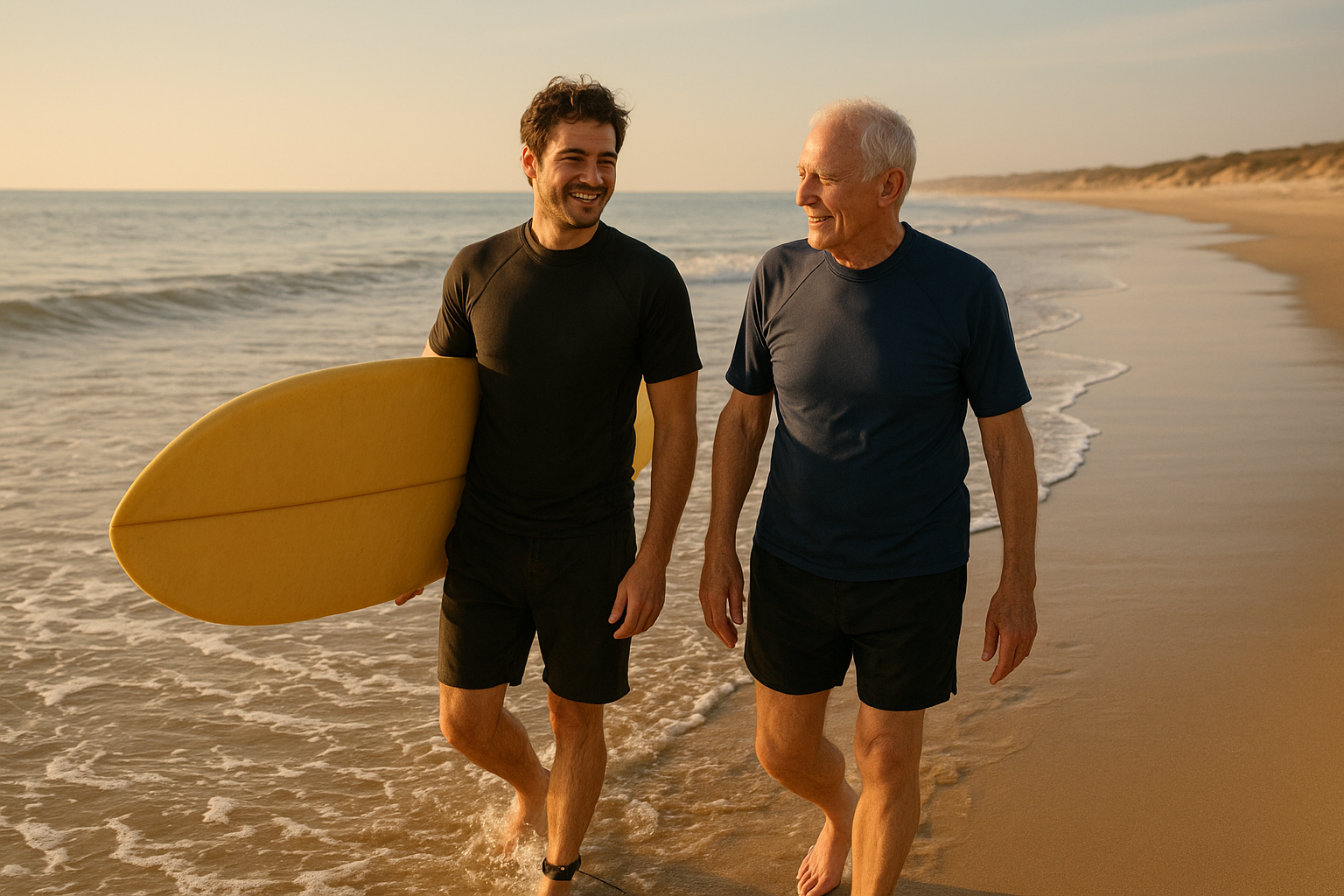
Patient, step-by-step guidance is central to safe surf instruction for older adults.
How to Choose the Right Surf School for Older Adults
Not every surf school approaches senior instruction the same way, so it helps to ask a few pointed questions before booking. First, ask how many students the instructor typically takes per lesson, since smaller ratios generally mean more individual attention. Second, ask whether the school offers private or semi-private options, because these formats allow the pace to be adjusted entirely around one person’s comfort level.
Third, consider the beach location itself. Waikiki remains the gold standard for beginner-friendly, senior-friendly surf instruction thanks to its long, forgiving waves. For families weighing multi-generational trips, resources like this family-friendly surf lessons guide and this ohana surf lesson guide can help coordinate lessons that suit grandparents, parents, and kids together.
Finally, look into the school’s overall reputation for patience and safety rather than speed of progress. You can browse a broader overview of surfing lessons on Oahu to compare formats, or explore Waikiki surf lessons directly to see what a senior-friendly session looks like in practice.
Safety Considerations for Senior Surfers in Waikiki
Safety should always come first, and reputable instructors treat it that way. In particular, soft-top longboards reduce injury risk because they are lightweight, buoyant, and far more forgiving than a hard, sharp-railed board if it makes contact with someone. Moreover, choosing a beach with lifeguards on duty, like most of Waikiki’s main surf breaks, adds another layer of protection.
It is also wise to disclose any relevant health conditions before the lesson begins. For instance, high blood pressure, recent surgeries, or balance disorders are all useful details for an instructor to know in advance. Consequently, they can adjust the lesson plan, choose calmer conditions, or add extra support in the water.
The U.S. National Institute on Aging notes that supervised, moderate physical activity is generally safe and beneficial for most older adults, even those managing chronic conditions, as long as the activity is appropriately adapted. That guidance lines up closely with how senior surf lessons are typically structured in Waikiki.
Physical Fitness Tips Before Your First Lesson
A little preparation goes a long way toward making the lesson more enjoyable. Gentle stretching for the shoulders, hips, and lower back in the days beforehand can ease the transition into paddling movements. Similarly, staying well hydrated and eating a light meal before the lesson helps sustain energy throughout the session.
On the day itself, arriving rested rather than rushed makes a noticeable difference. Above all, communicating openly with your instructor about fatigue or discomfort during the lesson allows them to adjust pacing immediately rather than pushing through avoidable strain.
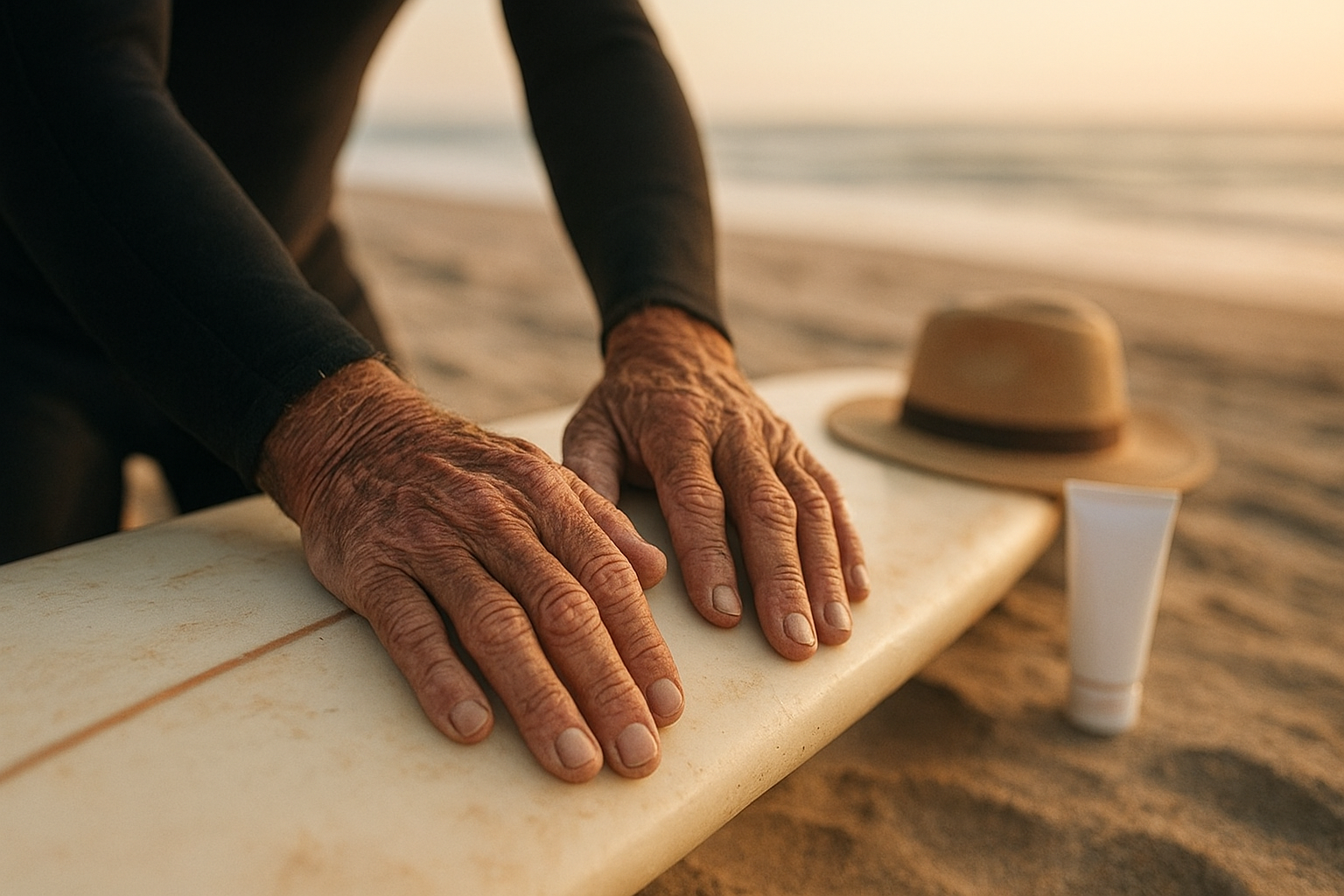
Simple preparation, like stretching and hydration, supports a smoother first surf lesson for older adults.
Frequently Asked Questions About Surf Lessons for Seniors Oahu
What are surf lessons for seniors Oahu?
Surf lessons for seniors Oahu are guided surfing sessions in Waikiki’s gentle waves, tailored to older adults with slower pacing, extra water support, and instructors trained to work with varying fitness levels. They focus on safety, balance, and confidence rather than speed of progress.
How old do you have to be to take surf lessons in Oahu?
There is no upper age limit for surf lessons in Oahu, and many schools regularly teach guests in their 60s, 70s, and beyond. Instructors typically ask about mobility and health conditions beforehand so the lesson plan fits the individual.
Is surfing safe for seniors with joint issues?
Surfing can be safe for seniors with joint issues when lessons take place in calm, shallow water and instructors use soft-top boards designed for stability. Low-impact paddling and gentle wave conditions in Waikiki reduce strain compared to many land-based sports.
How much do surf lessons for seniors Oahu cost?
Group surf lessons in Waikiki typically range from about $75 to $120 per person, while private lessons for seniors often run between $150 and $250 depending on lesson length. Semi-private options offer a middle ground with more personal attention than a large group.
How long does a typical senior surf lesson last?
Most senior surf lessons in Oahu last between 60 and 90 minutes, including beach instruction and time in the water. Instructors often build in rest breaks so participants can pace themselves comfortably.
What should seniors wear for a surf lesson?
A swimsuit or rash guard with quick-drying shorts works best, along with reef-safe sunscreen and a hat for the beach portion. Many schools provide rash guards, so checking ahead can save you a packing step.
Do I need to be a strong swimmer to take surf lessons?
You do not need to be a strong swimmer, but basic water comfort and the ability to float are helpful. Instructors stay close in shallow, protected areas of Waikiki so support is always within reach.
What is the best beach in Oahu for senior surf lessons?
Waikiki Beach is widely considered the best location for senior surf lessons because of its long, slow-breaking waves and sandy, gently sloping bottom. These conditions make it easier to catch waves without dealing with rocks, strong currents, or steep drop-offs.
How many people are in a senior surf lesson group?
Small group lessons for seniors usually include two to six students per instructor, which allows for individual feedback. Private and semi-private lessons reduce that ratio further for guests who want more one-on-one coaching.
What are common mistakes seniors make when starting to surf?
A common mistake is trying to stand up too quickly instead of mastering paddling and balance on the board first. Skipping a proper warm-up or choosing a board that is too small for stability are other frequent errors beginners of any age should avoid.
Can seniors with back pain still learn to surf?
Many seniors with mild to moderate back pain can still learn to surf, especially when starting from a kneeling or prone position rather than standing right away. It is wise to consult a doctor beforehand and inform the instructor so the lesson can be adapted.
What equipment is provided during surf lessons for seniors Oahu?
Reputable schools provide a soft-top longboard and hands-on instructor support in the water, with some also offering rash guards. Certain providers offer flotation aids for extra confidence during the early paddling stages.
How soon can a senior expect to stand up on a surfboard?
Many first-time senior students stand up and ride a wave within their first lesson, thanks to Waikiki’s forgiving, slow-breaking swells. Progress varies by fitness level, so instructors adjust pacing rather than pushing a fixed timeline.
Are private lessons better than group lessons for older adults?
Private lessons often suit older adults who want undivided attention, a slower pace, or have specific health considerations. Group lessons, however, can still work well for seniors who are comfortable in the water and enjoy a social learning atmosphere.
Final Thoughts on Surf Lessons for Seniors Oahu
Ultimately, surf lessons for seniors Oahu prove that age is not a barrier to trying something new in the water. With patient instructors, forgiving Waikiki waves, and equipment designed for stability, older adults can safely paddle, balance, and stand up on a board, often on their first attempt. Whether you are traveling solo, celebrating a milestone birthday, or joining family for a multi-generational beach trip, a well-matched surf school makes all the difference. For more information on lesson formats, locations, and booking options, visit Star Beach Boys and take the first step toward your own Waikiki surf story.