Beginner surfing programs Hawaii give first-timers a safe, structured path to standing up and riding a real wave, often on the very first day in the water. Unlike a random beach rental or a friend’s hand-me-down advice, these programs pair certified instruction with some of the gentlest, most forgiving surf breaks on the planet. Whether you have four days on Oahu or two weeks island-hopping, this guide walks through exactly how lessons work, what separates a great program from a mediocre one, and how to pick the right fit for your first session in the lineup.
Quick answer: Beginner surfing programs Hawaii are structured lesson packages that combine a beach safety briefing, land-based board drills, and supervised in-water coaching at gentle breaks like Waikiki. Most first-timers stand up and ride a wave within their very first session, and the best programs also offer clear pathways into semi-private, private, and multi-day coaching as skills improve.
What Are Beginner Surfing Programs in Hawaii?
Beginner surfing programs Hawaii are structured lesson packages that teach ocean safety, board handling, and wave-riding basics under the guidance of certified instructors. Most programs combine beach-based coaching with in-water practice at gentle, beginner-friendly breaks, so students are never thrown into deep water without direct support nearby.
Surfing itself, as documented on Wikipedia’s overview of the sport, dates back centuries in Polynesian culture, and Hawaii remains its spiritual home. In addition, for a deeper breakdown of what a full course looks like from start to finish, our comprehensive surf lessons guide covers everything from pricing to what to wear on lesson day.
Why Hawaii Beats Every Other Place to Learn
Families, honeymooners, and solo travelers all gravitate toward Hawaii surf lessons for one simple reason: the conditions are unusually forgiving. Warm water year-round means there is no need for a thick wetsuit, which in turn makes the whole experience far less intimidating for children and older adults alike.
Consequently, many visitors treat their first lesson as a highlight of the trip rather than a niche activity reserved for athletes. If you are traveling with a larger party, our group surf lessons page explains how instructors balance attention across multiple skill levels at once, so nobody gets left behind while the stronger paddler in your group catches an extra wave or two.
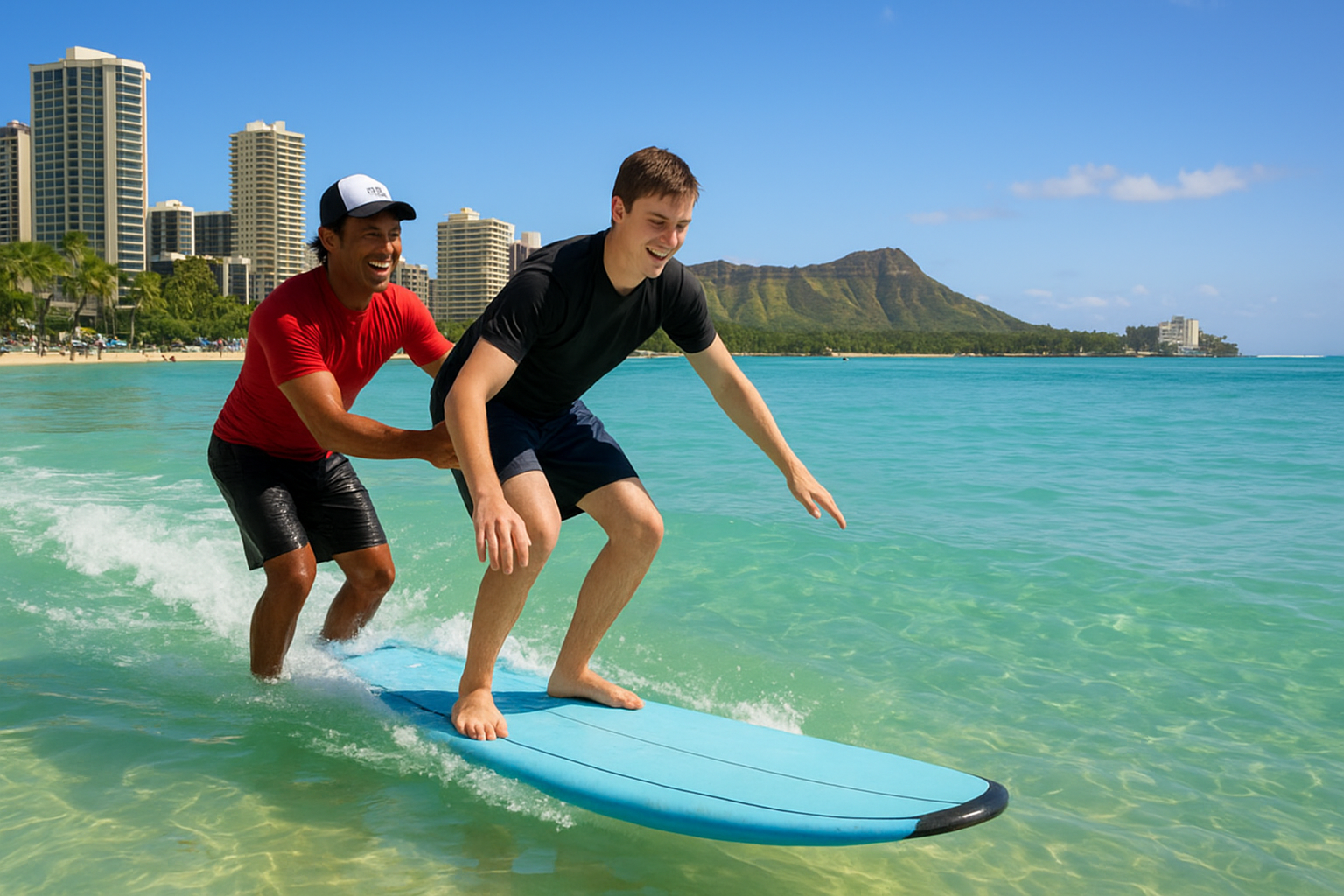
Beginner surfing programs Hawaii often start in shallow, slow-breaking water like this stretch near Waikiki.
How Beginner Surf Lessons in Hawaii Actually Work
Most schools follow a similar six-stage sequence to move students from dry sand to riding a wave with confidence. Here is exactly what that process looks like, step by step, so there are no surprises on the day of your lesson.
- Safety briefing on the beach: Instructors explain current ocean conditions, tide behavior, and hand signals before anyone touches the water, ensuring every student understands the ground rules first.
- Board and stance practice on sand: Students rehearse paddling motion and the pop-up technique on a stationary board, which builds the muscle memory needed before entering live surf.
- Guided paddle out to the lineup: The instructor walks or paddles alongside each student toward a gentle beginner break, checking comfort level and adjusting the pace the entire way.
- Wave selection and push-off assistance: The instructor picks an appropriately sized wave and physically pushes the board so the student catches it with the correct timing and speed.
- Standing, riding, and repeating: Once the pop-up lands, the student rides straight toward shore while the instructor watches form, then paddles back out for another attempt within minutes.
- Feedback and skill review: After several attempts, the instructor reviews what worked and what needs adjusting, then sets clear, achievable goals for the next session or lesson booking.
What to Expect During Your First Lesson
On lesson day, plan to arrive a little early since check-in and gear fitting take a few minutes. Specifically, expect a soft-top surfboard, a rash guard for sun protection, and reef-safe sunscreen recommendations from your instructor before you ever touch the sand.
According to the National Weather Service’s Honolulu forecast office, Waikiki’s south shore typically sees wave heights of just one to three feet through the summer months, conditions considered close to ideal for first-time surfers. For ongoing ocean and surf condition updates, you can check the National Weather Service Honolulu office before your session, and for a plain-language breakdown of rip currents, NOAA’s National Ocean Service rip current guide is worth a five-minute read beforehand.
Group, Semi-Private, or Private: Choosing Your Lesson Format
Not every beginner learns the same way, so most schools offer three lesson formats. Understanding the trade-offs before you book helps you match the format to your budget, timeline, and comfort level in the water.
- Group lessons: Typically four to eight students share one or two instructors, which lowers the per-person price while still delivering hands-on coaching for every wave attempt.
- Semi-private lessons: Two to three students share an instructor, striking a balance between cost and the amount of individual feedback each surfer receives per session.
- Private lessons: One student, one instructor, fully tailored pacing. This format suits nervous swimmers, young children, or anyone who wants to progress as quickly as possible in a single trip.
- Multi-day programs: Several schools bundle three to five sessions across consecutive days, which builds real muscle memory instead of a single, isolated experience that fades once the vacation ends.
Group lessons typically cost less per person than private instruction, while semi-private and one-on-one sessions cost more because of the individualized attention involved. In particular, prices vary by island, group size, and total lesson length, so always confirm exactly what is included before paying a deposit.
Best Islands and Beaches for Beginner Surfing Programs Hawaii
While Waikiki on Oahu is the best-known launchpad for first-timers, beginner-friendly breaks exist across the islands. As a result, your choice of island can shape both the crowd size and the overall learning pace.
- Oahu (Waikiki): Long, slow-breaking waves and a sandy bottom make this the most popular and arguably the most forgiving spot in the entire state for a first attempt.
- Maui (Lahaina and Kihei): Warm, protected coves offer smaller summer swells, which suit families looking for a quieter alternative to Oahu’s busier lineups.
- Kauai (Poipu): Gentle reef breaks provide a scenic, less crowded learning environment, though instructor availability is generally lower than on Oahu.
- Big Island (Kona side): Fewer dedicated beginner schools exist here, so booking further in advance is recommended if this is your only stop.
If safety and instructor experience matter more to you than convenience, our guide on where beginners can find the best surf lessons with a safety focus in Hawaii compares programs by exactly that criteria.
Core Skills You’ll Build in a Beginner Surf Lesson
Good beginner surfing programs Hawaii instructors design lessons around four core skills: paddling efficiency, wave reading, the pop-up, and basic balance while riding straight toward shore. Above all, these fundamentals form the foundation for every wave you will ever ride, no matter how advanced you eventually become.
Once these basics feel natural, many students wonder how quickly they can progress further. Our article on how long it takes to learn to surf breaks down realistic timelines, while our intermediate surfing classes page outlines the next step once you are ready to angle across the wave face instead of riding straight in toward shore.
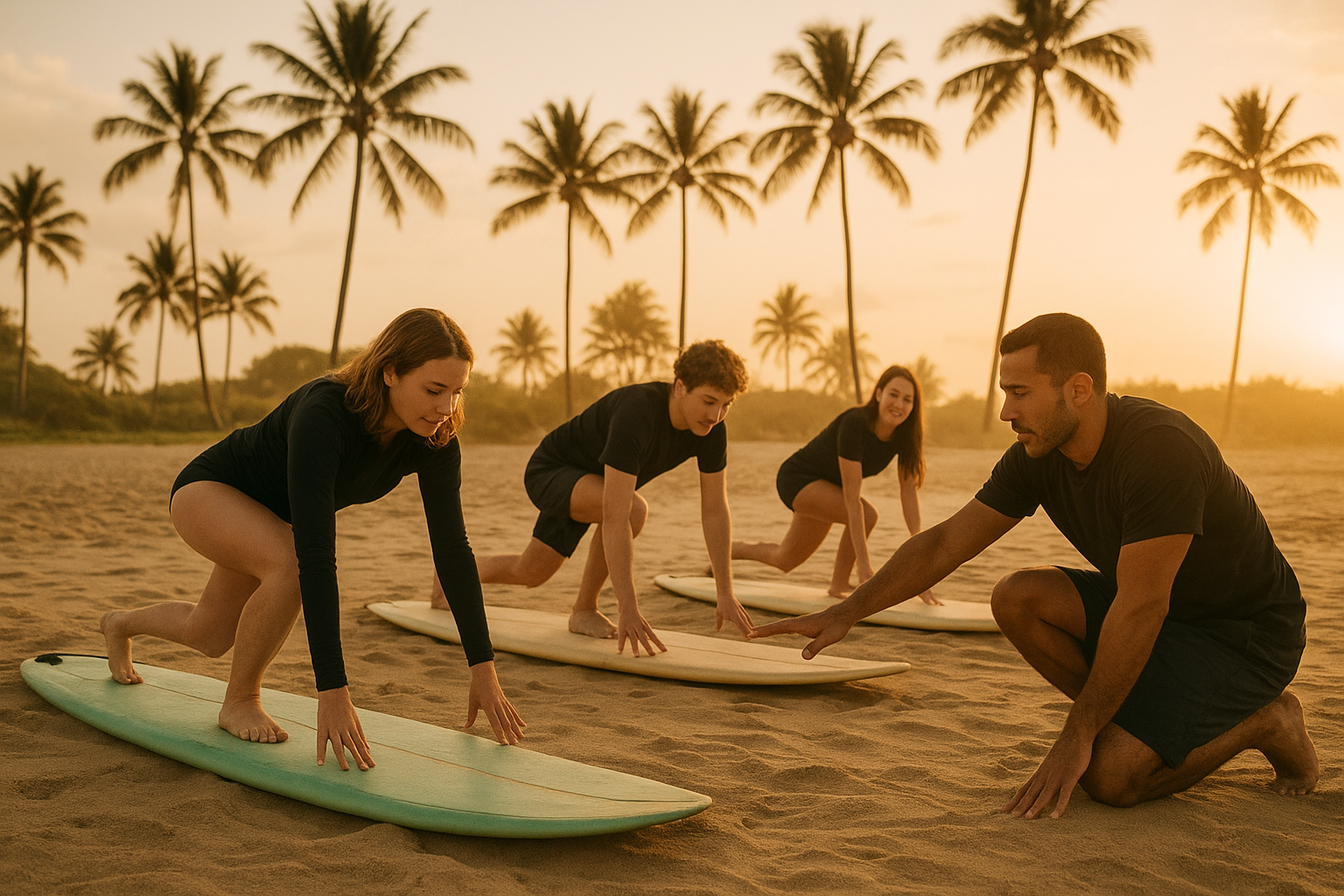
Land drills like this one help new students build muscle memory before paddling out.
Who Can Learn: Age, Fitness, and Swimming Ability
You do not need to be an expert swimmer to take a surf lesson, but basic comfort in the water is important. Instructors assess swimming ability beforehand and adjust the lesson location accordingly, moving nervous swimmers to calmer shallows if needed.
Similarly, no special fitness level is required. Paddling works muscles you may not use often, so expect some soreness the next day, but reasonably active adults and kids as young as five or six can typically participate in supervised beginner lessons. Age minimums vary by program, so confirming directly with the school is always worth the extra email.
Choosing the Right Surf School for Beginners in Hawaii
Not every surf school offers the same level of attention, so it helps to ask a few pointed questions before booking. In particular, confirm the student-to-instructor ratio, whether the location is genuinely beginner-appropriate, and whether instructors hold recognized coaching certifications.
Organizations such as the International Surfing Association set coaching standards that reputable schools often follow. Star Beach Boys structures its beginner surfing programs Hawaii around these same safety-first principles, and you can review the full program details directly at starbeachboys.com. For a broader overview of what separates strong programs from weaker ones, see our complete beginner’s guide to learning to surf.
Ocean Safety and Surf Etiquette Every New Surfer Should Know
Even in beginner-friendly conditions, the ocean deserves respect. Therefore, always check surf and weather reports before heading out, and never surf alone during your first few sessions without an instructor or experienced friend nearby.
Furthermore, learn to recognize rip currents, which pull water away from shore rather than toward it. If caught in one, swim parallel to the beach rather than fighting directly against the current until you break free, then signal for help if you feel tired.
Beyond safety, basic lineup etiquette matters too. For instance, whoever is closest to the breaking part of the wave generally has priority, so beginners should wait for a clear turn rather than paddling for every wave that passes. Your instructor will point this out in real time, which also doubles as an easy way to make friends in the water.
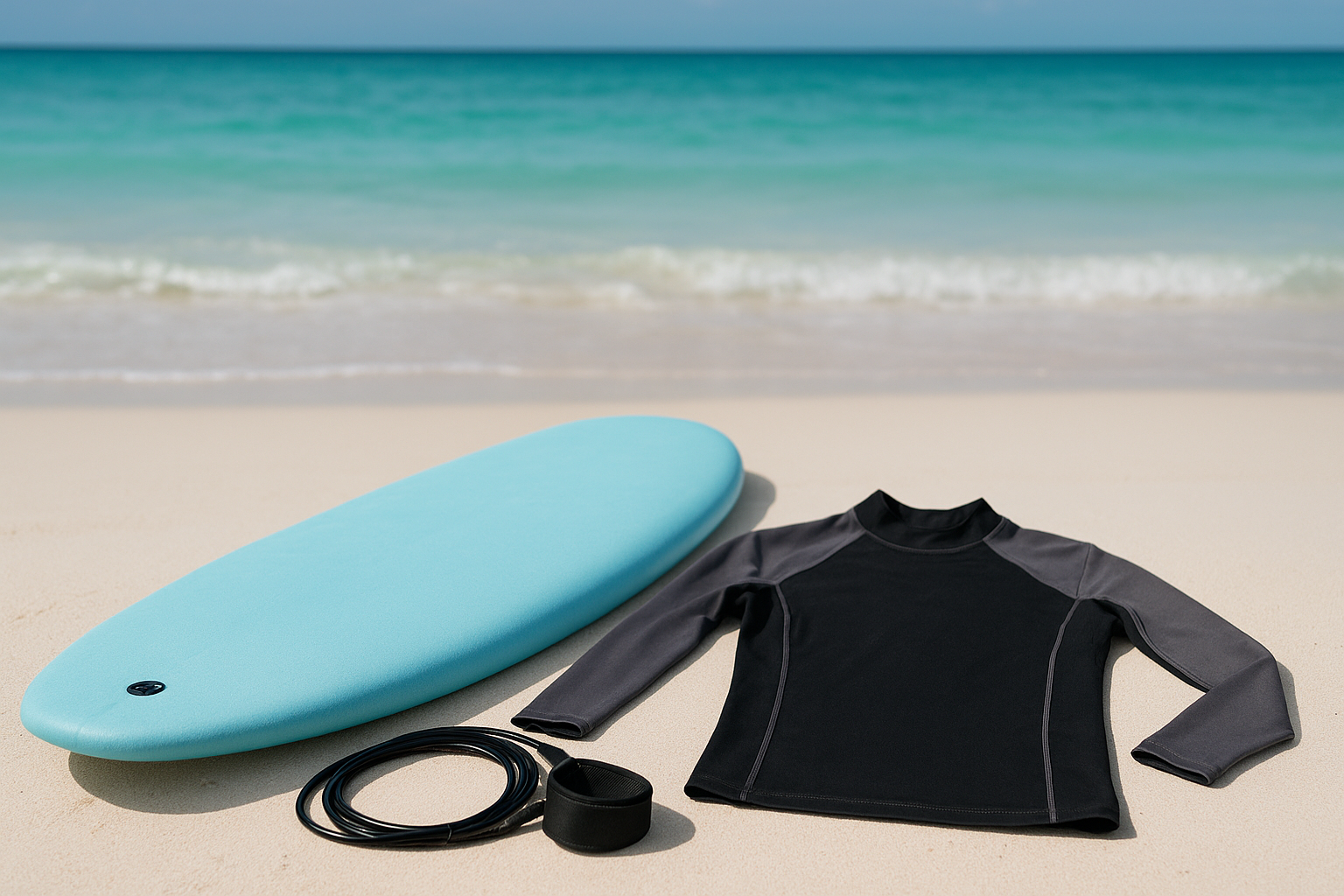
Most schools provide a soft-top board and rash guard as part of every beginner lesson.
Best Time of Year and What to Pack
Summer months typically bring smaller, calmer waves on south-facing shores like Waikiki, making them ideal for beginners. Winter, on the other hand, often produces larger swells that are better suited to experienced surfers chasing more challenging conditions.
Bring a swimsuit, towel, reef-safe sunscreen, and a positive attitude. Most schools supply the surfboard, rash guard, and any required safety gear, so renting rather than buying is recommended until you know which board style suits your progress.
Frequently Asked Questions About Beginner Surfing Programs Hawaii
What are beginner surfing programs Hawaii known for?
Beginner surfing programs Hawaii are known for pairing patient, certified instructors with gentle, forgiving waves. Most sessions combine land-based coaching with supervised in-water practice so new surfers build confidence quickly.
How long does a beginner surf lesson in Hawaii last?
Most beginner surf lessons run between 90 minutes and two hours. This includes a safety briefing, land drills, and roughly an hour of in-water coaching.
Do I need to be a strong swimmer to take a surf lesson?
You do not need to be an expert swimmer, but basic comfort in the water is important. Instructors assess swimming ability beforehand and adjust the lesson location accordingly.
What age can kids start beginner surfing programs Hawaii?
Many schools accept children as young as five or six for supervised beginner lessons. Age minimums vary by program, so it is worth confirming directly with the surf school.
How much do beginner surf lessons cost in Hawaii?
Group lessons typically cost less per person than private instruction, while semi-private and one-on-one sessions cost more due to individualized attention. Prices vary by island, group size, and lesson length.
What should I bring to my first surf lesson?
Bring a swimsuit, towel, reef-safe sunscreen, and a positive attitude. Most schools supply the surfboard, rash guard, and any required safety gear.
Is Waikiki good for beginner surfers?
Yes, Waikiki is one of the most popular spots for beginners because of its long, slow-breaking waves and sandy bottom. These conditions make it easier to practice standing up safely.
What’s the difference between private and group surf lessons?
Private lessons offer one-on-one coaching tailored to your pace, while group lessons split instructor attention among several students at a lower cost. Both formats teach the same core fundamentals.
How many lessons does it take to stand up on a surfboard?
Many beginners stand up and ride a wave during their very first lesson thanks to soft-top longboards and wave selection help from instructors. Consistent riding usually takes three to five lessons.
What common mistakes do beginner surfers make?
New surfers often stand up too quickly, look down at their feet, or paddle at the wrong angle to the wave. An instructor can correct these habits early, which speeds up progress significantly.
Is surfing in Hawaii safe for first-timers?
Surfing in Hawaii is generally safe for first-timers when lessons happen at beginner-friendly breaks with a certified instructor present. Choosing a reputable school and following ocean safety guidance reduces most risks.
What’s the best time of year for beginner surfing in Hawaii?
Summer months typically bring smaller, calmer waves on south-facing shores, making them ideal for beginners. Winter often produces larger swells better suited to experienced surfers.
Can I rent equipment instead of buying my own?
Yes, virtually all surf schools include board and gear rental as part of the lesson package. Renting is recommended for beginners until they know which board style suits their progress.
What happens to my lesson if the surf or weather turns bad?
Reputable schools monitor conditions closely and reschedule rather than run a lesson in unsafe surf. Most offer a free reschedule or full refund if weather forces a cancellation on their end.
Can I get photos or video of my first surf lesson?
Many beginner surfing programs Hawaii offer optional photo or video packages, often shot from the beach or water by a second staff member, so you can relive the first ride later.
Should I book a multi-day program instead of a single lesson?
If your trip allows it, a multi-day program builds far more consistency than one isolated lesson. Repetition across several days helps the pop-up and paddling technique become automatic rather than memorized.
In short, beginner surfing programs Hawaii combine gentle waves, certified coaching, and a proven step-by-step approach that gets most students riding a wave on day one. Whether you choose a group session for the family, a private lesson for faster progress, or a multi-day package to build lasting muscle memory, starting with a structured lesson remains the safest and most effective way to fall in love with surfing. As a next step, review our beginner’s guide, then book a lesson at a beach known for forgiving conditions and let an experienced instructor guide the rest of your journey.