Surfing for all fitness levels is a proven reality, not a marketing slogan. Ocean waves genuinely welcome complete beginners, weekend warriors, and lifelong athletes alike, provided the instruction, equipment, and pacing are matched to the individual. Whether you have never jogged around the block or you train five days a week, there is a wave, a board, and a coaching style built for your body right now.
According to the National Institutes of Health, water-based activity delivers measurable cardiovascular and musculoskeletal benefits across nearly every age group and physical condition. Surfing goes a step further by combining aerobic paddling, balance training, and core stability work inside a single session. As a result, it stands out as one of the few full-body workouts that feels like play rather than exercise.
This guide goes far beyond the surface-level question of “how fit do I need to be?” Instead, it breaks down the exact muscles, energy systems, and mental skills involved at every stage, explains how age and body type actually factor in, and gives you a concrete plan for your first lesson — regardless of where your fitness currently stands.
What Is Surfing for All Fitness Levels, Really?
Surfing for all fitness levels is an inclusive coaching approach that adapts board selection, wave choice, and instructional pace to match each individual’s physical capacity — instead of demanding a baseline athletic standard before anyone paddles out. In practice, this means a 65-year-old retiree and a 24-year-old marathon runner can share the same beach, the same instructor, and the same afternoon, and both walk out having ridden a wave.
The sport itself has a long, well-documented history as a form of active recreation — as detailed on Wikipedia’s overview of surfing — and modern instruction methods have made it dramatically more accessible than the extreme-sport image many people still carry in their heads. Specifically, beginners with lower fitness typically start on wide, soft-top foam boards in calm, shallow whitewater, where physical demand is minimal and injury risk is low.
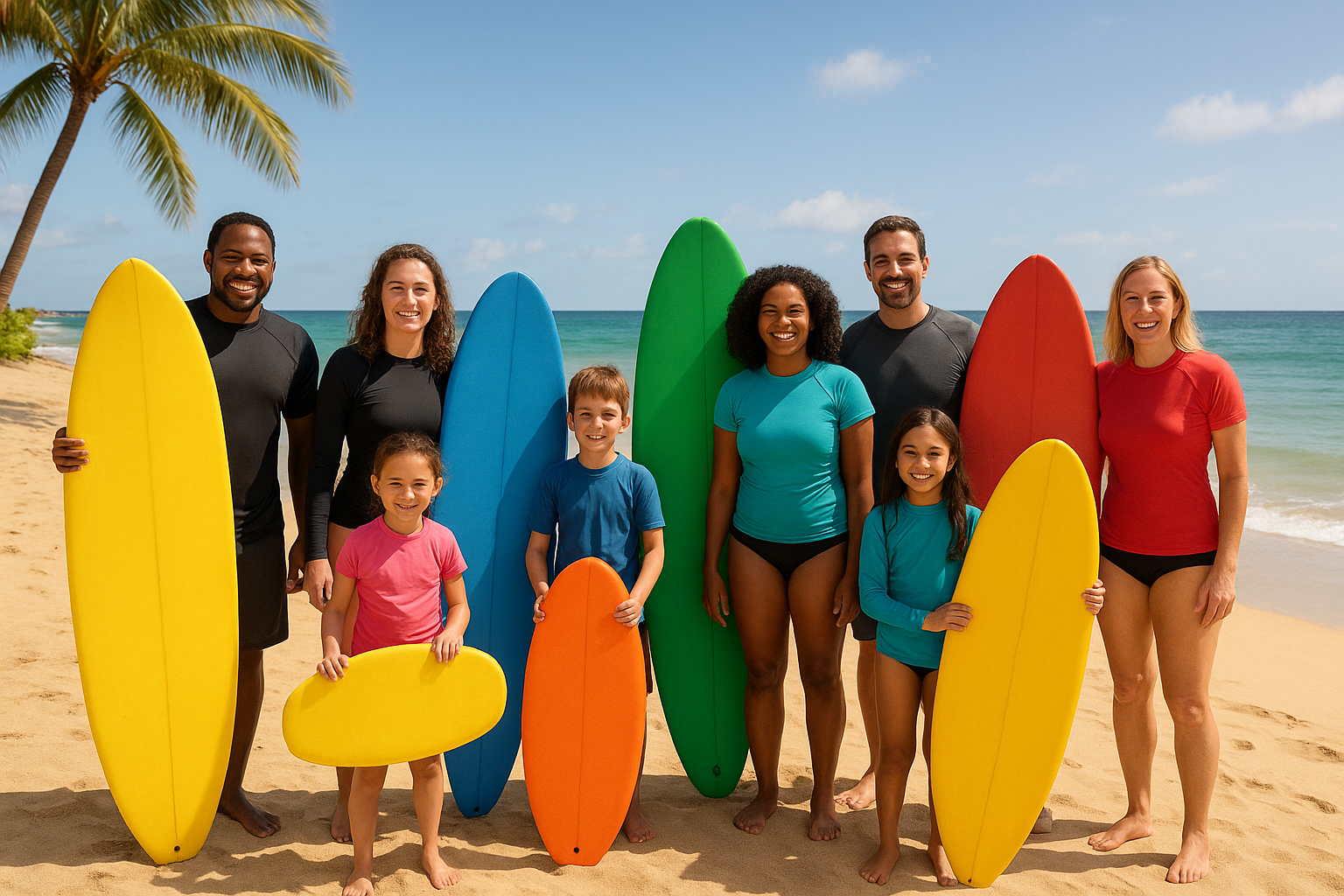
Surfing for all fitness levels begins with the right board, the right wave, and an encouraging learn to surf at any age instructor by your side.
The True Physical Requirements to Learn Surfing
Unlike many land sports, surfing does not demand a fixed level of strength, speed, or endurance before day one. However, it does draw on a specific combination of physical skills, and understanding them removes the mystery — and the intimidation — from your first lesson.
Muscles and Movement Patterns Surfing Actually Uses
- Shoulders and lats power the paddling stroke that gets you into position for a wave.
- Core muscles stabilize your body during the pop-up and while balancing on a moving board.
- Hip flexors and quadriceps hold your stance once you are standing and riding.
- Lower back and glutes support posture during longer paddling sessions.
In addition, according to the Centers for Disease Control and Prevention, moderate-intensity aerobic activity — the same category surfing falls into for most beginners — is safe and beneficial for the vast majority of healthy adults, even those who are currently sedentary. Therefore, the real prerequisite is not existing fitness. It is simply the willingness to move your body in the water.
Swimming Ability: What You Actually Need
You do not need to be a competitive swimmer to learn to surf. That said, basic water comfort — the ability to float, tread water briefly, and swim a short distance without panic — is genuinely important for safety. Reputable schools assess this before the lesson begins and choose sheltered, shallow whitewater zones specifically so swimming demand stays low.
Why Your Current Fitness Level Should Not Hold You Back
Many people assume surfing requires exceptional strength or stamina before they ever try it. In reality, beginner sessions are structured to minimize physical strain while maximizing fun and learning. The whitewater zone — the area where waves have already broken and roll gently toward shore — is calm enough for nearly anyone to manage comfortably.
Moreover, surfing builds the fitness it requires as you go. Every time you paddle, pop up, and balance on the board, your body naturally develops the strength, flexibility, and endurance needed to progress. Research published by Better Health Victoria confirms that water sports improve muscle tone, cardiovascular health, and mental wellbeing simultaneously — benefits that accumulate with every session, not just the first one.
Consequently, your first lesson does not need to be impressive. It simply needs to happen. That first step into the water, board tucked under your arm, is where the transformation actually begins.
How Surf Fitness Builds Itself, Stage by Stage
Understanding what your body will actually do during a surf lesson removes the fear of the unknown. At the beginner stage, most of the physical effort involves lying on the board, paddling short distances, and performing a pop-up — the movement from lying flat to standing. This requires only basic arm strength and core engagement, both of which develop rapidly with practice.
As you advance to intermediate surfing, the demands increase gradually. You will paddle further out, read wave patterns, and perform turns that engage your legs, hips, and lower back. However, by that point your body will have already adapted through earlier sessions, so the progression feels natural rather than sudden. For those who want to accelerate their development, this expert guide to improving surfing skills quickly offers structured techniques for building competence at any fitness level.
Once fundamentals feel secure, many surfers seek out varied conditions and destinations to keep the sport exciting. If that describes you, this complete guide to fun surf experiences is a useful next stop once the basics click.
How to Start Surfing Regardless of Your Fitness Level
Following a structured approach makes the learning process smoother and safer for everyone. Here is the step-by-step process that works across all fitness levels:
- Choose the right surf school and instructor. Look for a school that explicitly welcomes all fitness levels and employs certified, experienced instructors, since personalized attention matters most in the early stages.
- Select an appropriate beginner surfboard. Wide, buoyant foam boards provide maximum stability and require the least physical effort to balance on, and your instructor will match the board to your body type and current ability.
- Complete a beach safety and technique briefing. Before entering the water, learn ocean safety rules, paddling form, the pop-up technique, and how to fall safely, because this land session reduces anxiety and prepares your body for what comes next.
- Practice paddling and pop-ups in shallow whitewater. Start in the calm, broken-wave zone where conditions are gentle, and focus on timing your pop-up to the wave rather than on athletic performance.
- Progress gradually based on your comfort and ability. As your confidence grows, your instructor will introduce slightly larger waves and new skills, and there is no fixed timeline — progress at the pace that feels right for your body.
This approach mirrors what leading surf schools like Star Beach Boys use to guide students of every background safely into the sport. Their programs are thoughtfully designed to build skills progressively while keeping safety and enjoyment at the forefront.
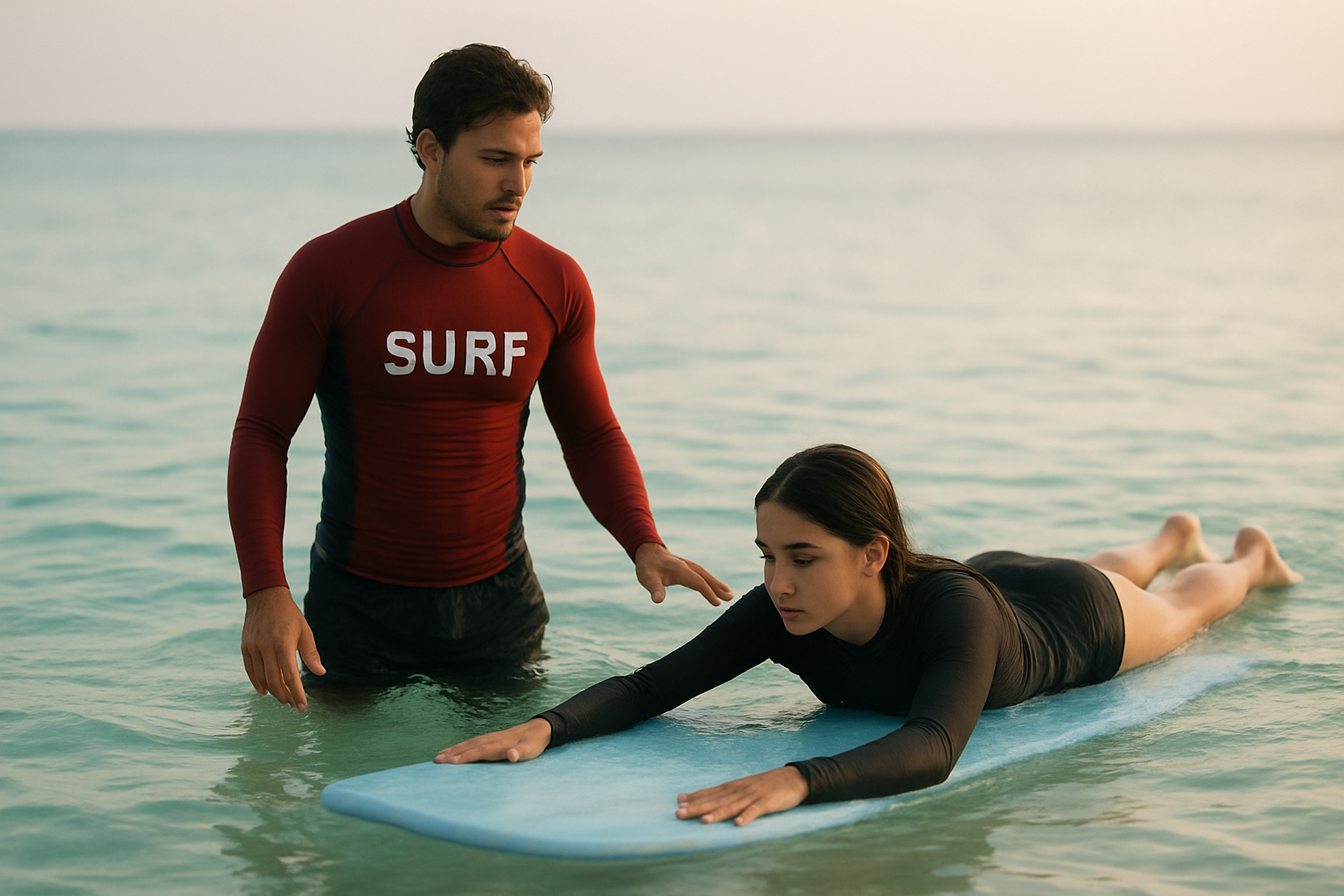
Professional surf instructors adapt every lesson to the student’s current fitness and comfort level.
Preparing Your Body Before Your First Surf Lesson
You do not need a training block before your first lesson, but a little preparation makes the experience more comfortable, particularly if you have been mostly inactive. In particular, three simple habits help:
- Light shoulder and back mobility work for five to ten minutes a day in the week before your lesson eases the paddling motion.
- Short walks or easy swims build baseline cardiovascular tolerance without risking fatigue or injury.
- Hydration and sleep the night before matter more than any single workout, since a well-rested body handles new movement patterns far more easily.
Above all, do not let a lack of preparation delay booking a lesson. Instructors routinely work with people who arrive having done zero prior training, and the on-water coaching itself compensates for that.
Surf Training Options for Adults of Every Background
Adults often worry they have missed the window to learn to surf. In contrast, adult learners frequently progress faster than children because they can better understand and apply verbal instruction, and they also tend to be more deliberate and patient with technique.
Dedicated surf training programs for adults address the specific physical considerations that come with an older body, including joint mobility, endurance, and recovery time. Sessions are typically shorter and more focused, emphasizing quality of movement over quantity of waves ridden.
Similarly, group lessons provide social encouragement that helps adults push past self-consciousness. Seeing peers of similar fitness levels succeed on the board is a powerful motivator, and as a result, many adult learners find group settings more effective than solo instruction for building confidence quickly.
Building Confidence in the Water at Any Fitness Stage
Confidence in the ocean is as important as physical fitness, and arguably easier to develop. Structured surf lessons expose students to the water gradually, building familiarity with wave patterns, currents, and board behavior in a controlled environment. As a result, fear diminishes naturally over time.
Techniques for building surfing confidence on every wave include breathing exercises, visualization before paddling out, and setting small, achievable goals each session. These strategies work regardless of your fitness level because confidence is a mental skill, not a physical one.
According to the World Health Organization, adults should aim for at least 150 minutes of moderate aerobic activity per week. A single hour of surfing, even at beginner level, contributes meaningfully toward that target. Furthermore, because surfing is enjoyable, people are far more likely to maintain it as a long-term habit compared with gym-based exercise.
Age, Weight, and Body Type: Does It Matter?
A common worry is that age or body weight disqualifies someone from surfing. In practice, neither is a barrier when equipment and coaching are adapted correctly. Larger, more buoyant foam boards handle a wider range of body weights comfortably, and instructors simply select board volume based on the student’s size rather than assuming a “standard” body type.
Age matters even less than most people expect. Balance and coordination, not raw youth, determine early success on a board. Consequently, many surf schools report that adults in their 50s and 60s often progress at a similar pace to younger beginners, because patience and body awareness compensate for any difference in raw athleticism.
Common Physical Concerns Addressed
People managing joint pain, past injuries, or chronic conditions often assume surfing is off-limits. However, low-impact adaptations exist for nearly every common concern:
- Knee or hip sensitivity: Standing on a stable foam board in gentle whitewater places far less strain on joints than running or jumping sports.
- Shoulder limitations: Instructors can shorten paddling distances and rely more on wave assistance to reduce repetitive strain.
- Asthma or reduced lung capacity: Short, controlled sessions with frequent rest periods keep exertion within a manageable range.
- Balance disorders: Wider, more buoyant boards and shallow water dramatically reduce fall risk while skills develop.
That said, anyone managing a significant medical condition should consult a physician before booking a lesson, and should inform their instructor beforehand so the session can be adapted appropriately.
The Benefits of Taking a Structured Surf Lesson
Self-teaching surfing is possible, but it is significantly slower and more frustrating than learning under professional guidance. Instructors identify technique errors before they become habits, choose appropriate conditions for each student’s ability, and provide real-time safety oversight that no video tutorial can replicate.
The benefits of taking a professional surf lesson extend well beyond technique. Students gain ocean literacy — understanding tides, rip currents, and wave behavior — that keeps them safe long after the lesson ends. This knowledge is especially valuable for lower-fitness participants, who may be more vulnerable in challenging conditions. For a broader look at what a good lesson delivers, this overview of the benefits of taking a surf lesson covers the full range of takeaways beyond fitness alone.
In addition, a well-structured lesson is simply more enjoyable. When you are not struggling to figure out the basics alone, you can focus on the joy of riding a wave, which is ultimately the whole point.

With the right instruction, riders of all ages and fitness levels can experience the thrill of standing on a wave.
Finding Your First Wave: Where to Begin
Starting your surf journey is simpler than most people expect. If you are searching for beginner surf lessons near you, the most important factor is finding a school with certified instructors and a clear commitment to student safety. Location matters too — beaches with gentle, consistent waves and sandy bottoms are ideal for first-timers.
Above all, the most important step is simply showing up. Fitness improves with every session. Technique sharpens with every wave. And the connection you build with the ocean is available to anyone willing to try, regardless of where they are starting from physically.
Sample Weekly Surf Fitness Plan for Every Level
For readers who want a light structure between lessons, a simple weekly rhythm supports progress without risking burnout:
- Two days: Gentle mobility and stretching focused on shoulders, hips, and the lower back.
- Two days: Light cardio such as brisk walking, swimming, or cycling for twenty to thirty minutes.
- One day: Bodyweight strength work — squats, planks, and modified push-ups — to support paddling and pop-ups.
- One or two days: Actual surf lessons or open-water practice, which is by far the most effective training of all.
Notably, this plan is a supplement, not a prerequisite. Plenty of surfers skip the off-water training entirely and still progress well, simply by showing up consistently for lessons.
Quick Answer: Surfing for all fitness levels means adapting board choice, wave size, and instruction pace to each individual’s physical condition. Beginners start in calm, shallow water on stable foam boards, while fitness and skill build naturally over successive sessions. No prior athletic experience is required.
Frequently Asked Questions About Surfing for All Fitness Levels
Is surfing for all fitness levels really possible?
Yes, surfing for all fitness levels is genuinely achievable with proper instruction and board selection. Beginners start on wide, stable foam boards in gentle whitewater, which requires very little athletic background. As fitness and skill grow, surfers progress to more challenging waves and equipment.
What fitness level do you need to start surfing?
You do not need a high fitness level to start surfing. Basic swimming ability and a willingness to try are the most important requirements for a first lesson. Instructors adapt exercises and board choices to match each student’s current physical condition.
How does surfing improve physical fitness?
Surfing builds core strength, balance, cardiovascular endurance, and upper-body power through paddling and pop-ups. Regular sessions also improve flexibility and coordination. Studies show surfing can burn between 250 and 450 calories per hour depending on wave conditions and intensity.
Can older adults or seniors learn to surf?
Absolutely. Many surf schools, including Star Beach Boys, welcome adult learners of all ages. Lessons are paced to suit older participants, focusing on safe technique and gradual progression rather than speed or athleticism.
What type of surfboard is best for low-fitness beginners?
Soft-top longboards or foam boards are ideal for beginners with lower fitness levels. They are wide, buoyant, and forgiving, making it easier to balance and stand up without requiring significant strength. Your instructor will choose the right size based on your height and weight.
How long does it take to stand up on a surfboard?
Most beginners can stand on a surfboard within their first one to two lessons under professional guidance. However, the timeline varies depending on individual coordination, fitness, and ocean conditions. Consistent practice accelerates progress significantly.
Is surfing safe for people who are not strong swimmers?
Beginner surf lessons are typically held in shallow, calm whitewater where swimming ability is less critical. However, basic comfort in water is recommended. Instructors always prioritize safety and stay close to students throughout the surfing safe for beginners lesson.
What should I wear for a surf lesson if I am not very fit?
A comfortable swimsuit or board shorts are standard attire for surf lessons. Rash guards protect against sunburn and board friction and are recommended for all fitness levels. Your surf school will advise on any additional gear such as wetsuits or a snorkel set based on water activities.
How many surf lessons do beginners typically need?
Most beginners benefit from three to five structured lessons to build a solid foundation. Each session builds on the previous one, covering paddling, timing, and balance progressively. Regular follow-up practice between lessons speeds up skill development.
Can children of different fitness levels learn to surf?
Yes, children as young as five or six can begin surfing with age-appropriate instruction and equipment. Surf schools adapt lesson plans to suit a child’s size, strength, and attention span. Most kids find surfing highly engaging, which naturally motivates physical effort.
What are common mistakes beginners make in surf lessons?
Common mistakes include looking down at the board instead of the horizon, standing too far back or forward, and rushing the pop-up motion. Professional instructors identify and correct these errors early, which prevents them from becoming ingrained habits.
How does a surf school adapt lessons for different fitness levels?
Qualified surf instructors assess each student’s physical condition before the lesson and tailor board selection, wave size, and exercise intensity accordingly. Students with higher fitness may progress to steeper waves sooner, while others spend more time mastering fundamentals in calm water.
Can I learn to surf if I am overweight or out of shape?
Yes. Wider, higher-volume foam boards provide extra buoyancy that supports a range of body weights comfortably. Instructors simply select equipment and wave conditions based on your current size and ability, so being out of shape is not a barrier to starting.
Conclusion: The Ocean Welcomes Everyone
Surfing for all fitness levels is not just an aspiration — it is the lived experience of thousands of people who once stood on the sand wondering if they could do it, and then did. The sport adapts to you: the right board, the right wave, and the right instructor make all the difference between a daunting challenge and an unforgettable breakthrough.
Whether you are a complete beginner, a returning adult, or someone managing physical limitations, the path into surfing is open. Professional surf schools like Star Beach Boys are built specifically to meet you where you are and guide you forward at a pace that honors your body and builds your confidence. Therefore, the only thing standing between you and your first wave is the decision to show up. For a deeper walkthrough, see our Surfing in Waikiki: The Ultimate Beginner’s Guide [2026]. Last updated: 2026-08-11. Author: Star Beach Boys surf instructors.
The ocean is patient. It has been waiting for you.