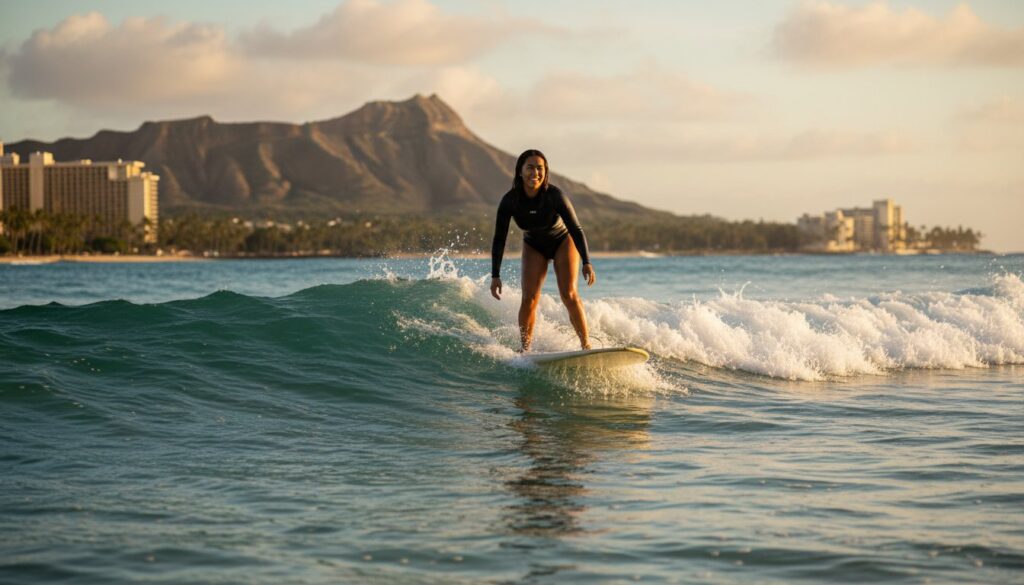
To learn surfing in Hawaii is to experience the sport at its birthplace — a place where wave-riding culture runs deeper than anywhere else on Earth. Whether you are stepping on a surfboard for the very first time or looking to sharpen your technique in warm Pacific waters, Hawaii offers the perfect combination of conditions, culture, and expert instruction to make it happen. This guide was written by experienced local instructors from Star Beach Boys and was last updated on 2026-06-27.
Surfing originated in Hawaii centuries ago, and today the islands remain the world’s most iconic destination for both beginners and professionals. Because the islands offer such a wide range of wave types and Hawaiian surfing lessons, planning your first lesson is straightforward — as long as you know where to start.
Learn Surfing in Hawaii: Why the Islands Are Ideal for Beginners
Hawaii’s warm water temperatures — typically between 74°F and 82°F year-round — eliminate the need for a wetsuit and make long sessions comfortable for beginners. Additionally, the islands receive consistent swells from multiple directions, meaning you can almost always find calm, manageable waves somewhere on the coast; see our Surfing Oahu lessons page for Oahu-specific tide and swell guidance.
Beyond the physical conditions, Hawaii’s surf culture is genuinely welcoming to newcomers. Local instructors are passionate about sharing the aloha spirit of surfing, and most beginner beaches are staffed with certified professionals who prioritize safety alongside fun.
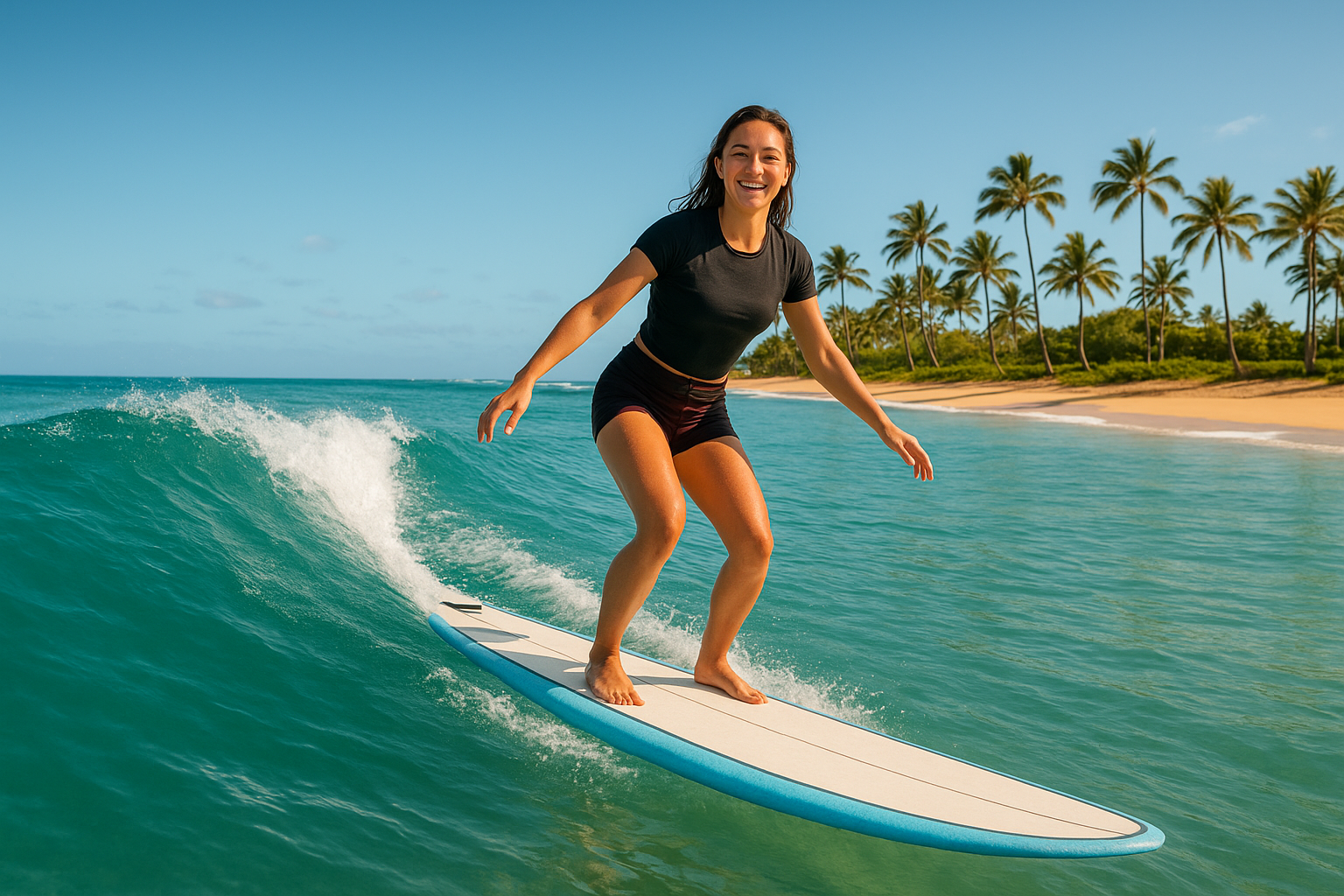
Learning to surf in Hawaii means warm water, gentle waves, and world-class instruction from day one. For a deeper walkthrough, see our Learn to Surf in Waikiki: The Ultimate Guide to Riding the Waves of Aloha.
The Best Beaches for Beginner Surfers
Waikiki Beach on Oahu is, without question, the top destination for first-time surfers. Its long, slow-rolling waves break gently over a sandy bottom, giving beginners plenty of time to stand up and find their balance. The learn to surf Oahu guide highlights Canoes and Queens as forgiving beginner breaks.
On Maui, Lahaina Harbor and Kaanapali Beach offer similarly calm conditions for beginners. Meanwhile, the Big Island’s Kahaluu Beach Park is another excellent option, especially for those who want smaller crowds. In contrast, the famous North Shore of Oahu is strictly for experienced surfers — the winter waves there can exceed 30 feet and are genuinely dangerous for anyone without advanced skills.
Matching the Beach to Your Skill Level
As a rule, beginners should look for beach breaks with waves under three feet, sandy bottoms, and no strong currents. Therefore, always check the daily surf report before heading out, and consult your instructor about which specific break is most appropriate for your current ability level.
How to Choose the Right Surf School
Selecting the right surf school is one of the most important decisions you will make when planning to learn surfing in Hawaii. Look for schools whose instructors hold certifications from recognized bodies such as the International Surfing Association (ISA). Additionally, check that the school maintains a low student-to-instructor ratio — ideally four students or fewer per instructor for group lessons.
Reading recent reviews on Google or TripAdvisor gives you honest insight into teaching quality and safety standards. For example, Star Beach Boys is a well-regarded Hawaii surf school with experienced local instructors who specialize in beginner and intermediate lessons at some of Oahu’s most accessible surf spots. For a deeper walkthrough, see our Learn to Surf in Oahu: Best Spots, Tips & Lessons.
Finally, confirm that the school provides all necessary equipment — including a soft-top longboard, leash, and rash guard — as part of the lesson fee. This saves you from unexpected rental costs and ensures your gear is appropriate for your skill level.
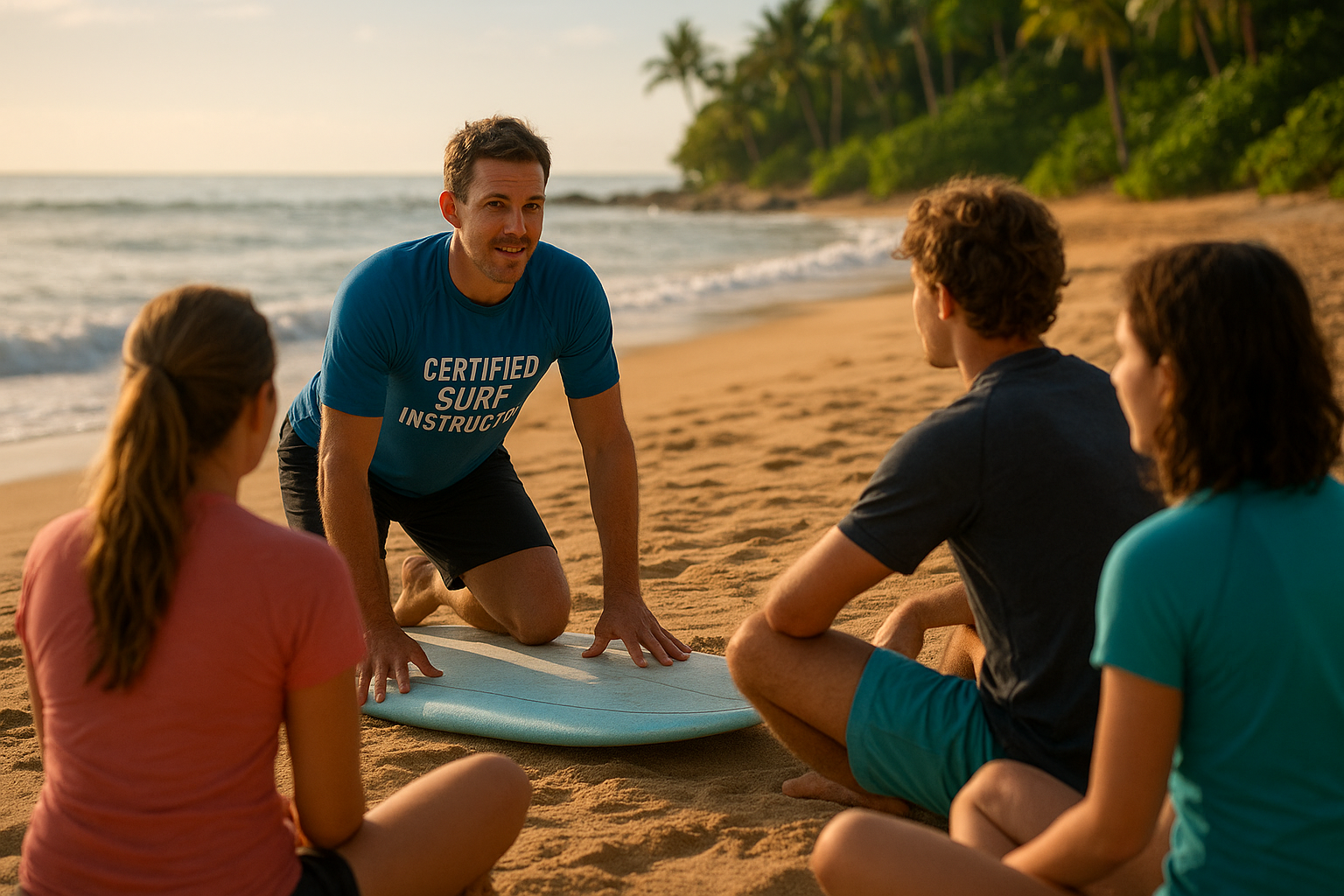
A good surf instructor covers land-based technique before students ever enter the water.
Step-by-Step: Learn Surfing in Hawaii — Your First Surf Lesson
Understanding what to expect helps you relax and absorb the instruction more effectively. Here is how a typical beginner surf lesson unfolds in Hawaii: Oahu surf spots and lesson formats explained in detail.
1Choose a beginner-friendly beach. Your instructor will direct you to a spot with gentle, rolling waves and a sandy bottom, such as Waikiki. For a deeper walkthrough, see our Learn to Surf in Waikiki: Your Complete Beginner’s Guide.
2Book a certified surf lesson. Secure your spot in advance, especially during summer, and confirm that all equipment is included. For a deeper walkthrough, see our Fun Surf Experiences: Your Complete Guide to Riding Waves.
3Learn beach safety and ocean awareness. Your instructor will cover rip currents, right of way rules, and how to fall safely off the board. For a deeper walkthrough, see our How Can I Improve My Surfing Skills Quickly?.
4Practice the pop-up on land. You will drill the motion of jumping from lying flat to standing upright on the board — repeatedly — until it becomes muscle memory.
5Paddle out and catch your first wave. With your instructor guiding you into position, you will paddle into a wave and attempt to stand up — often successfully on the very first try.
Essential Gear Every Beginner Needs
Most surf schools supply equipment as part of the lesson fee, but knowing what you need helps you prepare. A soft-top longboard — typically 8 to 10 feet — is the standard choice for beginners because it is stable, buoyant, and far more forgiving than shorter boards. If you’re wondering how quickly beginners progress, see learn to surf in Oahu for realistic lesson expectations.
Beyond the board, you will need a leash to keep the board attached to your ankle, a rash guard to prevent sunburn and board rash, and reef-safe sunscreen. Because Hawaii’s reefs are protected ecosystems, using chemical-free, reef-safe sunscreen is not just courteous — it is increasingly required by local regulations.
Should You Rent or Buy a Surfboard?
For your first few sessions, renting through your surf school is the most practical option. As a result, you avoid the cost and logistics of transporting a large board. Once you have taken several lessons and confirmed that surfing is a passion you want to pursue, investing in your own beginner board becomes worthwhile.
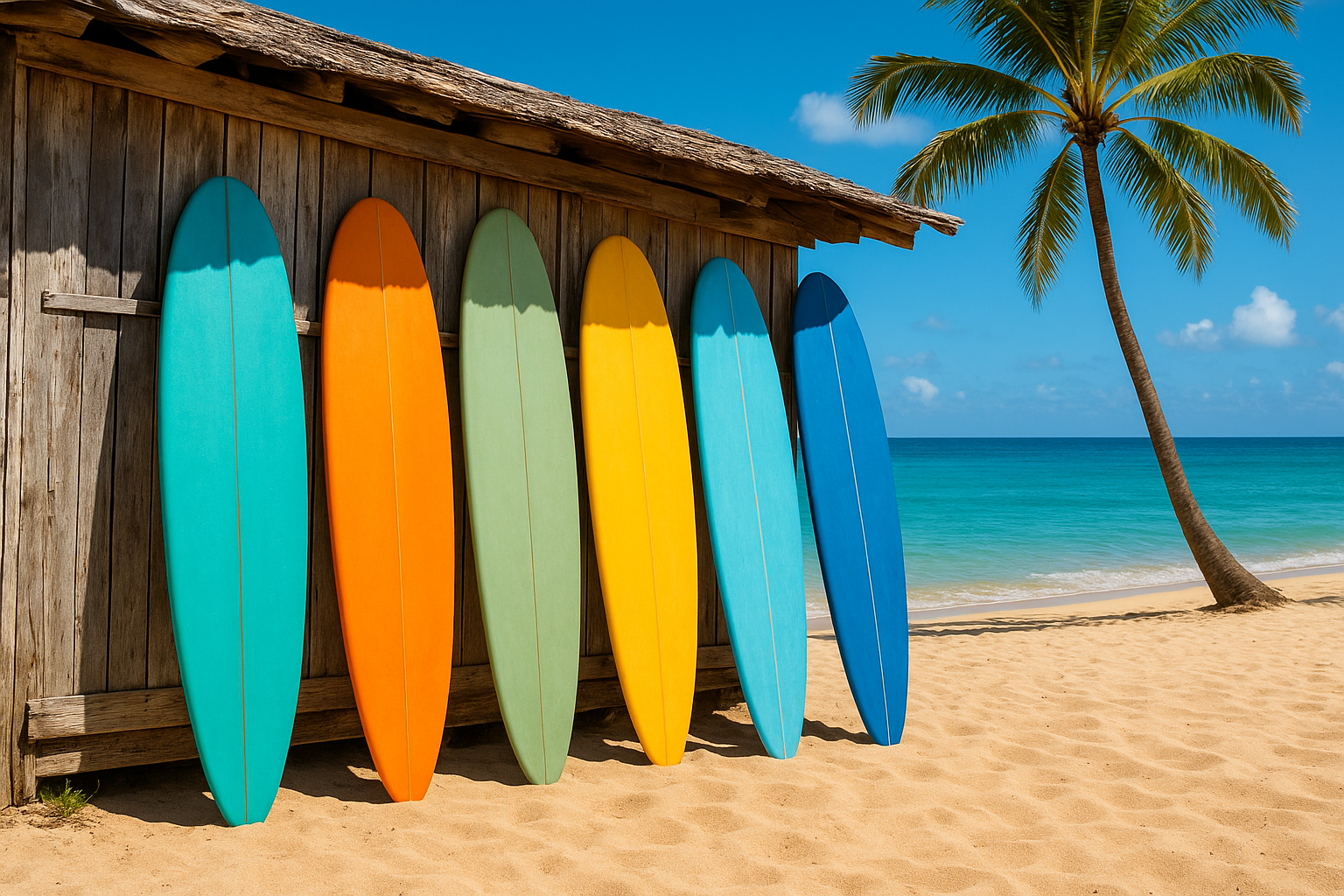
Soft-top longboards are the recommended choice for anyone starting out in Hawaii’s surf. For a deeper walkthrough, see our Can I Learn to Surf at Any Age?.
Safety Rules Every Beginner Must Know
Ocean safety is non-negotiable, and your instructor will emphasize it throughout your lesson. However, it helps to arrive with some foundational knowledge. The most important rule is right of way: the surfer closest to the peak of the breaking wave has priority. Dropping in on another surfer’s wave is dangerous and disrespectful.
Rip currents are another key hazard to understand. According to the National Weather Service, rip currents are responsible for the majority of surf rescues in the United States. If caught in one, swim parallel to shore rather than fighting it head-on, then angle back to the beach once you are out of the current.
Additionally, always surf with a buddy, never turn your back on the ocean, and exit the water immediately if conditions deteriorate. These habits, developed early, will keep you safe throughout your surfing journey.
Common Mistakes Beginners Make (and How to Avoid Them)
One of the most frequent mistakes is looking down at the board instead of toward the horizon. In practice, fixing your gaze forward dramatically improves your balance and helps you read the wave ahead. Therefore, train yourself to look up from your very first pop-up drill on the sand.
Another common error is paddling with bent arms rather than long, deep strokes that engage the shoulders and core. Efficient paddling conserves energy and gets you into waves earlier. Finally, many beginners rush the pop-up and end up off-balance. Instead, practice a smooth, controlled movement — chest up, hands flat on the board, then explode to your feet in one fluid motion.
Planning Your Trip: Timing and Logistics
The best time to learn surfing in Hawaii is during the summer months, from May through September. During this period, south swells produce smaller, more consistent waves on the south and west shores of the islands — perfect for beginners. Winter, by contrast, brings massive north swells that are best left to professionals.
When booking your trip, plan for at least three to five surf lessons spread over several days. This spacing gives your muscles time to recover and allows the skills from each session to consolidate. Resources like Star Beach Boys make it easy to book multiple lessons in advance and get matched with an instructor suited to your goals; see first surf lesson in Oahu for pre-lesson preparation tips.
The Cultural Significance of Surfing in Hawaii
Surfing — known as he’e nalu in the Hawaiian language — is far more than a sport in Hawaii. For centuries, it was a spiritual and social practice central to Hawaiian identity, with different wave breaks reserved for chiefs and commoners alike. Understanding this history deepens your appreciation for every wave you ride.
As a visitor, showing respect for local surfers, the ocean, and the reef is essential. This means following right-of-way rules, not overcrowding breaks, and treating the ocean as a sacred place rather than a theme park. In doing so, you honor the culture that gave the world this extraordinary sport.
Quick Answer: Is It Easy to Learn Surfing in Hawaii?
Learning to surf in Hawaii is genuinely accessible for beginners, especially at Waikiki Beach where waves are slow, gentle, and forgiving. With a certified instructor, most people stand up on their first wave within the first lesson. Consistent practice over several sessions builds the confidence and technique needed to surf independently. For a deeper walkthrough, see our Hawaii Surf Lessons in Waikiki: Experience the Authentic Beach Boy Legacy.
Frequently Asked Questions About Learning to Surf in Hawaii
Is Hawaii a good place to learn surfing for beginners?
Yes, Hawaii is widely considered one of the best places in the world to learn surfing, especially at beginner-friendly spots like Waikiki Beach. The warm water, consistent small waves, and abundance of certified surf schools make it ideal for first-timers. For a deeper walkthrough, see our Learn to Surf Oahu: Best Spots, Tips & Lessons.
How much does a surf lesson in Hawaii cost?
Group surf lessons typically cost between $50 and $100 per person, while private lessons range from $150 to $250. Prices vary by location, instructor experience, and lesson duration, which is usually 60 to 90 minutes.
What is the best beach in Hawaii to learn surfing?
Waikiki Beach on Oahu is the most popular and beginner-friendly option. Its long, gentle rolling waves and sandy bottom create a forgiving environment. The Canoes and Queens breaks within Waikiki are especially recommended for newcomers. For a deeper walkthrough, see our Outrigger Canoe Rides.
Do I need experience before taking a surf lesson in Hawaii?
No prior surfing experience is needed. Instructors cover ocean safety, paddling technique, and the pop-up before you enter the water. Basic swimming ability is, however, strongly recommended for your safety. For a deeper walkthrough, see our Outrigger Canoe Club Honolulu: A Visitor’s Guide to the Real Waikiki Experience.
What type of surfboard should a beginner use?
Beginners should use a soft-top longboard, typically 8 to 10 feet long. These boards are more stable, easier to paddle, and safer than shorter hard-top boards. Most Hawaii surf schools provide them as part of the lesson package.
How many lessons does it take to stand up on a wave?
Many beginners stand up on a wave during their very first lesson at Waikiki. However, developing confident balance and wave-reading skills typically takes 3 to 10 lessons depending on the individual’s athleticism and consistency. For a deeper walkthrough, see our Kids Surf Lessons in Waikiki: The Complete Guide.
Is surfing in Hawaii safe for beginners?
Surfing is generally safe for beginners when lessons are taken at designated beginner beaches with a certified instructor. Beginners should avoid reef breaks and high-surf areas like the North Shore, which are intended for experienced surfers only.
What should I wear for a surf lesson?
Wear a comfortable swimsuit or board shorts and apply reef-safe sunscreen before your lesson. Most surf schools provide a rash guard to protect against sunburn and board friction. Water shoes are optional but helpful at rocky entry points.
What is the best time of year to learn surfing in Hawaii?
The best time is during summer, from May through September, when south swells produce smaller, more manageable waves on the south shores. Winter brings larger north swells that are better suited to advanced surfers.
Can kids learn to surf in Hawaii?
Absolutely. Many Hawaii surf schools offer lessons designed for children as young as five or six. Kids adapt quickly to surfing, and the calm conditions at Waikiki make it a safe and fun environment for young beginners. For a deeper walkthrough, see our Oahu Surfing Lessons: Learn to Surf in Hawaii.
Should I book a surf lesson in advance?
Booking in advance is strongly recommended, especially during peak tourist season from June through August. Popular instructors and time slots fill up quickly, so online booking through your chosen surf school is the safest approach.
What is the difference between a group and private surf lesson?
Group lessons are more affordable and social, with a typical ratio of one instructor to four or five students. Private lessons offer one-on-one coaching tailored to your specific needs, making them ideal for faster progression and targeted feedback.
Ready to Learn Surfing in Hawaii?
To learn surfing in Hawaii is to connect with a living tradition that has shaped ocean culture worldwide. Whether you choose the gentle waves of Waikiki or a quieter break on Maui, the combination of expert instruction, warm water, and genuine aloha spirit makes every session unforgettable. Therefore, book your lesson, grab a soft-top board, and let Hawaii’s waves do the rest — your surfing journey starts here. About the author: Star Beach Boys instructors — local, ISA-certified coaches who teach beginners and intermediates. Last updated: 2026-08-11.