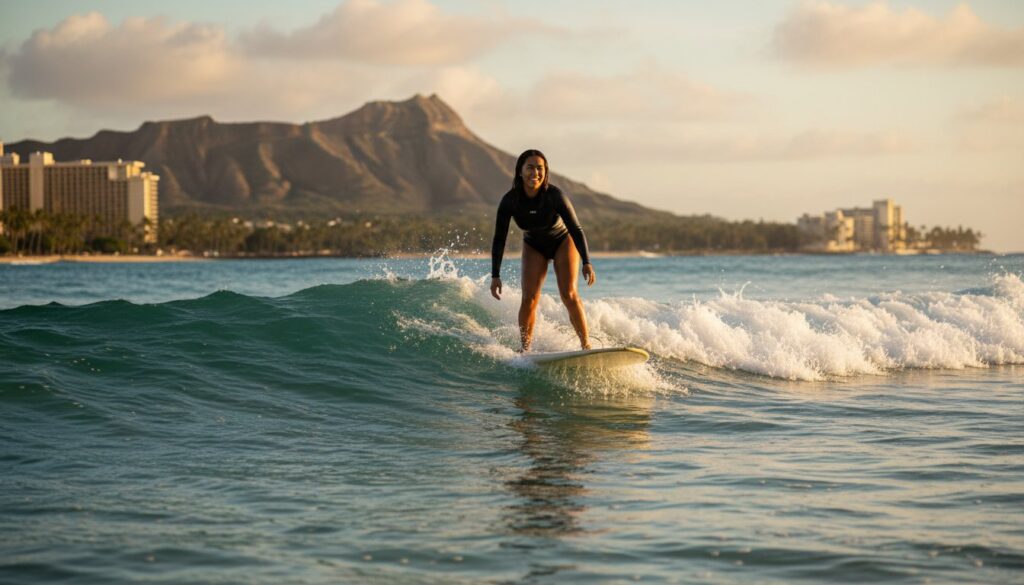
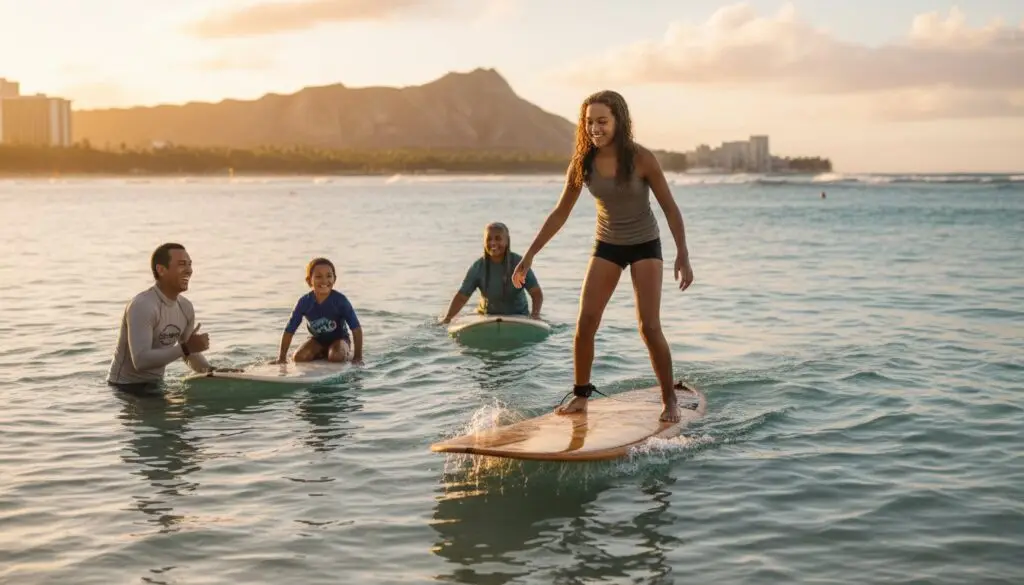
Star Beachboys — Waikiki surfboard rental experts · Waikiki, Hawaii
Surfboard Rental Waikiki: The Complete 2026 Guide to Boards, Prices, Breaks & the Aloha Tradition
Everything you need to rent the right board, surf the right break, and pay the right price — from the original Beach Boys who have called this sand home since 1974.
Aloha! Planning a Waikiki surfboard rental? Last Tuesday, a family from Denver stood on the sand at Queens, eyes fixed on the gentle, rolling waves. They dreamed of paddling out together — but a wave of worry hit them first. How do you carry three giant boards two blocks from a shop? Are those “cheap rental” signs hiding surprise fees for leashes, wax, and rash guards? And will a beginner just get in the way of the locals?
We see it every single day. You came to Waikiki for magic, not logistics stress. This guide answers every question about surfboard rental Waikiki — real prices, the right board for your level, exactly which breaks are safest, hidden fees to avoid, and why surfing with the original Beach Boy crew is something completely different. For a full gear and rental checklist, see our rental gear guide. Let’s get you off the sand and onto the waves.
Key Takeaways
- In 2026, expect to pay $20–$30/hour for a soft-top and $50–$70 for a full day — but always check what’s included before you hand over your card.
- Beginners should rent a 9–11 ft soft-top longboard with high volume for maximum stability on Waikiki’s rolling waves. For a deeper walkthrough, see our Surfboard Rentals in Waikiki: Prices & Best Spots.
- The safest, friendliest beginner breaks are Canoes and Baby Queens — long, sandy-bottom waves perfect for first-timers and families with kids.
- A leash, fresh wax, and a rash guard should always be included in any legitimate surfboard rental Waikiki offer — no exceptions.
- Surfing with Star Beachboys means you’re renting from the original Beach Boy crew — on the sand, zero carry distance, with Native Hawaiian water expertise since 1974.
- Overnight storage, multi-day discounts, and same-day walk-in availability make Waikiki one of the most flexible surf rental destinations on Earth. For a deeper walkthrough, see our Surf Board Hire Waikiki: Your Complete Rental Guide.
Why Waikiki Is the World’s Best Place to Rent a Surfboard
There is no place on Earth that makes learning to surf easier, safer, or more joyful than Waikiki. This is not marketing language — it is physical geography. The reef configuration, the consistent South Shore swell, and the sandy bottom create conditions so perfectly calibrated for beginners that the original Waikiki Beach Boys used to guarantee every student would stand up on a wave. That promise still holds today.
When you book a surfboard rental Waikiki style, you are tapping into something Duke Kahanamoku — the legendary Ambassador of Aloha and father of modern surfing — built right here on this sand. He believed these waves belonged to everyone. That spirit of welcome is inseparable from the Waikiki surf experience, and it is why visitors from 80 countries come back year after year.
The Physical Advantages of Waikiki’s Waves
Wave Length
Rides of 100–300 yards — more time to find your balance than anywhere else on the island.
Wave Height
Consistent 1–3 feet year-round on the South Shore — never too big, never too flat.
Bottom Type
Sandy bottom at beginner breaks — wipeouts are soft, not dangerous.
Water Temperature
76–80°F year-round — no wetsuit needed, just a rash guard for sun protection.
Why Renting Locally Always Beats Flying with Your Board
In 2026, major U.S. airlines charge $150–$200 each way for surfboard bags — often $400+ round trip per board, before factoring in the risk of dings, delamination from pressure changes, and the misery of hauling an 8-foot bag through two connecting airports. For a family of four, that math is brutal.
Renting your surfboard in Waikiki eliminates every one of those headaches. You land, you check in, you walk to the beach. Your board is waiting. The cost of a week’s rental for one board is often less than a single airline surfboard bag fee, and you get a board that is already matched to current conditions — no guessing.
The Beach Boy Tradition: 100+ Years of Sharing the Stoke
The original Waikiki Beach Boys were the world’s first surf instructors and the first ambassadors of what we now call surf culture. These legendary Hawaiian watermen didn’t just teach visitors to stand on a board — they taught them how to feel the ocean, respect the water, and carry the Aloha spirit with them for the rest of their lives. Duke Kahanamoku was their most famous member, and his legacy — that surfing is a gift meant to be shared freely — is the founding philosophy of Star Beachboys. Every rental, every lesson, every wave is an extension of that tradition.
Choosing Your Board: The Complete Rental Board Guide by Skill Level
The single biggest mistake renters make in Waikiki is grabbing a board that looks cool instead of one that matches their actual skill level. The right board makes your first wave a memory you carry for a lifetime. The wrong board makes a frustrating afternoon. Here is exactly how to choose.
The Volume Rule: Volume (measured in liters) is the single most important spec for rental boards. More volume = more buoyancy = easier paddling and wave-catching. Beginners should target boards with 80–120+ liters. Intermediate surfers can drop to 50–80 liters. Advanced surfers choose by feel and style.
Soft Tops vs. Epoxy Hard Tops: Which Should You Rent?
🏄 Soft Top (Foamie)
- Foam deck, flexible fins
- Built for safety & stability
- Forgiving on wipeouts
- Best for: beginners and kids
- Volume: 80–120+ liters
- Size: 9 ft – 11 ft
🏄 Epoxy Hard Top
- Lightweight, rigid construction
- More speed, sharper turns
- Higher performance ceiling
- Best for: intermediate to advanced
- Volume: 45–80 liters
- Size: 7 ft – 10 ft
Level 1 — Absolute Beginner: The Mega-Floaters (10–11 ft Soft Tops)
If this is your first time on a surfboard, your only job is to stand up and ride to shore with a giant smile. The tool that makes that happen is a 10- to 11-foot soft-top longboard with 90+ liters of volume. These boards are so buoyant they feel like floating on a pool raft. See examples and pictures of common rental shapes in our Rent, Learn & Ride guide.
Our Beach Boys will size you precisely based on your height and weight, not just hand you whatever’s on the rack. That personal fit makes an enormous difference on your first wave.
Level 2 — Has Surfed Before: Funboards & Mid-Lengths (7–9 ft)
You can paddle out, catch a wave, and stand up without thinking about it — but turning and trimming are still works in progress. An 8-foot funboard is your sweet spot. It blends the paddling ease of a longboard with the responsiveness of a shorter shape. You’ll immediately notice more speed and the ability to angle down the wave face. This is the board that takes your surfing from “I stood up!” to “I actually surfed.”
Level 3 — Intermediate / Experienced: Performance Longboards (9–10 ft Epoxy)
If you surf regularly at home and want to experience classic Waikiki longboarding — cross-stepping, nose riding, hanging five — a performance epoxy longboard unlocks the full palette. The long, peeling waves at Canoes and Queens were literally designed for this style of surfing. This is where Waikiki’s magic is most fully felt. Ask our Beach Boys about single-fin or 2+1 setups if you want to dial in your ride.
What to Tell the Rental Staff When You Arrive
- Your approximate height and weight (for volume matching)
- Your honest experience level — beginner, tried it a few times, or regular surfer For a deeper walkthrough, see our Surfing in Waikiki: The Ultimate Beginner’s Guide [2026].
- Where you plan to paddle out: Canoes, Queens, Publics, or elsewhere
- Whether you want a soft top or epoxy (they’ll guide you if unsure)
- How many hours or days you need the board
2026 Surfboard Rental Prices, Hidden Fees & What’s Always Included
Walk down Kalakaua Avenue and you’ll count a dozen rental signs. Every one of them looks cheap at first glance. The sticker price rarely tells the whole story. Here is a complete, honest breakdown of what surfboard rental in Waikiki costs in 2026 — including the extras that inflate the real number.
2026 Waikiki Surfboard Rental Price Guide
⚠️ Hidden Fees to Watch Out For
- Leash fee: Some shops charge $4–$7 separately. A leash is non-negotiable for safety — it should always be free.
- Wax charge: $2–$5 for wax application. Legitimate shops include this at no extra cost.
- Mandatory “ding insurance”: $8–$15 per day. Ask upfront whether this is optional or required.
- Rash guard rental: $5–$10/day if not included. Check before assuming it’s covered.
- Credit card hold: Most shops place a $100–$300 security deposit hold on your card. Ask the exact amount before signing.
- Off-site storage fee: If their racks aren’t on the beach, expect to pay $10–$15/night for overnight storage or deal with hauling your board back to the hotel.
What Every Star Beachboys Rental Includes — No Exceptions
- The perfectly matched surfboard — sized to your body and skill level by our Beach Boys
- A proper surf leash — attached and ready, always included
- Fresh tropical wax — applied for you before you hit the sand
- A high-quality rash guard — sun and wax protection, no upcharge
- Free overnight secure storage for all multi-day rentals (no more hotel board logistics)
- Beach Boy guidance — our crew is right there if you need a quick tip or a wave push
The Hidden Cost Nobody Talks About: Your Time
A shop that’s three blocks from the ocean may list a slightly lower hourly rate. But carrying a 9-foot board through crowded sidewalks in the Waikiki heat costs you 20–25 minutes of actual surf time every single session — 10 minutes each way. Over a 5-day trip, that’s nearly two full hours of vacation time spent as a pack mule instead of riding waves. Our racks sit directly on the sand. You grab your board, turn around, and you’re in the water in under 60 seconds.
When you factor in time, included gear, and no hidden fees, the real price of a great Waikiki surfboard rental is often less than the “cheap” option down the street.
How to Rent a Surfboard in Waikiki: Step-by-Step
Renting a surfboard at Waikiki is straightforward when you know the process. Here is exactly what to expect from start to first wave. For specifics on where to rent and shop comparisons, see where to rent in Waikiki.
-
1
Reserve Online (Recommended) or Walk Up
Booking in advance via our online reservation system guarantees your board size during peak season (June–August, December–January) and lets you skip the morning queue. Walk-ins are always welcome with Aloha — but board sizes can sell out by 9 AM in peak months.
-
2
Meet the Beach Boys at the Sand-Side Rack
Find our stand right on the beach — you will not need to cross Kalakaua Avenue. Tell our Beach Boys your height, weight, and experience level. They will match you with the right board in under 60 seconds. This is not guesswork; it is 50+ years of matchmaking people to boards.
-
3
Sign the Rental Agreement & Confirm the Deposit
Review the rental terms, confirm what is included (leash, wax, rash guard), and ask about the security deposit hold amount. All damage fee policies should be explained clearly before you sign. No surprises is the Aloha way.
-
4
Get Your Quick Beach Briefing
Our crew will spend 2–3 minutes covering today’s tide, the best spot to paddle out, where the canoe lanes are, and the key lineup rules. This is not a lecture — it is the local knowledge that will keep you safe and maximize your fun. First-timers: ask for a demonstration of the pop-up technique before entering the water.
-
5
Paddle Out & Ride — We’re Right Here If You Need Us
You’re in the water in under 60 seconds from our racks. If you get out there and feel stuck, just wave over one of our crew. We can turn any rental session into a quick impromptu coaching moment at no extra charge. We want you on the wave — that’s the whole point.
Where to Paddle Out: Every Waikiki Break Rated for Rental Boarders
Waikiki is not one wave. It is a collection of distinct surf breaks spread across a 2-mile stretch of coastline, each with its own character, crowd level, bottom type, and ideal conditions. Knowing which break matches your skill level with your surfboard rental Waikiki board is the difference between an epic session and a frustrating or dangerous one.
🏄 Canoes — Best for Beginners and Families
Bottom: Sandy
Best tide: 1.5–2.5 ft
Crowd: Moderate
Canoes is the heart of Waikiki surfing and the definitive beginner break. This is where Duke Kahanamoku introduced the world to surfing, and it is where our Star Beachboys crew was born. The waves here are long, slow-rolling, and break over a mostly sandy bottom — meaning wipeouts are soft and the water is safe. Rides can carry you 100–300 yards toward the beach, giving you enormous amounts of time to practice your pop-up and balance.
Watch out for: Outrigger canoes operate in designated lanes marked by buoys — give them wide berth. Canoes gets busy from 9 AM to noon during peak season; arrive early for the best experience.
🏄 Baby Queens — Hidden Gem for True First-Timers
Bottom: Sandy
Best tide: 1.0–2.0 ft
Crowd: Light
Baby Queens sits just inside (closer to shore) from the main Queens break and tends to be less crowded and even more gentle. It is an excellent alternative when Canoes is packed with surf lesson groups. This is one of the best Waikiki breaks that most visitors — and most rental shop staff from two blocks away — never tell you about.
🏄 Queens — For the Confident Longboarder
Bottom: Mixed — sand & reef
Safe at: tide above 1.5 ft
Crowd: Busy
Queens offers a faster, more classically shaped wave that longboarders love. The wave peels perfectly from right to left, making it ideal for cross-stepping, trimming, and nose riding. It sits just to the Diamond Head side of Canoes and draws a more experienced crowd. The reef becomes dangerously shallow at tides below 1.0 foot — always check the tide chart before paddling out here.
Recommended for: Surfers who have already had a session or two at Canoes and feel comfortable in the lineup.
🏄 Publics — Fewer Crowds, More Power
Bottom: Reef
Safe at: tide above 2.0 ft
Crowd: Light
Publics sits near the Waikiki Aquarium and receives slightly more swell energy than the inner breaks, producing a punchier, more powerful wave with fewer people in the lineup. It rewards intermediate surfers with quality rides, but the reef is real — shallow and unforgiving at lower tides. Check the tide, respect the bottom, and you’ll be rewarded with some of the best uncrowded waves in Waikiki.
🏄 Populars & Other Diamond Head Side Breaks — Advanced Only
Bottom: Reef
Breaks like Populars and the breaks closer to Diamond Head have more power, less predictable sections, and a reef that demands experience and respect. We do not recommend these for rental boards during a vacation unless you regularly surf overhead-plus waves at home. Ask our Beach Boys for honest advice about your level before heading in this direction.
Ocean Safety, Surf Etiquette & Tide Awareness for Rental Boarders
Waikiki is one of the safest surfing environments on Earth — when you know the rules. Ignore them and you become a hazard to yourself and everyone around you. These guidelines are not optional; they are the foundation of surfing with Aloha and the reason our breaks stay welcoming for everyone.
The Core Rules of Lineup Etiquette
- Right of way — the inside surfer wins: The surfer closest to the breaking peak (furthest inside) has the right of way. Never paddle for a wave if someone else is in position for it.
- No dropping in: If a surfer is already riding a wave toward you, do not paddle for that same wave. This is the cardinal sin of surf etiquette.
- Paddle wide, not through the break: When paddling back out, take the path of least interference — through the white water on the shoulder, not directly through the line where waves are breaking and surfers are riding.
- Never ditch your board: A loose 10-foot longboard is a lethal projectile. In any wipeout situation, keep hold of your board or maintain tension on your leash. Call out “board!” if your board gets away from you.
- Don’t hog waves: Even if you are the best paddler in the water, taking every wave leaves nothing for others. Share the stoke. One great ride every few minutes is plenty.
- Give canoes their lanes: At Canoes break, outrigger canoes operate in marked lanes. Respect the buoy markers — these canoes are a cultural institution and have been riding this wave since before most modern surfers were born.
Tide Awareness: Why It Matters More Than You Think
Rule of thumb: At Canoes, paddle out any time the tide is above 1.0 foot. At Queens and Publics, wait for a tide above 1.5–2.0 feet. When the tide drops below these thresholds, the reef becomes dangerously shallow — wipeouts that would be harmless in deep water become serious injuries on exposed reef.
Tides in Hawaii run on a semi-diurnal cycle — two high tides and two low tides per day. The best surf windows in Waikiki are typically mid-incoming tide to mid-outgoing tide, when water depth is optimal and wave shape is most consistent. Our Beach Boys know the day’s tide schedule by heart and will always tell you the best window to paddle out.
Sun and Ocean Safety Essentials
- Reef-safe sunscreen is mandatory: Hawaii law requires reef-safe sunscreen (no oxybenzone or octinoxate). Apply 20 minutes before entering the water and reapply after your session.
- Wear your rash guard: The Hawaiian sun reflects off the water and burns exposed skin in under 20 minutes. Your rash guard is not optional — it is your primary sun protection while surfing.
- Stay hydrated: Two hours of paddling in 80°F sun is serious physical exercise. Bring water to the beach and drink before and after your session.
- Know your limits: If you’re tired, paddle in. Exhaustion in the ocean is dangerous. Waikiki’s waves will be here tomorrow.
- If you’re caught in a current: Never fight it directly. Paddle at a 45° angle to shore or parallel to the beach until you’re clear of the pull, then paddle in.
Surfboard Rentals for Kids & Families in Waikiki: Complete Parent’s Guide
Waikiki is genuinely one of the best places on the planet to introduce children to surfing. The combination of warm water, gentle sandy-bottom waves, and the availability of small, lightweight soft-top boards makes it safe and achievable for kids as young as 5 or 6 years old. Here is everything a parent needs to know before renting boards for the family.
Minimum Age and Physical Requirements
- Recommended minimum age for solo rental: 8–10 years old, able to swim confidently in the ocean without assistance.
- Ages 5–8: Can ride in tandem on an outrigger canoe with our crew, or participate in a supervised family surf lesson with an adult always in the water nearby.
- Non-swimmers: All children and non-swimmers must have an adult in the water with them at all times during any rental session.
- Board sizing for kids: Children under 100 lbs typically ride 7- to 8-foot soft-tops. Our Beach Boys will match the board to the child’s specific body weight and confidence level.
Tips for a Successful Family Surf Day
- Go early: Arrive by 8–9 AM for lighter crowds, cooler air temperatures, and the most patient surf conditions before afternoon onshore winds arrive.
- Canoes is your break: Keep the family at Canoes. The long rides and sandy bottom make it the most forgiving environment for children learning on rental boards.
- Book ahead in summer: June, July, and August are peak family travel season. The small, lightweight boards appropriate for kids sell out fastest — reserve in advance.
- Consider a family lesson first: A 90-minute family group lesson before renting individually gives everyone the pop-up mechanics and water safety knowledge they need. It dramatically increases how much fun the rental session is afterward.
- Sun protection is critical for keiki: Children’s skin burns faster and more severely than adult skin in Hawaiian sun. Apply reef-safe sunscreen before arriving at the beach, and bring extra for reapplication.
A note from our Ohana: Some of our most treasured moments are watching parents who first surfed with us return years later to teach their own children on these same waves. That is the Waikiki Beach Boy legacy — not just a rental transaction, but a memory that your family will carry for generations. We live for that moment.
Rent a Board vs. Take a Lesson First: Which Is Right for You?
This is the question we hear most from first-time visitors, and the honest answer depends on your actual experience level — not the level you hope you are.
Take a Lesson First If…
- You have never surfed before
- You tried it years ago and didn’t stand up
- You’re not sure how to paddle efficiently
- You don’t know the pop-up technique
- You’re unsure about ocean safety rules
- You have children who need supervision
Rent Solo If…
- You can paddle out and catch waves independently
- You can pop up without thinking about the steps
- You understand lineup etiquette and right of way
- You’re comfortable reading wave sets
- You just want to refine your existing skills
- You surf regularly at home in other locations
Our 90-minute surf lessons cover ocean safety, wave etiquette, paddling technique, and the pop-up. By the end, the vast majority of our students have stood up on a wave. After a lesson, a surfboard rental Waikiki session becomes dramatically more rewarding — you know what to do, you know where to go, and you can actually enjoy the experience instead of fighting it.
For many visitors, the ideal Waikiki surf experience is a lesson on Day 1 and a rental session on Day 2 (or 3, or every morning for a week). Book a lesson with our Ohana and we’ll have you ready to rent with confidence. For a deeper walkthrough, see our Surf Waikiki Hawaii: The Ultimate Guide to the Birthplace of Surfing (2026).
The Star Beachboys Difference: Surfing with the Original Crew
You can find a surfboard for rent anywhere in Waikiki. Shops on Kalakaua Avenue, hotel beach concierges, vending-style kiosks — boards are not hard to locate. What is genuinely rare, and what makes a Waikiki surfboard rental from Star Beachboys completely different, is that we are not a rental operation that happens to be near the beach. We are the beach. We are the direct descendants of the original Waikiki Beach Boy culture that Duke Kahanamoku and his fellow watermen built on this exact stretch of sand.
50+
Years of continuous operation on this same beach since 1974
<60s
From our rack to in the water — zero board carrying required
100%
Native Hawaiian ocean knowledge passed through generations
Native Hawaiian Expertise — Instinct Built Over Generations
Our ocean knowledge was not learned in a classroom, a certification course, or a YouTube tutorial. It was passed down from father to son, uncle to nephew, over more than five decades of watching these specific tides, these specific currents, and these specific reef features interact. We know which corner of the reef goes shallow at which hour of a low tide. We know how the afternoon onshore wind shifts the wave shape at Queens. We know which swell direction turns Canoes from rolling perfection into a close-out. That institutional knowledge keeps you safe and in the best part of the wave.
Location — Right on the Sand, Zero Carrying Required
Our racks are on the beach. Not across Kalakaua Avenue. Not two blocks down a side street. On the sand, steps from the waterline. You grab your board and paddle out. When you’re done, you walk it back to the rack. There is no awkward carry through pedestrian traffic, no navigating curbs with a 9-foot board over your shoulder in the heat. This single geographic fact saves you 20–25 minutes every session — time that belongs to you and the waves.
The Ohana — You Are Not Just a Rental Ticket
We see the same families come back year after year. Children who first stood up on a wave with us bring their own kids here to learn. The parents who nervously paddled out for the first time in their 40s return in their 50s to show their grandchildren the same break. That relationship — that continuity — is what separates us from a transaction. You are Ohana. If you get out there and feel stuck, wave over one of our crew. We’ll give you the tip that unlocks your session. We want to see your face when you catch your first wave.
Ready to Join the Ohana on the Water?
Reserve your board online in 3 simple steps. Your board will be waiting on the sand when you arrive. Skip the line, skip the carry, skip the hassle.
What to Bring for Your Waikiki Surf Rental Day
We handle the board, leash, wax, and rash guard. Here is everything else you need for a perfect day on the water:
- Reef-safe sunscreen — required by Hawaii state law; apply before you arrive
- Reusable water bottle — hydration is critical during extended paddling sessions
- Towel and change of clothes — for after your session
- Waterproof phone case or dry bag — if you want to capture the experience
- Snack or light meal — surfing burns serious calories; a post-session banana or energy bar makes the afternoon session even better
- Credit card for deposit hold — most shops require a hold of $100–$300
- Your biggest smile and an open spirit — the ocean does the rest
Waikiki Surfboard Rental FAQ — Every Question Answered
How much does it cost to rent a surfboard in Waikiki in 2026?
In 2026, standard soft-top surfboard rental Waikiki rates run $20–$30 per hour, $35–$45 for 2 hours, and $50–$70 for a full day. Weekly rentals offer the best value at $200–$280, saving up to 40% compared to daily rates. Epoxy performance boards typically cost 15–20% more than these baseline soft-top rates. Always confirm what is included — a legitimate rental covers the board, leash, wax, and rash guard at no extra charge.
Where is the cheapest place to rent a surfboard in Waikiki?
The “cheapest” rental is almost never the best deal when you factor in hidden fees, carry distance, and quality of the board. Shops further from the beach may advertise lower sticker prices but then add $5–$15 in extras at checkout while costing you 20+ minutes of walking time every session. The best value in Waikiki is a beach-side rental like Star Beachboys where everything is included, the racks are on the sand, and experienced crew helps you choose the right board. Weekly rentals anywhere offer the deepest single discount — up to 40% off daily rates.
Do I need a reservation for a surfboard rental in Waikiki?
Walk-ins are always welcome and we love the spontaneous visitor. However, during peak season — June through August, and December through January — the most popular board sizes (especially beginner soft-tops) can sell out before 9 AM. Booking online in advance guarantees your preferred board is waiting when you arrive, so you spend zero time on the sand and get straight to the water. Off-peak, same-day walk-ins are almost always accommodated with no issues.
What size surfboard should a beginner rent in Waikiki?
Beginners should rent a soft-top longboard between 9 and 11 feet long with 80–120+ liters of volume. The length and volume give you the flotation, stability, and paddling speed you need to actually catch waves and stand up. Sizing is not one-size-fits-all — our Beach Boys will match your specific board to your height and weight so you have the best possible chance of standing up on your first session.
Is it better to rent a surfboard or take a lesson first in Waikiki?
For absolute beginners — anyone who has never surfed or who has tried and not stood up — a lesson first is strongly recommended. A 90-minute lesson covers ocean safety, the pop-up technique, wave etiquette, and how to read the lineup. You’ll catch waves and stand up during the lesson itself. Renting after a lesson is dramatically more enjoyable because you actually know what to do. If you already surf regularly and can paddle out and catch waves independently, go straight to renting.
Are leashes and rash guards included in the rental price?
A leash must always be included — it is a safety essential, not an optional accessory, and any shop that charges extra for it is not operating with the Aloha spirit. A rash guard is included in every Star Beachboys rental. Some other shops in Waikiki charge $5–$10 extra for rash guard rental. Always confirm what is included before signing any rental agreement so there are no surprises at checkout.
Where can I store my surfboard if I rent it for multiple days?
Do not bring a 9-foot surfboard back to your hotel room. Star Beachboys provides free secure overnight storage on the beach for all multi-day rental guests. Other shops in Waikiki may charge $10–$15 per night for board storage. Some hotels near the beach can store boards for guests — check with the concierge, as this varies by property and often involves an additional fee. Having beach-side storage means you can grab your board and be in the water within 60 seconds every morning.
What happens if I damage a rental surfboard?
If you damage a rental board, you are responsible for repair costs. Minor dings — small pressure cracks or rail chips — typically cost $50–$100 to repair professionally. Fin breaks or larger structural damage can run $100–$200+. We are fully transparent about our damage fee schedule before you sign. Some shops offer optional damage protection for $5–$10 per day, which can provide peace of mind if you’re learning and expect a few turbulent wipeouts. Inspect the board carefully before taking it out and note any pre-existing damage with the rental staff so you’re not charged for something that was already there.
Is surfing in Waikiki safe for kids on rental boards?
Waikiki is one of the safest surfing environments in the world for children. Canoes break features gentle rolling waves over a mostly sandy bottom, and falls are soft and manageable. Children as young as 8–10 years old who can swim confidently can rent small soft-top boards (7–8 feet) independently with an adult nearby. Younger children (5–8 years) do best in a supervised family lesson or on an outrigger canoe before transitioning to a rental. Always apply reef-safe sunscreen before entering the water and keep children in shallow, wave-appropriate areas at all times.
What is the best time of year to rent a surfboard in Waikiki?
Waikiki’s South Shore delivers surfable waves year-round, averaging 1–3 feet. The peak season for crowds is June through August and mid-December through January — boards and lessons book out early during these windows. April, May, September, and October offer an excellent combination of quality waves, shorter lineups, and more board availability. Winter North Shore swells (October–February) occasionally wrap around the island and bring larger, more powerful surf to Waikiki — beautiful to watch, but a reason to ask our Beach Boys about conditions before paddling out.
Can I rent a surfboard in Waikiki if I’m not a strong swimmer?
You should be a confident swimmer before renting a surfboard for independent use in the ocean. While Waikiki is calm by global surf standards, the ocean is always unpredictable. Leashes can occasionally snap, boards can be knocked out of reach, and currents can push you off your intended path. If you are not a strong swimmer, we recommend starting with an outrigger canoe ride or a supervised lesson in the shallow shore break before transitioning to an independent rental. Safety is non-negotiable — that is the Aloha spirit.
Your Waikiki Surf Adventure Starts Here
You now know the prices, the breaks, the right board for your level, the hidden fees to avoid, and the safety rules that keep you in the lineup and out of trouble. The only thing left is the water.
Star Beachboys has been on this sand since 1974. The waves are here. The Ohana is here. Come share the stoke.
Book Your Surfboard Rental Online & Save
Walk-ins always welcome · Racks right on the sand · Aloha guaranteed