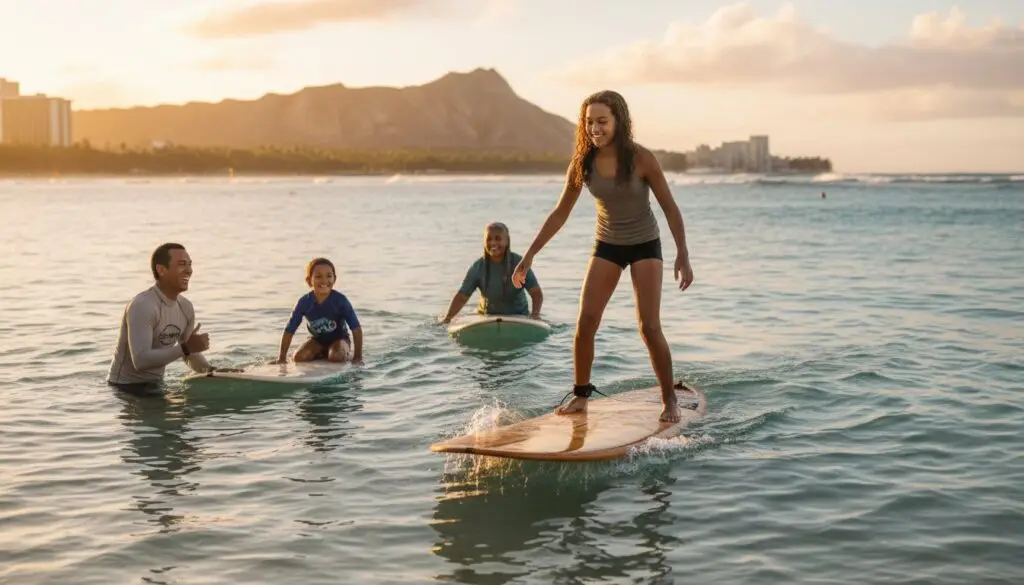
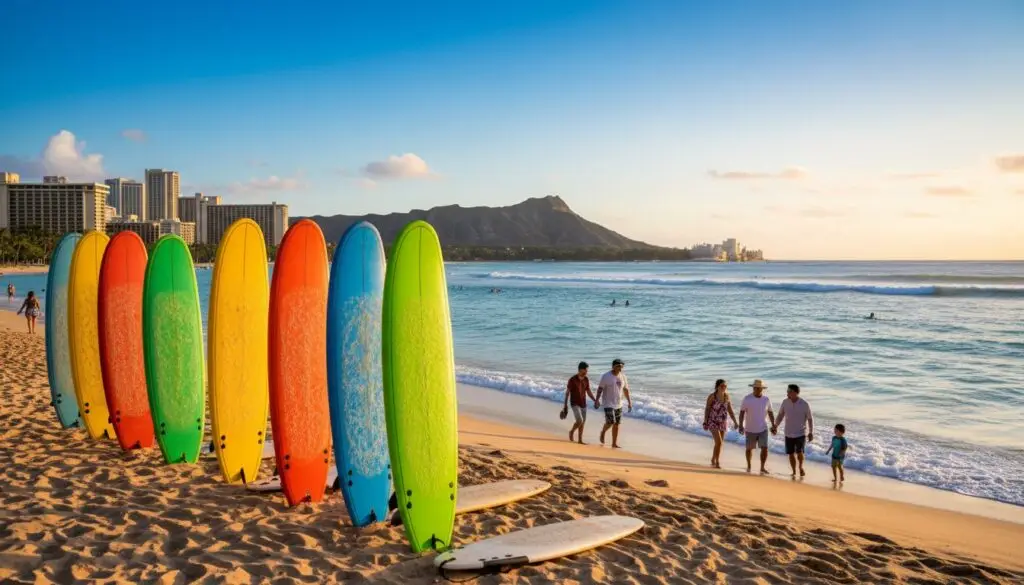
Wave riding lessons for intermediate surfers Oahu give surfers who already know the basics a structured way to tackle bigger swells, read ocean conditions, and ride with far more confidence. If you can pop up, paddle out, and catch a few small waves on your own, but still struggle with timing or reading a reef break, this stage of coaching is built for you. Oahu’s South Shore and North Shore together offer some of the most varied surf conditions anywhere, which makes the island an ideal classroom for leveling up. In this guide, you will learn what intermediate lessons actually include, which breaks suit your skill level, and how to choose an instructor who will push you safely toward the next stage.
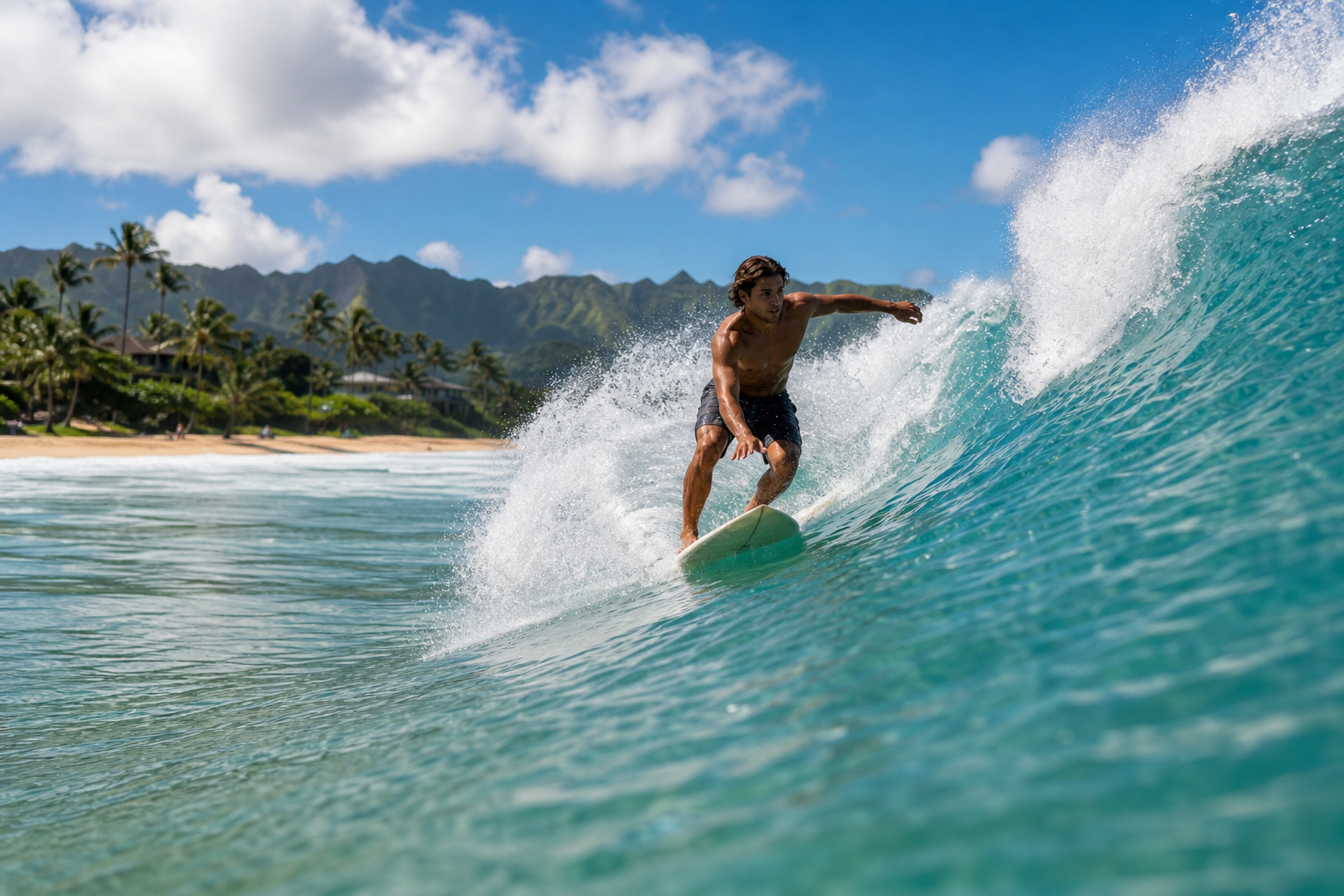
Progressive coaching helps intermediate surfers carve with more control on open-face waves.
What Are Wave Riding Lessons for Intermediate Surfers Oahu?
Wave riding lessons for intermediate surfers Oahu are coached sessions designed for surfers who have moved past the beginner stage and want to refine wave selection, bottom turns, and trim speed on unbroken waves. Unlike beginner lessons, which focus on standing up in whitewash near shore, intermediate coaching happens out in the actual lineup. Instructors typically combine in-water coaching, verbal cues, and a post-session debrief to speed up the learning curve.
This stage matters because many self-taught surfers plateau once they can stand up reliably. Specifically, they struggle with paddling timing, picking the right wave, and controlling direction once they drop in. Therefore, a coach who can watch your technique from the water and correct it immediately makes a measurable difference. For a broader overview of how lessons progress from zero experience, the surfing lessons on Oahu guide is a useful starting point before booking an intermediate session.
Why Oahu Is Ideal for Intermediate Surf Coaching
Oahu is one of the few places in the world where surfers can find both gentle, forgiving breaks and genuinely challenging swells within a short drive of each other. As a result, instructors can match the location to your exact skill level rather than forcing everyone into the same conditions. According to NOAA’s National Weather Service Honolulu office, South Shore summer swells generally stay in the 2 to 4 foot range, while North Shore winter swells can regularly exceed 10 feet. This seasonal contrast means intermediate coaching can be scheduled year-round without ever putting a learner in dangerous surf.
In addition, the island’s reef and sand-bottom breaks each teach different skills. Reef breaks, for example, demand sharper timing and respect for shallow hazards, while sand-bottom spots forgive small mistakes and allow more repetition. Consequently, a well-planned intermediate program will rotate between both types of breaks as your confidence grows.
Top Oahu Breaks for Leveling Up Your Surf Skills
- Waikiki’s outer reefs – longer rides on gentle, predictable walls.
- Kewalos – punchier waves that reward quicker pop-ups.
- Ala Moana Bowls – a classic left-hand reef for practicing turns.
- White Plains – a beginner-friendly stepping stone for mixed-ability groups.
- Chun’s Reef (winter, supervised) – a gentler North Shore option for stronger intermediates.
Surfers wanting a deeper comparison of these spots can review the intermediate surfing classes Hawaii guide, which breaks down which breaks suit specific goals, from turning practice to speed and trim.
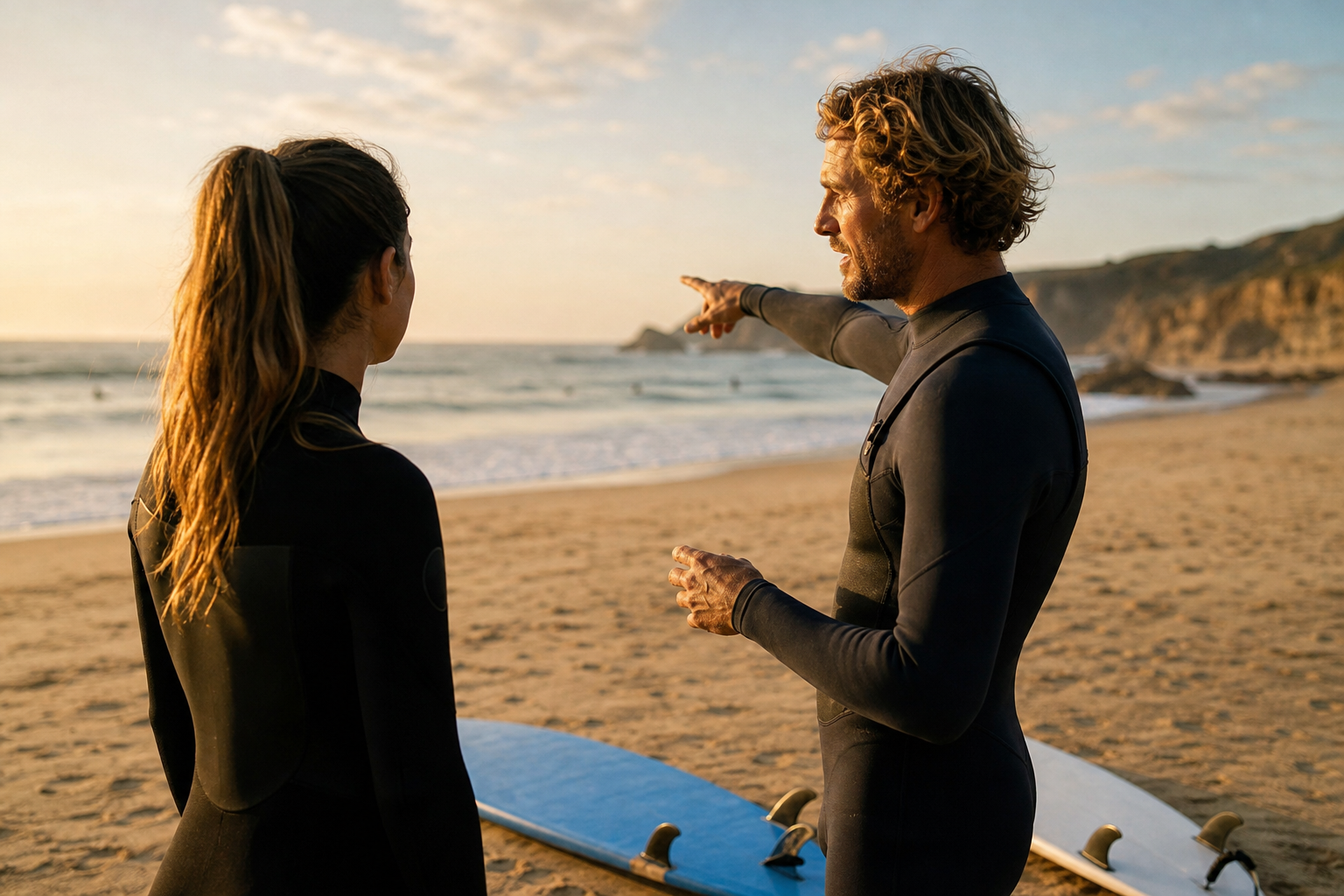
A land briefing on swell direction and hazards comes before every in-water coaching session.
What to Expect From Intermediate Surf Coaching in Oahu
Intermediate surf coaching usually starts with an honest skills assessment. Above all, a good instructor wants to see your actual paddling, timing, and pop-up before assigning a board or a break. Afterward, sessions tend to mix in-water correction with short rest periods on the beach to review what just happened. Similarly, many schools now offer brief video review so surfers can see their own stance and positioning from outside the water, which often speeds up learning considerably.
Step-by-Step: How Intermediate Wave Riding Lessons Work
- The instructor watches your paddling, pop-up, and wave riding on a few waves to identify weaknesses and set realistic goals for the session.
- Before paddling out, the coach explains swell direction, tide, and hazards, then matches you with a board suited to the day’s conditions.
- In the water, the instructor helps you sit in the correct lineup position and teaches you to judge which waves are worth paddling for.
- As you catch waves, the coach gives immediate verbal cues on stance, turning, and trim speed to correct habits while they are still fresh.
- After the session, the instructor reviews what improved and recommends which breaks suit your next practice sessions.
For a more detailed walkthrough aimed specifically at surfers transitioning from beginner to intermediate, the complete beginner-intermediate guide covers pacing and realistic expectations for each stage.
How to Choose the Right Surf School for Intermediate Lessons
Choosing a school matters more at the intermediate stage than it did as a complete beginner, because the margin for error is smaller and the waves are bigger. Look for instructors with specific experience coaching intermediate surfers rather than only teaching first-timers. In particular, ask how they assess skill level before a session and whether they adjust break selection to daily conditions.
Star Beach Boys, for example, structures its intermediate programs around a personalized assessment, matching surfers to breaks like Waikiki’s outer reefs or Kewalos depending on swell size and the surfer’s comfort level. The team’s professional surf lessons in Waikiki program is one option worth reviewing if you want structured, progressive coaching rather than a one-off group lesson. You can also browse the full range of offerings directly on the Star Beach Boys website before booking.
Common Mistakes Intermediate Surfers Make in Oahu Waves
Even surfers with decent fundamentals tend to repeat a few predictable mistakes once they move into real lineups. Recognizing these early saves time and reduces frustration.
- Paddling for a wave too late instead of committing early enough to catch the shoulder.
- Riding a board with too little volume for the current conditions, which makes paddling and catching waves harder.
- Misjudging reef breaks by underestimating how shallow or fast a wave can become.
- Ignoring lineup etiquette, such as dropping in on another surfer who already has priority.
- Skipping a check of local conditions and hazard information before paddling out.
According to Hawaii’s Department of Land and Natural Resources, ocean conditions on Oahu can change quickly between morning and afternoon, which is one reason coached sessions remain safer than surfing unfamiliar breaks alone. As defined by Wikipedia’s overview of surfing, wave riding itself depends heavily on timing and positioning, which is exactly what intermediate coaching is built to correct. Surfers still unsure whether they are ready for this level can check the beginner’s guide to learning surfing in Oahu for a readiness checklist.
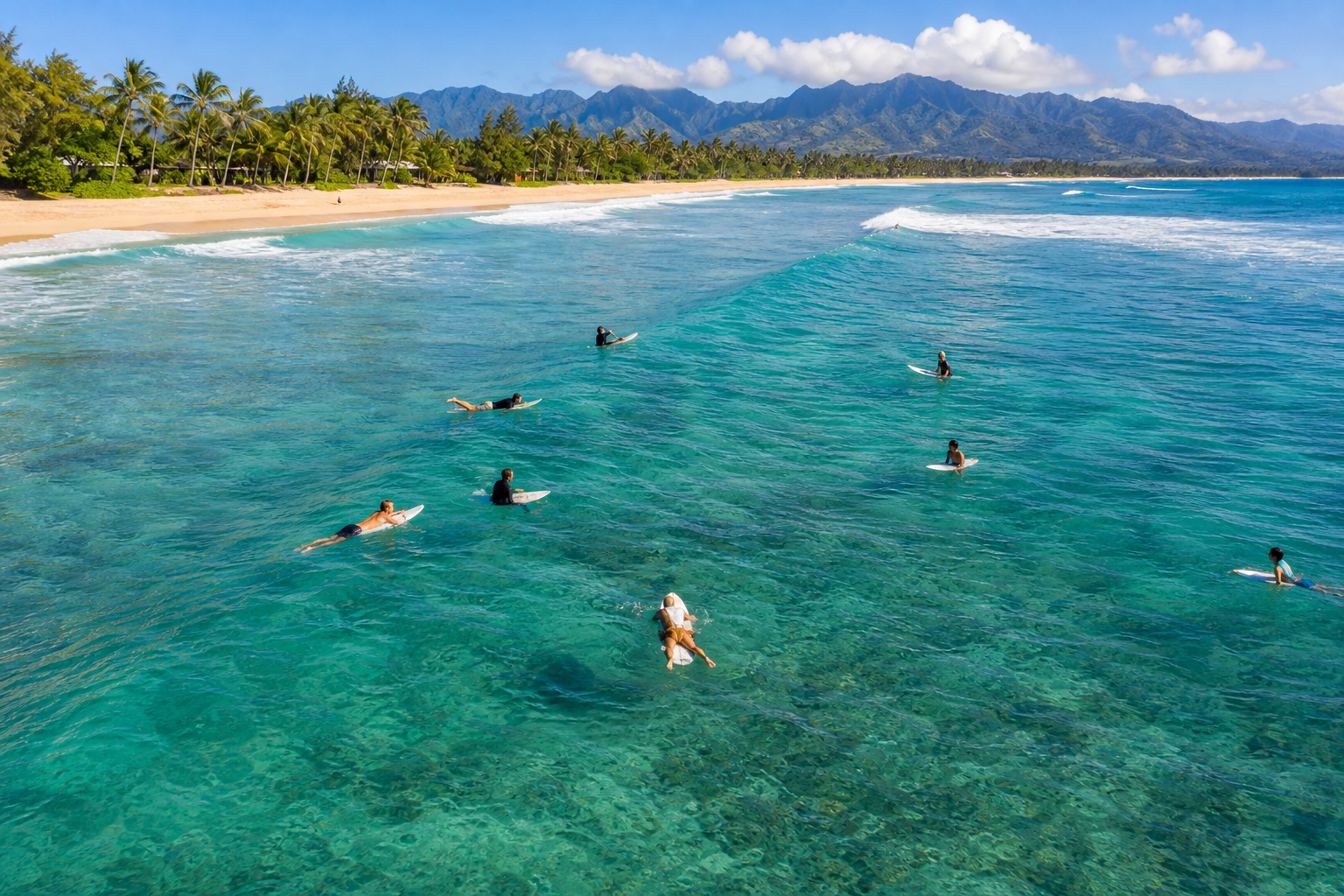
Reading the lineup correctly is one of the core skills taught during intermediate coaching.
Frequently Asked Questions About Wave Riding Lessons for Intermediate Surfers Oahu
What are wave riding lessons for intermediate surfers Oahu?
Wave riding lessons for intermediate surfers Oahu are coached sessions for surfers who already catch whitewash waves and want to ride unbroken waves, refine bottom turns, and improve wave selection. They typically take place in the actual lineup rather than near shore.
How do I know if I’m ready for intermediate surf lessons?
You’re likely ready if you can paddle out past small waves, pop up consistently, and ride straight to shore without help. If you still struggle to stand up reliably, however, a beginner refresher session is a better starting point.
What is the best time of year for intermediate surfing in Oahu?
Summer months, roughly May through September, bring smaller, mellower South Shore swells that suit intermediate practice. In contrast, winter from November through February produces powerful North Shore surf better suited to advanced coaching.
How long does an intermediate surf lesson in Oahu usually last?
Most intermediate sessions run between 90 minutes and two hours, including a land briefing and in-water coaching time. Some schools also offer half-day or multi-day progression packages for faster improvement.
How much do intermediate surf lessons cost on Oahu?
Private intermediate coaching generally costs more than group beginner lessons because of the one-on-one attention and board selection involved. Pricing varies by school, session length, and whether equipment rental is included.
What is the difference between beginner and intermediate surf coaching?
Beginner coaching focuses on standing up in whitewash close to shore. Intermediate coaching, in contrast, happens further out in the lineup and emphasizes timing, wave reading, and maneuvering on green, unbroken waves.
Which Oahu breaks are best for intermediate surfers?
Waikiki’s outer reefs, Kewalos, and Ala Moana Bowls offer forgiving but genuine waves for intermediate practice. In winter, spots like Chun’s Reef can work for stronger intermediates under close supervision.
Do I need my own surfboard for intermediate lessons?
No, most Oahu surf schools provide boards matched to your skill level and the day’s conditions. However, bringing your own board can help instructors give feedback specific to the equipment you actually ride.
What common mistakes do intermediate surfers make in Oahu?
Common mistakes include paddling for waves too late, choosing the wrong board volume, and misjudging reef breaks. Ignoring local lineup etiquette is another frequent issue that coaching helps correct quickly.
How quickly can intermediate surfers improve with coaching?
Many surfers notice better wave selection and timing within two to three coached sessions. Consistent practice between lessons, however, speeds up progress significantly.
Are intermediate surf lessons safe for solo travelers?
Yes, reputable schools pair solo travelers with a qualified instructor who monitors ocean conditions and surfer positioning throughout the session. This supervision makes intermediate lessons safer than surfing unfamiliar breaks alone.
Can intermediate lessons help with competition-level surfing later?
Intermediate coaching builds the foundational skills, like wave selection and turning technique, that advanced and competitive surfing require. As a result, many surfers use intermediate lessons as a stepping stone toward more advanced coaching.
What should I bring to an intermediate surf lesson in Oahu?
Bring reef-safe sunscreen, a rash guard, water, and swimwear suited for several hours outdoors. A towel and a change of clothes are also useful for after the session.
Final Thoughts on Leveling Up Your Surfing
Wave riding lessons for intermediate surfers Oahu bridge the gap between catching your first whitewash waves and genuinely riding the open face with control. As this guide has shown, the right coaching combines an honest skills assessment, a break matched to conditions, and real-time feedback in the water. Above all, progress comes faster with structured guidance than with trial and error alone. Whether you choose Waikiki’s forgiving reefs or a more challenging North Shore session later on, investing in intermediate coaching now will pay off every time you paddle out.