Surf lessons that include board maintenance tips give beginners a complete introduction to the sport, covering not just paddling and pop-up technique but also how to care for the board itself. At Star Beach Boys, instructors treat the surfboard as part of the lesson rather than an afterthought. Because a well-maintained board paddles faster, holds wax better, and lasts longer, students who learn basic upkeep from day one tend to progress more quickly. Therefore, many surf schools now build short maintenance briefings into every session. This guide explains what these lessons cover, why board care matters, and how new surfers can keep their equipment in shape between sessions.

Surf lessons that include board maintenance tips often start on the sand, before the first wave is caught.
What Are Surf Lessons That Include Board Maintenance Tips?
Surf lessons that include board maintenance tips are structured coaching sessions where instructors teach both riding skills and essential surfboard care, such as rinsing, waxing, and ding inspection. In other words, students leave knowing how to stand on a wave and how to protect their equipment. This combined approach is increasingly common at quality surf schools because equipment care directly affects safety and performance.
Specifically, a typical lesson might begin on the sand, where the instructor demonstrates how to check the leash, inspect the fins, and assess wax coverage before anyone enters the water. Afterward, the group reviews proper rinsing and drying once the session ends. As a result, students build habits that extend well beyond the lesson itself. For instance, instructors often walk beginners through a quick inspection checklist before and after paddling out, a habit the International Surfing Association highlights as part of responsible, long-term surf education.
Why Board Care Matters for New Surfers
Learning board care matters for several practical reasons beyond keeping a surfboard looking clean. First, salt water and sun exposure gradually weaken the fiberglass shell and foam core of most boards, as described on the surfboard overview on Wikipedia. Consequently, boards that are rinsed and stored correctly last noticeably longer than those left in hot cars or direct sunlight.
Second, a well-maintained board performs better in the water. For example, fresh wax improves grip, which helps beginners pop up with more confidence and fewer slips. Meanwhile, a board with cracked fins or a frayed leash introduces real safety risks, since broken equipment can separate from the rider in rough surf.
Finally, teaching maintenance alongside technique builds a deeper connection to the sport. Similarly to a cyclist learning basic bike repair, a surfer who understands their board tends to treat the ocean environment with more respect. Above all, this combination of skill and stewardship is part of what makes surf lessons that include board maintenance tips more valuable than technique-only coaching.
Essential Surfboard Maintenance Tips Every Beginner Should Know
New surfers benefit from a handful of simple habits that keep a board safe and ready to ride. In particular, instructors typically emphasize these core practices during every beginner course:
- Rinse the board with fresh water after each session to remove salt and sand buildup.
- Dry it fully in the shade before placing it in a bag or rack.
- Check the fins, leash plug, and rails for cracks after any hard landing or collision.
- Reapply surf wax when the deck starts to feel slick underfoot.
- Store the board away from direct heat, since extreme temperatures can weaken foam cores.
In addition, many students ask whether rental equipment needs the same care. The answer is yes — if you plan to rent a surfboard and take lessons at the same time, treating the rental with equal attention protects both you and the next guest who uses it.
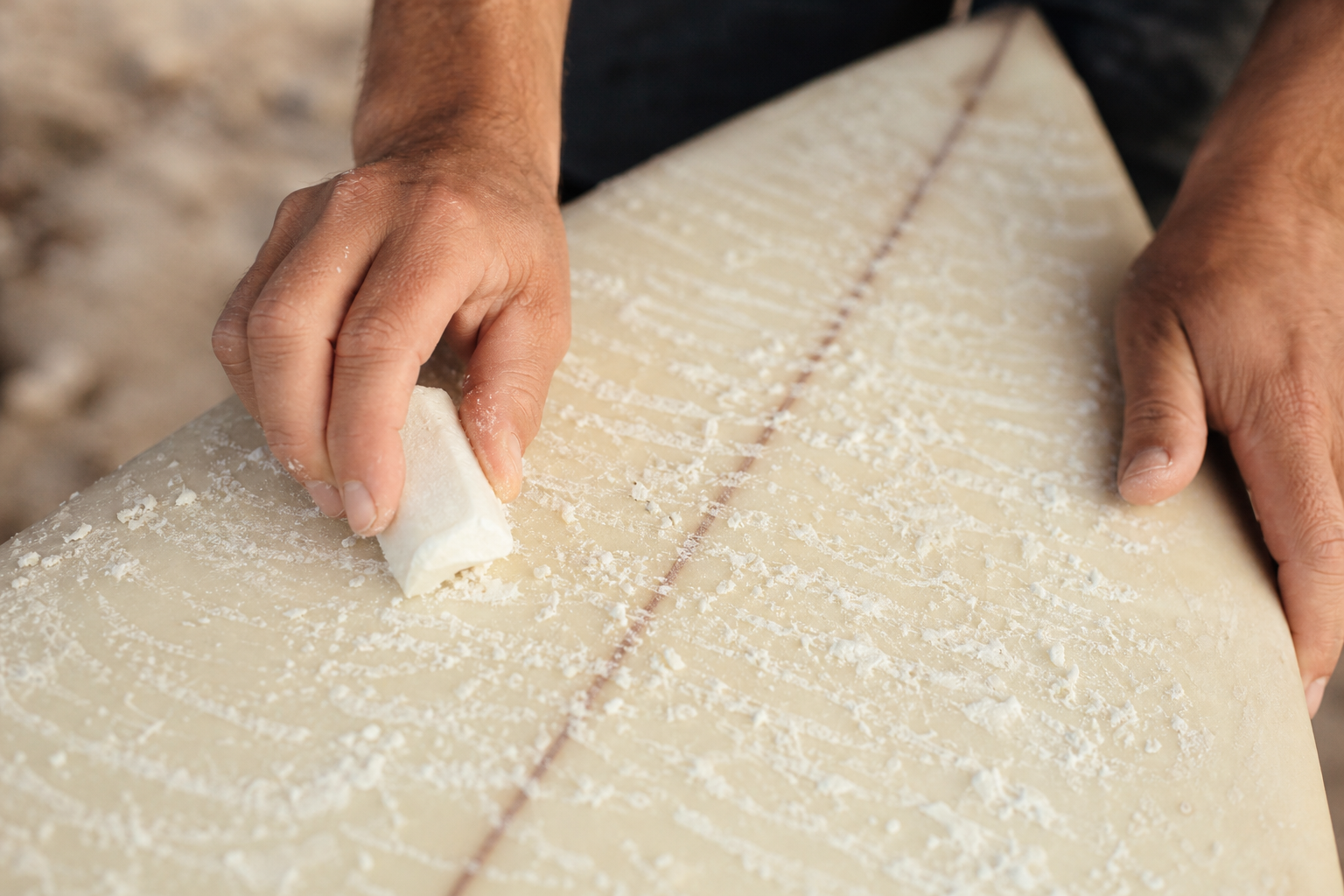
Reapplying wax is one of the simplest surfboard maintenance tips a beginner can learn.
Step-by-Step: Cleaning and Storing Your Surfboard
Once a lesson ends, following a consistent routine keeps a board in top condition for years. Below is the process most instructors recommend:
- Rinse the board thoroughly with fresh water, paying attention to the fin boxes and leash plug where salt tends to collect.
- Wipe down the deck with a soft towel to remove excess water and sand before it dries into the wax.
- Inspect the surface for dings, pressure dents, or cracked rails, marking any damage for repair before the next session.
- Reapply wax or use a comb to refresh traction if the current coat feels thin or gritty.
- Store the board upright or flat in a padded bag, away from direct sunlight, heat vents, and foot traffic.
Consequently, students who follow this five-step routine after every session rarely deal with unexpected repairs. For a deeper, hands-on walkthrough, Star Beach Boys also runs a dedicated surfboard maintenance workshop that expands on these basics in more detail.
How Surf Lessons That Include Board Maintenance Tips Build Lasting Skills
Surf lessons that include board maintenance tips do more than protect equipment; they also reinforce the technical skills taught in the water. For example, when an instructor explains why fin placement affects turning, students better understand balance and stance once they paddle out. Likewise, discussing how wax placement influences grip helps beginners connect foot position with pop-up technique covered in a complete surf teaching curriculum.
Furthermore, this combined approach tends to improve safety awareness. A student who regularly checks their leash and fins before paddling out is less likely to encounter equipment failure in open water. In fact, the United States Lifesaving Association reports that rip currents account for the majority of rescues performed by ocean lifeguards each year, which is why the National Weather Service recommends pairing equipment checks with basic ocean condition awareness before every session.
Over time, these combined habits create more self-sufficient surfers who can troubleshoot minor issues on their own, whether at a guided lesson or during an independent session later in their surfing journey.
Choosing a Surf School With Comprehensive Board Care Instruction
Not every surf school builds maintenance education into its curriculum, so it helps to ask a few questions before booking. Specifically, find out whether instructors demonstrate board inspection before paddling out, whether rental equipment is kept to a visible standard, and whether lessons scale for different ages and experience levels.
Star Beach Boys, for instance, structures its beginner and intermediate programs to include both water time and short equipment briefings, so guests leave understanding how to care for whatever board they use. This matters whether you are a first-time vacationer or a parent deciding what is the best age to start surfing lessons for a child.
In addition, a reputable school should be transparent about safety protocols for different conditions, since beginner-friendly waves require different equipment care than advanced breaks. Therefore, comparing a few local options — such as starbeachboys.com — and reading how each program balances instruction with equipment education helps families and solo travelers choose a program suited to their goals.

Group briefings on the sand are a common feature of comprehensive surf lesson programs.
Common Surfboard Care Mistakes New Surfers Make
Even motivated beginners sometimes develop habits that shorten a board’s life. Leaving a board in a hot car trunk is one of the most frequent mistakes, since heat can warp foam cores within a single afternoon. Similarly, skipping the rinse step after a session allows salt crystals to corrode hardware over time.
Another common error involves ignoring small dings. Although a hairline crack may look harmless, water can seep into the foam core and add weight, reducing performance. As a result, what starts as a cosmetic issue often becomes a costly repair.
Finally, some beginners assume rental boards do not need the same care as personal equipment. However, treating a rental with respect protects the next student and often determines whether a surf school continues offering flexible rental options. For broader guidance, reviewing a complete guide on how to surf safely as a beginner rounds out this knowledge, alongside the fundamentals covered on surfing basics.
Frequently Asked Questions About Surf Lessons That Include Board Maintenance Tips
What are surf lessons that include board maintenance tips?
They are surf coaching sessions that combine standard riding instruction with basic surfboard care, such as rinsing, waxing, and damage checks. This approach helps students protect their equipment while they learn to ride waves.
How often should I rinse my surfboard after a lesson?
Ideally, rinse the board with fresh water immediately after every session to remove salt and sand. Skipping this step even once can allow corrosion to begin on fin screws and leash plugs.
Why is surfboard maintenance important for beginners specifically?
Beginners often fall more frequently, which increases wear on fins, rails, and wax. Learning maintenance early helps new surfers catch small issues before they become expensive repairs.
What is the difference between board maintenance and board repair?
Maintenance refers to routine care like rinsing, drying, and waxing, while repair involves fixing dings, cracks, or delamination. Good maintenance habits reduce how often repairs are needed.
How much do surf lessons with board care instruction typically cost?
Pricing varies by location and lesson length, but group lessons that include basic equipment education are often similarly priced to standard lessons. Many schools fold maintenance tips into the existing lesson fee rather than charging extra.
How long does it take to learn basic surfboard maintenance?
Most students can learn the core habits, like rinsing, drying, and checking for dings, within a single lesson. Building it into a consistent routine usually takes a few more sessions of practice.
What are the most common surfboard care mistakes beginners make?
Leaving a board in a hot car, skipping the post-session rinse, and ignoring small dings are the most frequent mistakes. Each of these can shorten a board’s lifespan considerably.
What is the best way to store a surfboard between sessions?
Store the board in a padded bag, lying flat or standing upright in a cool, shaded spot away from direct heat. Avoid leaving it in a car trunk or against hot pavement.
Can I rent a surfboard and still learn maintenance during lessons?
Yes, most surf schools that offer rental equipment also teach basic care as part of the lesson, since well-maintained rentals benefit every guest. Treating a rental board with the same care as personal equipment is good practice.
What tools do I need for basic surfboard maintenance?
A few basics cover most needs: fresh water for rinsing, a bar of surf wax or wax comb, a soft towel, and a padded storage bag. More advanced repairs may require resin and sandpaper, which are usually best left to a professional.
How do I know if my surfboard has a ding that needs repair?
Look for cracked or discolored spots on the deck or rails, especially after a hard fall or collision. If you can press the area and feel it flex or see water underneath the surface, it is time for a repair before the next session.
What age is appropriate to start surf lessons that include board maintenance tips?
Many surf schools welcome children from around age six or seven, adjusting the maintenance lesson to match attention span and reading level. Reviewing guidance on choosing the best age to start surfing lessons can help families decide.
Final Thoughts
In summary, surf lessons that include board maintenance tips give beginners a more complete foundation than technique-only coaching. By combining paddling practice, pop-up drills, and simple equipment care, students build habits that protect their safety and extend the life of their gear. Whether you are planning a first vacation lesson or helping a child pick the right age to start, choosing a program that teaches both riding skills and board upkeep pays off long after the lesson ends. For hands-on guidance, consider booking a session with Star Beach Boys and asking how instructors fold board care into every class.