Surfboard fitting and gear recommendations make the difference between a frustrating paddle-out and a session you will want to repeat tomorrow. Choosing the right board, fins, and safety gear is not guesswork. It is a process built on your height, weight, skill level, and the waves you plan to ride. At Star Beach Boys, instructors match every student with equipment suited to their body and goals before a single wave breaks. This guide walks through exactly how professional surf coaches size a board, select supporting gear, and avoid the errors that slow beginners down.
What Is Surfboard Fitting and Why Does It Matter?
Surfboard fitting is the process of matching a board’s length, width, and volume (the amount of foam that keeps it floating) to a rider’s weight, skill, and typical wave conditions. A properly fitted board paddles faster, catches waves earlier, and feels stable underfoot. Gear recommendations, including fins, leashes, and wetsuits, round out a setup that protects both the surfer and the equipment.
Consequently, an ill-fitting board can turn a fun outing into an exhausting one. Too little volume sinks a beginner before they ever stand up, while too much volume on an advanced board blocks the control intermediate surfers are trying to build. In addition, mismatched fins and leashes contribute to lost boards, bruised shins, and avoidable wipeouts. For a deeper look at how instructors narrow down board shape for newcomers, see this guide on what type of surfboard is best for beginners.
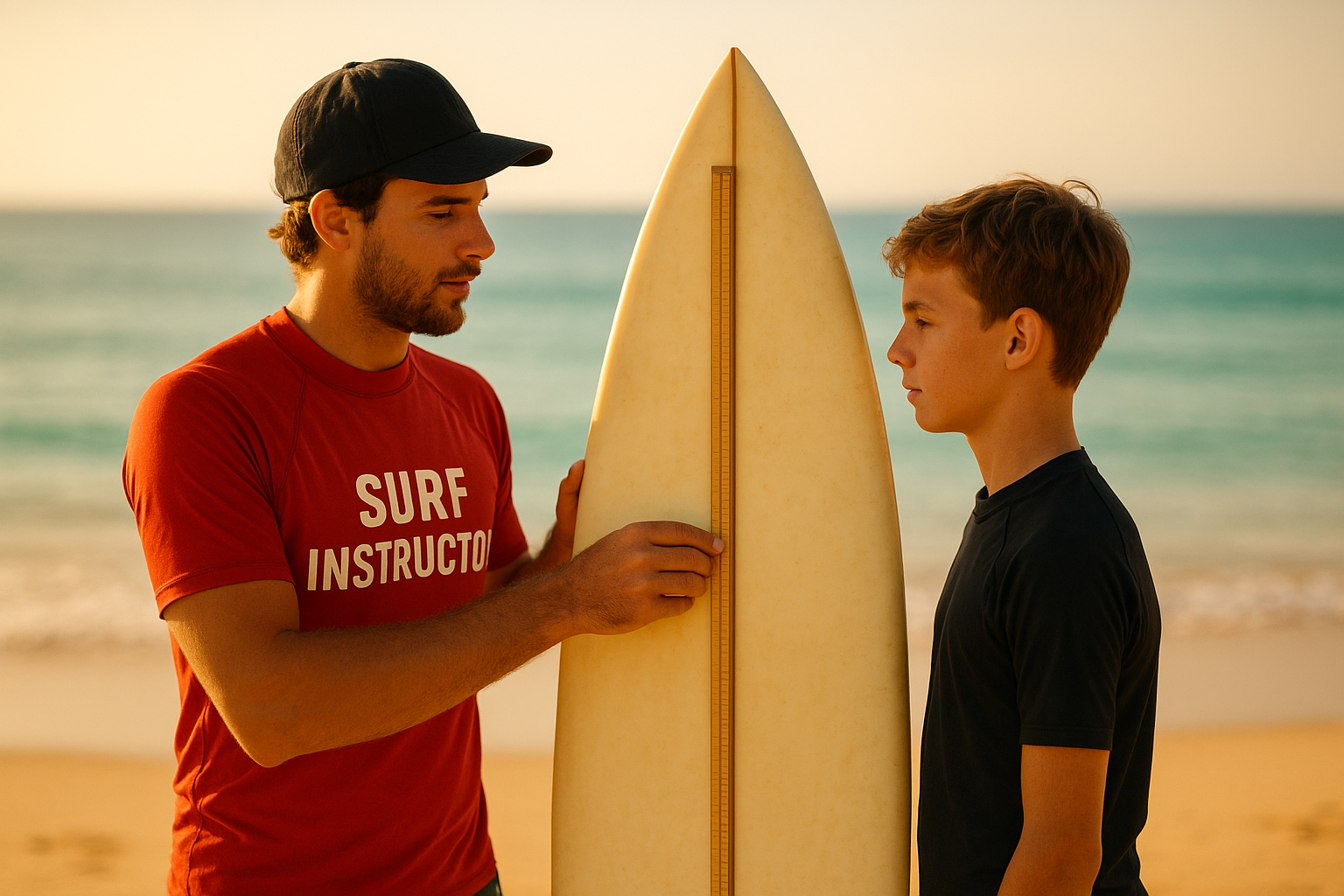
Proper surfboard fitting and gear recommendations start with matching a board to the rider’s body, not the other way around.
Understanding Your Skill Level Before Choosing a Board
Before anything else, be honest about where you stand as a surfer. Beginners generally need longer, wider, foam-top boards that offer forgiving stability during the pop-up. Intermediate surfers can move toward funboards or minimals, which balance glide with maneuverability. Advanced surfers, on the other hand, often prefer shorter, lower-volume shortboards for quick turns on steeper faces.
Similarly, your fitness level and ocean confidence matter just as much as technical ability. A strong swimmer with no surf experience still benefits from a higher-volume board at first. Star Beach Boys instructors assess this during every lesson, which is one reason the equipment provided during lessons is tailored rather than one-size-fits-all.
Board Length, Width, and Volume Explained
Length is measured in feet, width in inches, and volume in liters. As a general guideline, beginners often start on boards between 8 and 9 feet with 30 to 50 liters of volume, depending on body weight. Specifically, a wider, thicker board floats more easily, which gives a new surfer extra seconds to find balance before paddling for the next wave. According to the entry on surfboard design from Wikipedia, volume and rocker (the curve along the board’s length) together determine how a board handles speed and steepness, not length alone.
Essential Gear Recommendations for Every Surfer
Beyond the board itself, a handful of accessories round out a safe, effective setup. A leash keeps the board tethered to your ankle so it never becomes a hazard to other surfers. A rash guard or wetsuit prevents chafing and manages body temperature, and reef-safe sunscreen protects skin during long sessions. For renters, it helps to know what is included before arriving, which this overview of local board and lesson rentals explains clearly.
Fins, Leashes, and Wax: The Supporting Cast
Fins control how a board turns and holds a line across a wave face. A thruster setup, three fins arranged in a triangle, gives beginners predictable, stable turning. Meanwhile, leash length should roughly match board length; a mismatch can either snap the board back dangerously or let it drift too far during a wipeout. Finally, wax grades are formulated for specific water temperatures, so tropical wax on a cold board, or vice versa, simply will not grip properly.
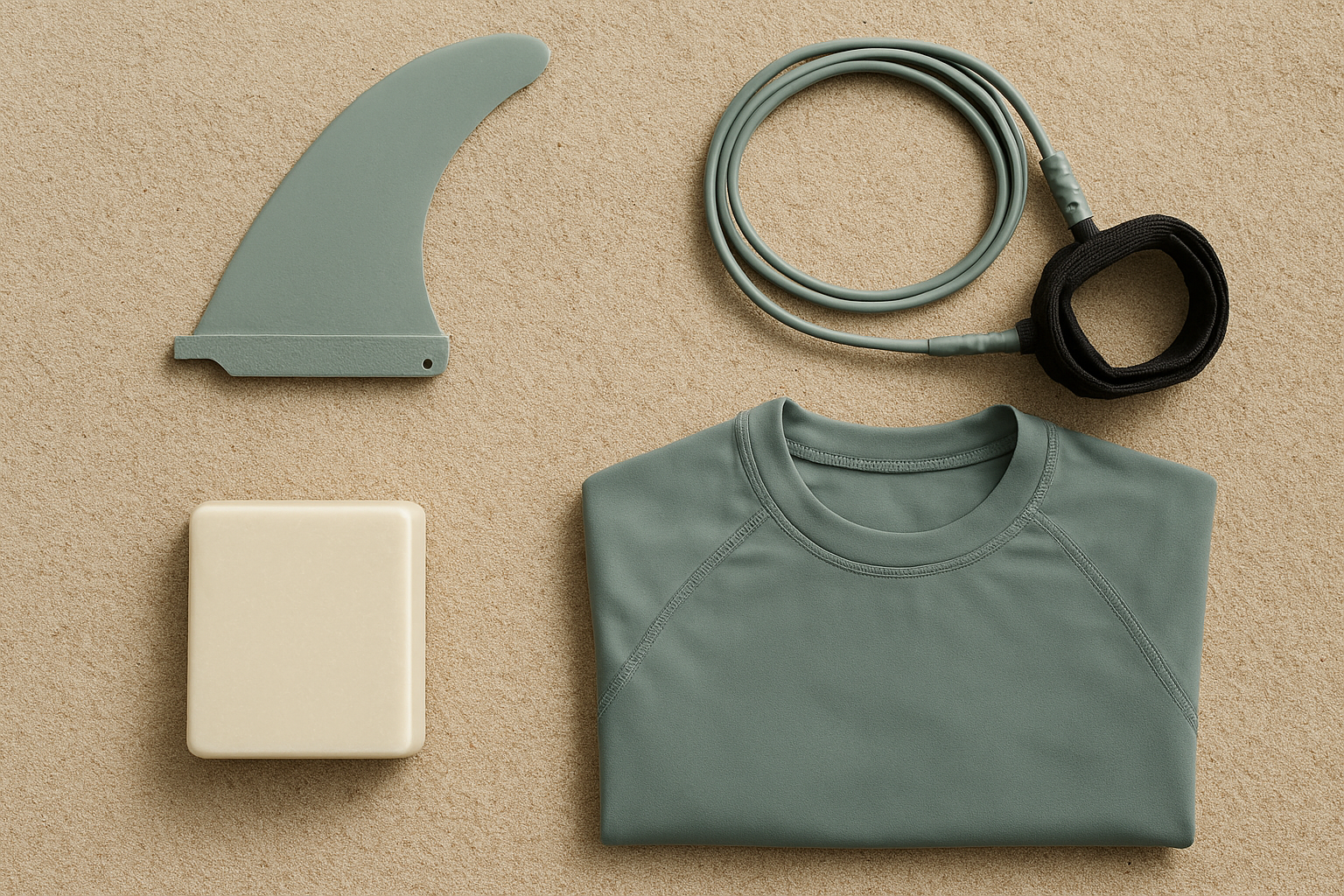
Fins, leash length, and wax grade are small details that make a big difference in gear recommendations for new surfers.
How to Get a Proper Surfboard Fit: A Step-by-Step Process
Instructors tend to follow a consistent sequence when fitting students with boards. Here is the process broken down into clear steps:
- Assess your skill level and goals honestly, since this one factor drives nearly every later decision about shape and size.
- Calculate an appropriate volume using your body weight, generally around one liter per kilogram for first-time surfers.
- Match length and width to your height and the local wave conditions, favoring longer boards for small, mushy surf.
- Test paddle and pop-up stability in the water before committing, because real conditions reveal fit issues specs cannot show.
- Choose supporting gear, including a matching leash, suitable fin setup, and correctly graded wax, to complete the setup.
As a result, following this sequence in order prevents the common trap of picking a board based on looks alone. Therefore, patience during fitting pays off during every session that follows.
Common Mistakes in Surfboard Selection
One frequent mistake is choosing a board that looks advanced instead of one actually sized for current ability. An undersized, low-volume board slows progress dramatically for a beginner. In addition, many surfers overlook leash length, fin configuration, or skip a trial rental altogether, jumping straight to a purchase.
Ocean awareness matters just as much as gear. The National Oceanic and Atmospheric Administration provides useful guidance on rip current safety, which is worth reviewing alongside any gear decision, since even a perfectly fitted board cannot replace basic ocean knowledge.
Renting vs. Buying: Finding the Right Surf Equipment
Renting is almost always the smarter first move. It allows a surfer to test multiple lengths, widths, and volumes without financial risk, which is especially useful for vacationers and families trying the sport for the first time. For those combining instruction with equipment, this explainer on whether you can rent a surfboard and take lessons together answers the logistics clearly.
Furthermore, the International Surfing Association estimates that global participation in surfing has grown substantially over the past two decades, meaning rental fleets and lesson programs now serve a far wider range of body types and skill levels than before. Once you know your preferred volume and shape from renting, buying becomes a far more informed decision. Visitors exploring longboard-style boards specifically may also enjoy browsing posts tagged under longboard surfing for style-specific tips.
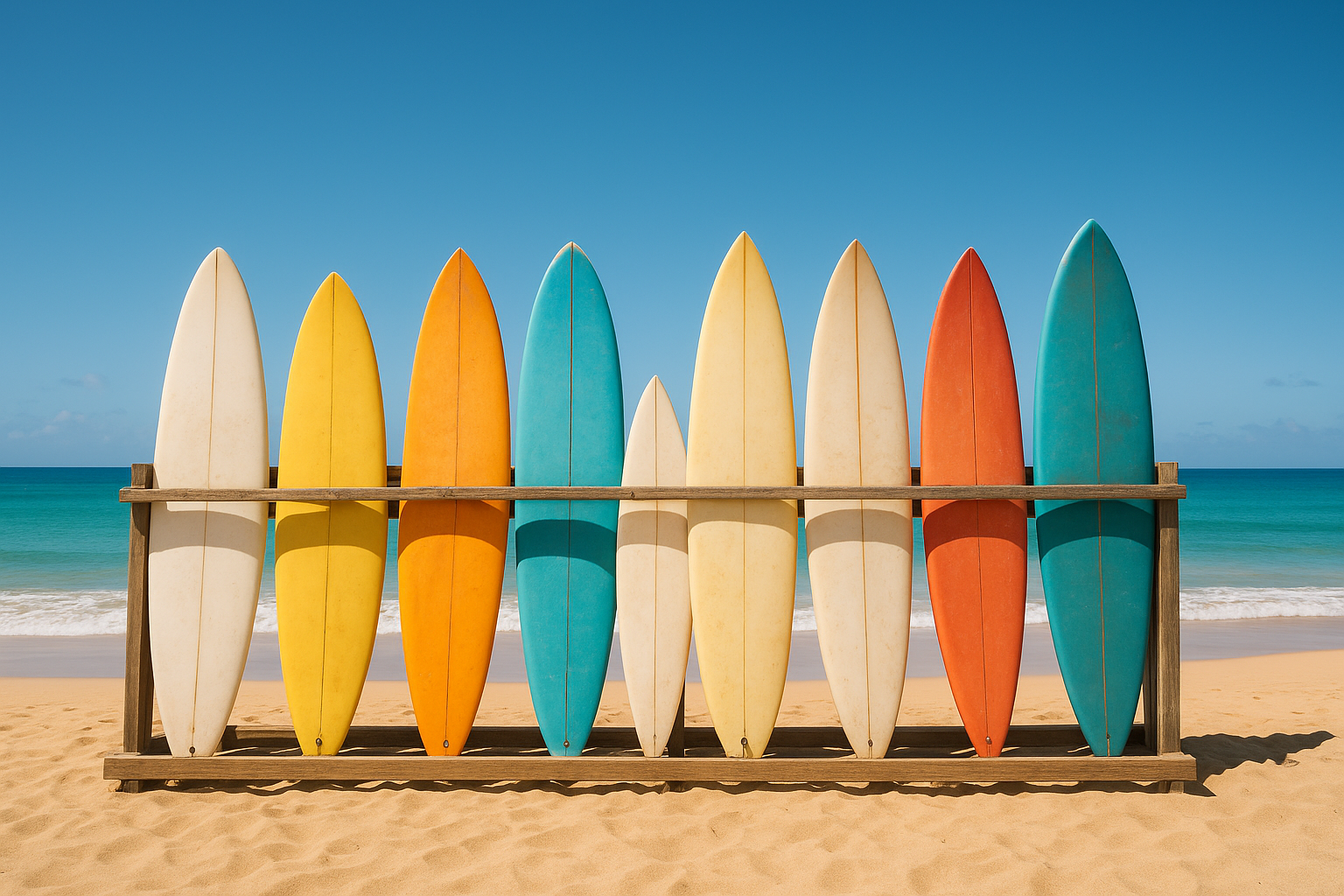
Trying several sizes through rental is one of the best gear recommendations before committing to a purchase.
Frequently Asked Questions About Surfboard Fitting and Gear Recommendations
What is surfboard fitting and gear recommendations?
Surfboard fitting and gear recommendations refer to the process of matching a surfboard’s size, shape, and volume to a rider’s weight and skill level, along with selecting supporting equipment like fins, leashes, and wetsuits. Done correctly, it makes paddling, standing, and riding waves far easier and safer.
How do I know what size surfboard I need?
Your ideal board size depends on your weight, height, and skill level, with beginners generally needing longer, wider, higher-volume boards for stability. A surf instructor can measure these factors quickly and recommend an exact length and width.
How much surfboard volume do I need as a beginner?
Many instructors suggest roughly one liter of volume per kilogram of body weight for first-time surfers, though this varies with fitness and wave conditions. More volume means more floatation, which helps beginners catch waves with less paddling effort.
What’s the difference between a foam board and an epoxy board?
Foam boards, often called soft-tops, are softer, more forgiving, and ideal for beginners learning to pop up safely. Epoxy boards are lighter and faster but less forgiving, making them better suited to intermediate and advanced surfers.
How long should my surf leash be?
A good rule is to match your leash length to your board length, so a seven-foot board pairs with a roughly seven-foot leash. A leash that is too short can snap the board back toward you, while one too long creates tangling risk.
What fin setup is best for beginners?
A thruster setup with three fins offers the most stability and predictable turning for new surfers. Single-fin and twin-fin setups are usually reserved for more experienced riders seeking a looser, faster feel.
Why does surf wax temperature rating matter?
Surf wax is formulated for specific water temperatures, and using the wrong grade means poor grip or wax that melts off the deck. Tropical, warm, cool, and cold-water waxes each have different softness levels suited to local conditions.
How much does a quality beginner surfboard cost?
A solid foam beginner board typically costs between $300 and $600 new, while used boards can run lower. Renting first is often smarter since it lets you test sizes before committing to a purchase.
How long does it take to outgrow a beginner surfboard?
Most surfers outgrow a beginner board within six months to two years, depending on practice frequency. As pop-up consistency and wave-reading skills improve, a lower-volume, more maneuverable board becomes appropriate.
What’s the biggest mistake surfers make when choosing a board?
The most common mistake is buying a board that looks advanced instead of one sized correctly for current ability. An undersized board with too little volume slows progress and makes catching waves unnecessarily difficult.
Should I rent or buy a surfboard first?
Renting is almost always the better first step because it lets you try multiple sizes and shapes without financial risk. Once you know your preferred volume and style, buying becomes a far more informed decision.
Can Star Beach Boys help with surfboard fitting and gear recommendations?
Yes, Star Beach Boys instructors personally fit every student with an appropriately sized board and gear before each lesson. This hands-on approach to surfboard fitting and gear recommendations removes the guesswork for visitors and locals alike, as detailed further at starbeachboys.com.
What wetsuit thickness do I need for surfing?
Wetsuit thickness depends on water temperature, with 2-3mm suits suiting warm water and 4-5mm suits suiting cooler conditions. In warm coastal destinations, many surfers skip a wetsuit entirely and use a rash guard instead.
Final Thoughts on Fitting Your Board Correctly
Ultimately, surfboard fitting and gear recommendations come down to honest self-assessment and a willingness to test before buying. Start with your weight and skill level, confirm volume and dimensions, and only then layer in fins, leash, and wax suited to local conditions. In contrast to guesswork, this structured approach shortens the learning curve and keeps every session safer. Whether you rent for a single lesson or invest in your own quiver, getting the fit right from the start, ideally with guidance from an experienced instructor, is what turns a shaky first paddle-out into a lifelong connection with the ocean.