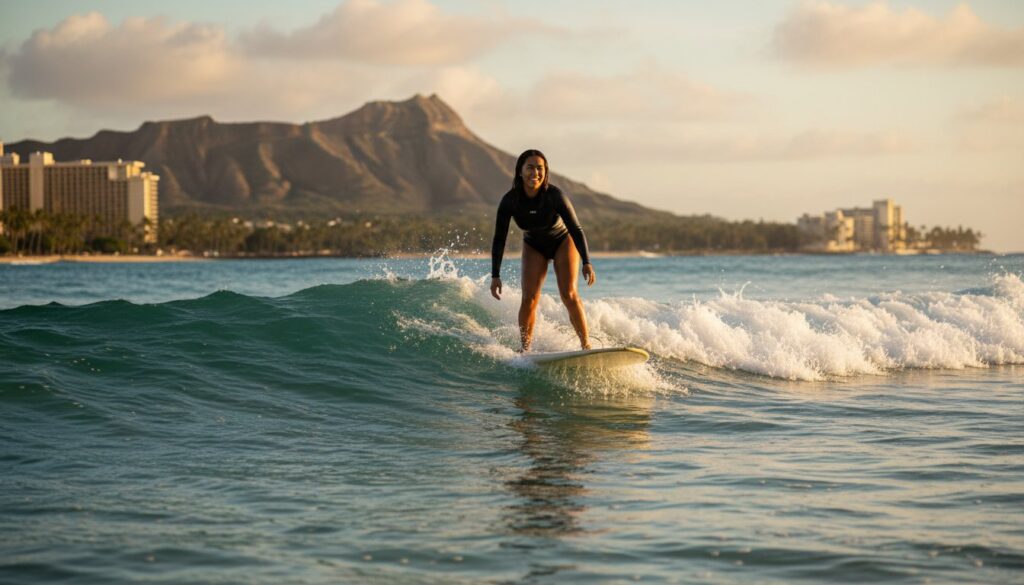
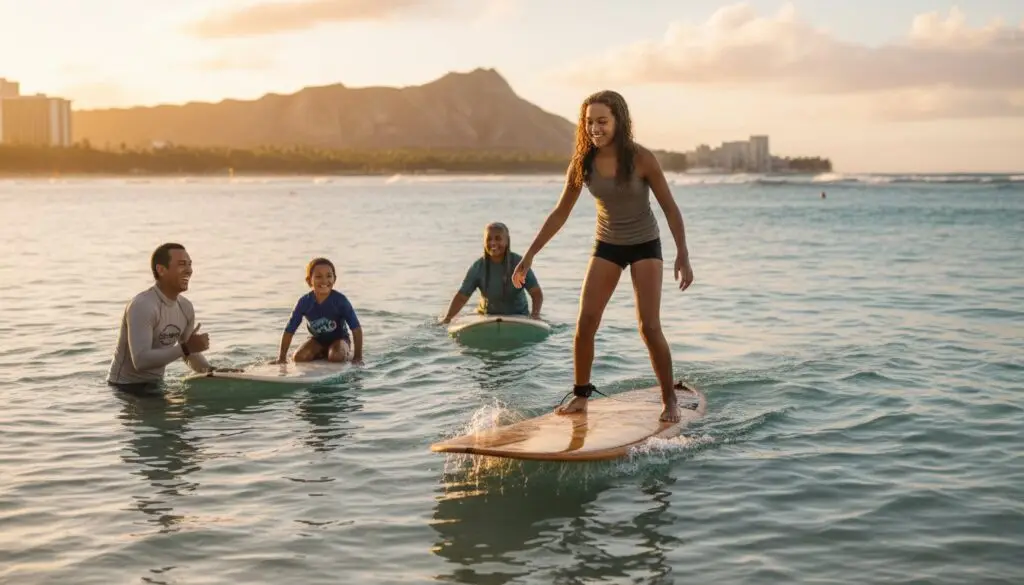
Surf lessons for tourists in Hawaii give visitors a safe, structured way to ride the islands’ famous waves without years of trial and error. Whether you’re a complete beginner or someone polishing your pop-up technique, professional instruction turns a bucket-list moment into a confident, lasting memory. In this guide, we’ll cover what these lessons include, how to choose the right surf school, and how much you should budget for your first session in the water.
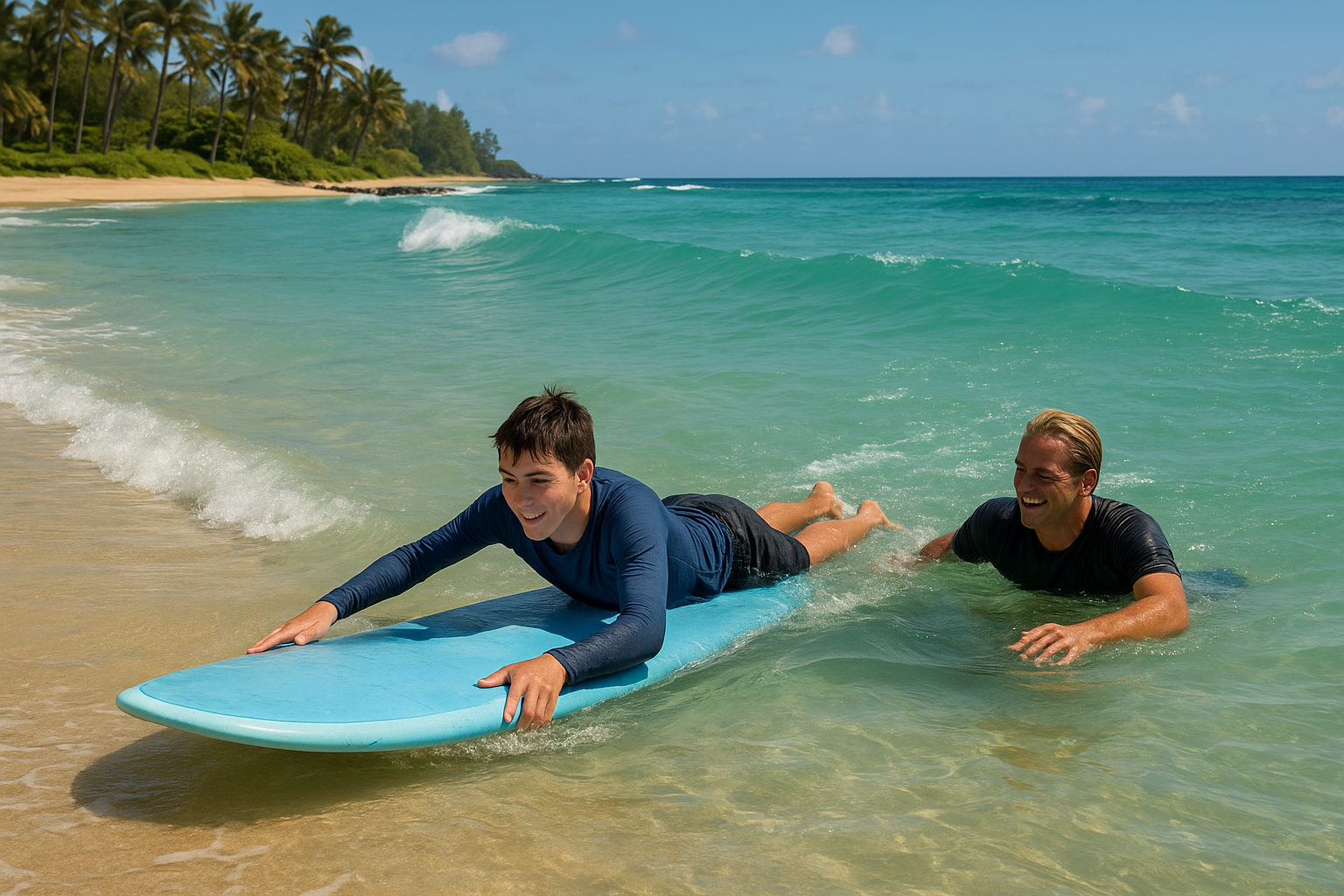
Beginners paddle out with an instructor during surf lessons for tourists in Hawaii.
What Are Surf Lessons for Tourists in Hawaii?
Surf lessons for tourists in Hawaii are guided instructional sessions led by certified local instructors who teach ocean safety, wave reading, and surf technique on beginner-friendly beaches. Most sessions last 60 to 90 minutes and include board rental, land-based training, and in-water coaching. Because they are structured for every experience level, these lessons work equally well for a first-timer and an intermediate surfer refining their skills.
In particular, instructors focus on reading the whitewash, which is the foamy water left after a wave breaks, since it offers the gentlest place to practice standing up. As a result, students often ride their first wave within the opening minutes of the lesson. For a broader overview of what these programs involve island by island, this complete surf lessons guide breaks down each option in detail.
Why Choose Professional Surfing Instruction in Hawaii
Hawaii’s coastline is famous for waves, but conditions can change quickly, and unfamiliar reef or current patterns catch many visitors off guard. Consequently, professional instruction matters more here than on many other beaches. According to the National Weather Service Honolulu office, ocean conditions across the islands can shift within the same day, which is exactly why local knowledge is so valuable.
Furthermore, certified instructors carry rescue training and know which beaches suit beginners versus advanced surfers. Above all, this local expertise reduces risk while helping students progress faster than they would learning alone. Surfing itself, as documented on Wikipedia, originated in Polynesia and remains deeply tied to Hawaiian culture, making a guided lesson also a small cultural introduction.
Choosing the Best Surf School for Your Vacation
Not all surf schools operate the same way, so it helps to compare a few before booking. Look for instructor certifications, small class sizes, and clear safety policies. In addition, read recent reviews and confirm whether the school supplies rash guards, which are snug athletic shirts that prevent skin irritation from the board’s wax.
Group Lessons vs. Private Coaching
Group lessons are typically the most affordable option and work well for families or friends learning together. In contrast, private lessons offer one-on-one attention, which can help nervous beginners or travelers hoping to progress quickly during a short trip. To weigh the pros and cons of learning alongside others, this guide to group surf lessons in Hawaii explains how the shared experience works.
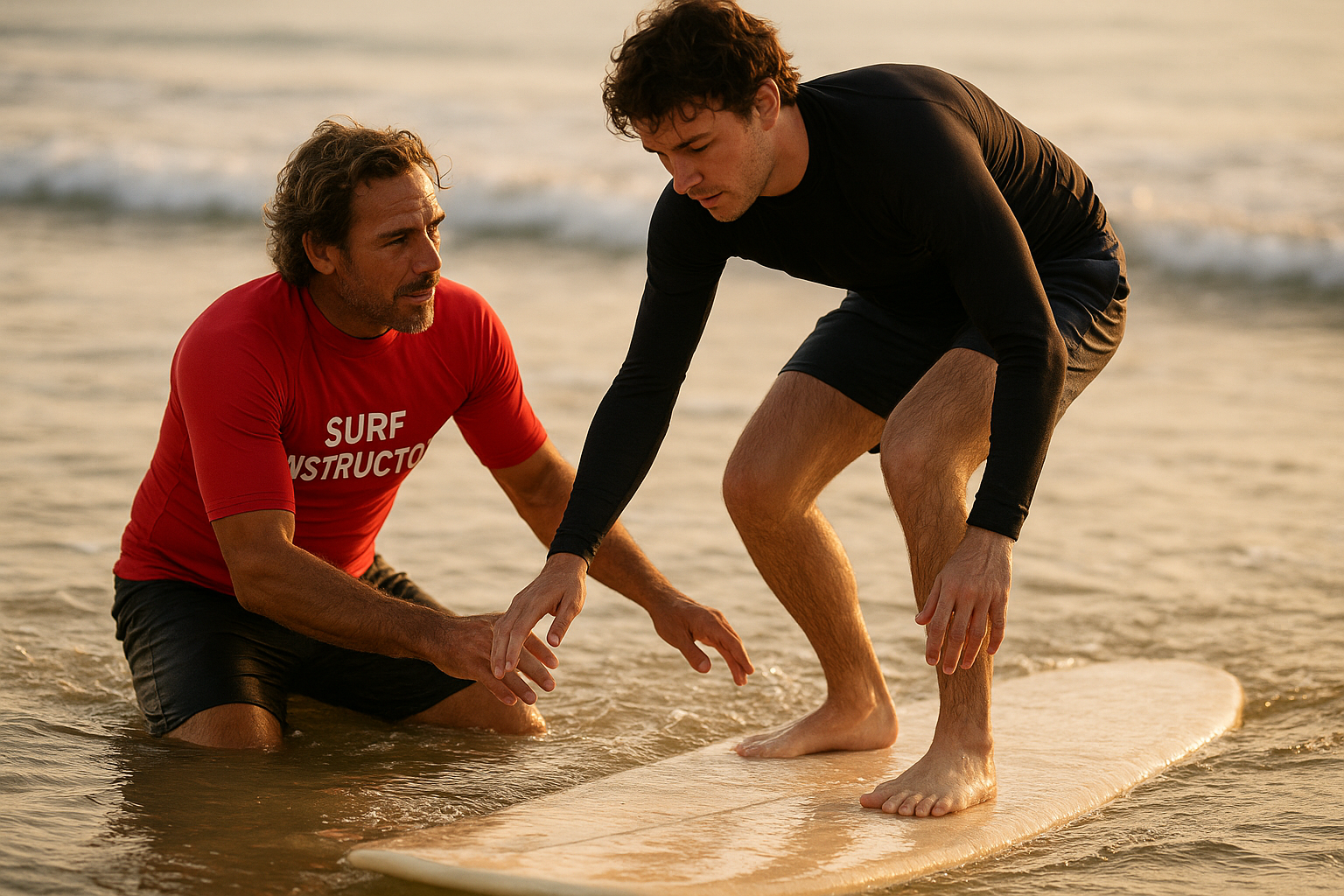
One-on-one coaching helps beginners correct technique quickly.
How to Prepare for Your First Surf Lesson in Hawaii
Good preparation makes the difference between a stressful first attempt and a smooth, enjoyable one. Follow these steps before your session:
- Book with a certified surf school that employs licensed, insured instructors familiar with local reef and current conditions.
- Wear a swimsuit or boardshorts with a rash guard to prevent chafing from paddling and lying on the board.
- Apply reef-safe, mineral sunscreen at least fifteen minutes before entering the water to protect your skin and the coral reef.
- Arrive ten to fifteen minutes early so your instructor can walk you through paddling, popping up, and ocean safety on land first.
- Practice the pop-up motion, the quick shift from lying down to standing, several times on the sand before paddling out.
What to Expect During Your Surf Lesson
A typical lesson begins on the sand with a briefing on paddling, balance, and reading incoming waves. Afterward, the group wades into shallow water while the instructor pushes each student into small waves at the right moment. Specifically, this early support lets beginners feel the sensation of gliding before they attempt to catch a wave independently.
Once a student stands successfully a few times, instructors gradually reduce assistance and encourage independent paddling. By the end of most sessions, many first-timers can catch and ride a wave on their own, which is often the highlight of their trip.
How Much Do Surf Lessons Cost in Hawaii?
Pricing varies by island, group size, and lesson length. Generally, group lessons range from about $75 to $120 per person, while private lessons often run between $150 and $250. Notably, prices usually include board rental and rash guard use, so there are few hidden costs.
Because rates differ from island to island, it’s worth comparing options before you book. This island-by-island breakdown of surf lesson prices in Hawaii can help you budget accurately for your trip.
Best Beaches and Times for Surf Lessons in Hawaii
Oahu’s Waikiki Beach is one of the most popular beginner spots thanks to its long, gentle rolling waves and sandy bottom. Meanwhile, Maui and Kauai also offer calm bays that work well for first-time surfers. If you’re unsure where to start, this list of recommended surf lesson locations in Hawaii highlights the top beaches by island.
Timing matters too. Summer months typically bring smaller south shore swells that suit beginners, while winter swells grow larger on north-facing coasts. However, lessons run throughout the year, as explained in this guide on whether surf lessons are available year-round in Hawaii.
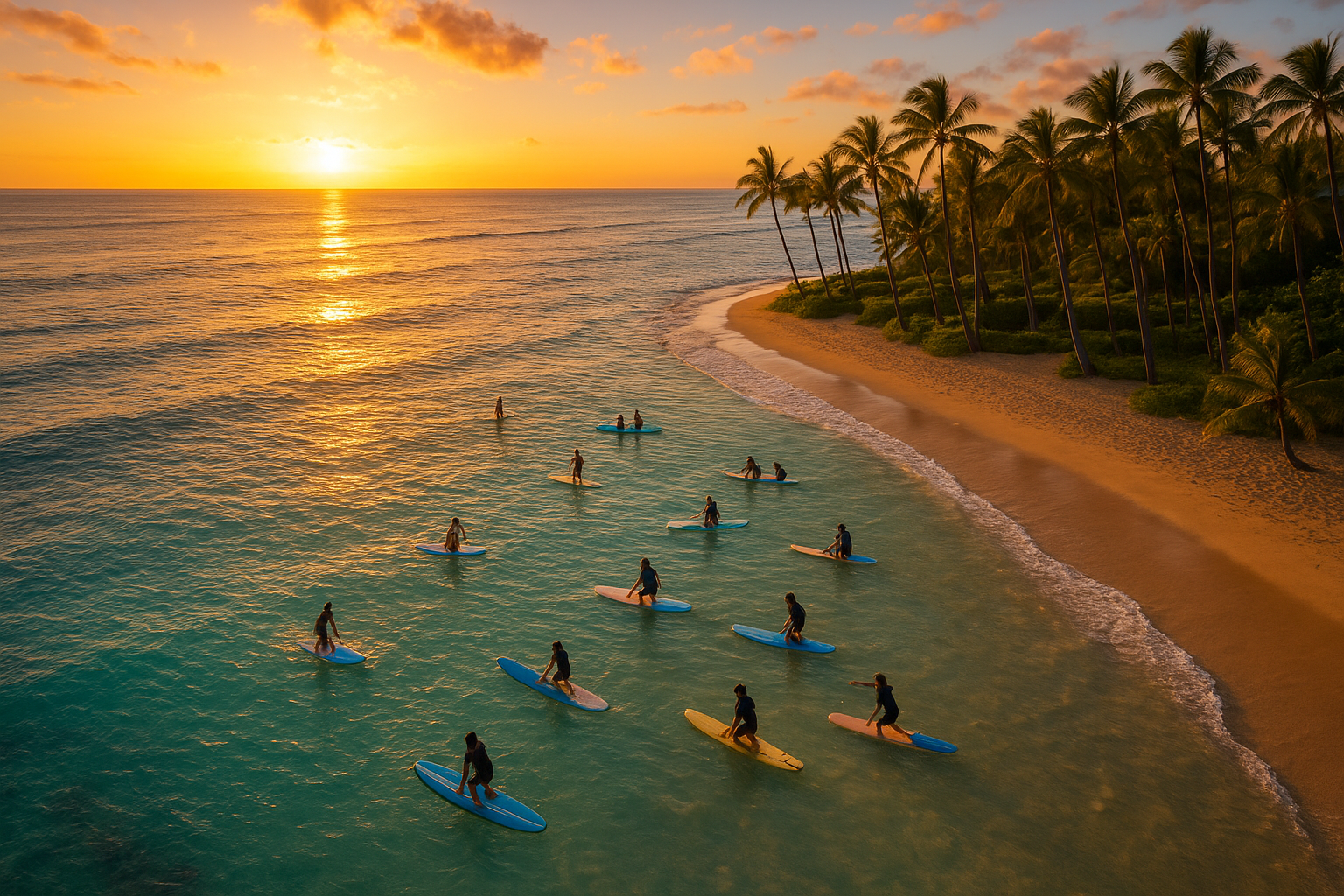
Golden hour is a favorite time for surf lessons along Hawaii’s shoreline; many visitors relax afterward in a beach chair to watch the sunset.
Frequently Asked Questions About Surf Lessons for Tourists in Hawaii
What are surf lessons for tourists in Hawaii?
Surf lessons for tourists in Hawaii are guided sessions taught by certified local coaches, covering ocean safety, wave reading, and surf technique on beginner-friendly beaches. Most run 60 to 90 minutes and include equipment.
How long does a typical surf lesson last?
Most beginner surf lessons last between 60 and 90 minutes, including a land briefing and time in the water. Private lessons sometimes run longer for extra coaching.
Do I need to be a good swimmer to take a surf lesson?
You don’t need to be an expert swimmer, but basic water comfort is recommended. Instructors choose beginner-friendly beaches with gentle whitewash to keep sessions safe.
What is the best age to start surf lessons in Hawaii?
Most schools accept children as young as five or six alongside adults of any age. Instructors adjust boards and pacing based on each student’s comfort level.
How much do surf lessons cost in Hawaii?
Group lessons typically range from $75 to $120 per person, while private lessons run between $150 and $250. Prices usually include board rental and a rash guard.
What should I wear to a surf lesson?
Wear a swimsuit or boardshorts with a rash guard, a snug shirt that prevents chafing from the board’s wax. Reef-safe sunscreen is also recommended; consider an anti-fog snorkel mask for clearer vision if you plan to snorkel before or after lessons.
Are group lessons or private lessons better for beginners?
Group lessons are more affordable and social, which suits families. Private lessons offer individual attention, which helps nervous beginners progress faster.
What is the best time of year for surf lessons in Hawaii?
Lessons run year-round, though summer typically brings smaller, calmer south shore waves ideal for beginners. Winter swells are larger on certain north-facing coasts.
Which Hawaiian island has the best beginner surf spots?
Oahu’s Waikiki Beach is widely considered one of the best beginner spots because of its long, gentle waves. Maui and Kauai also offer excellent beginner-friendly beaches.
What common mistakes do beginners make during their first lesson?
Common mistakes include standing up too quickly and looking down at the board instead of ahead. A qualified instructor helps correct these habits early on.
Do surf schools provide equipment?
Yes, most schools include a soft-top surfboard and rash guard in the lesson price; bring your own snorkel set if you plan to combine snorkeling with beach time.
How many lessons does it take to learn to surf?
Most beginners stand and ride a small wave during their very first lesson, but consistent riding usually takes three to five sessions depending on ocean conditions.
Final Thoughts on Surf Lessons for Tourists in Hawaii
Ultimately, surf lessons for tourists in Hawaii offer one of the most accessible ways to experience the islands’ waves safely, no matter your age or fitness level. From choosing between group and private coaching to picking the right beach and season, a little planning goes a long way toward an enjoyable first ride. Therefore, whether you’re visiting for a week or living locally, booking a lesson with an experienced, certified instructor remains the surest path to standing up on your first wave. To start planning your session, visit Star Beach Boys and connect with a local instructor today.