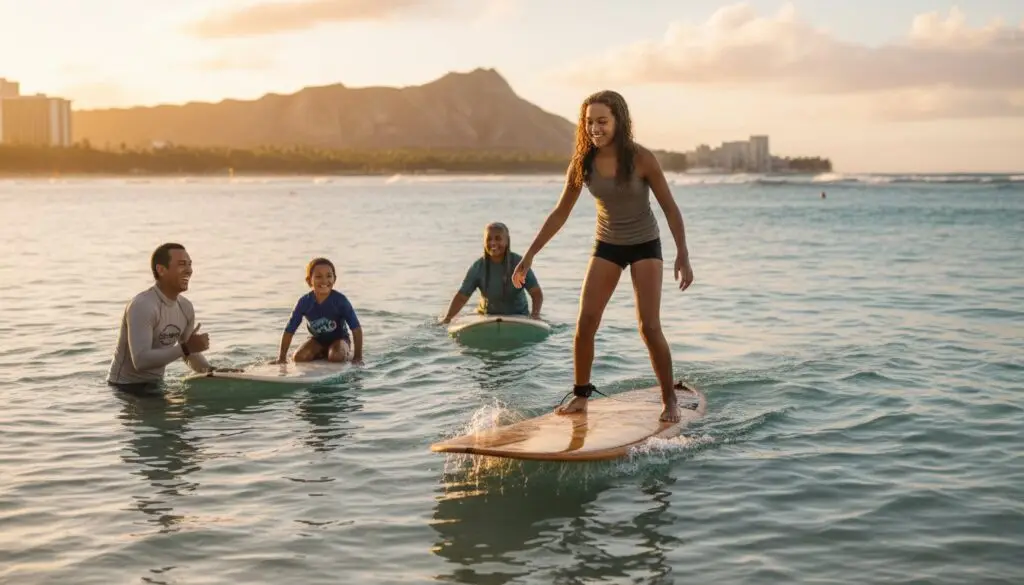
If you want to learn to surf Oahu, you’ve picked one of the most forgiving, welcoming coastlines on the planet to catch your first wave. Within a single lesson, most beginners are standing up and riding whitewater into shore — and by the end of this guide, you’ll know exactly which beach to choose, what a lesson costs, which board to rent, and how to avoid the mistakes that slow other first-timers down.
Oahu blends warm, clear water with long, slow-rolling beginner waves and a surf culture that has been teaching visitors for over a century. However, not every beach, board, or instructor is equal — and the choices you make in your first 48 hours on the island determine whether you leave frustrated or hooked for life. This guide covers every part of that decision, from the exact beach breaks to paddle out at, to the ocean-safety rules locals expect every beginner to know.
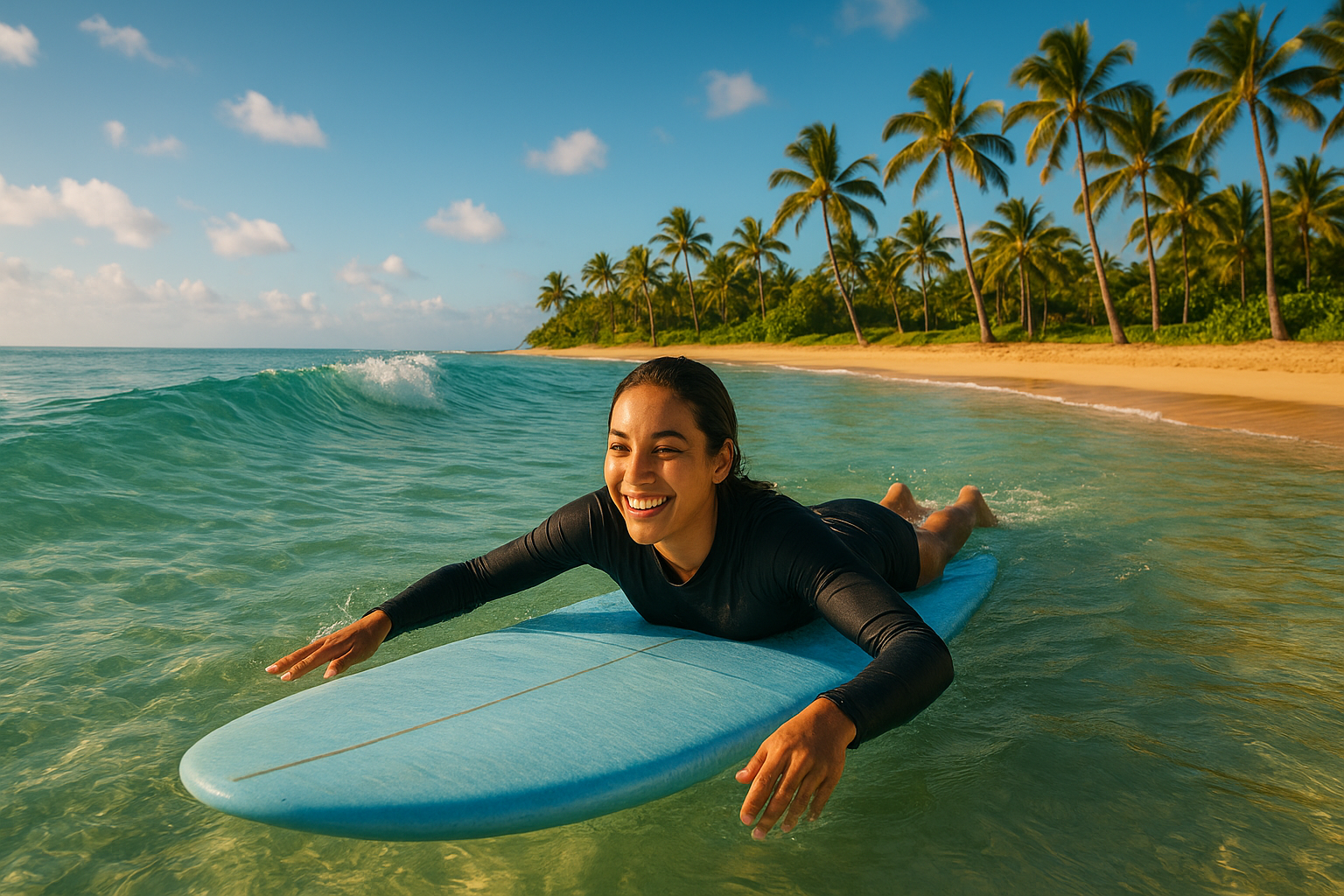
Waikiki Beach is the most popular destination to learn to surf on Oahu thanks to its slow, rolling beginner waves. For a deeper walkthrough, see our Learn Surfing in Hawaii: The Complete Beginner’s Guide.
Why Oahu Is the World’s Best Classroom for New Surfers
Oahu earned its reputation as a surfing mecca for good reason. The island’s South Shore, and specifically Waikiki Beach, produces long, slow-rolling waves that break gently over a sandy bottom. As a result, wipeouts are forgiving and the learning curve is far shorter than at most other surf destinations in the world.
Additionally, the water temperature hovers between 75°F and 82°F year-round, so a wetsuit is never necessary. That comfort removes one barrier that intimidates first-timers at colder destinations like California or Portugal. Meanwhile, Oahu’s surf culture is genuinely welcoming — local instructors take real pride in sharing the sport with visitors, not gatekeeping it.
In contrast, spots like Pipeline or Sunset Beach on the North Shore are reserved for expert surfers chasing double-overhead barrels. The South Shore breaks, by design, stay calm and beginner-appropriate for most of the year — which is exactly why nearly every surf school on the island bases its beginner lessons there.
Best Oahu Beaches to Learn to Surf, Ranked for Beginners
Not every beach on Oahu suits beginners. Therefore, knowing exactly where to paddle out is your single most important decision — more important than your board, your instructor, or even the swell forecast. For a complete borough-by-borough breakdown, see our guide on where to learn to surf in Oahu, including the best spots and schools.
Waikiki Beach (South Shore) — The gold standard for beginners. Breaks like Canoes and Queens offer long, rolling rides, thinner crowds in early morning, and a soft sandy bottom. Most surf schools, including ours, operate here for good reason.
Ala Moana Bowls (South Shore) — Slightly punchier than Waikiki, but still workable for beginners who have completed at least one lesson. Best visited once you’ve gained some confidence catching whitewater.
White Plains Beach (Ewa District) — A quieter option west of Honolulu with consistent, gentle waves. Because it draws fewer tourists, it’s a great place to practice without feeling crowded or self-conscious.
Puaena Point (North Shore) — Only workable in summer, when North Shore swells drop dramatically. First-timers should avoid the North Shore entirely from October through April, when the same waters turn into some of the most powerful surf on Earth.
If you’re still comparing neighborhoods, our companion article on the best spots, tips, and lessons across Oahu lays out driving times, parking, and crowd patterns for every beach on this list.
How to Learn to Surf Oahu Step by Step
Following a structured approach dramatically speeds up your progress. Here is the proven beginner process used by surf schools across Waikiki. For an even more detailed breakdown of the ride itself, check our complete guide to riding waves.
- Choose the right beach. Start at Waikiki. Its slow, forgiving breaks give you the most time to stand up and find your balance before the wave fades out beneath you.
- Book a certified surf lesson. Sign up with a reputable school that provides equipment, a safety briefing, and hands-on coaching. Look for instructors certified by the International Surfing Association or an equivalent body. Teams like Star Beach Boys have guided thousands of beginners through their very first waves right on Waikiki.
- Master the pop-up on land. Before entering the water, practice moving from lying flat to standing in one smooth motion. Keep your feet shoulder-width apart, bend your knees slightly, and fix your eyes on the horizon rather than the board.
- Paddle out and read the waves. Enter the water with your instructor, practice your paddling technique, and learn to spot which waves are catchable. Timing is everything, so watching a few sets before committing teaches you more than any textbook ever could.
- Catch your first wave and ride it in. As the wave lifts your board, execute your pop-up, keep your gaze forward, and let the wave carry you toward shore. Finally, celebrate — you are officially a surfer.
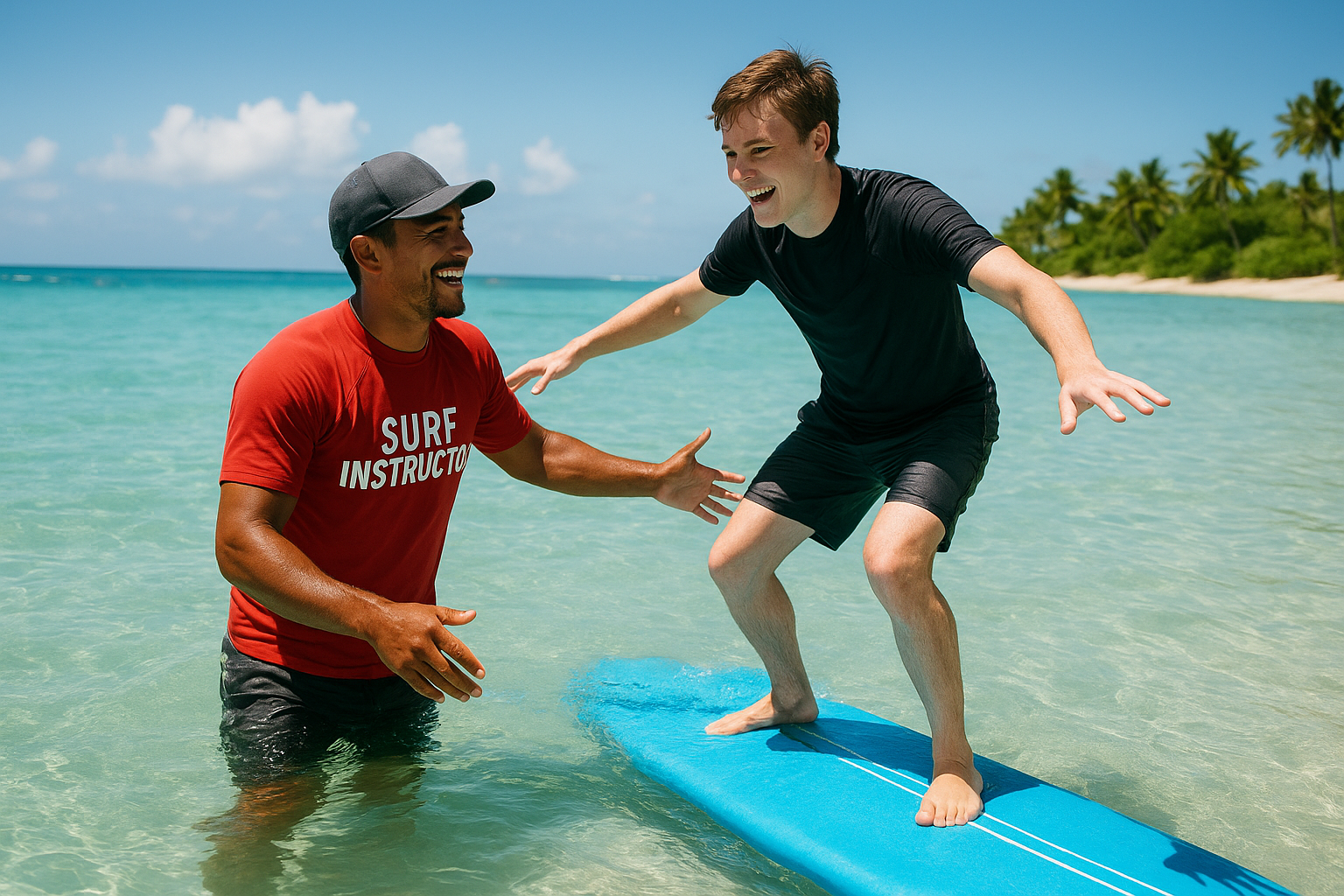
A hands-on instructor makes a significant difference when you’re learning the pop-up technique for the first time.
Choosing the Right Equipment as a Beginner
Equipment choice has a direct impact on how quickly you progress. For beginners, a foam soft-top longboard between 8 and 10 feet is the clear winner. These boards carry extra volume and surface area, which translates into easier paddling and far more stable rides than any shorter board could offer.
In contrast, shorter performance boards are stiff, tippy, and nearly impossible for beginners to control. Most surf schools provide foam boards as standard, so you typically don’t need to purchase equipment before your first lesson. If you’d rather compare rental options and packages before booking, our guide to finding your perfect wave with Oahu surf lessons breaks down what’s included at each price point.
Additionally, a rash guard is highly recommended. It shields your skin from both UV rays and board rash — the friction irritation that comes from lying on a surfboard for extended periods. Many schools include a rash guard in the lesson fee, so ask before you buy your own.
Group vs. Private Surf Lessons: What Beginners Actually Pay
Cost is one of the most common questions beginners ask, yet it’s rarely answered with real numbers. Here’s what you should expect to budget on Oahu.
Group lessons: $40–$80 per person for a 1- to 2-hour session. This is the most affordable route and still highly effective, since instructors keep groups small enough to give everyone real attention.
Private lessons: $100–$200 per hour. Ideal if you want undivided coaching, faster progress, or have specific concerns about water confidence.
Kids’ programs: Typically priced similarly to group lessons, with smaller boards, shorter sessions, and instructors trained to work with young beginners.
Because Oahu draws heavy tourist traffic in summer, book your lesson at least three to five days in advance during June, July, and August to secure your preferred time slot.
Is It Easy to Learn to Surf in Oahu?
In short, yes — Oahu is widely considered the easiest place in the world to learn to surf, largely because of Waikiki’s slow, sandy-bottomed breaks. That said, “easy” doesn’t mean instant. Most beginners stand up on whitewater within their first hour, but true independence in the water still takes repeated sessions. Our in-depth answer, Is It Easy to Learn to Surf in Oahu? A Complete Beginner’s Guide, walks through exactly what to expect session by session.
Age is rarely a barrier, either. Because Waikiki’s waves are so gentle, first-time surfers in their 40s, 50s, and beyond regularly succeed on their first try. If age is a concern for you or someone you’re traveling with, our guide Can I Learn to Surf at Any Age? A Complete Guide for Beginners covers what to expect at every stage of life. For a second, equally practical take on the same question, see Is It Easy to Learn Surfing in Oahu? A Complete Beginner’s Guide.
Ocean Safety and Surf Etiquette Every Beginner Should Know
Even on a beginner-friendly beach, the ocean deserves respect. Rip currents — powerful channels of water flowing away from shore — exist on every coastline, including Waikiki’s. According to NOAA’s ocean safety guidance, the safest response is to swim parallel to shore until you’re free of the current, then angle back in. Always ask your instructor about current conditions before paddling out.
Beyond currents, surf etiquette keeps everyone safe. Never drop in on a surfer who is already riding a wave. Hold onto your board in crowded lineups rather than letting it drift, and always paddle around — not through — a group of surfers catching waves. A good instructor will cover all of this before you ever touch the water.
Common Mistakes to Avoid on Your First Day
Even with great instruction, certain habits slow down beginners more than anything else. Knowing them beforehand gives you a meaningful head start.
- Looking down at the board is the single most common error. Instead, fix your eyes on the horizon as soon as you stand — your body naturally follows where your eyes lead.
- Standing up too early or too late causes most wipeouts. Because wave timing is everything, practice your pop-up repeatedly on land until the motion becomes automatic.
- Paddling with bent elbows wastes enormous energy. Keep your arms straight and pull deep through the water for maximum propulsion per stroke.
- Ignoring ocean currents is a genuine safety issue. Always ask your instructor about rip currents before paddling out, and never surf alone as a beginner, regardless of how confident you feel.
What to Expect From a Professional Surf School
A quality surf school does far more than hand you a board and push you toward the water. First, expect a thorough land-based safety briefing covering ocean awareness, wave reading, and surfboard etiquette. Next, your instructor walks you through the pop-up technique on the sand until the motion feels natural.
In the water, instructors physically assist beginners by holding the board steady and giving a push at exactly the right moment. This hands-on support dramatically increases your chance of standing up on the very first attempt. Schools like Star Beach Boys pride themselves on this personalized approach right at Waikiki.
Group lessons are typically more affordable and still highly effective. Private lessons, however, offer undivided attention and are ideal if you want to progress faster or have specific concerns about water confidence.
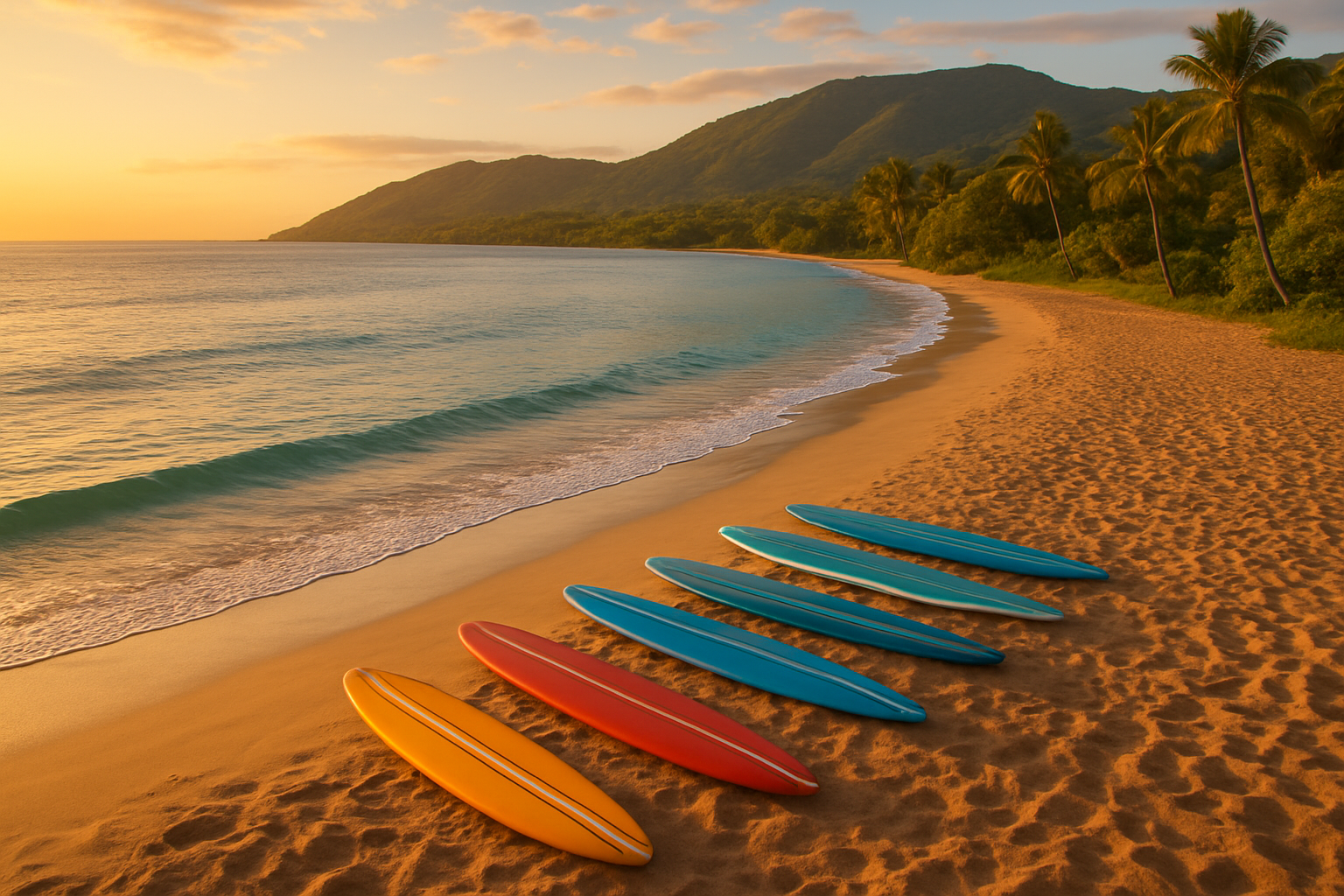
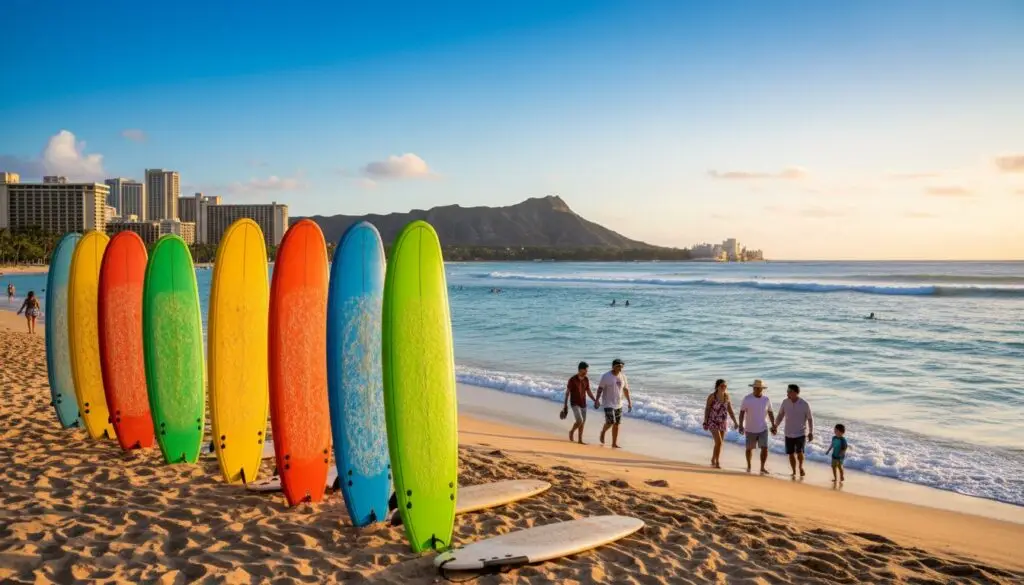
Foam longboards lined up at a Waikiki surf school — the essential starting point for any beginner surfer on Oahu.
Best Time of Year to Take Your First Lesson
Oahu’s South Shore is calmest and most beginner-friendly from April through October. During these months, summer swells from the south produce smaller, more manageable waves that are perfect for learning. As a result, this window is widely considered the best time for first-timers.
From November through March, larger North Pacific swells occasionally push through even to the South Shore. Although Waikiki still handles beginners well during winter, conditions can be slightly more challenging on certain days. Always check the surf forecast and consult your school before heading out.
Surfing’s Hawaiian Roots: Why Learning Here Means More
Surfing wasn’t invented as a tourist activity — it was born in Hawaii as a spiritual and cultural practice centuries before Western contact. In the early 1900s, Waikiki beach boy Duke Kahanamoku, an Olympic swimmer, helped introduce the sport to the world, teaching visitors on the very same sand where lessons happen today. That living history is part of what makes learning to surf on Oahu feel different from learning anywhere else.
Consequently, every lesson at Waikiki connects you, however briefly, to that lineage. Instructors often share local history and etiquette rooted in respect for the ocean — values that go well beyond simply standing up on a board.
Wrapping Up: Your Path to Riding Waves on Oahu
To learn to surf Oahu is to tap into a tradition stretching back centuries — surfing was born in Hawaii, and Waikiki is where that legacy lives most vividly today. With the right beach, a certified instructor, and a willingness to fall and get back up, most people catch their first wave within a single lesson.
Start at Waikiki, rent a foam longboard, keep your eyes on the horizon, and trust your instructor. Additionally, respect the ocean, follow surf etiquette, and remember that every expert surfer you see out there once stood exactly where you are now — staring at the water and wondering if they could do it.
They could. So can you. Learn to Surf Oahu and start with a Waikiki lesson to catch your first wave.
Frequently Asked Questions About Learning to Surf on Oahu
Is Oahu a good place to learn to surf?
Yes, Oahu is one of the best places in the world to learn to surf. Waikiki Beach offers long, gentle waves that break slowly over a sandy bottom, making it ideal for first-timers. Warm water and consistent conditions make almost every month a viable time to start.
How long does it take to learn to surf on Oahu?
Most beginners stand up and ride a wave within a single 1- to 2-hour lesson at Waikiki. However, becoming a confident, independent surfer typically takes weeks or months of consistent practice beyond that first lesson.
What is the best beach on Oahu for beginner surfers?
Waikiki Beach is the top choice for beginners. Its slow-breaking waves, sandy bottom, and proximity to certified surf schools make it the safest and most accessible spot on the island. Canoes and Queens are the two breaks used most often for lessons.
Do I need to know how to swim before taking surf lessons?
Yes, basic swimming ability is required. You don’t need to be an expert swimmer, but you should be comfortable in the ocean and able to swim at least 50 meters unassisted before joining a surf lesson.
How much do surf lessons cost on Oahu?
Group surf lessons typically range from $40 to $80 per person for a 1- to 2-hour session. Private lessons generally cost between $100 and $200 per hour. Prices vary by school, instructor experience, and season.
What should I wear for surf lessons in Oahu?
Wear a comfortable swimsuit or board shorts and apply reef-safe sunscreen before entering the water. Many surf schools provide rash guards for UV protection. Avoid loose clothing or jewelry that could snag on the surfboard.
What size surfboard is best for beginners?
Beginners should use a foam soft-top longboard measuring 8 to 10 feet. The extra volume and length provide stability, making it easier to paddle, balance, and catch waves. Most Oahu surf schools supply these boards as standard equipment.
Is surfing on Oahu dangerous for beginners?
Surfing at beginner breaks like Waikiki is generally safe when done with proper instruction. Risks include minor wipeouts and collisions with other surfers. Always surf with a certified instructor when starting out and respect all posted ocean safety guidelines.
What is the best time of year to take surf lessons on Oahu?
April through October is the best window for beginners on Oahu’s South Shore. Summer swells produce smaller, slower waves that are ideal for learning. That said, Oahu’s warm water makes surf lessons enjoyable in every season.
Can children learn to surf on Oahu?
Yes, children as young as 5 or 6 can take surf lessons on Oahu. Many schools offer dedicated kids’ programs with age-appropriate instruction and smaller boards. Waikiki’s calm, shallow breaks are especially well-suited for young first-timers.
Should I book a surf lesson in advance on Oahu?
Booking in advance is strongly recommended, especially from June through August. Popular surf schools fill up quickly during peak tourist season, so reserving your spot at least three to five days ahead ensures you get the time and instructor you want.
What are the most common mistakes beginner surfers make on Oahu?
Common mistakes include looking down at the board instead of the horizon, standing up too early or too late, and paddling with bent elbows. Many beginners also underestimate ocean currents and fail to read wave sets before paddling out — both of which a good instructor will address directly.
Can I rent a surfboard on Oahu without taking a lesson?
Yes, board rentals are available across Waikiki without a lesson. However, first-timers are strongly encouraged to book at least one lesson first, since instructors teach ocean awareness and etiquette that self-taught surfers often miss entirely.